Lucie Whitehouse: Before We Met (2014)

Before We Met

Lucie Whitehouse’s latest novel Before We Met, was a quick, fast-paced read. The book falls under the sub category of “domestic noir”. I didn’t even know that a sub-genre like that exists before I read Marina Sofia’s take on the term “chick noir”. I’m not sure I’m happy about these labels either. The only thing “domestic noir” tells us basically, is that it’s a married woman who gets in trouble. Before We Met was compared to Gone Girl, but since I haven’t read it that wasn’t something that made me pick it up. But when I saw Lucie Whitehouse compared to Nicci French in Guy’s review, I knew I had to read it as I’m a huge Nicci French fan. There are similarities, although, funny enough, the husband/wife duo Nicci French rarely write about married women. Their protagonists are mostly single women. The similarity is in the writing, and the pacing. Lucie Whitehouse and Nicci French both know how to write an engaging, well-plotted story that moves forward at a steady pace.

Hannah is a Brit who works in New York, where mutual friends introduce her to Mark who is British as well. Their relationship and the speed with which it develops catches them both unawares. Hannah didn’t really think she was the marrying kind, but handsome, attentive Mark wins her over and within a couple of months they are married. Mark is the owner of a successful British company, located in London. Hannah has a succesful career in New York. After they get married, she decides to relocate and follows Mark to London.  At the beginning of the novel they have been married for eight months. They live in a beautiful, huge house and are very happy together. Hannah is a little worried because she ‘s still not found a job but other than that everything is great. Until the day Mark doesn’t come home from a business trip.

That he doesn’t come home and tells her on the phone he’s lost his cell phone, is annoying, but it doesn’t alarm Hannah. What alarms her though is to find out that Mark has emptied her bank account and that a mysterious woman calls at his office.

I can’t write much more as the less you know, the more you will like this novel. It has quite a few unexpected twists and turns. For every explanation Hannah finds there’s a new unanswered question and in the end she doesn’t know whether she’s being protected or whether she is in danger.

As I said at the beginning, this was a quick read. It’s suspenseful and the writing is very smooth, very readable. My only negative comment would be that I found some of Hannah’s’ decisions not clever, but people react in strange ways under stress.
John Scalzi: Fuzzy Nation (2011)

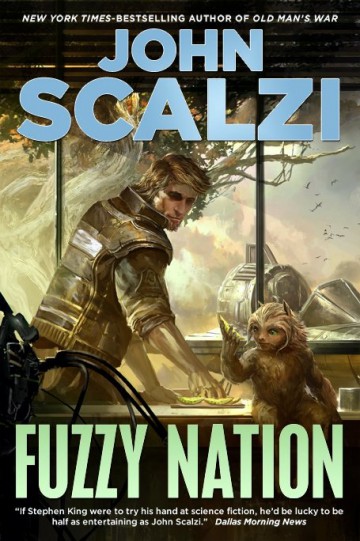
Fuzzy Nation

Sometimes I’m easy to please. It took John Scalzi less than one page to win me over with his novel Fuzzy Nation.

See for yourself:

Jack Holloway set the skimmer to HOVER, swiveled his seat around, and looked at Carl. He shook his head sadly.

“I can’t believe we have to go through this again,” Holloway said. “It’s not that I don’t value you as part of this team, Carl. I do. Really, I do. But I can’t help but think that in some way, I’m just not getting through       to you. We’ve gone over this how many times now? A dozen? Two? And yet every time we come out here, it’s like you forget everything you’ve been taught. It’s really very discouraging. Tell me you get what I’m saying to you.”

Carl stared up at Holloway and barked. Carl was a dog.

The idea that the book is told by a main narrator whose best friend is a dog to whom he speaks as if he was a human, amused me so much. The best thing however was that the whole book didn’t disappoint. It was not only a fun and charming read from beginning to end, but interesting and thought-provoking as well.

John Scalzi is said to be the most accessible Sci-Fi author writing today. I can see why. Not only does he write in an engaging way, but he has a knack for dialogue and great characters and a wonderful sense of humour. He’s also far more accessible than others because his world-building is minimal. Just a touch of description here and there to set the scene, but nothing that over stretches your imaginative muscles. As much as I like sci-fi, when the world-building is too detailed, my eyes glaze over and I simply can’t see the worlds that are described. Another reason why Scalzi is easy to read is his use of older material, which we may be familiar with. Fuzzy Nation, for example, is a “reboot” of Little Fuzzy by H. Beam Piper.

The central theme of Fuzzy Nation is the question: What makes a sentient being? Jack Holloway is a contractor for ZaraCorp a huge corporate company who exploits foreign planets. While working on the planet Zarathustra, Jack accidentally explodes a cliff and discovers a seam of unimaginably precious jewels. Legally, ZaraCorp is allowed to exploit this seam and give Holloway his share, but only if the planet is really not populated by sentient beings. So far only two other sentient species have been found in the universe.

Jack lives outside of the city, in a tree house, high above the raptors who populate the forest below. One day cute furry creatures come to stay at his house.  Jack is amazed how intelligent they are, but when his ex-girlfriend , biologist Isabel, tells him she thinks they are not animals but people, Jack is reluctant to accept that. He would never harm the Fuzzys. He would never harm any animal, but he doesn’t think they are people. After all, they don’t speak. Or do they? In any case, it would be awful for him, if they really were people, because he would lose the prospect of making millions.

Fuzzy Nation isn’t only an adventure story, in which cute little animal-people are suddenly in great danger and other people have to make some tough decisions, it’s also an exploration of what makes a human. Is it understanding, intelligence, dexterity, the aptitude to use machines or language? In any case, once you’re declared a sentient being, you have the right to possess things. Before that, everything you own can be taken and destroyed.

I have discovered a new favourite author and I’m sure I’ll read more of his novel in the future.

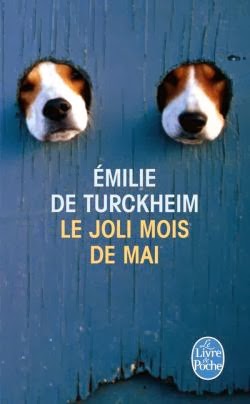
On Émilie de Turckheim’s Le Joli Mois de Mai (The Beautiful Month of May)

Le Joli Mois de Mai

Aimé, the narrator of Émilie de Turckheim’s short, dark, mean novel, cannot tell a story. Or that’s what he tells us. He’s not cultured, hasn’t had an education and, frankly, he seems a bit simple. A simpleton even. But it’s his story and his voice, which make this novel such a fun read, infused with black humour and full of absurd, comic situations. Just like child narrators and teenagers à la Holden Caufield, Aimé sees through the hypocrisy around him. He’s very literal and the way he unveils how people  lie with clichés and empty rhetoric, makes you laugh and gasp in horror at the same time.

You could call Le Joli Mois de Mai a very dark crime story. Monsieur Louis is found dead in the woods, a bullet in his throat. How did he die? And will he be the only victim? These are the questions we ask right away. And Aimé is willing to answer, only in his own time, and before we know the truth, we will hear a dark story of a teenage mother, abuse, violence, alcoholism and exploitation.

Monsieur Louis is dead and he has left a will. Five people will inherit everything. It should be surprising for the five heirs that Aimé and the horribly disfigured Martial, who have been living with Monsieur Louis, don’t get anything else than the right to stay at Monsieur Louis’s house. The five people who inherit the pension, the hunting grounds and the wood are a shady couple, an ex-policeman, an ex-soldier and a gay brothel owner. Greed clouds their judgment and influences their behaviour; they never wonder why would Monsieur Louis leaves everything to people he hardly knew.

I enjoyed finding out. I loved the way Aimé tells his story with so much naiveté and uncanny truthfulness. I laughed out loud quite few times, it’s so funny. It’s a shocking story, told in some of the blackest humour I’ve ever read.

The bad news – the book hasn’t been translated into English.

I first read about the author on Emma’s blog (Book Around the Corner). She’s reviewed one of her other books, Héloise est chauve (here). It sounds excellent as well. I hope Émilie de Turkheim will be translated. She’s a terrific writer. The voice was amazing, the way the story was told was shocking, funny and captivating. Her style is unique and from what I can see, all of her books are very different.

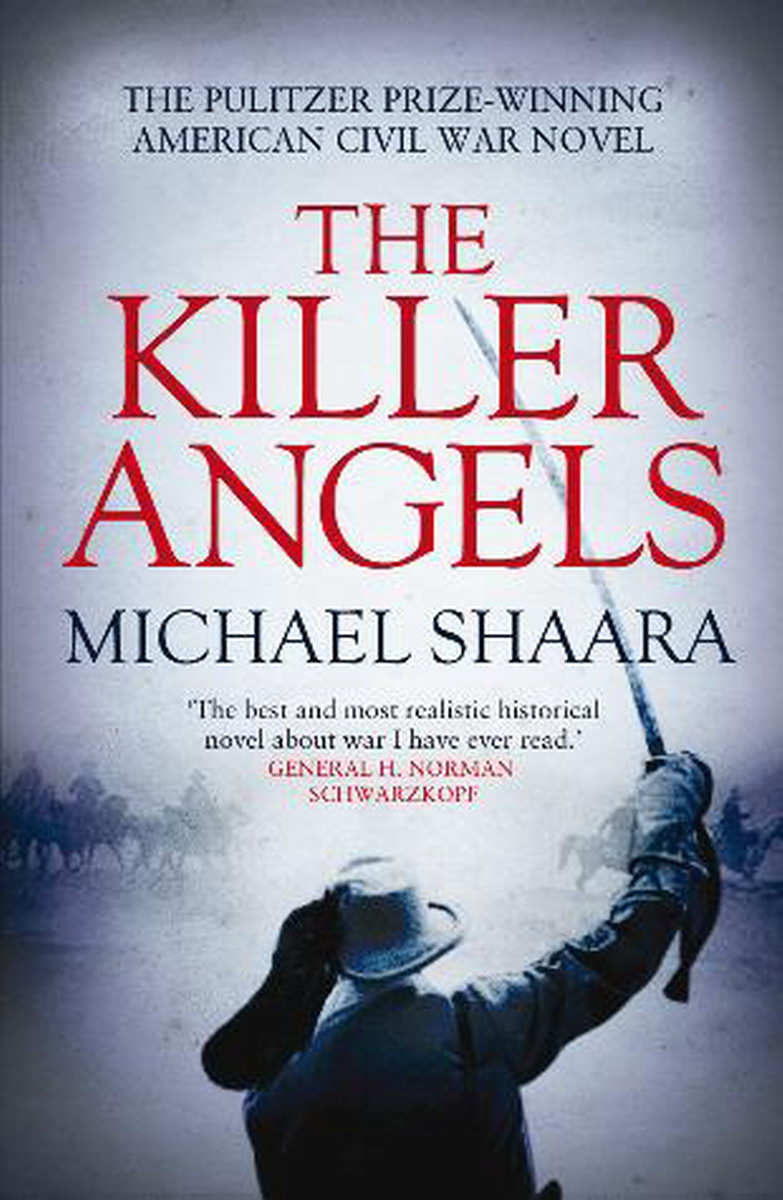
Literature and War Readalong February 28 2014: The Killer Angels by Michael Shaara

The Killer Angels

Michael Shaara’s Pulitzer Prize winning novel The Killer Angels is certainly one of the most famous novels about the American Civil War. Or rather about the decisive battle of Gettysburg that cost 50,000 lives. As far as I’m informed this was the battle that changed everything. While the Confederates were less numerous, they still won most battles so far. Gettysburg would change all that. I’m interested to see whether I will like a book that focuses on one battle only.

A few years back I saw the TV mini-series Gettysburg, which is based on this novel. It’s quite long but I enjoyed watching it and might rewatch it this month. It has a great cast: Tom Berenger, Martin Sheen, Jeff Daniels, Sam Elliott

Here are the first sentences of the novel

He rode into the dark of the woods and dismounted. He crawled upward on his belly over cool rocks out into the sunlight, and suddenly he was in the open and he could see for miles, and there was the whole vast army below him, filling the valley like a smoking river. It came out of a blue rainstorm in the east and overflowed the narrow valley road, coiling along a stream, narrowing and choking at a white bridge, fading out into the yellowish dust of June but still visible on the farther road beyond the blue hills, spiked with flags and guidons like a great chopped bristly snake, the snake ending headless in a blue wall of summer rain.

And  some details and the blurb for those who want to join

The Killer Angels by Michael Shaara (US 1974), American Civil War, Novel, 355 pages

The late Shaara’s Pulitzer Prize-winning novel (1974) concerns the battle of Gettysburg and was the basis for the 1993 film Gettysburg. The events immediately before and during the battle are seen through the eyes of Confederate Generals Lee, Longstreet, and Armistead and Federal General Buford, Colonel Joshua L. Chamberlain, and a host of others. The author’s ability to convey the thoughts of men in war as well as their confusion-the so-called “fog of battle”-is outstanding. This unabridged version is read clearly by award-winning actor George Hearn, who gives each character a different voice and effectively conveys their personalities; chapters and beginnings and ends of sides are announced. Music from the movie version adds to the drama. All this comes in a beautiful package with a battle map. Recommended for public libraries not owning previous editions from Recorded Books and Blackstone Audio (Audio Reviews, LJ 2/1/92 and LJ 2/1/93, respectively).

*******

The discussion starts on Friday, 28 February 2014.

Further information on the Literature and War Readalong 2014, including all the book blurbs, can be found here.

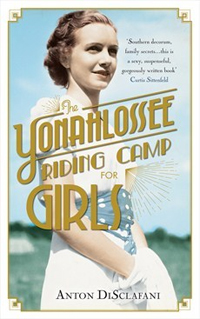
Anton DiSclafani: The Yonahlossee Riding Camp For Girls (2013)

The Yonahlossee Riding Camp for Girls

High in the Blue Ridge Mountains, The Yonahlossee Riding Camp for Girls is a refuge of privilege in a land devastated by the Depression. Thea Atwell’s arrival late in the summer season causes a ripple of intrigue and speculation. But even the most scandalous rumour cannot come close to the truth that destroyed her family, and brought her here. Fearless and unbroken, Thea soon finds that there is no banishment from secrets and temptations. Poised on the brink of adulthood, the events of that year will change the girls of Yonahlossee in ways they will never forget.

I’m not sure what exactly made me love this book so much. Was it the elegant writing, the dreamy mood, the sense of seeing a long-gone world, the tragedy of the story or the characters?

Anton di Sclafani’s (Anton is a woman, btw) novel Yonahlossee Riding Camp for Girls is set in 1930, in North Carolina, in a boarding school for rich girls. The Great Depression is in full swing and the rich families of the South, who send their girls to Yonahlossee, are hit hard. Many a girl has to leave the school because their parents lost everything. Thea, the fifteen-year-old narrator of this novel, has been sent away by her family because of something terrible she did. What exactly this was and why the consequences were so terrible, will be revealed bit by bit all through the novel. When Thea arrives in Yonahlossee, she thinks it’s for a summer vacation, but her family wants her to stay at least a year. She comes from Florida and while her father is a doctor there’s a lot of family money coming from citrus plantations. Thea isn’t an only child, she has a twin brother, Sam. They have never been apart and being separated from her twin is what is hardest on Thea at first. But Thea is also not used to other people. Her family lived a sheltered, secluded life and other than her aunt, uncle and cousin Georgie, she never met people. The twins were home schooled.

Thea is surprisingly good at fitting in and making friends at Yonahlossee. And because this is a riding camp, she can pursue her only passion, which is riding. Thea is not only a passionate rider, but a gifted one. She’s reckless too and at times also cruel.

It’s not difficult to find out what Thea has done. What could make a rich family send away their daughter? The other girls at the school know it as well. Boy trouble. How far it went and why it’s not only a scandal but a tragedy is something they will not find out. At first we think Thea is sorry for what she did but when she falls in love at Yonahlossee and is prepared to disregard all sense of decorum once more, we become aware that maybe it wasn’t so much what she did but its aftermath that she regrets.

I loved the way DiScalafani captured the setting and the period. I liked how she showed the end of an era without turning this into a mournful book, but into one that shows that people can free themselves from their stifling upbringing if they are true to themselves. Thea is a character who is true to herself at all times. This comes at a cost but one she’s aware of and willing to pay.

If you like a rich, beautifully told story, with mystery and a lush setting, if you are fascinated by the Great Depression and big Southern Families and enjoy a coming-of-age story, which is at times quite steamy, then I’m pretty sure you’ll love The Yonahlossee Riding Camp For Girls.

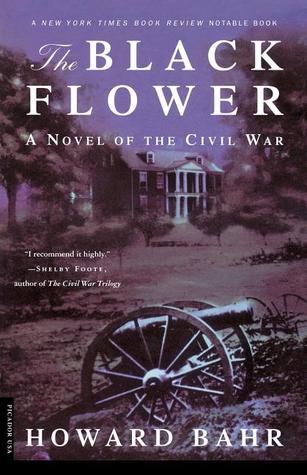
Howard Bahr: The Black Flower (1997) Literature and War Readalong January 2014

The Black Flower

This year’s Literature and War Readalong starts strong with Howard Bahr’s powerful book The Black Flower, a novel on the American Civil War. The book is at times a bit patchy, with an eccentric structure and a style reminiscent of an expressionist novel, but it manages one thing admirably well: bringing the Civil War to life for those who were not there.

The book is set in 1864, before, during and after the battle that took place in Franklin, Tennessee. It is told from different POVs, but mostly we see the story unfold through the eyes of Bushrod Carter and Anna Hereford. But Bahr jumps from them to different others from whose point of view we see a small incident or a chapter. One particularly powerful scene is told from the point of view of a wasp.

Anna stays at her cousin’s house, which will be occupied by the army shortly before and after the battle. It will be turned into some sort of field hospital. That’s where Anna and Bushrod meet and fall in love, amidst the chaos and mayhem.

Before he meets Anna we see Bushrod together with his best friends, Virgil and Jack. They wait for the battle to begin and talk about old times. In the afternoon, in what is one of the best scenes of the book, they bury their dead, together with soldiers from the Union. Meeting them up close, shows Bushrod and his friends once more how alike they are and how absurd it is to kill them.

The Black Flower concentrates entirely on these few people and on what happens to them during a short period of time. The strength lies in the way Bahr magnifies details and in his almost expressionist writing. Passages like the one below reminded me of the paintings of Otto Dix.

In the starlight, and in the torchlight as far as it carried, the dead possessed the violated earth. They were draped all over the parapet, festooned in the osage orange hedges, blown back from the embrasures in meaty fragments. In the ditch before the works they lay in geologic strata of regiments and brigades, piled six and eight and ten deep: an inextricable mass of gray and brown, a tangle of accoutrements and muskets, a blur of faces and claw-like hands. Some were almost naked, torn to shreds by canister and rifle fire, the clothes ripped from their bodies;others lay whole and peaceful, dreaming among their comrades. Here and there, dead men who’d had no room to fall stood upright in the pile, still holding their rifles, their faces still set toward the memory of the vanished foe.

Some of the dead were busy. They twitched and jerked from the violence of their passing, they heaved stubbornly as still-living men tried to push up from underneath. The surface layer of wounded writhed and groaned and implored; the whole pile crawled with movement. Steam rose from the fragments, from open skulls and blue pails of entrails. The smell hung close to the ground in the damp night.

If you don’t know a lot about the American Civil War, this book is not going to give you a lot of information. But it will show you how much it cost in terms of human life, safety, and hope. Every war is horrible, but these early wars, with their mass amputations, and improvised field hospitals have a particularly gruesome side. I don’t think that I was fully aware of this. Bahr also describes very well how tired, dirty and worn-out these men were.

Most of the characters in the book are well rendered. Even the minor characters are carefully described. We feel for all of them. Of course we feel particularly strongly for Anna and Bushrod and when the end of the book comes, it’s quite heartbreaking and unexpected.

I was surprised to find almost modernist elements and an episodic structure in this book, as the novel starts rather conventionally. Once I had finished the book, I realised that Bahr not only manged to paint a canvas of this war, but that he also told a tale of  love and friendship without sugar-coating or glossing over anything.

I’m glad that the next book is also on the American Civil War and that it contains an introduction. Background information on a war I’m not that familiar with, was the only thing I was missing here.

Should anyone wonder  – the title is an allusion to Death.

Other reviews

Danielle (A Work in Progress)

Kailana (The Written World)

*******

The Black Flower is the first book in the Literature and War Readalong 2014. The next book is the American Civil War classic  The Killer Angels by Michael Shaara. Discussion starts on Friday 28 February, 2014. Further information on the Literature and War Readalong 2014, including the book blurbs can be found here.

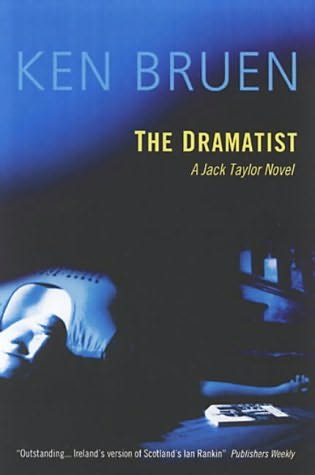
Ken Bruen: The Dramatist (2004) A Jack Taylor Novel

The Dramatist

The impossible has happened: Jack Taylor is living clean and dating a mature woman. Rumour suggests he is even attending mass…The accidental deaths of two students appear random, tragic events, except that in each case a copy of a book by John Millington Synge is found beneath the body. Jack begins to believe that ‘The Dramatist’, a calculating killer, is out there, enticing him to play. As the case twists and turns Jack’s refuge, the city of Galway, now demands he sacrifice the only love he’s maintained, and while Iraq burns, he seems a step away from the abyss.

I probably have to thank Guy (His Futile Preoccupations) for discovering Irish crime writer Ken Bruen as he has reviewed a couple of his books, although not The Dramatist. Bruen has written standalones, one of which London Boulevard, has been made into a movie and he’s written the series, featuring the luckless, loveless, ex-Cop turned PI Jack Taylor.

Jack Taylor is a cynic, disillusioned tough-guy with a good heart. He stumbles through live and his cases, gets beaten up, finds love, loses it again, battles addiction and his demons. All this are ingredients which are quite common in PI series, still I found this to be extremely original. The voice is very unique and the fact that Jack Taylor is a great reader adds an additional layer to the books.

The Dramatist is the fourth in the Jack Taylor series. Jack is newly clean and sober and even gives up smoking in the middle of this novel. It’s not easy for someone like him to stay away from booze as he lives in a hotel and spends most of his free time in bars. At the beginning of the novel he visits his ex-dealer in jail. The guy’s sister was found dead. Allegedly she fell down the stairs but her brother thinks it was foul play and wants Jack to investigate. Jack doesn’t buy the murder idea, but must admit that it’s weird that a book with Synge’s plays was found under the student’s body. When a second student dies the same way, also found with a book by Synge, Jack is convinced as well that it is murder.

I really liked The Dramatist and will read the first in the series soon. The mix between crime, character study and insights into contemporary Ireland and Irish culture worked extremely well for me. The novel is much more about Jack Taylor and his bad luck than it is about the crime, but since I really like this character, I liked the book. I’m tempted to compare Taylor to Marlowe, but I’d say he’s a tad more cynic and much more talkative. While his views on society and his own character are dark, he hasn’t given up the fight. He still hopes for love and a sober life. Maybe this sounds as if this was a one-man show, but it isn’t. Jack has a few enemies, but he also has a lot of friends and a knack to talk with “little people”, which is endearing.