Paris in July – 2011 or French Books, Movies, Art and Music

Paris in July is an event hosted by Book Bath and Thyme for Tea. I think it should appeal to many as you can contribute almost anything as long as it is about something French (not Paris only).

All you have to do is either read a French book, watch a movie, share a recipe, post something on French art or architecture, write a travel piece or share your favourite French music. It is up to you.

I am, as usual, tempted to contribute many things but July is my busiest month work wise, therefore I’ll try to not put the bar too high. But let me share a few plans.

Books

The July’s book for my Literature and War Readalong is Marguerite Duras’ Hiroshima mon amour. I will review the book and the movie.

I’m tempted to read and even re-read some Colette. I have never read her novel La Chatte, it would be a great choice for me. But I might also re-watch Chéri starring Michelle Pfeiffer and finally read the eponymous book as well. Zola’s Le ventre de Paris is also an option especially since there is a certain actuality to the topic as Les Halles, as I knew them all my life, are being torn down at the moment. Now these are just a few choices but my French reading pile is huge, I will certainly find something.

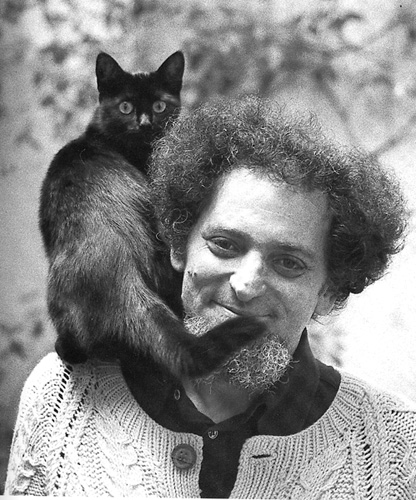
I could also imagine a post on French writers and their black cats.

Movies

I also have quite a little pile of DVDs here. I recently bought a Jean Gabin collection. I already watched Le Quai des Brumes and La Grande Illusion but there are some others that are very good. Another option is watching Les Misérables starring Gérard Depardieu. And I wanted to re watch the movie Paris, je t’aime. Despite it’s title it isn’t very clichéd.

Paris

I wanted to go to Paris in July but my workload will not allow it. Instead of that I might share a few extremely nice books on Paris that I found last year. There are a lot of themed guides around that are really interesting.

Paris: Made by Hand: 50 Shops Where Decorators and Stylists Source the Chic & Unique

Art

My favourite French painter is Gustave Caillebotte. He painted Paris like not many others. I might write in more detail about his work and background.

Music

When I think of French music, the first that comes to my mind is Air. I have all of their CD’s but I’m sure that’s not what people usually have in mind when thinking of French music. I’m also a huge fan of Edith Piaf. And there are many others that I could write about.

I hope this gives you an idea and tempts you as well. If you would like to sign up too here is the link.

On Philippe Delerm’s Blogger Novel “Quelque chose en lui de Bartleby” (2009)

« http://www.antiaction.com est pris d’assaut. Beaucoup de compliments, qu’Arnold a d’abord trouvés
outranciers, mais on s’habitue vite. Ces enthousiasmes sont souvent signés d’un prénom féminin
accompagné d’une adresse e-mail, mais M Spitzweg s’est promis de ne pas répondre. Certaines
correspondantes comprennent cette attitude : “Ne perdez pas votre temps. Continuez seulement à
cueillir le meilleur des jours.” Cueillir le meilleur des jours pour des Stéphanie, des Valérie, des
Sophie ou des Leila, voilà qui n’est pas sans flatter l’ego d’Arnold, même s’il cueille davantage
encore pour des Huguette ou des Denise ». Arnold Spitzweg crée son blog : l’employé de bureau discret jusqu’à l’effacement cède à la modernité mais sans renier ses principes. Sur la toile, à contre-courant du discours ambiant, il fait l’éloge de la lenteur. Ses écrits intimes séduisent des milliers d’internautes…. Comment vivra-t-il cette subite notoriété ?

I have read a few novels by Philippe Delerm and especially Autumn, his historical novel on the life of the Pre-Raphaelite painter Dante Gabriel Rossetti and his muse Lizzie Siddal, is an absolute favourite of mine. As a matter of fact I liked it so much that I keep his second novel on the life of another famous painter (Carl Larsson), Sundborn, unread on my TBR pile. Unfortunately only one of his books, La première gorgée de bière aka The Small Pleasures of Life has been translated into English. It’s a series of impressions and descriptions of life’s little pleasures. I did like it but not as much as his other books, some of which are novels, others are a combination of little sketches and photos (Paris l’instant).

Quelque chose en lui de Bartleby tells the story of Arnold Spitzweg, an invisible little clerk who is working for La Poste in Paris. Originally from the Alsace region he still loves Paris as much as when he first arrived. He lives an uneventful life, dreams of a unlived love affair, has an occasional lover, but all in all he likes to be left alone and just watch life pass. When someone tells him about a new phenomenon called “blogging” his curiosity is piqued. After a few inquiries he immediately starts his own blog in which he notes in minute details all the little things he observes around him, explains his way of seeing life, of enjoying the simple things and staying outside of it all as a pure observer.

It doesn’t take long and his blog has the first comments. After a while there are more and more until he is a real celebrity, even mentioned on the radio. While at first he wrote exactly what he wanted to write, fame makes him self-conscious and he starts to censor himself. When he realises that he doesn’t write for his pure pleasure anymore, he simply stops blogging.

Quelque chose en lui de Bartleby takes place during one hot summer in Paris. While everyone is gone on holidays, Mr Spitzweg, walks all over Paris, discovers and rediscovers streets, places and little corners and enjoys the city to the fullest. Since I love and miss Paris, I enjoyed all these details. They are well captured. And the parts on blogging are really interesting. From the start Spitzweg doesn’t answer comments or only rarely. He wants to be read but he doesn’t want to get in contact with his readers. I have noticed that there are quite a few bloggers like that out there. I often wonder what is in it for them. The reasons for blogging are probably as numerous as the bloggers who write the blogs. On the other hand I know from my own experience that a blog that gets many comments doesn’t necessarily have many readers, and you may have numerous readers but hardly any comments. I know that I wouldn’t want too many comments as I want to respond to each and every one. The more, the harder. It’s as simple as that. I’m not a crowd person and the people I call “friends” are well-chosen. The same goes for my blog, I suppose. I “know” those who leave comments on my blog. It’s not a crowd of strangers that I cannot place.

I could really understand Mr Spitzweg when he started to feel self-conscious. It did happen to me a few times. Fortunately I got rid of it but occasionally (on my German blog) I have thoughts like “Who is going to want to read this?” or “Oh my, what are they going to think?”.

And what about Bartleby? In the novel Arnold Spitzweg thinks that we are all a little bit like Bartleby and since he emphasized this so much I thought I need to read Melville’s novella. The review will follow tomorrow.

I’m not sure whether what I wrote made it obvious or not but I really liked this little novel. It isn’t one of his best but it contains everything I like in Delerm and I liked his character Spitzweg a lot. He is a very gentle and atypical man who gets picked on quite a lot. Especially by other men. There is also a little bit of gender discussion hidden underneath it all.

Delerm’s novel is not the first blogging novel I saw. I think Joanne Harris has written one and I vaguely remember another one. Has anyone read a novel about blogging?

Balzac: Le Colonel Chabert aka Colonel Chabert (1832/1844)

Balzac’s radiant story recounts the history of Colonel Chabert, a disenfranchised hero of the Napoleonic wars. Left for dead on the battlefield of Eylau, Chabert has spent years as an amnesiac in an asylum. The novel begins with his return to the life he left behind: only to discover that in his absence, his entire life – family, society, identity – has changed. With Napoleon deposed, France’s aristocracy has returned to power ‘as if the Revolution never occurred’. With Chabert supposedly dead, his wife is now married to a Count. Sickened by his wife’s pretence not to recognise him, and the titled society which spurns his former meritorious deeds, Chabert vows to recover his money, his reputation and his name.

A few years back I went through an intense Balzac phase reading one of his novels after the other. Still there are so many left I haven’t read and one of them was Le Colonel Chabert (or Colonel Chabert in English). I always thought it was much longer, probably because the edition I have contains other books as well. Or because of its notoriety. I think it is one of the most famous of his works.

Le Colonel Chabert is one of the books from the Scènes de la vie privée. Those who are familiar with Balzac know that the vast canvas of his work which he called La Comédie Humaine is organized in groups depending on the setting or themes.

Balzac has written an impressive amount of books. Some were serialized and written for the newspaper, like Splendeurs et misères des courtisanes, and the writing is not subtle at all. As wonderful as his plots, characters and topics usually are, his style is occasionally lacking. I was pleased to see that Le Colonel Chabert is, from a purely literary point of view, one of his best. It was published twice, first in 1832 under the name La transaction and then again in 1844.

Colonel Chabert is one of Balzac’s most tragic figures, a man who had everything and lost it all. To a certain extent the figure of Colonel Chabert whose fate is tied to that of Napoléon, also mirrors the emperor’s fate. Like Napoléon himself, he knew fame and glory and lost it all.

The novel opens on a scene of lively banter among several clerks who work for a young and promising lawyer. This scene is Balzac at his very best. With a few words he captures mediocrity. Into this setting enters a man who looks like a ghost. An old and broken man, poorly dressed, weak and ailing. When he asks to see Derville, the young lawyer, they make fun of him. And even more so when he tells them that he is the Colonel Chabert. Everybody knows that this cannot be as the Colonel has died in the battle of Eylau. His much deplored death has even been confirmed by Napoléon himself. His wife has remarried and born two children to a new husband. His fortune has been divided. The man standing in front of them cannot be the dashing looking colonel. This is an old man who seems to have seen nothing but poverty and misery.

The clerks who do not believe the old man send him away and tell him to return at one in the morning, the only hour during which the lawyer receives his clients.

When Chabert returns Derville is gruff at first but he is not only an ambitious young man, he is also very intelligent and kind-hearted. He pities the poor man and allows him to tell his story.

The Colonel who has shown Derville the deep scar on his skull, tells him how he was mortally wounded by a sabre, who almost split his skull in two. Buried under his horse who had been killed, he wasn’t trampled by the fleeing army but left unconscious. When they finally discovered him, they declared him dead and buried him. He regained consciousness later in the grave and managed to dig himself out from underneath corpses, earth and snow. This is a truly creepy scene that reminded me of an Edgar Allan Poe story.

Illustration de Le Colonel Chabert

(La bataille d’Eylau by Antoine-Jean Gros)

Ten years have passed since that episode. Ten years of suffering and erring during which the Colonel wrote to his wife a few times. Hoping to make a better marriage she pretends not to believe that he is alive. Chabert finally decides to ask for help and wants the young lawyer’s assistance in claiming back his wife and his considerable fortune.

His former wife, now the Countess Ferraud, is one of the ugliest characters of Balzac whose novels are full of greedy, vile people.

I will stop my summary here and just tell you that the outcome isn’t exactly what we expect.

I am not sure if it would be ideal to start reading Balzac with Le Colonel Chabert. I usually recommend Le père Goriot or La cousine Bette. Once you are more familiar with Balzac’s themes and characters you will realize how unique this book is. It is very short but extremely complex and a lot of allusions to French history are almost crammed into it. To fully comprehend the story it is good to know something about French history.

I’m looking forward to watch the movie one of these days as it seems to be very good as Guy Savage writes in his review of the book.

My favourite Balzac is Les illusions perdues aka Lost illusions, followed by La cousine Bette aka Cousin Bette. Which one do you like?

Colonel Chabert (Hesperus Classics)

Roger Martin du Gard: Confidence africaine aka African Secret (1931)

Confidence africaine

Roger Martin du Gard, one of the less famous French Nobel prize laureates is mostly known for his huge eight-part novel cycle Les Thibault, the story of a family from the turn of the century until the end of WWI. Almost all of his efforts have gone into this immense work. Apparently it was Tolstoi’s War and Peace that triggered his writing. I was always interested in du Gard but I didn’t dare diving into that ocean called Les Thibault. I am sure this is wrong as its most prominent features  are the wide range of human relationships and the graphic realism of the sickbed and death scenes which would fascinate me. And I would be especially interested in the seventh volume, L’Eté 1914 (“Summer 1914”), that contains the dramatic description of Europe’s nations being swept into war.

Roger Martin du Gard  wrote a few lesser known books one of which is Confidence africaine, a short piece of fiction of barely 80 pages. It is short but wonderfully accomplished. The narrator, called du Gard, visits a friend’s son in a sanatorium. In the sanatorium he meets the Italian Leonardo who visits his nephew Michele. Leonardo and his family live in North Africa. They own a library. Some months later du Gard visits him when travelling in Northern Africa and stays at their house. Leonardo lives with his sister and her husband under the same roof. When du Gard’s stay ends both men take a ship and set over to France. During a long, warm and enchanted night, Leonardo tells du Gard the secret of his incestuous relationship with his sister. This is told as if it was the most natural thing in the world. It is neither analyzed, nor rationalized, just told. It seems though as some of the sad developments that took place in their lives are considered by Leonard to be related to the incest.

I was wondering if du Gard, who was a friend of André Gide and also homosexual, meant to question what we tend to call deviant sexuality. I don’t know that much more about his biography to be sure. The topic of homosexuality and  sexuality in general, temptation, religion etc. is recurring in his books. Many of the protagonists in his novels have issues with the Roman Catholic faith. This novella could be seen as a variation on that theme.

The scene on the boat is extremely well written, and the whole novella is masterful but I can’t say I liked it. I found the story too odd. It is one of the novels the protagonists of Katherine Pancol’s novel rave about (see my post) and it is generally much liked in France.

What I know for sure is that I am still extremely tempted to read Les Thibault.

Thierry Dancourt: Hôtel de Lausanne (2008) French Prize For First Novel

Au cimetière du Trocadéro, un homme et une femme s’assoient sur un banc. Le vent souffle, elle n’arrive pas à allumer sa cigarette, ils entament la conversation. Elle s’appelle Christine, vit un peu hors du temps, entre un père obsédé par les mappemondes et un fiancé qui semble ne pas beaucoup compter. Lui, Daniel, parcourt le monde à la recherche d’objets anciens. Entre eux se noue une relation à part, clandestine, dans un Paris enneigé et brumeux. Du XVIe arrondissement à Casablanca, une galerie de portraits se dessine, mais une figure domine, entre ombre et lumière, celle, singulière et attachante, de Christine Stretter.

A man and a woman meet at the cemetery du Trocadéro in Paris. She tries to light a cigarette but the wind and the rain are too strong. They start to talk as if they had known each other forever. Christine lives outside of our daily world between a father obsessed with maps and  a fiancé who is never there. Daniel is an antiquarian and travels the world. They will start to meet in hotels all over Paris and in the province.

Dancourt won the French prize for first novel and I am pretty sure he will be translated. This little book is far too wonderful and will be highly appreciated by people everywhere as it is also an homage to the city of Paris. Without knowing it ( I looked it up later) I knew that Dancourt is not a Parisian. Parisians do not render their city so lovingly. Only people from abroad and the homesick ones who live in other countries would describe it with such great detail.

Reading this filled me with a terrible longing. Missing a city is not much better than missing a person. On the other hand, the Paris of this book has an otherworldly quality and charm that the struggle of daily life, commuting etc. destroys sooner or later. This is the Paris we love to dream about, the town we would love to live in if we did not have to go to work every day.

Hôtel de Lausanne tells also a very lovely story in the typical French manner of not revealing too much. The people in this novel keep their mystery until the very end. We can only assume why they do this or that, it is never explained or analyzed.

Christine is engaged when she meets Daniel and even though their relationship is very profound and magical she still gets married to her fiancé as she always wanted to get married very young (she is only 21). The funny thing, even though this feels wrong on a logical level, it feels right emotionally. One has never the feeling of reading a book about an adulterous woman. And one never questions her choice. I never even wondered why she wasn’t getting married to Daniel if they were so close.

I liked this aura of mystery that encloses the people and the many descriptions of Paris, its little cafés and bars. Those typical little cafés no tourist would ever go to but where the people living close by, the so-called  “habitués” will come every day, drink and eat and chat. Village-like coziness of big cities where you end up staying in your quartier unless you go to work. Christine and Daniel have their favourite places, where people know them and treat them like a couple and where they occasionally also meet someone who knew Christine’s mother. A haunting figure of whom we try to catch a glimpse as hard as Christine tries herself.

Hôtel de Lausanne is a very enchanting novel and I will certainly read more of Dancourt (his second novel Jardin d’hiver has just been published). As stated before I am pretty confident this will be translated. It simply has to.

Boileau-Narcejac: The Fiends/The Woman Who Was No More aka Celle qui n’était plus/Les diaboliques (1952)

Boileau-Narcejac, the French writer duo, are for France what Simenon is for Belgium or Agatha Christie for the UK. They are not traditional crime writers though. Solving the mystery is not the main interest when reading them. What they are famous for is the twist in the stories. The combination of the spooky with the suspense. The density of the melancholic atmosphere. Their writing is a cinematographic one. Once you open one of Boileau-Narcejac’s psychological thrillers you feel as if you were in the middle of a movie. No wonder their books were made into movies. The most famous one is certainly Hitchcock’s Vertigo that was based on their D’entre les mort/Sueurs froides aka The living and the dead.  The second most famous one is Cluzot’s Les diaboliques that was later remade starring Sharon Stone and Isabelle Adjani. It will not be easy to find English translations of their work. They are out of print, I guess. This book is no exception but it is worth trying and libraries should have them, I am sure.

Sit back, open the book and let yourself be enchanted by this atmospheric, haunting tale in which there is a lot of dense fog along dark, sparely lit piers. The lanterns illuminate the quay only barely and inside the house you see a couple, Ravinel and his lover Lucienne, planning the murder of Ravinels’s wife. They are after her life insurance. Lucienne who is a doctor has planned it carefully. They will give Murielle an anesthetic and drown her in the bath. Ravinel is a salesman. He works in Nantes but lives near Paris.  They trick Murielle into coming to Nantes, kill her and drive with her body back to Paris where  they dump her in a river. But this is only the very beginning of the story. If Murielle is dead, how come she is writing letters to Ravinel? Ravinel knows the answer. She is a ghost. Isn’t she? The second part of the story takes place in  Paris which gives the writers the opportunity for detailed descriptions of little smoky bars and cafés, old, dark houses. The way they describe a Sunday morning in a house, with all the different noises, children screaming, radios blaring and the smells of coffee and breakfast is wonderfully evocative.

There will be much more confusion in this book and the end is quite astonishing.

Boileau-Narcejac are masters of their art. If you have ever seen one of those French movies, maybe Le quai des brumes with  Jean Gabin, then you know the feel. There is a certain visual simplicity that is highly atmospherical. A solitary lamppost on an empty street, its yellow halo penetrating the fog. A lonely person in a room smoking and thinking. The pictures are simple but the feelings are complex. Their writing is economical and highly efficient at the same time.

I would really like to encourage you to discover these great writers.

Since I am not sure if I finish my German book/books for R.I.P. I count this as Peril The Third.

Celle qui n’était plus amazon.fr