Winner Announcement – German Literature Month Giveaways – Late Fame and A Bell for Ursli

german-literature-month-vi

comparison

It’s Monday and I’m happy to announce the winners of my giveaway.

The winner of Arthur Schnitzler’s Late Fame is Jonathan.

The winner of A Bell for Ursli is Travellin’ Penguin.

Congratulations to both of you.

Please send me your address via email

beautyisasleepingcat at gmail dot com


German Literature Month Giveaways – Late Fame by Arthur Schnitzler and A Bell For Ursli by Selina Chönz

german-literature-month-vi

Today I’m giving away two very different books. 

a-bell-for-ursli

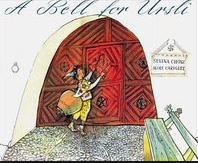
The first book is the miniature edition of one of the most famous Swiss picture books A Bell for Ursli.

“A Bell for Ursli” is a classic Swiss children’s story, with pictures by award-winning Swiss illustrator Alois Carigiet. Ursli is a little boy who lives in the Swiss Alps. He must find a big cowbell so that he can lead the spring procession through his village, so he goes alone to his family’s chalet high up in the mountains. There, he spends a lonely, scary night. Generations of Swiss children have grown up with Ursli but this is the first time his adventures have been widely available in English.


late-fame

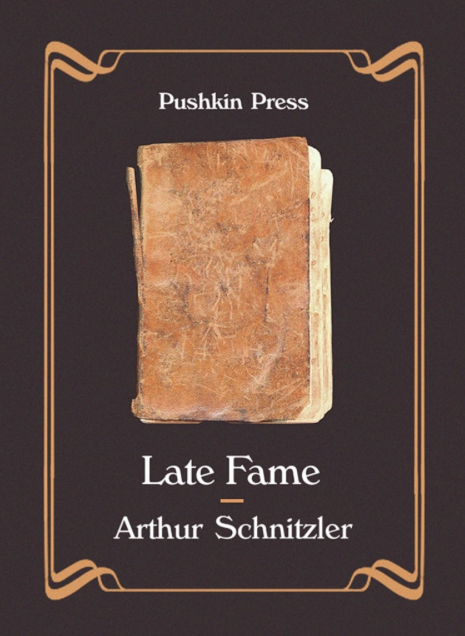
The second book I’m giving away is Arthur Schnitzler’s Late Fame.

Here’s what is written on Pushkin Press’ site:

First English publication of a recently rediscovered novella by one of the greatest European writers

One seemingly ordinary evening, Eduard Saxberger arrives home to find the fulfilment of a long-forgotten wish in his sitting room: a visitor has come to tell him that the youth of Vienna have discovered his poetic genius. Saxberger has written nothing for thirty years, yet he now realises that he is more than merely an Unremarkable Civil Servant, after all: a Venerable Poet, for whom Late Fame is inevitable – if, that is, his new acolytes are to be believed…

Arthur Schnitzler was one of the most admired, provocative European writers of the twentieth century. The Nazis attempted to burn all of his work, but his archive was miraculously saved, and with it, Late Fame. Never published before, it is a treasure, a perfect satire of literary self-regard and charlatanism.

*******

If you would like to win a copy of one of these books, please leave a comment. The only thing you have to do is to tell me why you’d like to win this book.

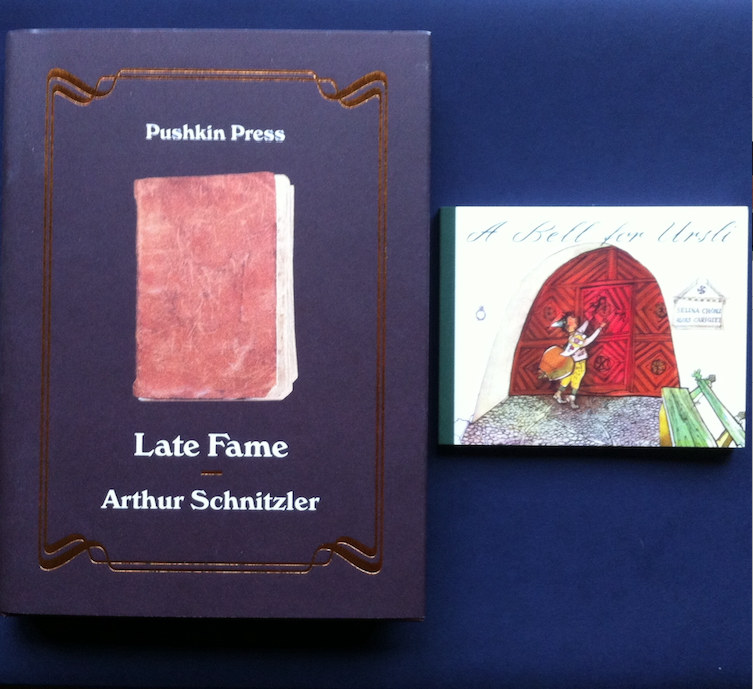
Please be aware that the picture book is tiny. To give you an idea, I took a photo together with the second book I’m giving away.

comparison


The giveaways is open internationally. I’ll announce the winners on Monday 21 November 17:00 – Western European time.


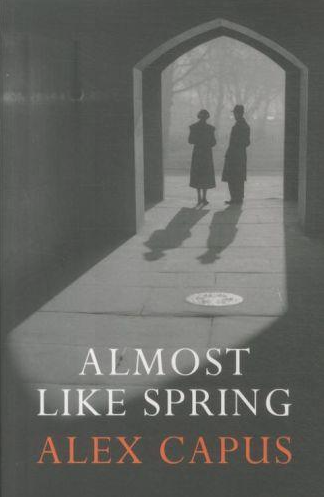
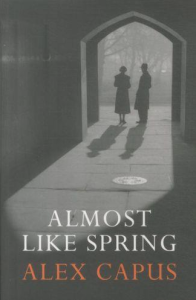
Alex Capus: Almost Like Spring – Fast ein bisschen Frühling (2002)

almost-like-springfast-ein-bisschen-fruhling

I wanted to post every other day during German Literature Month as I’ve read so many books in advance but last week was such an awful week. First the shocker election, then Leonard Cohen’s death, then the death of the brilliant Austrian writer Ilse Aichinger. So depressing. I’m sure many people feel the same way. Despondency may not be helpful but sometimes it needs room and needs to be acknowledge before we can move on.


cohenaichinger

I’ve not read any books by Alex Capus so far. I thought I wouldn’t like his writing but I’m glad to say, he’s so much better than I expected. I picked Almost Like Spring – Fast ein bisschen Frühling because it’s set in Basel, Switzerland. As many of you know, I live in Basel. There aren’t a lot of books set in this city, so I was curious because of that too.

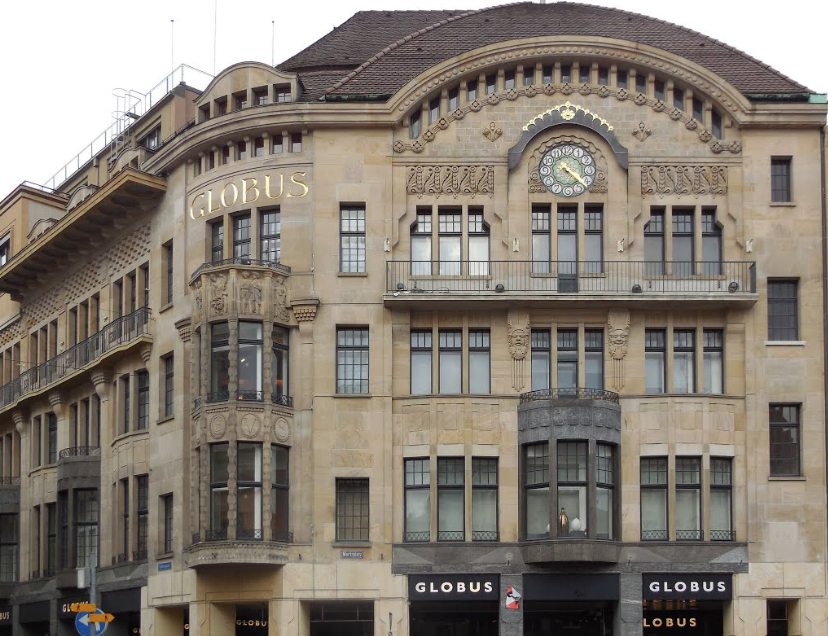
As Capus writes at the beginning of his novel, Almost Like Spring tells the true story of the German bank robbers Kurt Sandweg and Waldemar Velte. Fleeing from Wuppertal, Germany after having robbed a bank and killed someone, they arrived in Basel in the winter of 33/34. The plan was to flee to India but one of them fell in love with a shop girl, Dorly Schupp, who was working in the record department where the two robbers bought Tango records. Dorly worked at Globus, a department store that still exists and is known because it’s one of the rare Jugendstil buildings in Basel.
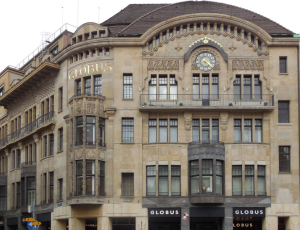
globus

Sandweg and Velte are depicted like two rebels and compared to Bonnie and Clyde. At any other time, one would have simply called them anti-social, but the way Capus depicts them, they were victims too. They robbed a bank because they were desperate, without a job and seeing no future in a Germany where the Nazis were taking over power. Sandweg and Velte are a peculiar pair; they are so close that people think they might be lovers but what they share is rather a bit like a folie à deux. In their heads, they’re on a mission – fighting poverty and injustice. One of them falls in love with Dorly, the other one with one of her colleagues— Alex Capus own grandmother. While the pair is in Basel, they buy a Tango record every day and go for long walks through the old town and along the Rhine, accompanied by the two young women.

The descriptions of these walks are lovely. The way Capus describes the weather, the cold winds from Siberia, and how it can get warm again, all of a sudden, in the middle of winter, because those winds change course and warm winds from the south arrive, is so spot on. The four young people don’t do much on these walks, but all four of them feel free. Dorly lives with her elderly mother, while Capus’ grandmother is engaged and will soon marry a man she never really liked. The two women don’t know that the men are criminals and when they finally leave Basel, they are disappointed.

Unfortunately, the plan to take a ship to India doesn’t work and a couple of weeks later, after having stayed in Spain, the two men are back in Basel and the real tragedy begins. They rob another bank, kill people, and are hunted down.

Most critics haven’t found anything good to say about this novel. I’m not sure why. Is it the tone? Capus mixes fact and fiction. He stays outside of his character’s heads, which makes it sound like a report at times, but the book is rich in mood and atmosphere. He captures the times and women’s fates so well. What choices did they have back then? Dorly’s actually living a relatively independent life, but Capus’ grandmother, who isn’t from Basel, is expected to return home soon and get married. While the storytelling is a bit dry, the mood is anything but.

I’m not sure about the descriptions though. Readers who haven’t been to Basel may be able to picture the department store Globus but the city? I don’t think so because he mentions street names but doesn’t really describe them.

Be it as it may, sometimes I agree with critics, sometimes I don’t. In this case I don’t agree. Almost Like Spring is a lovely book. It’s a rounded, historically accurate, atmospheric book that mixes fact and fiction to great effect.

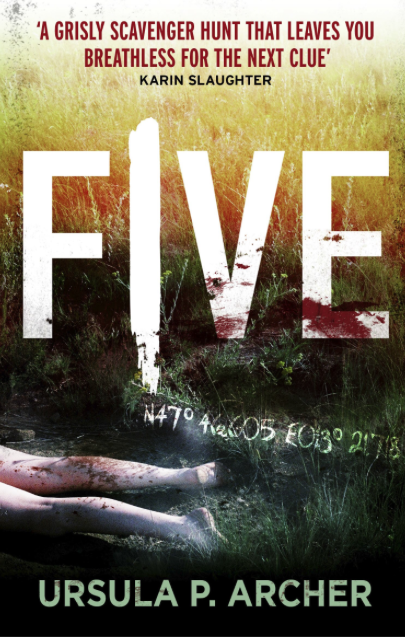
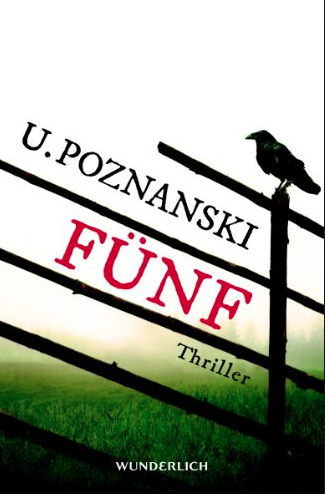
Ursula P. Archer aka Ursula Poznanski: Five – Fünf (2013)

fivefunf

Last year I read Ursula Poznanski’s YA thriller Erebos and liked it a great deal. When Lizzy mentioned that one of Poznanski’s crime novels for adults had been translated, I knew I had to read it. Not that I read it in English, of course not, but it’s always nicer to review books that have been translated.

Five – Fünf, the first in a series, introduces detectives Bea Kaspary and Florin Weininger of the Landeskriminalamt in Salzburg, Austria. They have been called to an unusual crime scene – a cow pasture. A woman has been found dead. Her hands tied in the back. She has been thrown from a small mountain overlooking the pasture. On the soles of her feet, they find a tatoo of strange numbers, which turn out to be coordinates. Those will lead them to a severed hand and more co-ordinates, which lead to another body part and other coordinates. The second set of coordinates aren’t added in the same straightforward manner as the first. They can only be found after the detectives solve a riddle for which they need to find someone. As if finding body parts wasn’t bad enough, the people who are the clues to solve the riddles, get killed as soon as they have been found by the police.

Five is very well done. It’s extremely suspenseful and, like in her YA novels, Ursula Poznanski/Archer uses a type of game or hobby – in this instance geocaching. I’d never heard of it but it seems that the author herself is a dedicated geocacher. Geocaching uses coordinates and hiding places. On a website you find coordinates and can then hunt a hidden object. The objects are often hidden in beautiful places. So it’s a bit of a mix between hiking and some sort of treasure hunt. It’s a trademark of Poznanski’s writing to use such modern-day games/technology as a base—computer games, live role-playing, drones . . .

I can’t say too much but although this sounds like a serial killer story, it’s not. Nonetheless, it’s quite gruesome in places.

Since this is the beginning of a series, the characters are very important. The detectives are very likable and well drawn. Bea is a mom of two, newly divorced from a bullying husband and still deeply traumatized by something that happened in her past. Florin is single but just started to date someone. That’s important because Bea clearly has a bit of crush on him. They work very well together, are almost friends. Bea is rather unconventional and gets into trouble with her superiors while Florin looks out for her and defends her.

One could call Five a crime novel with thriller elements. It’s very suspenseful and should appeal to many different crime readers – those who prefer thrillers, those who like a mystery, and those who love police procedurals. It has Poznanksi’s trademark mix of likable characters, impeccable pacing and contemporary feel. None of her novels could have been set at another time. I like that. She explores many themes in this book but they are tied so closely into the motive for the murder that I cannot say too much. If you’re looking for a suspenseful page-turner and love crime series, give this one a try.

If you’d like to find out more about geocaching – here’s a link.

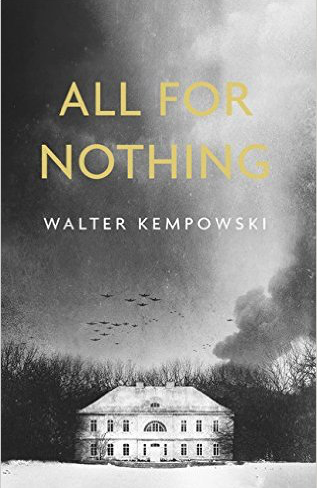
Literature and War Readalong November 2016 Meets German Literature Month: All For Nothing – Alles umsonst by Walter Kempowski

All For Nothing

The last title of this year’s Literature and War Readalong is Walter Kempowski’s All For Nothing – Alles umsonst. It was Kempowski’s last novel. Walter Kempowski was born in 1929 in Rostock and died in 2007 in Rotenburg. He was famous for his autobiographical novels, one of which Tadellöser & Wolff, was made into a mini-series, and his huge project Echo Soundings – Echolot, subtitled “A collective diary”. In this project he collected and juxtaposed excerpts of diaries, letters ,and documents to illustrate and capture history.

Here is the first sentence of All for Nothing

The Georgenhof estate was not far from Mitkau, a small town in East Prussia, and now, in winter, the Georgenhof, surrounded by old oaks, lay in the landscape like a black island in a white sea.

And some details and the blurb for those who want to join

All For Nothing – Alles umsonst by Walter Kempowski, 352 pages, Germany 2006, WWII

Here’s the blurb:

Winter, January 1945. It is cold and dark, and the German army is retreating from the Russian advance. Germans are fleeing the occupied territories in their thousands, in cars and carts and on foot. But in a rural East Prussian manor house, the wealthy von Globig family tries to seal itself off from the world. Peter von Globig is twelve, and feigns a cough to get out of his Hitler Youth duties, preferring to sledge behind the house and look at snowflakes through his microscope. His father Eberhard is stationed in Italy – a desk job safe from the front – and his bookish and musical mother Katharina has withdrawn into herself. Instead the house is run by a conservative, frugal aunt, helped by two Ukrainian maids and an energetic Pole. Protected by their privileged lifestyle from the deprivation and chaos around them, and caught in the grip of indecision, they make no preparations to leave, until Katharina’s decision to harbour a stranger for the night begins their undoing. Superbly expressive and strikingly vivid, sympathetic yet painfully honest about the motivations of its characters, All for Nothing is a devastating portrait of the self-delusions, complicities and denials of the German people as the Third Reich comes to an end.

*******

The discussion starts on Friday, 25 November 2016.

Further information on the Literature and War Readalong 2016, including all the book blurbs, can be found here.