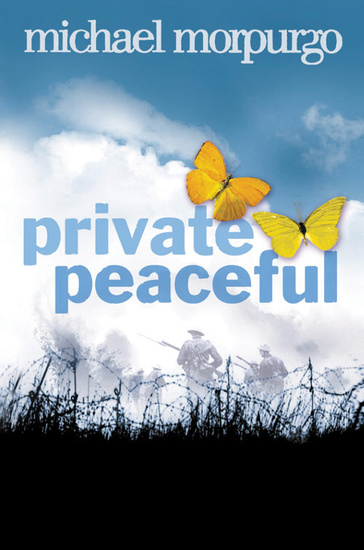
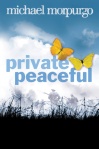
Michael Morpurgo: Private Peaceful (2003) Literature and War Readalong May 2014

Private Peaceful

British author Michael Morpurgo is one of the most appreciated writers for Children. He was the UK Children’s Laureate from 2003 to 2005 and Writer in Residence at the Savoy Hotel in 2007. He won many prizes for his fiction.

Tommo Peaceful is the narrator of Private Peaceful. He begins his story at five past ten in the evening, after everyone else has left him. He awaits the next day with anxiety but he doesn’t want any company or distraction. He wants to spend the night thinking about his life. The chapters are all given a specific time and each intro to the chapter describes briefly Tommo’s surroundings and his state of mind. After the intro Tommo tells us in flashbacks his story, from the idyllic childhood in the English countryside to the trenches of WWI.

Tommo is one of three boys. At the age of nine his father dies in an accident and Tommo feels responsible for his death. Although he and his older brother Charlie are very close, he never mentions what happened in the woods, the day their father dies. They have an older brother Big Joe who had Meningitis as a child. He can’t go to school and is easily agitated but they are still very fond of him.

Their father’s death marks a transition from a carefree life to a life of some hardship. They are at the mercy of the Colonel in whose cottage they live. The cottage is tied to a function and after the death of the father, who was the forester, they would have to leave. The Colonel’s estate is big and many people and families work for him and so Tommo’s mother is offered a position at the big house, and they can stay in the cottage.

The years go by and there is happiness and heartache in equal measures. When WWI breaks out, they don’t think they are affected. Tommo is only 16 and Charlie, who is two years older, doesn’t think of volunteering but in the end they are forced. Although Tommo is too young, he doesn’t want to abandon Charlie and pretends he’s older. Finally they are shipped to France together. From there they move on to Belgium and stay near Ypres for the following months.

They don’t see any action at first but eventually they come under heavy fire. From then on we get an impression of everything that was typical or important during WWI: trench warfare, mustard gas, rats, rain, mud, high numbers of casualties among men and horses, arbitrariness of orders, sadism of the high command, absurdity of it all . . . While it’s usually key to show but not tell, Morpurgo often tells but doesn’t show. He stays away from graphic descriptions or anything that you could call gruesome. We still get the horror because we see how it affects Tommo. Most of the time, we just don’t get to see what he sees. I think that’s a great way to go in a Children’s book.

What works particularly well in the book is the contrast between the childhood and teenage years and the war scenes. Morpurgo takes a lot of time to introduce us to his characters and to make us care for them. While some of the secondary characters are a bit stereotypical, the main characters Charlie and Tommo are well-developed. Their relationship is very close and they would give everything for each other.

As I wrote in the introduction to this month, I was particularly interested to see how a Children’s author would handle a WWI book from the point of view of a soldier. I think Michael Morpurgo did an admirable job. I’m sure, children will get a good impression for the particularities of WWI. And they will care for the characters and feel deeply about the end. For an adult reader who has read some very similar books for adults – Strange Meeting and How Many Miles to Babylon come to mind – it was not exactly a huge revelation, but in spite of that, I found the twist at the end harrowing.

Other reviews

Danielle (A Work in Progress)

 Judith (Reader in the Wilderness)

*******

Private Peaceful is the fifth book in the Literature and War Readalong 2014. The next book is the WWI novel Fear – La Peur by Gabriel Chevallier. Discussion starts on Friday 27 June, 2014. Further information on the Literature and War Readalong 2014, including the book blurbs can be found here.

Literature and War Readalong May 30 2014: Private Peaceful by Michael Morpurgo

Private Peaceful

Michael Morpurgo is a famous British Children’s author. Some of you may know him from the Spielberg movie War Horse, which was based on one of his novels. I’ve had Private Peaceful on my piles for a while and I’m really keen on reading it finally. I’ve always wondered how you write about war for children. Especially from the point of view of a soldier. We’ve read the Dutch novel Winter in Wartime last year, but that was set among civilians. So I’m curious to find out how explicit the book will be and where Morpurgo draws the line.

I’m glad that CarolineD made me aware that Private Peaceful and My Dear I Wanted to Tell You (our choice for September) have been chosen by CityRead London 2014. CItyRead London is a project to promote reading across the UK capital.

Here are the first sentences

They’ve gone now, and I’m alone at last. I have the whole night ahead of me, and I won’t waste a single moment of it. I shan’t sleep it away. I won’t dream it away either. I mustn’t, because every moment of it will be far too precious.

And some details and the blurb for those who want to join

Private Peaceful by Michael Morpurgo (UK 2003)  WWI, Children’s Book, 192 pages

Heroism or cowardice? A stunning story of the First World War from a master storyteller.

Told in the voice of a young soldier, the story follows 24 hours in his life at the front during WW1, and captures his memories as he looks back over his life. Full of stunningly researched detail and engrossing atmosphere, the book leads to a dramatic and moving conclusion.

Both a love story and a deeply moving account of the horrors of the First World War, this book will reach everyone from 9 to 90.


*******

The discussion starts on Friday, 30 May 2014.

Further information on the Literature and War Readalong 2014, including all the book blurbs, can be found here.

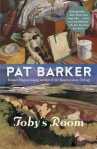
Pat Barker: Toby’s Room (2012) Literature and War Readalong April 2014

Toby's Room

I’ve been procrastinating all morning. Every time I sat down to write this review I had something very urgent to do. Read the afterword of Fire and Hemlock, read the news on the Ukraine, get a cup of tea, look for cat number 2, read more news on the Ukraine, read the guardian review of Toby’s Room, urgently hunt for a book voucher, read the NY Times review of Toby’s Room, call my best friend in Odessa. I think you get the drift. Anything but writing the review.

Why?  Because I’m far from happy about this book and because I’m going to say what the critics didn’t say: it’s a mixed bag and despite a lot of good elements – mainly the choice of topic – it’s pretty much a failure or – even worse – a dishonest attempt. Still, it would be a great book club pick, as its strengths are topics and characters. That’s why I think it was a good choice for our readalong and if a few people read it, the discussion should be interesting.

So what’s Toby’s Room about? Thanks to the Guardian review, I was made aware that the title is an allusion to Virginia Woolf’s Jacob’s Room, the novel which she wrote after her brother Thoby died in WWI. It’s not surprising then that Virginia Woolf has a cameo appearance in Toby’s Room. I’ve read Jacob’s Room too long ago to make the connection, but I’m tempted to revisit it.

Elinor and her brother Toby are close, too close, one could say. One afternoon, in 1914 they spend a night together. This is deeply traumatizing for Elinor, although she’s not a victim in the whole encounter. Later when they are both in London, Elinor studying to become a painter, Toby to become a doctor, their relationship is strained.

In 1917 Toby’s reported “Missing, believed Killed”, which affects Elinor deeply. Until that day she tried to avoid thinking of the war but the death of her brother and the uncertainty of the circumstances, propel her right into it.

When Elinor finds a letter her brother wrote shortly before his death, mentioning Kit Neville, a famous painter, knows what happened to him, she barges in on Neville who’s at a hospital for soldiers with facial wounds. She disregards his state and unease and tries to force him to confess what happened. To no avail.

The second part of the novel sees Elinor join Tonks, her former teacher. Tonks is a painter and surgeon who helped a great deal in giving back some sort of face to those who had been severely disfigured. Part of his and Elinor’s work consists in drawing the wounded men before, during and after surgery. The gallery of this drawings can be visited online here (I managed to look at two).

Neville doesn’t confess to Elinor, he will confess to the far more sympathetic Paul, Elinor’s lover, whose story is told in Barker’s Life Class.

Pat Barker is famous for blending fact and fiction, for introducing us to important topics – I shy away from calling facial reconstruction “fascinating” as she herself does in her afterword – and for addressing the complexity of WWI. And she’s a very good plotter. The book reads like crime fiction. From the very beginning we are drawn along, running like donkeys after a carrot, to find out “Whatever happened to Toby?” I’m grateful for Pat Barker’s plotting skills, it made for quick reading, but when the juicy carrot I’d been hoping for proved to be a shriveled scrap, I felt let down. I didn’t buy the end. It wasn’t believable for me, but very much in line with the sensationalist beginning.

My biggest problem however was that she felt she had to start with an incest. Why was that necessary? I can relate to someone’s attachment to their brother, I didn’t need an incest to understand that they were very close and that their relationship was far from uncomplicated. This leads me to another problem I had with the book – heavy-handed foreshadowing.

Before I move on to the good parts, let me just say that I found Elinor a off-putting character. Not only did I despise her for blocking out the war, but for being so insensitive. In a way, the novel wants to tell us, it’s that character trait that made her useful. If she’d been more emotional, more sensitive, she wouldn’t have been able to draw the atrocities she saw. I don’t think that is true. I think there are people capable of deep empathy who can still do work like that.

What I liked about this novel, besides its suspenseful readability, was the choice of topics. I’d never heard of Tonks before and I found it interesting how the novel showed that the painters had to document everything in great detail but that they knew it would never be shown publicly. Some of the other painters mentioned painting landscapes as a metaphor. The war can be shown metaphorically but not realistically.

Neville isn’t a sympathetic character either but he’s a great character nonetheless. His story illustrates how hard it was for people to handle seeing facial mutilations. It was so hard that they often ceased to think about the person who was “behind” the disfigurement. They seemed to have lost their humanity with their faces and thus the repulsive reactions of the people were only occasionally questioned.

The more I read, the more I was wondering whether the fact that these injured men were sent to hospitals outside of cities was not so much for their own good as for the good of the population. These parts were done admirably well in the novel and the juxtaposition with scenes in which Elinor learns how to become a better painter through anatomy lessons and dissecting a corpse is great as well.

As a whole however I would say that this novel with its shifting POVs and sensationalist beginning and ending, is a failure. But a very thought-provoking failure.

I’m curious to hear the thoughts of others. Did you think the incest was a good choice? And what about the many different POVs and Elinor’s diary?

Other reviews

CarolineD

Danielle (A Work in Progress)

Maryom (Our Book Reviews)

The Mole

*******

Toby’s Room is the fourth book in the Literature and War Readalong 2014. The next book is the WWI novel  Private Peaceful by Michael Morpurgo. Discussion starts on Friday 30 May, 2014. Further information on the Literature and War Readalong 2014, including the book blurbs can be found here.

Literature and War Readalong April 28 2014: Toby’s Room by Pat Barker

Toby's Room

With Pat Barker’s novel Toby’s Room, we’re leaving the American Civil War behind and move on to WWI. All the books following Toby’s Room are dedicated to WWI.

Pat Barker is one of my favourite writers and her Regeneration Trilogy one of my favourite books. I read all three volumes (RegenerationThe Eye in the DoorThe Ghost Road) back to back and was genuinely sad when I turned the last page. It wasn’t only a story about WWI, but about shell shock, the development of two young disciplines (anthropology and psychiatry) and some of the famous poets who fought in the trenches. My love for her trilogy prevented me from picking up any of her other books, but now, some six years after I’ve read her masterpiece, I’m in the mood, to find out how I will like another of her novel. The scope of Toby’s Room is much smaller, the topics not as varied, but I still hope I won’t be disappointed. As far as I can judge from the blurb, Toby’s Room is a harrowing tale, touching on themes like disfigurement and facial reconstruction.

The first paragraph

Elinor arrived home at four o’ clock on Friday and went straight to her room. She hung the red dress on the wardrobe door, glancing at it from time to time as she brushed her hair. that neckline seemed to be getting lower by the minute. In the end her nerve failed her. She hunted out her pink dress, the one she used to wear for dancing classes at school, put it on and stood in front of the cheval mirror. She turned her head from side to side, her hands smoothing down the creases that had gathered round the waist. Oh dear. No, no, she couldn’t do it, not this time, not ever again.She wriggled out of it and throw it to the back of the wardrobe. Out of the window would have been more satisfying, but her father and brother-in-law were sitting on the terrace. She pulled the red dress over her head, tugged the neckline up as far as it would go, and went reluctantly downstairs.

And  some details and the blurb for those who want to join

Toby’s Room by Pat Barker (UK 2013), WWI, Novel, 272 pages

Pat Barker returns to the First World War in Toby’s Room, a dark, compelling novel of human desire, wartime horror and the power of friendship.

When Toby is reported ‘Missing, Believed Killed’, another secret casts a lengthening shadow over Elinor’s world: how exactly did Toby die – and why? Elinor determines to uncover the truth. Only then can she finally close the door to Toby’s room. Moving from the Slade School of Art to Queen Mary’s Hospital, where surgery and art intersect in the rebuilding of the shattered faces of the wounded, Toby’s Room is a riveting drama of identity, damage, intimacy and loss. Toby’s Room is Pat Barker’s most powerful novel yet.

*******

The discussion starts on Monday, 28 April 2014.

Further information on the Literature and War Readalong 2014, including all the book blurbs, can be found here.

Literature and War Readalong 2014

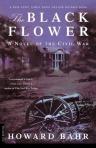
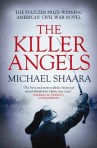
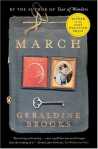
The Black FlowerThe Killer AngelsMarch

Toby's RoomPrivate PeacefulFear

Undertones of WarMy Dear I Wanted To Tell YouPhoenix and Ashes

The LieFlight Without EndLetters From a Lost Generation

The books for Literature and War Readalong 2011 and 2012 were following the different wars in chronological order. This year, 2013, we focused on different countries and wars we hadn’t covered so far. Next year will be about genre and WWI.

I was afraid a whole year dedicated to WWI books would be too much, especially since a lot of blogs run events for the Centenary, that’s why I decided to start with three novels on the American Civil War, one of which was part of 2011’s readalong, but had to be postponed. After that it’s all about WWI and to make it more interesting, I’ve included different genres: Memoir, letters, historical fiction, literary fiction, a children’s book and one fantasy novel. I hope there will be something for everyone among these titles.
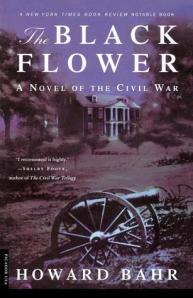
The Black Flower

January, Friday 31 

The Black Flower by Howard Bahr (US 2000), American Civil War, Novel, 272 pages

The Black Flower is the gripping story of a young Confederate rifleman from Mississippi named Bushrod Carter, who serves in General John Bell Hood’s Army of Tennessee during the Civil War battle that takes place in Franklin, Tennessee, in November 1864. Written with reverent attention to historical accuracy, the book vividly documents the fear, suffering, and intense friendships that are all present on the eve of the battle and during its aftermath. When Bushrod is wounded in the Confederate charge, he is taken to a makeshift hospital where he comes under the care of Anna, who has already lost two potential romances to battle. Bushrod and Anna’s poignant attempt to forge a bond of common humanity in the midst of the pathos and horror of battle serves as a powerful reminder that the war that divided America will not vanish quietly into the page of history.
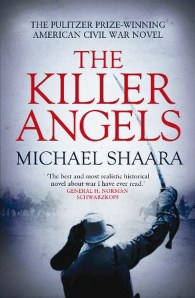
The Killer Angels

February, Friday 28

The Killer Angels by Michael Shaara (US 1974), American Civil War, Novel, 355 pages

The late Shaara’s Pulitzer Prize-winning novel (1974) concerns the battle of Gettysburg and was the basis for the 1993 film Gettysburg. The events immediately before and during the battle are seen through the eyes of Confederate Generals Lee, Longstreet, and Armistead and Federal General Buford, Colonel Joshua L. Chamberlain, and a host of others. The author’s ability to convey the thoughts of men in war as well as their confusion-the so-called “fog of battle”-is outstanding. This unabridged version is read clearly by award-winning actor George Hearn, who gives each character a different voice and effectively conveys their personalities; chapters and beginnings and ends of sides are announced. Music from the movie version adds to the drama. All this comes in a beautiful package with a battle map. Recommended for public libraries not owning previous editions from Recorded Books and Blackstone Audio (Audio Reviews, LJ 2/1/92 and LJ 2/1/93, respectively).
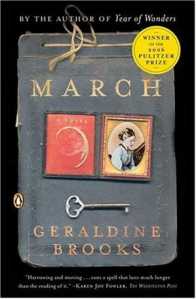
March

March, Monday 31

March by Geraldine Brooks (Australia 2005) American Civil War, Novel, 304 pages

Brooks’s luminous second novel, after 2001’s acclaimed Year of Wonders, imagines the Civil War experiences of Mr. March, the absent father in Louisa May Alcott’s Little Women. An idealistic Concord cleric, March becomes a Union chaplain and later finds himself assigned to be a teacher on a cotton plantation that employs freed slaves, or “contraband.” His narrative begins with cheerful letters home, but March gradually reveals to the reader what he does not to his family: the cruelty and racism of Northern and Southern soldiers, the violence and suffering he is powerless to prevent and his reunion with Grace, a beautiful, educated slave whom he met years earlier as a Connecticut peddler to the plantations. In between, we learn of March’s earlier life: his whirlwind courtship of quick-tempered Marmee, his friendship with Emerson and Thoreau and the surprising cause of his family’s genteel poverty. When a Confederate attack on the contraband farm lands March in a Washington hospital, sick with fever and guilt, the first-person narrative switches to Marmee, who describes a different version of the years past and an agonized reaction to the truth she uncovers about her husband’s life. Brooks, who based the character of March on Alcott’s transcendentalist father, Bronson, relies heavily on primary sources for both the Concord and wartime scenes; her characters speak with a convincing 19th-century formality, yet the narrative is always accessible. Through the shattered dreamer March, the passion and rage of Marmee and a host of achingly human minor characters, Brooks’s affecting, beautifully written novel drives home the intimate horrors and ironies of the Civil War and the difficulty of living honestly with the knowledge of human suffering.
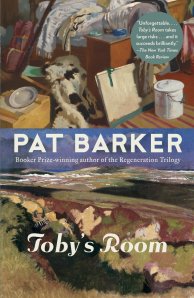
Toby's Room

April, Monday 28

Toby’s Room by Pat Barker (UK 2013), WWI, Novel, 272 pages

Pat Barker returns to the First World War in Toby’s Room, a dark, compelling novel of human desire, wartime horror and the power of friendship.

When Toby is reported ‘Missing, Believed Killed’, another secret casts a lengthening shadow over Elinor’s world: how exactly did Toby die – and why? Elinor determines to uncover the truth. Only then can she finally close the door to Toby’s room. Moving from the Slade School of Art to Queen Mary’s Hospital, where surgery and art intersect in the rebuilding of the shattered faces of the wounded, Toby’s Room is a riveting drama of identity, damage, intimacy and loss. Toby’s Room is Pat Barker’s most powerful novel yet.
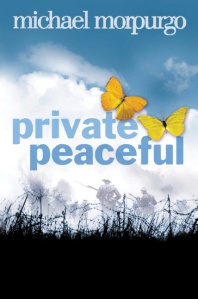
Private Peaceful

May, Friday 30

Private Peaceful by Michael Morpurgo (UK 2003)  WWI, Children’s Book, 192 pages

Heroism or cowardice? A stunning story of the First World War from a master storyteller.

Told in the voice of a young soldier, the story follows 24 hours in his life at the front during WW1, and captures his memories as he looks back over his life. Full of stunningly researched detail and engrossing atmosphere, the book leads to a dramatic and moving conclusion.

Both a love story and a deeply moving account of the horrors of the First World War, this book will reach everyone from 9 to 90.
Fear

June, Friday 27

FearLa Peur by Gabriel Chevallier (France 1930)  WWI, Classic, Novel, 320 pages

It is 1915. Jean Dartemont is just a young man. He is not a rebel, but neither is he awed by authority and when he’s called up and given only the most rudimentary training, he refuses to follow his platoon. Instead, he is sent to Artois, where he experiences the relentless death and violence of the trenches. His reprieve finally comes when he is wounded, evacuated and hospitalised.

The nurses consider it their duty to stimulate the soldiers’ fighting spirit, and so ask Jean what he did at the front.

His reply?

‘I was afraid.’

First published in France in 1930, Fear is both graphic and clear-eyed in its depiction of the terrible experiences of soldiers during the First World War.
The Lie

July, Monday 28

The Lie by Helen Dunmore (UK 2014) WWI, Novel, 304 pages

Set during and just after the First World War, The Lie is an enthralling, heart-wrenching novel of love, memory and devastating loss by one of the UK’s most acclaimed storytellers. Cornwall, 1920, early spring.

A young man stands on a headland, looking out to sea. He is back from the war, homeless and without family.

Behind him lie the mud, barbed-wire entanglements and terror of the trenches. Behind him is also the most intense relationship of his life.

Daniel has survived, but the horror and passion of the past seem more real than the quiet fields around him.

He is about to step into the unknown. But will he ever be able to escape the terrible, unforeseen consequences of a lie?
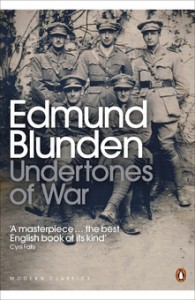
Undertones of War

August, Friday 29

Undertones of War by Edmund Blunden (UK 1928) WWI, Memoir, 288 pages

In what is one of the finest autobiographies to come out of the First World War, the distinguished poet Edmund Blunden records his experiences as an infantry subaltern in France and Flanders. Blunden took part in the disastrous battles of the Somme, Ypres and Passchendaele, describing the latter as ‘murder, not only to the troops, but to their singing faiths and hopes’. In his compassionate yet unsentimental prose, he tells of the heroism and despair found among the officers. Blunden’s poems show how he found hope in the natural landscape; the only thing that survives the terrible betrayal enacted in the Flanders fields.
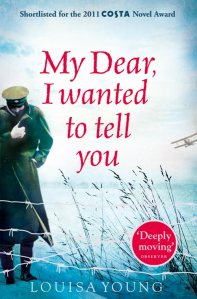
My Dear I Wanted To Tell You

September, Monday 29

My Dear, I wanted to tell you by Louisa Young (UK 2011) WWI, Historical Fiction, 336 pages

A letter, two lovers, a terrible lie. In war, truth is only the first casualty. ‘Inspires the kind of devotion among its readers not seen since David Nicholls’ One Day’ The Times

While Riley Purefoy and Peter Locke fight for their country, their survival and their sanity in the trenches of Flanders, Nadine Waveney, Julia Locke and Rose Locke do what they can at home. Beautiful, obsessive Julia and gentle, eccentric Peter are married: each day Julia goes through rituals to prepare for her beloved husband’s return. Nadine and Riley, only eighteen when the war starts, and with problems of their own already, want above all to make promises – but how can they when the future is not in their hands? And Rose? Well, what did happen to the traditionally brought-up women who lost all hope of marriage, because all the young men were dead?

Moving between Ypres, London and Paris, My Dear I Wanted to Tell You is a deeply affecting, moving and brilliant novel of love and war, and how they affect those left behind as well as those who fight.
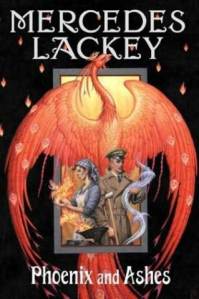
Phoenix and Ashes

October, Friday 31

Phoenix and Ashes by Mercedes Lackey (US 2004) WWI, Fantasy, 468 pages

In this dark and atmospheric rendition of the Cinderella fairy tale, an intelligent young Englishwoman is made into a virtual slave by her evil stepmother. Her only hope of rescue comes in the shape of a scarred World War I pilot of noble blood, whose own powers over the elements are about to be needed more than ever.

“A dark tale full of the pain and devastation of war…and a couple of wounded protagonists worth routing for.”
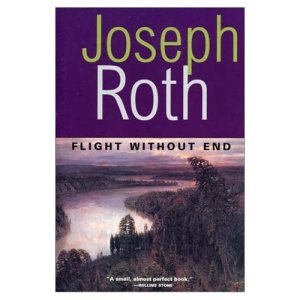
Flight Without End

November, Friday 28

Flight Witout End – Die Flucht ohne Ende by Joseph Roth (Austria 1927) WWI, Classic,  144 pages

Flight Without End, written in Paris, in 1927, is perhaps the most personal of Joseph Roth’s novels. Introduced by the author as the true account of his friend Franz Tunda it tells the story of a young ex-office of the Austro-Hungarian Army in the 1914- 1918 war, who makes his way back from captivity in Siberia and service with the Bolshevik army, only to find out that the old order, which has shaped him has crumbled and that there is no place for him in the new “European” culture that has taken its place. Everywhere – in his dealings with society, family, women – he finds himself an outsider, both attracted and repelled by the values of the old world, yet unable to accept the new ideologies.
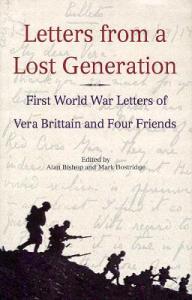
Letters From a Lost Generation

December, Monday 29

Letters from a Lost Generation by Vera Brittain and Four Friends (UK) WWI, Letters, 448 pages

Nothing in the papers, not the most vivid and heart-rending descriptions, have made me realise war like your letters’ Vera Brittain to Roland Leighton, 17 April 1915.

This selection of letters, written between 1913 & 1918, between Vera Brittain and four young men – her fiance Roland Leighton, her brother Edward and their close friends Victor Richardson & Geoffrey Thurlow present a remarkable and profoundly moving portrait of five young people caught up in the cataclysm of total war.

Roland, ‘Monseigneur’, is the ‘leader’ & his letters most clearly trace the path leading from idealism to disillusionment. Edward, ‘ Immaculate of the Trenches’, was orderly & controlled, down even to his attire. Geoffrey, the ‘non-militarist at heart’ had not rushed to enlist but put aside his objections to the war for patriotism’s sake. Victor on the other hand, possessed a very sweet character and was known as ‘Father Confessor’. An important historical testimony telling a powerful story of idealism, disillusionment and personal tragedy.

I think the list is very different from the last years. The one or the other title like Mercedes Lackey’s book is a bit of gamble but I tried to make the list as diverse as possible.

I hope that many of you will join.

Literature and War Readalong December 28 2012: Dispatches by Michael Herr

https://beautyisasleepingcat.com/wp-content/uploads/2011/11/dispatches.jpg

Dispatches is a book I wanted to read  ever since it has been mentioned in the comments of other posts and after having read Tim O’Brien’s astonishing The Things They Carried. It’s the only book on the Vietnam war we are reading this year and I’m very keen on finding out how it will compare to O’Brien’s masterpiece.

Herr was a front-line reporter in the Vietnam war and has participated in the writing of movie scripts like Apocalypse Now and Platoon.

Here are the first sentences

There was a map of Vietnam on the wall of my apartment in Saigon and some nights, coming back late to the city, I’d lie out on my bed and look at it, too tired to do anything more than just get my boots off. That map was a marvel, especially now, that it wasn’t real anymore. For one thing it was very old. It had been left there years before by another tenant, probably a Fenchman, since the map had been made in Paris.

*******

The discussion starts on Friday, 28 December 2012.

Further information on the Literature and War Readalong 2012, including all the book blurbs, can be found here.

David Malouf: Fly Away Peter (1982)

There really are numerous ways to write about war. While some elements will always remain the same – especially when one of the novel’s themes are the trenches of WWII – accomplished authors, will still find a way to write something completely new. David Malouf’s Fly Away Peter is an excellent example for this.

Being an Australian writer Malouf writes about the war from the Australian perspective which works on two very different levels. One focuses on the land and nature, the other on the people. I have a feeling I would have overread a lot if I hadn’t seen so many Australian WWI movies and read Charlotte Wood’s stunningly beautiful The Submerge Catherdral (here).

It seems to be a trademark of a lot of Australian writing to emphasize the beauty and uniqueness of the flora and the fauna of the continent. Much of it must seem like paradise to the inhabitants and so it’s not surprising Malouf starts the book with the description of nature. Jim Saddler, a young Australian who has never been outside of the country, knows more than anyone about birds. He lies hidden in the marshes and watches them for hours. Ashley Crowther, another young man, but from a very different background, has returned from England where he went to university and come back to take care of his vast family estate. The marshes are part of it. When the two men meet, something almost miraculous happens. Without knowing Jim, Ashley senses the knowledge and the passion he has for birds and offers him a job. This is a dream come true for Jim, a man from a very modest background. The plan is to turn the marshes into a bird sanctuary and Jim will work there, observing, making lists.

While observing one of the rare birds, Jim meets Imogen, an English woman who arrived in Australia not long ago, and has decided to stay here. She is a photographer and earns a living with nature photography.

When the war breaks out none of the three characters thinks at frist it has a lot to do with Australia but in the end, the two men sign up. Of course Ashley will be an officer, while Jim becomes just a simple soldier.

Once in France, the tone and style of the book changes considerably. During the first half of the book, Malouf’s writing was poetic and the structure of the sentences unconventional but when he starts to describe the horror of the war, the writing, moves into the background and is more conventional.

Most of what is described from Jim’s point of view, we know from other WWI novels; the rats, the mud, the corpses, the gas. That is not new but what is new is how the earth is evoked which leads to comparisons. The rich earth of the Australian marshes produced so much beauty, here the earth swallows up everything, they all sink into it in the end.

One of my favourite war movies, Beneath Hill 60,  describes the contribution of Australian miners to WWI. Something the film directors chose to leave out, is mentioned in the book. While digging the tunnel systems beneath Hill 60 and arriving at the enemy lines, the miners discovered the skeleton of a  mammoth.

Jim is a witness of this discovery. It’s a key scene in the novel as it is an example of continuity.

It was a great wonder, and Jim stared along with the rest. A mammoth, thousands of years old. Thousands of years dead. It went back to the beginning, and was here, this giant beast that had fallen to his knees so long ago, among the recent dead, with the sharp little flints laid out beside it which were also a beginning. Looking at them made time seem meaningless. (….)

Continuity is a major theme of the book, continuity and opposites. The land and nature exist and will always exist. They are endless while humanity is not and the individual man even less so. Man creates opposites, the good and the bad, the ugly and the beautiful, the cowardly and the heroic, they all take place inside of the continuity.

The mammoth is a symbol for this and so are Imogen’s photos. At the end of the novel she thinks about how she met Jim. She captured a bird on a  photo while he captured it in his mind. The bird is long gone and so is the picture in Jim’s mind because Jim is gone, but it’s still here, as she remembers both and there is still the photo as well.

It’s hard to do justice to a book like Fly Away Peter in a short post. I hope I was able to convey the beauty and make you curious to find out for yourself. I couldn’t help but had to compare it to two other shorter WWI novels we read last year, Susan Hill’s Strange Meeting (here is the review) and How Many Miles to Babylon by Jennifer Johnston (here is the review). While the latter will always be my favourite, Fly Away Peter is excellent as well and adds another dimension. It contains a rich a meditation and philosophical exploration of WWI from an Australian perspective which is well worth reading.

Have you read David Malouf? Which is your favourite of his books?

The review is a contribution to the Aussie Author Challenge as well as to War Through the Generations.

If you’d like to read another review, Danielle hast posted about it here.