Three Short Reviews – Eileen (2015) – The Loney (2014) – Saturday (2005)

Ottessa MoshfeghScreen Shot 2016-04-15 at 09.37.31Screen Shot 2016-04-15 at 10.16.27

I finished so many novels recently that I will never be able to review them all. That’s why I decided to do a post with shorter reviews. It doesn’t mean that the books weren’t as good as other books I’ve read. Just bad timing review-wise. I’ve added some blurb quotes at the beginning. Either as a contrast to what I wrote or to emphasize my opinion.

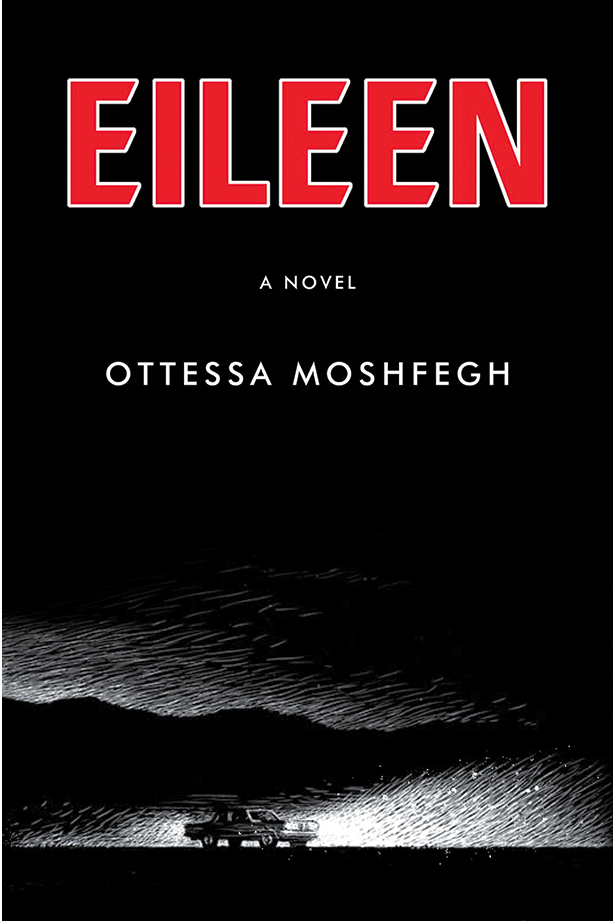
Ottessa Moshfegh

Fully lives up to the hype. A taut psychological thriller, rippled with comedy as black as a raven’s wing, Eileen is effortlessly stylish and compelling. – Robert Douglas-Fairhurst, The Times

First up is Ottessa Moshfegh’s Eileen. The tale of a crime that is instrumental in freeing the main character. Now this is a book I’m not likely to forget. The writing is so assured and strong. The voice of the narrator is original and the way the book was told worked remarkably well. The narrator, who was once called Eileen, is now an older woman, looking back at something that happened a long time ago. Back then she was an insecure woman who lived with her alcoholic father in a very dirty, sordid home and worked in a boy’s prison. When the new counselor, the glamorous Rebecca, arrives at the school, things first get very exciting for Eileen and then they get out of control. Eileen is a very unpleasant character. It’s not always a joy to be inside of her head. She has perverse fantasies and some of her hidden habits are really gross. The reasons why I enjoyed this taut noir so much, is that the older Eileen constantly adds information about her future life and because we sense that things will go wrong, we wonder how she managed, in spite of everything we are told, to have an almost normal life. I also enjoyed that it’s never really clear whether she’s totally unreliable or just completely deranged. Ottessa Moshfegh has been on my radar for a while. Many of her short stories have been highly praised. She certainly is a very assured and very talented writer. I’m really keen on reading more of her stories and hope she’ll write another novel soon

If you’d like a more detailed review here’s Guy’s post on Eileen. I discovered the book on his blog.

Screen Shot 2016-04-15 at 09.37.31

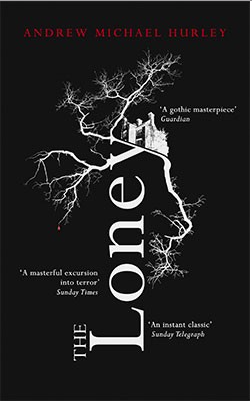
‘The Loney is not just good, it’s great. It’s an amazing piece of fiction’ Stephen King

The Loney won the Costa Prize in 2015. I received the novel as a Christmas gift. I’d never heard of the book before but the person who gave it to me, knows that I like dark and gothic tales. I’m really glad that I’ve read it but not entirely sure I liked it. The atmosphere is amazing. It’s set in a bleak desolate part of England, near the coast in Lancashire. The Loney is a stretch of land that gets cut off and turns into an island during high tide. Getting lost between the land and the sea is very dangerous. The tide comes in quickly and surprisingly. The narrator is an older man. The story he tells takes place when he’s still a young boy. For a long time it’s not clear if what happens in the book is just the result of religious fanaticism or whether there is really a haunting. I found that interesting but wasn’t too keen on the ending. The story takes place during Easter. The narrator’s parents, especially the mother, are fanatics. They hope that they will be able to cure the narrator’s older brother through prayer. The mother is a really chilling charcater and sounded a lot like Jeannette Winterson’s mother.

What didn’t work so well was the subdued tone. The writing is deliberately old-fashioned, but takes, in my opinion, too much time. The atmosphere is spooky from beginning to end; the mood depressing, but there’s no real climax. It’s very well written though. I’ll keep an eye out for other books by this author. This was Andrew Michael Hurley’s first novel.

Screen Shot 2016-04-15 at 10.16.27

“A book of great moral maturity, beautifully alive to the fragility of happiness and all forms of violence… Everyone should read Saturday… Artistically, morally and politically, he excels” (The Times)

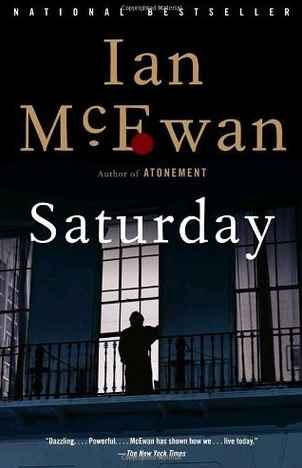
I know that a lot of people love Ian McEwan. Many even think he’s an outstanding writer. While I find him entertaining, I don’t really think he is all that good. The whole time I was reading Saturday I kept turning the pages quickly, which means I was captivated by the story, but at the same time I couldn’t help but think that this was a lot like Grey’s Anatomy in book form. Captivating but also a bit trashy. Saturday tells the story of one day in the life of neurosurgeon Henry Perowne. The details are so minute that it actually made me laugh. You can sense that McEwan did a lot of research but did he have to pack all of it into his book? I found this very heavyhanded. Almost like the novel of a beginner. Now, the neurosurgery part was actually OK. Not the most fascinating topic for me, but OK. But since he wanted to add other subjects, we get a lot of information on literature—one of Perowne’s kids is a poet, and so is his father-in-law— and information on music— his son is a musician. After a while, I felt like being invited to one of those boring dinner parties where everyone has a “great career”, reads the latest books, has seen the latest movies and talks a little bit about politics and endlessly about food. There’s even a recipe in this book. Ha! Perowne and his entourage are the kind of people I’ve seen referred to as “Champage Socialists” here in Switzerland.

At the beginning of the day, Perowne thinks he witnesses something horrible. He’s unsettled. Later, he really experiences something terrible. It all left me completely cold. I’d lost patience with the character. All in all, yes, I was entertained. In a way it felt like spying on someone or like living someone else’s life for a day. Nonetheless, I can’t say I found it great or that it’s a must read.

Have you read any of these?

Nicci French: Friday On My Mind (2015) Frieda Klein 5

Friday On My Mind

I just finished the fifth novel in Nicci French’s Frieda Klein series, Friday On My Mind. I really like this series although not all the books are equally good. Part of the appeal is that they are set in London, so, understandably I wasn’t too keen on book four, in which Frieda is returning to her childhood home and which therefore takes place mostly outside of London.

In this novel, we are back in London. It’s quite different from the other books, but I’m happy to say it’s one of the best of the series. Frieda isn’t only  looking for a perpetrator, no, she’s on the run and desperately trying to clear her name. A body has been found in the Thames. The dead man has a hospital tag with Frieda’s name around his wrist. His throat has been cut, so he’s clearly a murder victim. For various reasons, the police suspect Frieda.

Hiding in London proves to be very difficult. And dangerous. The police are hunting her and with CCTV everywhere, she might be discovered all too soon. But the danger doesn’t come from the police, it comes from the murderer who chases her as well.

As usual, Frieda does a lot of foolish things and puts herself and her friends in danger.

I really enjoyed this fifth installment. I liked the story and I like Frieda and her circle of friends who play an important role in this book.

Another aspect I enjoyed was that because Frieda was on the run, she came into contact with people who live on the margins of society and under precarious circumstances. This gave the book depth. On a side note—This is  the second UK novel I’ve read recently, in which the killing and/or abuse of homeless people plays a role. I felt tempted to google this and was shocked to find out how often this really happens. It’s appalling.

The sixth book is due in June (Saturday Requiem) but I will probably wait until it’s available in paperback.

Here are the links to the reviews of the other books in the series:

Blue Monday

Tuesday’s Gone

Waiting for Wednesday

Thursday’s Child

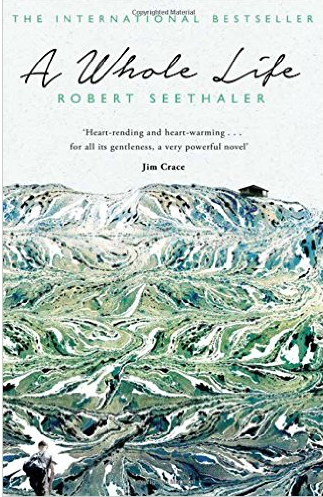
On Robert Seethaler’s Ein ganzes Leben – A Whole Life (2013)

Ein ganzes LebenA Whole Life

I’ve heard a lot about Austrian author Robert Seethaler’s books, especially Der Trafikant, but only when I saw that his latest had been translated and longlisted for the Man Booker International Prize, did I finally feel like reading him. I’ve read so many raving reviews that I thought I’d love this. Unfortunately, I didn’t. When I went digging for German and Swiss reviews, I found out that he wasn’t so unanimously praised and that I was far from alone in being highly critical of this novel. That said, it’s not a bad book. It has beautiful passages but it felt oddly anachronistic and I couldn’t shake a feeling of déjà-vu” or rather “déjà-read”. I should have picked one of his other novels. I’ve read so many similar books by earlier authors that I couldn’t help but wonder “Why did he write this?”. Robert Walser, Meinrad Inglin, C.F. Ramuz, they all wrote similar stories but, in my opinion, much better. There’s even a recent crime novel that’s similar. Now, maybe it’s unfair to judge a book because of its lack of originality, but I had other problems. People wrote how beautiful it was, how soothing, calming, refreshing. The only thing I found soothing, calming, and refreshing was the moment when it was over and I realized – wow – am I grateful for my own life.

Our protagonist, Andreas Egger, is an orphan, has to live with an uncle who is cruel, even sadistic, beats him until he’s crippled. Later he falls in love but the woman is taken from him. After that he volunteers to go to war (we’re in 1940s) and is refused. Later he’s taken anyway and soon becomes a prisoner of war on the Russian Front. He comes home; things have changed. He works like a donkey. He’s always alone. He sees a buddy lose an arm. And so on and so fort. It takes a stronger reader than me to find much joy in something like this. I found it nightmarish.

I did like a few passages because the descriptions were amazing. I liked the way he captured the mountains. The book is set in the Alps, pre-electricity, pre-tourism, at first. I’ve seen the scary side of the Alps. I always feel like the mountains are alive, brooding and lying in waiting. Seethaler does evoke that. (But so do Inglin and Ramuz). I also liked a few really crazy moments like the beginning in which the main character carries an old man down the mountains (that doesn’t sound crazy but believe me— it is. I’m trying not to spoil this book too much).

In the NZZ, the Neue Zürcher Zeitung, the critic Hannelore Schlaffer called this a book for sadists. Of course, that’s an exaggeration but I get what she means. I wish I had picked another of Seethaler’s books. They all sound wonderfully original. However, my biggest problem is that of all of his books, this is the one that was chosen for translation. Why? WWII? Again? Admittedly it’s just a short sequence but it’s important.

To some extent, I can see the appeal. Andreas Egger is a quiet man. Someone who doesn’t care for tourism and all the commodities a modern life brings. He’s modest and humble. You couldn’t find a character who is less narcissistic. All this is admirable but why did Seethaler have to turn this into such a biblical story? Couldn’t our humble protagonist have experienced more joy? Why was Seethaler so cruel to his character?

It may surprise you, but I’m tempted to pick another of Seethaler’s novels and I’m even convinced I will like it. Not every book is for everyone and this one wasn’t for me.

Those who loved this might enjoy Robert Schneider’s Schlafes Bruder – Brother of Sleep, which I found amazing. They might also enjoy this trio of Swiss writers, two of which write in German, one in French: Robert Walser, Meinrad Inglin, and C. F. Ramuz.

As I said, I have read many positive reviews of this book. Here are a few Lizzy, Vishy, Stu, and Pat.

Here’s the link to the NZZ review (in German)

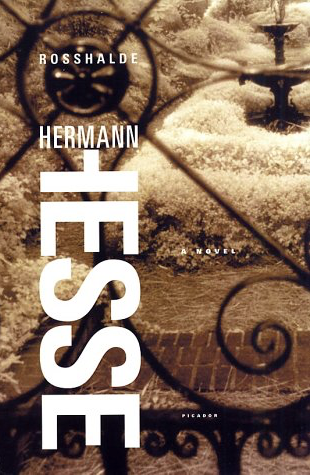
Hermann Hesse: Rosshalde (1914)

Rosshalde

Published in 1914, Rosshalde is Hermann Hesse’s fourth novel. It tells the story of a failed marriage and the disillusionment of a painter. In many ways it’s a continuation of Gertrude. Both novels are autobiographical, Rosshalde even more so than Gertude. Hesse often tried to make sense of his own life in writing his books, that’s why critics call many of his narrators alter egos.

Johann Veraguth, the main character of Rosshalde, is a painter who is entirely dedicated to his art. The only love in his life is the love for his second son Pierre. He bought the estate Rosshalde many years ago when there was still hope for his marriage. At the beginning of the novel, he returns home one night on his own and looks at the dark house. He has moved out a long time ago and lives in his artist’s studio. He gets up very early every morning, paints until noon, then takes lunch with his wife and son and later paints again until the evening. He’s a rich and famous painter, lives a life of ease, surrounded by beautiful things, he even has servants but he’s very lonely. His wife is hard and distant and has never really understood how he could be so absorbed by his art. His first-born hates him and had to be sent to a boarding school. His best friend travels the world and only rarely returns to Europe. The only joy in his life is his little boy. If his wife allowed him to keep the boy, he would have divorced her a long time ago.

Veraguth is unhappy but he doesn’t even realize it. He’s a bit like a well-oiled machine. He produces one painting after the other, follows a strict routine. All this changes when his old friend pays him a visit. He’s shocked when he sees how Veraguth lives and tells him he has to leave. He cannot go on living in such loveless isolation. But Veraguth cannot make up his mind. He’s too attached to his boy. Nonetheless, he has to admit that his friend is right and before he leaves again, he tells him he might follow him to India and spend a couple of months with him.

I had very mixed feelings while reading this. I didn’t like the beginning all that much but from the middle on, I really started to love this book. I finished it a week ago and it’s still constantly on my mind. There’s so much to like here. But there’s also a lot that I didn’t like. I really loved the descriptions and being in Veraguth’s head when he contemplated nature, his garden, his art. Those passages reminded me of Mercè Rodoreda’s novel Jardí vora el mar. In both books, a solitary man lives in a small house, surrounded by a huge garden and follows the life that is led in the estate nearby. But these passages also reminded me of Virginia Woolf’s The Voyage Out. The end of the novel has affected me quite a bit. I can’t really say anything without spoiling it – just this much – it’s very similar to The Voyage Out as well. I also liked how Hesse depicted Veraguth. The man’s so absorbed by his work, so self-centered, that he doesn’t even notice when his kid needs him, although the boy is the only really good thing in his life. Some of these scenes were written from the small boy’s point of view and were very sad.

What I didn’t like is the idea behind the novel. As I said earlier, it’s autobiographical and closely mirror’s Hesse and his wife’s marriage. From his biography I know that Hesse believed that artists – writers, painters, musicians – should never get married and live conventional lives. His own wife didn’t really understand him and having to provide for her and his three kids took its toll on him. Unfortunately, his views are so dated. His views on marriage, artists, and especially his views on gender. When you read about his views, it’s clear that the artist is always a man and the woman, who wants children and is dependent on him financially, will become a burden. Even so, Hesse thinks that the true failure of the marriage comes from the fact that an artist makes a poor companion. He’s too narcissistic, to self-absorbed. I couldn’t agree less. I’m sure there are artists like that but there are just as many narcissistic, self-absorbed people who don’t create anything. I’m afraid, it might have been a character trait Hesse struggled with. My problem with it is that he thinks it’s a universal problem, thinks that all artists are like that.

And then there’s the language. Hesse’s a very original writer. He creates words, uses new combinations but his German feels very old-fashioned, and his choice of words are at times too emotional, too sentimental. Don’t get me wrong, in spite of these negative aspects, I’m glad I read this and really loved it. But I had to ignore his views on men, women, artists, and marriage and just enjoy the amazing descriptions, the interior life of his protagonist and the terribly tragic story.

Rosshalde might be one of the best books for someone who hasn’t read Hesse and is a bit wary of his spirituality. Those who love him, do love him for that, but those who shy away from him or don’t appreciate him, often mention that aspect. Rosshalde isn’t like his later works in that regard. It talks about transcendence of some sort, but it isn’t meant in a religious way.

Have you read Rosshalde or any other of  Hesse’s books? Which is your favourite?

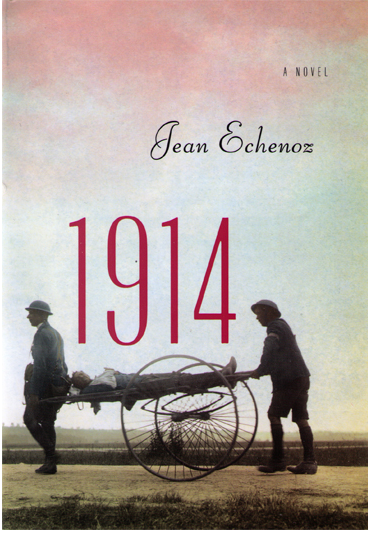
Literature and War Readalong March 31 2016: 1914 by Jean Echenoz

1914

This month’s readalong title is the slim novel 1914  – 14 by prize-winning French author Jean Echenoz. He has won the Prix Médicis for Cherokee and the Prix Goncourt for I’m off – Je m’en vais, both prestigious prizes, and a number of smaller prizes as well. He’s been on my radar for a long while and when I saw he wrote a novel set during WWI, I was immediately tempted. To be honest, the book has received mixed reviews. I’m very curious to find out on which side I’ll be.

Interestingly, the French title is 14 not 1914. One could probably discuss endlessly why they chose 1914 for the English translation and whether it’s right to change it like that. When I compared the beginning of the two books in French and English I noticed considerable differences. Those who read it in English, will have to tell me what they think of the translation.

Here are the first sentences:

Since the weather was so inviting and it was Saturday, a half day, which allowed him to leave work early, Anthime set out on his bicycle after lunch. His plan: to take advantage of the radiant August sun, enjoy some exercise in the fresh country air, and doubtless stretch out on the grass to read, for he strapped to his bicycle a book too bulky to fit in the wire basket. After coasting gently out of the city, he lazed easily along for about six flat miles until forced to stand up on his pedals while tackling a hill, sweating as  he swayed from side to side. The hills of the Vendée in the Loire region of west-central France aren’t much, of course, and it was only a slight rise, but lofty enough to provide a rewarding view.

And some details and the blurb for those who want to join

1914  – 14 by Jean Echenoz, 120 pages France 2012, WWI

Here’s the blurb:

Jean Echenoz turns his attention to the deathtrap of World War I in 1914. Five Frenchmen go off to war, two of them leaving behind young women who long for their return. But the main character in this brilliant novel is the Great War itself. Echenoz, whose work has been compared to that of writers as diverse as Joseph Conrad and Laurence Sterne, leads us gently from a balmy summer day deep into the relentless – and, one hundred years later, still unthinkable – carnage of trench warfare.

*******

The discussion starts on Thursday, 31 March 2016.

Further information on the Literature and War Readalong 2016, including all the book blurbs, can be found here.

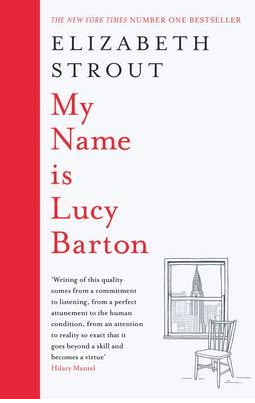
Elizabeth Strout: My Name is Lucy Barton (2016)

My Name is Lucy Barton

What a beautiful novel. I can hardly believe I haven’t read anything by Elizabeth Strout before. If someone can write a book like this, then surely, her other books must be outstanding too.

Lucy Barton looks back on a time in her life when she spent nine weeks in hospital suffering from a strange illness. Back then, she was married, had two small kids, and was an aspiring author. Lucy comes from a dirt poor family. However, it’s not only poverty she suffered from but cultural deprivation. They had no books, no TV, no radio. Little Lucy was profoundly lonely and that was, she thinks, the reason why she was drawn to books and reading and later to writing. She left her hometown Amgash, Illinois and moved to New York. During her time at the hospital, she often lies away at night and looks at the illuminated Chrysler building. It’s like a beacon. Looking at it helps her ward off feelings of loneliness, gives her hope. One day, she wakes up and finds her mother whom she hasn’t seen in years, next to her bed. Her mother stays five days and watches over her. During these five days, Lucy discovers how profoundly she loves this distant woman and how much it comforts her to know she’s close. The narrative moves back and forth in time. From the hospital room to her childhood and from there to a future with a second husband and a stunning career as a writer.

At times, the novel reminded me of Jenny Offill’s book Dept. of Speculation, but My Name is Lucy Barton is so much warmer, so much more emotional. I absolutely loved it. It explores so many topics. Families, the relationship between mothers and daughters, poverty, loneliness, the artist’s life, New York,  . . .

The voice is very endearing. It’s hard to imagine, this is an accomplished writer talking, the narrator sounds much more like a naïve girl. A very loving one, a girl who tries to find beauty and goodness in everything. It’s endearing and a bit frightening. Another writer would have chosen to throw disaster at her, but not so Elizabeth Trout. She has her character navigate the choppy waters of chance encounters, friendships, marriage and family relationships, without ever being wrecked and going under. There’s heartache, sadness, and loneliness, but Lucy’s always able to see something good and move on. She’s a true survivor. Her childhood sounds horrific. Her parents were abusive, the poverty was brutal. But Lucy survived and everything she’s given, seems like a gift. She stayed true to herself and remained kind and caring and humble.

This may sound a bit mushy, but it’s actually not. The tentative way in which the narrator tries to describe her life, her feelings, gives it great authenticity. At times, it feels like listening to someone talking.

It’s a fantastic book. For readers and for writers. I loved the many complex characters. Some appear only very briefly, like the writer Sarah Payne, who is extremely important for Lucy. It’s Sarah who tells her, that author’s shouldn’t be too concerned with plot as every writer only has one story that he will tell again and again. In Lucy’s case, that story is about trauma. While I’ve seen many authors write about PTSD or childhood trauma, I’ve hardly ever seen anyone, touching this subject in such a delicate way. From war trauma to abuse to AIDS, and 9/11, there’s so much suffering, but it’s like it’s presented behind a thick layer of fabric. Here and there something flares up but it’s never allowed to occupy too much space. It’s pushed back by deep and authentic experience and emotions.

I’ll leave you with a longer quote to give you an impression of the writing. The narrator is talking about her sister, Vicky, and then, as she always does, moves on:

How Vicky managed to this day I don’t know. We were not as close as you might expect; we were equally friendless and equally scorned, and we eyed each other with the same suspicion with which we eyed the rest of the world. There are times now, and my life has changed so completely, that I think back on the early years and I find myself thinking: It was not that bad. Perhaps it was not. But there are times, too—unexpected—when walking down a sunny sidewalk, or watching the top of a tree bend in the wind, or seeing a November sky close down over the East River, I am suddenly filled with the knowledge of darkness so deep that a sound might escape from my mouth, and I will step into the nearest clothing store and talk with a stranger about the shape of sweaters newly arrived. This must be the way most of us maneuver through the world, half knowing, half not, visited by memories that can’t possibly be true. But when I see others walking with confidence down the sidewalk, as though they are free completely from terror, I realize I don’t know how others are. So much of life seems speculation.

I hope that I managed to capture the beauty of this book. It’s such a stunning novel. I can’t wait to read more by Elizabeth Strout.

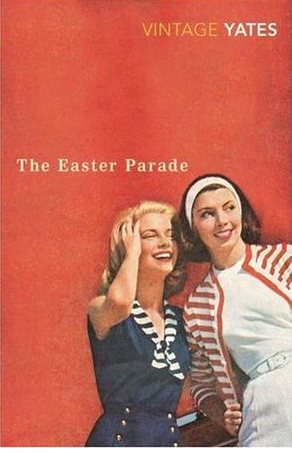
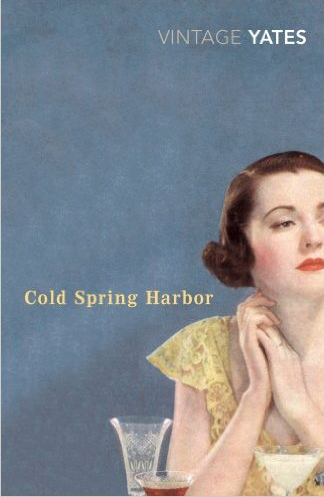
On Richard Yates’ The Easter Parade (1976) and Cold Spring Harbor (1986)

Easter ParadeCold Spring Harbor

I had almost forgotten how fascinating it is to read several books of the same author, one after the other. You see patterns emerge, recurring motifs, similar themes. Maybe not every author’s work is as homogenous as Yates’ is. In his case, the books are variations on the same themes. Some readers might find it repetitive to read so many of his novels, but I liked to see the patterns and differences emerge. Comparing The Easter Parade with Cold Spring Harbor was particularly rewarding. Most of Yates’ main themes are already present in Revolutionary Road but The Easter Parade and Cold Spring Harbor take them one step further.

The similarities of The Easter Parade and Cold Spring Harbor are striking. In both books we have excentric, almost laughable, mothers who are prone to drinking. We have struggling daughters and/or sons, who desperately try to live a better life but fail hopelessly. We watch those daughters and sons have kids and already know they will pass on the “loser gene”. Divorce is as much a recurring theme as alcoholism, lack of ambition, self-deception, and a failure to stand up for oneself.

The Easter Parade tells the story of a mother, Pookie, and her two daughters, Sarah and Emily. From the frist sentence on we know the story will not be a happy one.

Neither of the Grimes sisters would have a happy life, and looking back it always seemed the trouble began with their parents’ divorce.

If ever a sentence summed up the books of an author, then this is it. Not only does it tell us that his characters will not be happy, but it places them firmly in a family tradition, which predestines them for unhappiness. This is an extremely pessimistic view of families. While I agree, it’s very difficult to free yourself from the influence of a dysfunctional family, I’m not as pessimistic as Richard Yates. I do believe it’s possible.

The two daughters in The Easter Parade live very different lives. While Sarah gets married early and has kids, Emily is a free spirit, who strives for a career and has many lovers. She does get married but the marriage doesn’t last. We can judge how pessimistic Yates was, when we follow Emily’s life. The only reasons, for me, why she couldn’t be happy was that her family prevented her. The strings that attached her were too tight, even after she left and went to live far away from them.

Cold Spring Harbor tells the story of different people. Evan Shepard comes from a broken home, although his parents aren’t divorced. His father could never live the life he wanted to live and his mother is a severely depressed alcoholic. Evan marries too early, gets a divorce, and then meets his second wife, Rachel and her family. Rachel’s mother resembles Pookie. She too has two kids, a daughter and a son, she is divorced, has illusions of grandeur and drinks too much. About halfway into the novel, we know that Rachel will follow in her footsteps and possibly pass her unhappiness on to her child. We do have hope for the son though.

Failed marriages and divorce are recurring themes but, unfortunately, Yates’ characters experience other forms of misery. They are either not ambitious and therefore never achieve any type of professional fulfillment, or they are ambitious but not good enough at what they are doing and will never know success.

Both novels are sad and tragic but, strangely enough, they didn’t depress me. Yates’s outlook is pessimistic but when you look at his characters closely, you see that the misfortune is the result of their own doing. You don’t need to let your parents unhappy lives/marriages drag you down. Just because your parents drink, that doesn’t mean you have to start drinking as well. Maybe it’s odd, but in a way I found the books almost comforting because, maybe unbeknownst to Richard Yates himself, they seemed to be telling— this only happened to these people because they didn’t free themselves.

And then, like in Revolutionary Road – there’s the writing which is simply amazing. He’s got a knack for describing people like not many other authors. Actually, this aspect of his writing, reminded me a lot of Jane Austen. I already felt that when reading Revolutionary Road but after these two books, even more. Like Jane Austen, he can see right through people and phrase this in a witty way. The biggest difference is the fate he’s got in store for them. Not one of them is allowed a Happy Ending à la Austen. That said, his observations and descriptions are so masterful that they always cheer me up.

I’m not sure which of the three novels I’ve read so far I liked best. Possibly The Easter Parade. Cold Spring Harbor is like another version of that book; a slightly less perfect one.

Here’s my review of Revolutionary Road.