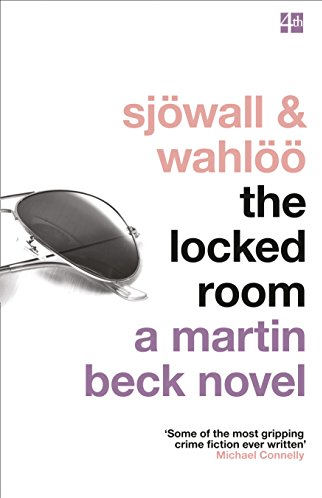
Sjöwall & Wahlöö: The Locked Room (1972) Martin Beck Series

the-locked-room

One could say that Sjöwall and Wahlöö are the grandfathers of Swedish crime. They wrote long before Nordic crime was the thing it has become. Their Martin Beck series is said to be one of the best around. A true classic. While the books have been around for as long as I can think, I never picked one up, although I have always been curious. Now, finally, because I was looking for a locked room mystery, I came across the eight title in the Martin Beck series, The Locked Room, and thought I’ll give it a try. I know it’s not ideal to start with book eight in a series but it was OK. I never felt liked I was missing a ton of information. According to Michael Connelly, who wrote the introduction to this book, it’s one of their best.

This book was not what I’ve expected. It was so much better. So good in fact that I immediately downloaded the first in the series.

Detective Inspector Martin Beck isn’t the central character in this book because he’s been shot and only just returned to work after an eighteen month break. To help him get back into the routine, he’s been assigned a minor case. A man has shot himself and Beck has to wrap up the case.

Parallel to this case, we follow the police investigating a bank robbery that has gone terribly wrong. One of the customers was shot. For years, the police have tried to catch a group of bank robbers, but they always escaped. The police are pretty sure that the robbers they are chasing, robbed this bank as well, even though they never shot anyone before.

The readers know from the beginning that someone else has robbed the bank. We also learn that the suicide Beck investigates was a murder. The man was found dead, shot, in a locked room and no weapon could be found.

These are two very different cases. The one Beck investigates is more suspenseful as we only know as much as Beck knows. The other case is rather hilarious. And this is exactly why this series surprised me so much and why I loved this book. Very obviously Sjöwall and Wahlöö were very fond of their character Beck. Beck, who is a bit of a loner, is very intelligent, a thinker, slightly sarcastic and disillusioned but not bitter. His colleagues aren’t too keen on him, they find him bizarre and too unconventional. He’s definitely an outsider. While we can feel how much the authors like Beck, we also notice quickly, how little they think of the police in general. They make fun of the bank robbery squad wherever they can. More than one of their missions turns into a farce. Some of these characters are very likeable too but dorky. Others, especially those higher up in the ranks are just clueless.

I really enjoyed the mix of such different cases. The quiet, introspective case Beck was on and the big bank robbery investigation that took surprising turns and had many funny moments.

Another aspect I liked was that the book was full of social criticism. It’s really quite harsh in places. The authors excoriate Swedish society and politics.

I know that Beck is more prominent in the earlier books, so I can’t wait to read a novel in which he gets more room. He’s a great character.

All in all, a very pleasant surprise. Sharp, pithy writing, combined with dry humour, appealing characters, a realistic setting, and two interesting cases. What more could you want?
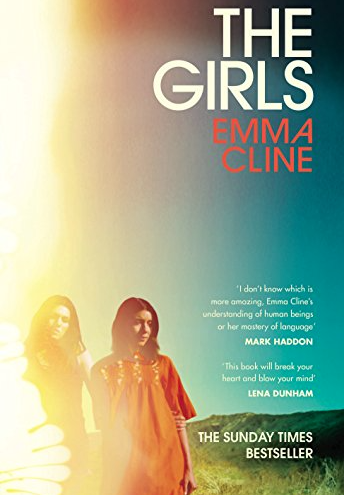
Emma Cline: The Girls (2016)

The Girls

I knew a lot about The Girls and Emma Cline’s publishing deal before the book was even out. It has been sold at an auction for 2,000,000 $ – together with the next, not yet written – novel and a collection of short stories. That must put a lot of pressure on the author. Another sign of a major hype is that the German translation came out at the same time as the US original. Oddly, since it’s been published, I’ve not heard so much about it or read many reviews on blogs. The title might not be doing it any favours as it makes it sound like another “girl thriller”. While it’s about a crime, The Girls is a literary novel, not a crime novel per se.

I’m in two minds about this novel. The first forty pages were terrific. Emma Cline showed major talent. Her prose was stylish and original and the approach to her topic daring, but then came the long, frankly rather boring middle section that made me almost abandon the book. I’m glad I didn’t because the end was good.

The Girls is told as a split narrative. Most parts are set during the summer of ’69 and told from the point of view of fourteen-year-old Evie Boyd; the other parts are told by the now middle-aged Evie, who’s looking back. In 1969 Evie’s a lonely girl who lives with a mother who’s just rediscovered dating and doesn’t have time nor patience. She’s going to send Evie to a boarding school. That would be misery enough but on top of that, Evie’s just fallen out with her best friend and is discovering her sexuality, which she can’t handle at all. Then, one afternoon, she sees the girls—a group of beautiful, dirty teenage girls who appear self-assured, arrogant, and wild. Evie’s fascinated, especially by Suzanne. Evie finds out later that the people in her town are wary of them. There are rumours of drug abuse, delinquency and orgies.

Evie sees them again and is invited to their farm and introduced to Russell, their leader. She’s quickly sucked into the life on the farm and becomes one of them. Being part of that group means following Russell’s every move, waiting to be summoned by him, stealing for him, doing drugs, having sex with much older men. Russell pretends to be enlightened but he’s narcissistic and deranged. What he really wants is to become a famous pop star.

Evie’s too miserable in her life to notice that something’s going very wrong on the farm. Not only are they taking too many drugs, but there’s hardly any food. The houses they live in are decaying. The whole place is dirty and insalubrious.

Early in the novel, we learn that a horrific murder was committed and we know that, for some reason, Evie wasn’t part of the group who committed it. What we only find out at the end is why she wasn’t there and what happened to her afterwards.

It’s not often that a book comes full circle at the end like this one. For a long time, I didn’t like the dual narrative, found it artificial, but it made sense in the end.

Emma Cline does a great job at showing us the world through the eyes of a lonely teenage girl. A girl that’s very much a product of her time. She manages to make us see how girls like Suzanne and Evie were easy prey for a man like Russell (or Manson). But she also shows us that Russell wasn’t the only reason for a girl to stay on the farm. In Evie’s case, it’s not Russell who has a hold on her, but the charismatic Suzanne.

At first I was a bit afraid that given the nature of the crime, the book would be too sensationalist. It is sensationalist, but not because of the crime but because of the way Cline writes about sex. The book is explicit and occasionally shocking. I guess that’s one of the reasons why it’s not been marketed as a YA novel.

I didn’t find this novel entirely convincig and certainly don’t understand the huge advance payment she received. While there are great parts in the book, there are many parts that are dragging and the story was far from original. It certainly wasn’t a must read.

If you’d like to get to know her writing – here’s her only other publication, her short story Marion. It was published by the Paris Review and received the Paris Review Plimpton Prize for Fiction in 2014.

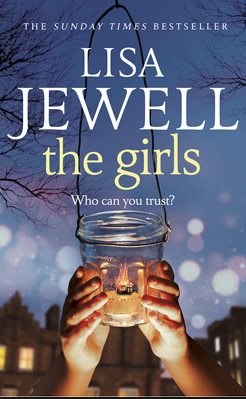
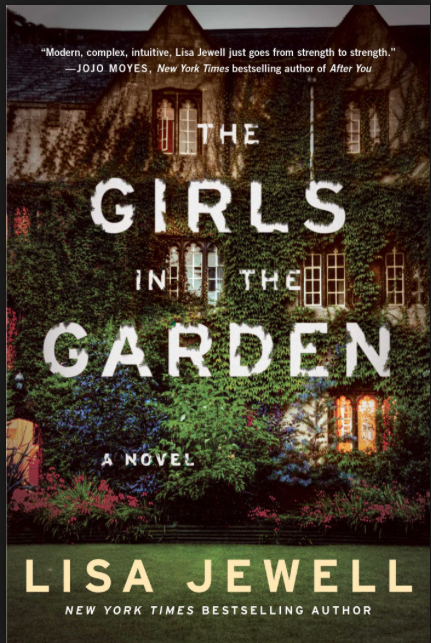
Lisa Jewell: The Girls in the Garden aka The Girls (2015)

The Girls in the GardenThe Girls Lisa Jewell

It doesn’t happen often that I stay up late because I have to finish a book but in this case it did. I guess that shows how captivated I was by Lisa Jewell’s novel The Girls or The Girls in the Garden (the US title). I came across this book on Danielle’s blog (here is the link) and had to get it right away. I just knew I would love everything about it.

The Girls is set in London, during one summer, in a communal garden and the flats and houses surrounding it. It’s told by several different narrators. It begins in the house Claire shares with her two daughters. Claire and her younger daughter Pip have just returned from a party, Claire is drunk and throwing up. Pip is worried and goes to look for her older sister Grace who is still in the garden with a group of kids from the neighbourhood. When Pip finds her, Grace is half-naked and unconscious. From here the story rewinds and starts at the beginning when Claire and her daughters move into one of the houses bordering the huge garden. Claire and her two daughters, twelve-year-old Pip and thirteen year old Grace, have gone through something shocking. The girl’s father burned down their beautiful house during an episode of paranoid schizophrenia. He’s been in a psychiatric hospital since then and Claire has never visited, nor does she want her girls to see him. When they arrive in their new house, they are quickly drawn into the lives of their neighbours. Claire and the girls are invited for dinner and the girls become part of a group of local kids.

Among the neighbours are Adele and Leo and their three homeschooled daughters. Gordon, Leo’s obnoxious father, who stays with them for health reasons. The elderly Rhea, who lives with a giant rabbit and a cat. Cece and her daughter Tyler. And beautiful Dylan with his mother and older brother with special needs.

The garden is a secluded place, secured by gates and only accessible with keys and through the back gardens of the surrounding houses. All the people who have access to the garden see it as a safe haven. A place where nothing can happen. That Grace is found unconscious, bleeding, and half-naked in a place like this is particularly shocking. Not only because nobody would have expected something like this to happen, but also because it’s clear that it must have been someone with access to the garden. Possibly someone who was at the summer night’s party.

Every single one of the men in this book is suspicious. Everybody else seems to hide something or know something they won’t tell. And there was the mysterious death of another girl, many years ago.

Obviously I found this book very suspenseful or I wouldn’t have stayed up late to finish it. But there was more. While the central question is what happened to Grace, the central themes are trust and safety, marriage and family life, growing up and friendships, themes we can all relate to. Plot and subplots, look at these themes from different angles and the result is arresting. I’m also fond of these communal gardens that I only know from the UK. They have something enchanted.

If you’re looking for a page-turner with great characters, a wonderful setting, and relatable themes, you shouldn’t miss this.

I’ve seen that Lisa Jewell has written many books. Has anyone read them? Are they as gripping as this?

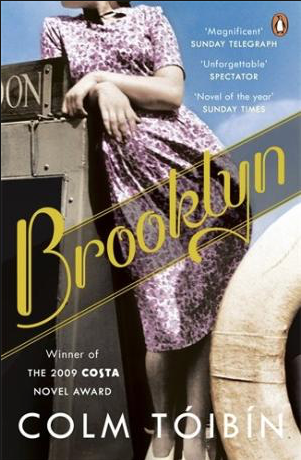
Colm Tóibín: Brooklyn (2009)

Brooklyn

I can’t understand why I haven’t read Colm Tóibín before. He’s outstanding. I admire his writing, his luminous prose. It’s not easy to say why it is so great but it is. His descriptions, the details he chooses, the settings, are so precise and conjure up a whole world.

It’s the 1950s and Ellis Lacey is living in Ireland with her mother and older sister. She wants to be an accountant but is only a shop assistant. Thanks to her sister, she can emigrate to America where she’s hired in a shop, goes to an accounting school and betters herself. Here, she meets a young Italian man and begins a relationship with him. After tragedy strikes, she has to decide whether she will stay in America or go back to Ireland. The novel has four parts. The first is set in Ireland and on the ship crossing over to America, the second and third are set in Brooklyn, the last in Ireland.

Ellis is a passive character but interesting as she’s introspective and a keen observer of what happens around her and inside of herself. I loved reading about the way she processed things that had happened to her during the day. In the beginning this passivity isn’t exactly attractive but it’s not as infuriating as it is in the last part. Ellis never speaks up, never fights for herself and in the end, she pays a high price for this behaviour. One aspect that stood out for me was the way Tóibín wrote about the experience of being an immigrant. I’ve lived abroad a few times, in some cases in places where I knew hardly anyone. Many of the feelings described, brought those experiences back.

Here’s a quote showing Ellis in the shop she’s working in Brooklyn.

The morning was full of frenzy; she did not for one moment have peace to look around her. Everyone’s voice was loud, and there were times when she thought in a flash of an early evening in October walking with her mother down by the prom in Enniscorthy, the Slaney River, glassy and full, and the smell of leaves burning from somewhere close by, and the daylight going slowly and gently. This scene kept coming to her as she filled the bag with notes and coins and women of all types approached her asking where certain items of clothing could be found or if they could return what they had bought in exchange for other merchandise, or simply wishing to purchase what they had in their hands.

Ellis may be the main character but there are numerous other characters, some who only appear briefly. They are all complex and rich in facets. One could also say that the two main settings, the eponymous Brooklyn and Ireland are treated like characters. They are described in detail, juxtaposed, compared, contrasted. Two very distinct worlds come alive between these pages.

I highly recommend Brooklyn. It’s beautiful and I can’t wait to read more of Tóibín. Just be warned – Ellis can, at times, be an infuriating character.

If you’d like to read a more in-depth review here’s Max’s take on the novel.

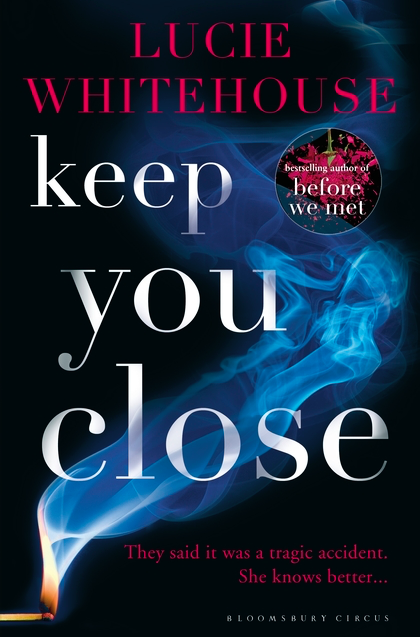
Lucie Whitehouse: Keep You Close (2016)

Keep You Close

This is just a quick review of Lucie Whitehouse’s latest novel Keep You Close. It’s short because it’s more easily spoilt than other crime novels. It has a couple of really surprising twists and it would be sad to give them away.

The famous, rich young painter Marianne Glass is found dead in her garden. The police say that it was an accident. Her former best friend Rowan Winter doesn’t believe this. Marianne suffered from crippling vertigo and would never have gone this close to edge of the roof.

When Rowan hears of her former best friend’s death, she travels to Oxford and the home of the Glass family. Marianne’s house is a place where she once used to be a constant visitor. Rowan, who lost her mother as a young girl and whose father never had time for her, found a second family in her friend’s family. Coming back after all these years is intense, to say the least. Although the circumstances are dire, the Glass family, or what is left of them, are happy to see Rowan again and even ask her to house-sit for them. Rowan however has a hidden agenda. She’s the only one who cannot belive that Marianne’s death was an accident. Could it have been a suicide? She doesn’t think so, she thinks that something far more sinister has happened and wants to investigate Marianne’s death.

Early on we find out that Rowan and Marianne hadn’t been in contact for ten years because of something that happened back then. This was right about the same time Marianne’s father died in a car crash. The official version was that they had a falling out because Rowan intruded too much and didn’t let Marianne grieve. But the reader questions soon whether Rowan isn’t hiding something.

A lot of things are mysterious. Someone seems to watch the house at night. Someone else or maybe the same person tries to break in. A lot of people seem to gain, one way or the other, through Marianne’s death. Some even attack Rowan, saying that she’s profiting as well, since she was able to renew her friendship with the Glass’s and begins a relationship with Marianne’s brother.

Keep You Close is an entertaining book but not entirely convincing. I didn’t mind the slow pace as much as the implausibility of some of the twists. One was really surprising and well done, the others were over the top. All in all, it’s not a bad book, but not as good as some of her older novels. This is her fourth and I’ve read three of them so far. I liked both The House at Midnight and Before We Met better than this. If you’ve never read anything by Lucie Whitehouse, I’d suggest to start with one of her earlier novels. I read The House at Midnight before blogging, so you won’t find a review, but here’s my review of Before We Met.


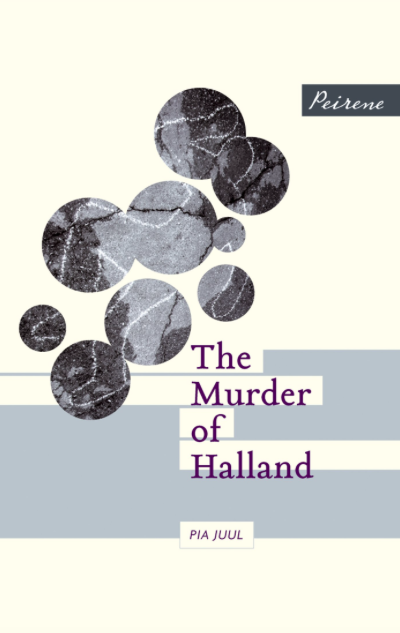
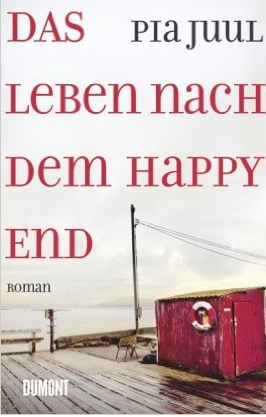
Pia Juul: The Murder of Halland – Mordet på Halland – Das Leben nach dem Happy End (2009)

The Murder of Halland

If you know that Pia Juul’s novel The Murder of Halland (Mordet på HallandDas Leben nach dem Happy End) plays with reader expectations, then you might enjoy this novel. If, however, you expect a conventional crime novel, you might be a little disappointed. Yes, it’s about a crime, but not a crime novel per se.

Pia Juul is a Danish writer, that’s why I read the German translation (I think that German is closer to most Nordic languages than English). While the English title is a literal translation of the Danish title, the German publisher chose to call the book “Life after the Happy End”. I don’t like the title but, at least, it didn’t sound like it was a crime novel.

The book opens with the murder of Halland. Or rather the discovery of his dead body. The man who found him says that Halland’s last words were “My wife killed me.” The reader knows that Bess, his partner, didn’t kill him. She was in the house, while he was shot.

Bess is a writer who left her first husband and her daughter because of Halland. She hasn’t seen her daughter since the girl was fourteen years old and has suffered because of this separation ever since. The daughter is now a young woman of 24.

Like most readers, even though I knew this wasn’t a typical crime novel, I assumed that the book would explore who shot Halland and why. The police does investigate, but it’s a half-hearted investigation. Of course, that’s not realistic, it was the writers choice to present the story this way. The reason for this is revealed later in the book when Bess watches a crime movie on TV and tells the reader that she’s never interested in the “who did it part” of a crime story and mostly forgets the end. She is much more interested in the people involved. The life of the victim, the investigator, and the friends and relatives of the victim. I feel a lot like Bess. I read crime novels for many reasons. Finding out who did it isn’t that important for me.

When Bess hears of Halland’s death, her first reaction is to call her estranged daughter. That reaction alone makes it clear we’re not going to read an ordinary story and from here on, Bess reacts in a rather unconventional way. And this is exactly why I found this book so great. Luckily, most of us will not encounter murder. We won’t find our partners shot dead or be friends with someone whose partner has been shot dead. So, why do we assume we know how a person would react under the circumstances? We think we know because we see how people in movies and books react. But maybe they wouldn’t cry and grief, maybe they would just go a little crazy? Maybe they would be so shocked that they wouldn’t react at all and just withdraw from the world?

Bess does go a little crazy but there are a lot of other things that are strange and the reader discovers with Bess that Halland may not have been who she thought he was and that he had secrets. Here again, expectations are not met. There are secrets but they are different from what we assume and possibly do not have anything to do with the murder as such. Or maybe they do? That’s for you to find out.

I really enjoyed this book. I found it refreshing, loved the brittle tone and how surprising it was. It’s never forseeable how Bess will react and in what direction the story will go next.

It’s a thought-provoking book that leaves a lot open. If you prefer the end of your novels to be less enigmatic, then this isn’t a book for you. If you like something more unusual, with unpredictable characters, then give it a try.

Here’s another take on the novel from Guy’s blog.

Das Leben nach dem Happy End

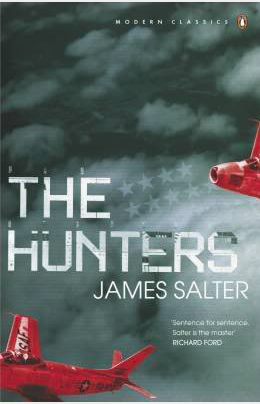
Literature and War Readalong May 31 2016: The Hunters by James Salter

The Hunters

James Salter’s The Hunters is this month’s Literature and War Readalong title. It’s the first novel about the Korean war that we’re reading in the read along. I’ve been keen on reading James Salter for ages as he’s always mentioned as one of the greatest US writers. Published in 1956, The Hunters was Salter’s first novel. Until the publication of this novel, Salter was a career officer and pilot in the US Air Force. He served during the Korean war where he flew over 100 combat missions. This was certainly the reason why he chose to write about a fighter pilot in his first novel. The novel has been made into a movie starring Robert Mitchum and Robert Wagner. James Salter died last June in Sag Harbor, New York.

Here are the first sentences:

A winter night, black and frozen, was moving over Japan, over the choppy waters to the east, over the rugged floating islands, all the cities and towns, the small houses, the bitter streets.

Cleve stood at the window, looking out. Dusk had arrived, and he felt a numb lethargy. Full animation had not yet returned to him. It seemed that everybody had gone somewhere while he had been asleep. The room was empty.

He leaned forward slightly and allowed the pane to touch the tip of his nose. It was cold but benign. A circle of condensation formed quickly about the spot. He exhaled a few times through his mouth and made it larger. After a while he stepped back from the window. He hesitated, and then traced the letters C M C in the damp translucence.


And some details and the blurb for those who want to join:

The Hunters by James Salter, 233 pages, US 1957, War in Korea

Here’s the blurb:

Captain Cleve Connell arrives in Korea with a single goal: to become an ace, one of that elite fraternity of jet pilots who have downed five MIGs. But as his fellow airmen rack up kill after kill – sometimes under dubious circumstances – Cleve’s luck runs bad. Other pilots question his guts. Cleve comes to question himself. And then in one icy instant 40,000 feet above the Yalu River, his luck changes forever. Filled with courage and despair, eerie beauty and corrosive rivalry, James Salter’s luminous first novel is a landmark masterpiece in the literature of war.

*******

The discussion starts on Tuesday, 31 May 2016.

Further information on the Literature and War Readalong 2016, including all the book blurbs, can be found here.