Literature and War Readalong July 28 2014: The Lie by Helen Dunmore

The Lie

Helen Dunmore has written several times about WWI. Back in 2012 we’ve read her earlier novel Zennor in Darkness, a book that made it on my Best of List that year. Naturally I’m looking forward to read her latest novel The Lie. I’ve seen a few reviews here and there but avoided to read them as I want to discover it for myself. What I like the most about Helen Dunmore is her beautiful prose. You can sense right away that she is also a poet.

If Rudyard Kipling’s epitaph at the beginning of the book is anything to go by, then it will be a heartbreaking novel.

If any question why we died

Tell them, because our fathers lied

This epitaph is doubly tragic as Kipling lost his son in WWI. Judging from the movie My Boy Jack, the boy would never have enlisted if it hadn’t been for his father. Here’s Kipling’s touching poem:

My Boy Jack

Have you news of my boy Jack?
Not this tide.
When d’you think that hell come back?
Not with this wind blowing, and this tide.

Has any one else had word of him?
Not this tide.
For what is sunk will hardly swim,
Not with this wind blowing, and this tide.

Oh, dear, what comfort can I find?
None this tide,
Nor any tide,
Except he did not shame his kind —
Not even with that wind blowing, and that tide.

Then hold your head up all the more,
This tide,
And every tide;
Because he was the son you bore,
And gave to that wind blowing and that tide!

Here are the first sentences of The Lie

He comes to me, clagged in mud from head to foot. A mud statue, but a breathing one. The breath whistles in and out of him. He stands at my be-end. Even when the wind is banging over the roof that I’ve bodged with corrugated iron, it’s very quiet. He doesn’t speak. Sometimes I wish he would break the silence, but then I’m afraid of what he might say. I can smell the mud.You never forget the reek of it. Thick, almost oily, full of shit and rotten flesh, cordite and chloride of lime. He has got himself coated all over with it. He’s camouflaged. He might be anything, but I know who he is.

And  some details and the blurb for those who want to join

The Lie by Helen Dunmore (UK 2014) WWI, Novel, 304 pages

Set during and just after the First World War, The Lie is an enthralling, heart-wrenching novel of love, memory and devastating loss by one of the UK’s most acclaimed storytellers. Cornwall, 1920, early spring.

A young man stands on a headland, looking out to sea. He is back from the war, homeless and without family.

Behind him lie the mud, barbed-wire entanglements and terror of the trenches. Behind him is also the most intense relationship of his life.

Daniel has survived, but the horror and passion of the past seem more real than the quiet fields around him.

He is about to step into the unknown. But will he ever be able to escape the terrible, unforeseen consequences of a lie?

*******

The discussion starts on Monday, 28 July 2014.

Further information on the Literature and War Readalong 2014, including all the book blurbs, can be found here.
Sarah Moss: Bodies of Light (2014)

Bodies of Light

In January I read Sarah Moss’ first novel Cold Earth (here is the review). I liked it but had some minor reservations. I wasn’t sure how good a writer she really was. After having read her latest book, Bodies of Light, I think it’s safe to say that she’s evolved from a promising writer to an accomplished one.

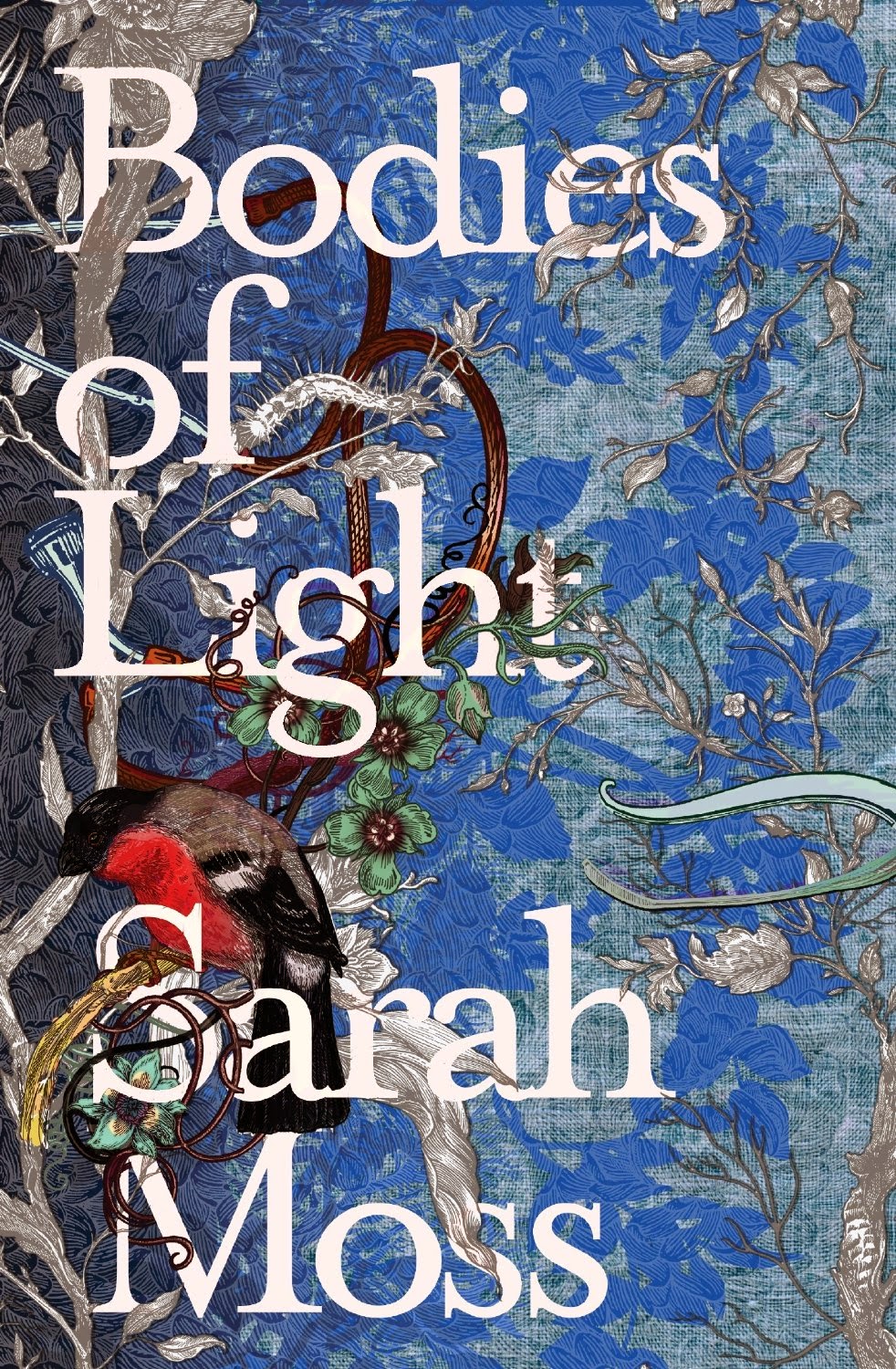
I didn’t look at the author’s name when I saw the book at the book shop the other day. What caught my attention was the beautiful cover that reminded me of a Victorian wallpaper. As soon as I opened it, I discovered that they had used the same endpaper inside. When I read the blurb, I saw how fitting this was, as Sarah Moss has set her third novel in Victorian Manchester and London. This might not have been enough for me to buy the book, but I started browsing and what struck me was how often colors and light were mentioned. I did something I don’t do that often; I bought the book and started reading it right away.

The novel did keep its promise; it has a lot of a William Morris wallpaper. The descriptions and the writing are gorgeous. But what is really arresting is the combination and range of topics.

Bodies of Light tells the story of two generations of women. Elizabeth is married to the designer and painter Alfred Moberley. Beauty is most important to him. He pays attention to color and light, to fabrics and interior decoration, to every single detail in a furniture, wallpaper or painting. Elizabeth is quite different. She likes it sober. She doesn’t want to wear expensive, colorful clothes. Her mother taught her that she has to be modest at all times because there are so many poor women who have nothing. This strict, severe upbringing, in which every single minute is dedicated to helping the poor, has turned Elizabeth into a joyless creature. And she’s ill-equipped for motherhood. She hates being pregnant and once the girl is born she hates her and can hardly be forced to take care of her. On the other hand, her mother taught her to despise the ways of the rich. A nanny is out of the question. Whenever her husband, who is a kind man, wants to take care of Ally and pampers the child, Elizabeth tells him off. It’s easy to understand why this marriage isn’t a happy one.

May is born after Ally. While she will be treated in very strict ways as well, she will not be abused. Abuse is the ugly secret in the Moberly household. Ally is her mother’s mirror and instrument. Her mother mishandles and punishes her and forces her to become successful. What she calls strict is nothing bud thinly veiled sadism.

In spite of this – or because of this – Ally will become one of the first women doctors. When it’s time for her to study, she will leave Manchester and go to live in London. She’s learned from an early age that others have less, that women are mistreated and it seems natural for her to dedicate her life to the cause of women. But her family, especially her mother, looms like a dark shadow over her head. The question is – will she be able to free herself and find happiness?

The summary may seem gloomy and the parts dedicated to Ally’s upbringing, the many cruelties she had to endure on a daily basis, made me choke, but the book contains so much beauty. I liked how complex all the characters are. Even Ally’s mother, Elizabeth. She’s doing a lot of good, helping the poor selflessly, at the same time, she unleashes her sadistic impulses on her daughter. It’s something that we hear occasionally. A person famous for his/her altruism, is a tyrant, bully or even a sadist at home.

A major topic is women’s fight for the right to higher education, their fight to become doctors. The scenes at the hospital are quite drastic. Ally specializes in gynaecology at first but then discovers her interest in psychiatry.

At times it was shocking to see that, while we’ve come a long way, women still fight for many of the things they fought for in the 19th Century. Conflicting emotions about motherhood, for example, are still more or less taboo.

Bodies of Light is a remarkable book. The writing is taut and stylish and full of luminous descriptions. The topics range from art to motherhood, from medicine to women’s history, from psychiatry to abuse and, finally, to healing. The greatest accomplishment however, is that the opposing themes and characters of the novel are mirrored in the writing. The writing is at times pithy, at times lavish. It’s a fascinating, thought-provoking book from a very assured writer. We can look forward to her next books.

Literature and War Readalong May 30 2014: Private Peaceful by Michael Morpurgo

Private Peaceful

Michael Morpurgo is a famous British Children’s author. Some of you may know him from the Spielberg movie War Horse, which was based on one of his novels. I’ve had Private Peaceful on my piles for a while and I’m really keen on reading it finally. I’ve always wondered how you write about war for children. Especially from the point of view of a soldier. We’ve read the Dutch novel Winter in Wartime last year, but that was set among civilians. So I’m curious to find out how explicit the book will be and where Morpurgo draws the line.

I’m glad that CarolineD made me aware that Private Peaceful and My Dear I Wanted to Tell You (our choice for September) have been chosen by CityRead London 2014. CItyRead London is a project to promote reading across the UK capital.

Here are the first sentences

They’ve gone now, and I’m alone at last. I have the whole night ahead of me, and I won’t waste a single moment of it. I shan’t sleep it away. I won’t dream it away either. I mustn’t, because every moment of it will be far too precious.

And some details and the blurb for those who want to join

Private Peaceful by Michael Morpurgo (UK 2003)  WWI, Children’s Book, 192 pages

Heroism or cowardice? A stunning story of the First World War from a master storyteller.

Told in the voice of a young soldier, the story follows 24 hours in his life at the front during WW1, and captures his memories as he looks back over his life. Full of stunningly researched detail and engrossing atmosphere, the book leads to a dramatic and moving conclusion.

Both a love story and a deeply moving account of the horrors of the First World War, this book will reach everyone from 9 to 90.


*******

The discussion starts on Friday, 30 May 2014.

Further information on the Literature and War Readalong 2014, including all the book blurbs, can be found here.
Literature and War Readalong April 28 2014: Toby’s Room by Pat Barker

Toby's Room

With Pat Barker’s novel Toby’s Room, we’re leaving the American Civil War behind and move on to WWI. All the books following Toby’s Room are dedicated to WWI.

Pat Barker is one of my favourite writers and her Regeneration Trilogy one of my favourite books. I read all three volumes (RegenerationThe Eye in the DoorThe Ghost Road) back to back and was genuinely sad when I turned the last page. It wasn’t only a story about WWI, but about shell shock, the development of two young disciplines (anthropology and psychiatry) and some of the famous poets who fought in the trenches. My love for her trilogy prevented me from picking up any of her other books, but now, some six years after I’ve read her masterpiece, I’m in the mood, to find out how I will like another of her novel. The scope of Toby’s Room is much smaller, the topics not as varied, but I still hope I won’t be disappointed. As far as I can judge from the blurb, Toby’s Room is a harrowing tale, touching on themes like disfigurement and facial reconstruction.

The first paragraph

Elinor arrived home at four o’ clock on Friday and went straight to her room. She hung the red dress on the wardrobe door, glancing at it from time to time as she brushed her hair. that neckline seemed to be getting lower by the minute. In the end her nerve failed her. She hunted out her pink dress, the one she used to wear for dancing classes at school, put it on and stood in front of the cheval mirror. She turned her head from side to side, her hands smoothing down the creases that had gathered round the waist. Oh dear. No, no, she couldn’t do it, not this time, not ever again.She wriggled out of it and throw it to the back of the wardrobe. Out of the window would have been more satisfying, but her father and brother-in-law were sitting on the terrace. She pulled the red dress over her head, tugged the neckline up as far as it would go, and went reluctantly downstairs.

And  some details and the blurb for those who want to join

Toby’s Room by Pat Barker (UK 2013), WWI, Novel, 272 pages

Pat Barker returns to the First World War in Toby’s Room, a dark, compelling novel of human desire, wartime horror and the power of friendship.

When Toby is reported ‘Missing, Believed Killed’, another secret casts a lengthening shadow over Elinor’s world: how exactly did Toby die – and why? Elinor determines to uncover the truth. Only then can she finally close the door to Toby’s room. Moving from the Slade School of Art to Queen Mary’s Hospital, where surgery and art intersect in the rebuilding of the shattered faces of the wounded, Toby’s Room is a riveting drama of identity, damage, intimacy and loss. Toby’s Room is Pat Barker’s most powerful novel yet.

*******

The discussion starts on Monday, 28 April 2014.

Further information on the Literature and War Readalong 2014, including all the book blurbs, can be found here.

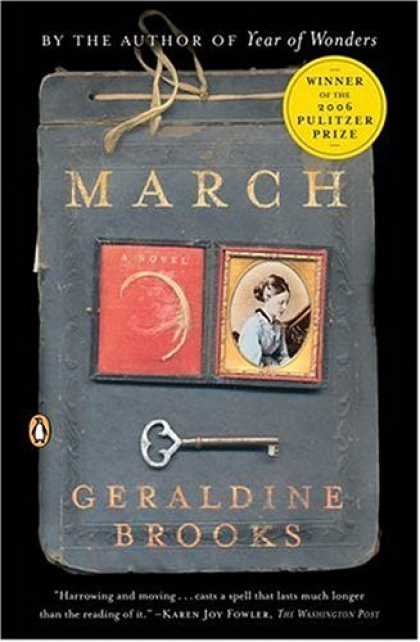
Literature and War Readalong March 31 2014: March by Geraldine Brooks

March

Geraldine Brooks is an Australian-born writer whose second book, the Civil War novel March, received the Pulitzer Prize in 2006. The book is inspired by Louisa May Alcott’s famous novel Little Women. March tells the story of the absent father. Right from the beginning of Little Women we know that the father is fighting for the Northern forces in the Civil War.

Jo said sadly, “We haven’t got father, and shall not have him for a long time.” She didn’t say “perhaps never”, but each silently added it, thinking of father far away, where the fighting was.

I’ve always meant to read one of her novels and this seemed a good choice. It will be interesting to compare this to Killer Angels.

Here are the first sentences

October 21, 1861

This is what I write to her: The clouds tonight embossed the sky. A dipping sun gilded and brazed each raveling edge as if the firmament were threaded through with precious filaments. I pause there to mop my aching eye, which will not stop tearing. The line I have set down is, perhaps, on the florid side of fine, but no matter: she is a gentle critic.My hand, which I note is flecked with traces of dried phlegm, has the tremor of exhaustion.

And  some details and the blurb for those who want to join

March by Geraldine Brooks (Australia 2005) American Civil War, Novel, 304 pages

Brooks’s luminous second novel, after 2001′s acclaimed Year of Wonders, imagines the Civil War experiences of Mr. March, the absent father in Louisa May Alcott’s Little Women. An idealistic Concord cleric, March becomes a Union chaplain and later finds himself assigned to be a teacher on a cotton plantation that employs freed slaves, or “contraband.” His narrative begins with cheerful letters home, but March gradually reveals to the reader what he does not to his family: the cruelty and racism of Northern and Southern soldiers, the violence and suffering he is powerless to prevent and his reunion with Grace, a beautiful, educated slave whom he met years earlier as a Connecticut peddler to the plantations. In between, we learn of March’s earlier life: his whirlwind courtship of quick-tempered Marmee, his friendship with Emerson and Thoreau and the surprising cause of his family’s genteel poverty. When a Confederate attack on the contraband farm lands March in a Washington hospital, sick with fever and guilt, the first-person narrative switches to Marmee, who describes a different version of the years past and an agonized reaction to the truth she uncovers about her husband’s life. Brooks, who based the character of March on Alcott’s transcendentalist father, Bronson, relies heavily on primary sources for both the Concord and wartime scenes; her characters speak with a convincing 19th-century formality, yet the narrative is always accessible. Through the shattered dreamer March, the passion and rage of Marmee and a host of achingly human minor characters, Brooks’s affecting, beautifully written novel drives home the intimate horrors and ironies of the Civil War and the difficulty of living honestly with the knowledge of human suffering.

*******

The discussion starts on Monday, 31 March 2014.

Further information on the Literature and War Readalong 2014, including all the book blurbs, can be found here.
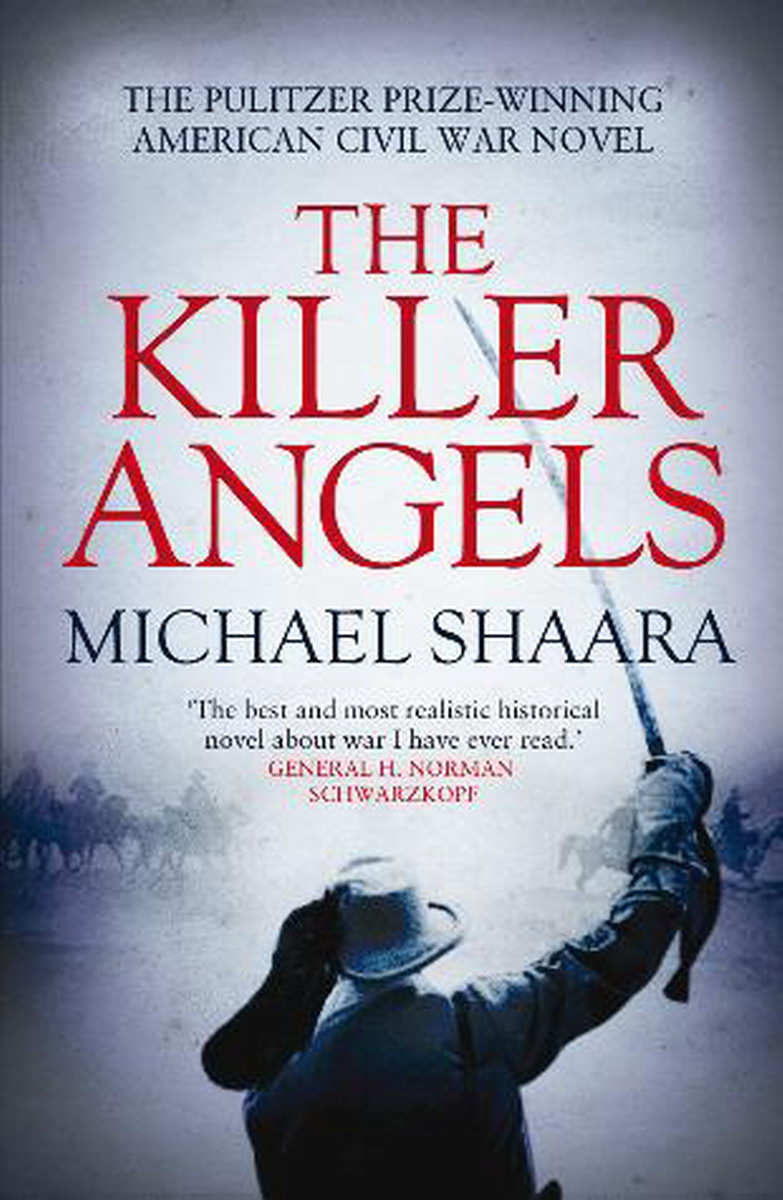
Literature and War Readalong February 28 2014: The Killer Angels by Michael Shaara

The Killer Angels

Michael Shaara’s Pulitzer Prize winning novel The Killer Angels is certainly one of the most famous novels about the American Civil War. Or rather about the decisive battle of Gettysburg that cost 50,000 lives. As far as I’m informed this was the battle that changed everything. While the Confederates were less numerous, they still won most battles so far. Gettysburg would change all that. I’m interested to see whether I will like a book that focuses on one battle only.

A few years back I saw the TV mini-series Gettysburg, which is based on this novel. It’s quite long but I enjoyed watching it and might rewatch it this month. It has a great cast: Tom Berenger, Martin Sheen, Jeff Daniels, Sam Elliott

Here are the first sentences of the novel

He rode into the dark of the woods and dismounted. He crawled upward on his belly over cool rocks out into the sunlight, and suddenly he was in the open and he could see for miles, and there was the whole vast army below him, filling the valley like a smoking river. It came out of a blue rainstorm in the east and overflowed the narrow valley road, coiling along a stream, narrowing and choking at a white bridge, fading out into the yellowish dust of June but still visible on the farther road beyond the blue hills, spiked with flags and guidons like a great chopped bristly snake, the snake ending headless in a blue wall of summer rain.

And  some details and the blurb for those who want to join

The Killer Angels by Michael Shaara (US 1974), American Civil War, Novel, 355 pages

The late Shaara’s Pulitzer Prize-winning novel (1974) concerns the battle of Gettysburg and was the basis for the 1993 film Gettysburg. The events immediately before and during the battle are seen through the eyes of Confederate Generals Lee, Longstreet, and Armistead and Federal General Buford, Colonel Joshua L. Chamberlain, and a host of others. The author’s ability to convey the thoughts of men in war as well as their confusion-the so-called “fog of battle”-is outstanding. This unabridged version is read clearly by award-winning actor George Hearn, who gives each character a different voice and effectively conveys their personalities; chapters and beginnings and ends of sides are announced. Music from the movie version adds to the drama. All this comes in a beautiful package with a battle map. Recommended for public libraries not owning previous editions from Recorded Books and Blackstone Audio (Audio Reviews, LJ 2/1/92 and LJ 2/1/93, respectively).

*******

The discussion starts on Friday, 28 February 2014.

Further information on the Literature and War Readalong 2014, including all the book blurbs, can be found here.
Literature and War Readalong January 31 2014: The Black Flower by Howard Bahr

The Black Flower

As I wrote in my introductory post to this year’s readalong, I was at first tempted to include only books based on WWI but decided against that for numerous reasons. In the first readalong I had included two novels on the American Civil War, one of which had to be removed from the list as 2011 was the first year of the German Literature Month and I wanted to add a German novel in November. The novel on the American Civil War that we read in 2011 and which impressed me a great deal was Cold Mountain and when Kevin (The War Movie Buff) mentioned he’d just read another novel on the American Civil War that he found just as compelling, I decided, to include said novel at a later date. So it’s thanks to Kevin that we’re reading The Black Flower this year. I must say I’m very eager, not only because I hope we will like it, but because I’m glad to return to the American Civil War. This book is the first in a series of three books that are dedicated to that war and I’m sure it will be interesting to see how these very different novels will approach the subject. At first I thought that Bahr might have been inspired by Cold Mountain but since both books were published in 1997, I’d say that wasn’t the case.

Howard Bahr was a school teacher before he started to write. The Black Flower  was his first novel. He’s written other novels since then and they all received awards.

Here are the first sentences

Bushrod Carter dreamed of snow, of big, round flakes drifting like sycamore leaves from heaven. The snow settled over trees and fences, over artillery and the rumps of horses, over the men moving in column up the narrow road. A snowflake, light and dry as a lace doily, lit on the crown of Bushrod’s hat; when he made to brush it away, he found it was not snow but hoe cake dripping with molasses.

And  some details and the blurb for those who want to join

The Black Flower by Howard Bahr (US 1997), American Civil War, Novel, 272 pages

The Black Flower is the gripping story of a young Confederate rifleman from Mississippi named Bushrod Carter, who serves in General John Bell Hood’s Army of Tennessee during the Civil War battle that takes place in Franklin, Tennessee, in November 1864. Written with reverent attention to historical accuracy, the book vividly documents the fear, suffering, and intense friendships that are all present on the eve of the battle and during its aftermath. When Bushrod is wounded in the Confederate charge, he is taken to a makeshift hospital where he comes under the care of Anna, who has already lost two potential romances to battle. Bushrod and Anna’s poignant attempt to forge a bond of common humanity in the midst of the pathos and horror of battle serves as a powerful reminder that the war that divided America will not vanish quietly into the page of history.

*******

The discussion starts on Friday, 31 January 2014.

Further information on the Literature and War Readalong 2014, including all the book blurbs, can be found here.