Tin Man by Sarah Winman (2017)

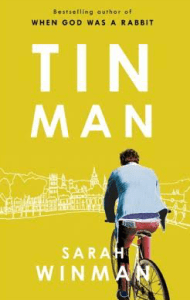
Sarah Winman’s Tin Man is another novel I bought because of some rave reviews. Luckily, this time, I enjoyed the book a lot. It’s actually surprising because Sarah Winman does something I normally don’t like. She switches narrators in the middle of the novel, using a narrative device that can easily sink a novel – the use of a diary. In this case, the switch added poignancy and turned a very good novel into an excellent, heartbreaking book.

Before I start with a brief summary, let me emphasize what a great cover this book has. Until you read it, it’s just a pop of yellow color with a man riding a bicycle on it, but once you’ve read the book, you know that the yellow cover alludes to one of Van Gogh’s most famous paintings – The Sunflowers.
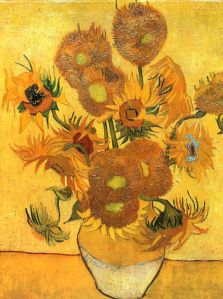
Van Gogh’s Sunflowers

The painting stands for beauty and the belief, as one of the characters’ mother says, that boys and men are capable of beautiful things.

As a matter of fact, the book starts with the painting or rather how Ellis’ mother won a copy of it in a raffle and put it on a wall, in an act of defiance. Her brutish husband would have preferred her to take a bottle of whisky. The year is 1950 and it’s Ellis’ birth year.

The book then moves to 1996. We are in Elli’s house. There’s a photograph of three people on a bookshelf. A photograph Ellis rarely looks at because two of the three people in it are gone. One, his wife, is dead. What happened to the other one, his best friend Michael ,will be revealed over the course of the novel.

Annie, Ellis’ wife, has been dead for five years, but the grief is still raw. It’s one of the reasons why Ellis works at night. In a factory. Factory work wasn’t exactly his calling. He wanted to become a painter but after his mother’s early death, his dad didn’t allow it.

Ellis’ whole life is slowly revealed. At its heart is his friendship with Michael, a lonely orphan, who lives nearby and visits often. The two boys are very close. Also physically close and for the longest time, one of them, Michael, thinks they will be lovers. They will, in fact, but it’s a furtive thing. Ellis doesn’t really seem to be gay. And once Annie comes along, there’s no doubt, this is the love of his life. At least romantically speaking, because in terms of emotional love, there’s not much of a difference. He loves Michael just as much as Annie.The truly magical thing, though, is that Michael and Annie become best friends as well.

Of course the reader wonders where Michael is. Why is Ellis’ best friend not with him and helps him to get over his grief?

Ellis has an accident and is on sick leave for a long time. Having so much time for himself, has a huge impact. He revisits his life, his aspirations, his dreams. And then he finds Michael’s diary and we finally learn what happened. How they lost contact and why they are apart.

The first part, Ellis’ part, is sad, but the second, Michael’s, is heartbreaking. The relationship seen through his eyes, gets another meaning and the book explores another form or grief—heartbreak.

Here’s what Michael says

I rest till I’m calm and my breathing has settled. I lift myself out and sit by the edge of the pool with a towel around my shoulders. And I wonder what the sound of a heart breaking might be. And I think it might be quiet, unperceptively so, and not dramatic at all. Like the sound of an exhausted swallow falling gently to earth.

Both men travel to the South of France, following Van Gogh’s itinerary but also, in Ellis’ case, exploring where Michael spent some time.

These parts are beautiful and capture the landscape, its colors and scents so well

It’s a rare overcast day and I walk over to Mausole, to the St. Paul asylum where Van Gogh spent a year before he died. The air along this stretch of road is filled with the scent of honeysuckle that has crept over a neighbouring wall. I think it’s honeysuckle. It’s sweet and fragrant, but I’m not good with plants – that was Annie’s thing. I veer off through olive groves where the sun has yet to take the colour of the wildflowers. In two weeks, though, the grass will be scorched and lifeless.

Since this novel is mainly set in the 90s of the last century and does explore what it was like to be gay back then, it touches on so many really sad topics like HIV, the way homosexuals were perceived by society, how many never came out, how they had to hide. Things have gotten so much better by now, that we almost tend to forget that not too long ago, they were very different. In the early 90s HIV was still synonymous with Aids. Once you were infected there wasn’t a huge chance you wouldn’t get seriously ill sooner or later and then, because there was no cure, die. There are passages, in which Michael visits men in an Aids ward. They are harrowing.

Tragic books, especially when they describe raw emotions can turn mushy or tacky. This one never crosses these lines. It’s moving and deeply touching without being sentimental. It’s an emotional ride that explores themes like grief and loss, loneliness and unrequited love, finding one’s path, following one’s calling and, most of all, fining beauty where there seems to be only ugliness. A truly beautiful book.
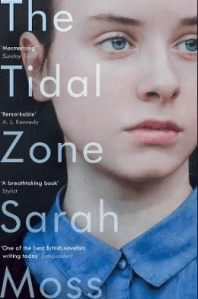

The Tidal Zone by Sarah Moss (2016)

Stories have endings; that’s why we tell them, for reassurance that there is meaning in our lives. But like a diagnosis, a story can become a prison, a straight road mapped out by the people who went before. Stories are not the truth.

Rave reviews of Sarah Moss’ The Tidal Zone caught my attention and I decided I had to read it. I’ve read two of her earlier novels, Cold Earth, a stunning ghost story, and Bodies of Light, a mesmerizing historical novel. I enjoyed them very much and was pretty certain I would love The Tidal Zone as well. Unfortunately, I was wrong. I liked it but didn’t love it. I’m not exactly sure, why I didn’t warm to this ambitious book. It offers so much. Meditations on life and death, gender, politics, family life, illness, the NHS . . . I could go on.

It’s the story of a family that almost unravels when the heart of the 15-year-old daughter, Miriam, stops. Miriam survives the episode but has to stay at the hospital for a long time as it’s not clear what brought on this reaction. She seems to suffer from some type of allergy. Adam, a stay-at-home dad, spends most of his time at her side, only occasionally replaced by his overworked wife, a doctor, who works for the NHS.

Many reviewers called this a “state of the nation” novel and that’s accurate. It definitely looks at the way people live in Britain now. Or rather, the way middle-class, white people live in England. Adam’s a bit of a failed academic and is working on writing something about the Coventry cathedral. The book alternates between reflections on the cathedral, which was, along with most of the city, destroyed during WWII. Like Miriam’s incident, the stories that are told in these parts are about human frailty and the unpredictability of life. But they also help to illustrate the family history as Adam’s Jewish dad was born in the US. The family fled Europe during the war.

Fiction is the enemy of history. Fiction makes us believe in structure, in beginnings and middles and endings, in tragedy and comedy. There is neither tragedy nor comedy in war, only disorder and harm.

While I didn’t warm to this book, I enjoyed many of its parts. This is a family of intellectuals who seem to love a good argument. The descriptions of family life are often hilarious. Miriam’s a great, great character.

Here’s  her answer to her dad’s question whether she’ll go with him to Coventry cathedral:

It’ll take more than coloured glass and old music to make me sign up to homophobia, misogyny and the grandfather of all patriarchal institutions.

She’s bright, very political and engaged. She will never let anyone get away with bullshit. It was so refreshing to read their repartees.

She had joined Amnesty International and Greenpeace and the Green Party. She said patriarchy and hegemony and neo-liberalism, several times a day. She put streaks of blue in her hair and enjoyed baiting her teachers by wearing mascara: but Miss, you’re wearing makeup. But Sir, aren’t you just inducting us into a world more interested in policing women’s sexuality than giving us knowledge?

Obviously, this isn’t your every day family as Adam’s a stay-at-home dad. While it does sound like hard work at times and he makes huge efforts to ensure that the family always has clean clothes, nourishing, healthy meals and that the house is clean and tidy, we never hear it mentioned that he struggles. I found that interesting because I can’t remember every reading a novel about a stay-at-home mum who also was an academic and tried to get work done and it sounded so harmonious. I wonder if that was a conscious choice and if so, why. I remember that the mothers in Sarah Moss’ earlier books struggled quite a bit with motherhood.

As you see, there’s a lot to love here. So why didn’t I warm to this? The book had the misfortune of reminding me of Ian McEwan’s Saturday. None of the characters is even remotely as obnoxious as those in Saturday, still, there’s a similarity. Probably because the characters both occupy the same social territory. Or maybe I didn’t warm to this because Sarah Moss tried hard to show us another side of her talent. While the other novels I read were very atmospheric and spoke to the senses, this one speaks purely to the mind and – depending on the reader – to the emotions. Since I had no emotional reaction to this, it spoke only to my mind, which wasn’t enough for me to love it.

Reading is Like Purring or What I’ve Been Doing These Past Months

Before I begin this post, I’d like to thank everyone who has left one of the many kind and supportive comments on my last post. It means a lot. I was very touched. Thank you so much.

What a long absence. Initially, I thought I’d be absent for a couple of weeks, maybe a month, but it has quickly turned into over two months. I don’t want to go into too many details but for those who are interested, I’ll explain a few things. Part of my absence was due to my eyes, even though I was allowed to read again after a few weeks. I know, some of you thought I was absent because of eye strain but that wasn’t the reason. One evening, while I was about to go to bed, I suddenly saw very bright flashing lights. Since I had had other eye problems for a while, I knew that seeing flashes is something you need to take very seriously and so I rushed to the ER of the eye clinic. As they explained, I had some ruptured blood vessels in my retina, due to the detachment of the vitreous body in one eye. Usually, this isn’t dangerous. Only 2% of the people who experience a vitreous body detachment are in danger of retinal bleeding and/or rupture  . . . I was lucky that it didn’t get worse and since the vitreous body seems fully detached now, I should be OK. Why did this happen, you wonder? I’m very short sighted in one eye and that’s one of the main reasons why this happened so early (usually people get this at a much older age, not at 40+, rather at 60+) and with these consequences. While there is no more danger, I still suffer from floaters, one of which is called “white ring” and rather annoying. It means my eyesight is still 100%, but I feel like looking through a snow globe and moving my eyes too quickly makes the floaters swirl. Reading books is actually OK, but reading on the laptop/computer or scrolling on the iPad is awful.

This brings me to the title of my blog post. As you probably know, cats purr for many reasons. Of course, they purr when they are content but they also purr to calm or placate themselves when they are in pain or scared. I noticed that reading serves pretty much the same purpose for me. I read when I’m happy, but I also turn to reading when I’m anxious and stressed. It calms me. Not being able to read while I wasn’t sure whether the bleeding would turn into something more serious like retinal detachment and I would need eye surgery, was a freaking nightmare. So much so, in  fact, that I had to think about reading at a more profound level than someone else might have in my situation. I don’t think it’s good to be this dependent on something. So, that’s another reason I was absent for so long.

Now, finally, here are some of the things I’ve done instead of reading:

  • Listening
    • Audiobooks – Within a week of my predicament I got an audible subscription but I’ve unsubscribed again. Audiobooks don’t work for me. I’m not sure why but I think it’s because of the voices. I find many readers are too intrusive and almost seem to interpret the books they are reading. I only managed to finish one of the few I started and that wasn’t even from my subscription but it was a CD I’d purchased a while ago. Arthur Schnitzler’s Late Fame (or rather Später Ruhm – I listened to it in German). It was absolutely terrific. The narrator’s an actor and you can hear that. And he’s never overdoing it. The story as such is great as well.
    • Podcasts – Another thing I’ve been listening to, were Podcasts and I’m happy to say that it was an amazing experience. I discovered that I love Podcasts and have tried out most of those that were recommended to me. And I’ve also discovered a few that weren’t as they are not only about books. The book/literature Podcast I enjoyed the most was Simon and Rachel’s Tea or Books. (Here’s the iTunes page). Another one I liked was CBC’s “Writers and Company” and the BBC’s World Book Club. The not fiction related Podcast that won me over is The Emma Gunns show. She talks a lot about beauty and interviews people from the beauty industry (Pixiwoo, Daniel Sandler,  . . .), but there are also Podcasts about other topics that I found super interesting like her conversations with Jen Sincero (about being a badass at making money) or Chloe Brotheridge (about her book on anxiety). Emma seems like such a lovely person. Here’s the link to her site.
    • Music – I discovered the music of Agnes Obel and absolutely love it. 
  • Looking
    • Coffee table books – In my case, not being able to read, didn’t mean I couldn’t look at books. (I had to avoid the rapid eye movements that reading demands). I discovered that I had a huge amount of art and great coffee table books and have started to peruse those. I’ll probably introduce you to some of them in the coming months.
  • Watching
    • Movies – Guy’s suggested a few French movies and I watched all of them. I especially liked the two starring Isabelle Huppert, Elle, a psychological thriller, and L’avenir – Things to Come, a quiet, reflective movie. What an amazing actress.
    • TV – The series I enjoyed the most was season one of Versailles. I could watch the Intro endlessly. 
    • BookTube – Of course, I knew that some bloggers have YouTube channels, but I’d never explored them. During the last weeks, I sampled a few and finally started following one of them – Jen Campbell. You may have heard of her. She’s the author of the hilarious collections Weird Things Customers Say in Bookshops and More Weird Things Customers Say in Bookshops (I reviewed the first one here). She’s also written a book about Bookshops, which looks terrific, a poetry collection, a children’s book and her first short story collection is due this autumn. I love her channel. She’s so enthusiastic and knowledgable, it’s refreshing. And she knows something about light and choosing an appealing background. It’s unbelievable how many book bloggers seem to think that talking to a camera in a half-dark, stuffy room, with unflattering light could be appealing to anyone. I get it, they aren’t beauty/fashion YouTubers but still, they could make a minimal effort. Anyway, check out Jen’s channel. It’s worth it. Here’s her YouTube channel.

And, finally, once I was better

  • Reading
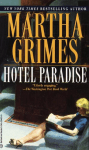
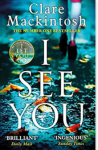
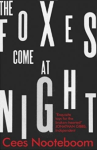
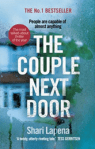
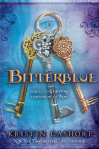
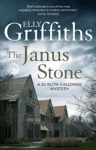
    •  Fiction – I’ve read one novel in the first month – Martha Grimes’ Hotel Paradise, a very engaging coming of age story with a terrific, original narrator. It’s about a crime, but that’s more in the background. The book is far more character than plot-driven. Once I felt better I rushed through three crime and one fantasy novel and a short story collection. Shari Lapena’s thriller The Couple Next Door is one of those super twisty thrillers. There are so many twists and I didn’t see them coming. I think I’m not that much into this kind of thriller anymore but if you are – read it. It’s definitely one of the better ones. Clare Mackintosch’s I See You was a disappointment for me. I liked her first novel I Let You Go so much, my expectations were quite high. It’s also quite twisty, and I didn’t see the ending coming. Unfortunately though, not because of the twist but because it seemed so farfetched and implausible. The next novel was the second book of Elly Griffith’s Ruth Galloway series The Janus Stone. I didn’t like it as much as the first but still enough to pick up the third soon. The fantasy novel I read was the third in Kristin Cashore’s Graceling Realm series Bitterblue. It had a very slow start but after two hundred pages I loved it so much, I was sad when it ended. Talk about a book hangover. The short story collection I’ve almost finished is Cees Nooteboom’s The Foxes Come at Night. Nooteboom has written some of my favourite books but I didn’t/don’t get along with this collection. I find it forced.
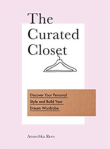
    • Nonfiction – I’ve tried to downsize and rearrange my closet and have gotten a few books about reorganising/style  . . . Currently I’m working my way through Anushka Ree’s The Curated Closet. It’s very enjoyable.

Overall, after the worst was over, I had a good time. I discovered a new way of reading. I don’t read as quickly as before, nor as rushed or obsessive. I stick to one book and savour it.

And how are you? What have you been reading, listening to, and watching these past months?

Claire Fuller: Swimming Lessons (2017)

Swimming Lessons is English author Claire Fuller’s second novel. After coming across more than one raving review by book bloggers and critics, I decided I had to read it.

Flora and Nan’s mother has disappeared twelve years ago. One day, their father, Gil Coleman, thinks he’s seen her and while trying to get a better look accidentally falls from a seafront. Nan, the older sister, a nurse, calls Flora and begs her to come home and help her look after their dad.

Unlike Gil and Nan, Flora doesn’t believe that her mother has drowned. She thinks that she simply chose to leave and might still return one day.

After the first chapter in which Flora travels to her childhood home, a swimming pavilion, the narrative splits. The parts in the present are told from Flora’s POV, the parts in the past are written in the form of letters Ingrid writes to Gil before she disappears. Ingrid hides the letters in the pages of Gil’s books. Gil Coleman, who is the famous author of a scandalous book, has an interesting hobby. He collects old books. Not because of the books but because of the things he finds in them— the notes and drawings of their readers. In one of these he finds a letter from his missing wife. Ingrid’s letters unfold their complex, difficult, and destructive marriage.

Most readers seem to have liked the marriage story told by Ingrid in the letters. While I found some elements interesting, overall, the parts set in the present, spoke to me much more.  The most interesting element of Ingrid’s story is her feelings for her children. She doesn’t relate to her two daughters. The first one, Nan, was an accident and somehow Ingrid always saw her as an independent being. Flora, the third, is very much Gil’s daughter. I guess that’s why the parts in the present are told from her and not from Nan’s point of view. She adores and idolizes her father. Finding out the truth about her parent’s marriage is more of a surprise and a shock to her than it is to the reader. One of the tragedies of Ingrid’s life is that the child she relates to the most was stillborn. When she’s pregnant with him, she already knows that Gil is unfaithful and she’s very lonely. She projects so much on this child and is sure he will become her companion. When he dies, she feels like she’s lost her only true child and her chance at happiness and companionship. I found this extremely sad and problematic for everyone involved. For Ingrid, because she lost that baby and for her two girls because they mean less to their mother than a child who didn’t even live.

The parts told by Flora were those I could relate to the most. They show how difficult it is to live with a family secret and what a challenge it can be, coming from a dysfunctional family, to have healthy relationships.

One of the main themes of the novel is ambiguous loss. There’s a story one character tells the others, in which a child gets lost and it mirrors Ingrid’s story. The loss is magnified because they never get closure. It’s possible she’s dead but it’s just as possible, she left them. Gil and Nan, both believe she’s dead and have moved on, but Flora, for the longest time, cannot move on as she’s still hoping her mother’s out there somewhere.

Whole books have been written about ambiguous loss. There are other forms of ambiguous loss, not only those, in which the body of the disappeared was never found but also those in which the mind has gone but the body’s still around, like in the case of dementia or Alzheimer patients. I haven’t experienced anything like this but I always thought it must be devastating. It’s an important topic and I loved how subtly it was explored in this novel.

This is one of those books I enjoyed far less while reading it than after finishing it. I’m not always keen on split narratives. I often prefer one narrator/POV and going back and forth between two or more can get on my nerves. But when a book is really good, it can come together as whole, once we finish reading. And that was the case here. The longer I thought about it, the more I liked it. I found the characters, especially quirky Flora, interesting and relatable and I absolutely loved the sense of place. The descriptions of the swimming pavilion and the surrounding landscape of marshes and ponds, is what held the book together. The imagery was so strong that I can still picture the place with great detail. The ending was unexpected and powerful.

If you like stories of dysfunctional families and family secrets, books with a strong sense of place, and fully rounded, complex characters, you might enjoy this subtle, haunting story that lingers in the mind long after the book is finished.

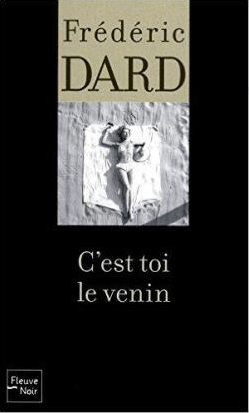
Frédéric Dard: C’est toi le venin (You’re the Poison) (1957)

I have no idea why I haven’t read any Frédéric Dard novels so far. Possibly, because in France his standalone novels are a bit overshadowed by his San-Antonio series, which never tempted me. Or because he was so prolific that I had no clue where to start. He wrote at least 280 novels, twenty plays, and sixteen adaptations for the cinema. There was one novel, however, I always meant to read because it has been made into a movie (Toi, le venin – Night is Not For Sleep aka Blonde in a White Car), of which my dad was very fond. He even had a single of the film music. That’s why I chose this book over all the many others that sounded just as good and also over all those already translated into English.

Ces’t toi le venin, which I would translate as “You’re the poison” tells the story of Victor Menda. Victor Menda, a young man of twenty-eight years, is down on his luck. He has no job, no money, no relatives, no friends and serious dept at the casino. The story’s set on the Côte d’Azur and at the beginning we see Menda walk along the sea, contemplating suicide. He eventually decides against this drastic measure and takes a walk along the water. Suddenly a car stops. A woman’s at the steering wheel and demands that he join her. Menda does as he’s told. He’s intrigued and wants to see the woman’s face but a scarf hides it. She finally stops again and wants to have sex with him. Although he finds this openly demanding behaviour a tad intimidating and even revolting, he still accepts. When she finally boots him out again, there’s nothing else he can do but write down her number plate.

Don’t worry, I haven’t given away too much of the plot, as what I just summarized doesn’t take up more than a few pages. The story as such begins when Menda finds the owner of the car. The car belongs to Hélène, the older of two very beautiful and rich sisters who own a huge villa near Nice. The younger sister, Ève, sits in a wheelchair since the age of thirteen. The young girl develops a massive crush on Menda and so the older one begs him to stay with them. Unfortunately, Menda falls in love with the older one.

It soon becomes obvious that things are not as they should. There’s someone using the car at night but it doesn’t seem to be Hélène. Other strange things happen, which alert Menda.

The atmosphere and the mood in the novel get darker and darker. At first Menda thinks, he’s struck gold, but soon he can’t shake off the feeling of being trapped and used. Someone is playing cat and mouse with the people living at the villa. Is it one of them or someone from outside?

I absolutely loved this novel. Some of it is predictable but there are still enough surprising twists and the end is chilling.

Like Simenon, Dard relies heavily on dialogue. There are just a few descriptions here and there to create a mood and atmosphere. That’s why reading the book feels a lot like watching a movie. It has immediacy and a pretty brisk pace.

I’m a sucker for books set on the Côte d’Azur, but even if Dard had chosen another setting, I would have enjoyed this book a lot.

I hope to watch the movie soon, until then, I’ll listen to the score. It’s captures the mood of the novel perfectly.

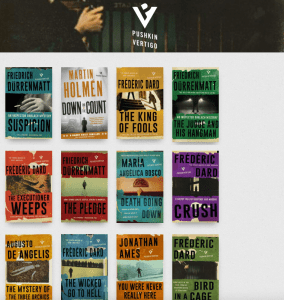
While C’est toi le venin hasn’t been translated yet, some of Dard’s other novels have been published by Pushkin Press in their Vertigo series.


Toni Morrison: God Help the Child (2015)

I’m so annoyed with myself. I have three or four unread books by Toni Morrison on my piles but instead of reading those, I went and bought her latest, God Help the Child. That wouldn’t be a problem if this was a good book but it’s not. It’s so flawed, it could be a beginner’s novel. And the style? Well, when you pick a Toni Morrison novel, you expect it to be challenging. You don’t expect it to be bland mainstream, with descriptions like “the sky was baby-blue”. Honestly, what went wrong?

The book’s premise had so much promise. The blurb said it’s a book about the way parents damage their children and the repercussions this has later in their life, but somehow that’s not really what it is about. The book doesn’t really take this theme seriously. Maybe because it’s about so many other topics— race, skin color, trust, self-esteem, child abuse.

When the main character Bride is born, her mother rejects her immediately because of her black skin. Nobody in Bride’s family is this blue-black. In fact, they are so light, some of them did pass as white. Her mother, too, could, if she wanted, pass as white. Bride’s father is so shocked that he leaves her mother. He can’t imagine that two rather fair African-Americans could be the parents of such a black child. Of course, he suspects she was unfaithful.

Bride grows up as an outsider and only later, in her twenties, is she able to embrace her skin color and discover her beauty. She even learns how to underline it by wearing only white. At the age of twenty-two, she’s a successful executive at a cosmetic company, ready to launch her own beauty line. While she’s still fighting for her mother’s love, she’s also happy about her success and her beautiful lover, Booker, until the day she tells him something and he leaves her without an explanation.

The reader learns that Booker’s reaction has something to do with Bride’s idea of helping a woman who was convicted for child abuse.

I will stop here as the book basically is about why Bride does what she does and why this makes Booker flee. Both reasons are tied to the protagonists’ childhood.

For such a slim novel – under 180 pages – it has just too many themes. While some are really well done, especially all those linked to colorism, others didn’t get the depth they would have deserved. It isn’t fully explored what being rejected by her mother really meant for Bride. She does something cruel to gain her mother’s love and this affects her, but there doesn’t seem any real and deep damage. This struck me as odd.

What also struck me as odd was the number of child molesters we come across in this book. This too is such a serious problem, but it just didn’t get the careful treatment it would have deserved.

I’m really disappointed and wish I hadn’t bothered with this book. At the same time, I find colorism such an important topic, that I liked the book for that.

I’m glad this wasn’t my first Toni Morrison. It would have been my last. I’d rather read some bestseller than something that is written like a mainstream novel but saddled with heavy, carelessly treated themes. Don’t read this unless you’re a Toni Morrison fan and want to read everything she’s ever written. That said, I think she’s a terrific author and I’ll be reading more of her. Let’s just hope this was a one-off.

Have you read Toni Morrison? Which of her novels do you consider must-reads?

Literature and War Readalong May 2017: War Poems

For the last readalong before the summer break we are reading something we haven’t read before—poems. I know people are sometimes reclutanct to read poetry, so to encourage you to participate, I’m keeping the “rules” very free. I’ve chosen four different collections and those who want to join can either pick only one or all of them, read only a few, or even only one poem. I don’t think I will review all four of the books in their entirety, but will choose several poems from the four collections

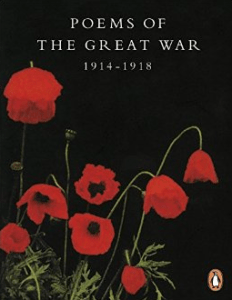
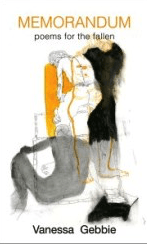
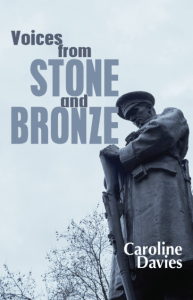
The Poems of the Great War collection is probably the one book most readers are familiar with. Memorandum is a collection by Vanessa Gebbie whose short story collection Storm Warning we’ve read last year. Vanessa even joined our discussion which was a special treat fo those who participated. Poet Caroline Davies has been a long-time follower of the read along. I’ve always enjoyed her thoughtful comments and when she suggested, we read poems, I was immediately enthusiastic, especially since this finally gives me the opportunity to read her poetry collections.

Here are the first lines of each collection

In Flanders Fields (John McCrae)
In Flanders fields the poppies blow
Between the crosses, row on row,
That mark our Place; and in the sky
The larks, still bravely singing, fly
Scarce heard amid the guns below.
(….^)
Cenotaph
Under duress, stone gives
up its constituent parts
Veteran shells, sediment
filled, crystalline. (…)
The Litany 
She has to look down as the roll call begins.
She knows all of them, each name, every family.
Thomas Arnold, G Arthur Caffrey, Thomas Cudworth, T Owen Davies
and then the moment of her son’s name when she raises her head. (…)
Sirens
When the sirens sound we huddle
under the kitchen table.
Mam, Nain and me.
It’s oak, it will keep us safe
when the house falls down.
Nain says Liverpool’s taking it bad. (…)

And some details and the blurb for those who want to join

Poems of the Great War

Published to commemorate the eightieth anniversary of Armistice, this collection is intended to be an introduction to the great wealth of First World War Poetry. The sequence of poems is random – making it ideal for dipping into – and drawn from a number of sources, mixing both well-known and less familiar poetry.

Voices from Stone and Bronze by Caroline Davies

A moving, honest and never sentimental collection that gives a voice to London’s many war memorials.
In her second poetry collection Caroline Davies turns her attention to the War Memorials of London. Voices from Stone and Bronze brings to life those who fought and died and those who survived, including some of the sculptors who had themselves come through trench warfare to a changed world.
Meticulously researched and deeply humane, these narrative poems apply a lyrical sensibility without sentimentalism; a deeply affective collection.

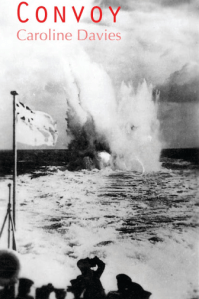
Convoy by Caroline Davies

Caroline Davies debut collection was inspired by the experiences of her grandfather, James Jim Honeybill, a merchant seaman in the Malta convoys of the Second World War.

The poems dramatically document the Navy s attempts to resupply the Mediterranean island, suffering severe losses at the hands of the German blockade. Beginning with the image of her mother as a child who has come to see her naval father as a stranger, the poems continue on to the voices of the men aboard the M.V. Ajax, fighting to get through against all odds, and making the greatest sacrifice of all. Skilfully incorporating a wealth of found material, recordings and interviews, this narrative poetry sequence captures a slice of history with visceral clarity.

Memorandum by Vanessa Gebbie

Memorandum is a haunting collection of poems that summons voices from the shadows of the First World War. Vanessa Gebbie transforms prosaic records of ordinary soldiers, and the physical landscape of battles, war graves and memorials, into poignant reflections on the small and greater losses to families and the world. Vanessa Gebbie is a writer of prose and poetry. Author of seven books, including a novel, short fictions and poetry, her work has been supported by an Arts Council England Grant for the Arts, a Hawthornden Fellowship and residencies at both Gladstone’s Library and Anam Cara Writers’ and Artists’ Retreat. She teaches widely. http://www.vanessagebbie.com “From the idea of a shell reverting to its unmade, peaceful state to dead men buried in Brighton and France being mourned by their mother in Glasgow … heartrending images such as the Tower of London’s ceramic poppies seen as callow recruits, doubts about a corpse’s identity and how dregs at the bottom of a cup can be reminiscent of the deadly Flanders mud. This is a modern view, wise and compassionate, of Europe’s fatal wound.” Max Egremont, author of Siegfried Sassoon and Some Desperate Glory, The First World War the Poets Knew “Vanessa Gebbie is that rare breed of poet who understands the trials and tribulations of the ordinary Tommy.” Jeremy Banning, military historian and researcher, battlefield guide “The dead who linger around memorials and battlefields slowly step again into the light. History may remember them collectively, but Gebbie’s achievement is to present, with sensitivity and without sentimentality, lives rooted in the particular rhythms of hometowns, families, and memories.” John McCullough, author of Spacecraft and The Frost Fairs “These poems rise like ghosts from a scarred landscape.” Caroline Davies, author of Convoy

*******

Should you feel like joining but don’t want to read a whole collection of poems, don’t hesitate to read and post on only one or just a couple of the poems. 

*******

The discussion starts on Wednesday, 31 May 2017.

Further information on the Literature and War Readalong 2017, including all the book blurbs, can be found here.