Welcome to German Literature Month

german-literature-month-vi

Finally it’s November. Those of you who follow my blog might have noticed I was a bit quiet in the last weeks. With good reason. I was busy reading German, Austrian, and Swiss literature.

As you know, Lizzy and I have decided to do a “Read as you please month” with only two themed weeks.

A crime week during week two, hosted by Lizzy.
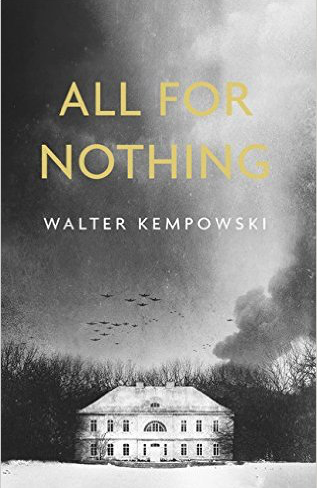
All For Nothing

The Literature and War Readalong on November 25, in which we read and discuss Walter Kempowski’s WWII novel All For Nothing – Alles umsonst.

For those who are still looking for titles, here are the books I have already read and those I’m still planning to read.
Weit über das Land

Peter Stamm’s latest novel. I must admit, I might not review it. It’s the worst book I’ve read this year. I can still not believe he wrote something like this.
letti-park

Judith Hermann’s new short story collection Lettipark. I’ve not finished this yet but I can already see that it’s a mixed bag.

karen-kohler

Karen Köhler’s short story collection Wir haben Raketen geangelt.

I bought this collection a while ago but haven’t read it yet. When I was looking for reviews of Judith Hermann’s book I saw it mentioned a few times. Most critics came to the conclusion that readers would do better to read Köhler instead of Hermann. I’ll let you know what I think.
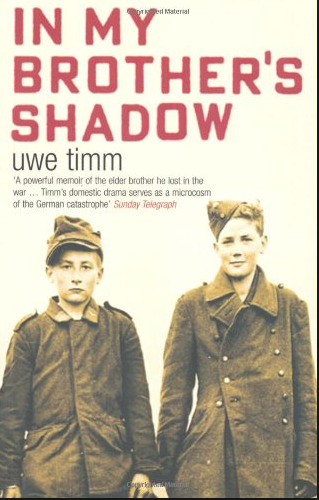
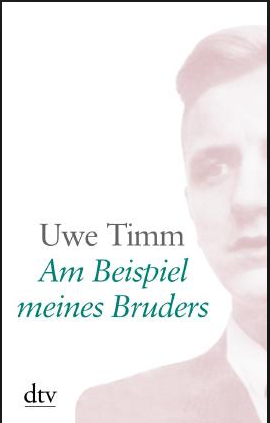
in-my-brothers-shadowam-beispiel-meines-bruders

I’ve only heard great things about Uwe Timm’s memoir In My Brother’s ShadowAm Beispiel meines Bruders. As far as I can tell, (I read the beginning), it’s amazing.
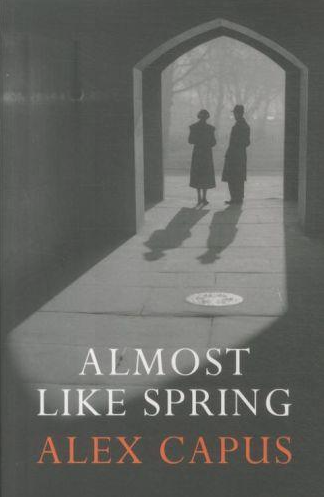
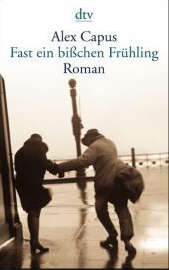
almost-like-springfast-ein-bisschen-fruhling

Almost Like SpringFast ein bisschen Frühling, is my first Alex Capus and if the rest is as good as the beginning, it won’t be my last.
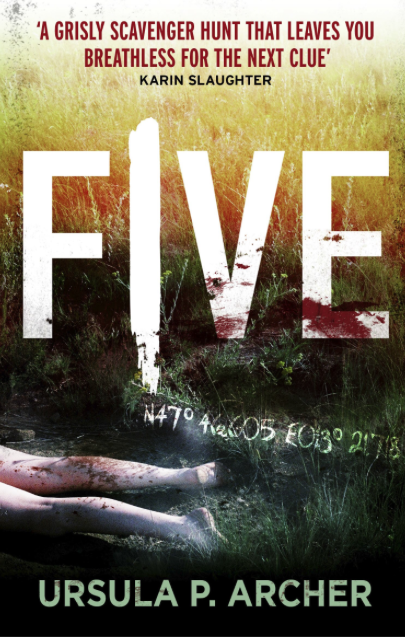
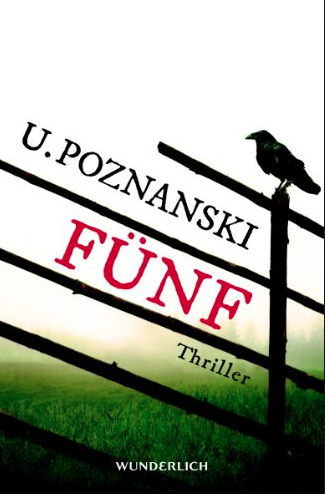
fivefunf

Last year I read Ursula Poznanski’s Erebos and was pretty much blown away. While I liked Five – Fünf a bit less, it’s still a really gripping book. You may have noticed that her adult crime novels are published under another name, Ursula P. Archer, in English. If you’re still looking for a page turner for crime week and are not too squeamish, you’ll enjoy this.
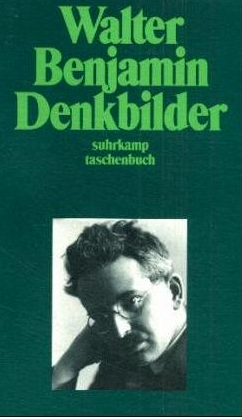
denkbilder

These are my plans so far. I might add some Walter Benjamin and one of the fantasy novels by Nina Blazon Der Winter der schwarzen Rosen (not translated yet).

der-winter-der-schwarzen-rosen

I hope you’re all busy making plans and wish you all a great month. I hope you’ll discover a lot of great books. Happy Reading!


*********

There will be a few giveaways.

Here’s a sneak peek.
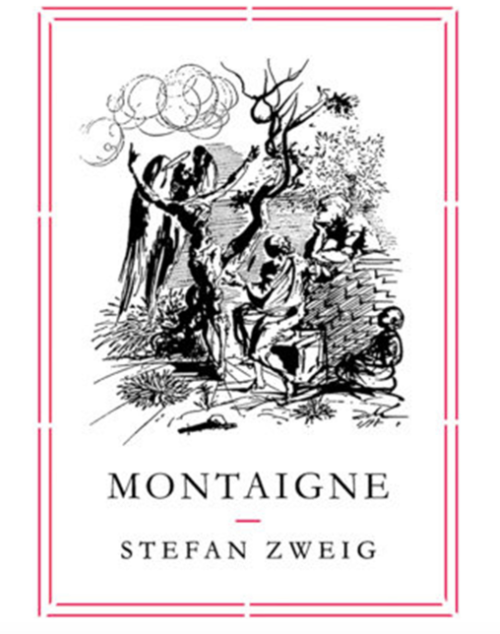
montaignea-bell-for-ursli


*********

Please add your reviews to this site German Literature Month.

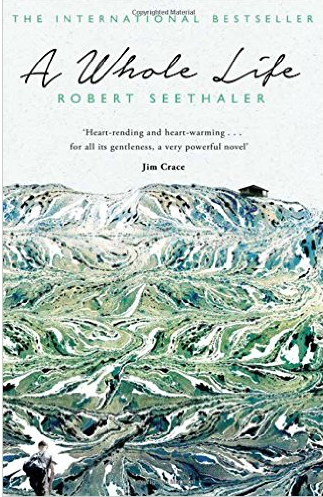
On Robert Seethaler’s Ein ganzes Leben – A Whole Life (2013)

Ein ganzes LebenA Whole Life

I’ve heard a lot about Austrian author Robert Seethaler’s books, especially Der Trafikant, but only when I saw that his latest had been translated and longlisted for the Man Booker International Prize, did I finally feel like reading him. I’ve read so many raving reviews that I thought I’d love this. Unfortunately, I didn’t. When I went digging for German and Swiss reviews, I found out that he wasn’t so unanimously praised and that I was far from alone in being highly critical of this novel. That said, it’s not a bad book. It has beautiful passages but it felt oddly anachronistic and I couldn’t shake a feeling of déjà-vu” or rather “déjà-read”. I should have picked one of his other novels. I’ve read so many similar books by earlier authors that I couldn’t help but wonder “Why did he write this?”. Robert Walser, Meinrad Inglin, C.F. Ramuz, they all wrote similar stories but, in my opinion, much better. There’s even a recent crime novel that’s similar. Now, maybe it’s unfair to judge a book because of its lack of originality, but I had other problems. People wrote how beautiful it was, how soothing, calming, refreshing. The only thing I found soothing, calming, and refreshing was the moment when it was over and I realized – wow – am I grateful for my own life.

Our protagonist, Andreas Egger, is an orphan, has to live with an uncle who is cruel, even sadistic, beats him until he’s crippled. Later he falls in love but the woman is taken from him. After that he volunteers to go to war (we’re in 1940s) and is refused. Later he’s taken anyway and soon becomes a prisoner of war on the Russian Front. He comes home; things have changed. He works like a donkey. He’s always alone. He sees a buddy lose an arm. And so on and so fort. It takes a stronger reader than me to find much joy in something like this. I found it nightmarish.

I did like a few passages because the descriptions were amazing. I liked the way he captured the mountains. The book is set in the Alps, pre-electricity, pre-tourism, at first. I’ve seen the scary side of the Alps. I always feel like the mountains are alive, brooding and lying in waiting. Seethaler does evoke that. (But so do Inglin and Ramuz). I also liked a few really crazy moments like the beginning in which the main character carries an old man down the mountains (that doesn’t sound crazy but believe me— it is. I’m trying not to spoil this book too much).

In the NZZ, the Neue Zürcher Zeitung, the critic Hannelore Schlaffer called this a book for sadists. Of course, that’s an exaggeration but I get what she means. I wish I had picked another of Seethaler’s books. They all sound wonderfully original. However, my biggest problem is that of all of his books, this is the one that was chosen for translation. Why? WWII? Again? Admittedly it’s just a short sequence but it’s important.

To some extent, I can see the appeal. Andreas Egger is a quiet man. Someone who doesn’t care for tourism and all the commodities a modern life brings. He’s modest and humble. You couldn’t find a character who is less narcissistic. All this is admirable but why did Seethaler have to turn this into such a biblical story? Couldn’t our humble protagonist have experienced more joy? Why was Seethaler so cruel to his character?

It may surprise you, but I’m tempted to pick another of Seethaler’s novels and I’m even convinced I will like it. Not every book is for everyone and this one wasn’t for me.

Those who loved this might enjoy Robert Schneider’s Schlafes Bruder – Brother of Sleep, which I found amazing. They might also enjoy this trio of Swiss writers, two of which write in German, one in French: Robert Walser, Meinrad Inglin, and C. F. Ramuz.

As I said, I have read many positive reviews of this book. Here are a few Lizzy, Vishy, Stu, and Pat.

Here’s the link to the NZZ review (in German)

Announcing German Literature Month V

literatur_2015_gold-2

I’m delighted to announce that Lizzy and I will host the 5th German Literature Month (#germanlitmonth) this coming November.


For those who have not participated before, here are the rules:


1) Whatever you read, in whichever language you read, must have originally been written in German.  Novels, novellas, short stories, plays, poems, they all count.   No genre is excluded.
2)  Enjoy yourself.  There’s no need to write long, detailed reviews (although we do like those).  A quick opinion piece, the posting of a favourite poem, the tweeting of a pertinent quote or picture of a delicious book cover (using the hash tag #germanlitmonth, of course) all contributes to a communal celebration of German-language literature.


You are free to pick what you like but for those who prefer some guidance or those who love the group-spirit of the event there are themed weeks and readalongs.


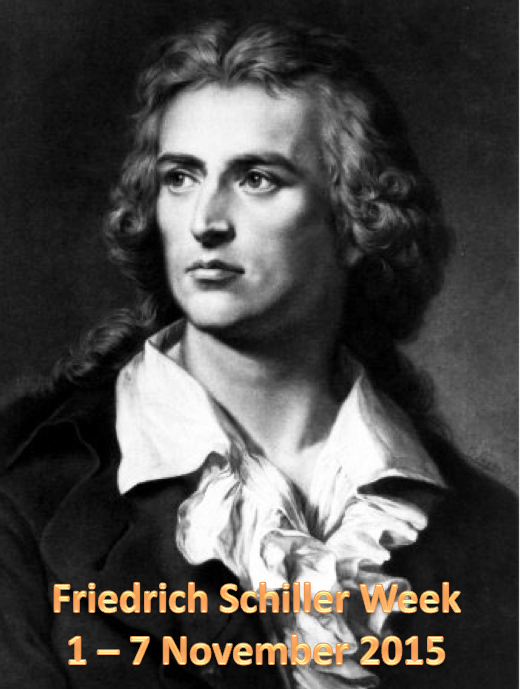
Week 1:  Nov 1-7 Schiller Reading Week. Hosted by Lizzy.


Friedrich Schiller Week


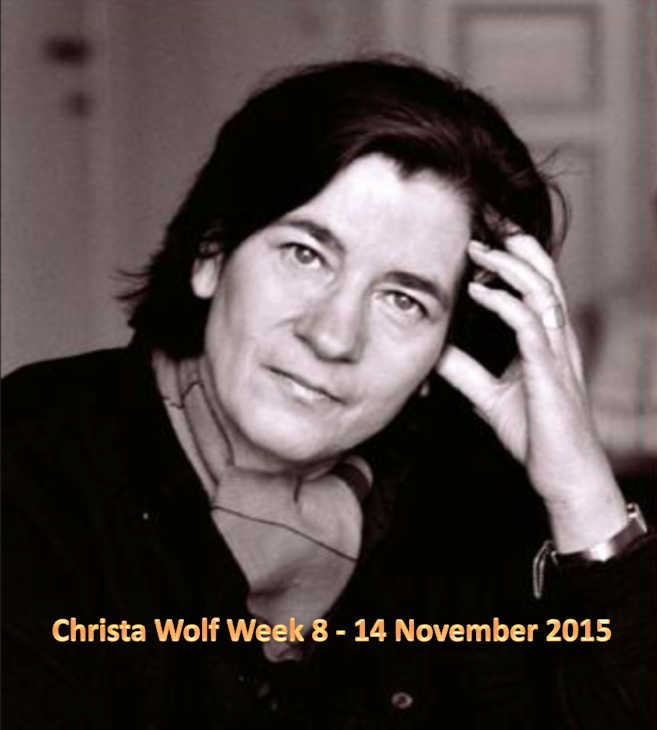
Week 2:  Nov 8-14 Christa Wolf Reading Week. Hosted by Caroline.


Christa Wolf Week


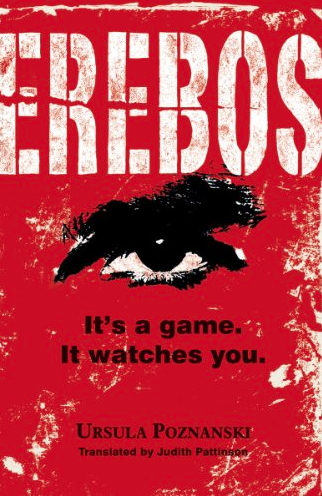
Week 3:  Nov 15-21 Ladies’ reading week incorporating a readalong of Ursula Poznanski’s award-winning YA title, Erebos on Friday 20.11.  Hosted by Lizzy.


Erebos


Here’s the blurb:
‘Enter.
Or turn back.
This is Erebos.’
Nick is given a sinister but brilliant computer game called Erebos. The game is highly addictive but asks its players to carry out actions in the real world in order to keep playing online, actions which become more and more terrifyingly manipulative. As Nick loses friends and all sense of right and wrong in the real world, he gains power and advances further towards his online goal – to become one of the Inner Circle of Erebos. But what is virtual and what is reality? How far will Nick go to achieve his goal? And what does Erebos really want?


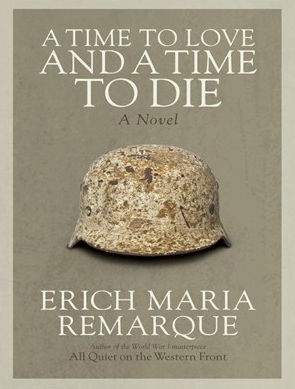
Week 4: Nov 22-28 Gents’ reading week incorporating a Literature and War readalong of Erich Maria Remarque’s A Time To Love and A Time to Die on Friday 27.11Hosted by Caroline.


A Time To Love and a Time to Die


Here’s the blurb:

From the quintessential author of wartime Germany, A Time to Love and a Time to Die echoes the harrowing insights of his masterpiece All Quiet on the Western Front.

After two years at the Russian front, Ernst Graeber finally receives three weeks’ leave. But since leaves have been canceled before, he decides not to write his parents, fearing he would just raise their hopes.

Then, when Graeber arrives home, he finds his house bombed to ruin and his parents nowhere in sight. Nobody knows if they are dead or alive. As his leave draws to a close, Graeber reaches out to Elisabeth, a childhood friend. Like him, she is imprisoned in a world she did not create. But in a time of war, love seems a world away. And sometimes, temporary comfort can lead to something unexpected and redeeming.
 
“The world has a great writer in Erich Maria Remarque. He is a craftsman of unquestionably first rank, a man who can bend language to his will. Whether he writes of men or of inanimate nature, his touch is sensitive, firm, and sure.”—The New York Times Book Review


Week 5: Nov 29-30 Read as You Please.


If you’re not sure what to read – our German Literature Month Page can help you with that.
German Literature Month IV was astounding in terms of numbers of participants (40) and quality contributions.  I’m not sure that we’ll be able to match it again, but let’s give it a shot. Are you in?

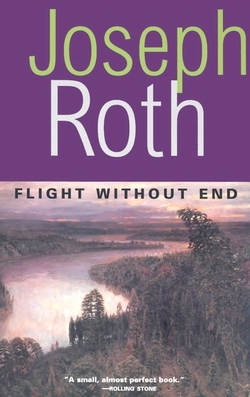
Joseph Roth: Flight Without End – Die Flucht ohne Ende (1927) Literature and War Readalong November 2014

Screen Shot 2014-10-19 at 10.18.51

I’ve read a few novels by Joseph Roth now and every time I’m surprised how different they are. Die Flucht ohne EndeFlight Without End is no exception. This is a Roth I’ve not encountered so far, or only in snippets. Flight Without End clearly shows the mark of the journalist, but it’s also the book of someone who cannot take the society he lives in seriously. Rarely have I seen him this sarcastic, mocking individuals and groups of people. And rarely have I come across a Roth that was this funny. I had to laugh out loud more than once and truly wish the translator was able to capture this. Roth’s wit and humour is very subtle and although a translation could be literal, the humour might get lost in translation as it’s often tied to one word that changes the meaning. Mostly he uses it when describing someone. Here’s just a short example.

Eine junge Schauspielerin, die zwar mit dem dicken Zweiten Bürgermeister geschlafen hatte, aber unbeschädigt aus seiner Umarmung wieder herausgekommen war und teilweise sogar erfrischt.

A young actress, who indeed slept with the fat second mayor but came out of this embrace undamaged, partially even refreshed.

I take just one element of the sentence to explain what I mean. It’s entirely possible to choose the word unharmed instead of undamaged but it would remove a lot of the fun. “Unbeschädigt” means both unharmed or undamaged, but normally you’d use it for an object, while unharmed would rather mean a person. Roth chose undamaged very consciously.

What struck me too in this book was how cosmopolitan Roth was. The book starts in the Russian steppe, moves to Baku, from there to Vienna, then to a unamed city on the Rhine, and ends in Paris. Each place is described masterfully, its essence captured, its character laid bare.

The story is a bit more problematic. I’ve seen this book mentioned as one of Roth’s weakest works, which would have needed some editing. I agree to some extent. I didn’t mind the lack of plot. What we find here is basically the story of a quest. Franz Tunda, former officer, then captive of the Russian army, escapee, revolutionary, drifter and private tutor, lacks one thing – a home. What is home for a man like Tunda? If he can be of some use, he’s adopted everywhere, but never really welcome. He stays an outsider and this makes him a keen observer. He sees behind everyone’s masks, doesn’t buy any of the big theories on progress and wealth. He’s as wary of the communists as he is of the socialist’s and the bourgeoisie. They all have a hidden agenda. That’s why his flight is without end because, as vast as the world may be, society ultimately makes it very small and there’s no home for those who don’t play along. When I get so much insight and analysis of people and countries I don’t mind a lack of plot. My reservation has something to do with the structure of the book. It’s presented as if we were reading an account of someone who is Tunda’s friend. At the same time there are accounts that are directly made by Tunda and it switches occasionally from third to first person. I think this would have needed editing but it’s a minor flaw.

One of the most poignant scenes is when Tunda visits the grave of the unknown soldier, under the Arc de Triomphe, in Paris.

The blue flame burned not to honor the dead soldiers, but to reassure the survivors. Nothing was more cruel than the blissfully ignorant devotion of a surviving father at the grave of his son, whom he had sacrificed without knowing it. Tunda sometimes felt as if he himself lay there in the ground, as if we all lay there, all those of use who set out from home and were killed and buried, or who came back but never came home. For it doesn’t really matter whether we’re buried or alive and well. We’re strangers in this world, we come from the realm of shadows.

Flight Without End doesn’t show us a poetic or lyrical Roth. It’s not elegiac or nostalgic. It’s sarcastic and ironic. It’s the work of someone who saw the downside of globalisation long before anyone else and who was no fool when it came to human beings. There are a few good ones out there but they hardly ever occupy the big stages; they might be hidden somewhere in the Taiga, doing their thing quietly and unseen.

I thoroughly enjoyed this book. It’s witty, irreverent, unflinching and astute. It may not be the best book for someone who hasn’t read Roth yet, but it’s a must-read for those who already like him.


Other reviews

Vishy (Vishy’s Blog) 


*******

Flight Without End is the eleventh book in the Literature and War Readalong 2014. The next book is Letters from a Lost Generation by Vera Brittain and four of her friends. Discussion starts on Monday 29 December, 2014. Further information on the Literature and War Readalong 2014, including the book blurbs can be found here.

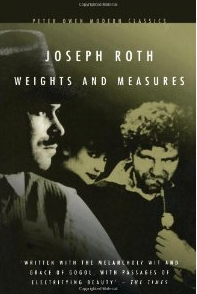
Joseph Roth: Weights and Measures – Das falsche Gewicht (1937)

Weights and Measures

How does an upright, steadfast man survive among corruption, hypocrisy, and crime? Roth’s answer to this question, which lies at the heart of Weights and Measures – Das falsche Gewicht, is pretty simple: he doesn’t. Either he is tainted or he will go down.

Anselm Eibenschütz, a former officer, leaves his soldier’s life behind and becomes the inspector of weights and measures in Zlotogrod. He hasn’t changed profession by choice but because his wife urged him too. The change is hard on Eibenschütz. He’s not used to this region; it’s colder and rougher than where he used to live, and he isn’t cut out for the job. It’s not to his liking and since he is incorruptible and upright, he clashes with the merchants of the region. Hardly anyone conducts honest business. They all rely on extra-money, coming from the use of false weights and measures and smuggling. While the old inspector was open to bribes, Eibenschütz is not. He reports every single misconduct and sends even the poorest to prison. A kind man at heart, this is especially hard on him. He doesn’t want to punish those who have nothing, but can’t make exceptions because the richer would find out and he would be denounced. He finds ways to help the poor though. Either he doesn’t check on their shops or he warns them somehow.

Eibenschütz blames his wife for his misfortunes. Why did she have to talk him into leaving his former life? He begins to hate and neglect her and when he finds out she’s cheating on him, it offers him an excuse to neglect her even more.

In the province of Zlotogrod is a border tavern that is visited by smugglers. Jadlowker, the owner, is a profiteer and famous everywhere for his criminal activities. He lives with a beautiful gypsy woman, Euphemia. When poor Eibenschütz sees her for the first time he falls in love and becomes a regular customer.

From that moment on it goes downhill for Eibenschütz. Even though he is able to arrest Jadlowker and is named supervisor of the tavern, he doesn’t find happiness, but turns into an alcoholic. Eibenschütz isn’t the only one who is tested. There’s an unseasonably warm winter towards the end of the book; a cholera epidemic breaks out and kills hundreds. Because people fear to touch the dead, prisoners are used as undertakers. Jadlowker grabs the opportunity and flees. The end of the book is foreseeable and tragic.

I thought this was an absolutely remarkable novel for many reasons. The main theme is the clash between an honest man and a corrupt system, but what is amazing is how the story unfolds in front of the background of the disintegrating Austro-Hungarian monarchy and serves as a mirror. The book really gives you a feel for how huge this monarchy was, how extended, and how many cultures were part of it.

What I liked most is how Roth used the descriptions of the place and the weather to show Eibenschütz’s emotions and to underline the wild remoteness of this region. There were many beautiful small scenes and episodes. Eibenschütz is upright and stiff, but he’s also very emotional and feels deeply. His life as a soldier sheltered him emotionally; experiencing heartache and passion, unhinges him. When he falls in love he discovers nature. Before his “awakening” nature is just a phenomenon he sees but barely notices. The changing seasons bring rain or snow, breaking ice or sunshine, but that doesn’t affect him. Once he’s “awake” he feels the seasons, feels he’s part of it.

Weights and Measures is a wonderful book. Short, complex, and filled with poetic descriptions. Knowing that Roth battled alcoholism all of his life, gives Eibenschütz’ descent into alcoholism an even deeper meaning.

Here’s a wonderful review by Max (Pechorin’s Journal) which contains quotes.

Literature and War Readalong November 30 2014 Meets German Literature Month: Flight Without End – Die Flucht ohne Ende by Joseph Roth

Screen Shot 2014-10-19 at 10.18.51

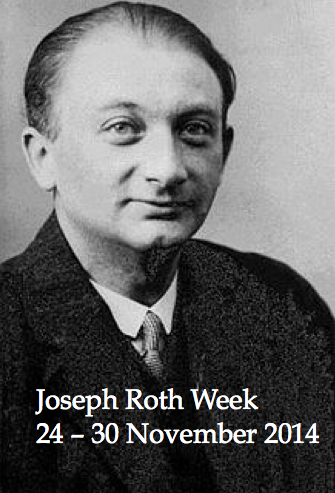
Jospeh Roth, one of the greats of Austrian literature, seemed like a wonderful choice, not only for the Literature and War Readalong in which we focus on WWI, but also as part of German Literature Month. And because he’s such a fine author, there will not only be a readalong but the last week of GLM ( 24 – 30 November) is dedicated to his work. After some rather unfortunate readalong choices, I’m confident this one will not disappoint.

Joseph Roth

Joseph Roth was an Austrian-Jewish writer and journalist. He died at the age of forty-seven in Paris. His early death was probably brought on by his alcoholism. His last book, called The Legend of the Holy Drinker, is inspired by his own battle with alcohol.

Some of his books deal with the end of the Austro-Hungarian Empire (The Radetzky March, The Emperor’s Tomb), others like Job focus on Judaism. Although he was Jewish, Catholicism was important for Roth and it’s assumed that he converted towards the end of his life.

Here are the first sentences of Flight Without End

Franz Tunda, first lieutenant in the Austrian Army, became a Russian prisoner of war in August 1916. He was taken to a camp a few versts north-east of Irkutsk. He succeeded in escaping with the help of a Siberian Pole. On the remote, isolated and dreary farm of this Pole, the officer remained until spring 1919.

And some details and the blurb for those who want to join

Flight Witout End – Die Flucht ohne Ende by Joseph Roth (Austria 1927) WWI, Classic,  144 pages

Flight Without End, written in Paris, in 1927, is perhaps the most personal of Joseph Roth’s novels. Introduced by the author as the true account of his friend Franz Tunda it tells the story of a young ex-office of the Austro-Hungarian Army in the 1914- 1918 war, who makes his way back from captivity in Siberia and service with the Bolshevik army, only to find out that the old order, which has shaped him has crumbled and that there is no place for him in the new “European” culture that has taken its place. Everywhere – in his dealings with society, family, women – he finds himself an outsider, both attracted and repelled by the values of the old world, yet unable to accept the new ideologies.


*******

The discussion starts on Friday, 28 November 2014.

Further information on the Literature and War Readalong 2014, including all the book blurbs, can be found here.

Arthur Schnitzler: Short Fiction – Lieutenant Gustl (1900) and Fräulein Else (1924)

Austrian writer Arthur Schnitzler was one of those whose books were burned in Nazi Germany. Hitler considered him to be a typical example of what he called ‘Jewish filth’. What infuriated the Führer and created a lot of controversy among other readers of the time was, among other things, how outspoken Schnitzler wrote about sexuality, notably in his most famous play Round Danca aka La Ronde (Der Reigen). La Ronde is easily one of the best plays to convert people who don’t read plays,  as it’s such a stunning piece. It’s a play about promiscuous and venal love in which we always see one of the two characters from the preceding scene in the next one too.

Schnitzler was highly influenced by Freud, a fact that is most apparent in Dream Story aka Dream Novella (Traumnovelle) on which Stanley Kubrick’s last movie The Eyes Wide Shut. While I liked the movie a great deal, I was pleased to find out the novella is even better.

I have read both The Dream Novella and La Ronde some years ago and wanted something else and finally decided to re-read Lieutnant Gustl and (after Tony’s suggestion) added Fräulein Else. Both are available in the collection Short Fiction.

They are both written entirely as interior monologues, a technique which was very new at the time and also influenced by Freud’s theories. At 35 pages, Lieutenant Gustl is the shorter of the two, Fräulein Else is twice that size.

Both monologues show young people in distress. Both are victims of their society. The effect of listening to their hidden fears and desires, their hopes and wishes, their silliness and despair, is spellbinding.

Lieutenant Gustl takes place in Vienna during one night. Gustl is a young officer and has a history of duels to show for. When we are introduced to him during a Oratorioum which bores him to death, we also learn that this is the evening before another duel with a doctor will take place. Gustl is all about honour and reputation. All that is on his mind are girls and the hope people will respect him. When on the way out of the theater, a master baker insults him, he feels there is only one way to save face – he has to kill himself. As the man is below him, he couldn’t ask for satisfaction in a duel. He spends the whole night debating, looking at pros and cons of his decision, imagining the reaction of the people he knows when they will find out about his death, remembers similar cases like his. At the same time he displays how much he loves life.

Fräulein Else’s story is similar but far more tragic. Else is a young girl from a rich family whose father, a gambler, again and again maneuvers the family into impossible situations. While she stays in Italy at a hotel with her aunt, her cousin and a few other people she knows, her father has lost a lot of money, some of which belongs to his charges. Because he has lost such a lot of money before, he owes most of his family and acquaintances already a fortune and there is nobody left he could ask this time. Else’s mother decides to write to her and begs her daughter to save her father. There is a rich man, Dorsday, staying at the hotel with her, someone who fancies her and the mother thinks if Else asks him, he will lend her the money. This puts Else in a very delicate situation. Not only is she deeply ashamed, she also senses that asking a man like Dorsday for money will lead to complications and most certainly he will want something in exchange. The story is quite upsetting as we get the feeling the parents know very well that this request is as if they were asking her daughter to prostitute herself. Else, like Gustl, contemplates suicide, sees herself dead, imagines escape routes and hopes for help.

What finally becomes of Else and of Lieutnant Gustl is for you to find out. I would really encourage you to read these stories, if you haven’t done so already. I liked them a great deal and think Schnitzler may be one of my favourite authors. What impressed me a lot as well was how fresh the stories and the language are. The society has changed but the things that are at stake are still the same: love, death, money. And the style is precise and emotional without ever being sappy or sentimental.