Thomas Mann – The Magic Mountain Part 4 – Time, Boredom, Madness, and Final Thoughts

Time – Boredom – Madness

Thomas Mann said that The Magic Mountain was first and foremost a “Zeitroman”, a novel about time. Time in a double sense. First about historical time and then about the perception of time. There are many passages about time, most of which are written from the point of view of Hans Castorp. The longer he stays at the sanatorium, the more his perception and experience of time change. We all know how time can fly when we do something interesting and almost grind to a halt when we’re bored. Looking back over these periods of time we notice that those stretches of time have the opposite quality now. Periods of time in which we did a lot seem to have lasted longer when we look back, while those in which life is repetitive seem very short. The novel mirrors this in its structure. The first half narrates roughly a year while the second half stretches over the course of six years. The title, “Magic Mountain” also alludes to this near magical quality of time.

During his first weeks and months everything that is offered to the patients is of great interest to Hans and keeps him fully occupied. But the more he’s familiar with the routine and the distractions that are offered, the more he tries to occupy his mind otherwise and find additional ways to pass time. He’s suddenly very interested in biology, anatomy, and botany. Long passages are dedicated to these topics. Apparently, many readers find these passages boring but I thoroughly enjoyed them.

Boredom seems to be something many of the patients are afflicted by and so they try to find all sorts of distractions. Many sneak off during the lying cure and go to Davos to have drinks, play games, and meet other people. I mentioned the affairs they are having, and I would assume many of those are also just a way to pass the endless time. Others, like Clawdia Chauchat, leave when they have had enough and travel either home or to other places but always return after a certain time.

The sanatorium offers distractions like presentations by Dr. Krokowski about various topics; then there are concerts, and festivities at Christmas or during the carnival season. The carnival episode is one of the funniest and craziest in the book and it made me think that possibly “Narrenberg”, The Fools’ Mountain or Mad Mountain might have been a better title. There is this sense of madness and craziness throughout the novel and towards the end, it seems to intensify and can barely be contained. Two characters are introduced late in the novel, Mynheer Peperkorn and a young girl who says to be a medium. Each of them, in their own way, contribute to the intensification of wackiness. Settembrini who is always the voice of reason in the novel and who feels responsible for Hans, warns him about both.

There is always this sense of the sanatorium being outside of the real world which contributes to these feelings of alienation and madness. Hans Castorp identifies strongly with the world “up there” and wants nothing to do with the world he left behind. While Settembrini also stays at the sanatorium during the first chapters, he moves down to Davos later because he cannot afford to stay at the Berhof any longer. That’s where he meets Naphta who is also ill but not rich enough for the Berghof. This may be one of the reasons why Settembrini isn’t affected by the folly that comes with prolonged stay at the Berghof. He’s also still in contact with the world outside as he’s working on a book. He has a keen interest in what is going on in the world and tells Hans about it and warns that a catastrophe is coming.

When Hans has been at the sanatorium for many years, everyone seems to become more restless, more bored and people throw themselves on all sorts of hobbies. Collecting stamps, trying every chocolate available, listening to music, and participating in seances.

Things accelerate and finally the big clash comes – the war breaks out. Everyone has to leave and those young enough like Hans Castorp are sent to the front.

Final Thoughts

I read a lot but unfortunately many of the books are gone from my memory by the end of the year. That said, I’m not likely to forget this book. It’s so unusual and wild. And I absolutely love the way Mann writes. His sarcasm and wit are unparalleled. I hope it comes through in the translations. It would be sad if it didn’t.

As funny as the beginning is, there’s always a sense of unease. We see all these people from all over the world, Germany, Russia, France, Italy, South America, Poland. . . .  and we know, only a few years later, sitting together peacefully will no longer be possible.

I highly recommend this book to anyone who loves Mann, to those who want to read one of the great novels of German literature, but also to those who love books about microcosms of society as we find them in hotel novels. In many ways, The Magic Mountain is like an exaggeration of the hotel novel. Hotel novels wouldn’t have such an appeal if they were not also novels with memorable characters and The Magic Mountain certainly offers many such characters.

If you’ve read it, which was your favourite episode or element? I thought that one of the strongest was Hans Castorp’s skiing expedition, one of the funniest when he explores Clawdia’s painting. But there are also tragic parts that are very affecting, especially the end. I won’t mention these episodes so as not to spoil the book any further.

In October, I was tempted to go to the “Berghof, or rather hotel Schatzalp as it’s called, for a few days. Schatzalp opened as a luxury sanatorium in 1900, but has been a hotel since 1953. In the end, I couldn’t go but maybe next year.
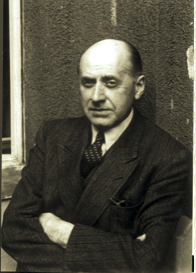
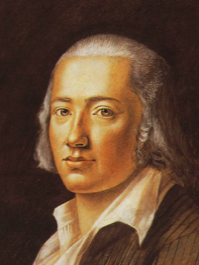
Autumn Poems by Gottfried Benn and Friedrich Hölderlin

This week is genre week and I knew from the beginning that I wanted to write about poems. I’ve read two collections that came out recently in English. One was written by Lutz Seiler, the other one by Uljana Wolf.

To be honest, I find it extremely difficult to review poetry collections and will need more time to do so.

In the meantime, I thought I’d share two older poems with you. I like to learn poems by heart and these are two of my favourites. They are perfect choices for the autumn season. Both poems are mournful and rich in imagery.

I hope you’ll like them.

Gottfried Benn – Asters/Astern (1935)

Asters

Asters—sweltering days

old adjuration/curse,

the gods hold the balance

for an uncertain hour.


Once more the golden flocks

of heaven, the light, the trim—

what is the ancient process

hatching under its dying wings?


Once more the yearned-for,

the intoxication, the rose of you—

summer leaned in the doorway

watching the swallows—


one more presentiment

where certainty is not hard to come by:

wing tips brush the face of the waters,

swallows sip speed and night.

(translated by Michael Hofmann)


Astern

Astern – schwälende Tage,
alte Beschwörung, Bann,
die Götter halten die Waage
eine zögernde Stunde an.


Noch einmal die goldenen Herden,
der Himmel, das Licht, der Flor,
was brütet das alte Werden
unter den sterbenden Flügeln vor?


Noch einmal das Ersehnte,
den Rausch, der Rosen Du –
der Sommer stand und lehnte
und sah den Schwalben zu,


Noch einmal ein Vermuten,
wo längst Gewißheit wacht:
Die Schwalben streifen die Fluten
Und trinken Fahrt und Nacht.


Friedrich Hölderlin – Hälfte des Lebens/Half of Life (1804)

Mit gelben Birnen hänget
Und voll mit wilden Rosen
Das Land in den See,
Ihr holden Schwäne,
Und trunken von Küssen
Tunkt ihr das Haupt
Ins heilignüchterne Wasser.

Weh mir, wo nehm ich, wenn
Es Winter ist, die Blumen, und wo
Den Sonnenschein,
Und Schatten der Erde?
Die Mauern stehn
Sprachlos und kalt, im Winde
Klirren die Fahnen.

Half of Life

With its yellow pears

And wild roses everywhere

The shore hangs into the lake,

O gracious swans,

And drunk with kisses

You dip your heads

In the sobering holy water.


Ah, where will I find

Flowers, come winter,

And where the sunshine

And shade of the earth ?

Walls stand cold

And speechless, in the wind

The wheathervanes creak.

(Translated by Richard Sieburth)

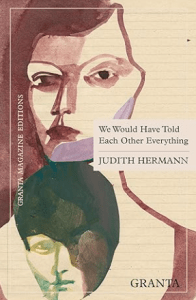
Judith Hermann – We Would Have Told Each Other Everything (Wir hätten uns alles gesagt)

We all have authors whose every book we read. For me, Judith Hermann is one of those authors. She’s best known for her short stories but has also written novels and now, finally, her long awaited first memoir. Or rather a series of lectures on life and writing that reads like a memoir. We Would Have Told Each Other Everything will be published in English next April. Two of her short story collections, Summer House, Later and Nothing but Ghosts are available in English. Her third short story collection Lettipark, a book of five connected stories, Alice, and her two novels Aller Liebe Anfang (Tony just let me know this and Letti Park were translated) and Daheim don’t seem to have been published in English.

Hermann is a bit of a phenomenon. Her first short story collection, Summer House, Later, which came out in 1998, was published to high acclaim. Critics and readers adored it. Nobody had written quite like her before. She seemed to capture the lifestyle and mood of a whole generation – the generation of those who were in their twenties in the late 90s. She wrote about things other people didn’t write about. Young people hanging out, travelling, doing nothing, just living their life. Most of the stories are set in Berlin, Judith Hermann’s hometown. I loved that book so much, found myself in so many of the stories and have been a loyal reader ever since. Sadly, even though I liked almost everything she has written, I found, like many of her critics and readers, that she was never able to achieve again what she had achieved in her first book. Some critics were already harsh when the first book came out. Over the years the criticism got worse. I never really understood why the reviews were at times so harsh, even cruel. When her first novel came out, one critic wrote she couldn’t write and had nothing to tell. In the memoir Judith Hermann addresses this review and what she has to say is very interesting. In many ways, her response to this reproach lies at the heart of these lectures.

Judith Hermann has never spoken much about her life, her childhood, or where her inspiration came from. Her answers to certain questions were always evasive. The book explores in detail why this was the case and it also investigates what is autobiographical and how she transforms what she has experienced and turns it into literature. At the beginning of the book, she describes how she ran into her psychoanalyst, late one night in Berlin. She discovered this psychoanalyst through a friend who went to see him and then spontaneously decided to go to see him as well. It seems the friend’s therapy was already over when she began to see the therapist, nonetheless, she never told her friend, Ada, that she went to see him too. We learn that this was rather typical of her. She hardly ever spoke to people or told them anything about herself or her childhood. The more we read about her past, the better we understand why she was silent. The trauma of two world wars, mental illness, emotional abuse, were all part of her difficult childhood.

All her stories are inspired by her life, but nothing is recognizable as such. That is because of her writing technique. She writes draft, after draft, after draft, erasing every time what is closest to what happened to get to a deeper meaning and truth. Very similarly, her psychoanalyst taught her to write down a dream and then write it down again the next day and once more on day three. The thing that would be missing, would be the most essential element of the dream, the element because of which the dream was dreamt, so to speak. Talking about her writing she says that in the end she sometimes no longer knows what really happened and what didn’t.

When she read the criticism I mentioned before, she agreed with the critic. Yes, she really didn’t have anything to tell because she couldn’t really tell what was important.

A large part of the book is dedicated to her friendship with Ada and the group of friends that surrounded Ada. Many of these scenes reminded me of some of her stories. She spent a lot of time with these friends. They spent whole summers together in the house near the sea that belongs to Judith Hermann’s family. These scenes are so wonderfully evocative. The friendships she has with these people, particularly with Ada, are very intense. They experience so much together yet they don’t really talk. This chosen family, she says, showed a very familiar lack of words and speechlessness to her own.

The last part of the book is set during Corona and the early lockdowns. During that time, she moved to the countryside and made a new friend, Jon. They spent a lot of time together but this time, her silences aren’t easily accepted, almost cost her this new friendship. And that’s where the title comes from. There’s a moment during which she would have told Jon everything about her life. It doesn’t happen but she will tell him later why she is so evasive.

Many of the things she describes in this book are relatable to anyone who has suffered (childhood) trauma. So often, one can’t find a way out of silence. It’s often the whole purpose of a therapy to be able to finally tell someone everything.

I’m not entirely sure I managed to capture how much I loved this book. But I did. It will make my end of year best of. It was one of those books I didn’t want to end. She achieves something quite magical – she lets us know a lot about herself and her writing process, but she also allows us to discover ourselves more deeply. Just like she does in her best stories.

The German title of this book is interesting. During these lectures she mostly uses the word “erzählen” – “to tell a story”. For the title, however, she uses “sagen” – “to tell”. This shows, in my opinion, that she’s come full circle. She used to tell stories but left out most of what really happened in her life. Through the new friendship with Jon, and in writing these lectures, she breaks the silence and speaks about the things behind the stories. I wonder if there will be another novel or book of stories from her. In some ways it would make sense if this was her last book. I hope not though.

For those who don’t want to wait for the publication of the English book there is either a part or even the whole translation by Katy Derbyshire on the Granta website here.

Welcome to German Literature Month X 2020

The first of November is here and it’s finally time for German Literature Month.

As you may know from our intro posts, we have two parallel programs this year. Lizzy is reading literature from all of the German Bundesländer, while I host four author weeks, including a Literature and War readalong of a newly discovered Siegfried Lenz novel – The Turncoat– on November 27.

Week 1 – November 1-7  Sophie von La Roche week

Week 2 – November 8-14 Max Frisch week

Week 3 – November 15-21 Ingeborg Bachmann week

Week 4 – November 22-28 Siegfried Lenz week

Feel free to join us or read as you please. As long as you enjoy yourself.

Here’s the link to our dedicated GERMAN LITERATURE MONTH PAGE – please do add your reviews so we can find and read them.

Announcing German Literature Month X

10 years, who would have thought it?  But here we are, and in a year when there has been plenty to be glum about, Lizzy and I thought we should buck the trend, and celebrate ten years with a bang! Hence the badge.

Thanks to all who have travelled with us thus far.  We hope you’ll accompany us again. For those who may be new to this, German Literature Month is the month for reading all things originally written in German – in whatever language you wish to read it – and then telling the world about it. Blogs, Twitter, Facebook, Instagram, YouTube, Goodreads. All good. Just use the hashtag #germanlitmonth when you share your thoughts.

Don’t have a clue what to read?  There’s a veritable database of reviews over at www.germanlitmonth.blogspot.com to help you find something appealing.

This year’s programme is a little different. Or, to be more precise, there are two programmes.

Programme 1

Unable to visit Germany this year for pandemic related reasons, Lizzy has an acute case of Fernweh, and has therefore decided on a virtual tour of Germany. One which will include all 16 Bundesländer, one way or another. Primarily through literature interwoven with memory.

Programme 2

I have decided to focus on four authors of interest, and chosen authors mean that there are weeks in which the spotlight will also  shine on Austria and Switzerland. My itinerary looks like this:

November 1-7  Sophie von La Roche

November 8-14 Max Frisch

November 15-21 Ingeborg Bachmann

November 22-28 Siegfried Lenz

The fourth week will include a Literature and War readalong of a recently discovered Lenz novel, The Turncoat. The discussion will take place on Friday 27.11.

As always, you can read as you please throughout the entire month.

We look forward to your company and discovering some scintillating German-language literature together.

Berlin Alexanderplatz Readalong – Part 4

Berlin Alexanderplatz Readalong Part 3 – “Chapters” 8/9


  1. Reinhold is possibly the biggest villain in the story. Would you agree? Do you find his punishment satisfying?


I found him the biggest villain because he seems so harmless at first. Almost helpless. He really tricked Franz, making him help him, trusting him. But even without that, the Mieze story shows his cruelty and viciousness and then, on top of everything else, trying to frame his “friend” shows the extent of his depravity. In light of this, no, I don’t think his punishment was satisfying.


  1. The quote that returns most frequently in the last chapters – at least as far I could see – is taken from Ecclesiastes (There is a time for everything, and a season for every activity under heaven . . . ) How did you feel about this use? Did you find it effective?


I found it downright creepy. Especially how it was used in the Mieze section, but also later on. Like an echo of evilness. It’s obviously not used in context. It’s one of those instances that made me want to read up on the book.


  1. Were you surprised by the ending?


I was surprised and somewhat disappointed. I’m not entirely sure what I expected but not this. First the episode in which Franz is catatonic, and at a mental institution and then picking up work, like everything that happened before didn’t take place. Possibly, Döblin wanted to tell us he redeemed himself. His love for Mieze, is certainly a redeeming factor.


  1. Looking back, what did you like the most about the book and what did you like the least?


At times I read it like a puzzle. Not the story itself, but the way Döblin used collage technique. Quoted songs, poems, the bible . . . It was fascinating to hunt them. Unfortunately, those were also the elements that I found annoying at times. There’s just too much and while it’s interesting to see what quotes he chose and how he changed parts of them, it made the book frustrating at times. It’s a book that requires close reading and I didn’t have the time to do that.


  1. Would you reread it and/ or are you glad you read Berlin Alexanderplatz?


My answer is a resounding no. I will definitely not read it again. I’m glad I read it. as I always felt I was missing out because I hadn’t read it yet. I found it intellectually stimulating but not exactly enjoyable. At other times in my life, the stimulating part would have been enough. Not so now. I didn’t realize before starting it that it’s so long. My edition has just 400 pages, but they are densely packed. The copies in translation showed that it was closer to 600.

Berlin Alexanderplatz Readalong – Part 3

Berlin Alexanderplatz Readalong Part 3 – “Chapters” 6/7


  1. The German original calls the chapters “Books” not chapters. In my opinion this is a gross error and robs the English reader of seeing some intertextual links. How do you feel about this?


I feel it’s a problematic omission. As I mentioned in the previous post, I’m pretty sure that in writing Berlin Alexanderplatz, Döblin referenced Simplicissimus, which is also divided in books, not chapters, uses a similar structure with short summaries at the beginning of each chapter (there are chapters with long titles in the books). One of Döblin’s later works, the over 1000 pages long historical novel Wallenstein (maybe an excellent choice for next year’s readalong? – just kidding) deals with the 30-year war, the same era during which Grimmelshausen’s famous work takes place. By the time he wrote Wallenstein, he most certainly knew Simplicissimus, but looking at BA’s structure he already knew it then.

But even if these intertextual links wouldn’t exist, I’m not sure why a translator has to change “book” to “chapter”. It seems a bit shoddy.


  1. Were you surprised to find out what happened to Franz after Reinhold pushed him out of the car? Do you find that Döblin is unnecessarily cruel to his creation?


It was a bit of a shocker and reinforced my earlier assumptions that Döblin likes to emphasize what a strong hold he has on his creature. Poor Franzeken is at his mercy.


  1. What does Berlin Alexanderplatz tell us about Döblin’s “Menschenbild” – his philosophical conception of human beings?


I find his concept of man very pessimistic. Not only does it seem that people can’t better themselves, they are also puppets on strings without any freedom. They are driven and things happen to them. Once the “machine infernale” is set into motion, there’s no stopping it. Fate will get you, no matter what. At the time when he wrote this novel, Döblin was an atheist. He’d been army doctor during WWI, and I assume that might have shaken his faith. When he was writing Berlin Alexanderplatz, he was “Nervendoktor”, – psychiatrist. He must have seen his share of tragedy and depravity. All this seems to come into play in his work.


  1. Do you have a favourite character so far?


I really like Herbert and Eva. Even crooks have a certain code of honour and while Reinhold is a character that doesn’t know any loyalty or honour, both Herbert and Eva are representative of this roguish code of honour, as I would call it and I like them for that. Yes, Herbert is a criminal and Eva a type of prostitute, or kept woman, but they are loyal to Franz and genuinely care. They help with anything they can.


  1. In these chapters, we see Franz attending political meetings. What did you think about these sections and his friend’s reactions?


I thought the reactions were extreme. I can only assume they didn’t like him exposing himself like this and drawing too much attention. The meetings he attends are meetings of the communist party. Franz isn’t even a communist, he’s far closer to national Socialist thinking. I read these sections as criticism of communism. I don’t know anything about Döblin’s political convictions, but maybe anti-communism was his own position.


  1. Most novels can be read without the reader knowing anything about the author’s life. What about this case? Were you compelled to read up on the author?


I find it always helps to know a bit about the author but often it’s not necessary. Not so in this case. I read up quite a bit. I was particularly interested in Döblin’s religion. For someone like me, who grew up in a Catholic environment, this was peculiar to read. While it’s very pessimistic, I also felt it had so many Catholic elements. It was interesting to me to know, while he was born into a Jewish family, Döblin converted to Catholicism. I could already sense it here and it helped me understand some passages and the use of some quotes.