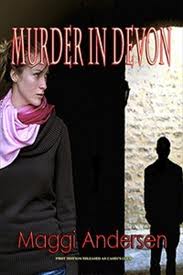
Maggi Andersen: Murder in Devon (2009)

I have never participated in a book tour before and thought it would be something new to try. When I was asked if I would like to read Australian writer Maggi Andersen’s Murder in Devon I accepted gladly. I like mysteries. I was aware that she is rather known for her Romance novels and that this crime novel belongs to the sub-category of Romantic Suspense. Although I’m really not a Romance reader, I have read Romantic Suspense in the past and liked it.

Casey wakes up, one morning in the cottage of her friends, in Devon. To her horror, someone has broken into the house, killed Don, her friend, and badly wounded his wife Tessa who is lying on the floor unconscious. Maybe due to a few glasses too many or exhaustion, Casey didn’t hear a thing. Don and Tessa are her oldest and closest friends. There are not many other people in her life as she isn’t good at relationships and has no family left. All this together makes the murder all the more painful.

Casey is the deputy editor of a woman’s magazine, while Don was a famous investigative reporter. Her friend Tessa is a psychologist working with abuse victims. Both Tessa and Don have had intense conflicts with people related to their work. Needless to say that there are many suspects.

While Chief Inspector Carlisle, who is responsible for the case  seems capable, Casey cannot let it be and has to actively investigate on her own. She isn’t even aware at first that she is a suspect. Carlisle isn’t amused that she is interfering with his investigation and when the two realize that they are drawn to each other and begin an affair, even less. Not only does he not want her to interfere but he knows she puts herself in great danger.

When Casey searches Don’s things and finds a list of paintings that are known to have been stolen by the Nazis – most of them are still missing – the discovery triggers a hunt that leads her from London to Germany and back.

I’m not an expert when it comes to romance novels but I can easily see that this part of the book did not work. The attraction came out of the blue and didn’t feel realistic. It somehow even felt like it was glued on the rest of the story which could have done very well without it. Despite the fact that the book is in serious need of editing (sentences were missing, many typos…) the crime part was gripping and I really wanted to finish and know who did it. I didn’t think it was too predictable at all.

If you like an entertaining crime novel which isn’t too gruesome but not exactly cozy crime with some history thrown in and if you prefer your crime to be action-driven and not psychological, then you’re in good hands here. It wasn’t really my thing but at least I was not bored.

One tiny thing I’d like to add is that Maggi Andersen supports the RSPCA (Royal Society for the Prevention of Cruelty to animals). There are always animals featuring in her books. In this one it’s a cat called Socrates. Here is her website.

I received a copy from the author and reviewed it as part of a Virtual Author Book Tour If you’d like to read the impressions of other participants, click on the link.
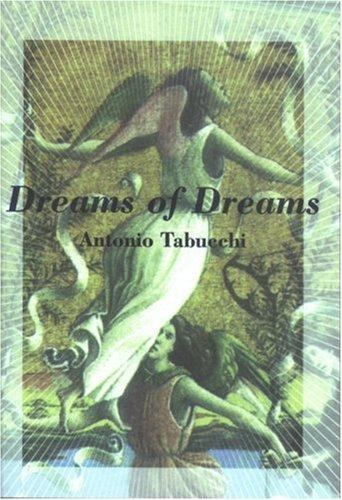
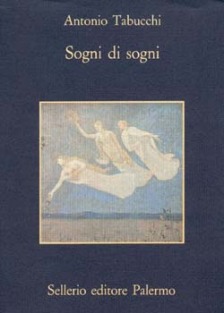
Antonio Tabucchi: Sogni di sogni – Dreams of Dreams (1992)

Elaborately imagined…mini-catalog of great artists’ dreams and the author’s interpretation of the last three days in the life of Portuguese poet Fernando Pessoa. Tabucchi’s rich language and his magical-realist charm tinge the volume with a visionary glow.

Antonio Tabucchi’s Sogni di sogni or Dreams of Dreams is a collection of sketches or short pieces, circling around the life and work of different authors, painters, musicians and other famous people. Arranged in chronological order they all tell of an imaginary dream of the person to whom the story is dedicated. At the end of the book, a short biography of each of the men gives some of the most important details about their life.

While this may not be an ideal starting point for someone who isn’t familiar with Tabucchi, it’s an amazing introduction into the Western European cultural heritage. It’s an amazing little book. To be able to write something that is equally enchanting, inspiring and instructive, is admirable. On the other hand it shows what a wonderful writer Tabucchi was. The short sketches are written in a beautiful and highly evocative prose that reminded me of the intensity of elaborate and sumptuous Persian miniatures.

If you are familiar with the men included in the book, it will enhance the experience but it’s not necessary.

To give you an idea of what Tabucchi does in this book, I’ll pick the example of Ovid. In his dream, Ovid sees himself not only loved by his emperor but transformed into a giant butterfly. Only when he stands in front of the emperor and should perform one of his poems, all that comes from his mouth is a high-pitched whistling sound. He tries to move his wings instead and perform his poem like a pantomime but this infuriates the emperor. Angered he has Ovid’s wings cut off. When they fall to the ground, Ovid knows he will die.

Hidden behind this sketch is an allusion to Ovid’s most famous work, the Metamorphoses and the whole tragic life story of one of the greatest poets of all times, who spent his last years disgraced and banned from Rome, in Tomis, on the Black Sea.

Here is the list of all of the people included in the book:

Daedalus
Ovid
Lucius Apuleius
Cecco Angiolieri
François Villon
François Rabelais
Caravaggio
Francisco Goya
Samuel T. Coleridge
Giacomo Leopardi
Carlo Collodi
R. L. Stevenson
Arthur Rimbaud
Anton Chekhov
Claude Debussy
Henri de Toulouse-Lautrec
Fernando Pessoa
Vladimir Mayakovsky
Frederico Garcia Lorca
Sigmund Freud

Sogni di sogni is highly imaginative and one of those books that opens doors. It will make you want to explore the people and works behind each chapter. It certainly made me want to read more of Tabucchi, one of the most amazing and creative Italian writers who sadly died earlier this year.

It’s often difficult to find Italian books in translation but Tabucchi is one of the rare authors who has been extensively translated. Some of the newest books are not out in English yet but most of his earlier ones are.

Have you read Tabucchi? Would you be interested in a Tabucchi week?

Andrei Gelasimov: Thirst – Žažda (2003)

Masterfully translated from the original Russian by award-winning translator Marian Schwartz, Thirst tells the story of 20-year-old Chechen War veteran Kostya. Maimed beyond recognition by a tank explosion, he spends weeks on end locked inside his apartment, his sole companions the vodka bottles spilling from the refrigerator. But soon Kostya’s comfortable if dysfunctional cocoon is torn open when he receives a visit from his army buddies who are mobilized to locate a missing comrade. Through this search for his missing friend, Kostya is able to find himself.

I owe the discovery of  Thirst by Andrei Gelasimov to literalab, my go-to blog for Central and Eastern European literature (if you don’t know it, you need to have a look). While French and German publishers are usually much faster in discovering foreign language authors this time they are lagging behind big time. That’s probably a reason why I had never heard of Gelasimov before, although Thirst isn’t his only book, not even his first. When I saw the review I realized that I havent read any contemporary Russian literature. One more reason for reading Gelasimov.

Thirst is a taut, short novel about a young veteran of the Chechen war. He was trapped in a vehicle and almost left for dead, burned beyond recognition. So badly in fact that he looks like a monster. There is nothing to escape this truth. He is confronted with it while still in the hospital wearing bandages. Maybe it is typical for Russians, I’m not sure, but it’s typical for the people in this story, they tell the truth in such a direct way, it’s like a shot in the gut.

“So what about you?” he asked me. “Do you have a girl back home?”

I said I didn’t.

“That’s good. Other wise she’ll leave you. Have you seen what you’ve got under the bandages?”

“No. There is no mirror in the bandaging room.”

I was lying. There was a mirror in the bandaging room. For the nurses. In a military hospital where it’s all guys lying there, girls have to keep up with those things. “L’Oréal Paris. After all, I’m worth it”. Who knows where you’re going to meet your destiny? Though we weren’t much to write home about. If you really tried, you might make one normal guy out of three of us.

The novel which is told by the first person narrator Kostya, is told in small episodic chapters that move back and forth in time. At the beginning of the novel Kostya fills his refrigerator with Vodka bottles. Drinking Vodka, watching TV and scaring children is all he does at present.

Kostya’s life before joining the army was the typical life of a young boy, coming from a poor family. The father left the mother when Kostya was just a little child, he cannot stand his step father and school is a drag. One of his teachers discovers that he has a rare talent. Kostya is amazing at drawing. While his teacher downs one Vodka bottle after the other, young Kostya spends his time with him instead of going to school and develops his rare gift. After the teacher is fired, Kostya starts to drift, joins up, gets trapped in the APC and is maimed. He still occasionally meets his three army buddies who were with him that day. Seryoga, who got out and saved them; Pashka and Genka, trapped with him but saved earlier because they still moved.

While Kostya is on a binge, Pashka and Genka appear and want him to follow them to Moscow and look for Seryoga who has disappeared.

If I hadn’t had the chance to meet quite a lot of Russians in my life, I might have thought this constant Vodka drinking was a cliché. Well, it’s not. And it’s very hard to say “no” because, drinking is a sociable thing. You’re only considered to be an alcoholic when you start drinking on your own. Saying “no” to a glass of vodka in public makes you look unsociable and unfriendly. Very often a glass is accompanied with a toast, mostly to some dead relative. That’s where it gets tricky. Saying “no” to the Vodka is saying “no” to the toast is not acknowledging people’s dead relatives…

There is a lot of drinking going on in this novel, a lot of pain gets swallowed down with the Vodka. The society depicted here is very patriarchal, with very strictly defined roles for men and women. Little Kostya remembers how he was told not to cry as a little boy when he had to have his appendix removed.

“What’s this, are you going to cry now?” The voice under the surgical mask was different now. “You’re our future soldiers. Soldiers don’t cry. Do you like to watch war movies? What? Speak up. Why are you whispering?”

I repeated , “I like them.”

“There you go. And you know how soldiers sometimes get hurt? But they don’t cry. They have to be brave. Will you be brave when ou go to war?”

The war and becoming a soldier is mentioned all through the novel. Even during Kostya’s childhood it is clear, he will be a soldier once, like his father was and that he will fight in a war as well. His father fought in Afghanistan, he will fight in Chechnya.

The characters in this novel are very lonely, the way they treat each other is honest but brutal. A lot is left unspoken. Despite all this, the book isn’t only bleak. There is hope as more even than the novel of a veteran it’s the novel of an artist. Art transforms the way Kostya sees the world, it will eventually transform him as well.

What I liked a lot is Gelasimov’s writing and the voice. The cuts, the shifts, the breaks which reminded me sometimes of the nouveau roman without the experimental feel. Each and every episode is very well executed, highly expressive, realistic and to the point. They are like short sketches that capture the characters and say more about them than a lot of words. One of Gelasimovs novels, Gods of the Steppes won the 2009 Russian National Bestseller literary award. It will be available in English this September. I’m looking forward to reading it.

Do you have any modern Russian literature recommendations?

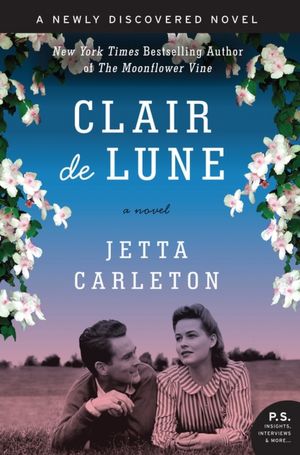
Jetta Carleton: Clair de Lune (2012)

Clair de Lune is Jetta Carleton’s long-lost second novel which has just been rediscovered and published for the first time this year. I read Moonflower Vine, her highly acclaimed first book, after I had seen it mentioned on Jane Smiley’s list of 100 best novels. Moonflower Vine was one of my favourite reads that year and Clair de Lune will most certainly be on my Best of 2012. I’m really glad I discovered a review on Natalie’s blog Coffee and a Book Chick.

Written in the 60s but set in the 40s in a small town in Missouri, Clair de Lune tells the story of a young woman who is trying to find her way, of a unique friendship between three people and of America just before entering the war.

Allen Liles dreams of being a writer and going to New York. Her love of literature is immense but she also craves the life of a writer, sitting in cafés, discussing.  For the time being she has to be content with a job as a teacher in a college in Missouri. Her love of books and her unconventional mind let her go ways that haven’t been explored before and thanks to the understanding college head she is allowed to offer an extracurricular discussion group. Her plan is to introduce the students to modern writers who are not on the syllabus yet. The students who sign up are as enthusiastic as she is and it doesn’t take long until they start to meet after the classes as well. With her barely 24 years, Allen isn’t much older than her students and none of them gives a thought to the fact that she isn’t allowed to meet them outside of the classroom. Her innocence and the happiness to find people who think like her prevents that it even crosses her mind that there could be a problem. After a few weeks only George and Toby are left and the three young people go out together on a regular basis or spend the evenings at Allen’s flat where they eat something, listen to music and discuss books and Allen’s’ own writing. They introduce each other to new books and pieces of music, one of their favourites being Debussy’s Clair de Lune. When they are fed up with sitting at home, they go to the cinema together or just walk the streets and enjoy the spring evenings.

As the weeks go by, a shift takes place and slowly Allen is drawn to Toby. They meet without George and  their friendship turns into a love affair. In her naiveté Allen doesn’t realize that she is in danger and when rumors start to spread, they have to stop seeing each other. When she finally realizes that she has made a mistake, she lives intense weeks of anxiety and fear.

Before the rumours started to spread the war had already cast a shadow over their friendship. Allen’s reaction is equally naive when it comes to her view of the war in Europe. She is certain that America will never be drawn into it, that the war is something that is dark and destructive but that they are secure and sheltered. George shares her views more or less but Toby loses patience with her and thinks she is very wrong.

The book centers on a few main themes, literature and friendship are but two of them. Convention versus freedom are other themes which are explored. In choosing an independent life, Allen is ahead of her time and although she is in many ways a naive young woman, she possesses a very original mind and is free of prejudice. Another main topic is change. Clair de Lune pictures a vanishing world. The US before entering the war  are very different from the one after. The times are changing and with them the needs of the society which is mirrored in the way the college changes. While this is a college which offers a broad education with emphasis on the arts, the younger faculty members want to get rid of the head and turn the faculty into one in which courses in economy and other specializations which lead to a career are offered.

I absolutely loved this book. I tried to slow down while reading but it was pointless, I just rushed through the pages and when I turned the last one I was quite sad. It contains such a lot of intense scenes and the most uplifting ending since I’ve read Nada last year. Since the largest part of the book is set in spring, there are a lot of wonderful outdoor scenes in which the three friends walk in the streets, stand in the rain or just stroll through the fog. There is a breathlessness and joy of life in these pages that is exhilarating. It renders the enthusiasm of young people for whom everything is a discovery, be it literature, art, music, love or friendship. At the same time there is the anxiety about war and the knowledge that the freedom and carefreeness they experience is going to end.

Have you read Jetta Carelton?

Charlotte Wood: The Submerged Cathedral (2004)

Australian author Charlotte Wood’s lyrical novel The Submerged Cathedral caught me unawares. Reading it felt at times like daydreaming. It has a hypnotic and very gentle quality that isn’t easy to put into words. It is highly symbolical and complex but still down to earth. The voice and choice of themes are so unusual, I’m really glad I discovered it on Kim’s blog last year (here).

The novel has four parts, each dedicated to a year – 1963, 1964, 1975, 1984 – covering twenty years in the lives of Jocelyn and Martin.

In part I Jocelyn and Martin meet and fall deeply in love. It’s the 60s and concubinage is far from being accepted. Jocelyn who already turned down one man, doesn’t want to get married but she wants to live with Martin. When they meet she is working as a copy editor and proofreading the manuscript of The Complete Illustrated Encyclopedia of Australia. The parts which speak the most to Jocelyn are those dedicated to the flora of Australia. The beauty and mystery of all these plants that are unique to this part of the world are a major theme. While reading about them Jocelyn becomes aware of them and decides she would love to create a garden, a garden unlike the English garden her mother used to have. Hers should be a garden with Australian plants only.

Martin is a doctor, a doctor who is much more of a healer than a surgeon. He can almost feel what is wrong with people before they tell him and knows what they need to recover. He is very taken with Jocelyn and her idea and wants to help her build the garden.

The time they spend together in his house is idyllic. They sit on the porch, talk about their plans, go swimming. It’s peaceful and harmonious until the day Ellen, Jocelyn’s older sister, announces she will come back to Australia. She has been living in London with her husband and her daughter. Her husband’s violence is driving her away.

Why the strong and courageous Jocelyn who doesn’t even fear to be a social outcast, lets her sister take over her life and dictate her every move, is hard to understand for anyone who has never been entangled in a dysfunctional family system. I know what this is like and although I read with shock how the beauty is crushed and the relationship between Martin and Jocelyn is put to a test it doesn’t pass, I could relate. It made me gasp and infuriated me but I felt that Jocelyn couldn’t act any other way under those circumstances. At the end of part I a tragedy happens after which Jocelyn leaves Martin.

The next three parts of the novel follow them in their journey from grief to healing and beyond. Jocelyn chooses to follow Ellen to London. Martin joins a convent. All through the novel the themes of love, religion, nature and gardens are undergoing different variations.

What I liked so much about this book is the way it is written. It has the capacity to draw you in. It speaks to your emotions much more than your intellect. I felt like a spectator who was captivated and then became part of the story because Charlotte Wood really shows everything, she doesn’t tell a lot. We don’t only think that Ellen’s sister is destructive, abusive and a liar, we experience it. This is amazingly artful. It’s also never said why Martin joins a convent but we learn to understand. The same goes for the description of the Australian flora and Jocelyn’s urge to create a garden that guides and haunts her until she finally gets the opportunity to follow her dream.

I would love to visit Australia because it is so unique, because it has landscapes and plants and animals that you find nowhere else in the world. If you share this fascination, you will love this book. It is a hymn to the beauty of that continent but it is also a hymn to love. Pure unconditional love. Last but not least it has  a religious theme that is as important as the nature element. The gardens of the Bible are mentioned and alluded to, Eden and Gethsemane. Antonement and pilgrimage are other key themes. While Martin tries to make sense as a recluse, Jocelyn is living like a pilgrim.

The Submerged Cathedral is a very subtle novel, very alluring and despite its gentleness very powerful. It seems to have been created in a timeless zone.

Part III in which Jocelyn travels through Europe with a garden architect has the appeal of a travel novel. They stay in France and Spain and while visiting Parque Güell in Barcelona, Jocelyn has a vision. The title The Submerged Cathedral refers to Debussy’s La cathedral engloutie. Seeing Gaudí’s Sagrada Familia reminds her of this piece of music. When she sees Gaudí’s church, everything is tied together; her idea of an Australian garden, the organic forms of Gaudí’s work, the dryness of the Spanish earth. Her journey is fulfilled and she returns to Australia.

I liked this book a lot. It’s beautiful and heartbreaking. Several tragedies happen between these pages that each made me put the book aside for a while. But there were equally passages of great beauty that also made me put the book aside. I wanted those pages to linger just a little while longer.

I would like to read more of Charlotte Wood’s books but they are not available outside of Australia at the moment. Animal People sounded like a novel I would love. Here is the link to her website if you’d like to explore.

The Submerged Cathedral is my second contribution to the Aussie Author Challenge 2012.

Here is a wonderful and very subtle analysis of the novel which I found on Nike Sulway’s blog Lost for Words: The Submerged Cathedral.

Dutch Literature Month and Beryl Bainbridge Week in June

If it hadn’t been for Iris’ Dutch Literature Month last year, maybe Lizzy and I wouldn’t even have thought of organizing a German Literature Month. Who knows, in any case I enjoyed Dutch Literature Month last year and I’m glad Iris is hosting it again in June. Needless to say that I am joining. Details can be found here.

I have a few plans for this year.

One book I would like to read is Hedwig’s Journey by Frederik van Eeden. I’ve got a copy from Holland Park Press and it sounded very good. The first translation has been published in 1902. This edition is a revised new translation.

Sample passages and a long description of the book can be found on the editor’s page. Here’s what makes me want to read it.

Outwardly, Hedwig is a typical girl growing up in a well-to-do family in a sleepy provincial town. Inwardly, she feels things very deeply and has a strong sense of self, and can all of a sudden feel very depressed.
‘It was the afternoon, between four and five o’clock, that she recalled with most dislike; …, and the worst of all the first day of the week in the middle of winter.’

The second possibility is The Tea Lords by Hella Haasse. Iris will host a readalong of this classic and although I don’t think I will join, I wanted to let you know, just in case you might be interested. Here is the blurb:

Rudolf leaves his comfortable origins in Delft by ship for Java to help run the family’s estates there. He moves from plantation to plantation, attempting to understand the ways of the local peoples, their version of Islam and their relationship to their land. On a visit to the capital, Jakarta, he falls in love with a teenage girl, Jenny, who he courts surreptitiously via his sister, with grave consequences for the reality of their relationships. Eventually they marry, and make a hard colonist-couple’s life theirs, bear, lose and raise children, before Jenny on her visit to the home country discovers all the comforts of which she has been deprived in Java. Back at the plantation homestead, as the back-breaking work of establishing and maintaining business takes its toll on Rudolf, Jenny becomes estranged from him, and the bitter resentments of relatives eat at her until a terrible solution is achieved.

I have many other books on my piles. I might read another Cees Nooteboom this year, I still have a few I haven’t read yet.

If you are looking for suggestions for Dutch Literature Month here is a post I did last year Dutch Literature Recommendations.

*******

There is another event I wanted to make you aware of and that is Beryl Bainbridge Week hosted by Gaskella from June 18 – 24. I already left a hasty comment saying I will be too busy to join but I have still got three unread copies which makes me think I can’t let this week pass without attempting to read at least one. I discovered Beryl Bainbridge last year on Guy’s blog and read The Dressmaker which I found excellent. The three books I still got on my piles are

The Bottle Factory Outing

An Awfully Big Adventure

The Girl in the Polka Dot Dress

How about you? Do you have your Dutch Literature choices ready? Are you in for Beryl Bainbridge Week?

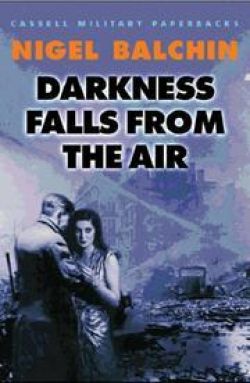
Literature and War Readalong May 28 2012: Darkness Falls From the Air by Nigel Balchin

I had never heard of Nigel Balchin before reading a few intriguing reviews on Guy’s blog (herehere and here). When I looked him up and saw he wrote a novel – Darkness Falls From the Air – which is called the “classic novel of the London Blitz” and written during the Blitz in 1942, I was keen on including it this year. Balchin seems one of those authors hardly anyone knows anymore but those who rediscover him are usually enthusiastic. It even seems that he is Patrick McGrath’s favourite novelist.

After having read about the bombing of Coventry written by a contemporary writer it will be interesting to see how someone handles the Blitz who has actually experienced it.

Here are the first sentences

I stopped at about seven. There was too much stuff on my desk to have a chance of getting clear that night, and I was tired of it. I felt pretty guilty coming downstairs, and had to tell myself  that this was the first time this week that I had stopped before eight.

Two French officers were just coming in the front door as I went out, and I did the bowing and waving act that I always do to them. It struck me as odd that they should still be around – unless they had decided to stay on in England and fight with us.

*******

The discussion starts on Monday, 28 May 2012.

Further information on the Literature and War Readalong 2012, including all the book blurbs, can be found here.