Louise Welsh: Naming the Bones (2010)

Knee-deep in the mud of an ancient burial ground, a winter storm raging around him, and at least one person intent on his death: how did Murray Watson end up here? His quiet life in university libraries researching the lives of writers seems a world away, and yet it is because of the mysterious writer, Archie Lunan, dead for thirty years, that Murray now finds himself scrabbling in the dirt on the remote island of Lismore. Loaded with Welsh’s trademark wit, insight and gothic charisma, this adventure novel weaves the lives of Murray and Archie together in a tale of literature, obsession and dark magic.

I read a few intriguing reviews of Louise Welsh’s books and Naming the Bones was the one that tempted me the most. Set in Glasgow, Edinburgh and on the Island of Lismore, off the West Coast of Scotland, this is a very atmospherical read. The first 150 pages or so, it did remind me a lot of Kate Atkinson but farther into the novel, this changed considerably. And that is a bit sad. The novel had the potential to be great but the denouement wasn’t to my liking and so I would say, yes, it is a very good novel but not a great one.

Murray Watson, a professor of English literature at the University of Glasgow has a passion that makes him ask for a sabbatical. Since he was a very young guy, he loved the poems of Archie Lunan. Lunan has only had one slim collection published before he died an untimely and mysterious death. Living on the Island of Lismore for a certain time, together with Christie, his girl friend, he took a boat in stormy weather and never returned.

Murray wants to write his biography, do extensive research on the poet, interview people who knew him and secretly wishes to find a few undiscovered poems. Fergus Baine, the head of the department and husband of Murray’s lover Rachel, disadvises this approach. He tells him to concentrate on the poems, not the man.

It is obvious that Naming the Bones is exploring these two approaches to literature; the biographical one and the one leaving out everything related to the life of the author.

Murray is an interesting character. We meet him at a junction in his life. He has just been dumped by Rachel and realizes that Fergus may have known all along that he had an affair with her and that he may not have been the only one whith whom she had affairs. Fergus and Rachel seem to have a very unhealthy relationship.

Murray’s father died of Alzheimer’s and Jack, his brother, who is an artist, made an installation, showing their demented father on film which infuriates Murray.

Murray is a good looking, very attractive man and his charms are the reason why all through the novel women feel attracted to him.

What reads for the first 100 and so pages like a character study and an adventure story circling around the core theme of researching a deceased poet, starts to get dismal once it seems obvious that some of the people in Murray’s life knew Archie and that there may be secrets tied to Archie’s death that are far more disturbing than the possibility that Archie committed suicide.

When the reasearch in Edinburgh and Glasgow is finished, Murray leaves for the Island of Lismore where Christie lives. She doesn’t want to give him an interview or any other information, still Murray wants to see the place where Archie lived and died.

As beautiful as the island may be, it is a lonely and desolate place. Murray’s mood seems to get darker and darker, along with the developments in the novel. It also seems as if other people looking into Archie’s life had met with an untimely death and the further we read into the novel the more uncanny it gets.

I saw the term “gothic” mentioned a few times along with this book and couldn’t understand the use at first. I love gothic books but I do not like the blend of gothic and crime/thriller because that invariably means that  a “satanistic cult” or some such thing serves as part of the background. It’s not as bad as that here but the elements are present. Lucky the outcome isn’t tied to anything supernatural or occult. What we find out at the end just shows some young people’s depravity.

As said in the beginning, this is a very atmospherical novel. I have been to Scotland and know Glasgow and Edinburgh as well as some of the islands off the West Coast and I must say they are very well rendered. It is also an extremely well written novel, the numerous main and secondary characters are without any exception interesting and complex. There is more than one theme explored in this book which gives it additional depth. Welsh tackles topics like old age, research, poetry, alternative life styles, modern relationships, death and suicide with intelligence and a great deal of insight.

All this together makes Naming the Bones a very entertaining read on an autumn or winter afternoon when the world outside is as rainy, stormy and dark as the world in the novel. If you like a gothic atmosphere, you will enjoy this a great deal.

Here’s the island’s website should you plan a trip to Scotland: Island of Lismore.

Ruth Rendell: The Tree of Hands (1984)

Once, when Benet was about fourteen, she and her mother had been alone in a train carriage and Mopsa had tried to stab her with a carving knife. It was some time since Benet had seen her mad mother. So when Mopsa arrived at the airport, looking drab and colourless in a dowdy grey suit, Benet tried not to hate her. But the tragic death of a child begins a chain of deception, kidnap and murder. Domestic dramas exploding into deaths and murders …threads are drawn tightly together in a lethal last pattern.

I read and reviewed A Judgment in Stone last year and have mentioned how much I liked it. It was one of my favourite reads of 2010. On one of the comment thread’s Guy Savage suggested another book by Ruth Rendell, The Tree of Hands, and that is how I discovered this novel.

I have to emphasize once more what a great writer Ruth Rendell is. This book is different from A Judgment in Stone but also very engrossing. After having read The Tree of Hands I can also see why A Kind of Intimacy was compared to Rendell’s books. The description of the streets and their inhabitants shows a lot of parallels plus the people are equally deranged.

In the Tree of Hands the stories of at least 6 people are interwoven but it is skillfully done and they are all linked together in a logical way. The novel works like those rows of domino stones that have been set up in order to see them fall one by one. The falling down of the first stone makes the others follow. One action in the novel triggers another action and they are all equally fatal and catastrophic.

I was a bit wary at the beginning as Mopsa, Benet’s mother, is said to have a mental illness. Using mental illness as an explanation for a crime is often insufferable to me. But fortunately Mopsa is just the first domino stone. Being totally irresponsible she steals a child without ever thinking of the consequences but then she leaves and lets all the other people deal with the aftermath of his kidnapping.

The book really has a chain reaction at its core and one bad decision leads to another. And it also describes quite a lot of negative, selfish and frankly bad people. What struck me, even though Mopsa is mentally ill and on top of that clearly not a good person, she is by far less deranged than some of the other nasty characters in this book.

One of the main stories is the story of Benet, a young mother and extremely successful writer who lives in a beautiful house in Hampstead. At the beginning of the book her mentally ill and very unstable mother, Mopsa, comes to visit her and her little boy, James. Benet is a very loving mother and James is the most important person in her live.

The second main story revolves around another young mother, Carol, her son Jason and her young boyfriend Barry. Carol is a superficial and unrestrained woman with a flaming temper. At the age of 28 she is already a widow and has three children from different men. Two have been taken away, only the smallest, Jason, is living with her and Barry.

At first the two strands of the story run in parallel until a tragedy happens and Mopsa steals Jason.

I am tempted to write a lot more as there are a few aspects that I find interesting but unfortunately it isn’t possible, it would spoil too much. I can however say that the novel also explores the concept of parenthood and if someone who loves a child dearly might not be a better parent than a biological parent.

Something that struck me in this book is the overuse of the sedative Valium. This dates the book. Surely nowadays people in novels don’t pop pills like sweets and they might not use benzodiazepines as often anymore. This constant use of downers and alcohol is of course symbolical and just underlines that the people in the novel do not want to face any problems or consequences of their actions.

Ruth Rendell’s writing is suspenseful, her characterizations are psychologically plausible and the descriptions of different social milieus spot-on. Do I have to mention that I will certainly read another Ruth Rendell or Barbara Vine very soon?

Crimeculture – Books, Movies and More

victorian


I found this great site Crimeculture today and wanted to share it with you as I know that many of you also love crime, thriller, detective and suspense novels and movies. It contains a lot of information, essays, articles, lists on books and films. You will find the books and movies organized by subgenres like Victorian Detective Fiction, Classic Detective Novels, Early Hard-Boiled… Film Noir, Neo Noir, Asian Detectives. I hope you will enjoy it as much as I do. It’s a great resource.

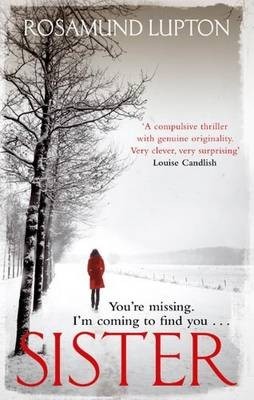
Rosamund Lupton: Sister (2010) A Great New British Thriller Writer

Nothing can break the bond between sisters …When Beatrice gets a frantic call in the middle of Sunday lunch to say that her younger sister, Tess, is missing, she boards the first flight home to London. But as she learns about the circumstances surrounding her sister’s disappearance, she is stunned to discover how little she actually knows of her sister’s life – and unprepared for the terrifying truths she must now face. The police, Beatrice’s fiance and even their mother accept they have lost Tess but Beatrice refuses to give up on her. So she embarks on a dangerous journey to discover the truth, no matter the cost.

That was a fast read. Even though this was a busy week and the novel had some 370 pages I read it in a few days. That certainly says something. I liked it a lot. The writing reminded me of Maggie O’Farrell. Should she ever choose to write a thriller, that’s what it could look like.

Sister is the story of  Tess and Beatrice, two sisters who are extremely close, even though the older one, Beatrice, lives in New York, while the younger, Tess, is still in London where she goes to an art school. When Beatrice gets the phone call from her mother saying her sister is missing she is highly alarmed and flies back to London immediately. When the sister is found dead and declared to be a suicide Bee – as her sister used to call her – is the only one who does not believe it was suicide. She is certain it was murder. And she won’t change her mind. No matter what the police, her mother or Tess’ psychiatrist say.

The story is told in part as if Beatrice was writing  a letter to her dead sister, telling her the whole story after the murderer has been found and arrested. In part she writes the letter, in part she tells the whole story to a lawyer. Consecutive flash backs. The story is also interspersed with dialogue between the sisters.  There are many red herrings as so many men who were in Tess’ life seem suspicious. The ending is quite a twist. That’s the only flaw I could find in this book. It seems a little bit artificial but then again it is not an improbable ending.

There are  many colorful characters in this novel. Art students, immigrants, doctors, scientists, policemen. The bond between those sisters is certainly the most important relationship in the book and it is very deep and moving. The story of their childhood is not an easy one which is another reason why they were so close. All through the novel Beatrice finds other people to relate to and some relationships like the one with her mother are completely transformed. Bee herself is also changed considerably. When the novel starts she is afraid of life, at the end she is ready to embrace and enjoy it.

Sister is Rosamund Lupton’s first book. The next should come out in 2011. I am already looking forward to reading it.

Kelley Armstrong: Bitten (2001) A Werewolf Thriller

Elena, heroine of Kelley Armstrong’s impressive debut thriller Bitten, never planned that a casual sexual encounter would transform her into a werewolf. Neither did Clay, her lover and one of the leaders of the exclusive werewolf clique known as the Pack; women do not generally change or survive if they do. Elena’s considerable reservations about her new life come to a head and she walks out on the Pack to return to something like normality, finding herself a boyfriend who turns a blind eye to her occasional disappearances in the middle of the night. She may have done with the infighting of werewolves, but they have not done with her; her former family call her back when they find themselves under threat from those they have excluded and dominated. Kelley Armstrong is very good on the sheer exhilaration of shape-changing, of running on four feet through forests, suburban greenery and urban back alleys; if there is a weakness here, it is that Elena’s relationship with the taciturn, untrustworthy Clay is sometimes a little too conventionally romantic–but the dark poetry of the best of the book overcomes this entirely.

I must admit if it hadn’t been for Kailana I would never have read Kelley Armstrong’s Bitten but some of her reviews of the Women of the Otherworld series were so enthusiastic, I simply had to try it.  And to be honest “A werewolf thriller” sounded somewhat intriguing. I was not disappointed. Besides, my late grandmother being from Brittany, I grew up with werewolf tales and did belive them until my late teens. But this is not the reason why I liked it. I liked it because I could identify with the heroine. She is such a realistically drawn person. A strong woman who grew up in foster homes, looking for a family, a home, security but never seems to get it. The years alone have hardened her. But then she meets Clay. Beautiful, intelligent, mysterious Clay who offers her everything she never had. Who even goes to a lot of pain to offer her her first proper Christmas and who takes her to Stonehaven, the home of his family, Jeremy, Antony, Nick, Logan and the others. And then the unthinkable happens. He bites her. The only secret he has kept from her, that he is a werewolf, is a fatal one. Normally no one survives a werewolf bite. Only the strongest do. And there was never a female werewolf. Elena is the first.

At the beginning of the novel, Elena lives in Toronto with Philipp. She has left Stonehaven and the pack. She doesnt’ want to be an outsider of society, she wants to fit in, lead a normal live. One day however she gets a call from Jeremy, the Alpha male of the pack. Someone is threatening the pack, wants their territory and has started killing innocent people. She is reluctant to go back at first but finally  gives in. Once she is there she realises how much she missed them. Especially Clay. The novel is action packed and fast paced. There is not only one other werewolf who wants to harm them, there are many. And they eventuallly start to kill the men from the pack. If they want to survive, they have to stick together and fight as one.

Elena fights alongside her men. As said before, she is a strong person. I would wish her as a role model for young women. Powerful and determined. What really surprised me is the writing. Did you ever want to know what it would feel like to be a werewolf? The writing is so detailed, and descriptive that you might very well have the feeling you know what it is like to smell with the nose of a wolf, to tread and run with the paws of a wolf, to hunt and to race through the forest at night. The character development of Elena is interesting too. At times I totally forgot I was reading Fantasy. The core theme is “being true to yourself” and that is certainly a theme anyone can relate to.

As you see, it is very entertaining. A werewolf thriller with a touching love story and a strong heroine. Bitten is the first in the series of Women of the Otherworld. I am not very keen on series but I might read the next one sooner or later.

Any series you like or would suggest?

Ruth Rendell: A Judgement in Stone (1977)

Four members of the Coverdale family – George, Jacqueline, Melinda and Giles – died in the space of fifteen minutes on the 14th February, St Valentine’s Day. Eunice Parchman, the housekeeper, shot them down on a Sunday evening while they were watching opera on television. Two weeks later she was arrested for the crime. But the tragedy neither began nor ended there.

I discovered this novel  thanks to a suggestion from Danielle from A Work in Progress. I have read a few books of Ruth Rendell before and liked them and  I also read one she wrote under the pen name Barbara Vine but didn’t know which to read next. It is always good with prolific writers if someone can make a suggestion. I really liked A Judgement in Stone and can see why it is considered to be one of her best. It takes a very good writer to be able to captivate a reader even though the victims and the murderer are known from the very beginning. The psychological insights are absolutely convincing. Each character is so different from the other and they are all quite fascinating. Rendell adds a lot about the British class system and her description of two completely deranged women is amazing.

Because we know from the start that the main characters will be killed the book has an eery quality. It reminded me of a Greek tragedy. There is nothing to stop the course of the action.

Eunice Parchman, a middle-aged, illiterate and not very intelligent woman starts her employment with the Coverdales in summer. On Valentine’s Day she kills them. The changing of the seasons that Rendell describes with great detail adds to the feeling of the inevitable. The narrator is very present in this story, he misses no occasion to remind us, that the people he describes will meet a certain death. This reminded me of Gabriel Garcia Marquez’ Chronicle of a Death Foretold.

Eunice is not only illiterate she also lacks feelings for others. There is not the tiniest bit of empathy in this woman. Since she can’t read and sees this as a great flaw she abhors the written word and those who like to read. The Coverdales, a typical British upper class family, love to read. There are books all over their house. Eunice tries to cover up her disability as best she can and gets herself in a lot of impossible situations. One day, when running errands, she meets Joan Smith, a former prostitute who has joined some obscure Christian sect. One woman is as deranged as the other. Eunice is a cold-hearted selfish sociopath and the other a fanatic psychopath. Their alliance can only bring misfortunes.

Rendell’s  book is gripping, psychologically convincing and utterly fascinating. I’m really in the mood to read more of her books.

A Judgement in Stone has twice been made into a movie. One of them is by Claude Chabrol, La Cérémonie, starring Sandrine Bonnaire as Eunice and Isabelle Huppert as Joan.