Welcome to German Literature Month 2018

November is here and German Literature Month begins.

Normally I do share my plans with you at this stage, not so this year. I will be focussing on our readalong titles. If I manage something else, wonderful, if not, that’s OK as well.

Just to remind you – here’s our program again:

Week 1: Children and Young Adult Fiction (November 1-7)

November 7 – Readalong with Lizzy: The Book Jumper – Mechthild Glaser

Amy Lennox doesn’t know quite what to expect when she and her mother pick up and leave Germany for Scotland, heading to her mother’s childhood home of Lennox House on the island of Stormsay. Amy’s grandmother, Lady Mairead, insists that Amy must read while she resides at Lennox House – but not in the usual way. It turns out that Amy is a book jumper, able to leap into a story and interact with the world inside. As exciting as Amy’s new power is, it also brings danger – someone is stealing from the books she visits, and that person may be after her life. Teaming up with fellow book jumper Will, Amy vows to get to the bottom of the thefts – at whatever cost.

Week 2: Crime Week (November 8-14)

November 14 – Readalong with Caroline: Blue Night – Simone Buchholz

The hair stands up on the back of my neck and I get an age-old feeling in my belly. Like there’s a fight ahead. Like something’s really about to go off…

After convicting a superior for corruption and shooting off a gangster’s crown jewels, the career of Hamburg’s most hard-bitten state prosecutor, Chastity Riley, has taken a nose dive: she has been transferred to the tedium of witness protection to prevent her making any more trouble. However, when she is assigned to the case of an anonymous man lying under police guard in hospital – almost every bone in his body broken, a finger cut off, and refusing to speak in anything other than riddles – Chastity’s instinct for the big, exciting case kicks in.

Fresh, fiendishly fast-paced and full of devious twists and all the hard-boiled poetry and acerbic wit of the best noir, Blue Night marks the stunning start of a brilliant new crime series, from one of Germany’s bestselling authors.

Week 3: 1918 Week (November 15-21)

November 21 – Readalong with Lizzy: The Emperor’s Tomb – Joseph Roth

The Emperor’s Tomb is a magically evocative, haunting elegy to the vanished world of the Austro-Hungarian Empire, and to the passing of time and the loss of youth and friends. Prophetic and regretful, intuitive and exact, Roth’s acclaimed novel is the tale of one man’s struggle to come to terms with the uncongenial society of post-First World War Vienna and the first intimations of Nazi barbarities.

Week 4: Swiss Literature Week (November 22-28)

November 28 – Readalong with Caroline: A Long Blue Monday – Erhard von Büren
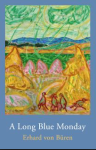
The novel portrays, with dry humour, delicate irony and a touch of nostalgia, the lives and feelings of young people in the late 1950s.

“Erhard von Büren pours out memories of love affairs, of family life, of student experiences or incidents from his readings… His style is spiced with waywardness and wit.” – Award of the Canton Solothurn Prize for Literature.

In A Long Blue Monday, the narrator, who is temporarily away from home working on a book about Sherwood Anderson, remembers his unrequited love affair with Claudia, whom he met at college during rehearsals for a play.

How could he, the village lad, the son of a working-class family, aspire to gain the affection of Claudia, a sophisticated town girl, who lives with her wealthy family in a spacious house by the river? Worlds seem to separate the two. But he is convinced that where there’s a will there’s a way. As a young boy, he had tried, by being a model pupil and a model son, to repair his family’s damaged reputation. But now, in spite of all his attempts, his love remains unreciprocated. Finally he decides to take several weeks off college to write a play – a trilogy, no less – to gain Claudia’s esteem.

Week 5: Read as you please (November 29-30)

*******

Please do not forget to enter your posts on the German Literature Month site, so everybody knows what’s happening and can visit your blogs.

Happy reading!
Announcing German Literature Month VIII – November 2018

German Literature Month is eight years old this year, and part of the literary calendar. Lizzy and I know that because of the chatter that continues throughout the year about books purchased and set aside for the event. And that makes us very happy.  We’re even happier when you read them during November.

For those though who are wondering what this is all about, and may wish to join us for the first time, November is the month for reading works originally written in German: fiction, non-fiction, poetry, plays, essays, comics, graphic novels.  Anything you fancy really, in any language you fancy, as long as the original language was German. Then tell the world about it: on your blog, facebook, twitter, instagram, goodreads, amazon, wherever. It all adds up to one great banquet of Austrian, German and Swiss literary goodness. This, for example, was last year’s menu. https://lizzysiddal.wordpress.com/2017/12/05/german-literature-month-vii-author-index/

The last couple of years have been entirely read as you please, but this year Lizzy and I wanted to introduce new themes and add in more social reading opportunities. So we’ve devised the following plan.

Week 1: Children and Young Adult Fiction (November 1-7)

November 7 – Readalong with Lizzy: The Book Jumper – Mechthild Glaser

Week 2: Crime Week (November 8-14)

November 14 – Readalong with Caroline: Blue Night – Simone Buchholz

Week 3: 1918 Week (November 15-21)

November 21 – Readalong with Lizzy: The Emperor’s Tomb – Joseph Roth

Week 4: Swiss Literature Week (November 22-28)

November 28 – Readalong with Caroline: A Long Blue Monday – Erhard von Büren

Week 5: Read as you please (November 29-30)

As always, you may read as you please for the month, or you may choose to join in any (or all) of the specific themes and readalongs.  It’s entirely up to you.  The main thing is to enjoy yourself!  Will you join us?

Final Thoughts on German Literature Month 2016

german-literature-month-vi

I know that some of you, including my co-host, are extending German Literature Month through December. I am not keen on extending events, so this is my goodbye to GLM.

A usual, the event was a success. There have been 119 reviews so far. Normally I try to read as many reviews as possible but November was too hectic and upsetting to do so. I still hope to visit a few of you. In any case, thank you so much for participating.

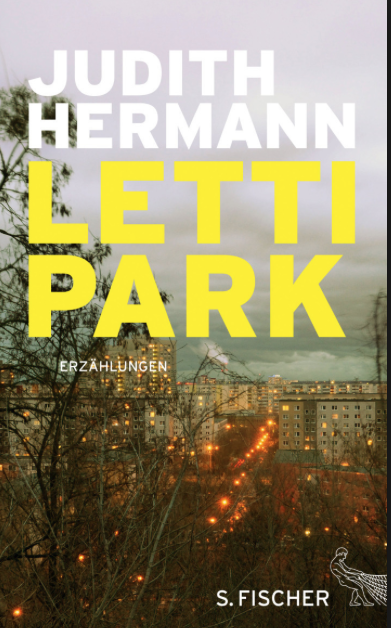
I’ve done quite well with my reading plans this year, but I haven’t reviewed everything I’ve read. Tony wrote about Judith Herrmann’s collection Lettipark here. I felt pretty much the same about the book, so I skipped the review. I’ll return to some stories, but overall it left me rather cold.

I never got to reading the fantasy novel I intended to read nor another short story collection but that’s OK. I’m especially glad I read Walter Kempowski and Uwe Timm.

I loved Capus’ novel when I read it but it’s already fading. Not the best sign. I enjoyed returning to Ursula P. Archer aka Ursula Poznanski and will read more of her crime and YA novels.

Thank you again for participating.


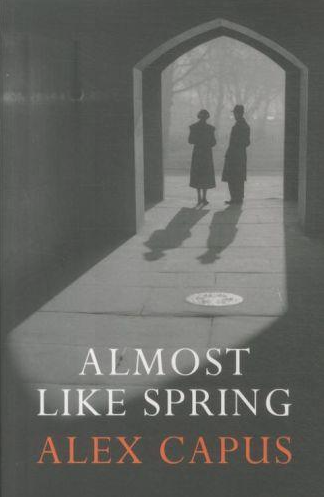
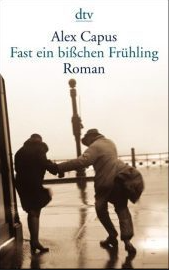
Alex Capus: Almost Like Spring – Fast ein bisschen Frühling (2002)

almost-like-springfast-ein-bisschen-fruhling

I wanted to post every other day during German Literature Month as I’ve read so many books in advance but last week was such an awful week. First the shocker election, then Leonard Cohen’s death, then the death of the brilliant Austrian writer Ilse Aichinger. So depressing. I’m sure many people feel the same way. Despondency may not be helpful but sometimes it needs room and needs to be acknowledge before we can move on.

cohenaichinger

I’ve not read any books by Alex Capus so far. I thought I wouldn’t like his writing but I’m glad to say, he’s so much better than I expected. I picked Almost Like Spring – Fast ein bisschen Frühling because it’s set in Basel, Switzerland. As many of you know, I live in Basel. There aren’t a lot of books set in this city, so I was curious because of that too.

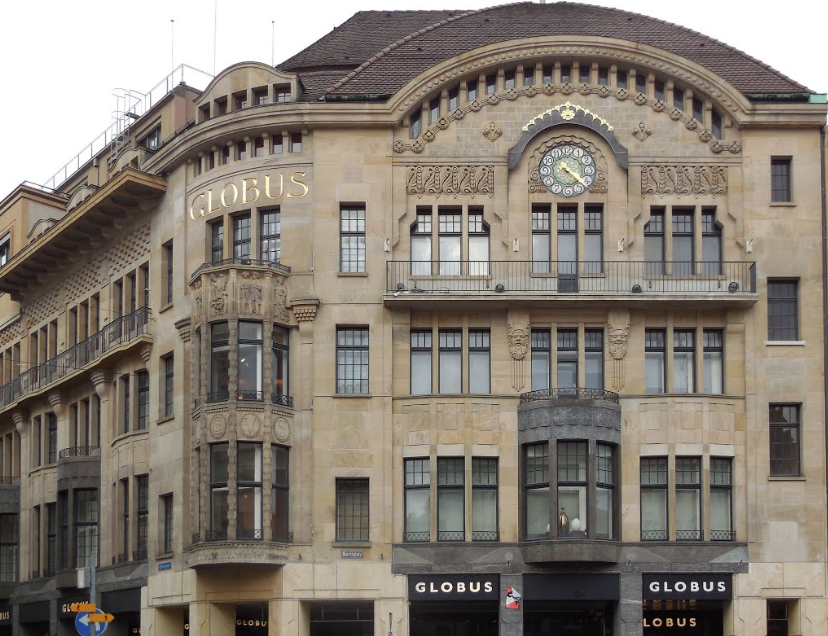
As Capus writes at the beginning of his novel, Almost Like Spring tells the true story of the German bank robbers Kurt Sandweg and Waldemar Velte. Fleeing from Wuppertal, Germany after having robbed a bank and killed someone, they arrived in Basel in the winter of 33/34. The plan was to flee to India but one of them fell in love with a shop girl, Dorly Schupp, who was working in the record department where the two robbers bought Tango records. Dorly worked at Globus, a department store that still exists and is known because it’s one of the rare Jugendstil buildings in Basel.

globus

Sandweg and Velte are depicted like two rebels and compared to Bonnie and Clyde. At any other time, one would have simply called them anti-social, but the way Capus depicts them, they were victims too. They robbed a bank because they were desperate, without a job and seeing no future in a Germany where the Nazis were taking over power. Sandweg and Velte are a peculiar pair; they are so close that people think they might be lovers but what they share is rather a bit like a folie à deux. In their heads, they’re on a mission – fighting poverty and injustice. One of them falls in love with Dorly, the other one with one of her colleagues— Alex Capus own grandmother. While the pair is in Basel, they buy a Tango record every day and go for long walks through the old town and along the Rhine, accompanied by the two young women.

The descriptions of these walks are lovely. The way Capus describes the weather, the cold winds from Siberia, and how it can get warm again, all of a sudden, in the middle of winter, because those winds change course and warm winds from the south arrive, is so spot on. The four young people don’t do much on these walks, but all four of them feel free. Dorly lives with her elderly mother, while Capus’ grandmother is engaged and will soon marry a man she never really liked. The two women don’t know that the men are criminals and when they finally leave Basel, they are disappointed.

Unfortunately, the plan to take a ship to India doesn’t work and a couple of weeks later, after having stayed in Spain, the two men are back in Basel and the real tragedy begins. They rob another bank, kill people, and are hunted down.

Most critics haven’t found anything good to say about this novel. I’m not sure why. Is it the tone? Capus mixes fact and fiction. He stays outside of his character’s heads, which makes it sound like a report at times, but the book is rich in mood and atmosphere. He captures the times and women’s fates so well. What choices did they have back then? Dorly’s actually living a relatively independent life, but Capus’ grandmother, who isn’t from Basel, is expected to return home soon and get married. While the storytelling is a bit dry, the mood is anything but.

I’m not sure about the descriptions though. Readers who haven’t been to Basel may be able to picture the department store Globus but the city? I don’t think so because he mentions street names but doesn’t really describe them.

Be it as it may, sometimes I agree with critics, sometimes I don’t. In this case I don’t agree. Almost Like Spring is a lovely book. It’s a rounded, historically accurate, atmospheric book that mixes fact and fiction to great effect.

Welcome to German Literature Month

german-literature-month-vi

Finally it’s November. Those of you who follow my blog might have noticed I was a bit quiet in the last weeks. With good reason. I was busy reading German, Austrian, and Swiss literature.

As you know, Lizzy and I have decided to do a “Read as you please month” with only two themed weeks.

A crime week during week two, hosted by Lizzy.

All For Nothing

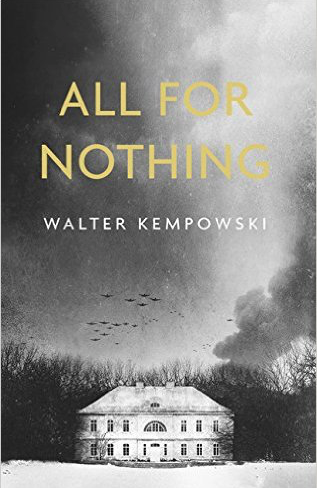
The Literature and War Readalong on November 25, in which we read and discuss Walter Kempowski’s WWII novel All For Nothing – Alles umsonst.

For those who are still looking for titles, here are the books I have already read and those I’m still planning to read.

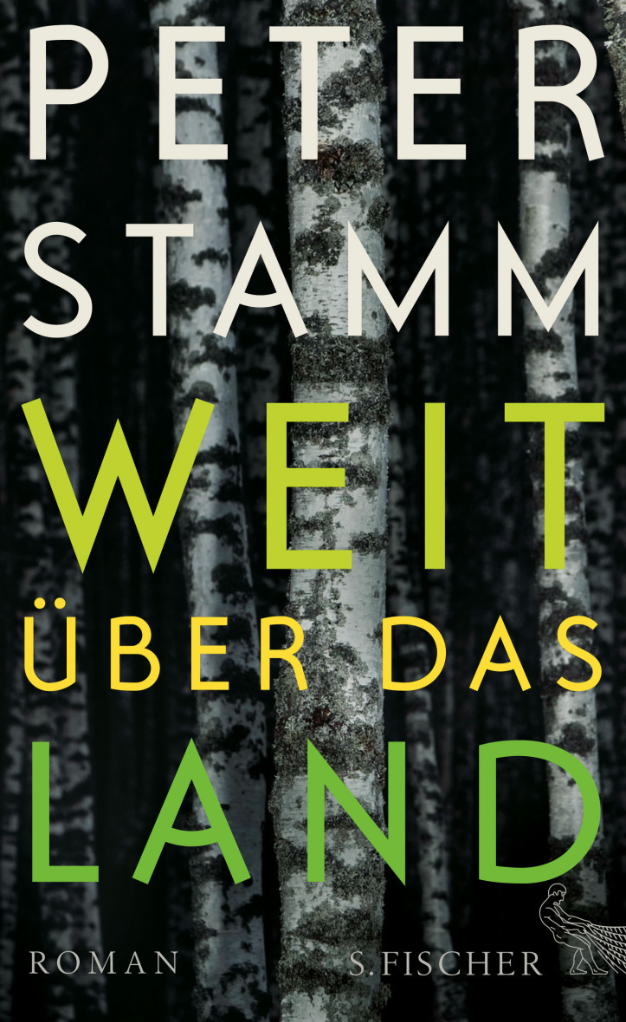
Weit über das Land

Peter Stamm’s latest novel. I must admit, I might not review it. It’s the worst book I’ve read this year. I can still not believe he wrote something like this.

letti-park

Judith Hermann’s new short story collection Lettipark. I’ve not finished this yet but I can already see that it’s a mixed bag.

karen-kohler

Karen Köhler’s short story collection Wir haben Raketen geangelt.

I bought this collection a while ago but haven’t read it yet. When I was looking for reviews of Judith Hermann’s book I saw it mentioned a few times. Most critics came to the conclusion that readers would do better to read Köhler instead of Hermann. I’ll let you know what I think.

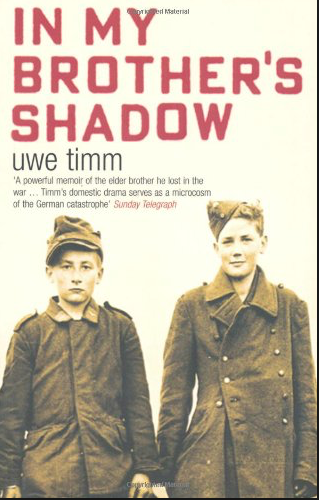
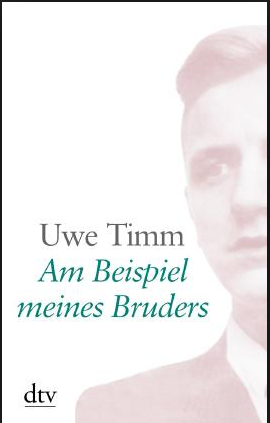
in-my-brothers-shadowam-beispiel-meines-bruders

I’ve only heard great things about Uwe Timm’s memoir In My Brother’s Shadow – Am Beispiel meines Bruders. As far as I can tell, (I read the beginning), it’s amazing.

almost-like-springfast-ein-bisschen-fruhling

Almost Like Spring – Fast ein bisschen Frühling, is my first Alex Capus and if the rest is as good as the beginning, it won’t be my last.

fivefunf

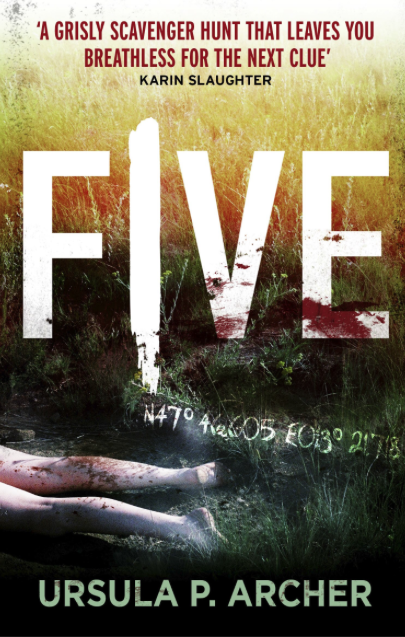
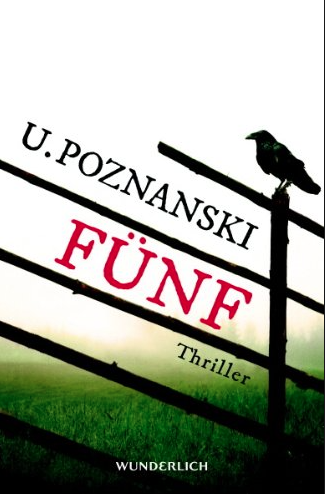
Last year I read Ursula Poznanski’s Erebos and was pretty much blown away. While I liked Five – Fünf a bit less, it’s still a really gripping book. You may have noticed that her adult crime novels are published under another name, Ursula P. Archer, in English. If you’re still looking for a page turner for crime week and are not too squeamish, you’ll enjoy this.

denkbilder

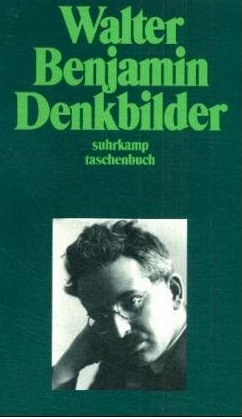
These are my plans so far. I might add some Walter Benjamin and one of the fantasy novels by Nina Blazon Der Winter der schwarzen Rosen (not translated yet).

der-winter-der-schwarzen-rosen

I hope you’re all busy making plans and wish you all a great month. I hope you’ll discover a lot of great books. Happy Reading!


*********

There will be a few giveaways.

Here’s a sneak peek.

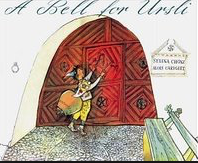
montaignea-bell-for-ursli


*********

Please add your reviews to this site German Literature Month.

Announcing German Literature Month V

literatur_2015_gold-2

I’m delighted to announce that Lizzy and I will host the 5th German Literature Month (#germanlitmonth) this coming November.


For those who have not participated before, here are the rules:


1) Whatever you read, in whichever language you read, must have originally been written in German.  Novels, novellas, short stories, plays, poems, they all count.   No genre is excluded.
2)  Enjoy yourself.  There’s no need to write long, detailed reviews (although we do like those).  A quick opinion piece, the posting of a favourite poem, the tweeting of a pertinent quote or picture of a delicious book cover (using the hash tag #germanlitmonth, of course) all contributes to a communal celebration of German-language literature.


You are free to pick what you like but for those who prefer some guidance or those who love the group-spirit of the event there are themed weeks and readalongs.


Week 1:  Nov 1-7 Schiller Reading Week. Hosted by Lizzy.


Friedrich Schiller Week


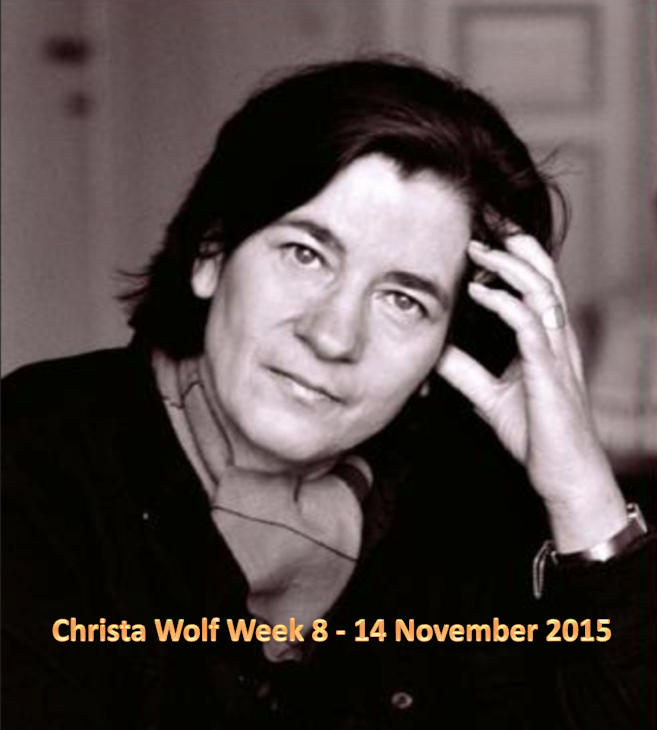
Week 2:  Nov 8-14 Christa Wolf Reading Week. Hosted by Caroline.


Christa Wolf Week


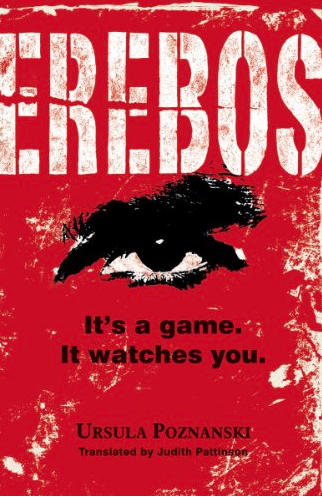
Week 3:  Nov 15-21 Ladies’ reading week incorporating a readalong of Ursula Poznanski’s award-winning YA title, Erebos on Friday 20.11.  Hosted by Lizzy.


Erebos


Here’s the blurb:
‘Enter.
Or turn back.
This is Erebos.’
Nick is given a sinister but brilliant computer game called Erebos. The game is highly addictive but asks its players to carry out actions in the real world in order to keep playing online, actions which become more and more terrifyingly manipulative. As Nick loses friends and all sense of right and wrong in the real world, he gains power and advances further towards his online goal – to become one of the Inner Circle of Erebos. But what is virtual and what is reality? How far will Nick go to achieve his goal? And what does Erebos really want?


Week 4: Nov 22-28 Gents’ reading week incorporating a Literature and War readalong of Erich Maria Remarque’s A Time To Love and A Time to Die on Friday 27.11. Hosted by Caroline.


A Time To Love and a Time to Die


Here’s the blurb:

From the quintessential author of wartime Germany, A Time to Love and a Time to Die echoes the harrowing insights of his masterpiece All Quiet on the Western Front.

After two years at the Russian front, Ernst Graeber finally receives three weeks’ leave. But since leaves have been canceled before, he decides not to write his parents, fearing he would just raise their hopes.

Then, when Graeber arrives home, he finds his house bombed to ruin and his parents nowhere in sight. Nobody knows if they are dead or alive. As his leave draws to a close, Graeber reaches out to Elisabeth, a childhood friend. Like him, she is imprisoned in a world she did not create. But in a time of war, love seems a world away. And sometimes, temporary comfort can lead to something unexpected and redeeming.
 
“The world has a great writer in Erich Maria Remarque. He is a craftsman of unquestionably first rank, a man who can bend language to his will. Whether he writes of men or of inanimate nature, his touch is sensitive, firm, and sure.”—The New York Times Book Review


Week 5: Nov 29-30 Read as You Please.


If you’re not sure what to read – our German Literature Month Page can help you with that.
German Literature Month IV was astounding in terms of numbers of participants (40) and quality contributions.  I’m not sure that we’ll be able to match it again, but let’s give it a shot. Are you in?

Hansjörg Schertenleib: A Happy Man – Der Glückliche (2005)

Hansjörg Schertenleib is a Swiss author who received a lot of praise for his novels. Das Zimmer der Signora (The Room of the Signora) which has not been translated is one of the most famous. I’ve read Das Regenorchester (The Rain Orchestra), which has equally not been translated and which I liked a lot. He has written many more.

This Studer, the main protagonist in  Schertenleib’s airy novella A Happy Man – Der Glückliche, is a jazz trumpeter and known for his somewhat enigmatic smile which puzzles and annoys those who meet him equally. Why does this man smile constantly? Is it possible to be this happy all the time?

This Studer is indeed happy most of the time. He loves his wife of twenty years just like he did when he met her, he loves jazz and his career as trumpeter and all the  joys this offers, like the trip to Amsterdam of which the novella tells us. Since This is not only of a sunny disposition but quite chatty and likable, he has many friends, one of them lives in Amsterdam and has invited him for a couple of concerts.

In the evening the friends play at a club, during the day This wanders the streets of Amsterdam, explores the city and has an uncanny encounter with a homeless man and his dog, an encounter which reminds him of something that happened in  his childhood and which shows that even this sunny man has some hidden darkness to hide.

What makes A Happy Man special is the narrative technique which reminded me of much older novels. There is a narrator who guides us into and out of the story, like a camera man, telling us to look at This now, to watch him and to leave him alone again in the end. I was afraid at first this would make for heavy reading but in the central part of the story, the narrator is in the background, just makes some comments occasionally.

I deliberately called this novella ‘airy’. ‘Breezy’ would have been apt as well. It’s like the dessert île flottante (floating island), which consists of floating egg white. If you have ever had that dessert, you will know what I mean. Fluffy, but not too sweet. And so is this novella; charming but not too cute. No literary heavyweight, that’s for sure, just a pleasant read. And if you like jazz, you might enjoy this even more.