Literature and War Readalong January 30 2012: Zennor in Darkness by Helen Dunmore

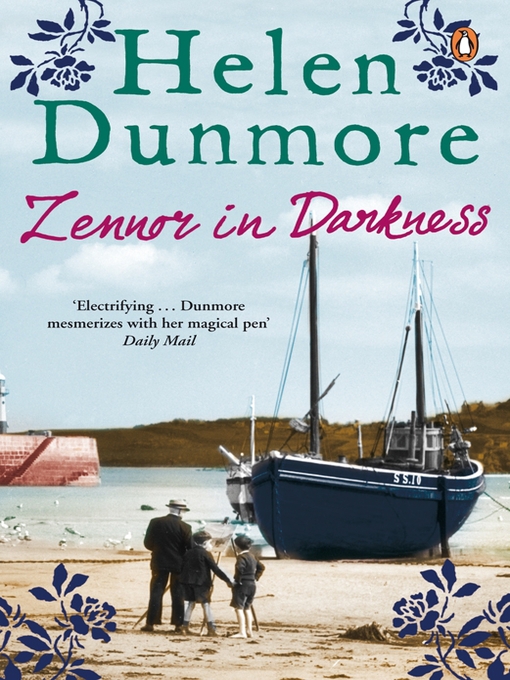
Two or three years ago I read Helen Dunmore’s The Siege a painfully realistic and harrowing account on the siege of Leningrad. This was such a stunning novel, one of the best WWII novels I have ever read, accurate, moving, descriptive and captivating despite the bleak topic. When I discovered that she had written a novel on WWI, Zennor in Darkness, I didn’t hesitate and put it on this year’s readalong list right away. Helen Dunmore hasn’t only written novels, but short stories, children’s books and poetry as well. I think her wonderful prose shows that.

The story is set in a Cornish coastal village in 1917 and combines fact with fiction. D.H. Lawrence and his wife have indeed stayed there but the story is invented. The core theme seems similar to Return of the Soldier and deals with shell shock. But it is also a story of artists and writers. I have a weakness for books about artists and love Cornwall as a setting.

Here are the first sentences

One faint shriek. Then another. Three girls fling themselves over the top of the last dune and skid down warm flanks of sand. Marram grass slashes their ankles and sand kicks up behind Clare and Peggy, into Hannah’s eyes. She is the heaviest and the last.

Have you read Helen Dunmore?

*******

The discussion starts on Monday, 30 January 2012.

Further information on the Literature and War Readalong 2012, including all the book blurbs, can be found here.

Charles Frazier: Cold Mountain (1997) Literature and War Readalong December 2011

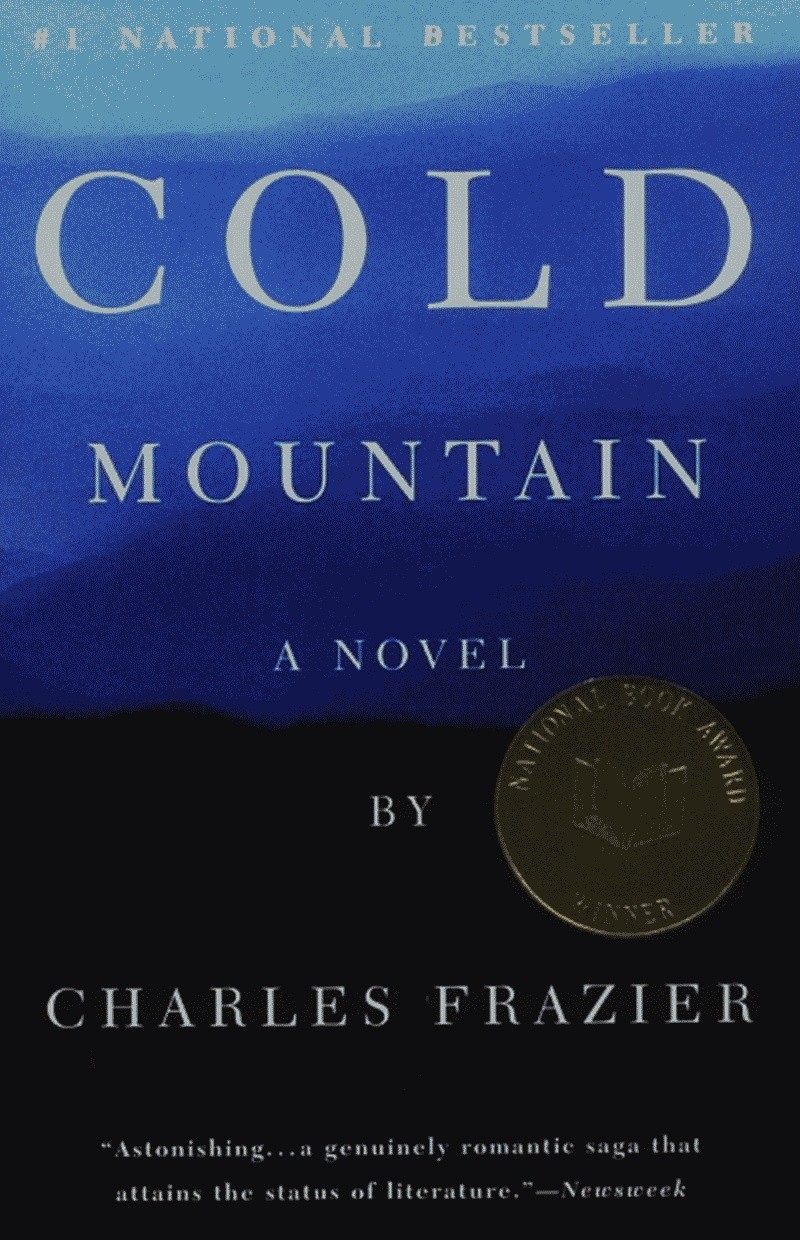
The last book of this year’s readalong, Charles Frazier’s Cold Mountain,  is the only book on the American Civil War.

Cold Mountain juxtaposes the stories of Inman, a Confederate soldier, who was badly wounded at Petersburg, and Ada, the woman he loves, who waits for him in Cold Mountain. It describes Inman’s slow and long return to Cold Mountain and how Ada copes on her own after her father has died.

I have only just finished this book and I am still a bit stunned. This is an extraordinarily well-crafted novel. The structure is interesting from the beginning on. The chapters alternate between Inman’s and Ada’s point of view and are symmetrical. Motifs and themes that are described in one chapter will be echoed in the next. This is fascinating. At the beginning, for example, we see Inman at a hospital. He was badly wounded and most of the time he is lying in bed and watching the world through a window. The window is like the frame of a picture.

That summer, Inman had viewed the world as if it were a picture framed by the molding around the window. Long stretches of time often passed when, for all the change in the scene, it might as well have been an old painting of a road, a wall, a tree, a cart, a blind man.

In the next chapter we see how Ada struggles. Her father has died and left her nothing but a farm. The farmhands have all gone, either to war or they are hiding. Ada has lived almost all of her life in Charleston and has only lived in Cold Mountain for a few years, because her father was ill, and the mountain air was thought to be beneficial. She can sew, paint, play the piano and loves to read but never in all of her life has she worked with her hands. She doesn’t know how to keep the farm going, how to produce anything. She spends long stretches of time sitting in a chair, reading and staring through a window that starts to look like a frame, the sky outside like a painting.

There is nothing that Inman experiences, that Ada’s story doesn’t echo and vice versa. They both struggle to survive, they both find unlikely friends. I liked this structure a lot but there is more to this novel. It’s exceptionally well written. Words are chosen carefully, the prose is crystal-clear and manages to paint a picture of a breathtaking landscape that we see change with the seasons.

Maybe Ada would have starved or contracted an illness and died if Ruby hadn’t turned up at her farm. From that moment on her life is changed forever. Ruby has never read a book but she is so resourceful and attentive to every little detail of nature, one almost expects her to spin straw into gold. There is nothing she cannot use, mend, transform. And she knows how to teach Ada to become as capable as she is. All Ada knew so far was a life of leisure and that life now turns into work. It’s interesting to see how useless money has become during the war and how valuable it is to be able to produce your own food.

After a while, when plants grow and they have produced all sorts of things, the women are not only independent but almost completely self-sustaining. And they have become very close friends. They sit on the porch at night and Ada reads to Ruby. They talk and sit like an old couple. Content. At least Ruby is, Ada still longs for Inman.

After a while I started to dread his return. Their life seemed so peaceful, I couldn’t imagine how Inman would fit in. What would happen, would Ada send Ruby away, would they live together?

All this time Inman is walking and hiding. He is constantly in danger, he is a deserter after all and the country seems to have become lawless. Anyone can shoot you at any time. That’s what happens to him anyway. He is taken prisoner, shot and left for dead. He finds refuge with an old woman, who, like Ada and Ruby, lives completely on her own, with a little herd of goats.

This is a very powerful episode. The war is constantly present throughout the book. Inman remembers the battles, the dead men, the wounded. The butchery. But nowhere is this as much in the foreground as when he speaks with the old woman. I’m not very familiar with the American Civil War and the impression I got from reading Cold Mountain was that maybe initially there was a cause but very soon there were a lot of lawless people attracted who came in for the change and the freedom to go about killing people as they pleased.

While Ada and Ruby live an almost sheltered life, Inman, in crossing the country, sees the many faces of this war. The poverty, the illness, people who die for no reason, the cruelty, the violence. His own biggest fear however is that he is too damaged to live a happy life with Ada. The old woman says something that made me think and I wondered whether this is really true:

That’s just pain, she said. It goes eventually. And when it’s gone, there is no lasting memory. Not the worst of it anyway. It fades. Our minds aren’t made to hold on to the particulars of pain the way we do to bliss. It’s a gift God gives us, a sign of His care for us.

Something that struck me more than anything, besides the beauty of the language, the artful structure and the wonderful complexity of the characters, is how American Cold Mountain is. It’s a hymn to the landscape and the history of the country, that includes everything, the mythology of the Cherokee, the stories of the settlers, the possibilities that this country offers to resourceful people.

Cold Mountain is a stunning novel and I’m sorry, I feel haven’t done this book any justice. It’s a complex, rich and a very rewarding book. It’s rare that I feel envious of characters in a book but at times I thought that there could hardly be a better life than the life led by Ada and Ruby.

If you have seen the movie, it is still worth, reading the book. It is so much richer.

*******

Cold Mountain was the last book of the Literature and War Readalong 2011. The first book of the Literature and War Readalong 2012 is Helen Dunmore’s Zennor in Darkness. The discussion takes place on Monday, January 30 2012.

Best and Worst Books 2011

Looking back I must say that this was a very good reading year. That’s fortunate for me because to be honest in many other areas it was a nightmare and I hope that next year will be better. But readingwise it was wonderful. So many new authors, so many really great books. It couldn’t have been much better.

It’s always so difficult to say which books I liked the most but I noticed that whenever I thought “Best Books” and started to make a mental list, the same 12 books popped up again and again and only when I went back to the blog and looked at all the posts, did I remember many more. So, like last year, I’m cheating and do not present a Top 10 but a best of per category.  The 12 that popped up immediately can all be found under the category beautiful and enchanting.

All the quotes are taken from my reviews.

Most beautiful and enchanting books 

Saraswati Park by Anjali Joseph

“The calm, quiet and floating feeling that permeates Saraswati Park makes this one of the most beautiful novels I have read recently. Saraswati Park is about love and marriage, loss and discoveries but also about the power of imagination and memories, the beauty and danger of reading and ultimately also about writing.”

Three Horses by Erri de Luca

Three Horses was my first Erri de Luca but it will not be the last. “The scent of earth, sage and flowers pervades a story of love, pain and war.”

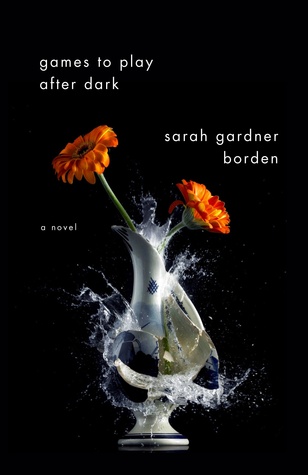
Games to Play After Dark by Sarah Gardner Borden

“It is hard to believe that Games to Play After Dark is Sarah Gardner Borden’s first novel. The topic, a marriage that falls apart, may not be the most original, the young mother who tries to combine the demands of her children and her husband and her personal needs, isn’t new but how she describes it, the details she evokes, the way she looks at what has been swept under the carpet and the bed and what is hidden in the closets is extremely well done.

Back When We were Grownups by Anne Tyler

Back When We Were Grownups is a novel about possibilities, lost dreams, second chances, family and love and ultimately about chosing the right path and belonging. I really loved this book. I liked Rebecca and many of the other characters, especially Poppy, the great-uncle. I liked how it shows that choosing a partner also means choosing a life and that maybe sometimes when we feel we are just drifting we are actually just sliding along because we are on the right path.

The Fish Can Sing by Halldór Laxness

Have you ever read a book and caught yourself smiling almost all the time? The Fish Can Sing is so charming I couldn’t help doing it. It’s also quite funny at times and certainly very intriguing. I’m afraid I can’t really put into words how different it is. As a matter of fact, Halldór Laxness’ book is so unusual and special that I have to invent a new genre for it. This is officially the first time that I have read something that I would call mythical realism.

The Square Persiommon by Takashi Atoda

I think the most intense reading experience is one that connects you to your own soul, that triggers something in you and lingers. Atoda’s stories even made me dream at night. I almost entered an altered state of consciousness while reading them.  The Square Persimmon managed to touch the part in me where memories lie buried and dreams have their origin.

Stranger by Taichi Yamada

Strangers is an excellent ghost story but it is also so much more than just a ghost story. It’s a truly wonderful book with a haunting atmosphere, a melancholy depiction of solitude and loneliness with a surprisingly creepy ending.

Enchanted Night by Steven Millhauser

Hot summer nights have a special magic. In the middle of the night, when everyone is sleeping and only night creatures are awake, the hot still air is heavy, time seems to stand still and the world is indeed enchanted. This is the magic captured by Steven Millhauser in his beautiful and poetical novella Enchanted Night. I have never read this book before but the images, the atmosphere felt so familiar. It was a bit like looking into my own imagination.

Goldengrove by Francine Prose

Reading Francine Prose’s novel Goldengrove felt at times like holding the clothes and belongings of a dead person in my hands. While I read it, and for a long while after I finished it, I felt as if I was grieving. It’s a really sad novel but at the same time it’s a very beautiful novel. It also reminded me of the series Six Feet Under. There is something very similar in the mood and the characters. Although I absolutely loved this novel I could imagine it isn’t for everybody.

Nada by Carmen Laforet

 Nada deserves to be called a classic. However it isn’t a classic because of the plot which can be summarized in a few sentences but because of the style. This is a young writer’s book who manages to capture the intensity of living typical for the very young and passionate.

The Cat by Colette

La Chatte has a subject to which I relate but it is far more than the story of a relationship between a man and his cat. It is a subtle analysis of love versus passion, of marriage versus celibacy, of childhood and growing up, of change and permanence. The story also captures the dynamics of disenchantment following the recognition that one’s object of desire is flawed.

So Long, See You Tomorrow by William Maxwell

So Long, See You Tomorrow  is a beautiful and melancholic short novel that explores a wide range of themes like memory, the past, isolation, loneliness, friendship, jealousy and violence. The central theme is that of the omission and the following regret. There are so many things left unsaid, things not done or too late in a life, that this core theme will speak to almost all of us. It’s often little things but they resonate for a long time in our lives and we might wish to turn back time and undo what has happened.

Most engrossing reads

These were the books where I never checked how many pages were left because I had finished them before even getting the chance to do so. In other words, the page-turners.

Underground Time by Delphine de Vigan

Les Heures souterraines or Underground Time is a chillingly good novel and shockingly topical. It’s accurate in its depiction of life in a corporate setting and of  life in a big city. It’s a very timely book, a book that doesn’t shy away to speak about the ugly side of  ”normal lives”.

Whatever You Love by Louise Doughty

Whatever You Love is a book of raw emotions. And that from the first moment on when we read about the police knocking on Laura’s door to inform her that her daughter Betty has been killed. Laura is a very emotional woman, she feels everything that happens to her intensely, her reactions are very physical. There are many elements in the book that made me feel uneasy.

You Deserve Nothing by Alexander Maksik

You Deserve Nothing was certainly one of the most entertaining reads this year. It offers an interesting mix of alternating and very realistic sounding voices, a Parisian setting and a wide range of themes.

A Kind of Intimacy by Jenn Asworth

I already jokingly “said” to Danielle in a comment that her top 2010 might become my top 2011 and,  yes, this book is certainly a candidate as it is astonishingly good. Very dark, absolutely fascinating, engrossing, and very well executed. While starting it I had forgotten Jenn Ashworth was compared to Ruth Rendell but the association immediately occurred to me as well.

everything and nothing by Araminta Hall

everything and nothing was one of those super fast reads, a book that I could hardly put down. Really riveting. The only complaint I have is that this is labelled as a psychological thriller. Although there is a part of it reminiscent of Ruth Rendell, it is like a background story and not really very gripping. At least not for me. Still I consider this to be a real page-turner for the simple reason that it captures chaotic family life in so much detail and explores some of the questions and problems parents who work full-time would face.

Best Books – Literature and War Readalong

How Many Miles To Babylon? by Jennifer Johnston

I loved How Many Miles to Babylon? I think it is a beautiful book. It doesn’t teach you as much about WWI as Strange Meeting (see post 1) but it says a lot about Irish history. I found this look at the first World War from an Irish perspective extremely fascinating.

The Things They Carried by Tim O’Brien

I expected The Things They Carried to be a very good book. A very good book about the war in Vietnam. What I found is not only an outstanding book about the war in Vietnam but also about the art of storytelling. I’m really impressed.

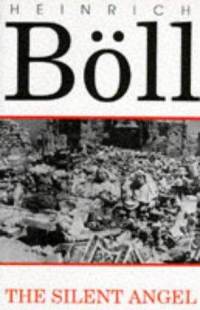
The Silent Angel by Heinrich Böll

Böll has a gift for description which is rare. And he represents a rare model of moral integrity, he is an author who wrote for those who have nothing, who tried to unmask hypocrisy and uncover everything that was fake and phony in post-war Germany. I don’t know all that many authors who are so humane.

Most touching

On the Holloway Road by Andrew Blackman. I read this novel in the summer and it’s one of a few books I haven’t reviewed. In this case because the reading caught me completely unawares. I had such an emotional reaction that I had to talk about it all the time. I still feel like reviewing it but I need some distance

Best classics

Mme de Treymes by Edith Wharton

Madame de Treymes has a Parisian setting which always appeals to me, as sentimental as this may be. It is a cruel little book and a very surprising one. All in all there is not a lot of description of the city itself, the novel rather offers an analysis of the society. It is interesting to see how Americans perceived the Parisian society and the differences in their respective values.

Hotel Savoy by Joseph Roth

Hotel Savoy has really everything. It is funny, sad, picturesque, touching and bitter-sweet and the ending is perfection. Roth describes people, the hotel and the little town with great detail. And every second sentence bears an explosive in the form of a word that shatters any illusion of an idyllic life. Roth served in WWI and never for once allows us to forget that the horror of one war and subsequent imprisonment have only just been left behind  while the next one is announcing itself already.

Grand Hôtel by Vicki Baum

Grand Hôtel is set in a luxurious hotel in Berlin between the wars. It’s walls shelter a microcosm of German society. The novel draws a panorama of the society and the times, reading it is fascinating and gives a good impression and feel for the time and the people. Vicki Baum includes a wide range of characters, the porter who waits for his wife to give birth to the first child, the aristocratic head porter Rohna, the many drivers and maids as well as some very interesting guests. Including the employees of the hotel gives the book a bit of an upstairs-downstairs feel and permits insight into the lives of the “simple people” who earn just enough not to starve.

Pedro Parámo by Juan Rulfo

It’s a powerful novel infused with the spirit of the Mexican Día de los muertos or Day of the Dead at the same time it is an allegory of oppression and freedom that comes at the highest cost. When you read Pedro Páramo it becomes obvious that “magic realism” has many faces.

Best non-fiction books

Making Toast by Roger Rosenblatt

I found Making Toast wonderful. It contains a lot of little endearing episodes like the one that gave the book its title, in which Rosenblatt states that the only thing he is really good at is making toast for the whole family in the morning. He describes how he gets up very early and, taking into consideration each family member’s taste, he produces a multitude of personalized breakfast toasts.

The Film Club by David Gilmour

The relationship between these two is unique. So much honesty, trust and friendship between a father and a son is wonderful. Not every parent has the chance to spend as much time with his kid, that is for sure, but every parent has certainly spent enchanted moments with his/her child and will be touched by this story. For us film lovers The Film Clubis  a great way to remind us how many movies there are still to discover, how many to watch again and in how many different ways we can watch them.

Howard’s End is on the Landing by Susan Hill

I can’t tell you exactly how long it took to read Howards End is on the Landing. An evening? Two? Certainly not longer. I devoured it. What is more fascinating to read than a bookish memoir? And written by a writer.

The Gifts of Imperfection by Brené Brown

Brené Brown is a researcher, specialized in topics like shame and perfectionism and analyzing how they are linked and keep us from living wholeheartedly. She is an incredibly honest and open person who is able to show her vulnerability.

Natural History of Destruction by W.G. Sebald

On the Natural History of Destruction is one of the most amazing books I have read this year. For numerous reasons. It is in line with the topic of my reading projects and readalong and contains descriptions that I have never read like this. On the other hand it gave me the opportunity to see another side of Sebald. One that I didn’t expect.

Cinderella Ate My Daughter by Peggy Orenstein

What happens when a feminist who knows exactly how things should be, gets pregnant and the child is – horror on horror – a girl? This is pretty much how Peggy Orenstein opens her entertaining, thought-provoking and occasionally quite shocking account Cinderella Ate my Daughter about what she sub-titles “Dispatches from the front-lines of the new girlie-girl culture”.

The Equality Illusion by Kat Banyard

Kat Banyard’s The Equality Illusion: The Truth about Men and Women Today takes an unflinching look at what it means to be a woman today and, due to the fact that Banyard is British, especially in the UK . Still, whether you are an Afghan woman fighting for girl’s rights of literacy or an American doctor performing late stage abortions, you have one thing in common: you lead a dangerous life and might end up being killed. Both things happened.  The first happened in Afghanistan in 2006, the second in the US in 2009. They illustrate the illusion of equality and show what a global phenomenon it is.

New Author Discoveries

These are the authors that made me think “I would like to read all of his/her books”.

Beryl Bainbridge,  William Maxwell, Jennifer Johnston, Peter Stamm, Annie Ernaux

The worst book this year

There is a lonely winner this year and it has so far not even been reviewed. I’m still determined to do so but I find adding quotes so tedious, only in this case it’s necessary to illustrate the problem I had with the book. Now you are dying to know the title, aren’t, you?

In a Hotel Garden by Gabriel Josipovici
Literature and War Readalong 2012

People have been announcing their challenges and events for 2012 for a while now so it was about time to let you see the list for next year’s Literature and War Readalong.

It was not easy to compile this list as the books needed to fulfill different criteria one of which was length. I didn’t want to include too many books over 300 pages. The only novel over 500 pages will make up for its length by being very readable.

The other criterion was the country. Like last year, I wanted to include books from as many different countries as possible. I know it looks as if there were more British books than anything else which is true, still I managed to include books from 8 different countries.

I will also join Anna and Serena for the War Through the Generations Challenge that is dedicated to WWI this year. My introductory post is due later this week. The first three novels in the readalong will also count for their challenge.

I have been asked whether it is possible to join but read something different. Since strictly speaking a readalong implies that people read and discuss the same book, it’s difficult but as I’m starting a Literature and War Project I thought of a good solution that will serve anyone who wants to join –  myself as well as I may be in the mood to read more than one novel focusing on war. The idea would be that anyone can join during the last week of the month and either participate in the readalong or review any other war themed book that will then be added to the project page. The objective of the page is to cover many different countries, wars, themes and even genres. For the War Through the Generations Challenge I will for example read a children’s book and maybe a crime novel set in the trenches. Next year I would also like to read a Sci-Fi novel like Joe Haldeman’s The Forever War that has been suggested by Max from Pechorin’s Journal. And finally I would like to read more non-fiction.

This year’s readalong will not always take place on Fridays but alternate between Monday and Friday depending on whether the Friday is during the last week of the month or not.

January, Monday  30

Helen Dunmore Zennor in Darkness , 320 p., England (1993), WWI

Spring, 1917 and war haunts the Cornish coastal village of Zennor: ships are being sunk by U-boats, strangers are treated with suspicion, and newspapers are full of spy-fever. Into this turmoil come DH Lawrence and his German wife Frieda, hoping to escape the war-fever that grips London. They befriend Clare Coyne, a young artist, struggling to console her beloved cousin John William who is on leave from the trenches and suffering from shell shock. Yet the dark tide of gossip and innuendo means that Zennor is neither a place of recovery nor of escape …

February, Monday 27

Sebastian Barry: A Long Long Way , 295 p.,  Ireland (2005), WWI

I discovered the book thanks to a comment from Danielle (A Work in Progress)

One of the most vivid and realised characters of recent fiction, Willie Dunne is the innocent hero of Sebastian Barry’s highly acclaimed novel. Leaving Dublin to fight for the Allied cause as a member of the Royal Dublin Fusiliers, he finds himself caught between the war playing out on foreign fields and that festering at home, waiting to erupt with the Easter Rising. Profoundly moving, intimate and epic, A Long Long Waycharts and evokes a terrible coming of age, one too often written out of history.

March, Friday 30

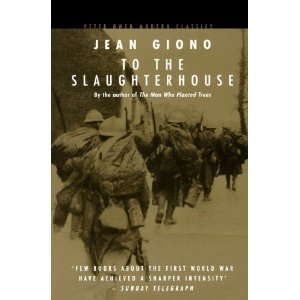
Jean Giono:  Le grand troupeauTo the Slaughterhouse 224 p., France (1931), WWI

Conscription reaches into the hills as the First World War come to a small Provençal community one blazing August. Giono’s fiercly realistic novel contrasts the wholesale destruction of men, land and animals at the front with the moral disintegration of the lonely and anxious people left behind. Yet not all is despair. The novel ends with a message  of hope.

April, Monday 30

Helen Humphreys: Coventry,172 p., England (2008), WWII

Another book discovered thanks to Danielle (here)

On the night of the most devastating German raid on Coventry, two women traverse the city and transform their hearts. Harriet, widowed during WWI, is “”firewatching”” on the cathedral roof when first the factories and then the church itself are set ablaze. In the ensuing chaos she helps a young man, who reminds her of the husband she has lost, find his way back home where he left his mother.

May, Monday 28th

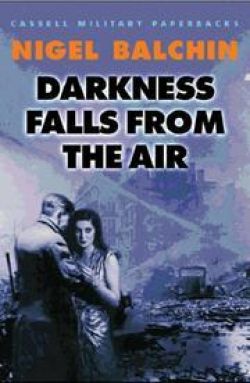
Nigel Balchin: Darkness Falls From The Air, 208 p., England (1942), WWII

I owe the discovery of Balchin to Guy (His Futile Preoccupations) who reviewed two of his books here and  here.

With ostentatious lack of concern, Bill Sarratt, his wife and her lover spend the war wining and dining expensively, occasionally sauntering out into the Blitz with cheerful remarks about the shattered night-life of London’s West End. But beneath the false insouciance lies the real strain of a war that has firmly wrapped them all in its embrace. Wit may crackle at the same pace as buildings burn, but personal tragedy lurks appallingly close at hand.

June, Friday 29

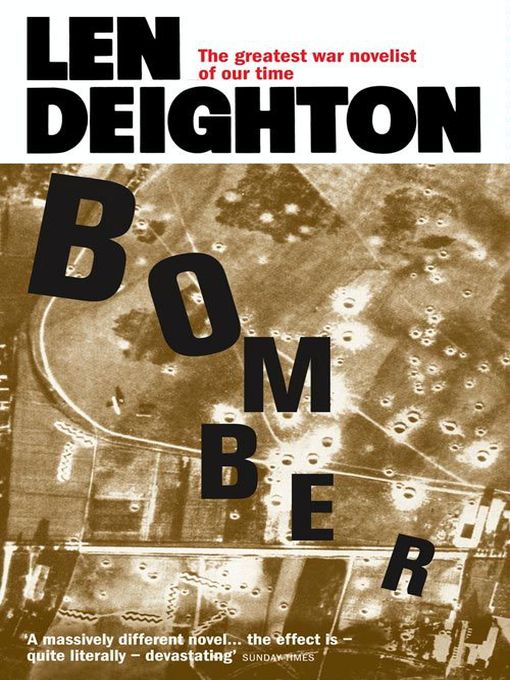
Len Deighton:  Bomber, 532 p., England (1970), WWII

This book is a suggestion from Kevin (The War Movie Buff). It is by far the longest on the list but it should be a very quick read.

The classic novel of the Second World War that relates in devastating detail the 24-hour story of an allied bombing raid.

Bomber is a novel war. There are no victors, no vanquished. There are simply those who remain alive, and those who die.Bomber follows the progress of an Allied air raid through a period of twenty-four hours in the summer of 1943. It portrays all the participants in a terrifying drama, both in the air and on the ground, in Britain and in Germany.In its documentary style, it is unique. In its emotional power it is overwhelming.Len Deighton has been equally acclaimed as a novelist and as an historian. In Bomber he has combined both talents to produce a masterpiece.


July, Monday 30

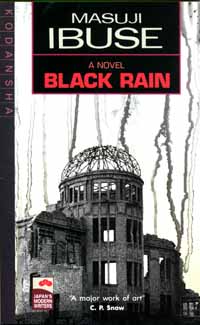
Masuji Ibuse: Black Rain – Kuroi Ame, 304 p., Japan (1969), WWII

I saw the book mentioned on Rise’s blog (in lieu of a field guide) where is was mentioned by Gary (The Parrish Lantern)

Black Rain is centered around the story of a young woman who was caught in the radioactive “black rain” that fell after the bombing of Hiroshima. lbuse bases his tale on real-life diaries and interviews with victims of the holocaust; the result is a book that is free from sentimentality yet manages to reveal the magnitude of the human suffering caused by the atom bomb. The life of Yasuko, on whom the black rain fell, is changed forever by periodic bouts of radiation sickness and the suspicion that her future children, too, may be affected.

lbuse tempers the horror of his subject with the gentle humor for which he is famous. His sensitivity to the complex web of emotions in a traditional community torn asunder by this historical event has made Black Rain one of the most acclaimed treatments of the Hiroshima story.


August, Friday 31

Aaron Applefeld: The Story of a Life – Sippur chajim, 208 p., Israel (1999), WWII

Aharon Appelfeld was the child of middle-class Jewish parents living in Romania at the outbreak of World War II. He witnessed the murder of his mother, lost his father, endured the ghetto and a two-month forced march to a camp, before he escaped. Living off the land in the forests of Ukraine for two years before making the long journey south to Italy and eventually Israel and freedom, Appelfeld finally found a home in which he could make a life for himself. Acclaimed writer Appelfeld’s extraordinary and painful memoir of his childhood and youth is a compelling account of a boy coming of age in a hostile world.


September, Friday 28

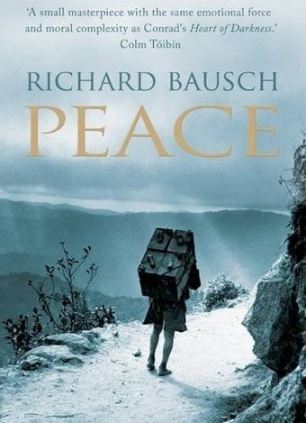
Richard Bausch: Peace, 171 p., US (2008), WWII

This was a suggestion from Sandra Rouse in a comment on one of this year’s readalong posts. 

It’s Italy, near Cassino. The terrible winter of 1944. A dismal icy rain falls, unabated, for days. Three American soldiers set out on the gruelling ascent of a perilous Italian mountainside in the murky closing days of the Second World War. Haunted by their sergeant’s cold-blooded murder of a young girl, and with only an old man of uncertain loyalties as their guide, they truge on in a state of barely suppressed terror and confusion. With snipers lying in wait for them, the men are confronted by agonizing moral choices…Taut and propulsive – Peace is a feat of economy, compression, and imagination, a tough and unmistakably contemporary meditation on the corrosiveness of violence, the human cost of war, and the redemptive power of mercy.

October, Monday 29

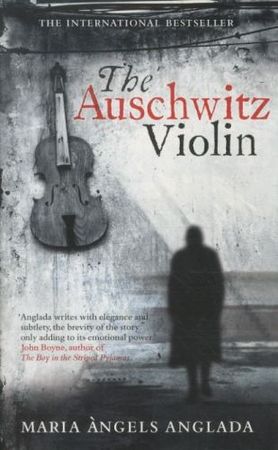
Maria Angels Anglada The Auschwitz Violin – El violí d’Auschwitz, 128 p., Spain (1994), WWII

In the winter of 1991, at a concert in Krakow, an older woman with a marvelously pitched violin meets a fellow musician who is instantly captivated by her instrument. When he asks her how she obtained it, she reveals the remarkable story behind its origin.

Written with lyrical simplicity and haunting beauty—and interspersed with chilling, actual Nazi documentation—The Auschwitz Violin is more than just a novel: It is a testament to the strength of the human spirit and the power of beauty, art, and hope to triumph over the darkest adversity.


November, Friday 30

Gert Ledig The Stalin Front  –  Die Stalinorgel , 198 p., Germany (1955), WWII

1942, at the Eastern Front. Soldiers crouch in horrible holes in the ground, mingling with corpses. Tunneled beneath a radio mast, German soldiers await the order to blow themselves up. Russian tanks, struggling to break through enemy lines, bog down in a swamp, while a German runner, bearing messages from headquarters to the front, scrambles desperately from shelter to shelter as he tries to avoid getting caught in the action. Through it all, Russian artillery—the crude but devastatingly effective multiple rocket launcher known to the Germans as the Stalin Organ and to the Russians as Katyusha—rains death upon the struggling troops.

December, Friday 28

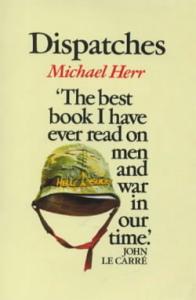
Michael Herr: Dispatches, 262 p., US (1977) Vietnam

This novel has been suggested by at least three people. Kevin (The War Movie Buff) and Max (Pechorin’s Journal)

If you’ve seen the movies Apocalypse Now and Platoon, in whose scripts Michael Herr had a hand, you have a pretty good idea of Herr’s take on Vietnam: a hallucinatory mess, the confluence of John Wayne and LSD.Dispatches reports remarkable front-line encounters with an acid-dazed infantryman who can’t wait to get back into the field and add Viet Cong kills to his long list (“I just can’t hack it back in the World”, he says); with a helicopter door gunner who fires indiscriminately into crowds of civilians; with daredevil photojournalist Sean Flynn, son of Errol, who disappeared somewhere inside Cambodia. Although Herr has admitted that parts of his book are fictional, this is meaty, essential reading for anyone who wants to understand Vietnam.

I hope that many of you will feel tempted by the one or the other title on the list and am looking forward to great discussions. The books are all very different in tone, style and themes. As always there are a some I can hardly wait to read.

*******

How does the readalong work?

This is just a quick info for those who are new to blogging and /or the readalong.

I will review the book on a set date during the last week of the month. If you choose to read along you can either participate in the discussion in the comments page or post a review on your blog. I will add all the links to the reviews at the bottom of my posts.

The books are usually announced with some additional information or a short introduction at the beginning of the month.

*******

This post will be copied into the Literature and War Redalong 2012 page so you can find it again at any time.

German Literature Month – Final Wrap up and Hans Fallada Giveaway

It’s hard to believe but German Literature Month is already over. I enjoyed it a lot. I’ve read quite a few books I liked, I discovered many others. I’ve read a few incredibly great reviews. I also discovered some blogs that I will be following in the future.  I hope all of you did enjoy it as much as I did. Judging from the amount of posts, readalong participants and comments I think it was a success and I would really like to thank all of you for the enthusiasm and support. Including all the introductory and readalong posts we have had over 170 contributions.

Some of you have been very prolific. The three participants with the most posts are Tony (Tony’s Reading List), Emma (Book Around The Corner) and Amateur Reader – Tom (Wuthering Expectations). While Tony was focusing on novellas, Emma has read a novel for each theme and Tom has delighted us with some very funny and unusual posts on plays. I’m sorry that some of the books Emma chose where not to her liking. Thanks to the discussions with her and others I discovered that while German literature is not all “dead people and WWII”, German literature in translation could really give this impression.

I’ve seen more than one contribution that stunned me. If I had to name all the great posts I would have a hard time.

Melville House Books who have already been very generous have given us the great opportunity of a final giveaway of four books by Hans Fallada. Since we wanted this to be a bit of special giveaway, we have already chosen the winners.

We decided that we will pick four posts, each from another group of posts, and give each of the writers one of the books by Fallada.

The first book will go to the person who has written the most amazing post. When we saw this contribution we all went “Wow” and “Blimey!”

The second book will go to Lizzy’s favourite Effi Briest readalong contribution.

The third book goes to the person who wrote The Silent Angel review I liked the most.

The last book goes to the person who has written the most original post on Kleist as we considered “Kleist week” to be some sort of readalong as well.

Seeing Tony’s dedication, his creativity and his very funny re-interpretation of Kafka’s The Castle (Das Schloss – The Play Act One – Das Schloss – The Play Act Two  – Das Schloss – The Play Act Three – Das Schloss – The Play (Director’s Cut) ), it was evident from the start that he should be a winner – only Tony likes his German books to be in German and not in translation. This is why he will get his present on Lizzy’s blog. I hope it’s fine by him.

Courtesy of Melvillehouse Publishing

Hans Fallada’s

Little Man, What Now? goes to

Vishy (Vishy’s Blog) for an absolutely astonishing post that can be read like an introduction to the most important writers of German Literature German Short Stories.

Every Man Dies Alone goes to

Fay (Read, Ramble) for a wonderful interpretation of Heine’s Sea Spectre in Effi Briest On Heine’s Sea Spectre in Effi Briest.

Wolf Among Wolves  goes to

Rise (in lieu of a field guide) for having written the review of The Silent Angel that I would have liked to have written and which gives a feel for its poetical qualities The Silent Angel by Heinrich Böll.

The Drinker goes to

Richard (Caravana de Recuerdos) for his enthusiastic and unorthodox review of The Duel that involved the much-loved expression “primal ambiguities”,  the discovering of Kleist’s rock star potential and, at the same time, imitated Kleist’s meandering style.

Last but not least I have a personal giveaway title which is from an author I love and who is often compared to Fontane. Thomas Mann considered him to be one of the finest German writers ever. When I read his book Wellen I thought it felt as if Schnitzler and Fontane had met to write a book together. It’s one of my favourite books ever. The author is Eduard von Keyserling. Apart from his early novels his books have not been translated into English but I’m sure that the winner will manage to read him in German. For those interested, his books are available in German and French.

Eduard von Keyserling’s Wellen goes to

Lizzy for having been a terrific co-host.

I really wonder if it will not feel strange, all of a sudden, when I realize tomorrow that the month is really over. Hmmm… Will I feel sad? A little bit. But I’m already making new plans…

Please send me your address via beautyisasleepingcat at gmail dot com.

Please do not miss Lizzy’s wrap up and giveaway.

Heinrich Böll: The Silent Angel – Der Engel schwieg (1951) Literature and War Readalong November 2011 Meets German Literature Month

Written between 1949 – 1951 Der Engel schwieg  or The Silent Angel is unique in many ways. Unique for German literature but also in Böll’s work. I have already written about it in my post on Sebald’s The Natural History of Destruction. Böll’s novel, which is one of the rare to depict a German city after the massive bombings by the Allies, had to wait 40 years for its publication. For this reason many of the chapters have been re-used in other books and if you are familiar with Böll the one or the other scene or description may appear familiar. All the important themes of Böll’s work can already be found here. Criticism of post-war Catholicism, compassion with those who have nothing, with those who suffer. His books often circle around the same elements, motives and themes and although he doesn’t always use the same style, this gives the impression of a very organic work that, read in its entirety, gives an excellent panorama of Post-war Germany.

The Silent Angel is one of the most important works of the so-called “Trümmerliteratur” (the literature of the ruins). The story as such can be told in a few sentences. It’s May 8 1945. Hans, a deserter, returns from the war without a passport. He tries to find the woman of a comrade who died instead of him. While walking the bombed and destroyed city he meets a woman who lives in an appartment in a house that is almost a ruin. He feels a strong connection to her and asks her if he can stay with her. She has lost her baby in an air raid, his wife has died as well and so, like two castaways, they are stranded together in this apartment. At first they both envy those who died but slowly they find their way back to love, hope and some kind of livable future.

It isn’t said but we know that the city which is described is Köln, Böll’s hometown. The description of the despair of the people, how tired they are physically and psychologically is impressive. The way he depicts their struggle to find bread, their fight to survive in those ruins is powerful. There is one scene in which Hans tries to visit someone and to walk a distance which used to take him ten minutes, he takes an hour because of  all the debris and the rubble. As I said before, Catholicism is an important theme in Böll’s work and in this novel, in which the greed of some Catholics is shown in all its ugliness, the description of the bombed churches becomes a very significant additional meaning.

What impressed me the most apart from the descriptions of the ruined city is how tired these people are. They spend days and days on end in their beds, staring at their walls. Finding something to eat, moving about the city, coming to terms with was has happened, takes an unimaginable effort, drains them of all their energy. All they have left is exhaustion.

This must sound very depressing but Böll isn’t only a writer of despair. He describes hopelessness but his characters overcome it, they find hope and the courage to go on living. The negative people have their positive counterparts. The greedy Dr. Fischer who doesn’t care for anything but money and for whom Catholic artifacts are just collectible items finds his counterpart in the gentle priest who helps Hans. The priest is the embodiment of a pure, compassionate Catholicism.

I was wondering while reading The Silent Angel whether I thought it was well written. I think he could have improved the structure, some passages read like short stories, some elements could have been left out, all in all it feels a bit loose at times which isn’t the case in his later work. His later novels are much more condensed but Böll has a gift for description which is rare. And he represents a rare model of moral integrity, he is an author who wrote for those who have nothing, who tried to unmask hypocrisy and uncover everything that was fake and phony in post-war Germany. I don’t know all that many authors who are so humane.

I have read The Silent Angel before. It isn’t my favourite Böll novel but since it’s an excellent example of “Trümmerliteratur” it seemed a great choice for the readalong. I’m very interested to know what others thought of this book.

Other reviews

Christina (Ardent Reader)

Danielle (A Work in Progress)

Fay (Read, Ramble)

Lizzy (Lizzy’s Literary Life)

Rise (in lieu of a field guide)

Tony (Tony’s Reading List)

German Literature Month Week III Wrap-up and The Winners of the Friedrich Glauser Giveaway

When I did the wrap up for the first week I was amazed about the contributions and thought that the enthusiasm might die down further into the month. I’m glad I was wrong with this assumption. The number of reviews and the variety of authors and books that have been chosen is as great as during week I and II. I would really like to thank all of you who contributed and help making this event a huge success.

The complete links and participants list can be found HERE.

Lizzy contributed two posts, one in which Publisher’s and Authors recommend their favourite German books and the other is a review of Julya Rabinowich’s Splithead which sounds like a most unusual book.

The Magic Mountain of German Literature 3 (Publisher and Author Recommendations)

Splithead by Julya Rabinowich

I reviewed a short story collection by Peter Stamm that I liked a lot and also reviewed Vicki Baum’s classic bestseller Grand Hôtel. While it isn’t as refined as Joseph Roth’s Hotel Savoy it is still a surprisingly interesting and character driven book.

In Strange Gardens and Other Stories by Peter Stamm

Grand Hôtel – Menschen im Hotel by Vicki Baum

Danielle (A Work in Progress) reviewed The Murder Farm by Andrea Maria Schenkel which she found a fascinating and unusual crime story in the vein of Capote’s In Cold Blood.

Emma (Book Around the Corner) read Short Stories by Stefan Zweig. The stories had all a historical theme. She did enjoy it but maybe not as much as his non-historical stories.

Ted (BookeyWookey) read The Artificial Silk Girl by Irmgard Keun and liked it a lot. The review captures the frothy playful tone that covers a dark undercurrent very well. The many quotes included in the review give a good impression of the novel (a favourite of mine).

Grace (Books Without Any Pictures)  re-read The Trial by Kafka which she thinks a most unusual and absolute must-read book. She likes it better than most of his short stories.

Richard (Caravana de Recuerdos) read Doctor Faustus by Thomas Mann after having been urged by a few people. He appreciated it a lot but liked it more for its ideas than its style. His review gives an excellent impression of the many interwoven themes of this complex book.

Jackie (Farm Lane Books) came to the conclusion that neither Jelinek’s Piano Teacher nor Grass’ The Tin Drum are to her liking. On Jelinek’s the Piano Teacher and Grass’ The Tin Drum. Judging from the comments, she is far from alone.

Guy (His Futile Preoccupations) read and reviewed Where Do We Go From Here? by Doris Dörrie which seems to have been a very good read, in typical Dörrie style “With piercing wit and a generous view of human nature.” Guy also read and reviewed  The Snowman by Jörg Fauser. A cult classic of gritty German crime which – to quote Guy – “is strongest in its depiction of the seedy underbelly of life –the cheap hotels, the filthy toilets (…).  There’s an intense authenticity to these scenes, and a sour truth to Fred’s realization that he’s small-time for a reason.”

Rise (in lieu of a field guide ) underlined in his review of Rock Crystal by Adalbert Stifter how crystal clear Stifter’s prose is. A captivating story written in a flawless style, concrete and precise like poetry, as he writes.

Fay (Read, Ramble) read Poems by Rilke which impressed her or in her own words “One reading of selected poems gives a sense of striking imagery and intense artistic purpose but not enough mastery of Rilke’s art to make further commentary worthwhile. Rilke is a poet who deserves several careful readings. All I know is that the more I came to know Rilke’s voice, the better I liked him, after a hesitant start. It is a voice to listen to again.”

Rikki (Rikki’s Teleidoscope) read Maybe This Time by Alois Hotschnig in German. She writes “I read this is German and I don’t think I have ever come across a writer who writes in such a precise way and who conjured such a clear picture of what is going on.”

Scott W. (seraillon) reviewed  Beautiful Days – Schöne Tage by Franz Innerhofer. In his in-depth review he writes about the unusual combination of a seemingly cheerful title with the topic of child abuse. The book seems to be well worth reading, complex and arresting.

Priya (Tabula Rasa) liked Hotel Savoy by Joseph Roth a lot and recommends it highly.

Alex (The Children’s War) rediscovered and reviewed an old children’s classic Emil and the Detectives by Erich Kästner and reviewed A Song For Summer by Eva Ibbotson. Ibbotson’s book offers a wide variety of unusual, typical Ibbotoson characters and despite a WWII topic stays light and hopeful.

Parrish (The Parrish Lantern)  introduced a great book on German poetry, including authors like Else Lasker-Schüler as well as Jan Wagner. The Faber Book of 20th Century German Poems. He included the whole list of poets, a poem by Elke Erb and a lot of other information.

Anthony (Time’s Flow Stemmed) calls Old Masters by Thomas Bernhard a flawless book. It seems also a very interesting book and one that was echoed by two other reviews (in lieu of a filed guide and seraillon). Bernard’s character criticizes Austrian art and artists, among them Stifter. The book could be called a rant but Anthony chooses to call it a tirade.

Tony (Tony’s Reading List) What happens when someone reads Kafka’s The Castle and participates in German Literature Month? Given he is an imaginative person it might look a little bit like this Das Schloss – The Play Act One  – Das Schloss – The Play Act Two  – Das Schloss – The Play Act Three Das Schloss – The Play (Director’s Cut). Tony writes his own “Castle Play ” and adds a review of Kafka’s book.

Liz (Tortoisebook) liked the sad but beautiful  The Sorrows of Young Werther by Goethe. She says “This book is a lovely read, beautifully told and achingly heartbreaking.”

Vishy (Vishy’s Blog) reviewed the original sheep crime novel Three Bags Full by Leonie Swann which read as if “Agatha Christie had rewritten The Wind in the Willows“.

Poor Daryl (Who Killed Lemmy Caution?) was ill but is recovering. Soon we will read her review of Klausen by Andreas Meier. Review on Its Way

Week three gives us a slightly puzzled Tom (Wuthering Expectations ) who after having read Wedekind’s Spring Awakening during week II thought he had seen the height of Austrian treatment of  sexuality in plays but no – he hadn’t read the La Ronde/Der Reigen by Arthur Schnitzler yet. He was quite amused by the use of … to cover up the ongoing activities and wonders how they handled this during the play.

Effi Briest Readalong

Week III

Andrew

Caroline

Danielle

Eibhlin

Fay 

Iris

Lizzy

Tony

**************

And here are the winners of the Friedrich Glauser giveaway courtesy of Bitter Lemon Press.

One copy each of In Matto’s Realm goes to

Neer from A Hot Cup of Pleasure and

Richard from Caravana de Recuerdos

Happy reading Neer and Richard!

Please send me your address via beautyisasleepingcat at gmail dot com.

The giveaway is part of German Literature Month.

The next giveaway will take place on Wednesday 23 November 2011.