Pat Barker: Toby’s Room (2012) Literature and War Readalong April 2014

Toby's Room

I’ve been procrastinating all morning. Every time I sat down to write this review I had something very urgent to do. Read the afterword of Fire and Hemlock, read the news on the Ukraine, get a cup of tea, look for cat number 2, read more news on the Ukraine, read the guardian review of Toby’s Room, urgently hunt for a book voucher, read the NY Times review of Toby’s Room, call my best friend in Odessa. I think you get the drift. Anything but writing the review.

Why?  Because I’m far from happy about this book and because I’m going to say what the critics didn’t say: it’s a mixed bag and despite a lot of good elements – mainly the choice of topic – it’s pretty much a failure or – even worse – a dishonest attempt. Still, it would be a great book club pick, as its strengths are topics and characters. That’s why I think it was a good choice for our readalong and if a few people read it, the discussion should be interesting.

So what’s Toby’s Room about? Thanks to the Guardian review, I was made aware that the title is an allusion to Virginia Woolf’s Jacob’s Room, the novel which she wrote after her brother Thoby died in WWI. It’s not surprising then that Virginia Woolf has a cameo appearance in Toby’s Room. I’ve read Jacob’s Room too long ago to make the connection, but I’m tempted to revisit it.

Elinor and her brother Toby are close, too close, one could say. One afternoon, in 1914 they spend a night together. This is deeply traumatizing for Elinor, although she’s not a victim in the whole encounter. Later when they are both in London, Elinor studying to become a painter, Toby to become a doctor, their relationship is strained.

In 1917 Toby’s reported “Missing, believed Killed”, which affects Elinor deeply. Until that day she tried to avoid thinking of the war but the death of her brother and the uncertainty of the circumstances, propel her right into it.

When Elinor finds a letter her brother wrote shortly before his death, mentioning Kit Neville, a famous painter, knows what happened to him, she barges in on Neville who’s at a hospital for soldiers with facial wounds. She disregards his state and unease and tries to force him to confess what happened. To no avail.

The second part of the novel sees Elinor join Tonks, her former teacher. Tonks is a painter and surgeon who helped a great deal in giving back some sort of face to those who had been severely disfigured. Part of his and Elinor’s work consists in drawing the wounded men before, during and after surgery. The gallery of this drawings can be visited online here (I managed to look at two).

Neville doesn’t confess to Elinor, he will confess to the far more sympathetic Paul, Elinor’s lover, whose story is told in Barker’s Life Class.

Pat Barker is famous for blending fact and fiction, for introducing us to important topics – I shy away from calling facial reconstruction “fascinating” as she herself does in her afterword – and for addressing the complexity of WWI. And she’s a very good plotter. The book reads like crime fiction. From the very beginning we are drawn along, running like donkeys after a carrot, to find out “Whatever happened to Toby?” I’m grateful for Pat Barker’s plotting skills, it made for quick reading, but when the juicy carrot I’d been hoping for proved to be a shriveled scrap, I felt let down. I didn’t buy the end. It wasn’t believable for me, but very much in line with the sensationalist beginning.

My biggest problem however was that she felt she had to start with an incest. Why was that necessary? I can relate to someone’s attachment to their brother, I didn’t need an incest to understand that they were very close and that their relationship was far from uncomplicated. This leads me to another problem I had with the book – heavy-handed foreshadowing.

Before I move on to the good parts, let me just say that I found Elinor a off-putting character. Not only did I despise her for blocking out the war, but for being so insensitive. In a way, the novel wants to tell us, it’s that character trait that made her useful. If she’d been more emotional, more sensitive, she wouldn’t have been able to draw the atrocities she saw. I don’t think that is true. I think there are people capable of deep empathy who can still do work like that.

What I liked about this novel, besides its suspenseful readability, was the choice of topics. I’d never heard of Tonks before and I found it interesting how the novel showed that the painters had to document everything in great detail but that they knew it would never be shown publicly. Some of the other painters mentioned painting landscapes as a metaphor. The war can be shown metaphorically but not realistically.

Neville isn’t a sympathetic character either but he’s a great character nonetheless. His story illustrates how hard it was for people to handle seeing facial mutilations. It was so hard that they often ceased to think about the person who was “behind” the disfigurement. They seemed to have lost their humanity with their faces and thus the repulsive reactions of the people were only occasionally questioned.

The more I read, the more I was wondering whether the fact that these injured men were sent to hospitals outside of cities was not so much for their own good as for the good of the population. These parts were done admirably well in the novel and the juxtaposition with scenes in which Elinor learns how to become a better painter through anatomy lessons and dissecting a corpse is great as well.

As a whole however I would say that this novel with its shifting POVs and sensationalist beginning and ending, is a failure. But a very thought-provoking failure.

I’m curious to hear the thoughts of others. Did you think the incest was a good choice? And what about the many different POVs and Elinor’s diary?

Other reviews

CarolineD

Danielle (A Work in Progress)

Maryom (Our Book Reviews)

The Mole

*******

Toby’s Room is the fourth book in the Literature and War Readalong 2014. The next book is the WWI novel  Private Peaceful by Michael Morpurgo. Discussion starts on Friday 30 May, 2014. Further information on the Literature and War Readalong 2014, including the book blurbs can be found here.

Angela Carter Week 8 – 15 June 2014

ACW badge 2-2

I’ve been a fan of Angela Carter’s work since I discovered her as a teenager. She’s one of those rare writers and academics who are good at every genre they try. Novels, short stories, essays, plays, film scripts. And her prose is one of those I admire the most. I don’t know any other writer with such an astonishingly rich vocabulary, that is both exquisite and evocative.

I always wanted to host an Angela Carter Week but I was looking for the right moment and co-host. When I saw that Delia was planning on reading Carter’s fairy tale retellings The Bloody Chamber for Carl’s Once Upon a Time Challenge, I knew the moment had come. After all, Delia (Postcards from Asia) and I had hosted Dickens in December and it was great fun. Seeing that she was planning on reading Angela Carter was the final nudge I needed. Luckily, Delia was in and she designed two gorgeous badges.

Here are the details:

  • The event runs from June 8 – 15 2014.
  • You can read absolutely anything you like. One short story or essay, a book she has edited, a novel, a radio play. Anything goes. You could equally read books or essays about her.
  • You can choose any of the two badges for your posts or side bar.
  • You can join any time. As early as now, as late as June 15. If you’ve written a post, please leave a comment in the comment section.

Angela Carter was not only versatile but her writing proves how lucid, highly creative and intellectual she was.  And provocative. She didn’t shy away from any topic, – be it sexuality, pornography, violence, torture, schizophrenia  –  or from any trope. She had a very unique esthetic; motives and themes like the circus, cabaret, artificial people, toys and angels are recurring. But she was also interested in cultural change, gender and various movements. Some of her books are exploring the culture and philosophy of the 60s.

Here are a few books you can choose from, (including the blurbs). There are many, many more.

Novels

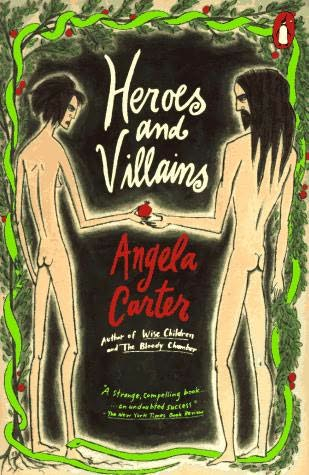
Heroes and Villains

Heroes and Villains

I’ve read a lot of Angela Carter’s short stories and some of her novels. The novel I liked by far the most was the critically acclaimed Heroes and Villains.

A modern fable, a post-apocalyptic romance, a gothic horror story; Angela Carter’s genre-defying fantasia Heroes and Villains includes an introduction by Robert Coover in Penguin Modern Classics.

Sharp-eyed Marianne lives in a white tower made of steel and concrete with her father and the other Professors. Outside, where the land is thickly wooded and wild beasts roam, live the Barbarians, who raid and pillage in order to survive. Marianne is strictly forbidden to leave her civilized world but, fascinated by these savage outsiders, decides to escape. There, beyond the wire fences, she will discover a decaying paradise, encounter the tattooed Barbarian boy Jewel and go beyond the darkest limits of her imagination. Playful, sensuous, violent and gripping,Heroes and Villains is an ambiguous and deliriously rich blend of post-apocalyptic fiction, gothic fantasy, literary allusion and twisted romance.

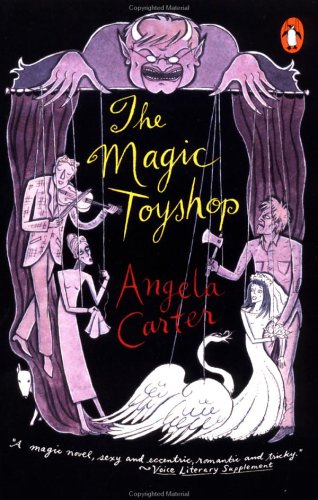
Magic Toyshop

The Magic Toyshop

This crazy world whirled around her, men and women dwarfed by toys and puppets, where even the birds are mechanical and the few human figures went masked… She was in the night once again, and the doll was herself.’ Melanie walks in the midnight garden, wearing her mother’s wedding dress; naked she climbs the apple tree in the black of the moon. Omens of disaster, swiftly following, transport Melanie from rural comfort to London, to the Magic Toyshop. To the red-haired, dancing Finn, the gentle Francie, dumb Aunt Margaret and Uncle Phillip. Francie plays curious night music, Finn kisses fifteen-year-old Melanie in the mysterious ruins of the pleasure gardens. Brooding over all is Uncle Philip: Uncle Philip, with blank eyes the colour of wet newspaper, making puppets the size of men, and clockwork roses. He loves his magic puppets, but hates the love of man for woman, boy for girl, brother for sister…

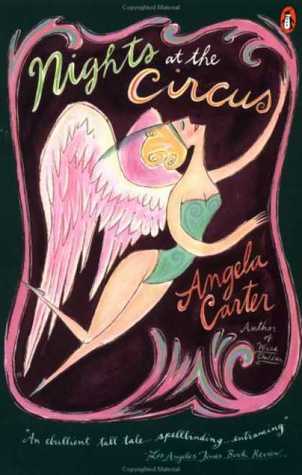
Nights at the Circus

Nights at the Circus

Is Sophie Fevvers, toast of Europe’s capitals, part swan…or all fake? Courted by the Prince of Wales and painted by Toulouse-Lautrec, she is an aerialiste extraordinaire and star of Colonel Kearney’s circus. She is also part woman, part swan. Jack Walser, an American journalist, is on a quest to discover the truth behind her identity. Dazzled by his love for her, and desperate for the scoop of a lifetime, Walser has no choice but to join the circus on its magical tour through turn-of-the-nineteenth-century London, St Petersburg and Siberia.

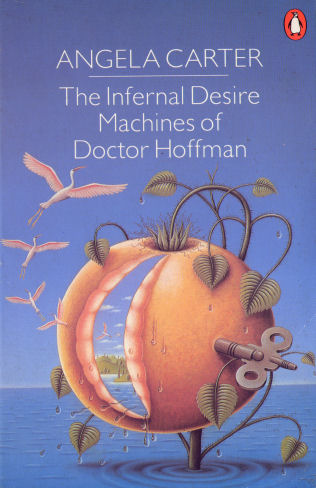
TheInfernalDesireMachinesOfDoctorHoffman

The Infernal Desire Machines of Doctor Hoffman

Desiderio, an employee of the city under a bizarre reality attack from Doctor Hoffman’s mysterious machines, has fallen in love with Albertina, the Doctor’s daughter. But Albertina, a beautiful woman made of glass, seems only to appear to him in his dreams. Meeting on his adventures a host of cannibals, centaurs and acrobats, Desiderio must battle against unreality and the warping of time and space to be with her, as the Doctor reduces Desiderio’s city to a chaotic state of emergency – one ridden with madness, crime and sexual excess.

A satirical tale of magic and sex, The Infernal Desire Machines of Doctor Hoffman is a dazzling quest for truth, love and identity.

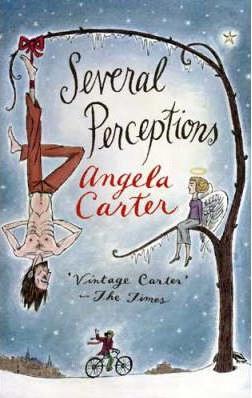
Several Perceptions

Several Perceptions

Centre stage in Angela Carter’s unruly tale of the Flower Power Generation is Joseph – a decadent, disorientated rebel without a cause. A self-styled nihilist whose girlfriend has abandoned him, Joseph has decided to give up existing. But his concerned friends and neighbours have other plans.

In an effort to join in the spirit of protest which motivates his contemporaries, Joseph frees a badger from the local zoo; sends a turd airmail to the President of the United States; falls in love with the mother of his best friend; and, accompanied by the strains of an old man’s violin, celebrates Christmas Eve in a bewildering state of sexual discovery. But has he found the Meaning of Life?

LOVE

Love

Love is Angela Carter’s fifth novel and was first published in 1971. With surgical precision it charts the destructive emotional war between a young woman, her husband and his disruptive brother as they move through a labyrinth of betrayal, alienation and lost connections. This revised edition has lost none of Angela Carter’s haunting power to evoke the ebb of the 1960s, and includes an afterword which describes the progress of the survivors into the anguish of middle age.

Short Stories

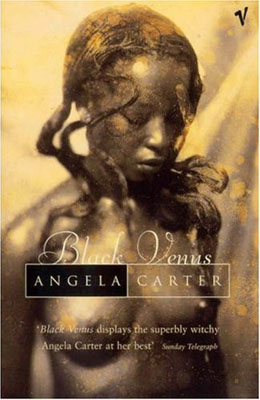
BLACK-VENUS

Black Venus

Extraordinary and diverse people inhabit this rich, ripe, occasionally raucous collection of short stories. Some are based on real people – Jeanne Duval, Baudelaire’s handsome and reluctant muse who never asked to be called the Black Venus, trapped in the terminal ennui of the poet’s passion, snatching at a little lifesaving respectability against all odds…Edgar Allen Poe, with his face of a actor, demonstrating in every thought and deed how right his friends were when they said ‘No man is safe who drinks before breakfast.’

And some of these people are totally imaginary. Such as the seventeenth century whore, transported to Virginia for thieving, who turns into a good woman in spite of herself among the Indians, who have nothing worth stealing. And a girl, suckled by wolves, strange and indifferent as nature, who will not tolerate returning to humanity.

Angela Carter wonderfully mingles history, fiction, invention, literary criticism, high drama and low comedy in a glorious collection of stories as full of contradictions and surprises as life itself.

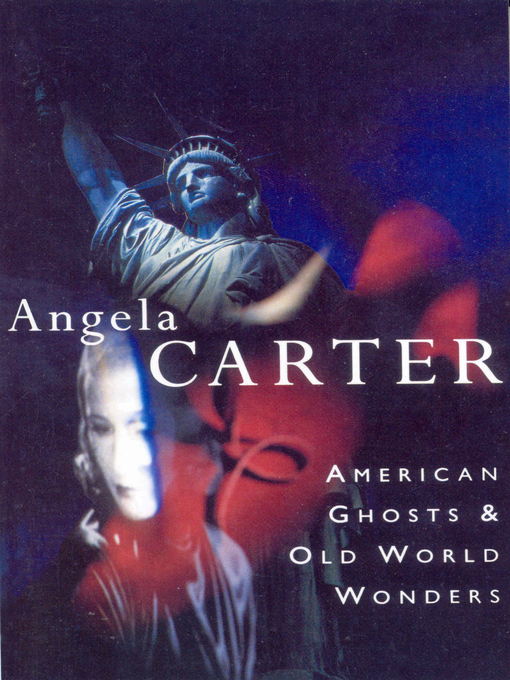
American Ghosts

American Ghosts and New World Wonders

A collection of short stories which tear through the archives of cinema, of art and of the subconscious. A young Lizzie Borden visits the circus; a pianist makes a Faustian pact in a fly-blown Southern brothel; and a transfigured Mary Magdalene steps out of the canvases of Donatello and de la Tour.

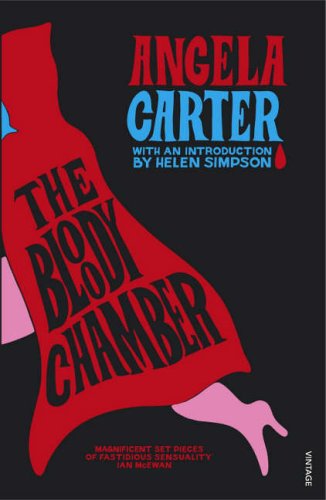
The Bloody Chamber

The Bloody Chamber

From familiar fairy tales and legends – Red Riding Hood, Bluebeard, Puss in Boots, Beauty and the Beast, vampires and werewolves – Angela Carter has created an absorbing collection of dark, sensual, fantastic stories.

Books edited by Angela Carter

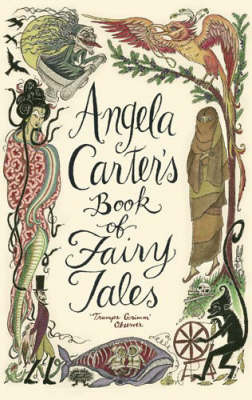
Book of Fairy Tales

Angela Carter’s Book of Fairy Tales

Once upon a time fairy tales weren’t meant just for children, and neither is Angela Carter’s Book of Fairy Tales. This stunning collection contains lyrical tales, bloody tales and hilariously funny and ripely bawdy stories from countries all around the world- from the Arctic to Asia – and no dippy princesses or soppy fairies. Instead, we have pretty maids and old crones; crafty women and bad girls; enchantresses and midwives; rascal aunts and odd sisters.

This fabulous celebration of strong minds, low cunning, black arts and dirty tricks could only have been collected by the unique and much-missed Angela Carter. Illustrated throughout with original woodcuts.

Essays and Criticism

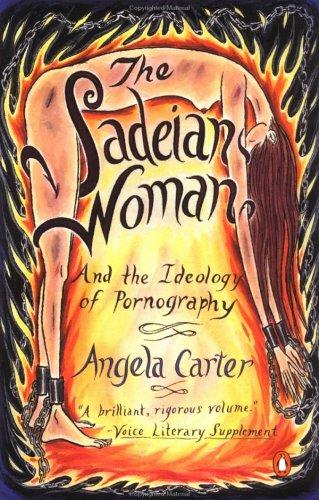
The Sadeian Woman

The Sadeian Woman

‘Sexuality is power’ – so says the Marquis de Sade, philosopher and pornographer extraordinaire. His virtuous Justine keeps to the rules laid down by men, her reward rape and humiliation; his Juliette, Justine’s triumphantly monstrous antithesis, viciously exploits her sexuality. In a world where all tenderness is false, all beds are minefields. But now Sade has met his match. With invention and genius, Angela Carter takes on these outrageous figments of his extreme imagination, and transforms them into symbols of our time – the Hollywood sex goddesses, mothers and daughters, pornography, even the sacred shrines of sex and marriage lie devastatingly exposed before our eyes. Angela Carter delves into the viscera of our distorted sexuality and reveals a dazzling vision of love which admits neither of conqueror nor of conquered.

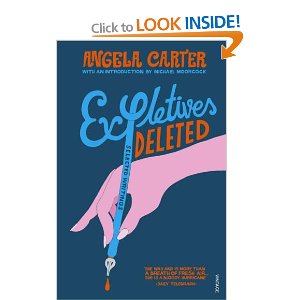
Expletives

Expletives Deleted

Angela Carter was one of the most important and influential writers of our time: a novelist of extraordinary power and a searching critic and essayist.This selection of her writing, which she made herself, covers more than a decade of her thought and ranges over a diversity of subjects giving a true measure of the wide focus of her interests: the brothers Grimm; William Burroughs; food writing, Elizbaeth David; British writing: American writing; sexuality, from Josephine Baker to the history of the corset; and appreciations of the work of Joyce and Christina Stead.

Radio Plays and Scripts

The Curious Room

 The Curious Room

This one is only available in kindle format.

The Vintage Collected Edition of Angela Carter’s works continues with THE CURIOUS ROOM, which contains her dramatic writings, including several previously unpublished plays and screenplays. THE CURIOUS ROOM includes a radio play about the demented Victorian painter and parricide Richard Dadd; reworkings of Puss in Boots and the Dracula story; a draft for an opera of Virginia Woolf’s ORLANDO, as well as the film scripts of THE MAGIC TOYSHOP and THE COMPANY OF WOLVES. Revealing many of the enthusiasms and concerns which ignited Carter’s fiction. THE CURIOUS ROOM is full of magnificent and startling new material, charged with the range and power of Carter’s imagination and inventiveness.

Essays on Angela Carter

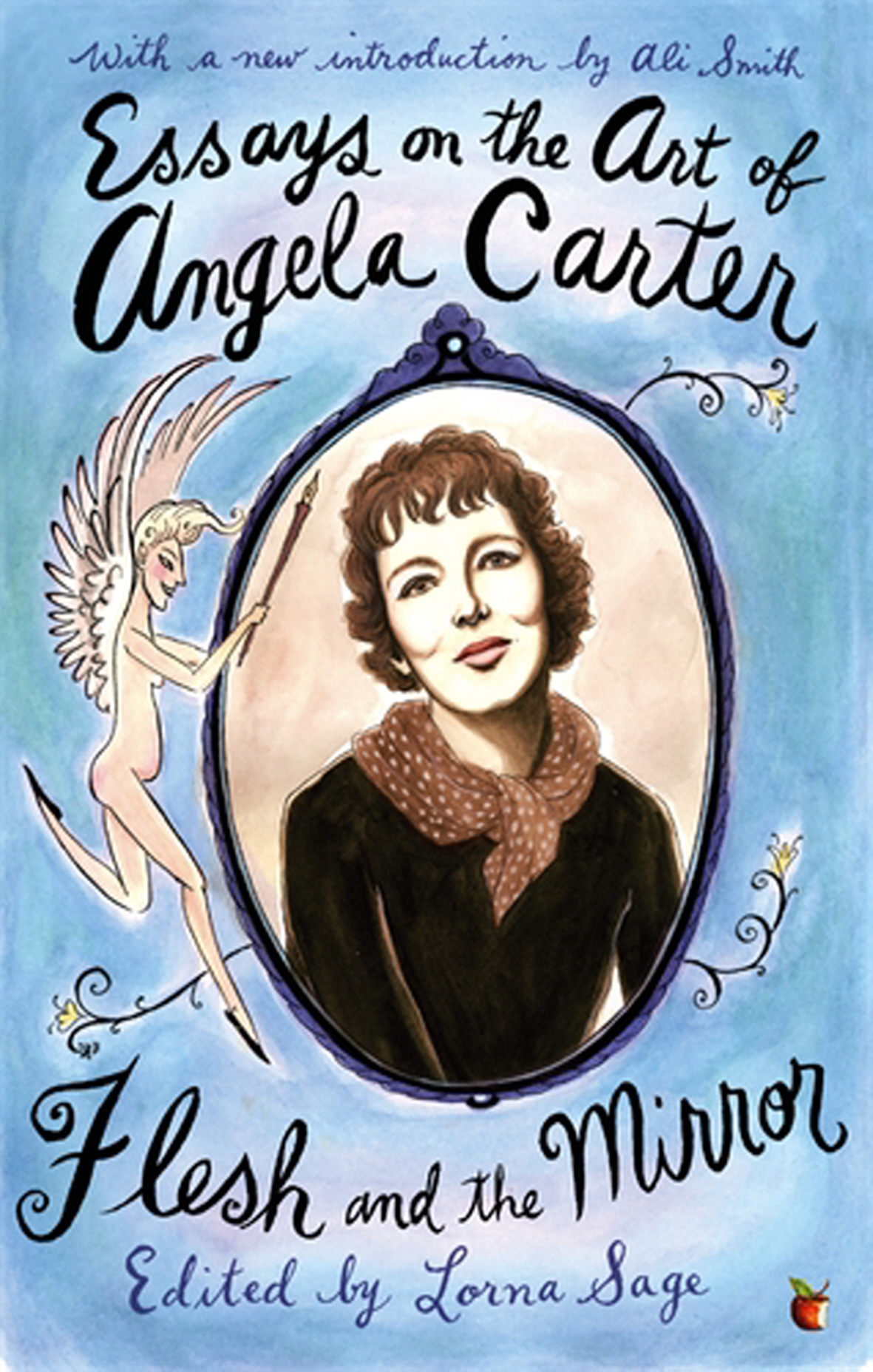
Flesh and Mirror

Flesh and the Mirror 

Go out and get Carter. Get all her fiction, all her fact.’ Ali Smith

 This distinguished volume of essays commemorates the work of Angela Carter. Here her fellow writers, along with an impressive company of critics, disuss the novels, stories and polemics that make her one of the most spellbinding authors of her generation. They trace out the signs of her originality, her daring and her wicked wit, as well as her charm, to produce an indispensable companion to her texts.

 Contributors are: Guido Almansi, Isobel Armstrong, Margaret Atwood, Elaine Jordan, Ros Kaveney, Hermione Lee, Laura Mulvey, Marc O’Day, Sue Roe, Susan Rubin Suleiman, Nicole Ward Jouve, Marina Warner and Kate Webb.


A list with more titles and further details can be found on Delia’s blog here.

I hope that you will join Delia and me in celebrating this unique writer.

I’m looking forward to rediscover a favourite writer. I might read her novel Love, a radio play and hopefully some short stories.

Will you join us? Which books or stories will you read?

Angela Carter Week

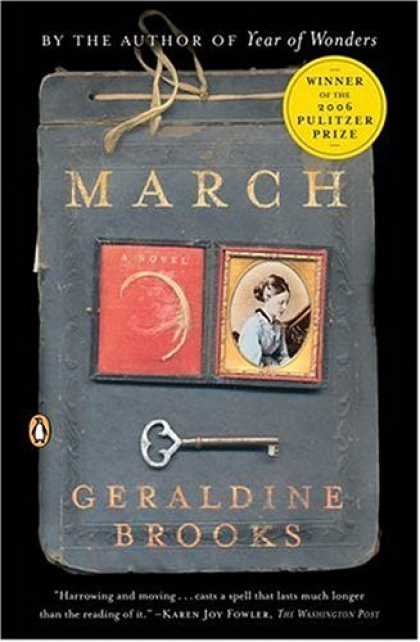
Geraldine Brooks: March (2005) Literature and War Readalong March 2014

March

It seems I have far less stamina than before, when it comes to finishing books I don’t like, even when they are my own readalong choices. While I did finish this novel, I must admit I read large portions of it diagonally, after having suffered through the first 15o pages. I’m not quite sure why I disliked March so much, I only know I did.

March tells the imagined story of the absent father in Louisa May Alcott’s Little Women. The father of the four girls has joined the Northern troops as a chaplain. The father is the narrator of the book – with the exception of a few chapters towards the end, which are told by his wife. Many of the chapters start with a letter to his wife, then they describe things that happen in the present and move back to the past, showing how March developed a sensibility for the cause or how he became an abolitionist.

As a young man, March toured the South as a peddler and that’s how he came into contact with Grace, a very cultivated and intelligent slave.  Together they wanted to teach a young girl to read and write, an undertaking that had fatal consequences. March falls in love with Grace and when he meets her again, later in the book, now a married man and father, it puts a lot of emotional pressure on him.

For the creation of the character March, Geraldine Brooks used the biography of Louisa May Alcott’s father Bronson Alcott. She introduces real characters like Emerson and Thoreau and the militant abolitionist John Brown. Introducing real characters, giving March the biography of a real person, could have made this book very authentic, but for me that’s what made it artificial and turned it into a pamphlet.

The many scenes leading to March’s awareness of the mistreatment of slaves and the stories that took place during the war, are harrowing and described in great detail, but they didn’t work for me either because of the voice. The biggest problem I had with this book was the voice. The tone was that of a goody-goody and often mawkish and preachy. At no time did I have the feeling of being transported to 19th Century America, but I never forgot that I read a book written by a 21st Century author with all the sensibilities of our time, with our thoughts, feelings and outrage about slavery. I’m sure that people who fought against slavery at the time, were outraged as well, still, it didn’t ring true. What diminished the message in this book was the combination of anti-slavery views and transcendentalist beliefs, which led to a peculiar mix that annoyed me.

Geraldine Brooks won the Pulitzer for this book, but, frankly, I don’t understand why. The style is heavy and preachy, the tone mawkish. The only passages that worked were the descriptions. Those were great.


Other reviews

*******

March is the third book in the Literature and War Readalong 2014. The next book is the WWI novel Toby’s Room by Pat Barker. Discussion starts on Monday 28 April, 2014. Further information on the Literature and War Readalong 2014, including the book blurbs can be found here.
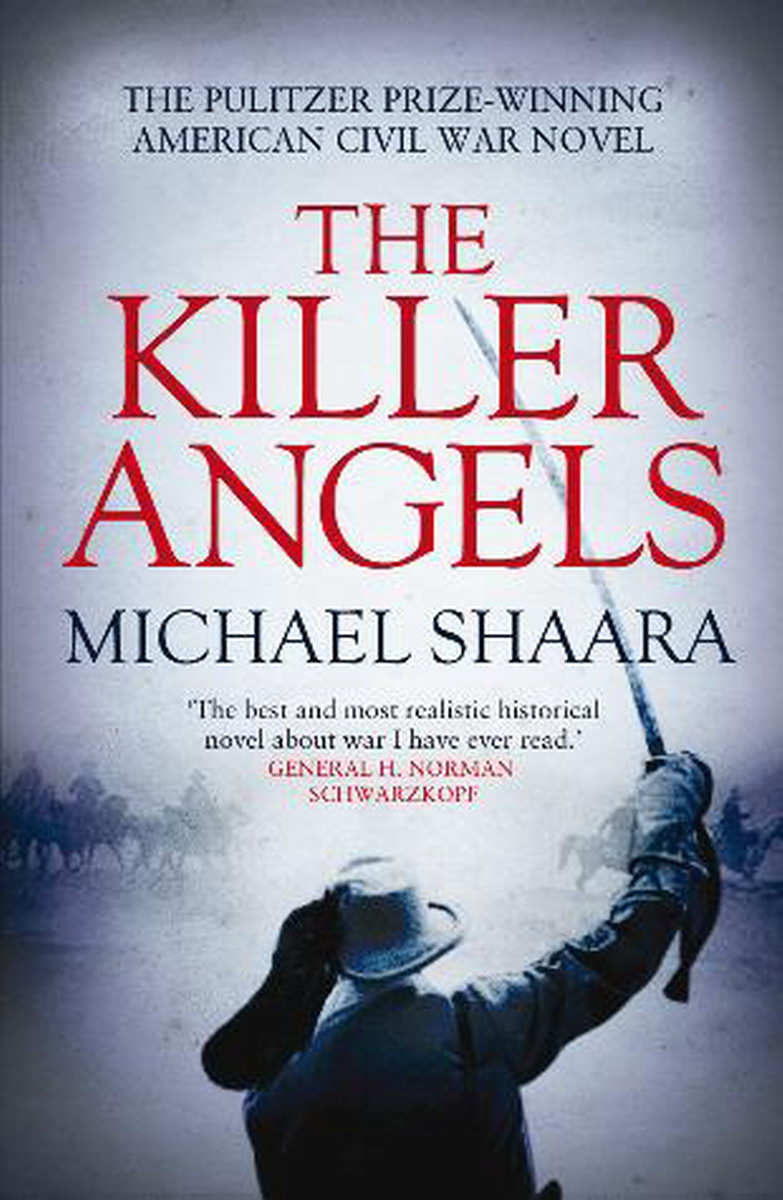
Michael Shaara: The Killer Angels (1974) Literature and War Readalong February 2014

The Killer Angels

Books are not always the way we expect them to be. Still, I’ve only rarely been this wrong. I was afraid Michael Shaara’s Pulitzer Prize winner would be dry, heavy on tactics and military jargon. It wouldn’t have been too surprising if it had been like that, after all, Shaara tells the story of the three-day battle at Gettysburg. But The Killer Angels is anything but dry or heavy. It’s a beautiful, lyrical novel, which focusses much more on the moods and emotions of the main characters than on tactics.

I liked the way this was told. We have seven different POVs, each chapter told by another person. That way the narrative constantly  switches from the Confederate Army to the Union Army. On the Union side we have Chamberlain and Buford, on the Confederate side we have the POVs of Lee, Longstreet, Fremantle, Armistead and a spy.

Gettysburg is said to have been the decisive battle. It was lost by the Confederate Army who had been mostly victorious so far. The way Shaara tells this, I got the impression that the defeat was due to a large extent to General Lee’s unfortunate belief in assault warfare. His second in command, Longstreet, cautions against it, but to no avail. It seemed that while Lee was one of the most beloved Generals, he was very old-school in his tactics. Longstreet wanted to be defensive and was proven right in the end. The battle cost the lives of numerous soldiers, many officers and many, many horses.

The amazing thing in this novel is that Shaara writes so well about moods and emotions. We see the men mostly before or after the battle. The way they experience life in the army, the apprehension and exhilaration before the fight. How they experience the weather, the other men. Politics are present but in the background. Everyone on both sides thinks it’s about slavery but we come to realize that it’s not. Slavery is a symbol for a way of life. In a way it’s a battle of change versus tradition. I never really saw it that way. And the book made me understand why the South fought. They were scared to lose their way of life. If they had known how to stay the way they were – big plantations, old money, traditions – without slavery, maybe they wouldn’t have minded so much. And they certainly didn’t like being told how to live. Fremantle is an interesting character, because he’s a British journalist and the way he compares the South to Britain is interesting and sheds light on many aspects.

I’m certainly no expert on tactics but I was wondering whether the terrain wasn’t to some extent responsible for the defeat.

While I liked this book a geat deal, I have one reservation. I had to check up on Shaara because the way this was written, how it glorifies some aspects, made me think that, while familiar with life in the military, Shaara doesn’t sound like someone who has seen action. And I was right. He served before the war in Korea but not during the war.

I will leave you with three quotes, which capture the mood of this book.

Chamberlain on his own

Isn’t that amazing? Long marches and no rest, up very early in the morning and asleep late in the rain, and there’s a marvelous excitement to it, a joy to wake in the morning and feel the army all around you and see the campfires in the morning and smell the coffee . . .

Lee on his own

The night air was soft and warm. Across the road there were still many fires in the field but no more bands, no more singing. Men sat in quiet groups, talking the long slow talk of night in camp at war; many had gone to sleep: There were stars in the sky and a gorgeous white moon. The moon shone on the white cupola of the seminary across the road – lovely view, good place to see the fight.

Chamberlain again – in a crucial scene that explains the title of the book.

Once Chamberlain had a speech memorized from Shakespeare and gave it proudly, the old man listening but not looking, and Chamberlain remembered it still: “What a piece of work is man . . . in action how like an angel!” And the old man, grinning, had scratched his head and then said stiffly, “Well, boy, if he’s an angel, he’s sure a murderin’ angel.” And Chamberlain had gone on to school to make an oration on the subject: Man, the Killer Angel.

I don’t know what other books the year will bring, but I have a feeling this one could make it on the Best of List. I love books which are rich in atmosphere, capture quiet, introspective moods and manage to bring the most different characters to life. I certainly didn’t expect to find all that in a war novel. The Killer Angels is a gorgeous book on an awful subject, reading it felt like seeing all the major participants of the battle during their most intimate moments. I’m grateful to Kevin who said I would be missing out, if I didn’t read it. He was right.

Other reviews

*******

The Killer Angels is the second book in the Literature and War Readalong 2014. The next book is the American Civil War novel  March by Geraldine Brooks. Discussion starts on Monday 31 March, 2014. Further information on the Literature and War Readalong 2014, including the book blurbs can be found here.
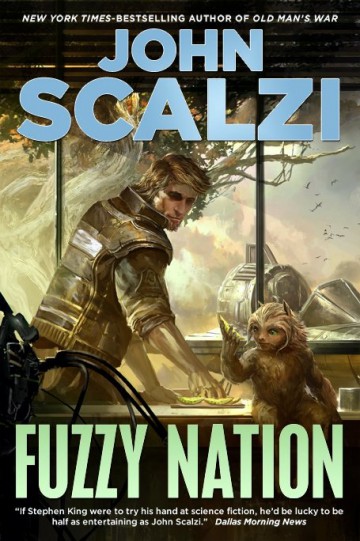
John Scalzi: Fuzzy Nation (2011)

Fuzzy Nation

Sometimes I’m easy to please. It took John Scalzi less than one page to win me over with his novel Fuzzy Nation.

See for yourself:

Jack Holloway set the skimmer to HOVER, swiveled his seat around, and looked at Carl. He shook his head sadly.

“I can’t believe we have to go through this again,” Holloway said. “It’s not that I don’t value you as part of this team, Carl. I do. Really, I do. But I can’t help but think that in some way, I’m just not getting through       to you. We’ve gone over this how many times now? A dozen? Two? And yet every time we come out here, it’s like you forget everything you’ve been taught. It’s really very discouraging. Tell me you get what I’m saying to you.”

Carl stared up at Holloway and barked. Carl was a dog.

The idea that the book is told by a main narrator whose best friend is a dog to whom he speaks as if he was a human, amused me so much. The best thing however was that the whole book didn’t disappoint. It was not only a fun and charming read from beginning to end, but interesting and thought-provoking as well.

John Scalzi is said to be the most accessible Sci-Fi author writing today. I can see why. Not only does he write in an engaging way, but he has a knack for dialogue and great characters and a wonderful sense of humour. He’s also far more accessible than others because his world-building is minimal. Just a touch of description here and there to set the scene, but nothing that over stretches your imaginative muscles. As much as I like sci-fi, when the world-building is too detailed, my eyes glaze over and I simply can’t see the worlds that are described. Another reason why Scalzi is easy to read is his use of older material, which we may be familiar with. Fuzzy Nation, for example, is a “reboot” of Little Fuzzy by H. Beam Piper.

The central theme of Fuzzy Nation is the question: What makes a sentient being? Jack Holloway is a contractor for ZaraCorp a huge corporate company who exploits foreign planets. While working on the planet Zarathustra, Jack accidentally explodes a cliff and discovers a seam of unimaginably precious jewels. Legally, ZaraCorp is allowed to exploit this seam and give Holloway his share, but only if the planet is really not populated by sentient beings. So far only two other sentient species have been found in the universe.

Jack lives outside of the city, in a tree house, high above the raptors who populate the forest below. One day cute furry creatures come to stay at his house.  Jack is amazed how intelligent they are, but when his ex-girlfriend , biologist Isabel, tells him she thinks they are not animals but people, Jack is reluctant to accept that. He would never harm the Fuzzys. He would never harm any animal, but he doesn’t think they are people. After all, they don’t speak. Or do they? In any case, it would be awful for him, if they really were people, because he would lose the prospect of making millions.

Fuzzy Nation isn’t only an adventure story, in which cute little animal-people are suddenly in great danger and other people have to make some tough decisions, it’s also an exploration of what makes a human. Is it understanding, intelligence, dexterity, the aptitude to use machines or language? In any case, once you’re declared a sentient being, you have the right to possess things. Before that, everything you own can be taken and destroyed.

I have discovered a new favourite author and I’m sure I’ll read more of his novel in the future.

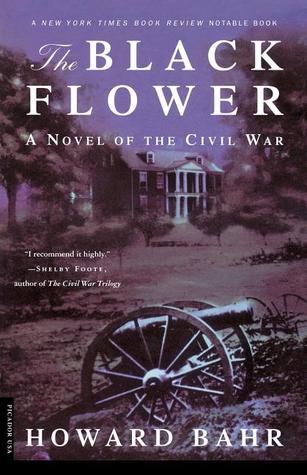
Howard Bahr: The Black Flower (1997) Literature and War Readalong January 2014

The Black Flower

This year’s Literature and War Readalong starts strong with Howard Bahr’s powerful book The Black Flower, a novel on the American Civil War. The book is at times a bit patchy, with an eccentric structure and a style reminiscent of an expressionist novel, but it manages one thing admirably well: bringing the Civil War to life for those who were not there.

The book is set in 1864, before, during and after the battle that took place in Franklin, Tennessee. It is told from different POVs, but mostly we see the story unfold through the eyes of Bushrod Carter and Anna Hereford. But Bahr jumps from them to different others from whose point of view we see a small incident or a chapter. One particularly powerful scene is told from the point of view of a wasp.

Anna stays at her cousin’s house, which will be occupied by the army shortly before and after the battle. It will be turned into some sort of field hospital. That’s where Anna and Bushrod meet and fall in love, amidst the chaos and mayhem.

Before he meets Anna we see Bushrod together with his best friends, Virgil and Jack. They wait for the battle to begin and talk about old times. In the afternoon, in what is one of the best scenes of the book, they bury their dead, together with soldiers from the Union. Meeting them up close, shows Bushrod and his friends once more how alike they are and how absurd it is to kill them.

The Black Flower concentrates entirely on these few people and on what happens to them during a short period of time. The strength lies in the way Bahr magnifies details and in his almost expressionist writing. Passages like the one below reminded me of the paintings of Otto Dix.

In the starlight, and in the torchlight as far as it carried, the dead possessed the violated earth. They were draped all over the parapet, festooned in the osage orange hedges, blown back from the embrasures in meaty fragments. In the ditch before the works they lay in geologic strata of regiments and brigades, piled six and eight and ten deep: an inextricable mass of gray and brown, a tangle of accoutrements and muskets, a blur of faces and claw-like hands. Some were almost naked, torn to shreds by canister and rifle fire, the clothes ripped from their bodies;others lay whole and peaceful, dreaming among their comrades. Here and there, dead men who’d had no room to fall stood upright in the pile, still holding their rifles, their faces still set toward the memory of the vanished foe.

Some of the dead were busy. They twitched and jerked from the violence of their passing, they heaved stubbornly as still-living men tried to push up from underneath. The surface layer of wounded writhed and groaned and implored; the whole pile crawled with movement. Steam rose from the fragments, from open skulls and blue pails of entrails. The smell hung close to the ground in the damp night.

If you don’t know a lot about the American Civil War, this book is not going to give you a lot of information. But it will show you how much it cost in terms of human life, safety, and hope. Every war is horrible, but these early wars, with their mass amputations, and improvised field hospitals have a particularly gruesome side. I don’t think that I was fully aware of this. Bahr also describes very well how tired, dirty and worn-out these men were.

Most of the characters in the book are well rendered. Even the minor characters are carefully described. We feel for all of them. Of course we feel particularly strongly for Anna and Bushrod and when the end of the book comes, it’s quite heartbreaking and unexpected.

I was surprised to find almost modernist elements and an episodic structure in this book, as the novel starts rather conventionally. Once I had finished the book, I realised that Bahr not only manged to paint a canvas of this war, but that he also told a tale of  love and friendship without sugar-coating or glossing over anything.

I’m glad that the next book is also on the American Civil War and that it contains an introduction. Background information on a war I’m not that familiar with, was the only thing I was missing here.

Should anyone wonder  – the title is an allusion to Death.

Other reviews

Danielle (A Work in Progress)

Kailana (The Written World)

*******

The Black Flower is the first book in the Literature and War Readalong 2014. The next book is the American Civil War classic  The Killer Angels by Michael Shaara. Discussion starts on Friday 28 February, 2014. Further information on the Literature and War Readalong 2014, including the book blurbs can be found here.
Ken Bruen: The Dramatist (2004) A Jack Taylor Novel

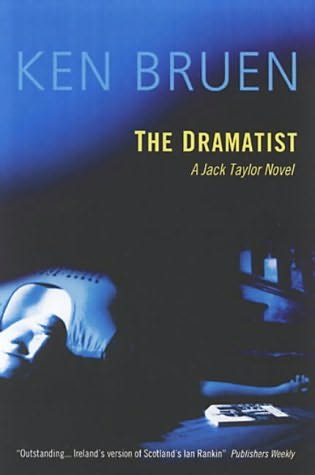
The Dramatist

The impossible has happened: Jack Taylor is living clean and dating a mature woman. Rumour suggests he is even attending mass…The accidental deaths of two students appear random, tragic events, except that in each case a copy of a book by John Millington Synge is found beneath the body. Jack begins to believe that ‘The Dramatist’, a calculating killer, is out there, enticing him to play. As the case twists and turns Jack’s refuge, the city of Galway, now demands he sacrifice the only love he’s maintained, and while Iraq burns, he seems a step away from the abyss.

I probably have to thank Guy (His Futile Preoccupations) for discovering Irish crime writer Ken Bruen as he has reviewed a couple of his books, although not The Dramatist. Bruen has written standalones, one of which London Boulevard, has been made into a movie and he’s written the series, featuring the luckless, loveless, ex-Cop turned PI Jack Taylor.

Jack Taylor is a cynic, disillusioned tough-guy with a good heart. He stumbles through live and his cases, gets beaten up, finds love, loses it again, battles addiction and his demons. All this are ingredients which are quite common in PI series, still I found this to be extremely original. The voice is very unique and the fact that Jack Taylor is a great reader adds an additional layer to the books.

The Dramatist is the fourth in the Jack Taylor series. Jack is newly clean and sober and even gives up smoking in the middle of this novel. It’s not easy for someone like him to stay away from booze as he lives in a hotel and spends most of his free time in bars. At the beginning of the novel he visits his ex-dealer in jail. The guy’s sister was found dead. Allegedly she fell down the stairs but her brother thinks it was foul play and wants Jack to investigate. Jack doesn’t buy the murder idea, but must admit that it’s weird that a book with Synge’s plays was found under the student’s body. When a second student dies the same way, also found with a book by Synge, Jack is convinced as well that it is murder.

I really liked The Dramatist and will read the first in the series soon. The mix between crime, character study and insights into contemporary Ireland and Irish culture worked extremely well for me. The novel is much more about Jack Taylor and his bad luck than it is about the crime, but since I really like this character, I liked the book. I’m tempted to compare Taylor to Marlowe, but I’d say he’s a tad more cynic and much more talkative. While his views on society and his own character are dark, he hasn’t given up the fight. He still hopes for love and a sober life. Maybe this sounds as if this was a one-man show, but it isn’t. Jack has a few enemies, but he also has a lot of friends and a knack to talk with “little people”, which is endearing.