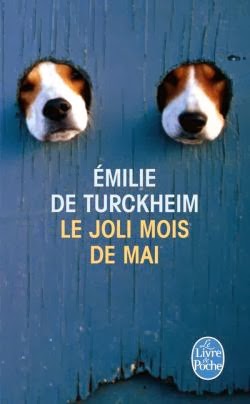
On Émilie de Turckheim’s Le Joli Mois de Mai (The Beautiful Month of May)

Le Joli Mois de Mai

Aimé, the narrator of Émilie de Turckheim’s short, dark, mean novel, cannot tell a story. Or that’s what he tells us. He’s not cultured, hasn’t had an education and, frankly, he seems a bit simple. A simpleton even. But it’s his story and his voice, which make this novel such a fun read, infused with black humour and full of absurd, comic situations. Just like child narrators and teenagers à la Holden Caufield, Aimé sees through the hypocrisy around him. He’s very literal and the way he unveils how people  lie with clichés and empty rhetoric, makes you laugh and gasp in horror at the same time.

You could call Le Joli Mois de Mai a very dark crime story. Monsieur Louis is found dead in the woods, a bullet in his throat. How did he die? And will he be the only victim? These are the questions we ask right away. And Aimé is willing to answer, only in his own time, and before we know the truth, we will hear a dark story of a teenage mother, abuse, violence, alcoholism and exploitation.

Monsieur Louis is dead and he has left a will. Five people will inherit everything. It should be surprising for the five heirs that Aimé and the horribly disfigured Martial, who have been living with Monsieur Louis, don’t get anything else than the right to stay at Monsieur Louis’s house. The five people who inherit the pension, the hunting grounds and the wood are a shady couple, an ex-policeman, an ex-soldier and a gay brothel owner. Greed clouds their judgment and influences their behaviour; they never wonder why would Monsieur Louis leaves everything to people he hardly knew.

I enjoyed finding out. I loved the way Aimé tells his story with so much naiveté and uncanny truthfulness. I laughed out loud quite few times, it’s so funny. It’s a shocking story, told in some of the blackest humour I’ve ever read.

The bad news – the book hasn’t been translated into English.

I first read about the author on Emma’s blog (Book Around the Corner). She’s reviewed one of her other books, Héloise est chauve (here). It sounds excellent as well. I hope Émilie de Turkheim will be translated. She’s a terrific writer. The voice was amazing, the way the story was told was shocking, funny and captivating. Her style is unique and from what I can see, all of her books are very different.
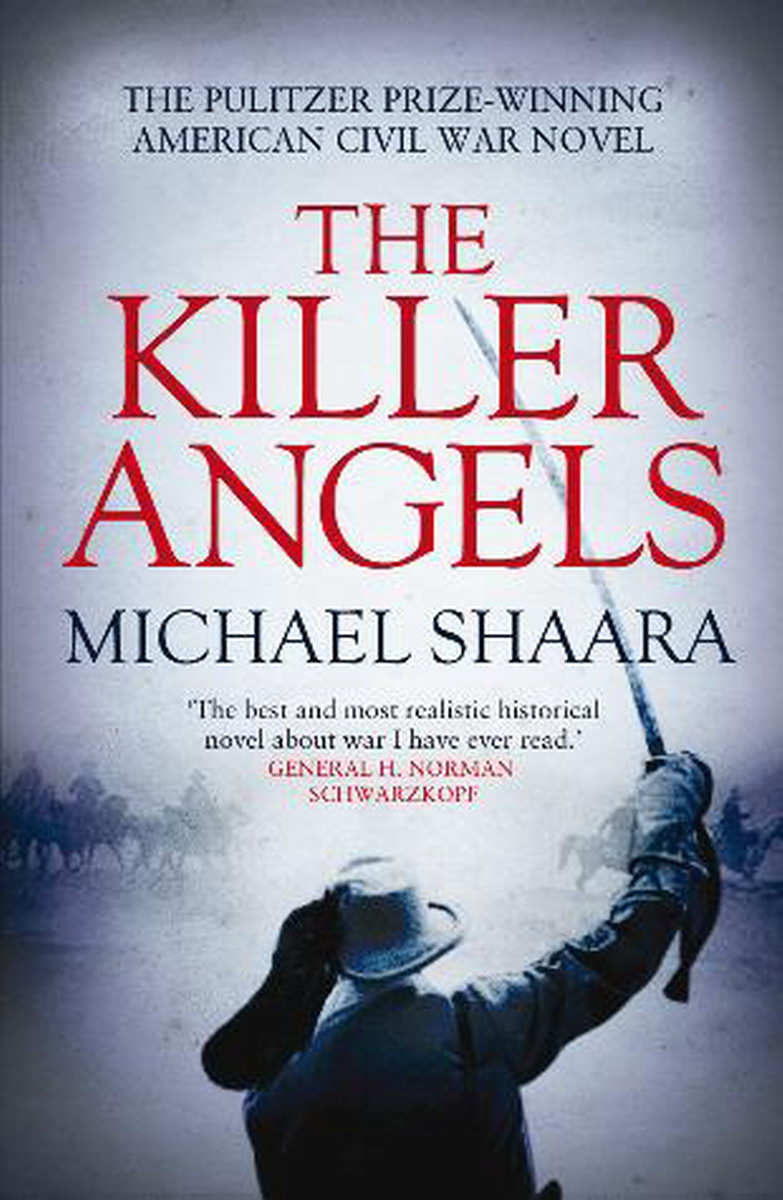
Literature and War Readalong February 28 2014: The Killer Angels by Michael Shaara

The Killer Angels

Michael Shaara’s Pulitzer Prize winning novel The Killer Angels is certainly one of the most famous novels about the American Civil War. Or rather about the decisive battle of Gettysburg that cost 50,000 lives. As far as I’m informed this was the battle that changed everything. While the Confederates were less numerous, they still won most battles so far. Gettysburg would change all that. I’m interested to see whether I will like a book that focuses on one battle only.

A few years back I saw the TV mini-series Gettysburg, which is based on this novel. It’s quite long but I enjoyed watching it and might rewatch it this month. It has a great cast: Tom Berenger, Martin Sheen, Jeff Daniels, Sam Elliott

Here are the first sentences of the novel

He rode into the dark of the woods and dismounted. He crawled upward on his belly over cool rocks out into the sunlight, and suddenly he was in the open and he could see for miles, and there was the whole vast army below him, filling the valley like a smoking river. It came out of a blue rainstorm in the east and overflowed the narrow valley road, coiling along a stream, narrowing and choking at a white bridge, fading out into the yellowish dust of June but still visible on the farther road beyond the blue hills, spiked with flags and guidons like a great chopped bristly snake, the snake ending headless in a blue wall of summer rain.

And  some details and the blurb for those who want to join

The Killer Angels by Michael Shaara (US 1974), American Civil War, Novel, 355 pages

The late Shaara’s Pulitzer Prize-winning novel (1974) concerns the battle of Gettysburg and was the basis for the 1993 film Gettysburg. The events immediately before and during the battle are seen through the eyes of Confederate Generals Lee, Longstreet, and Armistead and Federal General Buford, Colonel Joshua L. Chamberlain, and a host of others. The author’s ability to convey the thoughts of men in war as well as their confusion-the so-called “fog of battle”-is outstanding. This unabridged version is read clearly by award-winning actor George Hearn, who gives each character a different voice and effectively conveys their personalities; chapters and beginnings and ends of sides are announced. Music from the movie version adds to the drama. All this comes in a beautiful package with a battle map. Recommended for public libraries not owning previous editions from Recorded Books and Blackstone Audio (Audio Reviews, LJ 2/1/92 and LJ 2/1/93, respectively).

*******

The discussion starts on Friday, 28 February 2014.

Further information on the Literature and War Readalong 2014, including all the book blurbs, can be found here.

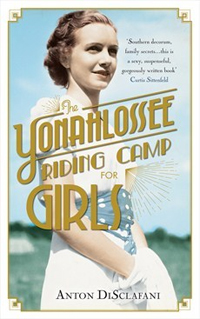
Anton DiSclafani: The Yonahlossee Riding Camp For Girls (2013)

The Yonahlossee Riding Camp for Girls

High in the Blue Ridge Mountains, The Yonahlossee Riding Camp for Girls is a refuge of privilege in a land devastated by the Depression. Thea Atwell’s arrival late in the summer season causes a ripple of intrigue and speculation. But even the most scandalous rumour cannot come close to the truth that destroyed her family, and brought her here. Fearless and unbroken, Thea soon finds that there is no banishment from secrets and temptations. Poised on the brink of adulthood, the events of that year will change the girls of Yonahlossee in ways they will never forget.

I’m not sure what exactly made me love this book so much. Was it the elegant writing, the dreamy mood, the sense of seeing a long-gone world, the tragedy of the story or the characters?

Anton di Sclafani’s (Anton is a woman, btw) novel Yonahlossee Riding Camp for Girls is set in 1930, in North Carolina, in a boarding school for rich girls. The Great Depression is in full swing and the rich families of the South, who send their girls to Yonahlossee, are hit hard. Many a girl has to leave the school because their parents lost everything. Thea, the fifteen-year-old narrator of this novel, has been sent away by her family because of something terrible she did. What exactly this was and why the consequences were so terrible, will be revealed bit by bit all through the novel. When Thea arrives in Yonahlossee, she thinks it’s for a summer vacation, but her family wants her to stay at least a year. She comes from Florida and while her father is a doctor there’s a lot of family money coming from citrus plantations. Thea isn’t an only child, she has a twin brother, Sam. They have never been apart and being separated from her twin is what is hardest on Thea at first. But Thea is also not used to other people. Her family lived a sheltered, secluded life and other than her aunt, uncle and cousin Georgie, she never met people. The twins were home schooled.

Thea is surprisingly good at fitting in and making friends at Yonahlossee. And because this is a riding camp, she can pursue her only passion, which is riding. Thea is not only a passionate rider, but a gifted one. She’s reckless too and at times also cruel.

It’s not difficult to find out what Thea has done. What could make a rich family send away their daughter? The other girls at the school know it as well. Boy trouble. How far it went and why it’s not only a scandal but a tragedy is something they will not find out. At first we think Thea is sorry for what she did but when she falls in love at Yonahlossee and is prepared to disregard all sense of decorum once more, we become aware that maybe it wasn’t so much what she did but its aftermath that she regrets.

I loved the way DiScalafani captured the setting and the period. I liked how she showed the end of an era without turning this into a mournful book, but into one that shows that people can free themselves from their stifling upbringing if they are true to themselves. Thea is a character who is true to herself at all times. This comes at a cost but one she’s aware of and willing to pay.

If you like a rich, beautifully told story, with mystery and a lush setting, if you are fascinated by the Great Depression and big Southern Families and enjoy a coming-of-age story, which is at times quite steamy, then I’m pretty sure you’ll love The Yonahlossee Riding Camp For Girls.

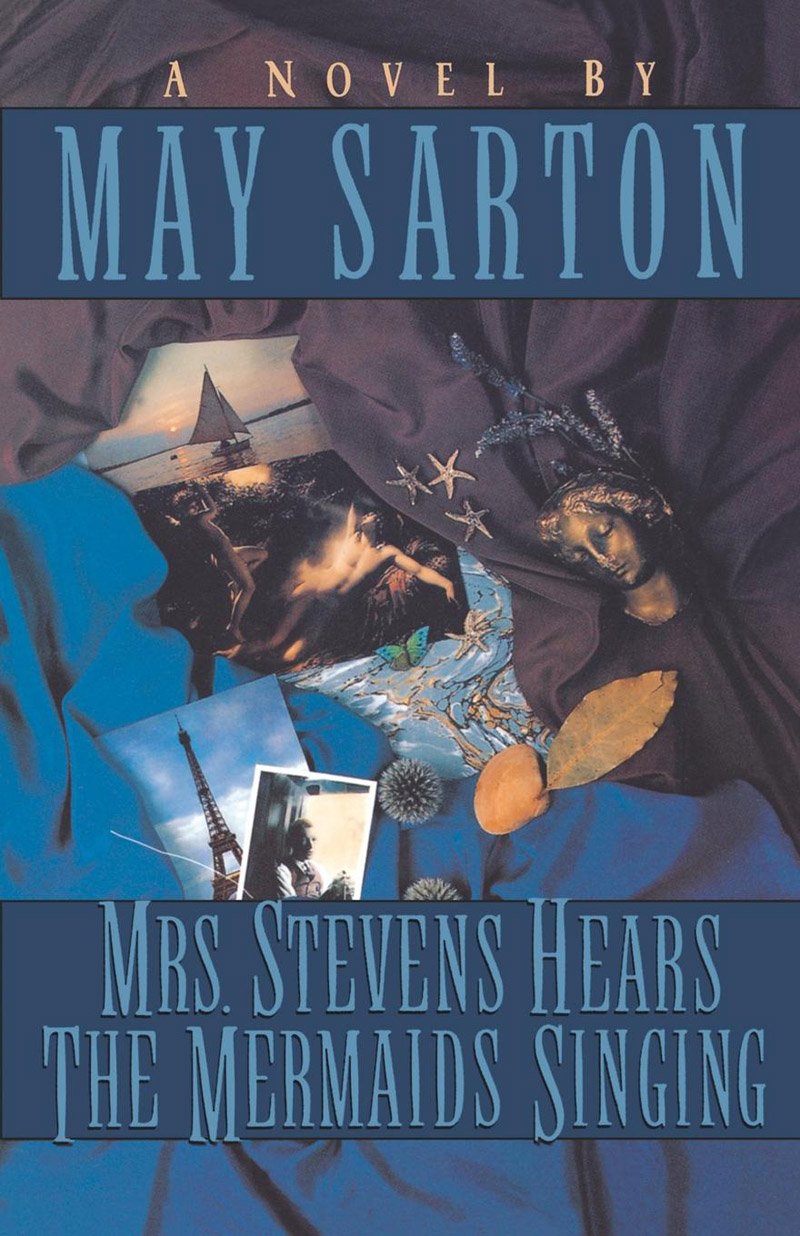
May Sarton: Mrs Stevens Hears the Mermaids Singing (1965)

Mrs Stevens Hears the Mermaids Singing

I came across May Sarton for the first time when I was reading Susan Tiberghien’s memoir Looking for Gold, in which Tiberghien wrote about her year in Jungian analysis. The books she mentioned were Sarton’s famous diaries Plant Dreaming Deep and Journal of a Solitude. I got them both but never read them so far. When Danielle (A Work in Progress) started writing regularly about Journal of a Solitude last year, mentioning in particular one entry in which Sarton wrote how much a negative review of one of her novels hurt her, I realized that I hadn’t even been aware that Sarton had also been a novelist and not only a poet and diarist. That made me curious and I decided to read one of her novels. Since the title Mrs Stevens Hears the Mermaids Singing reminded me of one of my favourite movies I’ve Heard the Mermaids Singing (I’m sure it’s no coincidence that Rozema chose that title) I picked that novel.

Mrs Stevens Hears the Mermaids Singing is the story of an elderly poet, Mrs Hilary Stevens, who has just published a highly successful volume of poems. The story focuses on one particular day on which an interview takes place but her whole life is unfolded as well. Two younger people, an aspiring young woman poet and a male critic are coming to see Hilary to interview her. Mrs Stevens is very anxious. She is aware that if the interviewers are any good, they will dig deep and trigger a lot of buried emotions and memories.

The book consists of four parts. The first called “Hilary” shows us the poet on her own, the morning before the young interviewers arrive. The second part “The Interviewers” describes the two young people on their way to Mrs Stevens and shows just how anxious they are as well. The third part is dedicated to “The Interview” and moves back and forth in time. We follow the interview and flashbacks reveal episodes of Hilary’s life, which she doesn’t want to share with her interviewers. The last part is called “Mar”. Mar is the name of Hilary’s protegé, a young gay poet who reminds her of herself as a young person.

The part I liked best was the first in which we see Hilary on her own. She has chosen to live a solitary life (I guess pretty much like the author) and relishes every minute. She lives close to the sea and finds solace and inspiration in watching the landscape, the trees, how sunlight falls on certain flowers. She has her small rituals and fixed schedule to which she sticks unrelentlessly. In this part she also thinks about what it means to get older and how the inner young self contrasts with the older out self, the aging body, and what it means to face the frailties of old age for someone living a solitary life.

The interview was broken up by pauses. Hilary has to interrupt the interview several times when memories overwhelm her and she retreats to her room, leaving the two interviewers on their own. In these pauses she thinks of the past which is revealed in flashbacks. I found this technique somewhat heavy-handed but it was still powerful. The topics of the interview circle around inspiration, the muse, the difference between men and women as artists.

Mrs Stevens Hears the Mermaids Singing is of importance in Sarton’s work because it is the first book in which she wrote about homosexual love. I found it interesting that Hilary had relationships with men and women and didn’t try to compare but felt each brought out another part of herself. Not all of the relationships are love affairs. The strong bond she has with Mar, for example, is free of physical attraction.

I found this novel highly engaging and inspiring. It’s full of insights and subtle observations on mundane and sublime things alike. There is a moment in the beginning in which Hilary complains that the world seems to strive towards chaos at all times. She takes her ashtrays as an example and states that she sometimes has the feeling, all she’s doing is emptying her ashtrays which get full again within seconds. I can’t say I haven’t had similar thoughts – not with regard to ashtrays -; there definitely is an absurd futility in housework.

At times reading this novel was like meeting a very interesting person who has given thought to everything. She finds thinking about housework, her cat, the light in the corner of a room, just as important as to ponder the deeper meaning of her life, the sources for her creativity, the deep bond between human beings. What I didn’t care for were those many observations on the difference between men and women and the assumption that it is dangerous for a woman to become a poet because it can endanger her fulfillment as a wife and mother. Yeah well. I agree to some extent but the problem isn’t an essential one, as she tries to make us believe, but a social one. If our society was different, these problems wouldn’t exist in that way. Unfortunately these thoughts and reflexions made the book feel quite dated.

As much as I liked reading this, it never really felt like a novel. On the other hand, I loved to get a glimpse at someone’s rich inner life and I might even read this again some day. Since I have a feeling Hilary Stevens is a lot like May Sarton, it certainly made me keen to read Sarton’s diaries, but I’m not sure I’ll read many more of her novels.

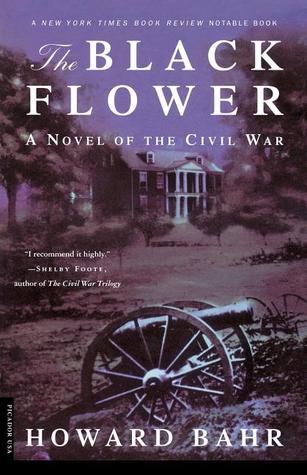
Literature and War Readalong January 31 2014: The Black Flower by Howard Bahr

The Black Flower

As I wrote in my introductory post to this year’s readalong, I was at first tempted to include only books based on WWI but decided against that for numerous reasons. In the first readalong I had included two novels on the American Civil War, one of which had to be removed from the list as 2011 was the first year of the German Literature Month and I wanted to add a German novel in November. The novel on the American Civil War that we read in 2011 and which impressed me a great deal was Cold Mountain and when Kevin (The War Movie Buff) mentioned he’d just read another novel on the American Civil War that he found just as compelling, I decided, to include said novel at a later date. So it’s thanks to Kevin that we’re reading The Black Flower this year. I must say I’m very eager, not only because I hope we will like it, but because I’m glad to return to the American Civil War. This book is the first in a series of three books that are dedicated to that war and I’m sure it will be interesting to see how these very different novels will approach the subject. At first I thought that Bahr might have been inspired by Cold Mountain but since both books were published in 1997, I’d say that wasn’t the case.

Howard Bahr was a school teacher before he started to write. The Black Flower  was his first novel. He’s written other novels since then and they all received awards.

Here are the first sentences

Bushrod Carter dreamed of snow, of big, round flakes drifting like sycamore leaves from heaven. The snow settled over trees and fences, over artillery and the rumps of horses, over the men moving in column up the narrow road. A snowflake, light and dry as a lace doily, lit on the crown of Bushrod’s hat; when he made to brush it away, he found it was not snow but hoe cake dripping with molasses.

And  some details and the blurb for those who want to join

The Black Flower by Howard Bahr (US 1997), American Civil War, Novel, 272 pages

The Black Flower is the gripping story of a young Confederate rifleman from Mississippi named Bushrod Carter, who serves in General John Bell Hood’s Army of Tennessee during the Civil War battle that takes place in Franklin, Tennessee, in November 1864. Written with reverent attention to historical accuracy, the book vividly documents the fear, suffering, and intense friendships that are all present on the eve of the battle and during its aftermath. When Bushrod is wounded in the Confederate charge, he is taken to a makeshift hospital where he comes under the care of Anna, who has already lost two potential romances to battle. Bushrod and Anna’s poignant attempt to forge a bond of common humanity in the midst of the pathos and horror of battle serves as a powerful reminder that the war that divided America will not vanish quietly into the page of history.

*******

The discussion starts on Friday, 31 January 2014.

Further information on the Literature and War Readalong 2014, including all the book blurbs, can be found here.

Tess Gerritsen: The Mephisto Club (2006) or Why I Prefer Rizzoli & Isles

The Mephisto Club

I’ve read Tess Gerritsen’s The Surgeon pre-blogging. It was an OK read, although looking back I can’t remember all that much. This summer I discovered Rizzoli & Isles, the TV series based on Gerritsen’s books. I really love that series, but the whole time I was wondering whether I’d simply not paid any attention while reading The Surgeon or whether books and series were that different. Since I still had The Mephisto Club somewhere on my piles I read it to find out. I must say, they do not have a lot in common. I did recognize some traits of Rizzoli, the detective, but Isles is a completely different character and so are the others. I basically love Rizzoli & Isles because of the friendship between the two protagonists, which is so endearing. None of that is in the books.  They are never together outside of work and there doesn’t seem any special connection between them at all. And all of the humour is missing. While they are two opposite characters in the series, they still have a deep bond, which evolves over time. So, if I want some of that Rizzoli & Isles friendship magic, I’ll have to stick to the TV series.

What about The Mephisto Club? Like The Surgeon, it’s OK, I’d say I even liked it better and I found the idea behind it quite interesting. The book tries to explore one explanation for the existence of evil. While it’s highly speculative, I still found it an oddly compelling idea.

In The Mephisto Club, Detectives Rizzoli and Frost and medical examiner Dr Isles are chasing a serial killer who commits a gruesome murder, leaving symbols and signs at the crime scene. The first murder is soon followed by others and some traces lead to a mysterious club called The Mephisto Club: a group of people who have dedicated their lives to proving the existence of Satan.

The story line that focusses on the law enforcement and the discovery of the crime was quite suspenseful but there are chapters which are written from the point of view of the perpetrator and some from the point of view of someone he hunts. I found that very heavy-handed and thought that this and the prologue gave away the solution. Finding who is the murderer is less important than catching him and avoiding to become the next victim.

I’ve read a few crime novels this year and while this was a quick read, it’s not one of my favourites and I’ll pick up another author next. I’m really looking forward to the next season of Rizzoli & Isles though. It is a crime series but unlike most others, it dedicates at least 40% of every episode to stories about the lives of the main characters. It’s also nice that for once the central team is composed of two women and not like in so many others (Bones, The Mentalist, Castle) of a woman/man duo.

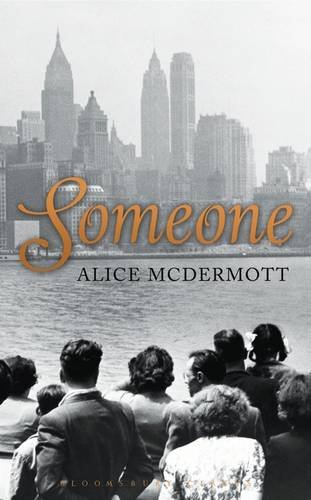
Alice McDermott: Someone (2013)

Someone

Someone begins on the stoop of a Brooklyn apartment building where Marie is waiting for her father to come home from work. It is the 1920s and in her Irish-American enclave the stories of her neighbours unfold before her short-sighted eyes. There is war-blinded Billy Corrigan and foolish, ill-fated Pegeen – and her parents’ legendary Syrian-Irish marriage – the terrifying Big Lucy, and the ever-present Sisters of Charity from the convent down the road.

As the years pass Marie’s own history plays out against the backdrop of a changing world. Her older brother Gabe leaves for the seminary to study for the priesthood, his faith destined to be tested to breaking point. Marie experiences first love – and first heartbreak – marriage and motherhood, and discovers how time can reveal us all to be fools and dreamers, blinded in one way or another by hope, loss or the exigencies of life and love.

It took a while until the title Someone of Alice McDermott’s latest novel made any sense, but once it did, I thought it was a brilliant choice. It refers to the narrator, Marie, the Brooklyn-born daughter of Irish immigrants, an unremarkable woman whose life story becomes meaningful because it is so universal. She is just “someone”, nobody special, just a woman who was born in the 20s, has experienced the aftermath of WWII, first love, work for an undertaker, marriage, her fist child, loss, grief and finally old age. It’s a mix of intense joy and pain told in delicately evocative scenes, in which every detail is rendered with a lot of care. Some say Philip Roth is the master of writing scenes. Alice McDermott maybe his female counterpart.

“Someone” also refers to other people in the book. One girl says, that there is always someone kind somewhere and when Marie, after her first heartbreak, asks her brother Gabe if she will ever find love, he tells her that someone will love her one day.

Someone isn’t told chronologically. It moves back and forth in time, picking the most important moments of Marie’s life. If it wasn’t for the writing it wouldn’t be as impressive as it is, but Alice McDermott is a writer you could read simply for her craft.

While reading I was wondering how this book that is so deeply rooted in Brooklyn would compare to Colm Toíbín’s novel Brooklyn. Just like it is the story of one woman’s life, it’s also the story of the changes Brooklyn undergoes. The way Marie’s neighbourhood is described makes you think much more of village life than life in a big city, but then again, that’s typical of the largest cities, in which some inhabitants never venture any future than their neighbourhood. Marie is particularly attached to Brooklyn. Unlike her brother Gabe she never wanted to leave or even work anywhere else. That’s why she comes to work for an undertaker, a job she’s wary of at first. It proves to be an opportunity to learn a lot about life and loss.

Since this novel is told entirely in elaborate scenes, one more wonderful than the next, I couldn’t even pick a favourite. I loved how they were descriptive and at the same time full of hidden meanings and allusions.

It’s one of those books, I’ll read again, some day, just to see, once again, how she did it, how she captured the tiny gestures of people, the way they hold themselves, the way they speak and betray their feelings in doing so.

But I didn’t only love it for the craft. I loved it for its themes – birth, marriage, family, religion, faith, too many to name them all –  and for its quiet gentleness, the belief in kindness and the many characters who all hope for a fulfilled life, but face as much disappoinment as joy and happiness. And I loved it for some lovely insighst like this one on sleep.

All the thought and all the worry, all the faith and philosophy, the paintings  and the stories and the poems, all the whatnot, gone into the study on heaven and hell, and yet so little wonder applied to the sinking into sleep. Falling asleep. All the prayers I had said before bed throughout my life, all the prayers I had made my children say – Our Father, Hail Mary, Glory Be – the Confiteor if some transgression had taken place – missed the mark entirely. It was grace, the simple prayer before meals, that we should have been murmuring into our clasped hands at the end of the day: Bless us, oh Lord, and this thy gift, which we are about to receive.

I’d love to read another of her novels. Does anyone have suggestions?