Literature and War Readalong September 29 2014: My Dear, I Wanted to Tell You by Louisa Young

My Dear I Wanted To Tell You

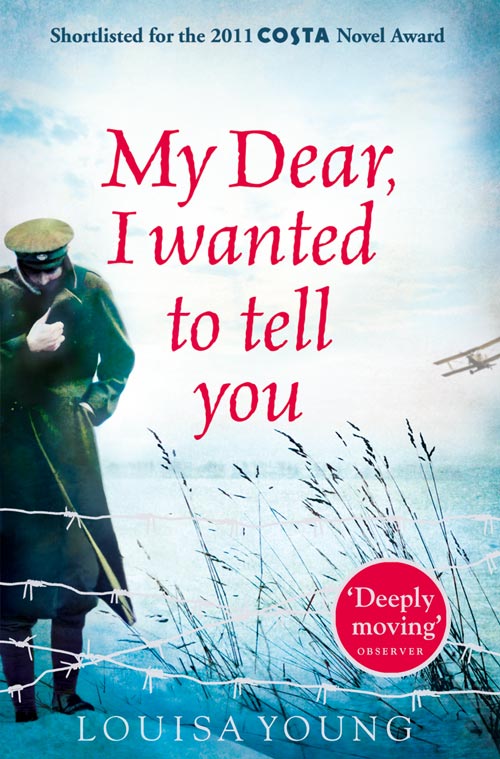
If I hadn’t read a lot of favourable reviews of Louisa Young’s novel My Dear, I Wanted to Tell You, I would never have picked it up. I know you shouldn’t judge a book by its cover but I’m allergic to men in greatcoat’s on WWI novels. On the other hand it’s better than a man in a greatcoat kissing a woman. But, as fluffy as it looks, the reviews made it sound poignant.

Louisa Young is a versatile author. Not only has she written three previous novels and a biography but, as Zizou Corder, she also writes a successful YA adult series together with her daughter.

Here are the first sentences

France, 7 June, 3.10 a.m.

It had been a warm night. Summery. Quiet, as such nights go.

The shattering roar of the explosion was so very sudden, cracking through the physicality of air and earth, that every battered skull, and every baffled brain within those skulls, was shaken by it, and every surviving thought was shaken out. It shuddered eardrums and set livers quivering; it ran under skin, set up counter-waves of blood veins and arteries, pierced rocking into the tiny canals of the sponge of the bone marrow. It clenched hearts, broke teeth, and reverberated in synapses and the spaces between cells. The men became a part of the noise, drowned in it, dismembered by it saturated. They were of it. It was of them.

They were all used to that.

And some details and the blurb for those who want to join

My Dear, I Wanted to Tell You by Louisa Young (UK 2011) WWI, Historical Fiction, 336 pages

A letter, two lovers, a terrible lie. In war, truth is only the first casualty. ‘Inspires the kind of devotion among its readers not seen since David Nicholls’ One Day’ The Times

While Riley Purefoy and Peter Locke fight for their country, their survival and their sanity in the trenches of Flanders, Nadine Waveney, Julia Locke and Rose Locke do what they can at home. Beautiful, obsessive Julia and gentle, eccentric Peter are married: each day Julia goes through rituals to prepare for her beloved husband’s return. Nadine and Riley, only eighteen when the war starts, and with problems of their own already, want above all to make promises – but how can they when the future is not in their hands? And Rose? Well, what did happen to the traditionally brought-up women who lost all hope of marriage, because all the young men were dead?

Moving between Ypres, London and Paris, My Dear I Wanted to Tell You is a deeply affecting, moving and brilliant novel of love and war, and how they affect those left behind as well as those who fight.


*******

The discussion starts on Friday, 29 September 2014.

Further information on the Literature and War Readalong 2014, including all the book blurbs, can be found here.
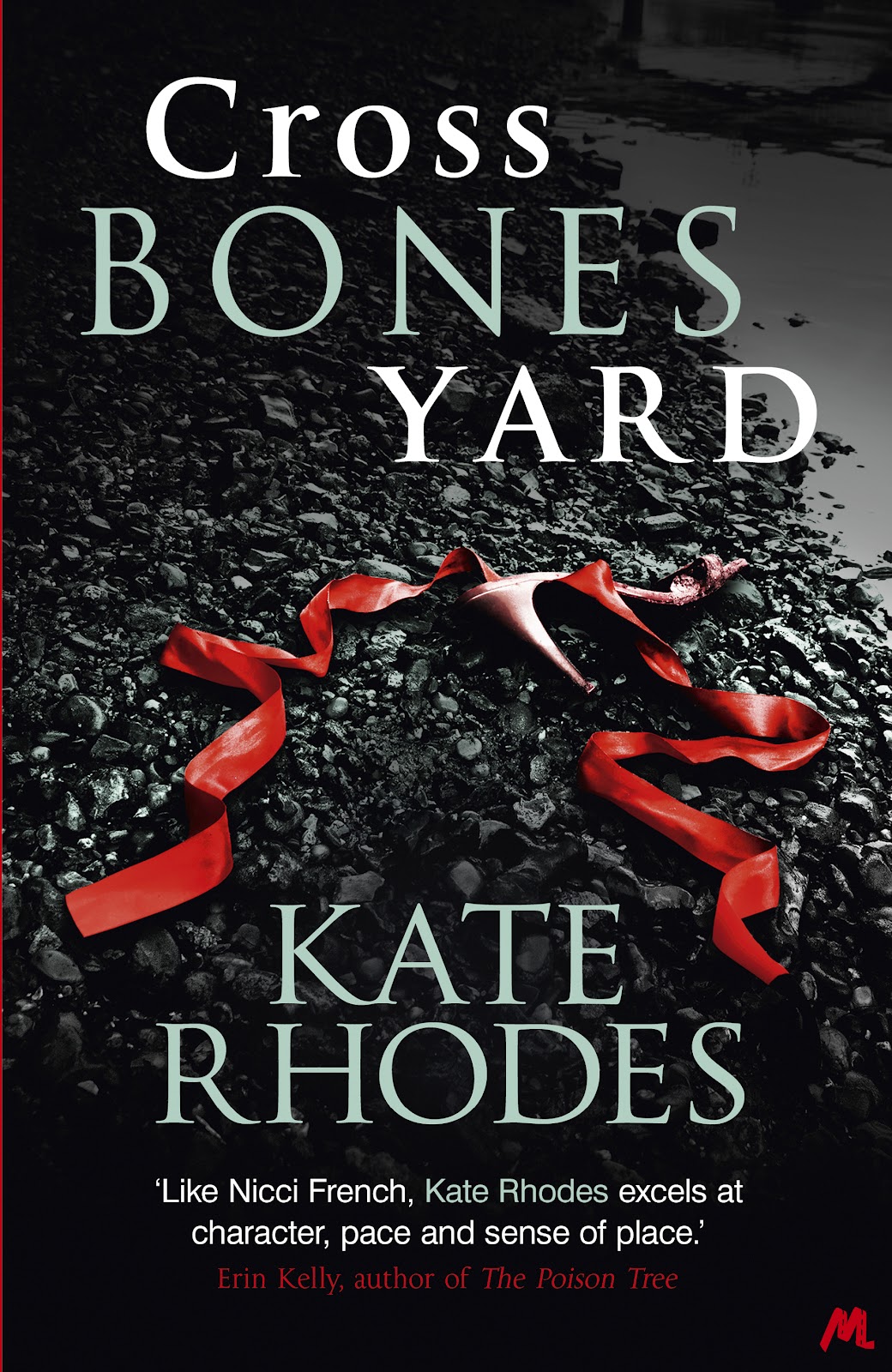
Kate Rhodes: Crossbones Yard (2012)

Crossbones Yard

When I reviewed Nicci French’s third Frieda Klein novel two weeks ago, Alex (Thinking in Fragments) mentioned Kate Rhodes’ Alice Quentin series as being similar and just as good. Of course, I had to get the first in the series Crossbones Yard and read it right away. Reading a new author with a favourite one in mind is often an unfortunate thing, but not in this case. I noticed similarities – a well-described London setting – one protagonist is a psychoanalyst, the other a psychologist – they both work for the police – they both get in trouble – they both have family issues and loyal friends – the pacing is similar and so is the knack for a strong plot. The best news is—Kate Rhodes’ book is still different enough to be interesting. I think one reason is that Alice is at least ten years younger than Frieda. She sounds and feels younger. She goes clubbing and drinks too much on occasions. She’s a professional, but she’s working for a hospital, not for herself, like Frieda. The London described in Crossbones Yard is edgier, it also seems bigger, as Kate Rhodes mentions more neighbourhoods.

The novel opens with a prologue. A flashback: an abusive father, a child in hiding. At the beginning of the novel, Alice avoids taking the elevator to her office on the 24th floor. She’d rather jog. Although she’s a successful psychologist, she suffers from claustrophobia. She’s working at a hospital where she has her practice and helps the police. Not surprisingly then, DCI Burns comes to fetch her. He wants her to talk to a man who is in prison for murder but will be released soon. Burns wants Alice to assess how dangerous he really is. She finds him creepy but mentally challenged and doesn’t see him as a risk. Unfortunately, just after he’s been released, a young woman, who’s obviously been held captive, is brutally murdered. Her face and abdomen were carved. Alice finds her body when she goes jogging one evening. The woman’s been dumped on the former burial ground Crossbones Yard. Nowadays it’s just a wasteland and happens to be exactly where Alice goes for her evening runs.

It will not be the last body Alice finds. At the same time she receives threatening letters and Alice knows that whoever kills these women is after her as well.

The book is swarming with suspects and many of them are somehow linked to a couple of serial killers. The husband is already dead but his wife is still serving time and the new murders look strikingly like those they committed.

I really liked Crossbones Yard a great deal in spite of feeling let down by the ending. The red herrings were too obvious; instead of misleading me, they led me to discover the murderer a bit too early. Still, this is a promising beginning to a series and I’m looking forward to read the sequels. Alice is a strong character and her troubled family history adds to her complexity. Another aspect I liked is that the comments Alice makes on psychology and human behaviour are eve more pertinent than those coming from Frieda Klein. And the descriptions of London are fantastic.

Literature and War Readalong August 29 2014: Undertones of War by Edmund Blunden

Undertones of War

Edmund Blunden’s Undertones of War is one of the most famous WWI memoirs. Blunden was a poet who enlisted at the age of twenty and took part in the battles at the Somme, Ypres and Passchendaele. My edition, which is The University of Chicago Press edition, contains a number of his poems. It will be interesting to compare the accounts of the trenches with the poems inspired by the landscape.

Here are the first sentences

I was not anxious to go. An uncertain but unceasing disquiet had been upon me, and when, returning to the officers’ mess a Shoreham Camp one Sunday evening, I read the notice that I was under orders for France, I did not hide my feelings. Berry, a subaltern of my set, who was also named for the draft, might pipe to me “Hi, Blunden, we’re going out: have a drink.”; I could not dance. There was something about France in those days which looked to me, despite all journalistic enchanters, to be dangerous.

And  some details and the blurb for those who want to join

Undertones of War by Edmund Blunden (UK 1928) WWI, Memoir, 288 pages

In what is one of the finest autobiographies to come out of the First World War, the distinguished poet Edmund Blunden records his experiences as an infantry subaltern in France and Flanders. Blunden took part in the disastrous battles of the Somme, Ypres and Passchendaele, describing the latter as ‘murder, not only to the troops, but to their singing faiths and hopes’. In his compassionate yet unsentimental prose, he tells of the heroism and despair found among the officers. Blunden’s poems show how he found hope in the natural landscape; the only thing that survives the terrible betrayal enacted in the Flanders fields.

*******

The discussion starts on Friday, 29 August 2014.

Further information on the Literature and War Readalong 2014, including all the book blurbs, can be found here.
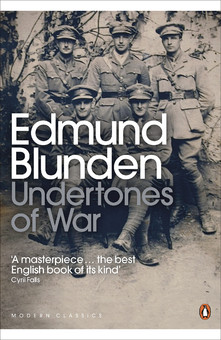
Eugenio Fuentes: The Depths of the Forest – El interior del bosque (1999)

El Interior del Bosque

In a guardian article on best crime fiction in English translation Ann Cleeves mentioned Eugenio Fuentes’ novel The Depths of the Forest – El interior del bosque. Since Stu‘s and Richard‘s Spanish Literature Month was upcoming and I’ve never read a Spanish crime novel before, I thought it would be an excellent choice.

The book starts chillingly with the POV of the first victim. Gloria, a beautiful painter, is hiking alone in Paternóster, a remote nature reserve, in Spain. She feels dread but since she’s all alone, there doesn’t seem to be any reason. A few minutes later she’s murdered brutally. This isn’t a spoiler. Her murder is revealed on the bokk cover and happens in the first few pages. The next POV is quite unusual. A rat finds Gloria’s body. The following paragraphs are written from the point of view of a group of young boys who torture scorpions and discover Gloria’s body. The POV switches again, this time we are in the head of Richard Cupido, the PI hired by Marcos, Gloria’s fiancé. Marcos is sure that the Guardia Civil, the local police, are not going to investigate thoroughly and hopes Cupido will find the murderer.

Most of the story is written from Cupido’s perspective but many chapters are told from the point of view of the many suspects. When a second woman is murdered there are even more suspects. In spite of these many different perspectives, the book didn’t feel disjointed.

Most of the men who came in contact with Gloria fell in love with her. And it seems that she had affairs with most of them. Was it a crime of passion? Or has it something to do with an ongoing lawsuit? El Paternóster used to belong to a rich widow who has been fighting to get it back for years. Did she take drastic measures to discourage the public from visiting?

Cupido turns in circles for a long time. He gathers information but it’s leading nowhere. And he becomes obsessed with Gloria himself.

Having finished the novel, I’m facing a huge dilemma. I want to be fair to a novel, which is clearly on the literary side of the crime spectrum, and would most certainly delight many readers, but at the same time I have to admit that this wasn’t for me. Not because it wasn’t good but because it contained a recurring scene of an act of cruelty against an animal (a deer) that made me sick. I skipped most of the parts but still read too much for my own liking. It wasn’t a gratuitous scene but nevertheless, I wonder why an author chooses to include scenes like this. I think this is too bad because if those scenes hadn’t been included I would have liked this book. I thought that all the aspects about nature and how people value it in different ways was thought-provoking and topical. From the nature theme we’re lead to think about human nature. Clearly, the cruelty is part of these explorations. Cupido is a complex character and most of the other character studies were quite fascinating too. The way Fuentes captured this nature reserve and its remoteness, was very well done. Fascinating and eerie at the same time. And I really wanted to find out who killed those women. But overall the novel was too pessimistic for my own liking. While I agree that humans are the most cruel animals in this world, I don’t want to read about it in this way. Or Nnot if illustrating this point includes scenes with cruelty against animals. If this doesn’t bother you and you like your crime novels unusual, literary and very bleak – don’t miss this.

This is my first contribution to Spanish Literature Month hosted by Stu and Richard.

The Depths of the Forest


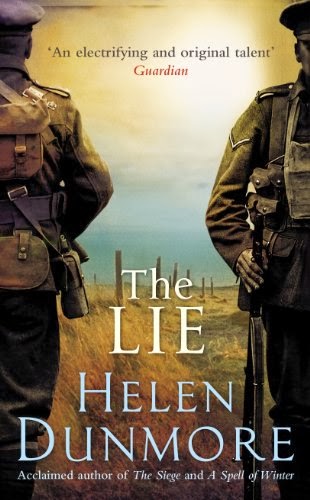
Literature and War Readalong July 28 2014: The Lie by Helen Dunmore

The Lie

Helen Dunmore has written several times about WWI. Back in 2012 we’ve read her earlier novel Zennor in Darkness, a book that made it on my Best of List that year. Naturally I’m looking forward to read her latest novel The Lie. I’ve seen a few reviews here and there but avoided to read them as I want to discover it for myself. What I like the most about Helen Dunmore is her beautiful prose. You can sense right away that she is also a poet.

If Rudyard Kipling’s epitaph at the beginning of the book is anything to go by, then it will be a heartbreaking novel.

If any question why we died

Tell them, because our fathers lied

This epitaph is doubly tragic as Kipling lost his son in WWI. Judging from the movie My Boy Jack, the boy would never have enlisted if it hadn’t been for his father. Here’s Kipling’s touching poem:

My Boy Jack

Have you news of my boy Jack?
Not this tide.
When d’you think that hell come back?
Not with this wind blowing, and this tide.

Has any one else had word of him?
Not this tide.
For what is sunk will hardly swim,
Not with this wind blowing, and this tide.

Oh, dear, what comfort can I find?
None this tide,
Nor any tide,
Except he did not shame his kind —
Not even with that wind blowing, and that tide.

Then hold your head up all the more,
This tide,
And every tide;
Because he was the son you bore,
And gave to that wind blowing and that tide!

Here are the first sentences of The Lie

He comes to me, clagged in mud from head to foot. A mud statue, but a breathing one. The breath whistles in and out of him. He stands at my be-end. Even when the wind is banging over the roof that I’ve bodged with corrugated iron, it’s very quiet. He doesn’t speak. Sometimes I wish he would break the silence, but then I’m afraid of what he might say. I can smell the mud.You never forget the reek of it. Thick, almost oily, full of shit and rotten flesh, cordite and chloride of lime. He has got himself coated all over with it. He’s camouflaged. He might be anything, but I know who he is.

And  some details and the blurb for those who want to join

The Lie by Helen Dunmore (UK 2014) WWI, Novel, 304 pages

Set during and just after the First World War, The Lie is an enthralling, heart-wrenching novel of love, memory and devastating loss by one of the UK’s most acclaimed storytellers. Cornwall, 1920, early spring.

A young man stands on a headland, looking out to sea. He is back from the war, homeless and without family.

Behind him lie the mud, barbed-wire entanglements and terror of the trenches. Behind him is also the most intense relationship of his life.

Daniel has survived, but the horror and passion of the past seem more real than the quiet fields around him.

He is about to step into the unknown. But will he ever be able to escape the terrible, unforeseen consequences of a lie?

*******

The discussion starts on Monday, 28 July 2014.

Further information on the Literature and War Readalong 2014, including all the book blurbs, can be found here.
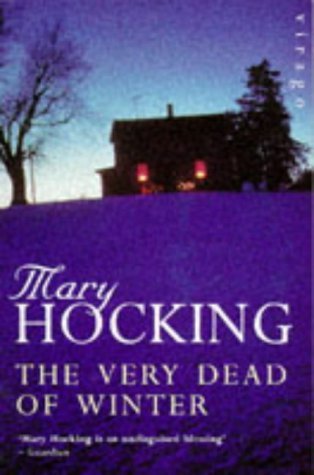
Mary Hocking: The Very Dead of Winter (1993)

The Very Dead of Winter

I’m so glad I came upon Heavenali’s Mary Hocking Month and discovered the brittle beauty of the novel The Very Dead of Winter and its cast of eccentric characters.With her wry humor and sharp eye for social comedy Mary Hocking can be firmly placed in the tradition of British women writers like Elizabeth Taylor, Barbara Pym, Susan Townsend Warner, Beryl Bainbridge and Muriel Spark.

Take a dysfunctional family, put them in a snowed in cottage at Christmas, with one of them slowly dying, and watch what will happen. I can guarantee you it will never be boring. The sisters Florence and Sophia used to spend their childhood holidays at the cottage. Now, in their sixties, they have come here for a special family reunion. Sophia is the owner of the cottage; Sophia’s sister Florence, her dying husband Konrad and their grown-up children Nicholas and Anita are guests.

What would be a testing moment for any family turns into a sometimes tragic, sometimes hilarious adventure. With the exception of Sophia and Konrad, these are some of the most selfish, narcissistic people I’ve ever come across in a novel. Florence is a master manipulator but she’s not very subtle, which leads to hilarious moments. Anita, her daughter, a child psychologist who doesn’t like children, has been under her thumb her whole life. Being with her mother is like being on a battle field when both parties are too tired to strike. They say the nastiest things in the world to each other but they can’t really fight openly.

“My mother is too big for me: She dwarfs everyone around her – except my father,” Anita shouted in to the wind. “There’s never any peace where she is, nowhere I can feel I am me. All my childhood I had to stay clenched tight, ready to parry thrusts from my mother.”

Nicholas isn’t any less dysfunctional he just handles it differently and doesn’t really communicate with any of them.

The book offers wonderful character portraits and an abundance of scenes I’m not likely to forget. In one instance, Florence decides to go to church in the middle of the night, right through the snowed in forest. What would be challenging during the day in summer turns into a dangerous expedition. Anita, although she’s terribly annoyed with her mother, feels obliged to go with her. Of course, it’s far too exhausting and Florence collapses in the middle of the woods. She’s a heavy woman and slender Anita isn’t capable of carrying her. Luckily they stumble over a half-frozen pony, and because she has no means to guide the animal, Anita takes drastic measures. I’m not going to reveal what she does. It’s nothing tragic, just wildly crazy.

Florence is a great character, she’s scheming and manipulative, driven by fear of abandonment, which makes her do foolish things. She lives in constant disappointment with everyone around her, always expecting them to serve her narcissistic purposes. She’s only interested in what people can be or do for her, but takes no interest in their personalities. She has no idea for example who her husband is, where he came from – he is German – or what his dreams and hopes are. Once it’s obvious he will die, filled with the horror of future loneliness, she clumsily tries to capture a widower who lives near by. The ensuing scenes are some of the funniest. Desperate as she is, she even thinks she can manipulate her grown-up children to come back to live with her. One of her favourite techniques is finding her own faults in everyone else.

“Dear God,” Florence said. “What has happened to me?”

Standing there, in the center of the room, it was as if she had come on stage to find herself in an unfamiliar play. She was, above all else, a performer, and to find that she had got the performance wrong was deeply disquieting.

I really liked The Very Dead of Winter are great deal. Not only for its wry humour and psychological insight, but also for some lovely descriptions. It’s not a flawless novel, there are a few instances of shifty point of view, but that didn’t diminish the experience one bit. I’ll certainly read more of Mary Hocking, might even re-read The Very Dead of Winter.

I leave you with two final quotes, one from the beginning of the novel, the other can be found towards the end:

The beginning of the journey had been enchanting. Porcelain blue sky and the sparkling white canopy transformed dingy streets into fantasies of unimaginable purity and, passing out of town, they came to broad fields where sunlight reflected the trellis of branches like veins across the snow.

She stood there a long time while the shadows crept towards her, deeps of blue from which a tree stump rose like the funnel of a sunken steamer. On the other side of the hedge, and between the bars of the gate, the sharpness of outline blurred into a mist of pink and grey shot through here and there with a shee of palest turquoise.

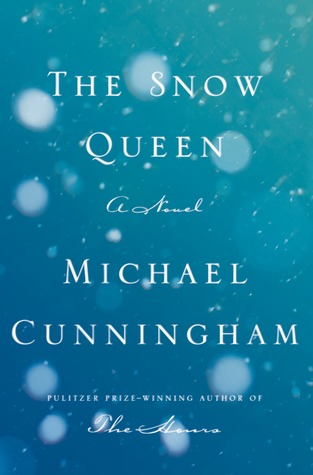
Michael Cunningham: The Snow Queen (2014)

The Snow Queen

Michael Cunningham’s luminous, compassionate new novel begins with a vision.

It’s November 2004. Barrett Meeks, having lost love yet again, is walking through Central Park when he is suddenly and inexplicably inspired to look up at the sky, where he sees a pale, translucent light that seems to regard him in a distinctly godlike way. Although Barrett doesn’t believe in visions – or in god, for that matter – he can’t deny what he’s seen.

At the same time, in the not-quite-gentrified Bushwick neighborhood of Brooklyn, Beth, who’s engaged to Barrett’s older brother ,Tyler, is dying of colon cancer. Beth, Tyler, and Barrett have cobbled together a more or less happy home. Tyler, a struggling musician with a drug problem, is trying and failing to write a wedding song for his wife-to-be – something that will be not merely a sentimental ballad but an enduring expression of eternal love.

Barrett, haunted by the light, turns unexpectedly to religion. Tyler grows increasingly convinced that only drugs can release his deepest creative powers. Beth tries to face mortality with as much courage and stoicism as she can summon.

One night, after having been dumped by his boyfriend via text message, Barrett is walking through Central Park when he sees a light. He’s pretty sure it’s of divine origin and looking down on him. He’s not the only one in his entourage who would benefit from divine intervention. He shares an apartment with his older bother Tyler, an unsuccessful musician with a drug problem, and his soon-to-be sister-in law Beth who has colon cancer. Both could do with some divine assistance.

The Snow Queen starts shortly before Christmas. It snows constantly and the images Cunningham creates are lovely and haunting. Tyler standing at the open window, while the snow swirls into the room full of old broken objects. Beth who wears only white and goes for a solitary walk. Liz and Andrew who do drugs until the early morning and stand on the top of the roof talking.

Barrett was once a wunderkind, someone who promised to be great one day. A scholar, a writer, someone who would leave a mark. Nowadays he’s happy to be a shop assistant in Beth’s and Liz’s vintage clothes shop. He doesn’t see himself as a failure when it comes to his career but he definitely sees himself as failure when it comes to love.

Tyler, the addict, struggles hard to write the perfect song for his wedding. He’s sure that a small bit of cocaine occasionally will help him. But occasionally is just an addict’s way of saying “I’ll stop soon”. And he always stops – until the next time, which comes invariably.

Liz is the oldest of the group of friends. She’s over fifty and still dating young men in their twenties. When they leave her for younger women she doesn’t care. It’s part of the plan, part of never settling.

We follow the four characters over the course of four years and see each of them come to terms with their life choices. They are drifters who have to learn that what they wanted in life might not have been the thing that would really make them happy.

I’m not sure what to think of this novel. I’ve read it in one sitting and some of the images are still vivid but it was also quite lame. I’ve read two of Cunningham’s novels A Home at the End of the World and The Hours. I loved both but this one left me puzzled. The writing is airy and precise, the images he creates are haunting but overall it’s so fluffy. And most of the time I felt like I’ve read something similar somewhere before. I even had a shock moment while working out, watching TV, and an episode of Sex and the City came on. A lot in this episode resembled The Snow Queen. I must say I like him better when he recycles Virginia Woolf. I also have no idea why he chose the title. Tyler get’s a snow splinter in his eye at the beginning but apart from that and the snow-heavy first chapters, there’s no link. Another possible inspiration might have been Jonathan Lethem’s Fortress of Solitude, with which it has more than one element in common.

With the exception of one critic most were raving about this book. I agree that the writing is lovely and the descriptions of addiction are extremely well done. Nonetheless, I need a bit more than a person seeing a light which is never explained and a couple of drifters accepting that life isn’t as grand as they thought it would be. Read it if you want to read an ode to resignation in a snowy setting.