Deborah Levy: Swimming Home (2011)

Swimming Home

Picture this—A dark road in a mountainous area, in the South of France at night. It’s summer. The sound of insects in the dark. A couple is talking in a car. The woman, Kitty Finch, is driving the car. The conversation is slightly off. The atmosphere brooding. That’s how Deborah Levy’s novel Swimming Home begins. Then it rewinds and we learn how the two people ended up in the car together. In the first chapter a red-haired woman swims naked in a pool. The people who have rented the villa to which the pool belongs are watching her. They have no clue who she is. Finally, Isabel, a war correspondent, and the wife of a famous poet, Joe, jumps into the pool, grabs the young woman by her ankle and forces her to leave the water. Other people have watched the scene. An elderly therapist,who rents the villa next door, Joe, the famous poet, Laura and Mitchell, family friends, and Nina, Joe’s and Isabel’s teenage daughter. Kitty Finch tells them that there was a mix up in the dates. Jurgen, the caretaker of the villa, has made a mistake. They are all enthralled by Kitty Finch, her striking red hair, her beauty, her green finger nails and the fact that she skinny dips in the pool of strangers as if it was the most natural thing in the world. But what is even more surprising – Isabel offers her a spare room.

Inviting a mysterious stranger is daring at the best of times, but inviting someone who behaves as oddly as Kitty Finch is downright reckless. Soon it’s obvious that her presence upsets an already fragile balance and people start to show what they were hiding behind their masks. The reader senses—something bad will happen.

Writing more would spoil this wonderful book. I truly admired Deborah Levy’s understated style. The book felt fresh, uncluttered, like a well-aired room. Everything she writes reminds you of something but proves to be very different in the end. People never say what you would expect them to say. On the other hand Swimming Home was one of those books I couldn’t read without being constantly reminded of other books or movies. I suppose that’s because the setting, the South of France, is so charged with meaning. I was reminded of Françoise Sagan’s novel Bonjour Tristesse, which has equally unhinged characters, desire and raw emotions at its heart. The movies La Piscine, starring Alain Delon and Romy Schneider, and Swimming Pool, starring Charlotte Rampling, came to my mind as well.

I also liked that Deborah Levy used so many point of view characters. The POV changes in every chapter and it’s not always clear who is the main character. Kitty Finch who serves as a catalyst for each of the other characters or Nina, the teenage daughter on whose POV the book ends? Or the poet who seems to occupy the emotional centre?

I’ve owned a copy of this novel for some time, but Violet‘s recent post was the reasons I picked it up finally.

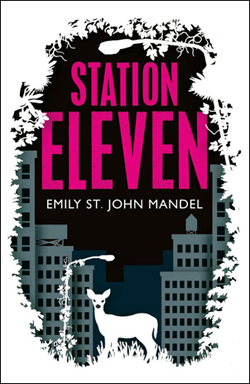
Emily St. John Mandel: Station Eleven (2014)

Station Eleven

Another post-apocalyptic novel and one that so  many have reviewed already. Still, I have to write about Station Eleven because it’s such an impressive book and even though there are so many dystopian and post-apocalyptic books published every year, this one stands out. To a large extent because it’s one of a few – maybe even the only one – that doesn’t make you feel as if someone just bashed you over the head. It has so many moments of glorious beauty that you’ll finish it without feeling a major depression coming on.

The book opens with a theater play. It’s Arthur Leander’s last performance of King Lear. Although he dies during the play he has a pivotal role in the book. The night of the play, a winter night in Toronto, isn’t only Arthur’s last night, it marks the end of most of humanity. In a few days a pandemic will have wiped out 99% of the world’s population.

From that night the novel flash forwards to the future, fifteen years later. Kirsten is part of the Travelling Symphony, an orchestra and theater group who performs Shakespeare plays while travelling from one place to the next. The world has changed a great deal. Everywhere lie the remnants of the old world, in which there still was electricity, air planes, iPhones etc.

I mentioned that Arthur Leander has a pivotal role and that’s because Emily St. John Mandel decided to tell the story of all those who were close to him and present when he died, including the story of some other people linked to him. Kirsten, for example, played a child Cordelia in this modern interpretation of Shakespeare’s play.

Some of the people who were close to Arthur will make it, some won’t. There are some heartbreaking scenes when we read how some of them struggle in vain and die during the pandemic.

What makes the book stand out, apart from the ingenious structure, was how people looked back on what they lost. It makes you grateful for everything we have but at the same time, the book shows that there will always be great things. Because the society we live in now has so much to offer, so  much beauty – art, theater, even technology – that, although 99% of its population are wiped out, many live in a lawless state, and other’s form fanatic cults, there’s still enough that has survived and will go on making our world a special place.

I wonder if this book made it into other people’s dreams as well. While I was reading it, I dreamt every night of the landscapes in the book. That’s why I called it impressive. It’s not overburdened with descriptions but what little she uses is very powerful. If you wonder why it’s called Station Eleven – the title refers to a comic book one of the characters has been drawing almost all of her life.

I liked that the book made me look at what I have and wonder what I would like to keep. Even when it comes to objects. Only things that are useful or even things that are just beautiful?

I could say a lot more about this book but I feel it’s OK to only write a short review because there are so many around at the moment. The important thing is – pick it up. It’s really worth it. If you love post-apocalyptic stories, you’ll read it anyway. If you don’t, maybe it will show you that not every book about the end must be traumatic. Certainly not one that makes you grateful for everything we have and, ultimately, shows that it’s possible to find beauty, no matter what will happen to our world. Nothing illustrates the message of the book better than the reversal of Sartre’s famous quote L’enfer c’est les autres – Hell is other people. In the novel Kirsten thinks that he’s wrong. She has come to the conclusion that hell is the absence of people you feel close to.

I haven’t read The Road yet but I could imagine the two complement each other; one being very gloomy, the other one very luminous.

Phil Rickman: The Smile of a Ghost (2005) Merrily Watkins Series

Smile of a Ghost

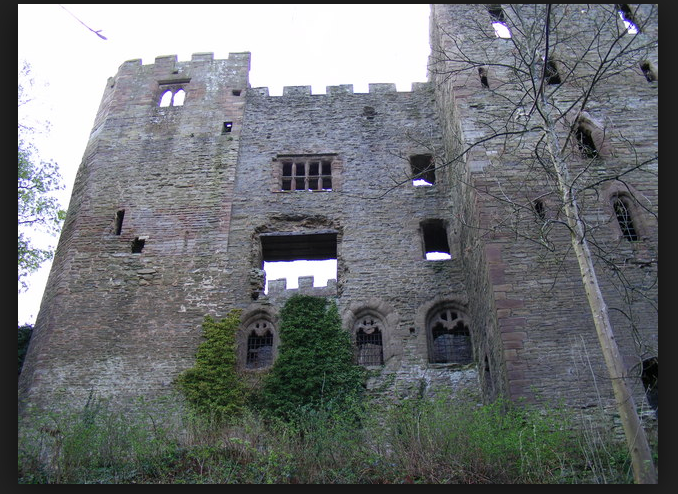
In the affluent, historic town of Ludlow, a teenage boy dies in a fall from the castle ruins. Accident or suicide? No great mystery, so why does the boy’s uncle, newly-retired detective sergeant Andy Mumford take his personal fears to diocesan exorcist Merrily Watkins? More people will die before Merrily, her own future uncertain, uncovers in those shadowed, medieval streets, a dangerous obsession with suicide, the nature of death and the afterlife.

I bought The Smile of a Ghost by accident, thinking it was the first in the Merrily Watkins series, but it’s already book seven. I think it says a lot about a series though if new readers do not feel left out and don’t get the impression that there’s a huge amount of backstory that would be annoying for those already familiar with the books.

When you read about some of the elements of the novels, notably that they are set in small English towns and that the main protagonist/investigator is a vicar, you might be led to thinking this is cozy crime. You’d be very wrong. The series is far edgier than you’d expect. And in some ways quite eccentric. Think Trollope meets the Gilmore Girls and you have a pretty good idea of the flavour of the series.

The main investigator is thirty-six-year-old Merrily Watkins, vicar of Ledwardine, in Herefordshire, near the Welsh border. Merrily isn’t only a vicar she’s also a deliverance minister – in other words an exorcist. And she’s the single mom of a teenage daughter and dates a rock musician. With these ingredients it’s not surprising that the books offer a mix of solid mystery, with a gothic flair and a very realistic look at life in contemporary Britain.

In this seventh book of the series Merrily has a lot of trouble with the church. Exorcist is a role that many among the clergy want gone. It whiffs too much of medieval superstitions. But Merrily persists. She’s not entirely sure herself whether she believes in ghosts, all she knows is that there are phenomena nobody can explain and if people feel the need of a priest to help them, why should the church refuse this. It’s decided that she can go on doing what she does but only after consulting with a whole group of people first, one of which a retired, pompous psychiatrist.

Merrily is a very independent person. She hates these new rules. But she’s got more troubles of her own . Her boyfriend, rock musician Lol, has moved to Ledwardine and they try to keep it a secret for the time being. Someone knows though or they wouldn’t receive hate mail. Jane, Merrily’s feisty daughter, starts to investigate, only to find a few other worrying things.

When a young boy, Robbie Walsh, falls from Ludlow castle, it looks like an accident at first. His uncle, newly-retired police investigator Mumford doubts it was an accident. As usual the boy stayed with his grandparents for the holidays. He loves staying at Ludlow. His own home is anything but peaceful. His mother is a druggie and pregnant with a much younger guy’s kid. Robbie’s a history buff and knows everything about Ludlow, including its ghost stories. Shortly before he dies he’s seen with Belladonna, an eccentric goth musician who has bought a house in Ludlow. She’s often seen at night in a dark cape, possibly naked underneath, holding a flickering candle. Does she have something to do with Robbie’s death? Was it a suicide?

If Mumford’s mother wouldn’t pretend she’s still seeing Robbie and he’s talking to her, Merrily might not have been drawn into this, but since there’s the possibility of a haunting, Mumford asks her for help.

Shortly afterwards Mumford’s mother is found dead in the river and a girl jumps from the castle. There’s clearly something very sinister at work here. A suicide cult led by Belladonna? Drug-dealing youth who force others to throw themselves from the ruin? Murder?

I loved this book and will return to this series again. It has such an arresting mix of elements: a suspenseful mystery, elements of ghost stories, a strong sense of place and setting, social commentary and a lot more. The characters are wonderfully well drawn. Merrily and her daughter Jane are a great team. They made me think of the Gilmore Girls more than once. The only reservation I have is the length of the books. None is shorter than 500 pages, many are over 600 and a lot of these pages are filled with church politics. It didn’t bother me too much because everything else was so different and fresh. And I had a tiny problem with the occasional use of vernacular though. It’s just something I don’t like.

I highly recommend this series. It offers a terrific mix of elements, wonderfully likable characters, and great setting and atmosphere. I was almost sad when I came to the end of the novel and didn’t have another one at hand. And I would love to visit Ludlow Castle.

Ludlow Castle

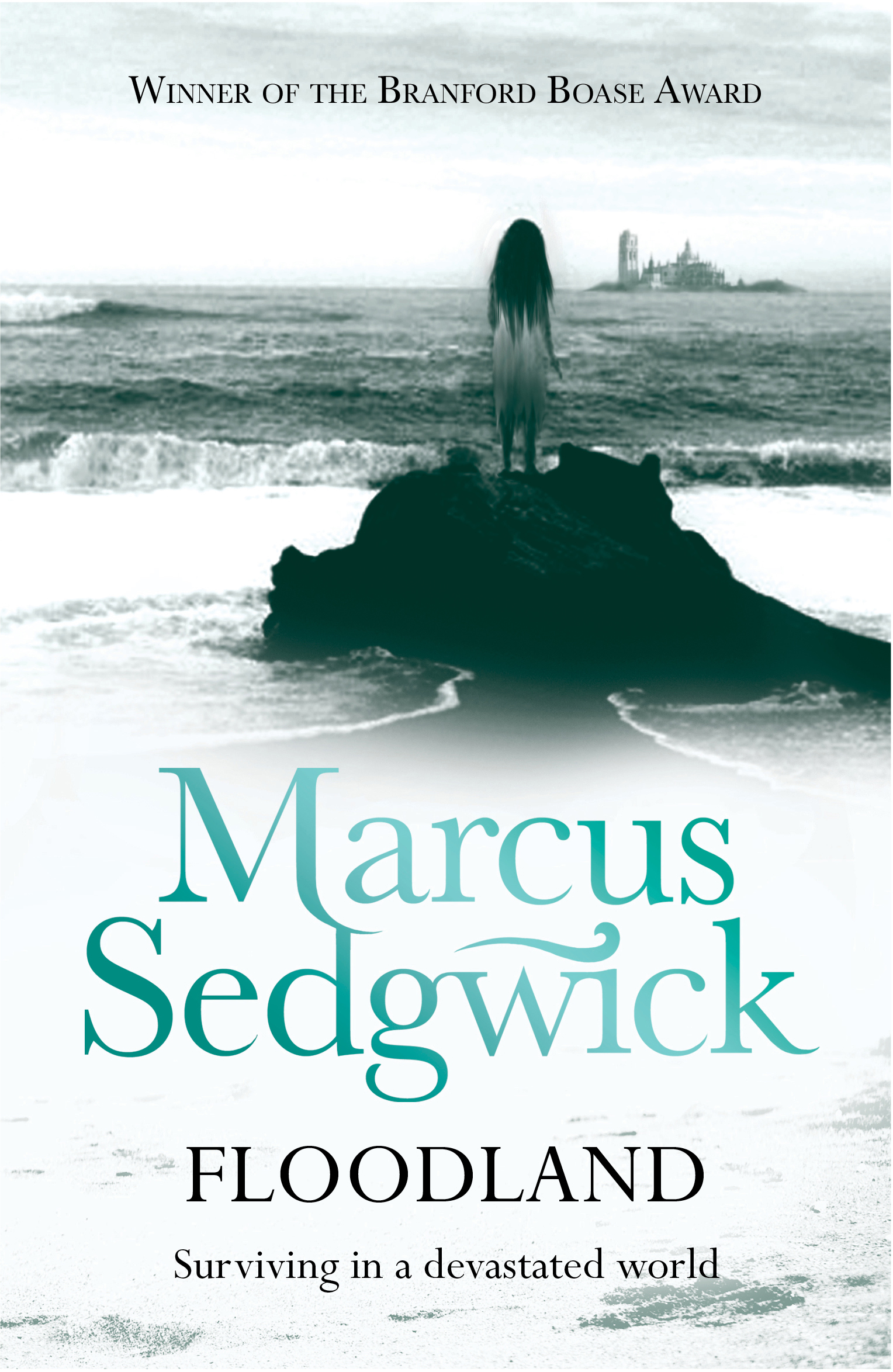
Marcus Sedgwick: Floodland (2000)

Floodland

Marcus Sedgwick has been on my radar for a while. I’ve seen more than one enthusiastic review of his books. He’s regularly nominated for awards and has won a few, notably the Branford Boase Award for first children’s book for Floodland. When you come to a writer who is as prolific as Marcus Sedgwick it’s hard to know where to start. Last year he even published a book for adults A Love Like Blood, that’s high on my TBR piles. I first wanted to read Midwinterblood but then decided to start with his first novel Floodland.

Floodland is set in the UK in the future. Most of the country is flooded, some of the higher regions building small islands. Food is scarce and people try to flee from the smaller islands to a larger part of the mainland. Zoe is left behind on the island of Norwich when her parents leave. During a moment of total chaos they boarded without making sure that she was really following them. Zoe’s been fighting for herself ever since. She’s a loner and most people leave her alone that’s why, when she discovers a boat, she’s able to hide it, and make it seaworthy again. One day she leaves the island, looking for the mainland. Instead of finding the mainland she’s stranded on an even smaller island than Norwich. Dooby, who is only a few years older than Zoe, is the leader of the people on that island. Food is even scarcer and so is shelter. Most people live in an old cathedral. Dooby confiscates her boat and Zoe’s forced to stay on this island on which people have turned into barbaric mobs, periodically overrun by other mobs who they torture and kill, if given a chance. Her only aim is to find her boat, flee and find the mainland and her parents.

I thought that the idea of Norwich being an island was pretty uncanny. I liked how this book was structured and divided into three parts “before”, “then” and “after”. Each part is subdivided into short chapters. At the beginning of every part and every chapter we find haunting wood carvings by Marcus Sedgwick.

Floodland is a short novel and so it may not be surprising that the writing is taut. There’s no superfluous word here. It all moves along at a steady pace and is very suspenseful.The middle part, which is the longest, was reminiscent of Lord of the Flies. It was also the part which carried the strongest message. There’s only one elderly person on that island and he makes Zoe understand how important it is to tell stories if humans want to keep their humanity.

The end felt a bit rushed but I still thought it was well done. Overall I enjoyed this adventurous story a great deal. Zoe’s a wonderful heroine and the world Marcus Sedgwick created felt realistic. There’s not too much backstory but we still understand it’s all a result of global warming. For children this may be a very emotional book because Zoe wonders until the end why her parents didn’t come back to find her. There’s one thing I didn’t like and that’s the idea that people turn into animals when they lose their humanity. I’m not keen on the dichotomy animal/human. The people in this book lose their compassion and their altruism because they are in a very precarious situation. They are cruel and depraved. That doesn’t make them animals. Animals don’t know cruelty.

If you’d like to find out more about Marcus Sedgwick here’s his website Marcus Sedgwick. It’s one of the most appealing writer’s websites I’ve come across. He also writes a blog where I found this quote that sums up his writing

I’m not a writer who tells you something five times. I usually say it just once, and if I say it any more in a first draft, my editor makes me take it out in a rewrite anyway. That’s one of the reasons that my books are sometimes shorter than other people’s. And that’s one of the reasons why I wish some people would read more slowly. Books are patient; you can afford to take your time when you’re reading for pleasure.

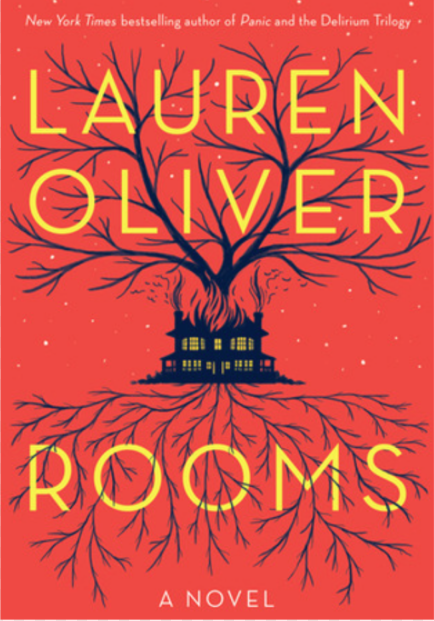
Lauren Oliver: Rooms (2014)

Rooms

This is a carryover review from last year. I finished the book before Christmas and wasn’t even going to review it at first – like so many others – but since it’s new, I thought it would be good to write about it anyway.

Rooms is Lauren Oliver’s first book for adults. She’s famous for her YA novels, Panic, Before I Fall and the Delirium trilogy. I haven’t read them, so I came to this novel without any preconceptions. I only knew it was said to be a rather unusual ghost story or – to be more precise – a haunted house story. I do love ghost stories and haunted house stories and the mini-review I read was so appealing that I had to try it.

Richard Walker died, leaving behind a huge country house. At the beginning of the novel his estranged family, – his ex-wife Caroline, his daughter Minna, her young child Amy, and his son Trenton – arrives to take possession of the house and his things.

The house is occupied by two bickering ghosts, Alice and Sandra. Unlike other ghosts who haunt houses these two are woven into the fabric of the house. They have become the house. They are in the walls, in the plumbing, everywhere. That’s an unusual idea and could have been really spooky, but it wasn’t because Rooms focuses too much on the story of each character. With the exception of little Amy, they are all troubled. The ex-wife is an alcoholic, Minna is a sex addict, Trenton is a suicidal teenager, Sandra, one of the ghosts, was shot, and Alice has secrets of her own.

The story moves along quickly, the descriptions are evocative, and the end is, although foreseeable, not bad. The biggest problem is that there are too many characters and, especially the ghosts Alice and Sandra, are too alike. They have different names and a different story but that’s not enough to tell them apart. The voices are too similar, even though they use another vocabulary. The same goes for the family members. They are all equally dysfunctional but if they were not so distinct through age and gender, they would blend into each other as well. Some of the descriptions of alcoholism or Minna’s and Trenton’s behaviour are spot on but they seem to exist in a vacuum. They have no history other than that the father was a bastard. We don’t understand Caroline’s drinking. We have no clue why Minna’s this bad, popping pills, jumping every guy that enters the house. Trenton’s the only character we get to understand a bit better.

Although I wasn’t too keen on this book, I think some readers might like it. Lauren Oliver knows how to write a scene or a description. However, overall this felt like a highly artificial attempt at a ghost story. The worst was maybe the lack of atmosphere. We don’t always need to know why a ghost is haunting a place but we want to feel the haunting. Atmosphere is a key element. As the story of a dysfunctional family it doesn’t work either because it lacks depth; for a character to be interesting he/she needs a bit more than being dysfunctional.

Maybe she’s better at writing for YA. Since I’ve got te first in the Delirium trilogy and Before I Fall I’ll certainly find out sooner or later.

Have you read any good ghost or haunted house stories lately?


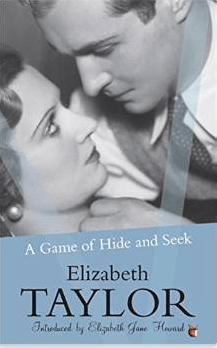
Elizabeth Taylor: A Game of Hide and Seek (1951)

Screen Shot 2014-11-26 at 09.14.09

I often read the best books of the year in December. Sometimes they don’t make it on the Top 10 list because I read them so late in the year. Luckily I’ve read Elizabeth Taylor’s fifth novel  A Game of Hide and Seek  just in time. This is my third Elizabeth Taylor novel and every time I read her I’m amazed to find out again how good she is. As much as I liked Blaming and Mrs Palfrey at the Claremont, A Game of Hide and Seek is even better. It’s larger in scope, richer in themes, with many more protagonists, and stretches over decades. The mood and atmosphere reminded me a lot of Rosamond Lehmann’s Dusty Answer and David Lean’s movie Brief Encounter, both of which are favourites of mine.

The main story of A Game of Hide and Seek is the love story between Harriet and Vesey, an unfulfilled love story that lasts a life time. They meet as children when Vesey spends his summer vacations at his aunt Caroline’s house. Caroline is the best friend of Harriet’s mother Lilian. Caroline and Lilian are very modern, emancipated women, former suffragettes and, when younger, spent some time in prison together. Lilian is surprised to see that, in spite of their battles, the younger generation goes back to old ways.

“It took us years to get rid of those cumbersome skirts and now you go all meekly back in them like a herd of sheep. And all this make-up. You look like a woman of uneasy virtue,” Lilian had said with vague distress.

Harriet is very different from her mother. She has no ambition and fails in school. When the book starts, she’s about eighteen and helps Caroline with her paper work. In the evenings she often plays hide and seek with Vesey and his small cousins. When they are in each other’s presence, they are both awkward, muted by their feelings, exhilarated and fearful at the same time.

Harriet is mortified by her feelings because Vesey is such an imperfect person. He likes to provoke, is careless and selfish. He even manages to upset Caroline and her husband although they are the most tolerant people one could imagine. One of Caroline’s mottos is “houses are for people” – not the other way around- , which means, she doesn’t care whether its appearance is neglected. It doesn’t have to be clean, it has to be welcoming. The children and dogs are allowed to do everything they want. Nobody has to follow strict rules. The only thing she’s insisting on is vegetarianism. When Vesey and Harriet take out the children, Vesey reveals his recalcitrant character once again and orders steak for them. It’s the final transgression and he’s sent back home immediately. Harriet will never recover from this loss. She will never find anyone she’ll love as much.

A few years later Harriet works a sales girl. She’s part of a tight-knit group of women; some have boyfriends or fiancés, others have lovers. They tease Harriet until she meets Charles who’s much older and quite rich. Harriet likes him and finally marries him. They live in a big house and have one daughter, Betsy. Life is quiet. But then Vesey reappears. He’s become an unsuccesful actor, living under precarious conditions as his family doesn’t support him. All the feelings Harriet had been able to contain, break free.

The love story between Harriet and Vesey is one of the most intense and mysterious I’ve come across in literature. With only a few words, Elizabeth Taylor manages to convey the intensity of their feelings, the turmoil, the confusion that keeps them apart at first and then draws them to each other almost violently.

“His climate!” Harriet thought, staring down at the fire until her eyes smarted. The word expressed something of her feelings at being with him: how she had loved, when she was young, merely to stand close to him. When he had drawn away, he took something miraculous from her.

It is amazing how multi-layered the characters are although there are so many. Everyone is wonderfully well rendered. The main and the minor characters alike. Interestingly they are all flawed but even the most mundane person is fascinating because we see their strengths and their shortcomings, their hopes and lost dreams. Thanks to the number, there are many different themes and moods. Scenes in which Betsy, Harriet’s daughter occupies centre-stage, are light and playful. Harriet’s and Vesey’s scenes are often melancholic and nostalgic. I couldn’t think of any other novel in which even the minor characters come alive like this and whole lives are rendered in a few sentences. Lilian and Caroline’s friendship for example, their struggle for women’s rights, the way they live their lives – it only takes up a dozen pages but we feel we know them.

A part I enjoyed a lot was the part in which we see Harriet as a sales girl. It’s interesting to read about the work conditions of these early professional women. The camaraderie between the women is touching; their little ruses funny.

Their hours were long; they went up to the elevenses at ten, were often missing while they cut out from paper patterns, set their hair, washed their stockings, drank tea. Nothing was done in their own time that could be done in the firm’s. They were underpaid so they took what they could; not money in actual coins, but telephone-calls, stamps, boxes of matches, soaps; later when these were marked down as soiled, they bought them at the staff-price, a penny in the shilling discount.

The end of the novel is as mysterious as the love story between Harriet and Vesey.

What contributes to the scope of the novel is that we first see Harriet as a young woman and then as a middle-aged wife and mother, looking back, reminiscing, comparing how she thought of middle age and how she lives it now that she is in her forties.

I’m aware I wasn’t able to capture this book because it contains so many themes (childhood, first love, passion, married life, women’s rights, work, education, memory, growing older . . .) and is so rich— there’s a wonderful, bitter-sweet love story, accurate descriptions of a period, lifelike, flawed characters, and humourous observations. It’s one of the best books I’ve read this year. I even added it to my list of all-time favourite books.

Have you read Elizabeth Taylor? Do you have a favourite Elizabeth Taylor novel?

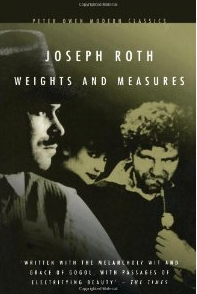
Joseph Roth: Weights and Measures – Das falsche Gewicht (1937)

Weights and Measures

How does an upright, steadfast man survive among corruption, hypocrisy, and crime? Roth’s answer to this question, which lies at the heart of Weights and Measures – Das falsche Gewicht, is pretty simple: he doesn’t. Either he is tainted or he will go down.

Anselm Eibenschütz, a former officer, leaves his soldier’s life behind and becomes the inspector of weights and measures in Zlotogrod. He hasn’t changed profession by choice but because his wife urged him too. The change is hard on Eibenschütz. He’s not used to this region; it’s colder and rougher than where he used to live, and he isn’t cut out for the job. It’s not to his liking and since he is incorruptible and upright, he clashes with the merchants of the region. Hardly anyone conducts honest business. They all rely on extra-money, coming from the use of false weights and measures and smuggling. While the old inspector was open to bribes, Eibenschütz is not. He reports every single misconduct and sends even the poorest to prison. A kind man at heart, this is especially hard on him. He doesn’t want to punish those who have nothing, but can’t make exceptions because the richer would find out and he would be denounced. He finds ways to help the poor though. Either he doesn’t check on their shops or he warns them somehow.

Eibenschütz blames his wife for his misfortunes. Why did she have to talk him into leaving his former life? He begins to hate and neglect her and when he finds out she’s cheating on him, it offers him an excuse to neglect her even more.

In the province of Zlotogrod is a border tavern that is visited by smugglers. Jadlowker, the owner, is a profiteer and famous everywhere for his criminal activities. He lives with a beautiful gypsy woman, Euphemia. When poor Eibenschütz sees her for the first time he falls in love and becomes a regular customer.

From that moment on it goes downhill for Eibenschütz. Even though he is able to arrest Jadlowker and is named supervisor of the tavern, he doesn’t find happiness, but turns into an alcoholic. Eibenschütz isn’t the only one who is tested. There’s an unseasonably warm winter towards the end of the book; a cholera epidemic breaks out and kills hundreds. Because people fear to touch the dead, prisoners are used as undertakers. Jadlowker grabs the opportunity and flees. The end of the book is foreseeable and tragic.

I thought this was an absolutely remarkable novel for many reasons. The main theme is the clash between an honest man and a corrupt system, but what is amazing is how the story unfolds in front of the background of the disintegrating Austro-Hungarian monarchy and serves as a mirror. The book really gives you a feel for how huge this monarchy was, how extended, and how many cultures were part of it.

What I liked most is how Roth used the descriptions of the place and the weather to show Eibenschütz’s emotions and to underline the wild remoteness of this region. There were many beautiful small scenes and episodes. Eibenschütz is upright and stiff, but he’s also very emotional and feels deeply. His life as a soldier sheltered him emotionally; experiencing heartache and passion, unhinges him. When he falls in love he discovers nature. Before his “awakening” nature is just a phenomenon he sees but barely notices. The changing seasons bring rain or snow, breaking ice or sunshine, but that doesn’t affect him. Once he’s “awake” he feels the seasons, feels he’s part of it.

Weights and Measures is a wonderful book. Short, complex, and filled with poetic descriptions. Knowing that Roth battled alcoholism all of his life, gives Eibenschütz’ descent into alcoholism an even deeper meaning.

Here’s a wonderful review by Max (Pechorin’s Journal) which contains quotes.