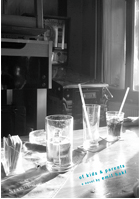
Emil Hakl: Of Kids and Parents – O rodičích a dětech (2002)

Of Kids and Parents

I have Stu of Winstonsdad’s Blog to thank for bringing this little gem to my attention. Since he’s hosting an Eastern European Literature Month this March, I thought it was fitting to choose Hakl’s novel as my first contribution.

Emil Hakl is a Czech writer who has published poetry, short stories and novels. His novel Of Kids and Parents won prizes and was even made into a movie called Of Parents and Children.

A forty-year-old son and his seventy-year-old father spend an afternoon and evening walking through Prague, stopping at different pubs and bars, drinking heavily, and talking about everything. There is nothing these two men don’t find worthy as a topic of conversation. Air plane types, nasty drinks, WWII, women, ambition, history, trees, cooking . . . They exchange stories of their lives, tell each other anecdotes, reminisce, quarrel about who knows more about something, who has the better taste. The language is hefty, the way they talk very open. After only a couple of pages two very distinct characters come alive. And we feel we are there with them, downing one juniper brandy after the other, mocking other patrons, and living an intense moment of authentic communication.

We learn a lot about these two men. The stories of their lives, how they were marked by their times, what they think about current politics. They don’t always see eye to eye with each other. The father often interrupts the son to add some piece of information. The son gets upset because the father’s too loud, too unselfconscious. Nonetheless they are always attentive and genuinely interested in each other. They know each other’s tastes and foibles and they care about each other.

While we follow them on their walk, we get introduced to a Prague that’s far from the Prague a tourist would see. They don’t walk down big streets lined by Jugendstil houses, but down alleys that reek of piss and whose recent industrial buildings are already in decay.

Both characters think of themselves as ordinary but the way they talk, the way they see things, and the intensity of their interest in everything and everyone makes these two men far from ordinary.

Here are a few samples.

“So, what’s new?” I asked

“Nothing’s been new in this world for more than two billion years, it’s all just variations on the same theme of carbon, hydrogen, helium, nitrogen,” Father said.


“I’ve been saying to myself for a long time now that one of the few dignified forms of employment in this world is to be a hired killer, too bad I didn’t take it up when I was young,” Father said, “I don’t mean in relation to this lot, a hired killer has to be free of all emotions and that’s what’s nice about it . . . You sure don’t want any chicken?”


“I remember it like it happened the day before yesterday because it was the first time I’d seen real tanks. What a rush! The motors roared, smoke hung above the woods, the tanks rumpled along one after another, and still there was no end to them! And we stood until the afternoon. Granddad shook his fist at the but I waved at them, secretly so he couldn’t see it . . . . I remember one tiny officer with a moustache and one of those broad flat caps of theirs who kept looking round at us from an armoured car and he just couldn’t get it: grandfather threatening, little boy waving . . . “


While reading this I was wondering if there are similar books out there from a mother/daughter point of view. I’d be glad for any suggestions/recommendations. It would be interesting to see how they compare in terms of topics, setting etc.

As I said, I’m really grateful Stu suggested this book. I loved every moment of it. It’s so rich, intense, and full of life. But also highly intelligent and lucid. It says a lot about being human and getting older. About history and how it repeats itself again and again. And about the humans who think they are the crown of creation while they are not. And I shouldn’t forget to mention that, at times, it’s a very funny book.
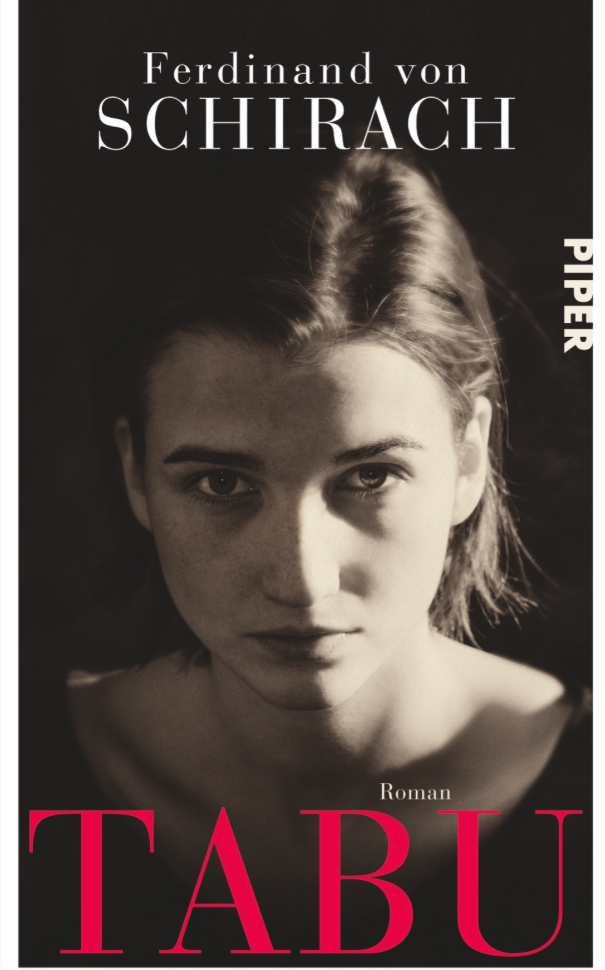
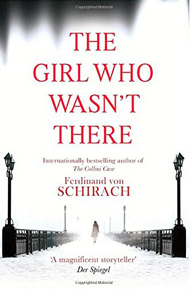
Ferdinand von Schirach: Tabu (2013) – The Girl Who Wasn’t There (2015)

Tabu

I bought Ferdinand von Schirach’s last novel The Girl Who Wasn’t There  –  Tabu (Taboo) when it came out in German, but didn’t feel like reading it until now. Meanwhile it’s available in translation and I’ve seen a few reviews on English blogs.

Since I liked his first books  Crime – Verbrechen, Guilt – Schuld, and The Collini Case – Der Fall Collini I was looking forward to The Girl Who Wasn’t There. I didn’t expect a crime novel per se, as von Schirach, even when he writes about crime, is more interested in justice and human dignity than crime-solving or reasons for committing a crime. He recently published a book of essays, which all circle around the idea of human dignity. No surprise then that Tabu wasn’t a “proper” crime novel. So, that’s not the problem I had with this book. My biggest problem was the style and that I felt he didn’t really have a story, only themes he wanted to explore.

Interestingly the reception in English-speaking countries – by professional critics and bloggers – is far more favourable than the reception in Germany. Could it be that the translation improved the text? I don’t think that’s the reason but you never know.

I like spare prose and it served von Schirach well in his first two story collections. His prose was still quite alright in The Collini Case, but it drove me up the wall in this novel. The prose isn’t only spare but clumsy. His overuse of parataxis and short main clauses just didn’t feel right. Parataxis is often used to convey a feeling of alienation. Of course, if a character, like the main character Sebastian von Eshburg, feels dead inside because his father committed suicide when he was only a kid – there must be a feeling of alienation, nonetheless, I would have hoped von Schirach would have tried to convey it in another way.

The book is divided into several parts; each has a color as its title. The longest parts tell about von Eschburg’s childhood and how he became a famous artist. Then we see a man being questioned and threatened by a police man. The next part has another narrator – defence lawyer Biegler. That part is much more lively. Biegler is a lusty, driven man. An interesting character. He accepts to defend von Eschburg, who is accused of murder, because he suspects von Eschburg has confessed a crime he might not have committed. The last parts are dedicated to the trial and its outcome.

Overall I didn’t care for this book. I’m familiar with von Schirach’s themes by now and I found the essay collection more interesting than this novel. The style, as I said, is annoying in German. Nonetheless there were parts I liked. Biegler’s chapter is great because Biegler is a great character. I also enjoyed reading about von Eschburg’s childhood because the setting von Schirach chose – the Swiss Graubünden region – brought back childhood memories.

Unfortunately I can’t say this is a must read. It has interesting elements but that wasn’t enough for me. Since some of the main topics are important – violence, the representation of sex and violence in art, sex trafficking, torture – it could still be a good choice for a book group.

A last comment on the title. The German title refers to the main theme, while the English title refers to the alleged crime.

The Girl Who Wasn't There

Literary Lost – Viewing Television Through the Lens of Literature

Literary Lost

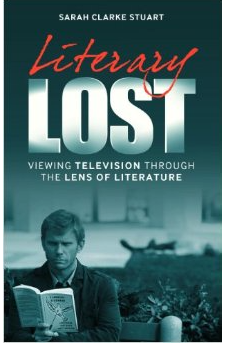
Years ago I caught two episodes of Lost on TV and thought it might be a series I’d enjoy. Only it was aired too late for me, so I gave up. A while ago I discovered Sarah Clarke Stuart’s book Literary Lost, which analyses the use of works of fiction in the series. Those familiar with Lost probably know that far over 70 books are used, mentioned, discussed, and alluded to in the series.

Some of the books are important because different characters read them. Others have influenced story lines. Others have the same themes and motives. The books are mostly literary fiction.

Some of the most important books which are used repeatedly are the following: Heart of Darkness, Alice’s Adventures in Wonderland, Robinson Crusoe, Watership Down, Moby Dick, Lord of the Flies, Our Mutual Friend, Of Mice and Men, A Wrinkle in Time, Ulysses, The Odyssey, The Wonderful Wizard of Oz, The Stand.

Some books that are equally important but not mentioned as often are: The Brothers Karamazov, Slaughterhouse Five, The Third Policeman, The Invention of Morel, Everything That Rises Must Converge.

The Crying of Lot 49 is never mentioned but it’s narrative plays an important role for those trying to understand the end of Lost.

After I started reading the book, I finally also started to watch the series. I must say, looking at it from a literary perspective makes for really exciting watching. With the exception of Adolfo Bioy Casares The Invention of Morel, I think I own almost all the books that are important in the show and have read many. Just last week I finished The Wonderful Wizard of Oz.

Sarah Clarke Stuart writes in Literary Lost that the series’ use of books was so influential that it has turned non-readers into readers, rekindled the interest of some who stopped reading, and has even led to higher sales for some books like Flann O’ Brien’s The Third Policeman.

Lost has also led to special book clubs in which people don’t only discuss the series but the books that are featured. It’s not surprising that there were challenges to read all of the titles.

Sarah Clarke Stuart’s book does more than just add another layer to the viewing experience. It shows that some TV series can offer more than pure escapism and are exciting narratives in their own right. She shows that Lost is a great example of a neo-baroque series:

In the case of Lost’s hyperconscious literary references, “nostalgic reverence” is usually the motive. The on-screen appearance of a book suggests certain themes, while paying homage to that particular work. Furthering the postmodern understanding of Lost, more than one academic observer has identified the “neo-baroque” qualities of the show, using the model that Angela Ndalianis provides in her book Neo-Baroque Aesthetics and Contemporary Entertainment. Intertextuality is a central prong of her neo-baroque construct; she explains that a text’s allusions create “folds” and “labyrinthine” impression. Neo-baroque narratives draw the audience into potentially infinite or at least multiple directions that rhythmycally recall what Focillon labels the “system of the labyrinth”.

Of course there are similar books on other TV series. I’ve got one dedicated to Six Feet Under (Reading Six Feet Under – TV to Die For) and at least half a dozen who study Buffy the Vampire Slayer and one or the other focussing on Veronica Mars.

I know this is a bit of a disjointed post, but I just wanted to share my enthusiasm for the series and the book. I was hoping that someone might be tempted to watch/re-watch Lost and that we might be able to discuss some of the topics and books. Or that those who love the series but were not aware of Literary Lost might pick it up.

I was wondering if anyone has read Bioy Casares The Invention of Morel. It’s the book mentioned in the series I’m most tempted to read at the moment.

Have you watched the series? Did it make you pick up some books?

Literature and War Readalong March 31 2015: The Disappeared by Kim Echlin

The Disappeared

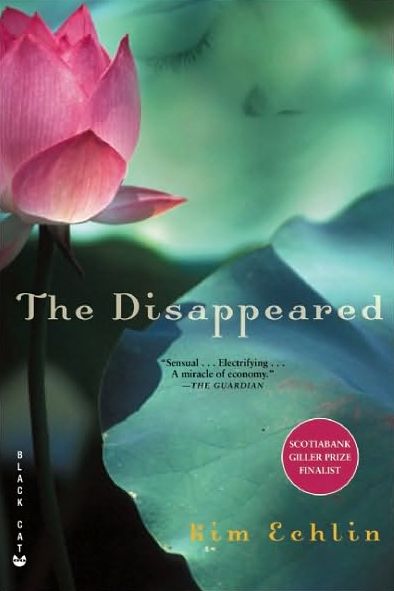
Kim Echlin’s novel on the war in Cambodia is the first title of this year’s Literature and War Readalong.

I chose The Disappeared for various reasons the most obvious being that we haven’t read anything on the war in Cambodia so far. The fact that it was nominated for many awards and has been translated into 19 languages made it a worthy choice as well. Another reason was that it came highly recommended by one of my favourite bloggers (Gavin from Page247) who sadly has stopped blogging in 2013.

Kim Echlin is a Canadian author, journalist, and educator. She has published a couple of other novels before The Disappeared and a new novel is due this year.

Here are the first sentences

Mau was a small man with a scar across his left cheek. I chose him at the Russian market from a crowd of drivers with soliciting eyes. They drove bicycles and tuk tuks, rickshaws and motos. A few had cars. They pushed in against me, trying to gain my eye, to separate me from the crowd.

The light in Mau’s eyes was a pinprick through black paper. He assessed and calculated. I chose him because when he stepped forward, the others fell back. I told him it might take many nights. I told him I needed to go to all the nightclubs of Phnom Penh. The light of his eyes twisted into mine. When I told him what I was doing, the pinprick opened and closed over a fleeting compassion. Then he named his price, which was high, and said, I can help you, borng srei.

And some details and the blurb for those who want to join

The Disappeared by Kim Echlin (Canada 2009), War in Cambodia, Novel, 336 pages.

After more than 30 years Anne Greves feels compelled to break her silence about her first lover, and a treacherous pursuit across Cambodia’s killing fields. Once she was a motherless girl from taciturn immigrant stock. Defying fierce opposition, she falls in love with Serey, a gentle rebel and exiled musician. She’s still only 16 when he leaves her in their Montreal flat to return to Cambodia. And, after a decade without word, she abandons everything to search for him in the bars of Phnom Penh, a city traumatized by the Khmer Rouge slaughter. Against all odds the lovers are reunited, and in a political country where tranquil rice paddies harbour the bones of the massacred, Anne pieces together a new life with Serey. But there are wounds that love cannot heal, and some mysteries too dangerous to know. And when Serey disappears again, Anne discovers a story she cannot bear.

Haunting, vivid, elegiac, The Disappeared is a tour de force; at once a battle cry and a piercing lamentation, for truth, for love.

Literary fiction of the highest order, this is an unforgettable novel set against the backdrop of Cambodia’s savage killing fields.

*******

The discussion starts on Tuesday, 31 March 2015.

Further information on the Literature and War Readalong 2015, including all the book blurbs, can be found here.

Deborah Levy: Swimming Home (2011)

Swimming Home

Picture this—A dark road in a mountainous area, in the South of France at night. It’s summer. The sound of insects in the dark. A couple is talking in a car. The woman, Kitty Finch, is driving the car. The conversation is slightly off. The atmosphere brooding. That’s how Deborah Levy’s novel Swimming Home begins. Then it rewinds and we learn how the two people ended up in the car together. In the first chapter a red-haired woman swims naked in a pool. The people who have rented the villa to which the pool belongs are watching her. They have no clue who she is. Finally, Isabel, a war correspondent, and the wife of a famous poet, Joe, jumps into the pool, grabs the young woman by her ankle and forces her to leave the water. Other people have watched the scene. An elderly therapist,who rents the villa next door, Joe, the famous poet, Laura and Mitchell, family friends, and Nina, Joe’s and Isabel’s teenage daughter. Kitty Finch tells them that there was a mix up in the dates. Jurgen, the caretaker of the villa, has made a mistake. They are all enthralled by Kitty Finch, her striking red hair, her beauty, her green finger nails and the fact that she skinny dips in the pool of strangers as if it was the most natural thing in the world. But what is even more surprising – Isabel offers her a spare room.

Inviting a mysterious stranger is daring at the best of times, but inviting someone who behaves as oddly as Kitty Finch is downright reckless. Soon it’s obvious that her presence upsets an already fragile balance and people start to show what they were hiding behind their masks. The reader senses—something bad will happen.

Writing more would spoil this wonderful book. I truly admired Deborah Levy’s understated style. The book felt fresh, uncluttered, like a well-aired room. Everything she writes reminds you of something but proves to be very different in the end. People never say what you would expect them to say. On the other hand Swimming Home was one of those books I couldn’t read without being constantly reminded of other books or movies. I suppose that’s because the setting, the South of France, is so charged with meaning. I was reminded of Françoise Sagan’s novel Bonjour Tristesse, which has equally unhinged characters, desire and raw emotions at its heart. The movies La Piscine, starring Alain Delon and Romy Schneider, and Swimming Pool, starring Charlotte Rampling, came to my mind as well.

I also liked that Deborah Levy used so many point of view characters. The POV changes in every chapter and it’s not always clear who is the main character. Kitty Finch who serves as a catalyst for each of the other characters or Nina, the teenage daughter on whose POV the book ends? Or the poet who seems to occupy the emotional centre?

I’ve owned a copy of this novel for some time, but Violet‘s recent post was the reasons I picked it up finally.

Elizabeth Jane Howard: After Julius (1965)

After Julius

It is twenty years since Julius died, but his last heroic action still affects the lives of the people he left behind. Emma, his youngest daughter, twenty-seven years old afraid of men. Cressida, her sister, a war widow, blindly searching for love in her affairs with married men. Esme, Julius’s widow, still attractive at fifty-eight, but aimlessly lost in the routine of her perfect home. Felix, Esme’s old lover, who left her when Julius died and who is still plagued by guilt for his action. And Dan, an outsider. Throughout a disastrous – and revelatory – weekend in Sussex, the influence of the dead Julius slowly emerges.

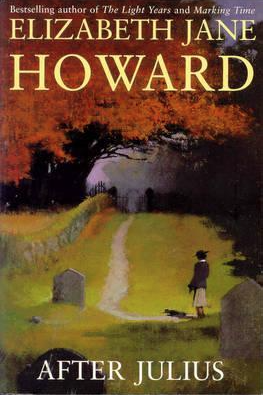
Elizabeth Jane Howard is best known for her Cazalet Chronicles, which I haven’t read yet. I don’t know where I came across After Julius, I only know I liked the premise. I’m drawn to stories that deal with the aftermath of an action. While After Julius is more complex than that, all the characters are affected by Julius’ last heroic action, which took place during WWII, twenty years before this story begins.

After Julius is divided into three parts; each part is subdivided into several chapters, each of which is told by another narrator. In lesser hands this might have turned into a fractured story, but Elizabeth Jane Howard is a very skilful writer and, while each chapter is told in a distinct voice, the whole feels seamless.

The narrators are Esme, Julius’ fifty-eight-year-old widow, Cressy, her older daughter, Emma, her younger daughter, Dan, Emma’s friend and Felix, Esme’s former lover. These five people, plus a married couple and an old Major meet for a dinner at Esme’s house in the country.

In the first part we see them all get ready for the weekend. Cressy and Emma live together in a dingy flat in London. Emma works in her late father’s publishing house, while Cressy struggles as a pianist. Like her mother, Cressy’s been a widow since the last war. She’s a great beauty, one of those that make whole rooms go quiet when she enters. A bit like Lily Bart. And, like Lily Bart, her beauty isn’t doing her any good. She attracts many, mostly married men, and all of her affairs end in drama and tears. When we meet her first she’s crying and thinking of ending it with her current lover Dick. Esme lives luxuriously in a big house in the country. Her only occupations are her garden, answering letters, planning meals and instructing the housekeeper. Dan’s a struggling poet and Felix is a doctor, who has spent most of his life abroad.

The dinner turns into a disaster for many reasons. Felix, who is Cressy’s age, was once her mother’s lover. He left her when Julius died and they haven’t seen each other in twenty years. Cressy’s lover is the husband of the woman, Esme invited for the dinner. The friend Emma brings along is an eccentric poet that she’s met only a few hours ago and invited spontaneously.

The last part of the novel shows each character after the disastrous meal.

The plot isn’t the most important thing in this book. What is amazing is how true to life these characters are. How we get to see their vulnerabilities, their disappointments, their hidden motivations. It’s a very outspoken book. Whether it lays bare the hopes of the protagonists, their sexual desires, or their life choices, it’s so honest, it’s occasionally painful to read. We forget that these are characters on paper and think we’re actually looking into someone’s soul.

It’s a beautiful book and a tragic one. We can’t help but wonder—when did things start to go wrong? While Julius’ death sets things in motion, it’s not the real beginning of the drama.

Esme is by far the most tragic character. She’s looking forward to seeing Felix again. Although he’s fourteen years younger, she hopes that there could finally be a future for them. She never assumes that he may have come for other reasons.

I found it hard to believe at times that this book was written in 1965. The open discussion of abortion and sexuality seemed far more modern. It made me wonder if we’re not living in more prudish times now.

Before ending this post I have to mention Elizabeth Jane Howard’s descriptions. They are stunning. When she describes a room, a scene, clothes, anything, she makes full use of these descriptions. It’s never just a random description but it always contributes to the understanding of a character, enhances the mood, sets the tone.

It’s still early but I wouldn’t be surprised if this book would be among my best of this year. Since she reminded me of many writers I absolutely love —Elizabeth Taylor, Rosamond Lehmann, Jean Rhys, Elizabeth Bowen — I know I’ll be reading more of her.

Do you have a favourite Elizabeth Jane Howard novel?


Laura Kasischke: Mind of Winter (2014)

Mind Of Winter

I wonder sometimes whether authors prefer we read their books very slowly, savouring every word or whether they take it as a compliment if we devour a novel in one sitting. I don’t think Laura Kasischke’s going to pop in and let me know how she feels about the way I read her latest novel Mind of Winter. I bought it, started reading on the tram, kept on reading at home – resenting even the shortest interruptions – and finished it a couple of hours later. I don’t do that very often and if I do, it means that I found a book highly enthralling and couldn’t wait to find out what’s going on. Not a bad thing for a psychological thriller, right?

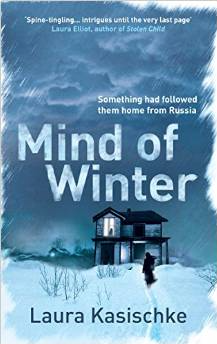
Mind of Winter (which I discovered on Tony’s Book World here) takes place on December 25, during one snowy day. Holly Judges, a poet, who has been suffering from writer’s block for decades, wakes late on Christmas morning. Her husband dashes out the door to get his parents at the airport, their daughter Tatty – Tatiana – is still sleeping. Holly, who woke from a nightmare, tries to make sense of a sentence that haunted her when she woke up “Something had followed them from Russia.”

Moving back and forth in time we hear about the adoption of Holly’s daughter, thirteen years ago, from a Russian orphanage and we witness how this Christmas day develops. It’s snowing constantly and after a few hours it’s obvious that neither friends nor family will make it and join Holly and Tatty for their traditional Christmas meal.

Inside of the house tensions rise. Tatiana not only displays the moodiness of a teenager but behaves more and more erratic.

There are many dark elements of the past mentioned – dead animals, neighbours who don’t speak to Holly anymore, a family history of hereditary cancer and much more. In the beginning there are just a couple of words that hint at something sinister but then, more information is added on every page, a fuller picture emerges and the reader is wondering constantly what really happened in the past and what is going on in the present.

Saying more would spoil this utterly compelling novel. There’s just one tiny thing that I feel I have to reveal—while the atmosphere is dark and brooding, and the book is more than a little creepy at times, there’s no supernatural explanation. As much as I love ghost stories, I really hate it when a psychological thriller takes the easy way out and uses some lame paranormal explanation for the things that go on.

This is a tightly woven novel, a real page-turner, but still a book that explores a huge amount of interesting themes like hereditary disease, writer’s block, poetry, motherhood, family  . . .  I know I’ll be returning to this author soon.

Laura Kasischke isn’t only a novelist, she’s also a poet. It’s not surprising that poetry is important in this book. I’m grateful that she introduce me to a whole bunch of poets I didn’t know and to the poem referred to in the title,  Wallace Stevens’  The Snow Man.

The Snow Man

One must have a mind of winter
To regard the frost and the boughs
Of the pine-trees crusted with snow;


And have been cold a long time
To behold the junipers shagged with ice,
The spruces rough in the distant glitter


Of the January sun; and not to think
Of any misery in the sound of the wind,
In the sound of a few leaves,


Which is the sound of the land
Full of the same wind
That is blowing in the same bare place


For the listener, who listens in the snow,
And, nothing himself, beholds
Nothing that is not there and the nothing that is.