On Friedrich Ani’s Naked Man, Burning – Nackter Mann, der brennt (2016) German Crime at its Best

I discovered Friedrich Ani on the list for the German Book Prize. Several years, until 2016, he occupied the second place. Last year, finally, he won the prize with his novel Der namenlose Tag – The Nameless Day. If I’m not completely mistaken, that will be his first English translation. It’s due out in December.

I’m surprised he hasn’t been translated earlier as he’s published so much. If Nackter Mann, der brennt Naked Man, Burning – is anything to go by, this was a huge omission. He’s fabulous. This novel reminded me a lot of Pascal Garnier’s novels, only I’d say, Ani’s better; his writing is more original. The way he plays with words, uses quotes from songs or films, his interesting sentence structures and the way he combines words is unique.

Naked Man, Burning is a dark tale, a real noir. Coelestin fled his home village at the age of fourteen. Forty years later, under a fake name and looking nothing like he used to, he returns. The book opens with Ludwig getting ready for a funeral. This is how the novel begins (my translation)

Praised be Jesus Christ, I thought, crossed myself and opened the door to the storeroom, where my guest was hatching his fear. He stared at me and I closed the door again. This was going to be a day to my liking.

Soon the reader understands that Ludwig doesn’t only hold someone captive but that he might have had something to do with the death of the person being buried.

Why did Ludwig disappear? Why did he change his name and looks? And why is he threatening older men? The reader knows very quickly that they are responsible for a  lot of ugly things that happened a long time ago. Bit by bit we learn what that was and then we watch, with uneasy fascination, how Ludwig illustrates the old saying – revenge is a dish best served cold.

I hope this book will be translated. It’s chilling, original, dark, and has a pretty unexpected ending. And the strong voice and language are so amusing, eloquent, and fresh. I can assure you, there aren’t many crime writers like Ani.

I picked this book because the premise appealed to me and because it’s a standalone. Most of his other novels are part of  a series.

Marguerite Duras: The War – La douleur (1985) Literature and War Readalong April 2017

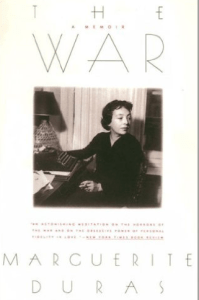
Marguerite Duras’ affecting book The War – La douleur  is a collection of texts based on her war diaries. Before beginning my review, I have to mention that I’ve read the French edition and don’t know how close to the English it is. It seems that the two last texts, two short stories, have been left out in the English edition but I could be wrong. I’m not going to review them here. Each of the texts covers another time period.

1945

La douleur – The pain is the first text in the book and is also the longest and appears to be the only one that she left as she found it. Duras said that she couldn’t remember writing this diary and that, to her, it seemed more powerful than any of the literary texts she’d ever written. La douleur, which was written during April 1945,  describes in painful details, how Marguerite Duras waited for the return of her husband, Robert L., a member of the resistance, who had been deported to Buchenwald in 1944.

Duras managed to convey the anxiety of those waiting and the incredible difficulties to take care of someone who came back. They knew to which camp Robert had been brought and so, knowing the Germans had lost the war, they followed the news closely and went to the centres to which those who returned came and questioned them. Duras knew that Buchenwald had been liberated, but she didn’t know if by that time Robert was still alive. Once she found someone who had seen him, there was still the fear that he might have been among those shot by the fleeing Germans. Why, she wonders did they shoot them just minutes before the arrival of the Allies? In Buchenwald alone 51,000 were shot, while 20,000 survived. Possibly, he was among the survivors but if so, he might still die of exhaustion or an illness. A little later, when they hear that the German cities are literally burning, another anxiety joins the fears she had before. He might be trapped in a fire storm and get killed that way.

In the end, two of her friends travel to dacha (Robert had been moved a few times) and bring him back. Before they arrive, they warn her – she might not recognize him. The tall man weighs a mere 38 kilograms and looks horrific. He’s very ill and his survival is almost a miracle.

1944

Monsieur X – Pierre Rabier is the second text in the collection. It describes the cat-and-mouse game a Gestapo official plays with Marguerite Duras. He pretends her husband hasn’t been deported yet, meets her often, wants to have an affair with her. He may think he’s the stronger one, but Duras plays a game with him as well. She learns everything about him and later uses it to help sentencing him to death.

After the war

Albert des capitales and Ter le milicien both describe how Duras and other members of the resistance take part in torturing and forcing people to give them information that will lead to their or other people’s sentencing. In these two pieces she changed names and wrote about herself in third person, calling herself Thérèse.

I wasn’t sure what to expect from this book. I’m familiar with Marguerite Duras and love her writing but I still thought this would be just another WWII memoir. It isn’t. Most memoirs fous either on the war – on the battle field or the home front – or on the camps. I don’t think I’ve ever read a memoir by someone who was waiting for someone and about the challenges of the return. There’s so much going on in these pages. Every day, there’s a new anxiety regarding her husband and every day the people in France find out more details about the war. The French sent 600,000 Jews to the camps. One in 100 came back. They didn’t know any details about the camps until the end of the war. Other arresting details capture that for France the end of the war also meant the end of the occupation. Or what it was like to see Paris at night illuminated again.

As I wrote before, some of the texts deal with what happened to collaborators. Duras seems to have taken an active part in their arrest and punishment. I couldn’t help but wonder what I would have done. I can absolutely not imagine myself watching someone being tortured or even torturing someone.

There were also aspects that were especially interesting for me, as a French person, because the liberation and its aftermath, the coming to power of de Gaulle have led to problems France is battling to this day. Marguerite Duras mentions that de Gaulle only wanted to emphasize that the Allies won the war. He didn’t mention the camps, nor did he want them mentioned because it had to be about glory not about pain. Possibly this explains the choice of title because she thinks you have to discuss the pain. You have to hear the people who suffered. I’m afraid that the logic behind not mentioning the camps isn’t only linked to “glory” and such. If you don’t talk about the camps, you don’t need to talk about those who were deported to the camps and the people who sent them there. Ultimately, this leads to the refusal to admit responsibility and the denial that there were collaborators.

French politics aside, this is one of the most important WWII texts I’ve ever read. The writing is tight, evocative and detailed, just what I had expected from Marguerite Duras.


Other Reviews

My Book Strings


*******

The War – La douleur is the fourth book in the Literature and War Readalong 2017. The next readalong is dedicated to war poetry. Discussion starts on Wednesday 31 May, 2017. You can  find further information on the Literature and War Readalong 2017, including the book blurbs here.

Three Short Reviews – Eva Moves the Furniture (2001) – A New Dawn (2016) – Mariana (1995)

It’s only April but I already have an incredible review backlog from this, and an even greater one from last year. If I wanted to review everything I’ve read, I’d end up publishing three or four times a week. That’s not going to happen. This means it’s time to do a few short reviews.

Margot Livesey was born in Scotland but now lives in the US and teaches at Emerson College. One of her more recent novels, The Flight of Gemma Hardy, a retelling of Jayne Eyre, was very successful. I can’t remember where I heard of Eva Moves the Furniture, but I remember whoever mentioned it was full of praise. I can see why. It’s a lovely book. A blend of historical fiction and magical realism. Think— Pat Barker (or Helen Dunmore) writing a book with Alice Hoffman.

Eva Moves the Furniture tells the story of a life. Eva’s mother dies in childbirth and Eva grows up with her dad and one of his sisters. It’s quite an idyllic childhood, even though Eva has no mother. She has her dad and her aunt and two invisible companions who protect her and keep her company. At times, it seems they might not be as good-natured as Eva believes, but then again they help her when she needs it most. It will take the whole novel for her and the reader to discover their true intentions and figure out their identity.

The story is divided into four distinct parts, which are all equally beautiful. Part I, Ballintyre, tells of Eva’s childhood. It spans the years after WWI until the beginning of WWII. In part II, Eva is a nurse in Glasgow in a hospital for severely wounded soldiers. She falls in love with a doctor who is an expert in reconstructive surgery. Part III is set near Perth, where Eva is a matron at a boys’ school. Part IV, the most mysterious of the four parts, is told in second person. Eva is talking directly to her newborn daughter.

Lovers of historical fiction and those who love magical realism will both enjoy this subtle, enchanting tale.

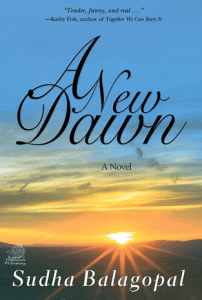
A New Dawn is Sudha Balagopal’s first novel. She previously published two collections of short stories. We are members of the same writers’ group and so I was familiar with her short stories, which I like very much. When I heard she’d published a novel, I couldn’t wait to read it. Sudha was born and raised in India and now lives in Arizona where she writes and teaches yoga.

A New Dawn tells the story of 49-year-old Usha. She has been a widow for two years and her daughter and friends urge her to start dating again. But dating isn’t an easy thing for Usha—she has never done it before. The story is told in a dual timeline. One part, beginning in 1985, reveals the backstory. Usha’s marriage to Arja was arranged. In 1985, she left her native India and followed him to the US. This part is the story of an emancipation. Usha is a young, inexperienced bride, in a foreign country, married to a dominant, at times bullying man. With fascination she watches how her daughter, born and raised in the US, becomes a very different kind of woman. While her marriage is anything but easy, she’s come to trust and respect her husband. When he dies, it’s a terrible shock. The second timeline, set in 2012, is very much a romance. Usha meets someone who attracts her instantly but her complex past and her doubts make this anything but smooth. She realizes that she’ll have to overcome more than one obstacle before she’ll be able to be with someone new.

I enjoyed A New Dawn especially for its insight into another culture and for its lovely tone. I also loved the setting. I have never been to Arizona, but I feel I know what it must be like in summer. The descriptions are so evocative. Usha is such an endearing character and following her on her journey to find new love, is moving. Although this is a book about another culture it adresses universal, topical questions. How do you move on after loss? And how do you meet someone when you’re over forty? It’s not as easy as it is for younger people. Usha’s choice is the internet, which has become one of the most important means to find a partner.

A New Dawn is a very warm, engaging novel that mixes contemporary literature with romance. My only reservation is a matter of taste. A New Dawn is written in close third person POV. At times, it was a little too close for me. Many readers love to be privy to the thoughts and reasonings of characters. If you’re one of them, you’ll love this.

If you’d like to find out whether this is a book for you, you can read the first chapter of this novel here, where it has been published as a short story.

Many of Sudha’s short stories are available online. You can find them on her website.

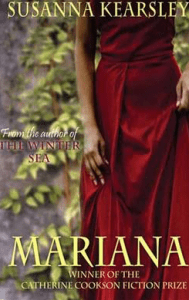
Many bloggers love Susanna Kearsley’s books. Since I’m fond of time-slip novels, I was keen on trying one of her books. Mariana was the one that tempted me the most. I got it last year, in summer, and read it pretty much in one sitting. It was a peculiar experience because I didn’t love it at first, but it kept on haunting me. The images, the story, the characters were so vivid, it felt like I’ve read the book yesterday.

What is it about? As a child Julia Beckett falls in love with a house. The connection to the house is strong and it almost feels as if she’s lived there before. When she’s much older she buys Greyweathers and moves in. The house soon becomes a portal to another life, a life set in 17th century England, the time of the Great Plague and the Great Fire of London. (These aren’t the topics of the story, they are just the reasons why it begins). In this other life, Julia is called Mariana and lives a dangerous forbidden love.

I loved the descriptions of the house and its surroundings. I also loved to read about Julia’s life there, the friends she makes. Of course, there’s also a love story. The time-travel bits were captivating too. Unfortunately, there’s a huge twist at the end that was the reason why I didn’t love the book. Not so much because of the twist as such, as because of its psychological implications. I can’t say more or I would spoil the book. Let’s just say, it wasn’t believable. Nonetheless, because this story has stayed so vivid in my mind and I can still remember it almost half a year later, I still recommend it. If you like time-travel books you might enjoy this.

Han Kang: The Vegetarian – 채식주의자 -Chaesikju-uija (2007) Korean Literature

Ever since The Vegetarian  (채식주의자 – Chaesikju-uija) won the Man Booker International Prize for Fiction last year, I wanted to read it. I’m so glad I did. It’s so different from most other novels I’ve read recently; it’s mysterious, fresh, and powerful. It made me think of Yoko Ogawa and Kafka.

Han Kang was born in Gwangju, South Korea. Her writing has won many prizes. She currently teaches creative writing in Seoul.

The Vegetarian is divided into three parts, each told by another narrator who is related to the main character Yeong-hye, the vegetarian of the title.

Part 1, The Vegetarian is told by Yeong-hye’s husband. He is an ordinary office worker, while she’s a housewife. Things are not great between them but the marriage seems to work anyway until the day Yeong-hye decides she wants to be a vegetarian. She’s had upsetting nightmares and feels the urge to become a plant. What follows is quite shocking. This seemingly simple decision has unbelievable repercussions. Her refusal to eat meat triggers a flood of violence, especially from the men in the family. Her husband treats her sadistically; her father beats her. The women are baffled as well but they do not react so violently. During a family reunion, things escalate and Yeong-hye almost dies. (Trigger Warning – there’s a graphic description of one of Yeong-hye’s dreams. It’s short, less than a page, but describes a horrible cruelty against a dog. If, like me, you’re sensitive, skip it. I wish, I had been warned).

Part two, Mongolian Mark, is told by Yeonh-hye’s brother-in-law, an artist. Her vegetarianism and the subsequent family drama, trigger a dark and surreal side in him. After he hears that his sister-in-law’s Mongolian Mark is still visible, he becomes more and more obsessed with her. He fantasizes about covering her body in flower paintings and filming her while she makes love with a man whose body has been painted the same way. When he tries to live his fantasy, things get out of hand.

Part 3, Flaming Trees, is told by Yeong-hye’s sister. She’s divorced from her artist husband. At the beginning of this part she’s on her way to a psychiatric hospital. Yeong-hye has been there for months. She has stopped eating because she wants to be a tree. The doctors fear for her life. Her sister tries to feed her, but she also tries to understand her.

At the beginning of this post, I wrote that the book did remind me of Yoko Ogawa and Kafka. Like Ogawa, Han Kang explores the darker sides of passion, sexuality and lust, and like Kafka, she manages to make you feel what she wants to say. I often understood Kafka’s enigmatic stories on an emotional level. I tried to feel what he described, experience the mood, the atmosphere, and that’s how I understood him. Yeong-hye is an enigmatic person and her vegetarianism is about more than not eating meat. It’s a deeper form of vegetarianism. She wants to become a being that cannot harm anymore. The way Han Kang described it we can really feel how violent it is to eat meat. But not only that, the reactions also show us a patriarchal society in which violence is used to keep others in check. That someone wants to do something nobody else does – vegetarianism seems far less common in South Korea than in Western societies – threatens the status quo. Yeong-hye breaks free and this is seen as an act of rebellion that must be punished.

The three parts form a whole but they are very different. The first analyses the society and its patriarchal structure. Part two explores eroticism and sexuality and uses art as a means to symbolise certain aspects. Yeong-hye wants to be a tree but her brother-in-law, who wants to transform her and later himself into a flower, is interested in the erotic aspects of her desire. In part three, finally, psychological aspects are explored. Yeong-hye’s sister is the only person who tries to really understand her and her motivations.

Although Yeong-hye’s vegetarianism comes from other sources than most other people’s vegetarianism, the book is still very realistic at depicting the reactions of those who eat meat. I remember more than one family dispute, especially with my father, when I didn’t want to eat meat. He too, could react aggressively, as if my refusal threatened him. I remember one meal in particular and it still upsets me to think of it. He knew that I didn’t eat meat and when he invited me for dinner, I assumed I would just leave out the meat and eat everything else. But there was nothing else. Just meat in a sauce.

The Vegetarian is beautiful and mesmerising. Its message and images will stay with me for a long time. I loved it.

If you’d like to read another review – here’s Tony’s take on the novel. Those interested in South Korean literature will find many valuable resources on his blog.


Literature and War Readalong April 2017: The War – La douleur by Marguerite Duras

Usually I like to say a few introductory words about my readalong titles, but I’m in bed with the flu and my head feels like it’s filled with cotton. The book has to speak for itself. Luckily, I found the first pages of  the translation of Marguerite Duras’ The War – La douleur online.

Here is the beginning:

I found this diary in a couple of exercise books in the blue cupboards at Neauphle-le-Chateau.

I have no recollection of having written it.

I know I did, I know it was I who wrote it. I recognize my own handwriting and the details of the story. I can see the place, the Gare d’ Orsay, and the various comings and goings. But I can’t see myself writing the diary. When would I have done so, in what year, at what times of day, in what house? I can’t remember.

One thing is certain: it is inconceivable to me that I could have written it while I was actually awaiting Robert L.’s return.

How could I have written this thing I still can’t put a name to, and that appalls me when I reread it? And how could I have left it lying for years in a house in the country that’s regularly flooded in winter?

The first time I thought about it was when the magazine Sorcieres asked me for a text I’d written when I was young.

The War is one of the most important things in my life. It can’t really be called “writing.” I found myself looking at pages regularly filled with small, calm, extraordinarily even handwriting. I found myself confronted with a tremendous chaos of thought and feeling that I couldn’t bring myself to tamper with, and beside which literature was something of which I felt ashamed.

April

Opposite the fireplace and beside me, the telephone. To the right, the sitting-room door and the passage. At the end of the passage, the front door. He might come straight here and ring at the front door. “Who’s there?” “Me.” Or he might phone from a transit center as soon as he got here. “I’m back — I’m at the Lutetia to go through the formalities.” There wouldn’t be any warning. He’d phone. He’d arrive. Such things are possible. He’s coming back, anyway. He’s not a special case. There’s no particular reason why he shouldn’t come back. There’s no reason why he should. But it’s possible. He’d ring. “Who’s there?” “Me.” Lots of other things like this do happen. In the end they broke through at Avranches and in the end the Germans withdrew. In the end I survived till the end of the war. I must be careful; it wouldn’t be so very extraordinary if he did come back — it would be normal. I must be careful not to turn it into something extraordinary. The extraordinary is unexpected. I must be sensible: I’m waiting for Robert L., expecting him, and he’s coming back.

The phone rings. “Hello? Any news?” I must remind myself the phone’s used for that sort of thing, too. I mustn’t hang up, I must answer. Mustn’t yell at them to leave me alone. “No, no news.” “Nothing? Not a sign?” “Nothing.” “You know Belsen’s been liberated? Yes, yesterday afternoon…” “I know.” Silence. “You mustn’t get disheartened, you must hold on, you’re not the only one, alas — I know a mother with four children…” “I know, I’m sorry, I haven’t moved from where I was. It’s wrong to move too much, a waste of energy, you have to save all your strength to suffer.

She said, “You know Belsen’s been liberated?” I didn’t know. One more camp liberated. She said, “Yesterday afternoon.” She didn’t say so, but I know the lists of names will arrive tomorrow morning. I must go down and buy a paper and read the list. No. I can hear a throbbing in my temples getting louder and louder. No, I won’t read the list.


And some details and the blurb for those who want to join

La douleur  – The War by Marguerite Duras, 217 pages, France 1985, WWII

This 1944 diary of a young Resistance member, written during the last days of the French occupation and the first days of the liberation, is only now being published – Duras says she forgot about it during the intervening years, and only recently rediscovered it in a cupboard. The loneliness and ambivalence of love and war have appeared in Duras’ work before, from The Lover to Hiroshima Mon Amour, in which a Frenchwoman reveals to her Japanese lover, after the bomb, that she was tortured and imprisoned in postwar France for her affair with a German soldier. In the first section of The War, Duras the heroine waits for her husband to return from the Belsen concentration camp. When De Gaulle (“by definition leader of the Right – “) says, “The days of weeping are over. The days of glory have returned,” Duras says, “We shall never forgive him.” It’s because he’s denying the people’s loss. When her husband returns, she has to hide the cake she baked for him, because the weight of food in his system can kill. (We are spared no detail of his physical degradation, even to being told the color of his stools.) When he is stronger, she tells him she is divorcing him to marry another Resistance member. In the second section, set earlier, at the time of her husband’s arrest, a Gestapo official plays a cat-and-mouse game with Duras, to whom he’s attracted, preying on her desperation to help her husband. In the third section, post-liberation, she switches roles, becomes an interrogator as Resistance members torture a Nazi informer. She also half-falls in love (with characteristic Duras dualism) with a young prisoner who childishly joined the collaborationist forces out of nothing more than a passion for fast cars and guns. In her preface, Duras says it “appalls” her to reread this memoir, because it is so much more important than her literary work. Certainly, like everything she has written in her spare, impassive voice, the book is at once elegant and brutal in its honesty: in her world, we are all outcasts, and the word “liberation” is never free of irony. A powerful, moving work. (Kirkus Reviews) –This text refers to an out of print or unavailable edition of this title.

*******

The discussion starts on Friday, 28 April 2017.

Further information on the Literature and War Readalong 2017, including all the book blurbs, can be found here.

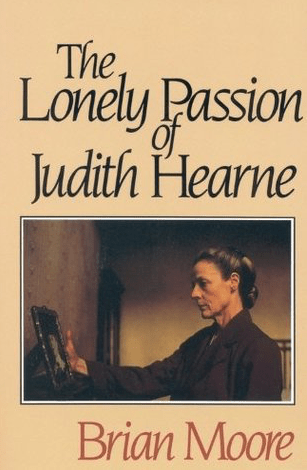
On Brian Moore’s The Lonely Passion of Judith Hearne (1955)

I finished Brian Moore’s The Lonely Passion of Judith Hearne two weeks ago, but am still not sure how to write about it. My reaction to it was very strong; it even gave me nightmares. I wonder if I can do it justice as there’s so much to discuss. It’s excellent and multifaceted and has a lot to say about religion, spinsterhood, family duty, shattered dreams and the woes of being an unattractive woman.

It’s peculiar that after having written two reviews about women who were punished for being too beautiful (Asking For It and Little Deaths), I’m now writing about a book in which the main character suffers, among other things, from being unattractive. Clearly, it’s hard to be a woman.

Judith Hearne is a 40-something spinster who has lived a rather dull and lonely life. Out of a sense of family duty and fuelled by her religious beliefs, she has cared for an ailing aunt until her death. The aunt in question was a rather formidable person and Judith lived under her thumb. Caring for her took up all of Judith’s time. It made it impossible to find love and friendship and now, at 40, she thinks it’s over. Even in her youth she wasn’t good-looking and sadly, age hasn’t made her look interesting. Not yet.

Here’s what she thinks about herself:

She watched the glass, a plain woman, changing all to the delightful illusion of beauty. There was still time: for her ugliness was destined to bloom late, hidden first by the unformed gawkiness of youth, budding to plainness in young womanhood and now flowering to slow maturity in her early forties, it still awaited the subtle garishness which only decay could bring to fruition: a garishness which, when arrived at, would preclude all efforts at the mirror game.

At the beginning of the novel, Judith Hearne has just moved into new lodgings in a shabby boarding house in Belfast. Here’s how the novel begins:

The first thing Miss Judith Hearne unpacked in her new lodging was the silver-framed photograph of her aunt. The place for her aunt, ever since the sad day of the funeral, was on the mantel piece of whatever bed-sitting-room Miss Hearne happened to be living in. And as she put her up now, the photograph eyes were stern and questioning, sharing Miss Hearne’s own misgivings about the condition of the bed-springs, the shabbiness of the furniture and the run-down part of Belfast in which the room was situated.

After she has found a place for her aunt’s picture, she needs to find another one for the Sacred Heart. This beginning shows exactly what kind of person Judith Hearne is. She’s poor and single and the two only things that give her solace are the memory of her aunt and her religion. And a few possessions of value like a watch and pretty shoes with buttons that look like winking eyes.

Judith Hearne is a piano teacher with only a few pupils left. One of the reasons she’s losing pupils is only discovered later in the novel—when things get too stressful, she drinks. Her good education and valuable belongings, catch the eye of one of the other boarders, Mr Madden, the brother of her landlady. Unfortunately, poor Judith thinks he’s really interested. She knows her time is running out and seeing how kind Mr Madden is with her and how he likes to talk to her, gives her hope.

And maybe, although it was a thing you could hardly bear to think about, like death or your last judgment, maybe he would be the last one ever and he would walk away now and it would only be a question of waiting for it all to end and hoping for better things in the next world. But that was silly, it was never too late.

It soon becomes clear that Mr Madden is looking for a business partner, not for a wife. He’s returned from America where he has lived for a long time. According to Miss Hearne, he’s more American than Irish. He lacks manners and dresses differently. If she was honest to herself and not so desperate, she would have to admit that he’s not her type.

Being single might not have been as bad for Judith Hearne if she had friends and family but she doesn’t. There’s only one family she calls her friends, the O’Neill’s. Judith pays them a visit every Sunday. It’s the highlight of her week. She tells herself that they are like family, that the O’Neill kids are like her grandchildren. And she’s sure that they look forward to seeing her too, after all, she goes there well prepared.

For it was important to have things to tell which interested your friends. And Miss Hearne had always been able to find interesting happenings where other people would find only dullness. It was, she often felt, a gift which was one of the great rewards of a solitary life. And a necessary gift. Because, when you were a single girl, you had to find interesting things to talk about. Other women always had their children and shopping and running a house to chat about. Besides which, their husbands often told them interesting stories. But a single girl was in a different position. People simply didn’t want to hear how she managed things like accommodation and budgets. She had to find other subjects and other subjects were mostly other people. So people she knew, people she had heard of, people she saw in the street, people she had read about, they all had to be collected and gone through like a basket of sewing so that the most interesting bits about them could be picked out and fitted together to make conversation.

Brian Moore uses stream-of-consciousness and various points of view to give us an insight into most of his characters thinking. That’s why we know that nobody in this novel thinks kindly about Judith Hearne. Seeing the O’Neill’s before Judith’s arrival on one Sunday is enlightening. Moore is brilliant at unmasking his characters’ feelings and thoughts and knowing what they think and comparing it to what she thinks they think is chilling.

Before moving into this boarding house, Judith Hearne isn’t happy but once things go wrong with Mr Madden, she heads for a crisis. A crisis that unhinges her, because she pretty much loses everything including her faith. The end of the novel, which I won’t describe, tells us how she moves on, after having lost her faith and her illusions.

Different readers will find different things interesting in this book. As someone who was born into a Catholic family, I found the religious aspects especially perturbing.

Just before starting the book, I saw the title of an article about the pope saying he thought it was better to be an atheist than a hypocritical Christian. I couldn’t help but think of this while reading The Lonely Passion of Judith Hearne, a book that is, among other things, very much about just that – religious hypocrisy.

Being rejected by a man, is painful but being let down by her religion and its representative, a priest, is far worse for Judith Hearne.

It’s not often that a title is so well-chosen or that it does double duty like in the case of Moore’s eponymous title. Yes, the book is about loneliness, and it’s about the last hope to find love. But it’s also a description of utter despair and suffering and that’s alluded to in the title as well. After all, “passion” is also a reference to the “passion of the Christ” or his final suffering and martyrdom. We find in this book the same doubts, the same “why have you forsaken me feeling”, only Judith Hearne, being human, has another fate awaiting her.

Before ending, I’d like to say a few words about confession. There’s a heartbreaking scene in this novel, in which Judith Hearne goes to confession. She goes to confess her sin – drinking – but also because she hopes for spiritual help. The scene reminded me of one of Frank O’Connor’s amazing short stories First Confession.

This is a bit of a hodgepodge review and I’m sorry for that. It’s an excellent novel but it reminded me of so much, that it was hard to write about it coherently and I didn’t want to turn this into a memoir piece, telling you all about me and why I left the church. Maybe I’ll do that in another post some day.

The Lonely Passion of Judith Hearne is an excellent novel because Moore is astute. The characters are brilliantly drawn and explored. We see all of their foibles which, at times, is quite funny. The ending however was heartbreaking.
This post is a contribution to  Cathy’s and Raging Fluff’s Reading Ireland Month


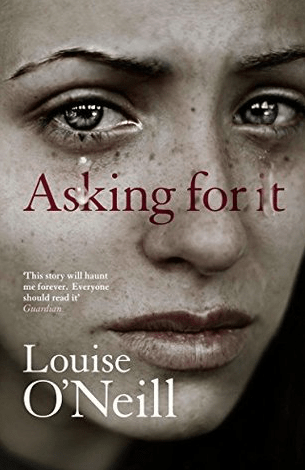
Louise O’Neill: Asking For It (2015)

They are all innocent until proven guilty. But not me. I am a liar until I am proven honest.

What a book! I finished it a while ago but I’m still stunned. Sometimes you read a book and the topic shocks you. Then you read a book and the topic and your reaction shock you. This is what happened when I read Louise O’Neill’s brilliant novel Asking For It.

Asking For It is set in a small Irish town where everyone knows everyone. Eighteen-year-old Emma O’Donovan is the local beauty and most popular girl. There’s hardly a boy who can resist her and many girls want to be her friend. She loves to party, drinks, takes drugs and hooks up with random boys. You could say she’s pretty wild. One evening, like so often, she does drugs and has casual sex with a guy and then things get out of hands. The next afternoon, her parents find her asleep on the verandah with a serious sunburn and no idea what happened before and after she passed out. She’ll find out soon enough. Because someone filmed it and posted it on Facebook. Now she’s not popular anymore, she’s just a slut.

Emma’s first reaction is to suck it up and forget all about it but people tell her she has to report what happened as rape. From the moment, the word is said and charges are made, things go even further downhill for Emma. The ending was a real shocker but realistic.

It’s a sad and sobering story and the way it is told is so powerful and eye-opening because of Louise O’Neill’s choice of main protagonist. If Emma was just a beautiful, wild girl, it wouldn’t have had such an impact on me. I would have felt sorry for her and sided with her but Emma isn’t a likable character. On the contrary. She’s possibly the most obnoxious character I’ve ever come across. She’s narcissistic and has to be the center of attention all the time. She loves to steal other girls’ boyfriends or seduce the boys they fancy. She’s also jealous and downright nasty, mean, and offensive. Since she’s the first person narrator we get to know her very well. She’s a real piece of work.

At first I didn’t understand O’Neill’s choice of character but when I noticed my reaction, I got it. I’m ashamed to admit but my first thought was – she really had it coming. That gave me pause and I had to ask myself “seriously – because she’s unlikable she deserved what happened?” and that’s when I had to say – no, of course not. Nobody deserves something like this. And nobody is asking for it. And that’s when I began to admire Louise O’Neill’s choice because it shows what an explosive topic this is. What horrible reactions victims might have to face. It’s easy to feel empathy with a likable girl – wild or quiet – but obnoxious girls like Emma deserve understanding and support as well. Emma is a 21st century girl. In some ways she’s maybe an exaggeration, but in many other ways she’s not. Many teenage girls drink, party, do drugs, and have casual sex but that doesn’t mean they are asking for being abused and raped. And they certainly don’t deserve it.

Asking For It looks at important aspects of the discussion around rape. Just because a girl/boy, woman/man was drunk or unconscious that doesn’t mean it’s not rape. Dressing in a provocative way, doesn’t mean someone wants to be touched  . . . It’s appalling that these things still need to be said. The idea that they are punished for behaving the wrong way is so deep-rooted that some women don’t even dare calling what happened to them rape. The book also shows how easily society turns against the victim.

Asking For It is powerful. The writing is strong and tight. Emma’s voice is so distinct, I could still hear her after I finished the book. The bragging Emma and the one that was shamed and humiliated. Sadly, Asking For It is an important book. We need books like this. They raise awareness, offer food for thought and topics for discussions. Documentaries like The Hunting Ground show all too well how real “rape culture” is.

The review is my first contribution to  Cathy’s and Raging Fluff’s Reading Ireland Month