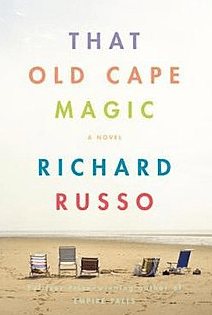
That Old Cape Magic by Richard Russo – Broken Dreams and Childhood Memories

Richard Russo is an American novelist who won the Pulitzer Prize for his novel Empire Falls which came out in 2001. That Old Cape Magic was published in 2009. I remember buying it back then but I’m not entirely sure whether because of a review or a blog post. At the time, I hadn’t heard of Richard Russo but liked the idea of a book about memories, set mostly at Cape Cod.

The book begins with Griffin driving to the Cape to attend his daughter’s friend’s wedding. He’s carrying the urn with his father’s ashes in his trunk. He wants to scatter the ashes at the Cape. Normally his wife Joy should have been with him but because of a minor argument, he’s on his own and in a bad mood. The moment he crosses Sagamore Bridge, which will lead him to the Cape, he starts singing That Old Black Magic, or rather, as his parents used to sing, That Old Cape Magic. This opens the door to memories of his childhood and suddenly this isn’t a book about a middle-aged man in a possible marriage crisis, but the story of his complicated parents. Parents, who failed to live the life they longed for. Instead of being professors at a minor college in the “Mid-fucking-West”, they wanted to be at an elite university with a summer house at the Cape. As a substitute, they spend every summer at the Cape, renting a house. Depending on their fluctuating income, the house was either shabby or decent.

We’re immediately introduced to Griffin’s mother and can see why she’s difficult.

Griffin’s mother loathed grading papers, too, of course. Who didn’t? But she was meticulous about correcting errors, offering style and content suggestions in the margins, asking pointed, often insulting, questions (How long did you work on this?) and then answering them herself (Not long, one hopes, given the result).

The book has two parts, one set at Cape Cod, the other in Coastal Maine. Both are about a wedding and, in both instances, Griffin has urns with him. First his father’s, then his father’s and his mother’s.

Odd that the future should be so difficult to bring into focus when the past, uninvited, offered itself up so easily for inspection.

Told in flashbacks, we get to know both his parents and Griffin. Griffin suffered and still suffers because of his parents, two academic snobs, who were judgemental, sarcastic, and narcissistic. They had a way of judging people and things that was very cruel. At the same time, they were deeply disappointed in themselves. While they didn’t judge themselves openly, it was clear from the way they spoke about other people and how they rated things. The most telling was the way they rated the cottages and houses at Cape Cod, where they felt they should be able to live. Either it was “Wouldn’t Have It As A Gift” or “Can’t Afford It.” Basically, nothing was ever right or attainable. Because of that, back in the Mid-West, they also never bought their own house but always rented furnished places which they treated with disregard, breaking and staining things.

The drive back to the Mid-fucking-west was always brutal, his parents barely speaking to each other, as if suddenly recalling last year’s infidelities, or maybe contemplating whom they’d settle for this year. Sex, if you went by Griffin’s parents, definitely took a backseat to real estate on the passion gauge.

They are unlikable characters but not free of their own tragedy. It’s not their fault that their dreams weren’t fulfilled. But it’s their fault that they can’t move past it. They felt that they were better than what they got but not as good as what they wanted.

Griffin’s life turned out differently but is also not entirely successful. He started as screen writer, but only wrote cheap made-for-TV scripts and finally left L.A. and became a professor of screenwriting. Griffin always thought that he was different, but his interior monologues show clearly, he’s not only quoting his parents or hearing, especially his mother’s voice, but he’s a little like them too. He frowns upon simple people, easily calls someone a moron. This leads to conflicts with his wife Joy who comes from a family that’s anything but academic.

Griffin dismissed their (his parents) snobbery and unearned sense of entitlement, but swallowed whole the rationale on which it was based (Can’t Afford It; Wouldn’t Have It As A Gift).

Weddings often trigger hidden feelings about marriage and life in general and it’s no different here. The first leads to total emotional chaos, while the second, his daughter’s wedding, one year later, turns into a farce.

In the comment section of a post about funny novels, Tom from Wuthering Expectations suggested Russo’s campus novel Straight Man. After reading That Old Cape Magic, and especially the hilarious scenes during the second wedding, I’m keen on finally reading it. The mean and snarky comments of Griffins mother often made me chuckle, but the scenes at the wedding rehearsal made me laugh out loud.

When I started this book, I expected something different. Something more lyrical, more atmospheric. But that’s not the way Russo writes. There’s a subtlety here but its more psychological, sarcastic, and humorous. I think it says a lot about a book when someone like me, who prefers lyrical, atmospheric books, ended up enjoying this as much as I did. It’s not only funny but says so much about family dynamics, marriage, broken dreams, family rituals, coming to terms with the past, and also the bond between parents and children and between spouses.

For anyone who has complicated parents or who has or had to deal with someone who is both judgemental and always seems to feel entitled, this will ring very true.

I attached a short video in which Richard Russo speaks about That Old Cape Magic and tells how this book, which started out as a short story, turned into a novel. It’s not only a good intro to the book but says a lot about the creative process.

If you’re looking for a funny novel – here’s the link to my post on Funny Novels again. It’s a great resource as many people added suggestions.
 

Looking Back on A Post a Day in May

It’s hard to believe the month is over. And I did it. I posted one post a day all through the month of May. Even though I had such a tough time blogging in the last two years, I never doubted I would make it. I somehow knew I would enjoy it and I really did. The first weeks went by very quickly, the third was a bit dragging but the fourth was gone before it even started. I didn’t follow a plan, I just picked something every day, read it or looked at it and wrote about it.

Before I’m going to look at some statistics, I’d like to thank everyone who followed me this month. All those who read my posts, liked them, and commented. Thank you very much. You all made this so much more enjoyable than it would have been otherwise. It almost felt like the early years of blogging. And gives me hope that I can celebrate my upcoming 10-year anniversary in style – posts and guest posts and maybe one or two themed weeks. We will see.

Some statistics:

I read 2 novels (which I didn’t review) and 18 novellas, short novels, longer stories, and nonfiction texts.

12 titles were written by women, 8 by men.

I read books from 11 different countries: UK, US, Canada, Ireland, Israel, Turkey, France, Belgium, Sweden, Germany, and Russia.

Week two was the week when I had the most visitors and also the most new subscribers.

The posts that had the most views were: The Daphne du Maurier Week post on The Birds, 100 Must-Read Life-Changing Books and The Intro post The Temptation of a Post a Day in May.

The day when I had the most views was the day when I published on Dickens.

The posts that received the most comments were The Intro Post, the Post on The Birds, and the post on Chandler’s Killer in the Rain.

This is quite interesting as it shows how many people look at posts without commenting or liking – The Life-Changing Books post for example.

New Followers – I did count for a while but then there were so many every day that I gave up. By week two, there were some 40 or 50 new followers.

Where do I go from here?

The question that I’ve been asking myself in the last couple of days—where do I go from here? I don’t want to go back to posting only once a month or every two months. Obviously, that wasn’t exactly my choice since I had pain issues. That was actually my biggest worry for this month – that the pain would return. And it did for a week or so, but luckily it wasn’t as unmanageable as before.

Before this month, I also had issues with reading. I picked one dud after the other that I really didn’t feel like reviewing. I was astonishingly lucky this month. There was one book I could have done without, Odd and the Frost Giants, but even that was not terrible at all. And those that were good like Love, Am Südhang, Once There Was A Family, Killer in the Rain, The Dog,The Testament of Mary, or The Calligraphers’ Night were just amazing. Several will be on my best of list at the end of the year.

This will sound weird, but it looks like I do best when I have a project that leaves me a lot of freedom. If I had chosen the books I was going to read and write about beforehand – this would have been an utter failure.

So, what now? It is entirely possible that I will do another month like this. Maybe in August, maybe in December. It might not even be about books. I might resuscitate my World Cinema Series and do A Movie a Day.

And I would like to begin a late Literature and War Readalong. Last year I had to skip it, the year before I had to stop before the end. So, this year, I’d like to just read two or three titles, but not decide in advance which ones I’ll be reading. I’ll let you know two months in advance, so you can join, if you feel like it.

For now, I hope I can stick to a three days per week posting schedule. One review type post, one coffee table book, and maybe something more like essays or musings.

Thanks again to everyone who read, commented, liked and shared. It meant and it means a lot. Without you, it wouldn’t have been so much fun.

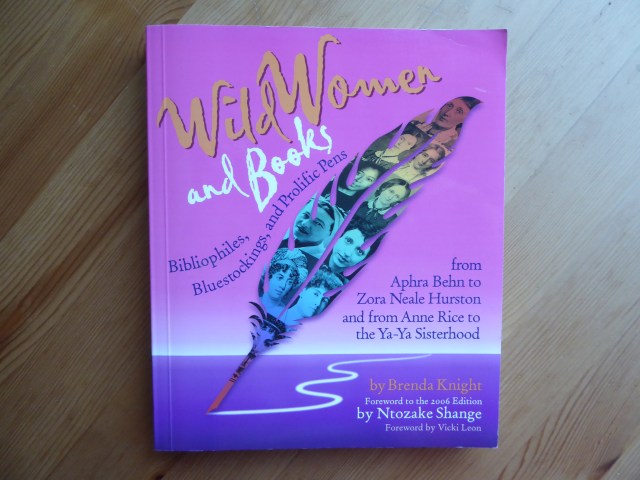
Wild Women and Books by Brenda Knight – Bibliophiles, Bluestockings, and Prolific Pens – A Post a Day in May

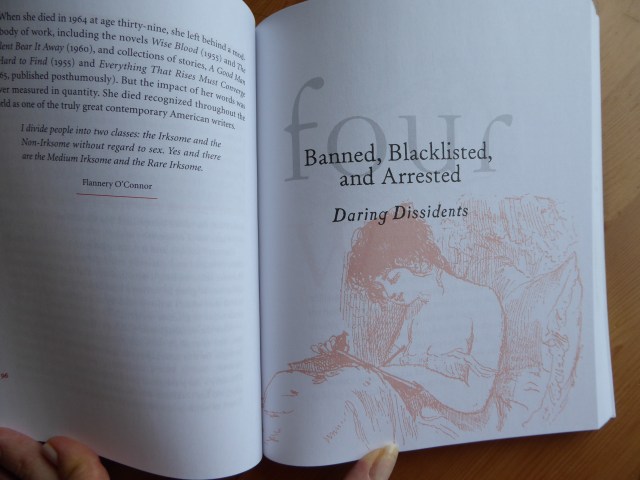
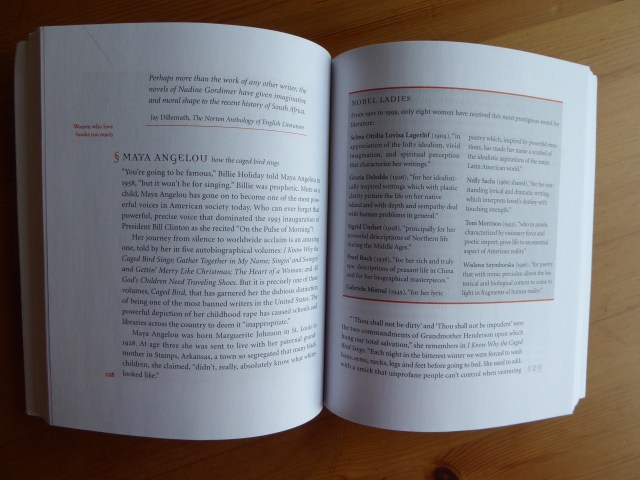
I kept this one for last as it’s hands down one of my favourite books. Wild Women and Books – Bibliophiles, Bluestockings, and Prolific Pens contains entries that span from Aphra Ben to Zora Neale Hurston. Now this may sound like it’s similar to Literary Witches but it’s quite different. It’s a much bigger book and while it contains photos, illustrations, and pictures of artwork, there is a lot of text in each chapter and on each writer. Additionally, to the chapter texts, it has boxes that give information on where to find the authors online and themed lists.

There is a total of seven chapters.

Chapter 1 – First Ladies of Literature is on the precursors and pioneers like Anne Bradstreet, Aphra Behn, Harriet Beecher Stowe, Lorraine Hansbury.

Chapter 2 – Ink in their Veins focusses on women who come from writing dynasties, like the Brontës or Mary Shelley.

Chapter 3 – Mystics and Madwomen explores authors like Hildegard von Bingen and Teresa of Avila.

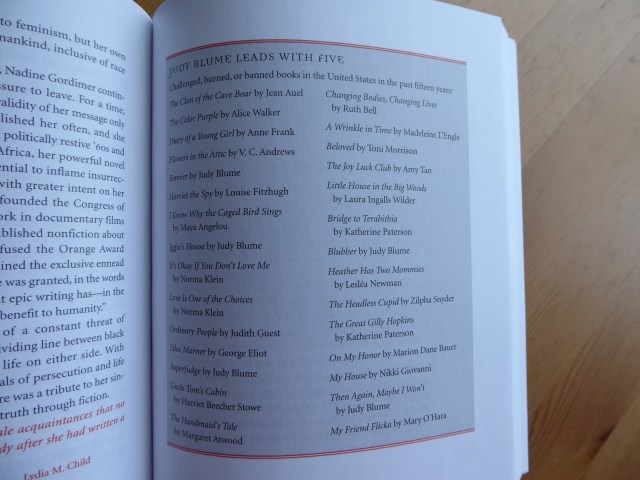
Chapter 4 – Banned, Blacklisted and Arrested is particularly fascinating. Why do women get blacklisted and who are they? I’ve always been baffled when I saw these lists of books that have been banned in the US. You can find many of them above. There are a lot of children’s authors like Judy Blume on that list.

Chapter 5 – Prolific Pens explores those women who seem to be publishing nonstop or have published a lot like Margaret Mead, Joyce Carol Oates, and also Margaret Atwood, Edith Wharton, Danielle Steel, and Barbara Cartland.

Chapter 6 – Salonists and Culture Makers looks at authors like Dorothy Parker, Simone de Beauvoir, Virginia Woolf, Getrude Stein, Djuna Barnes and many more.

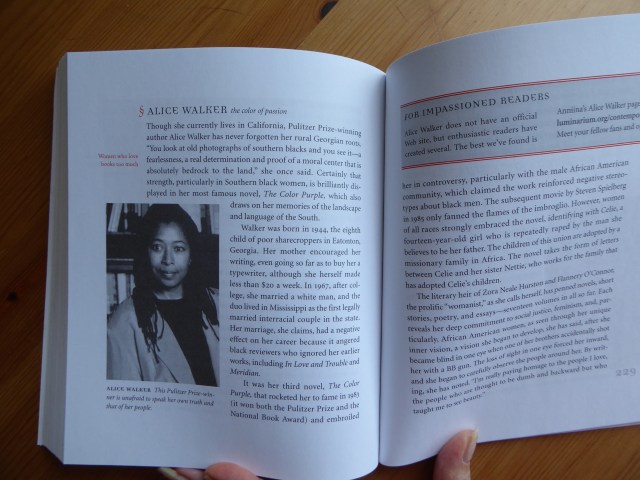
Cahpter 7 – Women Whose Books are Loved too Much is interesting and diverse. These are the authors who have a large fanbase, fervent followers and admirers. Some of them are Agatha Christie, Alice Walker, Anne Rice, and Margaret Mitchell.

I’m sure it’s easy to see why this is such an appealing book. Anyone will stumble upon authors they hadn’t heard of before as it is so diverse. The high and the low and those in the middle, they are all there. The book has a handy index at the back, lists with online book groups and further reading on women and books. Wild Women was initially published in 2000 and then reissued and updated in 2006. The only bad thing – it looks like it’s currently out of stock but second hand copies are cheap and easily available and there’s a kindle version too.

Odd and the Frost Giants by Neil Gaiman – A Tale Inspired by Norse Mythology – A Post a Day in May

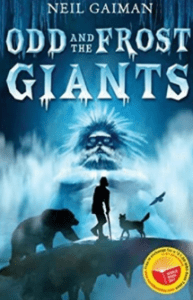
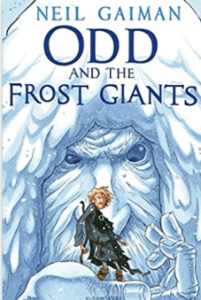
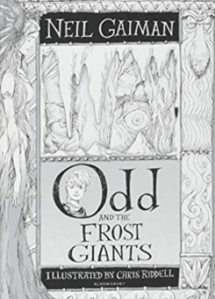
Neil Gaiman wrote Odd and the Frost Giants for World Book Day 2008. The cover on the left is the original cover. The book has since been reissued twice, illustrated by different people, one of which is Odd and the Frost Giants illustrated by Chris Riddell. That’s the cover on the right. The one in the middle was illustrated by someone called Adam. My version is the World Book Day version. It’s also illustrated but the illustrations are not very typical for a Neil Gaiman book as they aren’t anything special.

Odd and the Frost Giants is inspired by Norse Mythology and because I want to read Gaiman’s book on Norse Myths, I thought it would be fun to read this first. Besides, I haven’t read any of Gaiman’s children’s books so far, with the exception of Coraline, and The Graveyard Book, which appeal to kids and grown-ups alike.

Odd, a half-Viking, half Scottish boy with a disability from an accident, leaves his home. After his dad’s death, his mother married again, and the stepdad doesn’t like Odd. Because Odd is a little odd. He has the habit of smiling an infuriating smile.

Odd doesn’t only leave because he’s mistreated by his stepdad but because, for the first time, this year, spring isn’t coming. On his way to his dad’s old hut, he meets a bear, a fox, and an eagle who accompany him. Together they sleep in his dad’s hut. At night, Odd finds out that the three animals can talk. They are not really animals but the Gods Odin, Thor, and Loki. Usually they live in Asgard, not in Midgard, where they meet Odd. But because of a mistake, they were booted out by the Frost Giants. And this is why winter won’t stop.

Odd, who may be strange and disabled, is also courageous and so they travel to Asgard together to defeat the Frost Giants.

What can I say about this book? It’s OK. The beginning is very nice, typical Gaiman, but then it sort of fizzles out. Neil Gaiman writes a lot of stories for events and anthologies and I’ve often noticed in the past that they aren’t as good as the other stories. I might be one of the only ones to think like this about Odd and the Frost Giants. Many, especially adult readers seem to love it. That said, I’m not the only one who noticed discrepancies. I came across an interesting website called Disability in KidLit and there was a blog post about the disability in Odd. You can find it here. The author noticed that while Odd’s disability is described as making it hard for him to walk, it’s never mentioned that he’s in pain. But suddenly, towards the end, the pain is important. I noticed this too but thought I’d been inattentive while reading. Seems like I wasn’t. Maybe you’ll think that’s no big deal and, in a way, for the story, it isn’t, but it just shows that it was possibly written quite quickly and not thoroughly edited. If however, you look at disability in kid’s lit, then it becomes a big deal as the portrayal is sloppy.

If you want to read everything he’s ever written, you’ll have to read this. If not, well, it’s a quick read but don’t expect anything too spectacular. I tried to find out what children think of it but didn’t find anything. Possibly, this tale of a boy who – against all odds – (Gaiman likes to play with words it seems) – defeats the big Frost Giants, is a winner with kids.


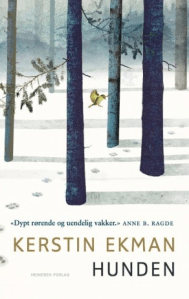
The Dog – Hunden by Kerstin Ekman – Swedish Novella – A Post a Day in May

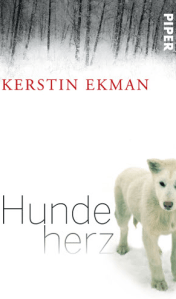
Swedish writer Kerstin Ekman is something like the grande dame of Swedish literature. She’s considered one of the most important, if not the most important living Swedish writer. She has written numerous novels, many of which received prizes and were made into movies. She’s also been extensively translated. Ekman began her career as a crime author but subsequently moved away from the genre. The novella The DogHunden was published in 1986. I read the German translation, Hundeherz (by far the most poetic title) as I always feel it’s closer to the Scandinavian languages than English.

Before I start the review, I have to spoil the book. The blurb does so too and with good reason. The beginning of the book is quite sad, and, for most animal lovers, it would be too heart-breaking to read on not knowing whether there would be a happy ending. Luckily, there is. So, now you know it – Sad beginning, happy ending.

The Dog is set in the countryside of Northern Sweden. It’s winter and a man drives to a lake to go fishing. He has no intention to take his dog, but she sees him and runs after his scooter. Her little puppy follows her. In the snow and the cold, the puppy gets lost. Upon his return home, the man notices the dog’s absence and searches for him. To no avail. What follows is a dramatic tale of survival during a harsh winter, in a wild landscape. The puppy almost freezes and starves. At first, he just crouches under the low branches of fir trees, shivering, his heart beating wildly. Then he finds a dead elk and the meat of the massive animal helps him over many weeks.

During the long winter months, he learns to recognize the noises and traits of the landscape. Eventually, he explores farther and farther away from his hiding place. He learns to hunt and to avoid being hunted.

The story is told from the point of view of the dog, but Ekman doesn’t try to humanize the dog. She tells the story in a way that makes it very plausible, just describing what the puppy can see, smell, taste, hear. The result is brilliant. In lesser hands this might have become mawkish, but it isn’t. She is an astounding writer, with a huge vocabulary and intimate knowledge of the Swedish landscape, the flora, the fauna. The animals and plants are all named. It’s never just “a tree” or “a bird” or “a plant”. She’ll let you know exactly what it is. All the many wild birds and animals are differentiated through the noises their wings or paws make. The wind sounds different, depending on which grasses and plants it rustles. And the many scents are described in so much detail too. It’s true that every plant smells different when it is crushed.

The story isn’t sentimental and therefore, at times, a bit hard to read. After all, it’s a tale of survival and that includes hunting. The dog must hunt to survive. And there’s also an elk hunt later in the novella that leads him back to the man who lost him.

This is a tale about survival, about enduring cold, hunger, and loneliness. But ultimately it’s also a tale about the strong bond between man and dog.

I did expect this to be good, but I didn’t expect the writing to be this extraordinary. I’m already looking forward to reading more of her work.


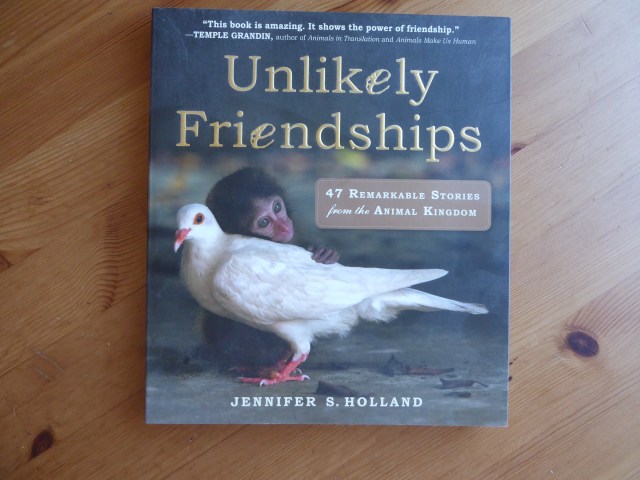
Unlikely Friendships by Jennifer S. Holland – Animal Cuteness -A Post a Day in May

I feel like we can all do with some cuteness these days and so I decided to share this book about animal friendships. Unlikely Friendships is such a lovely book. The stories are all so touching and the pictures that go with them are beyond cute. Some of these friendships aren’t that uncommon but some really make you look twice. There are 47 true stories in the book, most of them accompanied by three to four pictures.

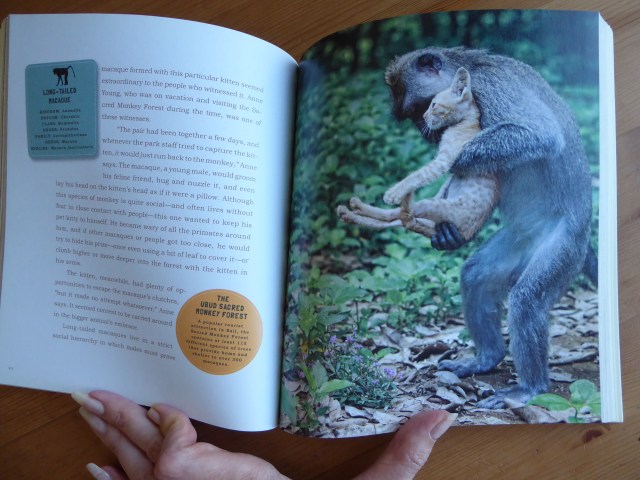
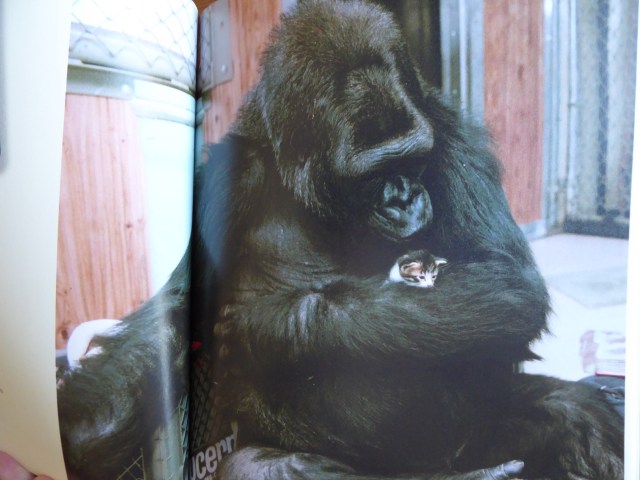
Some of the stories like that about the gorilla Koko and the kitty are quite famous. Others are told by people who witnessed their pets suddenly being very friendly with an animal from another species. Other stories have been reported by visitors to parks or nature reserves like this one:

This young male Macaque found a stray kitten in the Ubud Sacred Monkey Forest in Bali. Visitors saw the two together. They were inseparable. The kitty could have gotten away many times, people even tried to take him away, but he always ran back to his monkey friend.

The story between the gorilla Koko and his kitten is well known as Koko was famous. In the 80s she was taught sign language and was able to communicate with people. One day, she told her teacher that she wanted a kitten for her birthday. And that’s how these two became friends. The story didn’t have a happy-ending as the kitten was later run over by a car. Koko was inconsolable and grieved her kitten for a very long time.

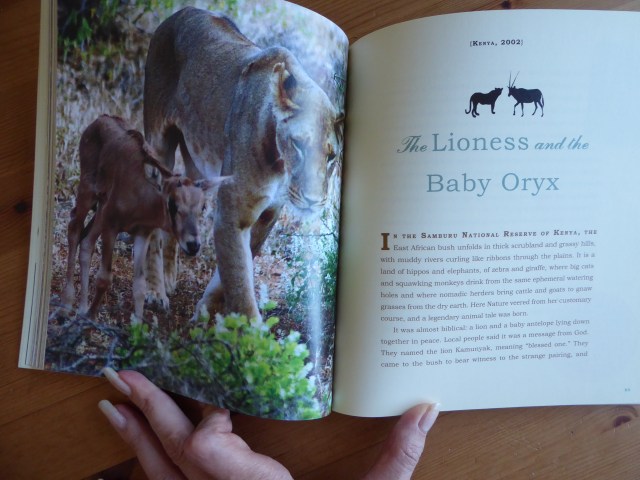
The friendship between this lioness and the baby Oryx is another very unlikely friendship. The two were spotted together in the Samburu National Reserve in Kenya.

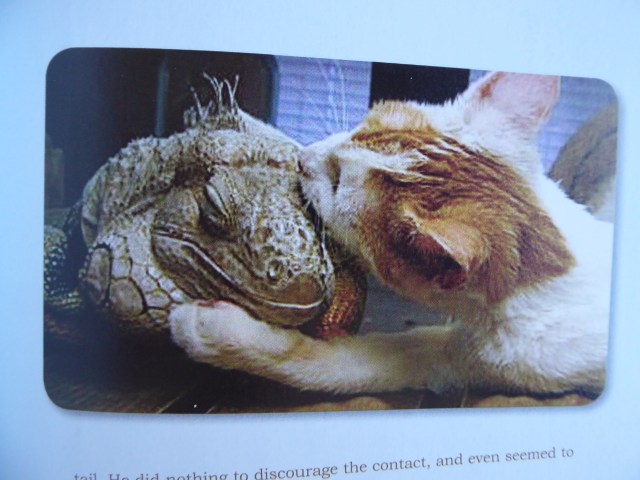
There are several friendships between cats and other animals in this book. Cats and rats, cats and cockatoos, cats and pigs, and this one between an Iguana and a house cat. The Iguana was found wandering the streets of New York and someone rescued him. He couldn’t keep the animal and gave him to a friend, a nurse, who was known for rescuing stray animals. The Iguana thrived and grew and soon stretched to four and a half feet. When the nurse adopted a rescue kitten, the most unlikely thing happened – they became friends and are always close together.

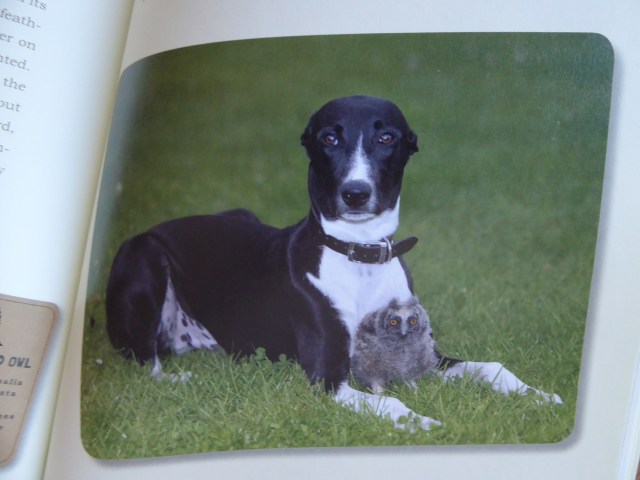
This might be one of my favourite pictures because they both look at the camera in such a cute way. This friendship lasted until the owl was grown up, then it was brought to an aviary. To this day, when the owner of the greyhound walks by the aviary, the owl and the dog greet each other.

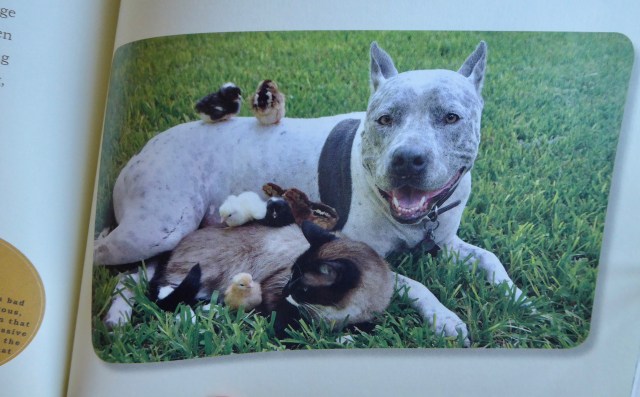
This male pit bull belongs to an owner who lives in Texas. When her female dog had pups, she noticed that the dad was even keener and more affectionate than the mother. Whenever there are small chicken on her farm, they climb on his back and he seems to love them very much. The closest friendship he has though is with a Siamese cat.

I hope you enjoyed this little sneak peek at this wonderful book. There are many other friendships in here – To name but a few more: Black bear and cat, dog and Bobtail Cat, White Rhino and Billy goat, seeing eyed cat and a blind mutt and macaque and white dove.

While this is a cute book, it also proves that animals have deep feelings and are capable to form strong connections and friendships.

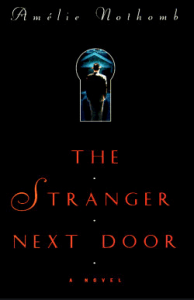
The Stranger Next Door – Les catilinaires by Amélie Nothomb – Belgian Novella – A Post a Day in May

I don’t know many authors who are as prolific as Amélie Nothomb. Since her first novel, Hygiene and the Assassin, was published in 1992, she published another 36 or more. I’ve read her first and one of her newer ones, Barbe Bleu, which I reviewed here. I always meant to get back to her and finally chose The Stranger Next Door, as I’ve come across a really appealing review on Guy’s blog here. The Stranger Next Door is one of her earlier novels, her fifth to be precise, published 1995.

The Hazels are happily married and like nothing better than solitude and being with each other. Emile Hazel has just retired from his job as Latin and Greek teacher. The Hazels are looking forward to their retirement. The only thing that’s missing is the perfect house in a perfect location, far away from any other people. Luckily, they find that house. The HOUSE. It’s amazing and in such a beautiful landscape. The next village is miles away. There is a neighbour, a doctor, so that too, is perfect. On their first day, it starts to snow, and they enjoy a wonderful walk. When they come back, they look forward to an evening of peace and quiet but at 4pm sharp, someone knocks on the door. It is their neighbour. They are not too keen on being disturbed like this but what can they do? They ask him in, and he stays for a full two hours hardly talking, looking morose, and clearly not enjoying his stay. Glad when the visit is finally over, they don’t want to think about it anymore, but at 4pm sharp, the next day, they have to as their neighbour repeats his visit. And the next day. And the day after. He comes at 4pm and leaves at 6pm, every time demanding coffee, not talking, and only answering with yes or no or not at all. It’s like a sinister groundhog day.

I often wonder if Amélie Nothomb is one of those authors who begin their stories with a “What if” question. It seems that’s exactly what she did here. What if you were living in a wonderful house, and suddenly someone turns up stubbornly every day at the same time, even though he doesn’t seem to enjoy it? What would a polite, cowardly person do?

The intrusion of their neighbour triggers all sorts of feelings and finally also reactions in them. At first, they are just helpless. How does one handle a situation like this without being rude? After a while, being rude is the least of their problems. As this story progresses and the doctor’s wife, a grotesquely obese woman, is introduced as well, it becomes more and more sinister.

This is a dark little novel with bizarre and grotesque elements and an outcome that’s quite unforeseeable. I literally couldn’t put it down. I needed to know where this was going. It’s told from the point of view of Emile Hazel and to see his polished surface crack and a new character emerge is fascinating. And also relatable. Haven’t we all, at times, felt that we should have said no earlier? That we were too nice, too polite? Most of the times, it won’t end like it does here but very often, we too might have felt – enough is enough.

If you like dark and twisted stories, you might enjoy this.