David Gilmour: The Film Club (2007) A Touching Memoir of a Father and His Teenage Son Watching Their Way Through Cinema History

It was an unconventional deal: Jesse could leave school, sleep all day, not work, not pay rent – but he had to watch three films a week … of his father’s choosing. Week by week, side by side, father and son watch the world’s best (and occasionally worst) films – from True Romance to Chungking Express, A Hard Day’s Night to Rosemary’s Baby, Showgirls to La Dolce Vita. The films get them talking – about girls, music, heartbreak, work, drugs, money, love, friendship – and they open doors to a young man’s interior life at a time when parents are normally shut out. Gradually, the son develops from a chaotic teenager into a self-assured young adult, but as the film club moves towards its bittersweet and inevitable conclusion, Jesse makes a decision which surprises even his father… The Film Club is a book that goes straight to the heart. Honest, unsparing and poignant, it is the true story of one man’s attempt to chart a course for his beloved son’s rocky passage into adulthood.

David Gilmour’s The Film Club was one of the few books that I bought following a recommendation in a book shop. You know those corners where the staff piles up the books they read during the year and liked a lot? Well, this was on one of them. It is not only a memoir – the non fiction genre I like best – but a book that speaks extensively about movies. It isn’t a literary masterpiece, it is no The Liar’s Club or The Glass Castle, but it is very, very entertaining and quite touching. Gilmour is very outspoken when it comes to feelings. He writes as easily about joy as about anxieties.

Picking movies for people is a risky business. In a way it is as revealing as writing someone a letter. It shows how you think, it shows what moves you, sometimes it can even show how you think the world sees you.

When Gilmour’s teenage son starts to show an alarming disinterest in school, Gilmour decides to let him leave school under one condition, namely watching three movies per week with his father. Three movies that his father chooses, of course. It’s an experiment and when they start Gilmour is as uncertain about the outcome as the reader.

Gilmour, a novelist and journalist, has come to a major turning point in his own life. He is out of work and desperately trying to get little TV assignments here and there. Being out of work, panics him, on the other hand it gives him a lot of time to spend with his son. Knowing very well that the boy isn’t going to stay with him forever he cherishes every moment. No wonder the book is full of nostalgia and has a very bitter-sweet tone.

I return to old movies not just to watch them again but in the hope that I’ll feel the way I did when I first saw them; not just about movies either, but about everything

During the three years that follow Gilmour’s idea of letting his son drop out of school, he shows him the greatest of filmmaking there is. They watch movies by periods, by schools, by themes, by countries. I think he lists at least some 80 movies including some from the French nouvelle vague, the New Hollywood movement, Japanese film making, Western, Horror, Comedies… The first few choices are far from succesful as Jesse, Gilmour’s son, finds them unbearably boring. He has no clue how to watch a French movie for example, doesn’t know which are crucial scenes to look out for in a Hitchcock film. Normally before showing the movie to his son, Gilmour will give some background information, a lot of it was very enlightening. He explains to him why certain actors are better than others, that the best of them are even great when they don’t even say a word, he shows him special camera angles, indicates pieces of dialogue. It takes a year until Jesse starts to see and enjoy the movies they are watching and develops a taste of his own. He loves Chungking Express.

True Romance has a eight- or nine minute encounter between Dennis Hopper and Christopher Walken that may well be, for me, the best stand-alone scene in film. (….) Christopher Walken announcing “I am the Antichrist”.

But this book isn’t only about movies. The movies also serve as basis for discussions about everything. And life goes on. Gilmour struggles to find a job, Jesse falls in love twice and both times end in disaster. The second heart-break is so intense, you have to be really hardened to not be reminded of something similar in your own life.

Showgirls,” I said to Jesse, “is something of a cinematic oddity, a guilty pleasure without a single good performance.”

It is obvious that the experiment described in the book helps them both. Jesse finds perspective. After living as a rap musician for a while, he takes a completely new direction and David Gilmour writes this book. The relationship between these two is unique. So much honesty, trust and friendship between a father and a son is wonderful. Not every parent has the chance to spend as much time with his kid, that is for sure, but every parent has certainly spent enchanted moments with his/her child and will be touched by this story. For us film lovers it’s a great way to remind us how many movies there are still to discover, how many to watch again and in how many different ways we can watch them.

Here’s a video in which they talk about the book.

David and Jesse Gilmour talk about The Film Club

Jenn Ashworth: A Kind of Intimacy (2009) A Very Noir Character Study

Annie is morbidly obese, lonely and hopeful. She narrates her own increasingly bizarre attempts to ingratiate herself with her new neighbours, learn from past mistakes and achieve a “”certain kind of intimacy”” with the boy next door. Though Annie struggles to repress a murky history of violence, secrets and sexual mishaps her past is never too far behind her, finally shattering her denial in a compelling and bloody climax. A quirky and darkly comic debut – giving readers a glimpse of a clumsy young woman who has too much in common with the rest of us to be written off as a monster.

I discovered A Kind of Intimacy thanks to a review on Danielle’s blog. It was also among her top 12 of 2010 and it was also one of the favourite reads of Guy Savage who also reviewed it.

I already jokingly “said” to Danielle in a comment that her top 2010 might become my top 2011 and,  yes, this book is certainly a candidate as it is astonishingly good. Very dark, absolutely fascinating, engrossing, and very well executed. While starting it I had forgotten Jenn Ashworth was compared to Ruth Rendell but the association immediately occurred to me as well.

A Kind of Intimacy is told by the main protagonist, obese, deluded Annie herself. She is what you call an unreliable narrator. The reader feels that something is wrong from the beginning, too many hints and little details tear apart the picture of perfection that Annie wants to draw for our and her own sake. These interfering details, as I would call them, make this a creepy read. Uncanny and creepy. It is not so much that we judge Annie as that we wish to never meet someone like her as she seems capable of doing really harmful things.

At the beginning of the novel Annie moves into a new neighbourhood. One of the first people she meets is Neil who has a natural capacity for being kind, which proves to be fatal in this relationship, as Annie doesn’t see things the way they are but the way she wants them to be. Unknown of Neil or anyone else, she is convinced, he is her soul-mate and the only thing that needs doing is getting rid of Lucy, his skinny and pretty girlfriend.

What starts like a comedy soon develops into something much darker. Bits and pieces of Annie’s past are revealed slowly. A miserable childhood, an odd marriage, a baby girl who seems to have disappeared and some really dodgy things Annie does to try to get “A Kind of Intimacy” despite her being revoltingly obese. The further you read the more you will hope to never meet anyone like Annie.

As deluded and extreme as she may seem, Annie is a character I am all too familiar with which added another dimension to my reading. However odd this may seem, I have met more than one Annie in my life. They were not always as dangerous and they were always male… Call me Neil… It’s really scary what some people can interpret into your tiniest actions.

I read somewhere that Jenn Ashworth was criticized for chosing an obese woman as her protagonist… I see Annie as a distortion, a caricature and as such the obesity did work for me. Unlike one critic I read, I did feel sorry for Annie. All through the web of lies and deceptions we catch glimpses of a very lonely and hurt soul.

Jenn Ashworth is a gifted writer. If you have ever tried to write yourself you will know that voice and point of view are always very challenging. Annie’s voice does sound so right. There is not one wrong note in this symphony of lies and self-deception. A Kind of Intimacy is one of the best character studies I have ever read. Fascinating, creepy and compulsively readable. I am sure this book will appeal to readers of crime and general fiction alike.

Just one aside, Jenn Ashworth won a prize for Best Blog Content in 2008. Here is the link to her site.

Kubrick’s Barry Lyndon (1975)

I finally watched Barry Lyndon thanks to a comment on  Guy Savage‘s review of one of Thackeray’s novels and after seeing Kubrick mentioned again the very same day on Tuulenhaiven’s blog.

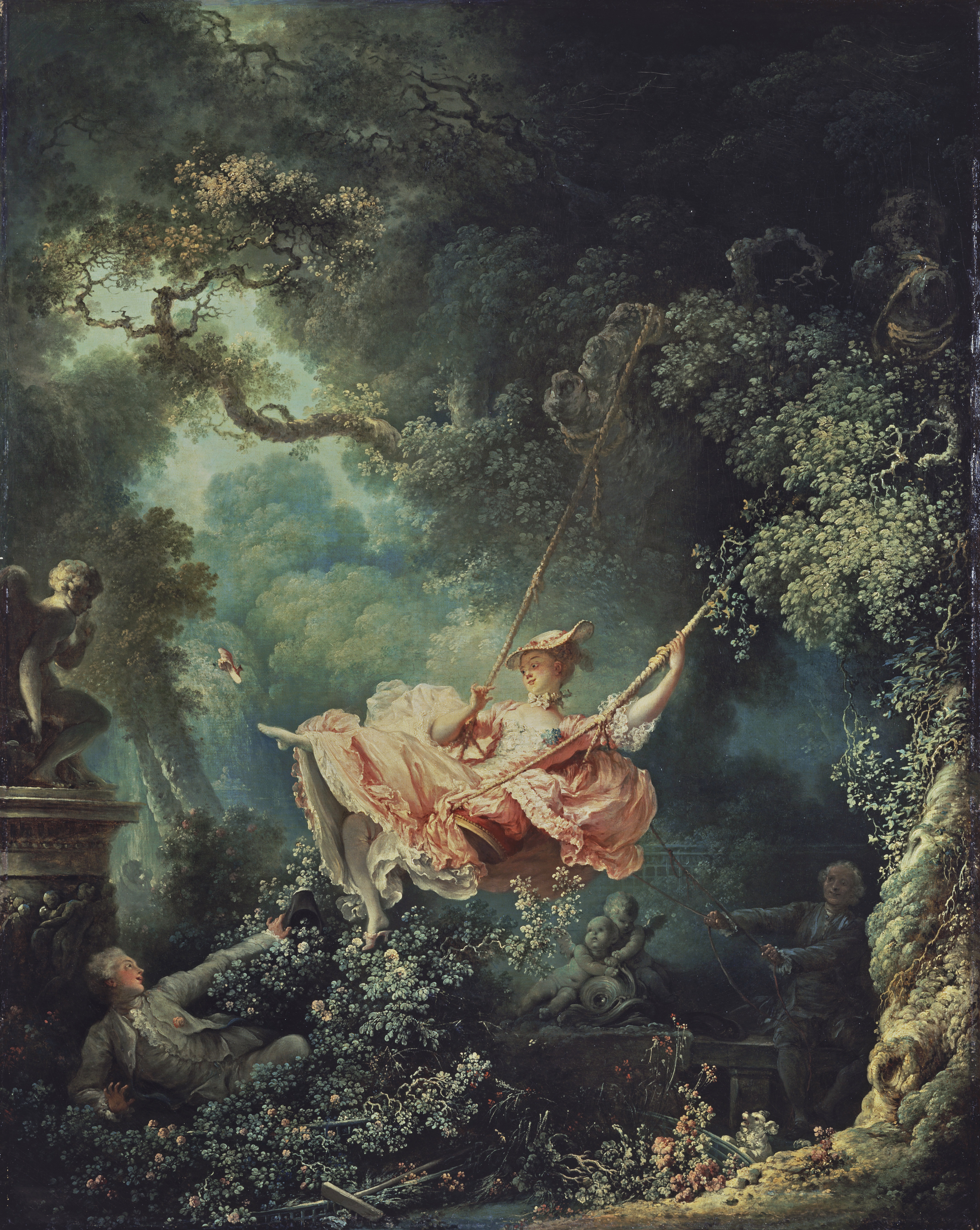
Watching Barry Lyndon is like seeing a Rococo  painting come to life. It reminded me of Fragonard and Watteau. It’s visually astonishing with a sorrowful and beautiful soundtrack (click the second YouTube link if you’d like to listen to it while reading), sumptuous costumes and a lush decor. It is a picaresque story, at least all through the first half. Redmond Barry (Ryan O’Neil), an Irishman who is neither rich nor noble, falls in love with a girl whose family is in need of some substantial financial assistance. Easy to understand that they don’t think that Redmond is a good match. Unluckily he is young and stubborn and thus provokes a duel with the future husband of the girl he loves.

File:Fragonard, The Swing.jpg

After shooting him and seeing his opponent sink down, Redmond is led to believe, he has killed him and is sent off to Dublin with the money of his mother and of a friend of the family. Unfortunately the money is stolen from him on his journey. As is typical for picaresque stories Redmond stumbles from one mishap into the other. He ends up serving with the English army in the seven-year war, deserts, serves with the German army, meets a gambler, helps him… As visually stupendous as the first half is, I wasn’t entirely interested but that changed completely with part two.

In the second half of the film Redmond meets Lady Honoria Lyndon (Marisa Berenson), fancies and seduces her and, after her geriatric husband dies suddenly, he marries her. She is a very rich woman and he will do his very best to spend her fortune. Unfortunately for him and the son she gives him,  he doesn’t automatically acquire a title as well.

The misfortunes and mishaps continue throughout the movie until the end. Redmond brings a lot of those onto himself and I never really liked him until I had time to think about he movie later on.

What made me like the second part is Honoria Lyndon. One of the crucial moments in the movie is when the newlyweds sit together in the carriage. His young wife begs Redmond not to smoke in the carriage and he not only continues but deliberately blows the smoke into her face. At that moment Honoria Lyndon reminded me of Henry James’ Isabel Archer, when she discovers that she has been trapped and that there is no real love in her marriage. The disappointment and disillusionment in her beautiful face was very moving. As said before, I started to be truly interested in what happened once Honoria was introduced. She is such a tragic figure. Redmond gets more and more hateful but in the end, after the movie was over and looking back on all that has happened to him and where he came from, I felt pity for him as well.

Barry Lyndon is a very long and very slow movie. We are meant to dwell on those pictures and – given the choice of the music, Händel’s Sarabande – we can see this movie as a meditation on hope and sorrow.

I don’t know how true the movie is to Thackeray’s novel. We often hear a voice-over commenting Redmond’s actions which sounds as if it was taken directly from the novel. Maybe anyone has read it?

Haruki Murakami Reading Challenge 2011

I am still quite new to book blogging which means I am still quite new to challenges. However I know already what type of challenge would put me under pressure and which one most likely not.

Since I wanted to dedicate some of this year’s reading to the Japanese authors I have on my TBR pile and Murakami is one of them, I decided to join the challenge hosted by Tanabata from In Spring it is the Dawn.

Please read what Tanabata says:

For a list of the books available in English, visit the Books Page.

Things to keep in mind:
*The goal is simply to read something/ANYthing by Haruki Murakami.
*Whether you’re a complete newbie, or already a huge Murakami fan, everyone is welcome to join in.
*You can join in anytime.
*Feel free to grab either of the buttons but please save them to your own computer first.
*There is no need to list your books in advance, and even if you do, you can change them any time.
*You can also change your level of participation at any time because sometimes life just gets in the way.
*You don’t have to have a blog to participate. You can also share your thoughts on Goodreads, LibraryThing, etc.
*Crossovers with other challenges are allowed. (Don’t forget that anything you read for this challenge also counts for Bellezza’s Japanese Literature Challenge).
*Books should be read between January 1st and December 31st, 2011.
(However, I welcome you to submit reviews to any of Murakami’s books or stories that you have read and reviewed previously. More on the ‘Submit a review‘ page.)
*Books can be in any format: paper, ebooks, audio.
*Rereads are allowed, and encouraged.
*There will be quarterly prizes (details to be decided).
*And most importantly, have fun!

As far as I am concerned, I will certainly read one but am not sure if I will read more.

These are the books on my TBR pile. The first two are the ones I am most likely to read.

The Elephant Vanishes (short stories)

Sputnik Sweetheart

Norwegian Wood

A Wild Sheep Chase

The Wind-Up Bird Chronicle

I am really looking forward to this challenge as it seems stressfree, fun and a good way to discover more books of this wonderful writer.

Urs Widmer: My Mother’s Lover (2011) aka Der Geliebte der Mutter (2000) One of the Finest Swiss Authors Finally Translated

It’s Switzerland in the 1920s when the two lovers first meet. She is young, beautiful, and rich. In contrast, he can barely support himself and is interested only in music. By the end of their lives, he is a famous conductor and the richest man in the country, but she is penniless. And most important of all, no one knows of her love for him; it is a secret he took to his grave. Here begins Urs Widmer’s novel “My Mother’s Lover”. Based on a real-life affair, “My Mother’s Lover” is the story of a lifelong and unspoken love for a man – recorded by the woman’s son, who begins this novel on the day his mother’s lover dies. Set against the backdrop of the Depression and World War II, it is a story of sacrifice and betrayal, passionate devotion and inevitable suffering. Yet in Widmer’s hands, it is always entertaining and surprisingly comic – a unique kind of fairy tale.

Urs Widmer is one of the finest Swiss authors of German language. He has been compared to Frisch and Dürrenmatt but that isn’t doing him any justice. I personally like him more. His novellas and novels are always very nostalgic, melancholic and bitter-sweet. There is beauty and sadness in equal doses. Recently I looked which of his works has been translated and couldn’t believe that until now there wasn’t any English translation available. Seems as if his novel Der Geliebte der Mutter aka My Mother’s Lover is the first of his books that has been translated into English. It will be out in June. That is incredibly good news. This really is an author to discover and My Mother’s Lover is a good starting point as it is one of the best novels of German language of the last decade. It is rich, it is dense, it is colourful and as powerful as a slap in the face.

My Mother’s Lover is told in first person peripheral, a point of view I like a lot. Some of the best works of literature have made use of it (Le Grand Meaulnes, The Great Gatsby… ). It is a very poetical point of view. In this novel, it is the son who tells his mother’s story. A story that spans over eighty years and begins just before the Black Thursday 1929, when Clara, the mother, is some 20 years old. Widmer tells the story of a life and a century with all the joy, sadness, madness and tragedy there was in both.

Clara is the daughter of an Italian whose great grand-father was of African descent. Her father left his Northern Italian hometown to live in Switzerland, Zürich, where Clara is born. The mother died young and Clara grew up with her father enjoying a life of ease and wealth. They loved going to concerts and that is how she met Edwin, the man who should become the love of her life and one of the most famous conductors of all time.

The Black Thursday 1929 kills her father and ruins her. She starts to work for Edwin and his orchestra and leads a life of joyful bohemianism. Together with Edwin and the orchestra they travel to Paris, sit in restaurants and bars and discuss all night long. She becomes Edwin’s lover.

The descriptions of the cities in the novel are among the best parts. Clara travels to pre-war Frankfurt that was a city full of charm and narrow medieval streets. Clara also travels to Italy where her relatives life on a vineyard, producing some of the best Italian wine. She even sees Mussolini.

Clara gets pregnant and contrary to what she expects Edwin wants her to get rid of the child. She doesn’t realize that this is the end of the affair. Edwin marries the rich daughter of an industrialist and – we never really understand why – Clara gets married to the narrator’s father who stays somewhat non existent throughout the book.

The first part of the book spans maybe 5 years, the second part almost sixty. What is told from now on is the descent of a fragile woman with a great appetite for life and a passionate love for music. She is robbed of the life she loves and the man she desires. The juxtaposition of Clara’s life and the outbreak of the second world war is incredibly masterful. We see Clara like a figure on a stage and the history of the second world war like a moving canvas in the back. Clara plants vegetables, Hitler invades Poland, Clara cooks marmalade, Hitler drives the British into the sea at Dunkirk… It is breathtaking. And so is Clara’s story. After leading a normal life at first and having a child, the narrator, all of a sudden, she slowly goes mad. She who always fantasized a lot invents a dozen ways of killing herself. Of course she thinks of taking the child with her. After a breakdown, she ends in the asylum where she stays for a long time. Although she leaves the asylum again, she returns to it all through her life until her violent death.

Apart from being the story of a life, a century, it is also an homage to classical music and art in general. You will discover many names of musicians you know and maybe a few new ones.

Widmer takes barely 140 condensed pages to tell this century long story. It has a staccato rhythm. Phrases vary considerably in length. Fragments alternate with parataxis and longer phrases with subordinate clauses. That doesn’t make for smooth reading. At least not in German. Another writer would have told this story in 300-500 pages but he would never have made you feel as if you had jumped from a cliff at the end of it. And still, and this is Widmer’s most prominent feature as a storyteller, you know you have witnessed beauty. There is always something tragic about beauty… It doesn’t last, does it? Beauty has to be captured in art. And that’s what Widmer excels at.

Best and Worst Books 2010

After debating with myself for at least one week, whether or not I should do a Best of 2010, I finally gave in. Since I only started blogging in August many books are not reviewed here. Unfortunately some haven’t or will never be translated either. I did also add the worst books of this year. Not very nice, I know…

Most engrossing reads

These were the books where I never checked how many pages were left because I had finished them before even getting the chance to do so.

Francesc Miralles Amor en minúscula. Please find here his Spanish website. This writer needs to be translated!

Ulli Olvedi Über den Rand der Welt. Olvedi is a German Buddhist, teacher of Qi Gong and novelist.

M.C. Beaton Death of a Witch. Cozy crime in a Scottish setting with cat.

Ayelet Waldman Love and Other Impossible Pursuits. She has a style that just swipes you away and all her themes are so interesting.

Elizabeth Lupton Sister. Great thriller.

Ruth Rendell A Judgment in Stone. Fascinating psychological study of a criminal mind.

Most beautiful

You want to live in the world created by a beautiful book, jump right into it and stay there.

Harper Lee To Kill a Mockingbird. Atticus, where have you been all my life?

Rosamond Lehmann Dusty Answer. I love Rosamond Lehmann. This moved me and it is beautiful and thanks to this book I started blogging because it made me discover A Work in Progress and….

Elizabeth Taylor Mrs Palfrey at the Claremont. Just perfect.

Niccolò Ammaniti I am not scared. Childhood memories, intense pictures, such a beautiful, beautiful book.

Meg Rosoff What I Was. This has a truly dreamlike quality. Something very, very special.

Most fascinating

Books that were different, thought-provoking, engaging, not easy but worthwhile.

Sheri S. Tepper The Gate to Women’s Country. That’s what I call original. Feminist SciFi.

Audrey Nyffenegger Her Fearful Symmetry. The setting (Highgate Cemetery), the topic (ghosts), the writing. Marvelous.

Sjón The Blue Fox. Fairytale, historical, poetical.

John O’Hara Appointment in Samarra. This is a must read for aspiring writers. His writing teaches you a lot.

Most interesting

Occasionnaly you want to learn something when you read a novel. These two teach you something, are entertaining and really surprisingly good reads.

Lisa Genova Still Alice. What if you had early onset Alzheimer’s? Who would you be without your memory, without your intellectual faculties and how would others react?

Allegra Goodman Intuition. Did you ever wonder what scientists do in a lab, how researchers live? Intuition tells you this and a lot more. She kept me interested in a topic I am normally not interested in. Plus the style is limpid.

Most accomplished

This is the category of the stylists. Two of the books mentioned have been written by poets.

Jennie Walker 24 for 3. The work of a poet. I hardly found a book in which more parts were quotable than in this one.

Gerard Donovan Julius Winsome. Beautifully crafted. Sad and touching story. If you ever really loved an animal you know what he is talking about…

Jennifer Johnston The Gingerbread Woman. How to survive a tragedy? Told in compelling prose.

Andrew Sean Greer The Story of a Marriage. Puzzling, nice construction, short and efficient.

Most touching

Books that speak to you, your soul or something you experienced. In these cases everything spoke to me.

Susan Breen The Fiction Class. A teacher of creative writing, a difficult mother, a possible love story.

Maria Nurowska Jenseits ist der Tod. Death of a mother and how to bury her. Raw emotions. Incredible. I read the German translation of this book. The original is Polish.

Best Short Story

Lauren Groff Blythe (from her collection Delicate Edible Birds). If someone took the pieces of Anne Sexton’s life and wrote a short story about it, that is what would come out.

Would I have wanted to be the author?

I always ask myself this question. Occasionally I say yes.

These are this years’ choices:

Francesc Miralles Amor en minúscula

Maria Nurowska Jenseits ist der Tod

Niccolò Ammaniti I am not scared

Harper Lee To Kill a Mockingbird (why be modest?)

Non Fiction

Deepak Chopra’s The Book of Secrets. Chopra is famous but I don’t necessarily like his books. This one was different. It is one of the best introductions to Hinduism and the different yogas you can find. It combines theory with exercises. A truly great book and recommended by Ken Wilber whom I admire loads.

Paul Leyhausen Cat Behaviour: Predatory and Social Behaviour of Domestic and Wild Cats. One of the most interesting books on cats.

Georg Diez Der Tod meiner Mutter. Unfortunately this hasn’t been translated. It is an outstanding memoir about the death of a mother, the love of a son and saying goodbye.

Steven Pressfield The War of Art. You want to write or be otherwise creative? Why don’t you? Procrastination. Pressfield’s book is like dynamite…

Isabel Gillies Happens Everyday. Also a memoir. The style is simple not very engaging but I enjoyed it a lot. It is the story of the end of a marriage. But that is not the engrossing part, the engrossing part was the description of Oberlin College. Campus life in the States, something we do not have here.

The worst reads this year

Sebastian Barry’s The Secret Scripture. I hate this type of coincidence and Maggie O’Farrells’ The Vanishing Act of Esme Lennox tells a similar story only in a more appealing way.

Jo Nesbos The Snowman. Did he want to kill me through boredom? He almost achieved. Predictable and boring.

Alice Sebold The Lovely Bones. This is a bit difficult. Why did I not like it? I just didn’t. Period.

Maria Nurowska

John O’Hara: Appointment in Samarra (1933) The Social and Psychological Downfall of an Alcoholic

Appointment in Samarra is a fast-paced, blackly comic depiction of the rapid decline and fall of Julian English. English is part of the social elite of his 1930s American hometown but from the moment he impetuously throws a cocktail in the face of one of his powerful business associates his life begins to spiral out of control – taking his loving but troubled marriage with it.
“For all its excellence as a social panorama and a sketch of a marriage, it is as a picture of a man destroyed by drink and pride that Appointment in Samarra lives frighteningly in the mind” John Updike

Isn’t it wonderful when you read a book at the exact right time? I started Appointment in Samarra on Christmas Eve, not knowing that the novel started on Christmas Eve or rather, during the early morning hours of Christmas and tells a story, with a few flashbacks, that lasts exactly three days. Three days in which a man starts his descent. The man is Julian English and the reason for his downfall seems to be his throwing a glass of drink, including ice cubes, into the face of a much despised but universally feared man. Of course this is not the real reason for Julian’s fall into the social and psychological abyss, it is just the tipping point, the one crucial moment that pushes him over the edge. The real reason is his heavy drinking and, due to this, the end of his marriage to Caroline, a woman he still loves and desires as much as when he met her. On an even deeper level, there is also something happening that the French writer Cocteau termed “La machine infernale”. And exactly this is what the title alludes to. Appointment in Samarra refers to a short piece taken from Somerset Maugham titled Death speaks that opens the novel. Death speaks alludes to the inevitability of destiny. Once the machine is set in motion, there is no stopping it. Once your fate has been decided you cannot change it.

Apart from following Julian’s descent Appointment in Samarra offers an incredibly interesting analysis of a highly ritualized society during the Great Depression and Prohibition era. Julian and Caroline English are part of the high-society of the small town, Gibbsville. They follow the rules of club life and parties very closely until Julian throws his drink into Harry’s face. From this moment on, he is an outcast. But what is so terrible in what he did? It seems to lay bare the undercurrent of hate and contempt beyond this façade of politeness and good manners. And what’s worst, he doesn’t really give a damn. Breaching the rules of society sets something free in Julian as well. He doesn’t keep up a front anymore. He had problems with alcohol before but now they get unbridled. He drinks and drinks and drinks, hurts people’s feelings and still doesn’t care until he cannot stop anymore.

Appointment in Samarra was criticized when it came out as it is a very outspoken novel. Sexuality is a central theme and even women show interest in it. At the same time it illustrates what society expects from its members, especially its female members. Virginity is an important topic and the fact whether or not a girl is a virgin is of greatest importance. There are two flashback parts in the novel. One shows Caroline just before she gets married to Julian and is an interesting and careful analysis of women’s role in this society. The second flashback focuses on Julian’s childhood and his complicated relationship with his father a very incapable surgeon. It also mentions Julian’s grandfather who committed suicide and was, as Julian’s father states, a liar like Julian himself.

One of the most impressive features of this book is how O’Hara handles point of view. It is very diverse and original but not experimental. The second thing that struck me is his use of dialogue. Some of the dialogues are among the best I have ever read. These people sound like real people, also the drunken Julian is incredibly well rendered.

Apparently O’Hara has in parts told his own story. He just got divorced, pretty much for the same reasons as Julian. He drank too much. However some of the traits are inverted. O’Hara was an Irish Catholic but in the book Harry, the guy he throws the drink at, is an Irish Catholic. O’Hara’s own father was a doctor and the relationship must have been a conflicting one.

Appointment in Samarra is also a very American novel, one of the most American novels I have ever read and this is not only based on the fact that the Depression and Prohibition are mentioned but in how prominent the role of cars is in this novel. Cadillacs to be precise. Apart from being status symbols, they are treated like rooms. You drive in them, talk in them, quarrel and make love in them. You sit in your car to drink or smoke or just think. And you can end your life in a car as well.

According to John Updike who wrote the foreword to my edition, this seems to have been O’Hara’s first and most accomplished novel. Apparently he wrote some 400 short stories.

I always wanted to read the novel since I saw it mentioned by one of the soldiers in the movie Redacted (which I never finished watching btw.  There are a lot of allusions to the Great War, which would probably also be worth analyzing) and lately saw O’Hara mentioned on Danielle’s blog.

This is definitely a book to reread. I don’t really know if I liked it but I found it fascinating and enjoyed the style a great deal. This is like reading F. Scott Fitzgerald without the varnish. A novel with the feel of a roman noir and the bleakest of endings.