German Literature Month Giveaway – Grimm’s Fairy Tales T-shirt by Literary Book Gifts

A while ago I was contacted by a small company – Literary Book Gifts – that produces gifts for book lovers. I had a look and liked their products so much that I decided to feature them for German Literature Month and offer one of their T-shirts, The Grimm’s Fairy Tale shirt,  as a give-away (co-sponsored by Literary Book Gifts).

The company produces T-shirts for women and men and tote bags. All of them with great book-related art work as you can see below where I share some of my favourites. Each T-shirt comes in various sizes and colors.

And some of the tote bags:


GIVEAWAY

The T-shirt I’m giving away is a Grimm’s Fairy Tales T-shirt. This too, is available for men and women and in various colors.

If you would like to win a T-shirt, leave a comment below.

The giveaway is open internationally. The winners will be announced on Sunday November 4 2018, around 18:00 Central European time.

******

If you’d like to buy something from Literary Book Gifts, you can use the promo code beautyisasleepingcat20. It will give you a discount of 20%.

Thanks to Literary Book Gifts for co-sponsoring the T-shirt and for offering a code.

A Very Short Review – Belinda Bauer: Snap (2018)

I’ve wanted to read Belinda Bauer for ages because I’ve heard so many good things about her books. Even so, I was surprised to see her on the Man Booker longlist. I don’t think many crime novels are included usually. And so, even though Rubbernecker is on my piles, I went and got Snap. I finished it two days ago and am still baffled. Baffled it made the Booker longlist. Not only baffled – sad really – because if the typical Booker longlist reader usually doesn’t read crime and this is his introduction to the genre  . . . Not ideal. Baffled also because it’s such a weak book. There’s some nice writing there, good characterisations, but the story is unbelievable, relies heavily on coincidences – one after the other  – and the killer’s motive is so far-fetched that it’s painful.

The premise is interesting enough. A pregnant mother leaves her kids in the car to get petrol and never returns. Later, her body is found. She’s been murdered. There are no suspects and soon it’s a cold case. Three years later, the three kids are living on their own in the messiest place one could imagine. What happened? The dad couldn’t cope and left the three children to fend for themselves. The oldest, Jack, provides for them by breaking and entering into houses whose owners are on holidays. Unfortunately, (biggest coincidence) one house isn’t abandoned and inside Jack finds not only a pregnant woman, but an object he believes had something to do with his mother’s death.

If I didn’t already own Rubbernecker, I’m pretty certain, I would not return to Belinda Bauer. But since I do, I might give her another try. I’m not sure though. I’ve read many great crime novels this year and also a few mediocre ones, but none was as unbelievable as this.

Why did I finish it, you may wonder? For the longest time, I thought it might go into another direction. Sadly it didn’t. And there was zero atmosphere.


Announcing German Literature Month VIII – November 2018

German Literature Month is eight years old this year, and part of the literary calendar. Lizzy and I know that because of the chatter that continues throughout the year about books purchased and set aside for the event. And that makes us very happy.  We’re even happier when you read them during November.

For those though who are wondering what this is all about, and may wish to join us for the first time, November is the month for reading works originally written in German: fiction, non-fiction, poetry, plays, essays, comics, graphic novels.  Anything you fancy really, in any language you fancy, as long as the original language was German. Then tell the world about it: on your blog, facebook, twitter, instagram, goodreads, amazon, wherever. It all adds up to one great banquet of Austrian, German and Swiss literary goodness. This, for example, was last year’s menu. https://lizzysiddal.wordpress.com/2017/12/05/german-literature-month-vii-author-index/

The last couple of years have been entirely read as you please, but this year Lizzy and I wanted to introduce new themes and add in more social reading opportunities. So we’ve devised the following plan.

Week 1: Children and Young Adult Fiction (November 1-7)

November 7 – Readalong with Lizzy: The Book Jumper – Mechthild Glaser

Week 2: Crime Week (November 8-14)

November 14 – Readalong with Caroline: Blue Night – Simone Buchholz

Week 3: 1918 Week (November 15-21)

November 21 – Readalong with Lizzy: The Emperor’s Tomb – Joseph Roth

Week 4: Swiss Literature Week (November 22-28)

November 28 – Readalong with Caroline: A Long Blue Monday – Erhard von Büren

Week 5: Read as you please (November 29-30)

As always, you may read as you please for the month, or you may choose to join in any (or all) of the specific themes and readalongs.  It’s entirely up to you.  The main thing is to enjoy yourself!  Will you join us?

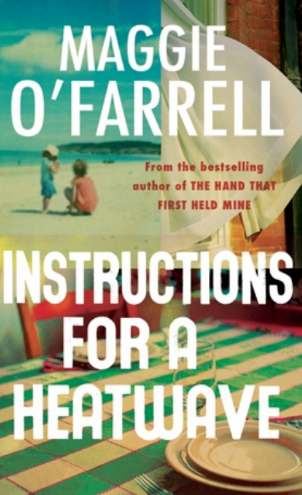
Maggie O’Farrell: Instructions For a Heatwave (2013)

I’m so behind with book reviews that it’s highly unlikely, I’ll ever catch up. This would have been one of many I was going to put aside “for later”, but the title’s too fitting to postpone reviewing it. And it was enjoyable.

The heatwave of the title refers to the heatwave of 1976, one of the worst the UK has ever seen. I don’t know anyone who was alive back then, no matter how small, who wouldn’t remember it. While it’s possibly as hot now as it was then, the heat started earlier, I think, in June and there were massive water shortages. Let’s hope that it won’t come to that. Although it looks dire already. “Over here”, where I live, Continental Europe, it’s even hotter. And, just like in the UK, we have no air conditioning. In Switzerland it’s even forbidden to have them in your own home. Small ones, yes, but they don’t help much. Before diving into the review, let me moan some more – yesterday, the thermometer in our flat showed 35°! Only two degrees less than outside. Sleeping, you wonder? Not so much. My poor cats crawl into dark corners, hoping dark means cool and stay there until the evening. Normally, they run around all day. Unfortunately, he’s afraid of the fan, while she enjoys it

Now on to Maggie O’Farrell. As I mentioned already, Instructions For a Heatwave is set in 1976 during the heatwave and tells the story of the Riordan family. One morning, the dad, Robert Riordan, leaves the house and doesn’t come back. His wife Gretta is shocked and flustered. She calls her children hoping they will come and help her. Already the first phone calls show the family dynamics. There are misunderstandings, half-truths, accusations, exaggerations, tensions. And the three children are facing troubles of their own, that are now, through this family emergency, magnified. At the same time, the emergency shows how frail their family bonds are, how dysfunctional. Gretta is a hypochondriac. She changes subjects when she feels she doesn’t want to talk about something and that is often. She pops pills, makes stuff up and has her kids constantly on alert. Some of the reasons for her behaviour will be revealed later.

Michael Francis is the oldest sibling and in the middle of his own family crisis. It may very well be that his wife, who is reinventing herself, will leave him. He’s not entirely without fault though. Monica, the first daughter, married for the second time, is also doubtful about the future of her marriage. And Aoife, the youngest, is in New York, trying desperately to hold on to a life she loves but that is threatened because it’s built on a lie – nobody knows that she’s a functional illiterate.

When they hear of their dad’s disappearance they all return home. At first, the reunion is frosty and awkward. There are too many things that have been left unsaid in the past and too many family secrets. The biggest is the reason for their dads’ disappearance.

It will take them a few days to sort some things out and then they take a family trip to Ireland, where the parents originally come from.

Instructions for a Heatwave is in many ways an astonishing book. It’s so intricately told, the stories are so tightly interwoven that I was constantly wondering – how did she do that? She moves in out of characters’ minds, switches from the present to the past and back again, but it’s never confusing because it’s so well done.

This is the story of a dysfunctional family but one with hope. They do not give up on each other nor on themselves. Gretta was possibly my favourite character although she reminded me of my late mother (minus my mother’s meanness that is). It’s fascinating to see a character description that resonates so much. Just like Gretta, my mother would always change the subject if she didn’t want to talk about something, pretending she hadn’t heard what had been said and then pretending she had an attack of something (cough, sickness, stomach cramps, “nerves”) and urgently needed her pills. Also, like Gretta, she would start chatting with anyone, finding out family stories and other people’s secrets without ever revealing any of her own. Since the Riordan’s are Irish and Catholics, that was something I could relate to as well. Looking back, it was no fun being brought up by a Catholic mother – my dad was anti-clerical, so that balanced things out a bit.

While this book resonated a lot with me because of my own history, I still think anyone who loves complex family stories would like this very much. In the past, I had mixed experiences with Maggie O’Farrell. I loved The Vanishing Act of Esme Lennox, but didn’t care for another one of her books (I think it was After You’d Gone). This rich and lovely novel has put me in the mood to read more by her. Her memoir I Am, I Am, I Am is already on my piles.

#LiveFromSofia – A Short Story Collection by Alexander Shpatov

I just reviewed Alexander Shpatov’s fascinating short story collection #LiveFromSofia for #BulgarianLiteratureMonth hosted by the Global Literature in Libraries Initiative. If you’d like to read it – here’s the review. The site is well worth checking out, especially if, like me, you’re not very familiar with Bulgarian literature.

Amélie Nothomb – Barbe Bleue – Blue Beard (2012)

In 1992, Belgian author Amélie Nothomb entered the literary scene with a bang. Her first novel, Hygiene and the Assassin – L’hygiène de l’assassin, was so successful, that to this day, it’s always the one novel mentioned together with her name. One could almost assume that she has not written anything else. One couldn’t be more wrong. Since 1992 she has published a novel per year. I read her first and wasn’t too keen on it, so I never returned to her until I saw Barbe Bleue (Blue Beard) in a book shop. I love fairy tale retellings or reinterpretations and Blue Beard is one of my favourites. Knowing that she’s famous for her dry, acerbic style, I thought it would be interesting to see what she would do with a tale like this. I was pretty sure, it wouldn’t be fantasy or fantastical and I was right. I had hoped I would like it, but I didn’t expect to like it so much. It’s clever, witty, and whimsical.

Saturnine, a young lecturer at the school of the Louvre in Paris, is looking for a room. When she sees and ad offering rooms in an elegant mansion in the 7th arrondissement, she’s thrilled. The rooms are big, the rent is cheap, what more could she wish for? Of course, she’s not the only one interested in the offer. The place is swarming with women. As Saturnine finds out to her surprise, most of them didn’t come for the rooms, but because they want to catch a glimpse of the rich, notorious owner. All of his eight former tenants have vanished and it is rumoured that he may have killed them. Because Saturnine is from Belgium, she had never heard of the story before. One of the women, applying with Saturnine, predicts that she will be the chosen one as she’s the youngest and the prettiest. And she’s right.

When Saturnine sees the host for the first time she’s totally underwhelmed. He’s not very attractive and full of mannerisms. He’s a Spanish nobleman with a long, flourishing name. Don Elemirio is very proud of his origins and of himself. He shows her around and tells her she can go anywhere she likes with the exception of one room with a black door. He warns her that it wouldn’t be dangerous for her if she entered.

Saturnine isn’t a nosy person and so she’s never tempted to open the door to the forbidden room, but she would like to know what happened to her eighth predecessors.

On the first evening, her host begs her to join him for dinner. She accepts and this will be the first of many dinners. They are all eccentric and downed with large amounts of the most expensive champagne. During these meals, Saturnine teases the nobleman but he doesn’t really get it. He stays serious and finally confesses he’s in love with her. Saturnine is shocked that someone could fall in love so quickly and very certain that she will never love him back. Soon, however, it becomes clear that the mysterious and many talented Don Elemirio fascinates her.

If you’d like to find if she falls for him, and whether or not she’ll access the forbidden room and what happened to the eight women before her, you’ll have to read the book.

To tell this whimsical retelling of the famous Blue Beard fairy tale, Amélie Nothomb uses mainly dialogue. There are only few descriptions and some of Saturnine’s reasonings added. The result is very lively as the discussions are so witty and original and touch upon subjects as diverse as the Spanish Inquisition, Ramon Llull’s Ars Magna, and the perfect color. Saturnine is anything if not feisty. Any other woman would have fled the premises. While she teases, questions, and criticizes the nobleman, he shows her a world of idealism and perfectionism that’s as far from our world as could be.

I enjoyed this book. It’s a clever reinterpretation of an old tale. Since it’s so dialogue heavy, I could imagine it would make a wonderful play.

Most of Amélie Nothomb’s books have been translated into English, but not this one.

I’ll be reading another of Amélie Nothomb’s books bery soon. After having read a few rave reviews I got Les Catilinaires – The Stranger Next Door.

Have you read any of Nothomb’s books. Which ones would you recommend?

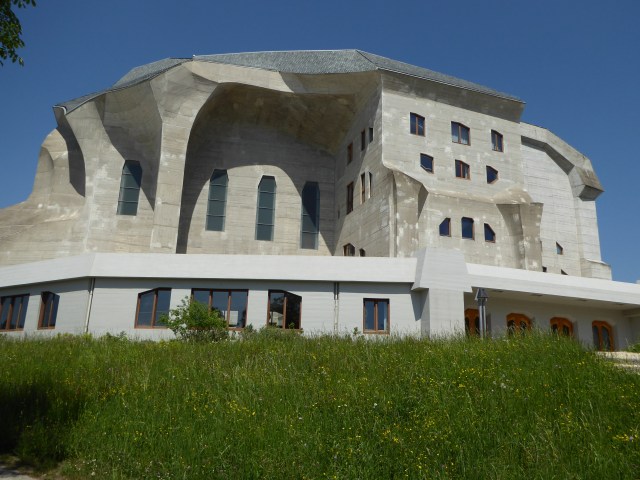
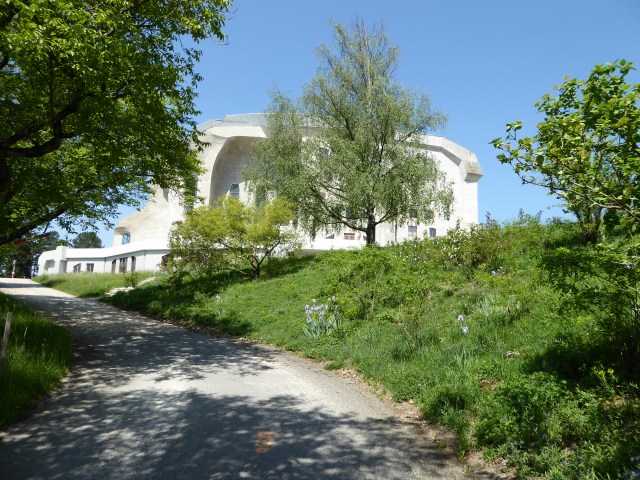
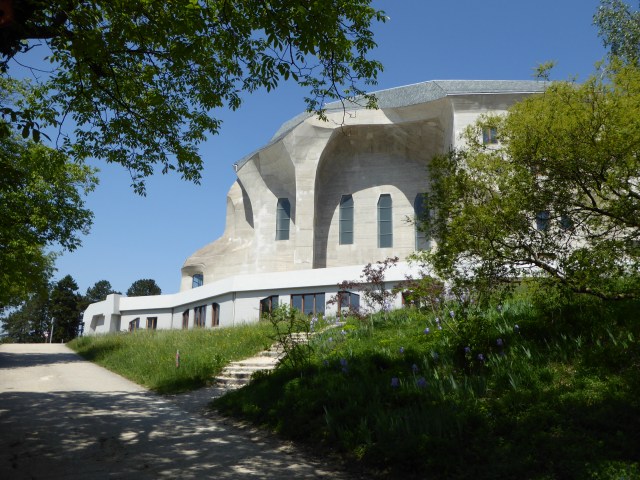
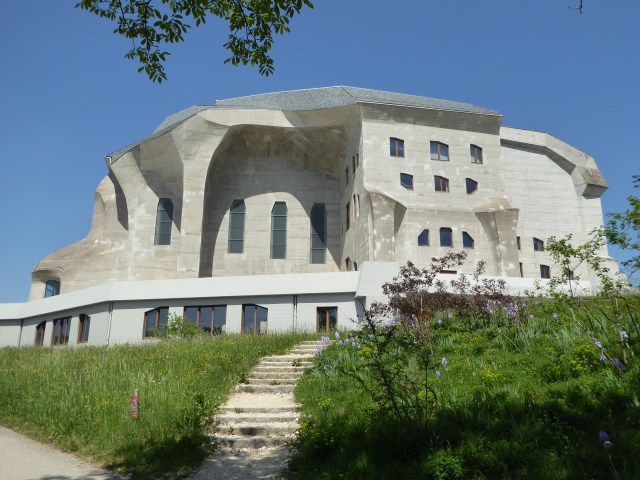
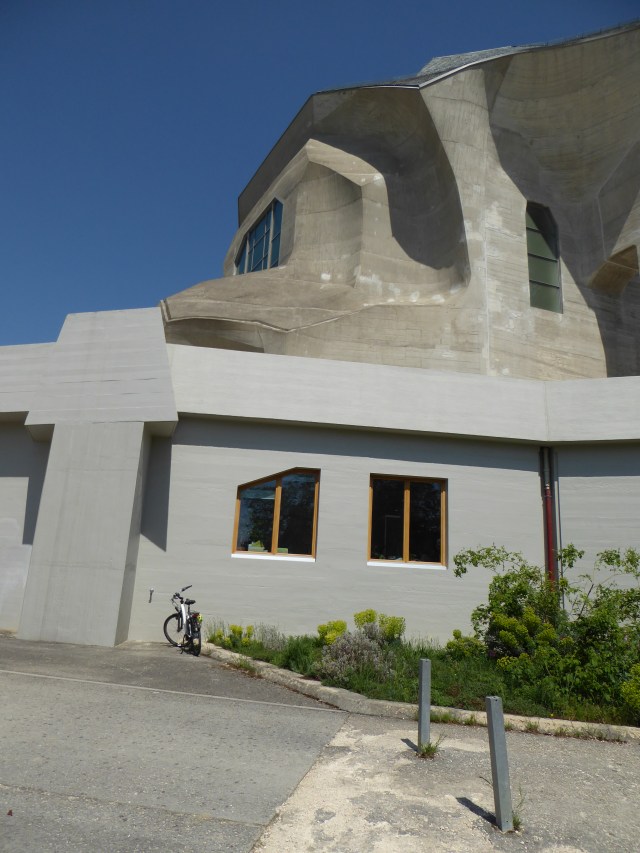
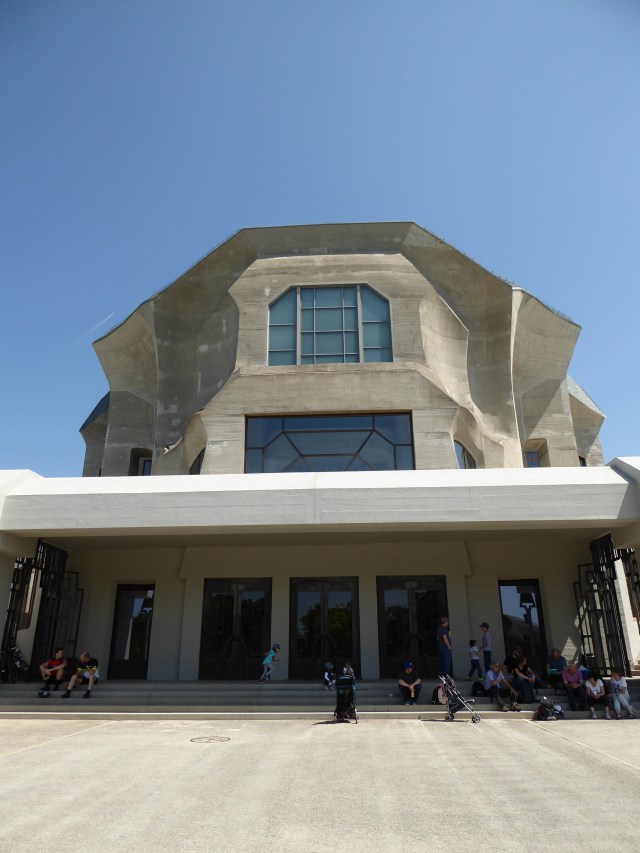
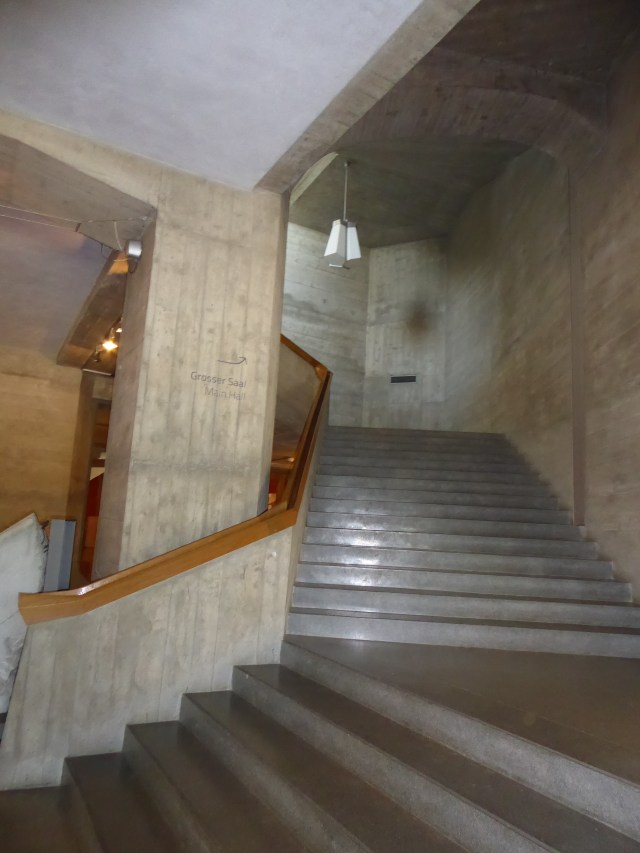
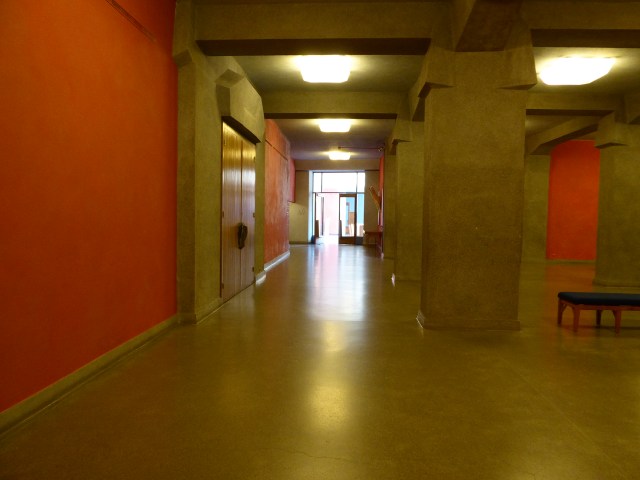
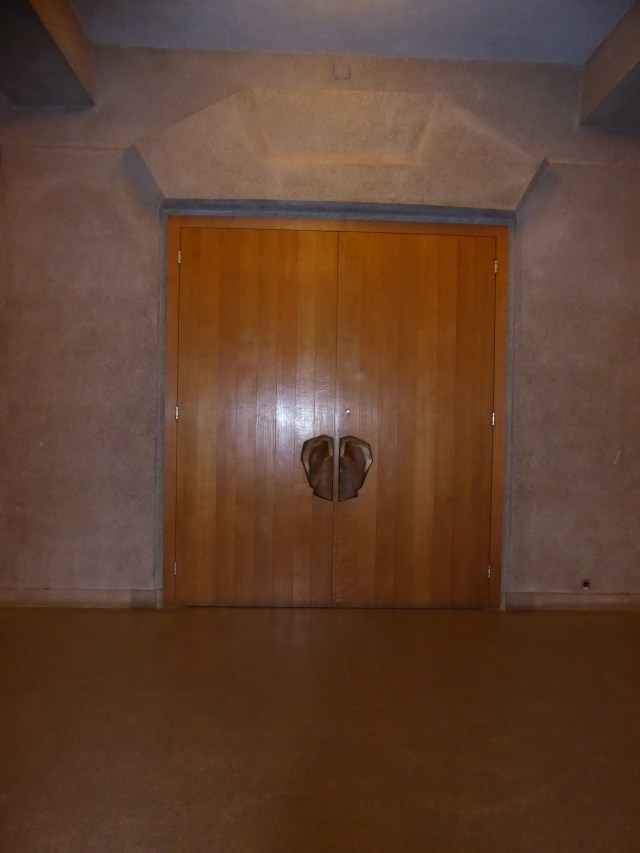
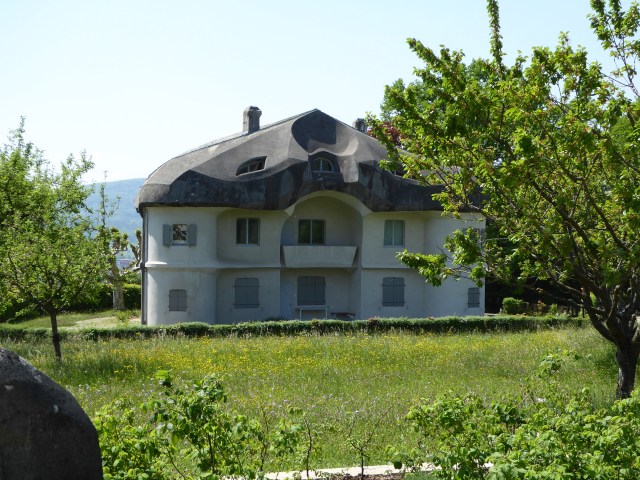
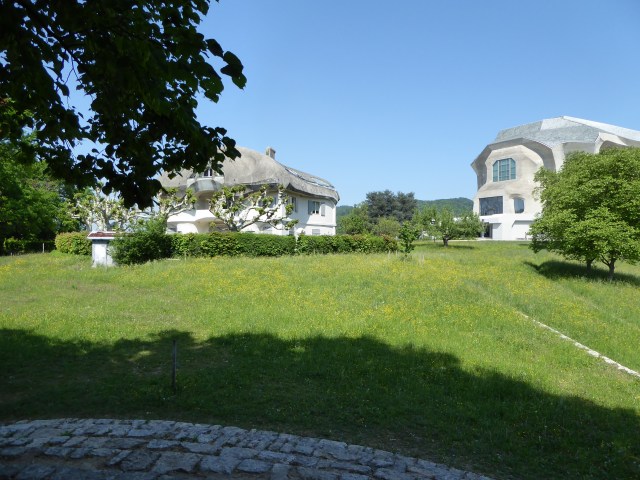
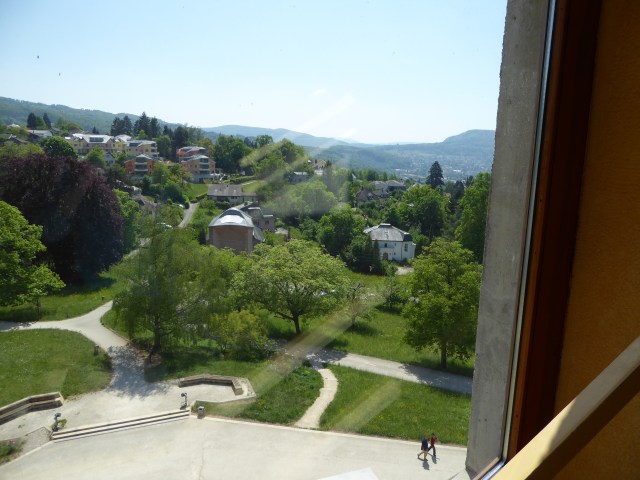
A Magical Place – The Goetheanum in Dornach, Switzerland

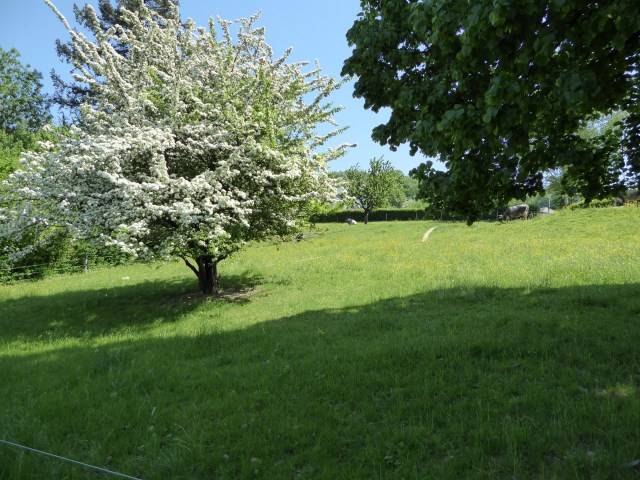
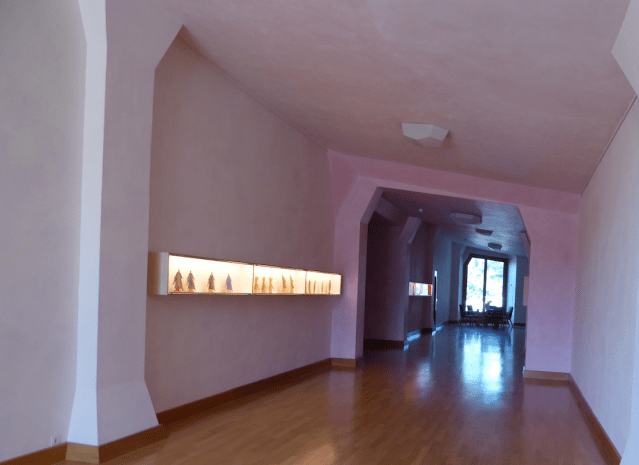
There aren’t many places that enchant me as much as the Goetheanum, in Dornach, Switzerland. Luckily, for me, it’s only about a ten minute drive from Basel, where I live. In the past, I used to visit at least once a year, mostly in spring because then the surrounding landscape and the gardens are at their most beautiful. Although I enjoy it so much, I haven’t been there in a while and was surprised to find many, lovely changes inside.

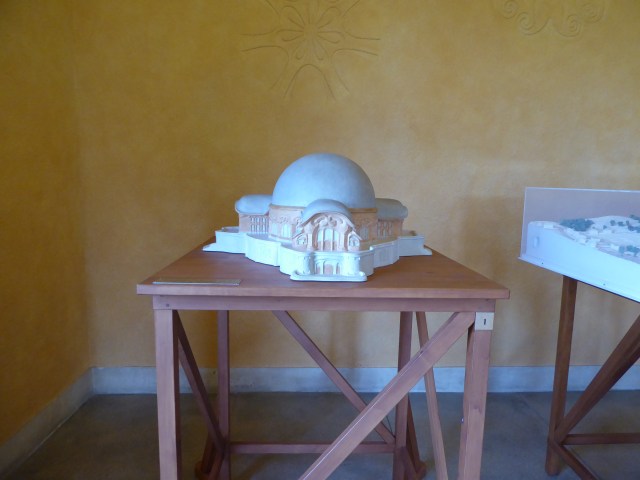
The Goetheanum is the world center for the anthroposophical movement. The building was designed by its founder Rudolf Steiner and named after Johann Wolfgang von Goethe. It is the only place in the world, where you can see an unabridged version of Goethe’s Faust cycle.

The Goetheanum is a center of study and art. You can attend workshops, see plays, take courses and study many of the branches of anthroposophy. Dancing, painting, health courses, bio-dynamic farming, astronomy, astrology . . .

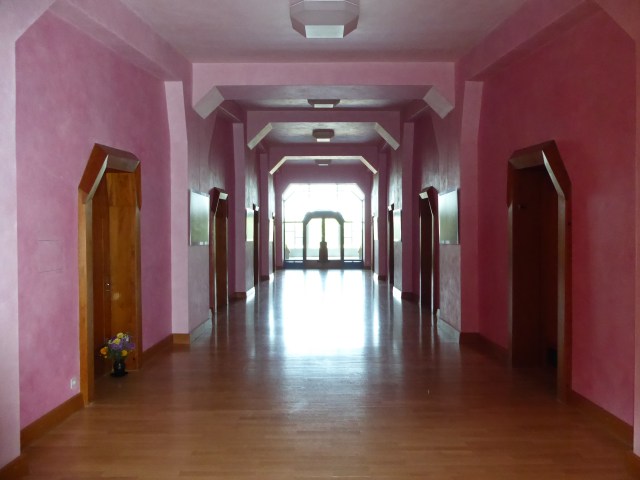
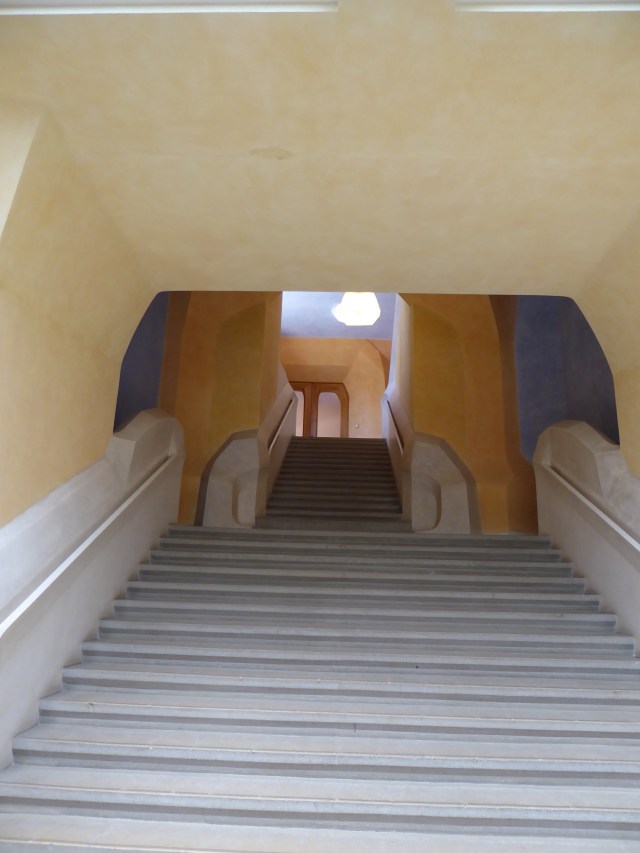
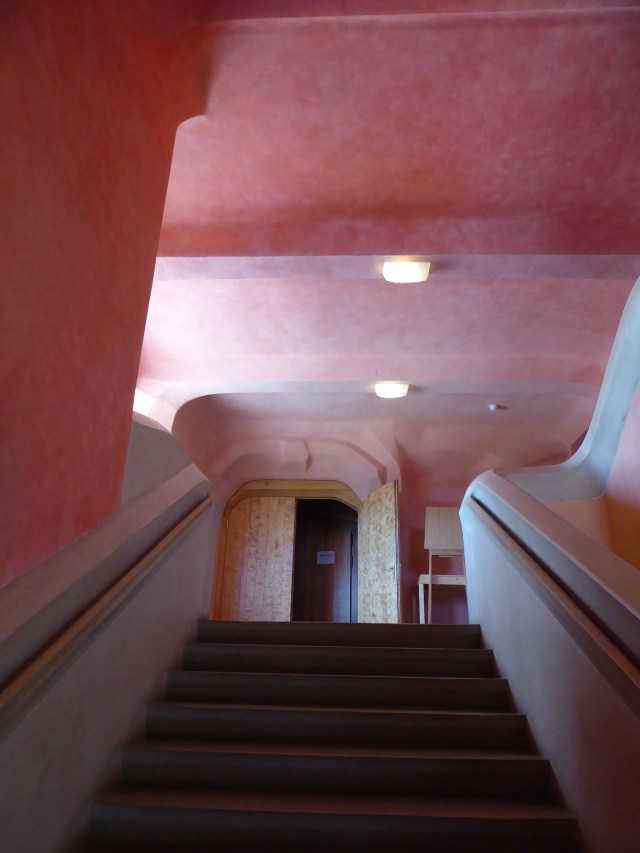
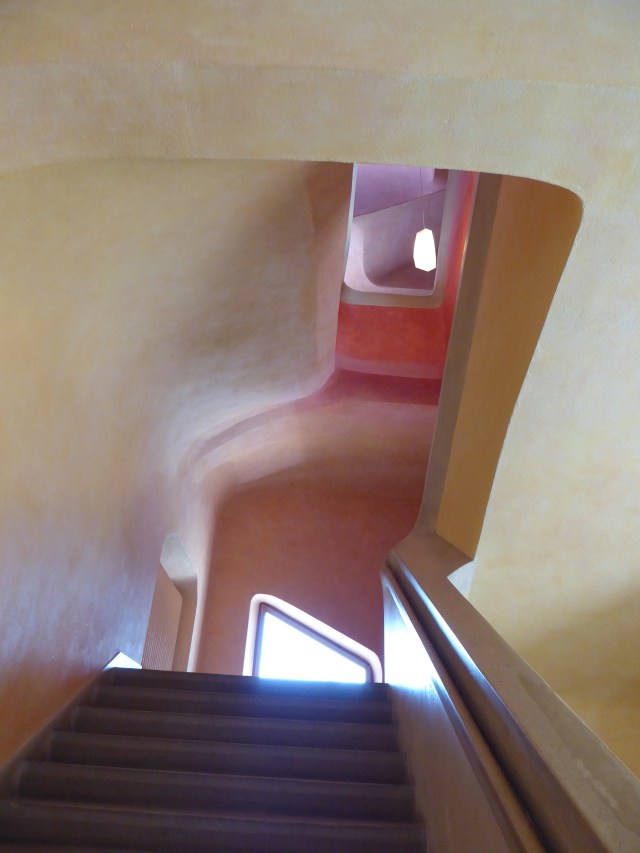
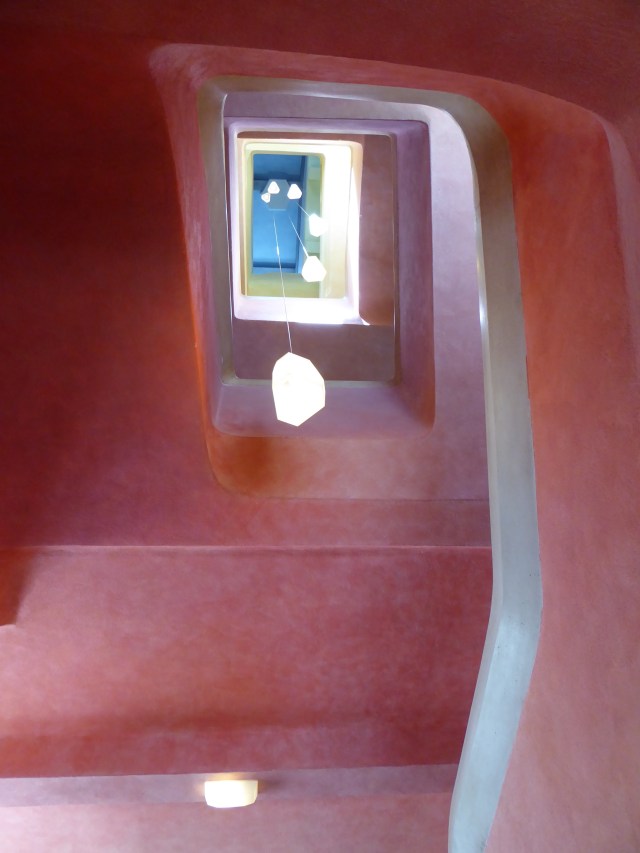
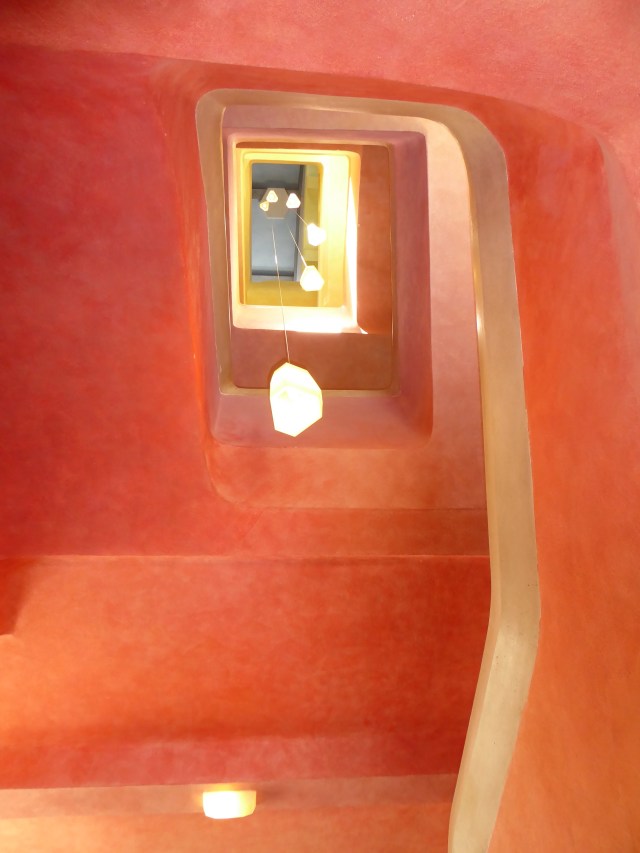
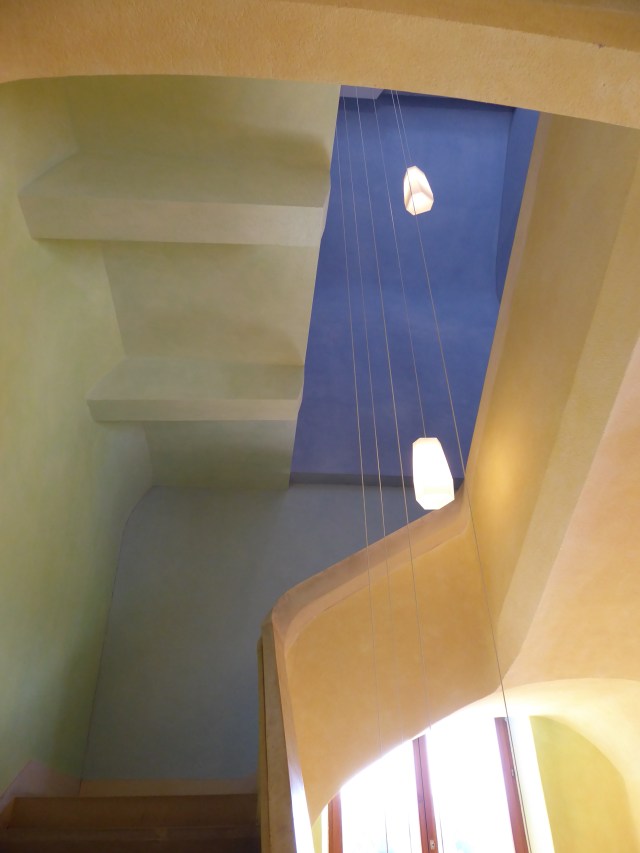
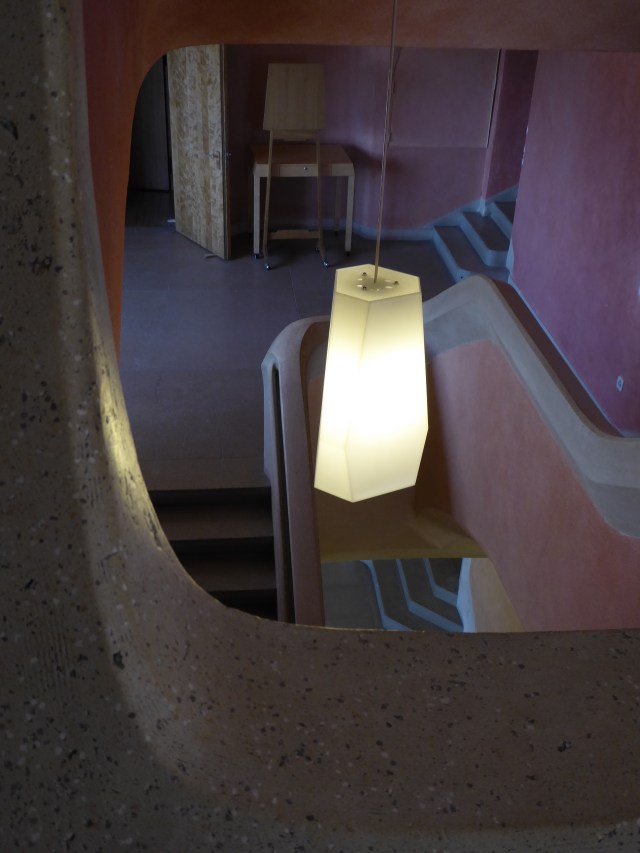
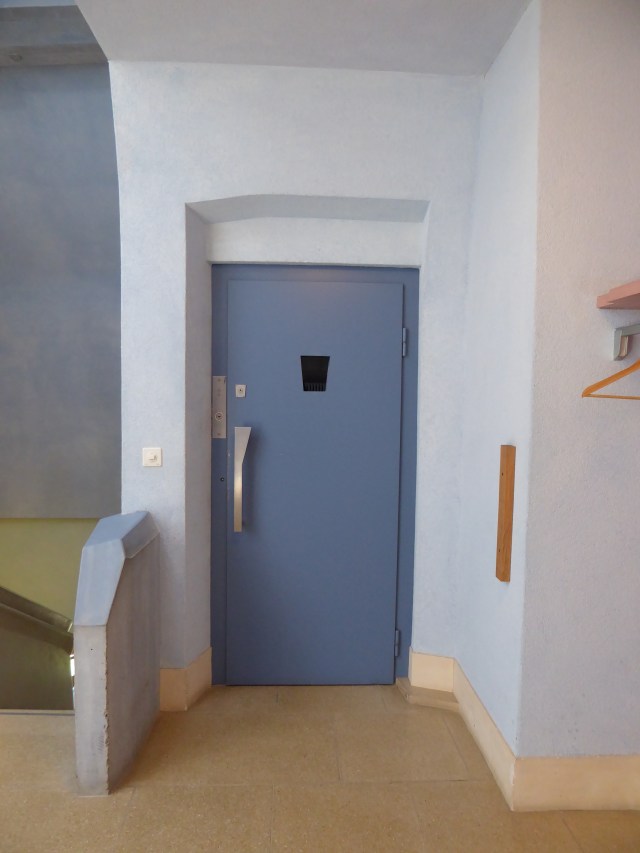
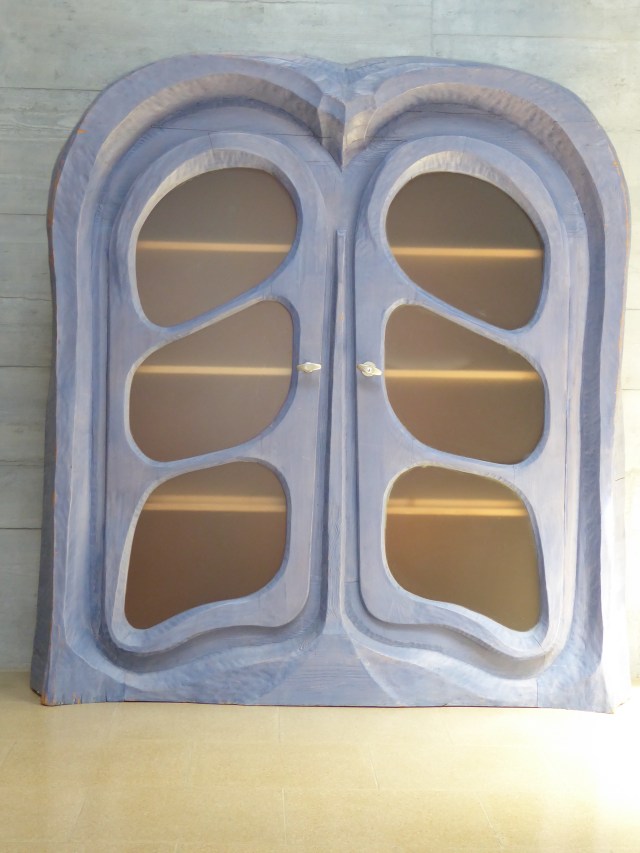
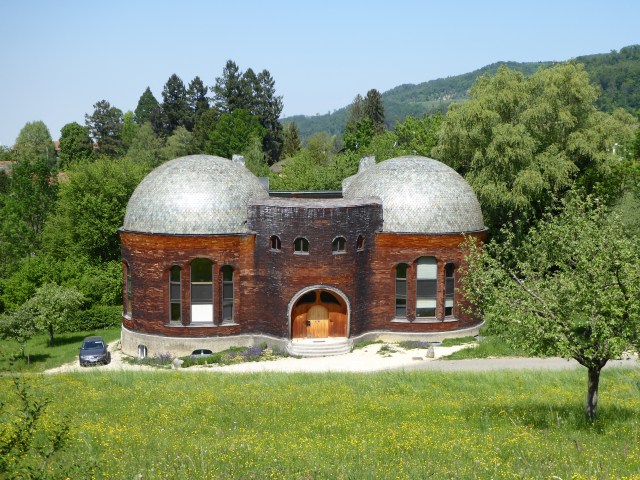
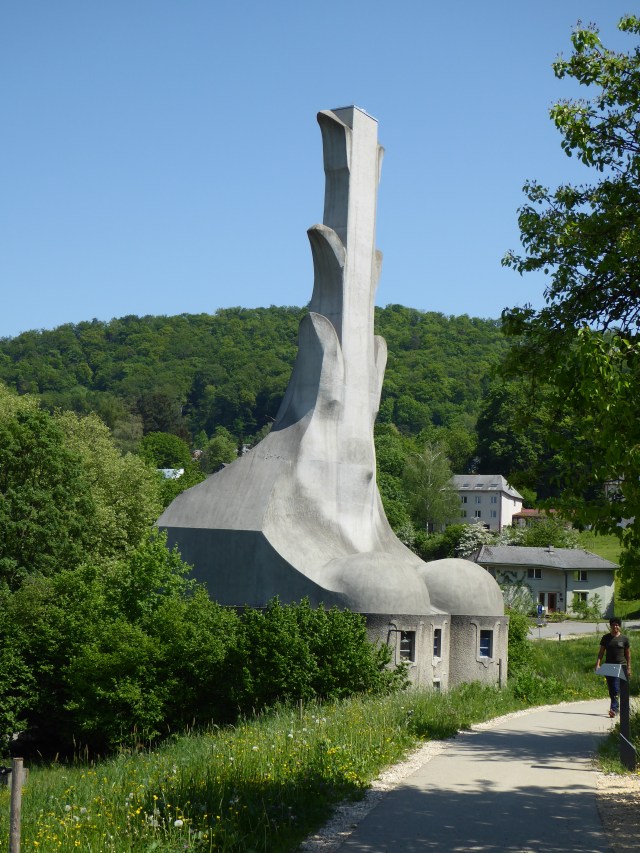
Anthroposophy is a very complex philosophy and I can’t go into details here. One aspect of it, however, is worth mentioning here: the idea that forms should be organic. That’s why the architecture is so stunning. The are no sharp angles or rectangles. Everything is rounded or many angled. The color scheme is very unique too. I’d call them strong pastels.
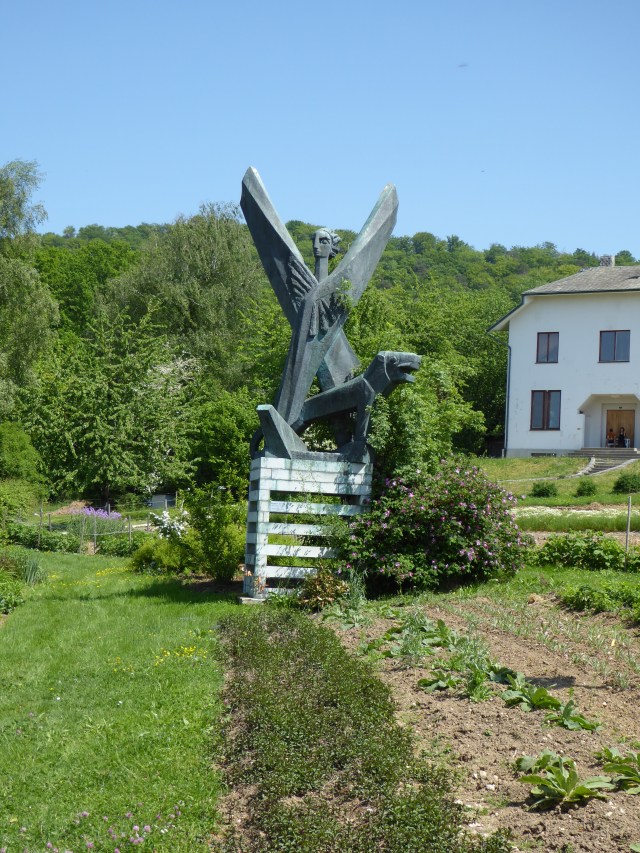
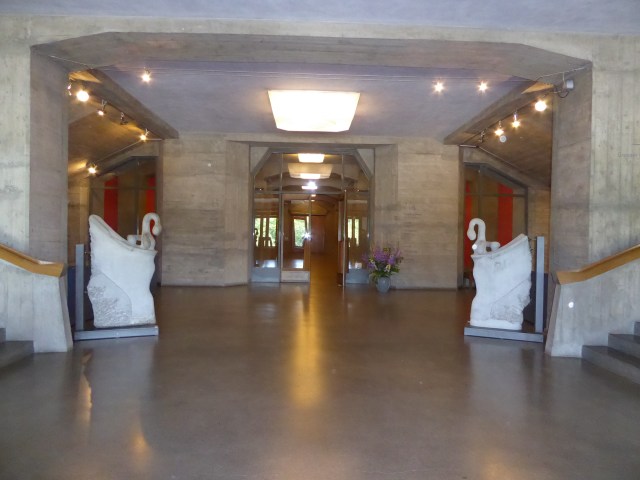
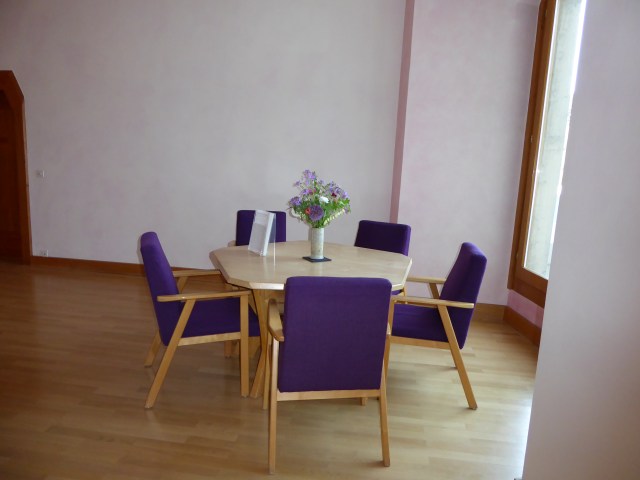
When I saw the house last, it was all grey concrete, inside and outside. I was pleased to discover that they started to paint the inside. It enhances the delicate, intricate architecture. One stair case was particularly stunning. Every floor was painted a different color, ceilings included and that gave you the impression of experiencing the color, bathing in colored light. Truly magical.

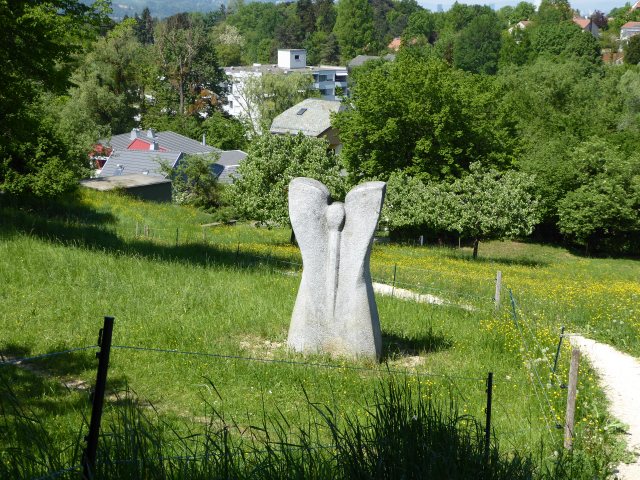
The buildings surrounding the Goetheanum, or close by, are equally built in an anthroposophical style. You can also find artwork in the gardens, mostly of angels and other cosmic beings.

If you’re ever in Switzerland, you shouldn’t miss this. It’s such a peaceful place. The entrance is free and you can enter pretty much every room and walk through all the corridors unhindered, as long as there isn’t a workshop/play/study group inside.

And for those who read German – there’s another special treat – one of the best book shops I know.