Ursula Bloom: Wonder Cruise (1934)

Wonder Cruise

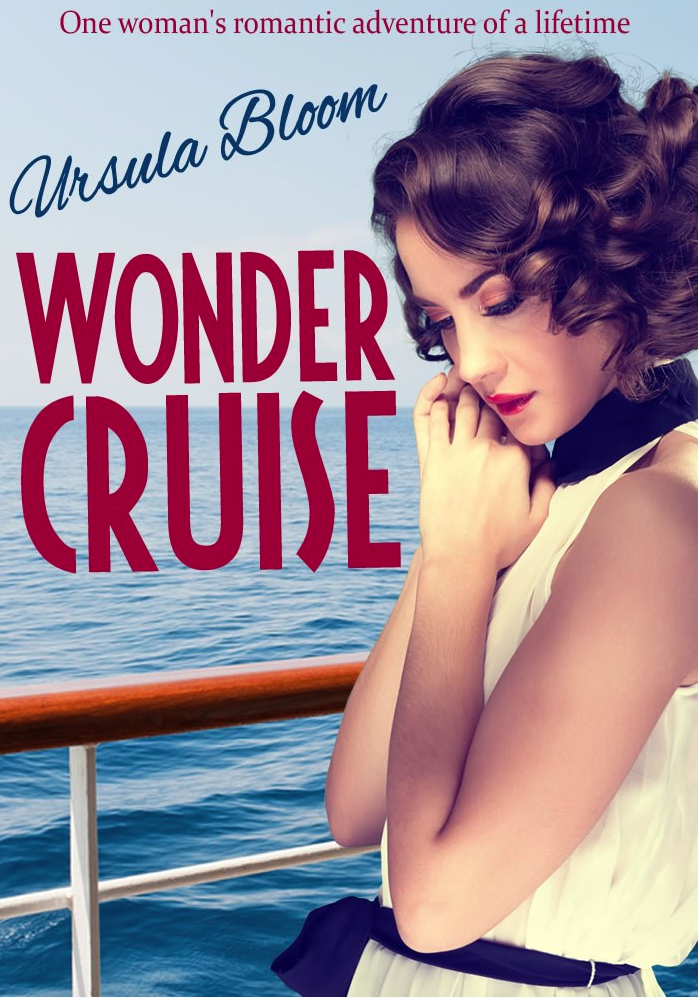
Before Corazon Books contacted me and asked me whether I would be interested in reviewing Ursula Bloom’s Wonder Cruise, I had never even heard of the author before. It sounded like a novel by one of those wonderful English authors who wrote and published in the first half of the last century – Mary Stewart, Angela Thirkell, Barbara Pym -, so I said yes immediately. When the book arrived I was a bit worried because of the cover, but as soon as I started reading I knew I had nothing to worry about. Although it has an unfortunate cover, Wonder Cruise is an absolutely delightful book; it’s as charming as it’s witty. I could hardly believe that an author who wrote like this has become a forgotten author. Especially since Ursula Bloom wrote far over 500 novels. Yes, you read correctly – over 500. She’s even in the Guinness Book of Records.

Written and set in the 1930s, Wonder Cruise tells the story of Ann Clements. You could call it a story of awakening and transformation. Ann is a spinster of 35, with little hope of marriage or an otherwise fulfilled life. She works at an office, doing tedious, boring jobs. In her private life, she is pretty much under the thumb of her older brother Cuthbert, a pompous, self-righteous clergyman who manipulates Ann constantly. It doesn’t look as if there was a lot of hope for Ann’s future but, from the first page on we know that Ann’s a very keen observer and someone who is very much aware of the beauty surrounding her, and we instantly root for her.

She’s aware that she doesn’t like her life and her work but she doesn’t think it could change.

That was life at the office.

It went on and on and on for years, as it would go on and on, Ann felt, long after she was dead. It was a place that she had been sucked into by the giant machinery of life. An intricate pattern of living, and always dismally the same. You could not escape it.

Then something wonderful happens. Ann wins a lot of money in a sweepstake and suddenly life has promise. However, there’s Cuthbert to deal with. He wants her to save the money, so his own daughter will have something to fall back on. Ann’s torn between her feelings of duty and her yearning for another life.

Until this actual moment she had not realised that she was sick of digging, and of doing the same thing in the same way day after day. She had not realised that Mrs. Puddock’s rooms were awful, and that Monday washing, Tuesday ironing, Wednesday mending, Thursday hair-wash were much like a pair of handcuffs set like shackles on her wrists.

Once she’s conscious of her situation and the manipulations of her brother, she is able to break free. She books a cruise along the Mediterranean coast. The ship lands at Marseille, Gibraltar, Naples, Malta, Venice  . . . With every kilometer, Ann becomes more herself, discovers that she is still young and attractive. For the first time, she enjoys herself.

There was the scent of tuber roses, and of lilies and wistaria all blending together. It was far more beautiful than anything she had ever imagined, far lovelier than any picture she had seen, even the one inside the portal of the steamship company in Cockspur Street.

Cockspur Street.

How terribly far away that seemed – and was!

After a few weeks of enjoyment, Ann has to ask herself fundamental questions: Who is she really and what does she want? Can she ever go back to her dull life of routine? And what about the men she meets? Is there one among them that she could love?

I’ll stop here and let future readers find out from themselves how Ann answers these questions.

The descriptions of the various settings are so lovely and spot-on. I’ve been to many of these places and the way Ursula Bloom described them, shows that she knew these places very well. Ann is a delightful character. She’s endearing, naïve but enthusiastic and a witty and keen observer. It’s great fun to read her take on the various people who are on this cruise with her. Bloom enjoys poking fun at stuck-up, uptight Brits who treat the places and people they meet like artifacts in a museum and constantly complain about the heat and the food. Some of the scenes are really funny.

Wonder Cruise has been such a discovery. It offers intelligent, charming entertainment, features an endearing main character, and is full of witty observations and enthralling descriptions. I’d love to read more of Ursula Bloom’s books.
James Salter: The Hunters (1956) Literature and War Readalong May 2016

The Hunters

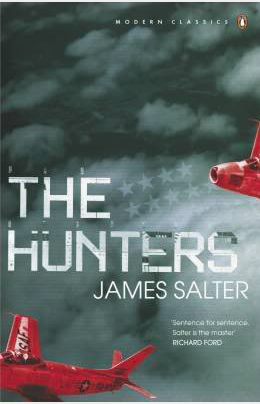
The Hunters was James Salter’s first novel. It is based on his own experience as a fighter pilot during the war in Korea.

The Hunters tells the story of Cleve Connell, an excellent, seasoned pilot who is sent to Korea. Cleve is anxious to get there. He wants to prove himself and become an ace, a fighter pilot who has shot down five enemy planes – MIGs. He knows he’s running against time because he isn’t a young pilot anymore.

One thing he was sure of: this was the end of him. He had known it before he came. He was thirty-one, not too old certainly; but it would not be long. His eyes weren’t good enough anymore. With a athlete, the legs failed first. With a fighter pilot, it was the eyes. The hand was still steady and judgement good long after  man lost the ability to pick out aircraft at the extreme ranges. Other things could help to make up for it, and other eyes could help him look, but in the end it was too much of a handicap. He had reached the point, too, where a sense of lost time weighed on him. There was a constant counting of tomorrows he had once been so prodigal with. And he found himself thinking too much of unfortunate things. He was frequently conscious of not wanting to die. That was not the same as wanting to live. It was a black disease, a fixation that could ultimately corrode the soul.

Cleve and every other pilot lives for nothing else but the adrenaline rush of a mission that may bring the possibility to shoot down an MIG and to survive another dangerous mission. The pilots are all competitive but that doesn’t mean they would endanger each other.

They had shot down at least five MIGs apiece. Bengert had seven, but five was the number that separated men from greatness. Cleve had come to see, as had everyone, ho rigid was that casting. There were no other values. It was like money: it did not matter how it had been acquired, but only that it had. That was the final judgement. MIGs were everything. If you had MIGs you were standard of excellence. The sun shone upon you.

Then, one day, Pell arrives. Pell is by far the most competitive pilot Cleve has ever met. And the most reckless. He’s assigned to Cleve’s flight, a small group of pilots of which Cleve’s the leader. Cleve hates him immediately. Not only because he’s so competitive but because he senses he would do anything for a kill and that he’s dishonest. Pell hates Cleve just as much. He’s jealous of his reputation and undermines his authority from the start.

At first, Cleve’s very sure of himself because he’s known to be one of the best pilots but after he returns from many missions, without one single kill, he loses confidence. On top of that, Pell shoots down one enemy plane after the other and, so, killing turns into an obsession for Cleve.

Cleve’s not the only pilot who seems to have forgotten, that ultimately they are in a war. The following quote might explain why this is the case.

They talked for a while longer, mostly about the enemy, what surprisingly good ships they flew and what a lousy war it was. The major repeated that despairingly several times.

“What do you mean, lousy?”

“Oh, I don’t know,” Abbott said distractedly, “it’s just no good. I mean what are we fighting for, anyway? There’s nothing for us to win. It’s no good, Cleve, You’ll see.”

The Korean war is often referred to as the “forgotten war” and this sense of not really knowing what they were fighting for, seems to have been almost universal. Many of the pilots who fought in the Korean war, fought during WWII. While they had the sense of having done good in Europe and the Pacific, they often didn’t really understand why they fought in Korea. However, the book doesn’t explore the political or historical dimensions of the war. It only focuses on the drama of the pilots.

The Hunters is an excellent novel and the reader senses that from the beginning. The writing is tight and precise. Salter uses metaphor and foreshadowing with great results. He’s also very good at capturing emotions and moods like in this quote:

He was tired. Somehow, he had the feeling of Christmas away from home, stranded in a cheap hotel, while the snow fell silently through the night, making the streets wet and the railroad tracks gleam.

The book offers a fascinating character study, or rather the study of two characters. And it’s suspenseful. We wonder constantly whether Cleve will make it, become an ace and leave Pell behind or whether Pell will leave him behind for good. And then there’s the almost mythical figure of “Casey Jones”, a Korean Fighter pilot who is so reckless and successful that everybody speaks about him and thinks he’s invincible. Shooting down a pilot like that, would make up for everything else.

I can’t say more as it would spoil this excellent novel. It’s amazingly well written and surprisingly suspenseful. And, as if that was not enough, the end is unexpected and satisfying.

The book comes with a foreword, for which I was glad as it’s key to understand in what formations the pilots flew and to know what the characteristics of the respective planes were. There’s a great scene towards the end, in which Cleve and another pilot fight with almost empty tanks. The logic of this and other fights would have been difficult to understand without the introduction.

Other reviews


*******

The Hunters is the third book in the Literature and War Readalong 2016. The next book is the US novel Billy Lynn’s Long Halftime Walk by Ben Fountain. Discussion starts on Friday 30 September, 2016. Further information on the Literature and War Readalong 2016, including the book blurbs can be found here.

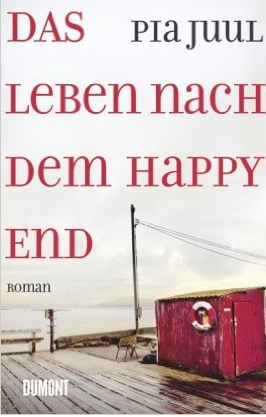
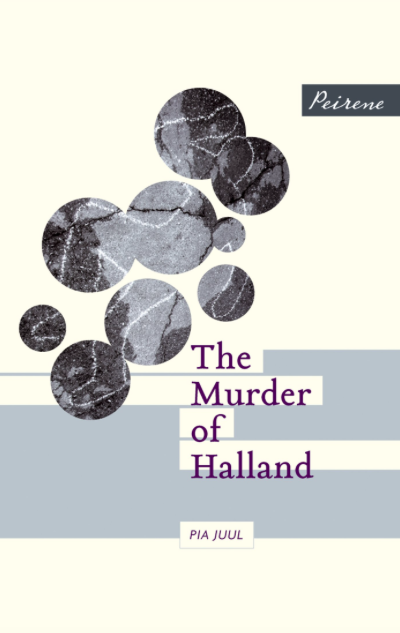
Pia Juul: The Murder of Halland – Mordet på Halland – Das Leben nach dem Happy End (2009)

The Murder of Halland

If you know that Pia Juul’s novel The Murder of Halland (Mordet på HallandDas Leben nach dem Happy End) plays with reader expectations, then you might enjoy this novel. If, however, you expect a conventional crime novel, you might be a little disappointed. Yes, it’s about a crime, but not a crime novel per se.

Pia Juul is a Danish writer, that’s why I read the German translation (I think that German is closer to most Nordic languages than English). While the English title is a literal translation of the Danish title, the German publisher chose to call the book “Life after the Happy End”. I don’t like the title but, at least, it didn’t sound like it was a crime novel.

The book opens with the murder of Halland. Or rather the discovery of his dead body. The man who found him says that Halland’s last words were “My wife killed me.” The reader knows that Bess, his partner, didn’t kill him. She was in the house, while he was shot.

Bess is a writer who left her first husband and her daughter because of Halland. She hasn’t seen her daughter since the girl was fourteen years old and has suffered because of this separation ever since. The daughter is now a young woman of 24.

Like most readers, even though I knew this wasn’t a typical crime novel, I assumed that the book would explore who shot Halland and why. The police does investigate, but it’s a half-hearted investigation. Of course, that’s not realistic, it was the writers choice to present the story this way. The reason for this is revealed later in the book when Bess watches a crime movie on TV and tells the reader that she’s never interested in the “who did it part” of a crime story and mostly forgets the end. She is much more interested in the people involved. The life of the victim, the investigator, and the friends and relatives of the victim. I feel a lot like Bess. I read crime novels for many reasons. Finding out who did it isn’t that important for me.

When Bess hears of Halland’s death, her first reaction is to call her estranged daughter. That reaction alone makes it clear we’re not going to read an ordinary story and from here on, Bess reacts in a rather unconventional way. And this is exactly why I found this book so great. Luckily, most of us will not encounter murder. We won’t find our partners shot dead or be friends with someone whose partner has been shot dead. So, why do we assume we know how a person would react under the circumstances? We think we know because we see how people in movies and books react. But maybe they wouldn’t cry and grief, maybe they would just go a little crazy? Maybe they would be so shocked that they wouldn’t react at all and just withdraw from the world?

Bess does go a little crazy but there are a lot of other things that are strange and the reader discovers with Bess that Halland may not have been who she thought he was and that he had secrets. Here again, expectations are not met. There are secrets but they are different from what we assume and possibly do not have anything to do with the murder as such. Or maybe they do? That’s for you to find out.

I really enjoyed this book. I found it refreshing, loved the brittle tone and how surprising it was. It’s never forseeable how Bess will react and in what direction the story will go next.

It’s a thought-provoking book that leaves a lot open. If you prefer the end of your novels to be less enigmatic, then this isn’t a book for you. If you like something more unusual, with unpredictable characters, then give it a try.

Here’s another take on the novel from Guy’s blog.

Das Leben nach dem Happy End

Literature and War Readalong May 31 2016: The Hunters by James Salter

The Hunters

James Salter’s The Hunters is this month’s Literature and War Readalong title. It’s the first novel about the Korean war that we’re reading in the read along. I’ve been keen on reading James Salter for ages as he’s always mentioned as one of the greatest US writers. Published in 1956, The Hunters was Salter’s first novel. Until the publication of this novel, Salter was a career officer and pilot in the US Air Force. He served during the Korean war where he flew over 100 combat missions. This was certainly the reason why he chose to write about a fighter pilot in his first novel. The novel has been made into a movie starring Robert Mitchum and Robert Wagner. James Salter died last June in Sag Harbor, New York.

Here are the first sentences:

A winter night, black and frozen, was moving over Japan, over the choppy waters to the east, over the rugged floating islands, all the cities and towns, the small houses, the bitter streets.

Cleve stood at the window, looking out. Dusk had arrived, and he felt a numb lethargy. Full animation had not yet returned to him. It seemed that everybody had gone somewhere while he had been asleep. The room was empty.

He leaned forward slightly and allowed the pane to touch the tip of his nose. It was cold but benign. A circle of condensation formed quickly about the spot. He exhaled a few times through his mouth and made it larger. After a while he stepped back from the window. He hesitated, and then traced the letters C M C in the damp translucence.


And some details and the blurb for those who want to join:

The Hunters by James Salter, 233 pages, US 1957, War in Korea

Here’s the blurb:

Captain Cleve Connell arrives in Korea with a single goal: to become an ace, one of that elite fraternity of jet pilots who have downed five MIGs. But as his fellow airmen rack up kill after kill – sometimes under dubious circumstances – Cleve’s luck runs bad. Other pilots question his guts. Cleve comes to question himself. And then in one icy instant 40,000 feet above the Yalu River, his luck changes forever. Filled with courage and despair, eerie beauty and corrosive rivalry, James Salter’s luminous first novel is a landmark masterpiece in the literature of war.

*******

The discussion starts on Tuesday, 31 May 2016.

Further information on the Literature and War Readalong 2016, including all the book blurbs, can be found here.

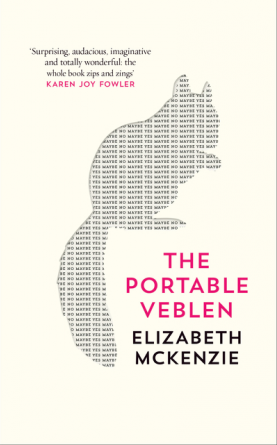
Elizabeth McKenzie: The Portable Veblen (2016)

The Portable Veblen

There are a few things you might see differently after having read The Portable Veblen—squirrels, marriage, clinical trials, mental health, consumerism, Thorstein Veblen. What I’m trying to say – this is a novel that’s as quirky as it is serious. But the best of all: the voice is stunning and as witty as it is clever. Looking at some of the topics this novel explores—dsyfunctional families, PTSD, pharmaceutical companies, mental illness— one wouldn’t think it would be funny, but it is. I really loved this book and it’s main narrator Veblen Amundsen-Hovda.

Veblen, named after Thorstein Veblen, author of The Theory of the Leisure Class, is a self-declared “cheerer-upper” with a narcissistic, hypochondriac and controlling mother. Veblen is obsessed with squirrels, translates from the Norwegian in her free time and is highly suspicious of everything that whiffs of consumerism.

Veblen espoused the Veblenian opinion that wanting a big house full of cheaply produced versions of so-called luxury items was the greatest soul-sucking trap of modern civilization, and that these copycat mansions away from the heart and soul of a city had ensnared their overmortgaged owners – yes, trapped and relocated them like pests.

She’s engaged to Paul, a neurologist who works for a shady pharmaceutical company and gives her the most ridiculously huge engagement ring. All of her life, Veblen has been crushed by her mother. Her dad is in a mental institution and her step-dad always takes her mother’s side. Nonetheless, her mother and her mother’s opinion are important. So far, neither Veblen nor Paul have met their respective parents. Both are wary of a meeting. Veblen because she’s afraid of what crushing things her mother might say about the engagement and her fiancé, and Paul because he’s ashamed of his parents, hippies who were anything but good parents.

Just to give you an idea of what Veblen has to deal with. That’s her thinking of telling her mother about the engagement:

She had an internal clock set to her mother’s hunger for news, but sometimes it felt good to ignore it.

Then she went back inside and grabbed the phone to spring the news on her mother. Nothing being fully real until such springing. And nothing with her mother ever simple and straightforward either, and that was the thrill of it. A perverse infantile thrill necessary to life.

And this is how the phone call goes:

“Well. Did you say yes for all the right reasons?”

The coffeemaker gurgled and hissed, a tired old friend doing its best. “I think so.”

“Marriage is not the point of a woman’s life. Do you understand that?”

“By now.”

“Do you love him?”

“I do, actually.”

“Is everything between you, good, sexually?”

“Mom, please! Boundaries or whatever.”

“Don’t say boundaries like every teenage twerp on TV.”

It bothered Veblen’s mother that most people were lazy and had given up original thought a long time ago, stealing stale phrases from the media like magpies.


The main question at the heart of the story is: should anyone get married, especially when coming from a dysfunctional family? It takes Veblen a long time to make up her mind – the whole novel – and most of it involves hilarious scenes. Her mother is one of those parents that, while toxic, still has a lot going for her. I loved all the scenes that involved her. I equally enjoyed the passages in which we see Veblen on her own. Some of the chapters are told from Paul’s POV and those weren’t my favourites. He’s not a character that could stand on his own, he always needs to clash with another one to be interesting.

This might be one of the wittiest books I’ve read in a long time. But it’s also charming and profound. I’ve seen a few people comment that they found the book confusing. I didn’t. Most of the crazy moments are due to Veblen’s attempts at staying sane. Dissociation and escape into a fantasy world in which squirrels communicate with her, are coping mechanisms. As cheerful as Veblen seems, she is someone who has been crushed and whose lack of self-confidence is painful. That a lot of her composure comes from taking medication, is equally tragic. It may sound paradoxical, but given her upbringing, she’s doing well.

As I said, I enjoyed The Portable Veblen a great deal. It’s s such a clever book.

I wasn’t surprised to find it on the short list for the 2016 Bailey’s Prize for Fiction.

Three Short Reviews – Eileen (2015) – The Loney (2014) – Saturday (2005)

Ottessa MoshfeghScreen Shot 2016-04-15 at 09.37.31Screen Shot 2016-04-15 at 10.16.27

I finished so many novels recently that I will never be able to review them all. That’s why I decided to do a post with shorter reviews. It doesn’t mean that the books weren’t as good as other books I’ve read. Just bad timing review-wise. I’ve added some blurb quotes at the beginning. Either as a contrast to what I wrote or to emphasize my opinion.

Ottessa Moshfegh

Fully lives up to the hype. A taut psychological thriller, rippled with comedy as black as a raven’s wing, Eileen is effortlessly stylish and compelling. – Robert Douglas-Fairhurst, The Times

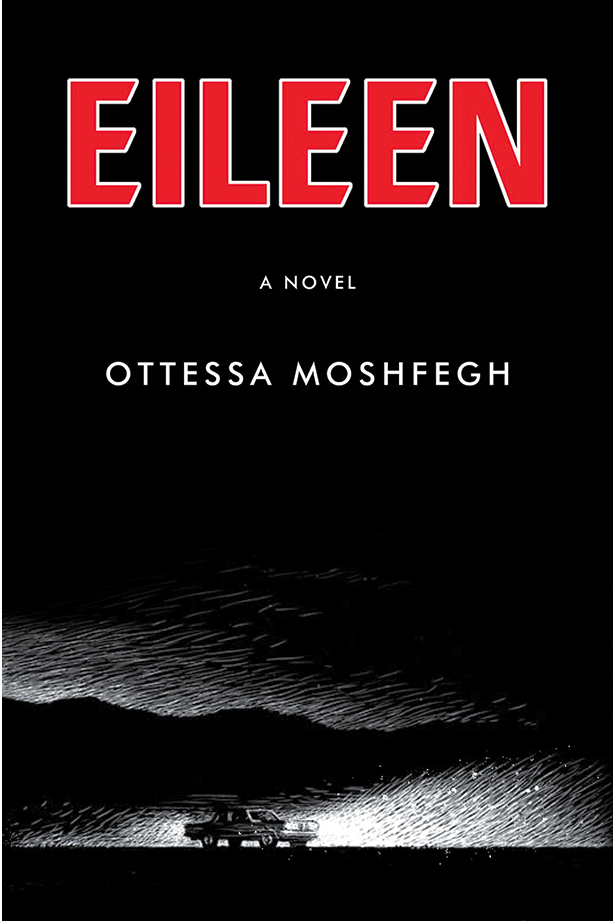
First up is Ottessa Moshfegh’s Eileen. The tale of a crime that is instrumental in freeing the main character. Now this is a book I’m not likely to forget. The writing is so assured and strong. The voice of the narrator is original and the way the book was told worked remarkably well. The narrator, who was once called Eileen, is now an older woman, looking back at something that happened a long time ago. Back then she was an insecure woman who lived with her alcoholic father in a very dirty, sordid home and worked in a boy’s prison. When the new counselor, the glamorous Rebecca, arrives at the school, things first get very exciting for Eileen and then they get out of control. Eileen is a very unpleasant character. It’s not always a joy to be inside of her head. She has perverse fantasies and some of her hidden habits are really gross. The reasons why I enjoyed this taut noir so much, is that the older Eileen constantly adds information about her future life and because we sense that things will go wrong, we wonder how she managed, in spite of everything we are told, to have an almost normal life. I also enjoyed that it’s never really clear whether she’s totally unreliable or just completely deranged. Ottessa Moshfegh has been on my radar for a while. Many of her short stories have been highly praised. She certainly is a very assured and very talented writer. I’m really keen on reading more of her stories and hope she’ll write another novel soon

If you’d like a more detailed review here’s Guy’s post on Eileen. I discovered the book on his blog.

Screen Shot 2016-04-15 at 09.37.31

‘The Loney is not just good, it’s great. It’s an amazing piece of fiction’ Stephen King

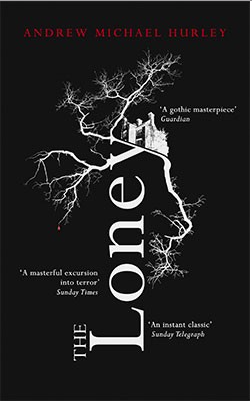
The Loney won the Costa Prize in 2015. I received the novel as a Christmas gift. I’d never heard of the book before but the person who gave it to me, knows that I like dark and gothic tales. I’m really glad that I’ve read it but not entirely sure I liked it. The atmosphere is amazing. It’s set in a bleak desolate part of England, near the coast in Lancashire. The Loney is a stretch of land that gets cut off and turns into an island during high tide. Getting lost between the land and the sea is very dangerous. The tide comes in quickly and surprisingly. The narrator is an older man. The story he tells takes place when he’s still a young boy. For a long time it’s not clear if what happens in the book is just the result of religious fanaticism or whether there is really a haunting. I found that interesting but wasn’t too keen on the ending. The story takes place during Easter. The narrator’s parents, especially the mother, are fanatics. They hope that they will be able to cure the narrator’s older brother through prayer. The mother is a really chilling charcater and sounded a lot like Jeannette Winterson’s mother.

What didn’t work so well was the subdued tone. The writing is deliberately old-fashioned, but takes, in my opinion, too much time. The atmosphere is spooky from beginning to end; the mood depressing, but there’s no real climax. It’s very well written though. I’ll keep an eye out for other books by this author. This was Andrew Michael Hurley’s first novel.

Screen Shot 2016-04-15 at 10.16.27

“A book of great moral maturity, beautifully alive to the fragility of happiness and all forms of violence… Everyone should read Saturday… Artistically, morally and politically, he excels” (The Times)

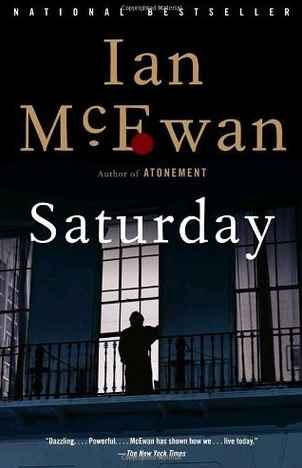
I know that a lot of people love Ian McEwan. Many even think he’s an outstanding writer. While I find him entertaining, I don’t really think he is all that good. The whole time I was reading Saturday I kept turning the pages quickly, which means I was captivated by the story, but at the same time I couldn’t help but think that this was a lot like Grey’s Anatomy in book form. Captivating but also a bit trashy. Saturday tells the story of one day in the life of neurosurgeon Henry Perowne. The details are so minute that it actually made me laugh. You can sense that McEwan did a lot of research but did he have to pack all of it into his book? I found this very heavyhanded. Almost like the novel of a beginner. Now, the neurosurgery part was actually OK. Not the most fascinating topic for me, but OK. But since he wanted to add other subjects, we get a lot of information on literature—one of Perowne’s kids is a poet, and so is his father-in-law— and information on music— his son is a musician. After a while, I felt like being invited to one of those boring dinner parties where everyone has a “great career”, reads the latest books, has seen the latest movies and talks a little bit about politics and endlessly about food. There’s even a recipe in this book. Ha! Perowne and his entourage are the kind of people I’ve seen referred to as “Champage Socialists” here in Switzerland.

At the beginning of the day, Perowne thinks he witnesses something horrible. He’s unsettled. Later, he really experiences something terrible. It all left me completely cold. I’d lost patience with the character. All in all, yes, I was entertained. In a way it felt like spying on someone or like living someone else’s life for a day. Nonetheless, I can’t say I found it great or that it’s a must read.

Have you read any of these?

Linda Pastan’s The Happiest Day

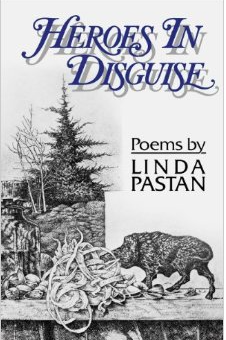
Heroes in Disguise

I don’t read a lot of poetry. Maybe one or two books a year, often less. Last year, I discovered the poems of Linda Pastan. One of my favourites is The Happiest Day.

It’s from her collection Heroes in Disguise.

The Happiest Day

It was early May, I think
a moment of lilac or dogwood
when so many promises are made
it hardly matters if a few are broken.
My mother and father still hovered
in the background, part of the scenery
like the houses I had grown up in,
and if they would be torn down later
that was something I knew
but didn’t believe. Our children were asleep
or playing, the youngest as new
as the new smell of the lilacs,
and how could I have guessed
their roots were shallow
and would be easily transplanted.
I didn’t even guess that I was happy.
The small irritations that are like salt
on melon were what I dwelt on,
though in truth they simply
made the fruit taste sweeter.
So we sat on the porch
in the cool morning, sipping
hot coffee. Behind the news of the day–
strikes and small wars, a fire somewhere–
I could see the top of your dark head
and thought not of public conflagrations
but of how it would feel on my bare shoulder.
If someone could stop the camera then…
if someone could only stop the camera
and ask me: are you happy?
perhaps I would have noticed
how the morning shone in the reflected
color of lilac. Yes, I might have said
and offered a steaming cup of coffee.