Kate O’Brien: The Land of Spices (1941)

Land of Spice

Back in August, I participated in All Virago/All August, not taking it literally, which means that I didn’t dedicate the whole month to reading only Viragos. I made a small list and read a few books but there were still some more left. One of those was Kate O’Brien’s The Land of Spices.

The Land of Spices tells the story of Sister Marie-Hélène, the Reverend Mother of a French order located in Ireland, and a young Irish girl, Anna Murphy. When the book opens, little Anna, who is only six years old, has just joined the convent, which is also a boarding school for rich girls. She is the youngest child who has ever been accepted and Mère Marie-Hélène whom everyone calls “cold” is surprised that she reacts so strongly to this little girl. Not only does she feel she has to protect the girl, but she also feels some a kinship. This kinship triggers memories of her own childhood when she too joined the convent as a boarder. Back then, she lived in Brussels with her parents, although they were English.

Since her childhood she always felt much closer to her father and when her mother died, when she was only twelve, they grew even closer. But something happened. Something that made Marie-Hélène not only become a nun but flee her father. While this isn’t something she has repressed, she has repressed the memory of a wonderful childhood and the relationship with her father which once meant the world to her.

All through the book, there are allusions to what happened and I was a bit afraid, we wouldn’t find out what it was. I actually feared that it was something quite different and once the truth is revealed I was relieved. However, at the time when this is set, before WWI, Marie-Hélène’s discovery would have come as a shock. Let’s leave it at that or I’ll spoil the book.

The presence of Anna and the strong feelings she triggers, make Mère Marie-Hélène remember.

The book follows the lives of these two women until the day, when Anna graduates and Mère Marie-Hélène is finally granted her wish to go back to Brussels.

I didn’t expect to love this book as much as I did. It’s so subtle and rich and the depiction of convent life is detailed and intriguing. Kate O’Brien captures both, the sister’s religious life and their “human” lives. Many of these sisters are less than holy but selfish, jealous and unjust. There is even a scene reminiscent of Jane Eyre. Only mother Marie-Hélène who people call “cold” is never unfair or unjust. Marie-Hélène is a fascinating character. Intelligent, introspective, fond of poetry. Through her eyes we discover the more contemplative side of her life at the convent. It’s important to say, that this isn’t a contemplative order. The sisters here are similar to those in Call the Midwife. Only they aren’t midwives but many teach in the convent school.

The descriptions of life at the convent were fascinating and because Kate O’Brien is so good at capturing people’s follies and foibles, this is also a very funny book. There’s a chapter dedicated to a concert that made me laugh so much. I can honestly not remember having read anything this funny in a long time. It reminded me of similar moments in my childhood, when people who were a little too full of themselves made total fools out of themselves and you had to pretend what they were doing was great and try not to laugh. The whole chapter dedicated to this concert is a tour de force of witty characterisation.

While it had funny aspects, it’s not a humorous novel per se. It’s the story of a very unusual life. A life that could have gone a very different way, especially since Marie-Hélène initially didn’t join the convent for religious reasons. Nonetheless, she makes the most of her career choice, strives for goodness and fights hard for her faith.

The foreword points out that this is also a rare study of a world in which the hierarchy is almost purely female. Yes, there are priests and bishops visiting, but those in charge in the convent are women. And the successor of the Mere Générale, the head of the order, will be named by a woman.

Since the main protagonist is English and the book is set just before WWI, Home Rule and the Irish’s fight for independence are very important topics.

The Reverend mother often thinks she’s an outsider because she is English, but the novel shows us that she might just be one of those people who will always be outsiders. She’s too easily wounded and that’s why she’s built a wall around herself nobody can break through.

When the book was published in 1941, it caused a bit of stir as there was a scene that was considered risqué. It’s not risqué at all because all it says is that the narrator saw someone in an embrace. Nonetheless, Kate O’Brien had a hard time getting other books published and this one was condemned by the Censorship Board. Possibly however, as the foreword says, this was far less because of the sexual allusion but because she poked fun at convent hierarchy and criticized the sisters, depicting them in a very realistic, not exactly saintly way.

As I said before, I loved this book. I found the atmosphere soothing, the characters so well described and it had one of the funniest scenes I read in a while.


Literature and War Readalong 2017

house-made-of-dawnmagnusclosely-observed-trainsthe-warpoems-of-the-great-warvoices-from-stone-and-bronzeconvoymemorandumceremonysuite-francaisethe-oppermanns

Some Literature and War Readalong lists took a long time. Not this one. The only thing that took some time was deciding whether I wanted to choose twelve books like I used to or only five like I did in the last two years. In the end, I decided for a compromise and that’s why this year’s list has ten titles, three of which will be the readalong books for May. Usually the summer months and the end of December have never been ideal dates, so I’m skipping those.

Now to my book choices. As you will see, with one exception, they are all focussing on WWII. I always strive for diversity and this year is no exception. There are books from five different countries on the list. Every year I include American novels, this year, to make a statement, I chose two Native American writers. Three of the other novels are French, one is Czech, and one German. May’s choice(s) are special because, for the first time, I decided to include poems. We will be reading and discussing British war poems. Some from poets who wrote during WWI, some from contemporary poets like Vanessa Gebbie and Caroline Davies. I’d like to thank Caroline for suggesting I include poems.

Here are the books and their blurbs.

house-made-of-dawn

January, Tuesday 31

House Made of Dawn by N. Scott Momaday, 208 pages, US 1966, WWII

The magnificent Pulitzer Prize-winning novel of a stranger in his native land

A young Native American, Abel has come home from a foreign war to find himself caught between two worlds. The first is the world of his father’s, wedding him to the rhythm of the seasons, the harsh beauty of the land, and the ancient rites and traditions of his people. But the other world — modern, industrial America — pulls at Abel, demanding his loyalty, claiming his soul, goading him into a destructive, compulsive cycle of dissipation and disgust. And the young man, torn in two, descends into hell.

magnus

February, Tuesday 28

Magnus by Sylvie Germain, 190 pages, France 2005, WWII

Magnus is a deeply moving and enigmatic novel about the Holocaust and its ramifications. It is Sylvie Germain’s most commercially successful novel in France. It was awarded The Goncourt Lyceen Prize. Magnus’s story emerges in fragments, with the elements of his past appearing in a different light as he grows older. He discovers the voices of the deceased do not fall silent. He learns to listen to them and becomes attuned to the echoes of memory.

closely-observed-trains

March, Friday 31

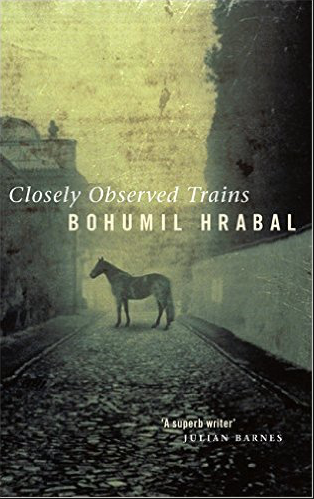
Closely Observed Trains – Ostře sledované vlaky by Bohumil Hrabal, 96 pages, Czech Republic 1965, WWII

For gauche young apprentice Milos Hrma, life at the small but strategic railway station in Bohemia in 1945 is full of complex preoccupations. There is the exacting business of dispatching German troop trains to and from the toppling Eastern front; the problem of ridding himself of his burdensome innocence; and the awesome scandal of Dispatcher Hubicka’s gross misuse of the station’s official stamps upon the telegraphist’s anatomy. Beside these, Milos’s part in the plan for the ammunition train seems a simple affair.

the-war

April, Friday 28

La douleur  – The War by Marguerite Duras, 217 pages, France 1985, WWII

This 1944 diary of a young Resistance member, written during the last days of the French occupation and the first days of the liberation, is only now being published – Duras says she forgot about it during the intervening years, and only recently rediscovered it in a cupboard. The loneliness and ambivalence of love and war have appeared in Duras’ work before, from The Lover to Hiroshima Mon Amour, in which a Frenchwoman reveals to her Japanese lover, after the bomb, that she was tortured and imprisoned in postwar France for her affair with a German soldier. In the first section of The War, Duras the heroine waits for her husband to return from the Belsen concentration camp. When De Gaulle (“by definition leader of the Right – “) says, “The days of weeping are over. The days of glory have returned,” Duras says, “We shall never forgive him.” It’s because he’s denying the people’s loss. When her husband returns, she has to hide the cake she baked for him, because the weight of food in his system can kill. (We are spared no detail of his physical degradation, even to being told the color of his stools.) When he is stronger, she tells him she is divorcing him to marry another Resistance member. In the second section, set earlier, at the time of her husband’s arrest, a Gestapo official plays a cat-and-mouse game with Duras, to whom he’s attracted, preying on her desperation to help her husband. In the third section, post-liberation, she switches roles, becomes an interrogator as Resistance members torture a Nazi informer. She also half-falls in love (with characteristic Duras dualism) with a young prisoner who childishly joined the collaborationist forces out of nothing more than a passion for fast cars and guns. In her preface, Duras says it “appalls” her to reread this memoir, because it is so much more important than her literary work. Certainly, like everything she has written in her spare, impassive voice, the book is at once elegant and brutal in its honesty: in her world, we are all outcasts, and the word “liberation” is never free of irony. A powerful, moving work. (Kirkus Reviews) –This text refers to an out of print or unavailable edition of this title.

poems-of-the-great-warvoices-from-stone-and-bronzememorandum

May, Wednesday 31

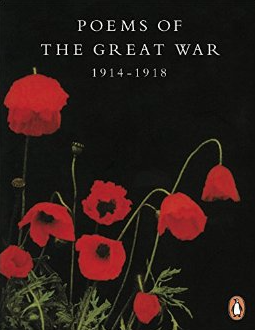
Poems of the Great War

Published to commemorate the eightieth anniversary of Armistice, this collection is intended to be an introduction to the great wealth of First World War Poetry. The sequence of poems is random – making it ideal for dipping into – and drawn from a number of sources, mixing both well-known and less familiar poetry.

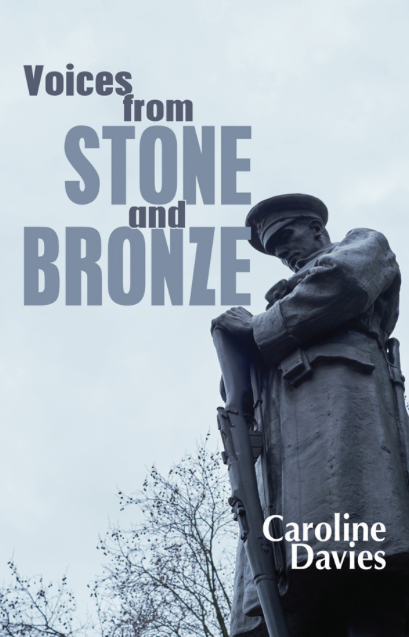
Voices from Stone and Bronze by Caroline Davies

A moving, honest and never sentimental collection that gives a voice to London’s many war memorials.
In her second poetry collection Caroline Davies turns her attention to the War Memorials of London. Voices from Stone and Bronze brings to life those who fought and died and those who survived, including some of the sculptors who had themselves come through trench warfare to a changed world.
Meticulously researched and deeply humane, these narrative poems apply a lyrical sensibility without sentimentalism; a deeply affective collection.

Memorandum by Vanessa Gebbie

Memorandum is a haunting collection of poems that summons voices from the shadows of the First World War. Vanessa Gebbie transforms prosaic records of ordinary soldiers, and the physical landscape of battles, war graves and memorials, into poignant reflections on the small and greater losses to families and the world. Vanessa Gebbie is a writer of prose and poetry. Author of seven books, including a novel, short fictions and poetry, her work has been supported by an Arts Council England Grant for the Arts, a Hawthornden Fellowship and residencies at both Gladstone’s Library and Anam Cara Writers’ and Artists’ Retreat. She teaches widely. http://www.vanessagebbie.com “From the idea of a shell reverting to its unmade, peaceful state to dead men buried in Brighton and France being mourned by their mother in Glasgow … heartrending images such as the Tower of London’s ceramic poppies seen as callow recruits, doubts about a corpse’s identity and how dregs at the bottom of a cup can be reminiscent of the deadly Flanders mud. This is a modern view, wise and compassionate, of Europe’s fatal wound.” Max Egremont, author of Siegfried Sassoon and Some Desperate Glory, The First World War the Poets Knew “Vanessa Gebbie is that rare breed of poet who understands the trials and tribulations of the ordinary Tommy.” Jeremy Banning, military historian and researcher, battlefield guide “The dead who linger around memorials and battlefields slowly step again into the light. History may remember them collectively, but Gebbie’s achievement is to present, with sensitivity and without sentimentality, lives rooted in the particular rhythms of hometowns, families, and memories.” John McCullough, author of Spacecraft and The Frost Fairs “These poems rise like ghosts from a scarred landscape.” Caroline Davies, author of Convoy

ceremony

September, Friday 29

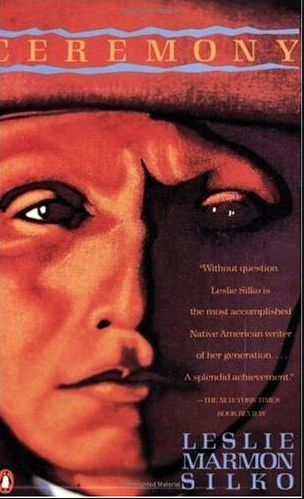
Ceremony by Leslie Marmon Silko, 243 pages, US 1977, WWII

The great Native American Novel of a battered veteran returning home to heal his mind and spirit
More than thirty-five years since its original publication, Ceremony remains one of the most profound and moving works of Native American literature, a novel that is itself a ceremony of healing. Tayo, a World War II veteran of mixed ancestry, returns to the Laguna Pueblo Reservation. He is deeply scarred by his experience as a prisoner of the Japanese and further wounded by the rejection he encounters from his people. Only by immersing himself in the Indian past can he begin to regain the peace that was taken from him. Masterfully written, filled with the somber majesty of Pueblo myth, Ceremony is a work of enduring power. The Penguin Classics Deluxe Edition contains a new preface by the author and an introduction by Larry McMurtry.

suite-francaise

October, Tuesday 31

Suite Française by Irène Nemirovsky, 432 pages, France 1942, WWII

Set during the year that France fell to the Nazis, Suite Française falls into two parts. The first is a brilliant depiction of a group of Parisians as they flee the Nazi invasion; the second follows the inhabitants of a small rural community under occupation. Suite Française is a novel that teems with wonderful characters struggling with the new regime. However, amidst the mess of defeat, and all the hypocrisy and compromise, there is hope. True nobility and love exist, but often in surprising places.

Irène Némirovsky began writing Suite Française in 1940, but her death in Auschwitz prevented her from seeing the day, sixty-five years later, that the novel would be discovered by her daughter and hailed worldwide as a masterpiece.

the-oppermanns

November, Wednesday 29

The Oppermanns  – Die Geschwister Oppermann by Lion Feuchtwanger, 416 pages, Germany 1934, WWII

First published in 1934 but fully imagining the future of Germany over the ensuing years, The Oppermanns tells the compelling story of a remarkable German Jewish family confronted by Hitler’s rise to power. Compared to works by Voltaire and Zola on its original publication, this prescient novel strives to awaken an often unsuspecting, sometimes politically naive, or else willfully blind world to the consequences of its stance in the face of national events — in this case, the rising tide of Nazism in 1930s Germany. The past and future meet in the saga of the Oppermanns, for three generations a family commercially well established in Berlin. In assimilated citizens like them, the emancipated Jew in Germany has become a fact. In a Berlin inhabited by troops in brown shirts, however, the Oppermanns have more to fear than an alien discomfort. For along with the swastikas and fascist salutes come discrimination, deceit, betrayal, and a tragedy that history has proved to be as true as this novel’s astonishing, profoundly moving tale.


*******

I’m looking forward to reading these books and hope that some of you might be tempted to join me and join the discussions.

For those who are new to this blog – you can either read the book and just join the discussion or you can post a review on your blog/Goodreads  . . . as well. I post my review on the announced date and will link to anyone else’s review. The discussion normally begins that day and lasts several days.

Walter Kempowski: All for Nothing – Alles umsonst (2006) Literature and War Readalong November 2016

alles-umsonstAll For Nothing

Until not too long ago, even Germans thought it was in bad taste to write about German suffering during WWII. The feeling of guilt ran too deep. I still remember the discussion when the movie Anonyma came out in 2008. It’s based on the diary of a German woman who was in Berlin when the Russian army arrived. She was one of 2,000,000 German women who were raped many times by the Russian troops. We may look at the war any which way we want, there’s no denying that the Germans suffered too. We just have to think of the bombing of Dresden, the mass rapes of German women by Russian troops and – of course – the huge number of people who were forced to flee from the East towards the West, when the war was lost. Many of these Germans would never be able to return because the place they came from wouldn’t be part of Germany anymore.

This may seem a lengthy introduction but it’s essential to understand not only the importance but the scope of Walter Kempowskis’ powerful and chilling novel All For Nothing – Alles umsonst .

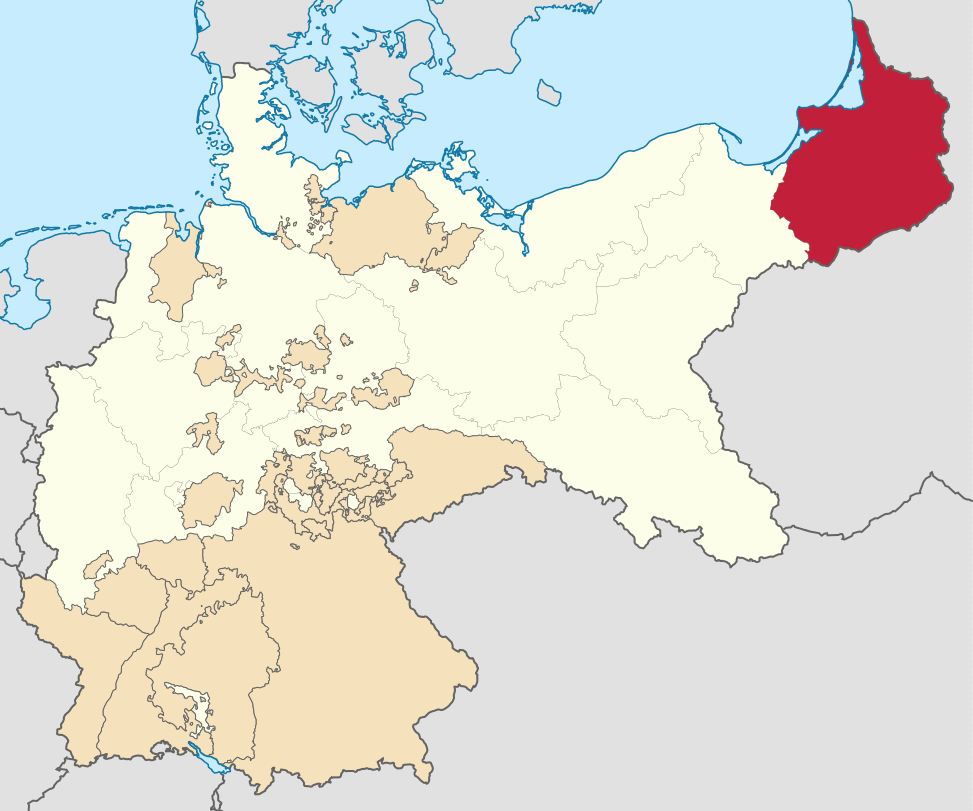
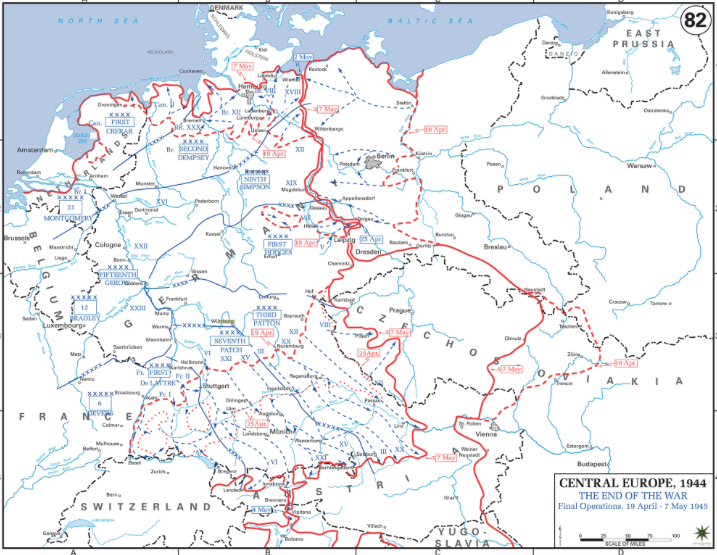
All for Nothing is set in East Prussia, in the winter of 45. In January, to be precise. The story mostly takes place on the Georgenhof estate, located near Mitkau, not too far from Königsberg. Königsberg which was once famous was almost completely destroyed and is now called Kaliningrad. For further understanding, I’ve added two maps.

east-prussia

The map above shows East Prussia in red. The other one below, is a map from 1945. It is more detailed and shows other territories. It’s easy to understand when you look at the maps, how precarious the situation was for the civilians in East Prussia when the Russians started to advance.

germany-1945

At the beginning of the novel, people already start to flee in the direction of Berlin, only the people on Georgenhof, the von Globig’s, behave as if nothing was happening. This is mostly due to Katharina von Globig’s character. She’s the wife of the estate owner who is serving in Italy. Together with her twelve-year-old son, her husband’s elderly aunt and Polish and Ukrainian servants, she lives a life of carefree ease. She’s someone who likes to withdraw from the world, into her own realm. She lives in an apartment inside of the large estate where nobody is allowed to enter. Here she reads, dreams, smokes, cuts out silhouettes, and thinks of an affair she had some years ago. Possibly the only time in her life in which she was really happy.

The aunt is a typical old maid. In the absence of her nephew, and knowing how little Katharina cares, she is in charge of the estate. Peter, the son, who should be with the Hitler Youth, pretends he’s got a cold and, like his mother, flees to other realms in his imagination.

When the first refugees arrive, the small household welcomes them. They feed and entertain them, just as if they were ordinary guests. Katharina may be distracted but she’s kind and generous. Even though her husband calls her occasionally and urges her to leave, she stays put.

But some of the refugees tell horror stories and even Katharina and the aunt realize that falling into the hands of the Russians might prove fatal. Only their life is so comfortable, so enjoyable, how can they leave everything behind? This is an incredible dilemma, and one can easily understand how so many waited far too long before they finally fled.

In the case of the von Globig’s it needs a tragedy that finally pushes them to make a decision.

The first half of the book tells the story before they flee, the second half, tells the story of the flight.

It was so strange, but reading the first almost peaceful part was really stressful. The reader knows what’s coming but the character’s don’t. It takes so long until it sinks in that all is lost.

The descriptions of the flight, those long, endless treks of refugees is harrowing. Not only are the Russians pushing forward, but the refugees are bombed and dead people and horses are piled up to the left and the right of the roads.

Kempowski did a great job at describing in a poignant way how this must have been without traumatizing the reader. We read, breathlessly, but it’s not too graphic and the characters are held at arm’s length. That doesn’t mean the book left me cold. Not at all but it never felt like it was manipulative and trying to shock and disgust.

People often say “Why didn’t they leave earlier?” when speaking of people who are trapped in a war zone. When you read this, you get a good feeling for the reasons. Not only do they have to abandon everything, but they have no idea whether it will be better where they are going. Besides, back then, all they had was accounts of a few other refugees and British radio. Their own radio told them that it was negative propaganda, that all was well, the frontline still secure. How would you have known for sure?

The luckiest thing may have been that they fled back to their own homeland and could stay on territory in which their own language was spoke. While many didn’t make it and many had a very uncertain future, they had at least that. Unlike the refugees that come to Europe from the war zones in the Middle East.

Before ending, I’d like to say a few things about the characters and Kempowski’s style. He does something I’ve never seen before. Almost every other sentence ends in a question mark. It’s really bizarre and I’m surprised it didn’t annoy me. Interestingly, it felt like we hear the characters question themselves all the time. I read a few reviews and apparently he tried to show the general confusion. I’d say he was very successful but it takes some getting used to. His characters are very well drawn. Even minor characters come to life. Most of the time he uses indirect speech but you can still hear the different mannerisms. People repeat the same stories again and again. Just like in real life. Sometimes that’s quite funny. People can be so absurd. Petty. Self-absorbed. Ridiculous. Under the circumstances it’s tragically comic. As I said, Kempowski keeps the reader at arm’s length, that’s why there isn’t a character I loved but there were two I genuinely disliked. One of them was Peter. I would love to know if anyone who read this had a similar reaction. The more I approached the end, the more I disliked this kid. Such a cold fish.

I’m so glad that I chose this novel for the readalong because it’s not only powerful but important. It tells a story that needed to be told and does so masterfully. Raising awareness for a tragedy, making characters  come to life on the page, but not bang your readers over the head or traumatize them – that’s no mean feat.

Other reviews


*******

All For Nothing is the fifth book in the Literature and War Readalong 2016. The list for next year’s Literature and War Readalong will be published in December. Further information on the Literature and War Readalong 2016, including the book blurbs can be found here.

Alex Capus: Almost Like Spring – Fast ein bisschen Frühling (2002)

almost-like-springfast-ein-bisschen-fruhling

I wanted to post every other day during German Literature Month as I’ve read so many books in advance but last week was such an awful week. First the shocker election, then Leonard Cohen’s death, then the death of the brilliant Austrian writer Ilse Aichinger. So depressing. I’m sure many people feel the same way. Despondency may not be helpful but sometimes it needs room and needs to be acknowledge before we can move on.

cohenaichinger

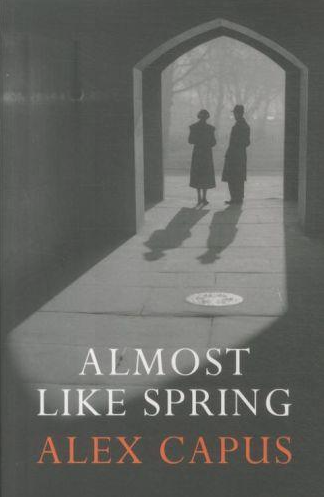
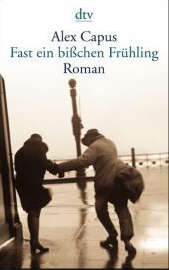
I’ve not read any books by Alex Capus so far. I thought I wouldn’t like his writing but I’m glad to say, he’s so much better than I expected. I picked Almost Like Spring – Fast ein bisschen Frühling because it’s set in Basel, Switzerland. As many of you know, I live in Basel. There aren’t a lot of books set in this city, so I was curious because of that too.

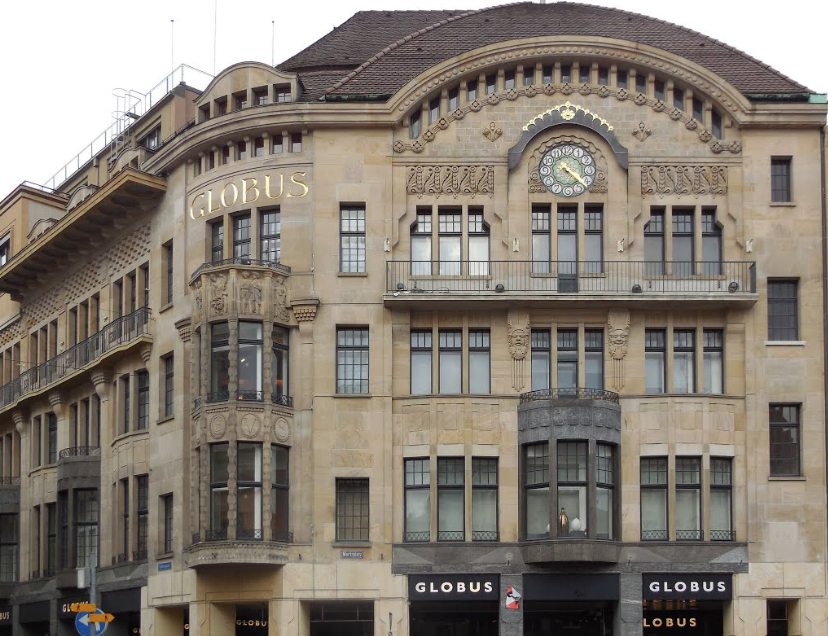
As Capus writes at the beginning of his novel, Almost Like Spring tells the true story of the German bank robbers Kurt Sandweg and Waldemar Velte. Fleeing from Wuppertal, Germany after having robbed a bank and killed someone, they arrived in Basel in the winter of 33/34. The plan was to flee to India but one of them fell in love with a shop girl, Dorly Schupp, who was working in the record department where the two robbers bought Tango records. Dorly worked at Globus, a department store that still exists and is known because it’s one of the rare Jugendstil buildings in Basel.

globus

Sandweg and Velte are depicted like two rebels and compared to Bonnie and Clyde. At any other time, one would have simply called them anti-social, but the way Capus depicts them, they were victims too. They robbed a bank because they were desperate, without a job and seeing no future in a Germany where the Nazis were taking over power. Sandweg and Velte are a peculiar pair; they are so close that people think they might be lovers but what they share is rather a bit like a folie à deux. In their heads, they’re on a mission – fighting poverty and injustice. One of them falls in love with Dorly, the other one with one of her colleagues— Alex Capus own grandmother. While the pair is in Basel, they buy a Tango record every day and go for long walks through the old town and along the Rhine, accompanied by the two young women.

The descriptions of these walks are lovely. The way Capus describes the weather, the cold winds from Siberia, and how it can get warm again, all of a sudden, in the middle of winter, because those winds change course and warm winds from the south arrive, is so spot on. The four young people don’t do much on these walks, but all four of them feel free. Dorly lives with her elderly mother, while Capus’ grandmother is engaged and will soon marry a man she never really liked. The two women don’t know that the men are criminals and when they finally leave Basel, they are disappointed.

Unfortunately, the plan to take a ship to India doesn’t work and a couple of weeks later, after having stayed in Spain, the two men are back in Basel and the real tragedy begins. They rob another bank, kill people, and are hunted down.

Most critics haven’t found anything good to say about this novel. I’m not sure why. Is it the tone? Capus mixes fact and fiction. He stays outside of his character’s heads, which makes it sound like a report at times, but the book is rich in mood and atmosphere. He captures the times and women’s fates so well. What choices did they have back then? Dorly’s actually living a relatively independent life, but Capus’ grandmother, who isn’t from Basel, is expected to return home soon and get married. While the storytelling is a bit dry, the mood is anything but.

I’m not sure about the descriptions though. Readers who haven’t been to Basel may be able to picture the department store Globus but the city? I don’t think so because he mentions street names but doesn’t really describe them.

Be it as it may, sometimes I agree with critics, sometimes I don’t. In this case I don’t agree. Almost Like Spring is a lovely book. It’s a rounded, historically accurate, atmospheric book that mixes fact and fiction to great effect.

Literature and War Readalong November 2016 Meets German Literature Month: All For Nothing – Alles umsonst by Walter Kempowski

All For Nothing

The last title of this year’s Literature and War Readalong is Walter Kempowski’s All For Nothing – Alles umsonst. It was Kempowski’s last novel. Walter Kempowski was born in 1929 in Rostock and died in 2007 in Rotenburg. He was famous for his autobiographical novels, one of which Tadellöser & Wolff, was made into a mini-series, and his huge project Echo Soundings – Echolot, subtitled “A collective diary”. In this project he collected and juxtaposed excerpts of diaries, letters ,and documents to illustrate and capture history.

Here is the first sentence of All for Nothing

The Georgenhof estate was not far from Mitkau, a small town in East Prussia, and now, in winter, the Georgenhof, surrounded by old oaks, lay in the landscape like a black island in a white sea.

And some details and the blurb for those who want to join

All For Nothing – Alles umsonst by Walter Kempowski, 352 pages, Germany 2006, WWII

Here’s the blurb:

Winter, January 1945. It is cold and dark, and the German army is retreating from the Russian advance. Germans are fleeing the occupied territories in their thousands, in cars and carts and on foot. But in a rural East Prussian manor house, the wealthy von Globig family tries to seal itself off from the world. Peter von Globig is twelve, and feigns a cough to get out of his Hitler Youth duties, preferring to sledge behind the house and look at snowflakes through his microscope. His father Eberhard is stationed in Italy – a desk job safe from the front – and his bookish and musical mother Katharina has withdrawn into herself. Instead the house is run by a conservative, frugal aunt, helped by two Ukrainian maids and an energetic Pole. Protected by their privileged lifestyle from the deprivation and chaos around them, and caught in the grip of indecision, they make no preparations to leave, until Katharina’s decision to harbour a stranger for the night begins their undoing. Superbly expressive and strikingly vivid, sympathetic yet painfully honest about the motivations of its characters, All for Nothing is a devastating portrait of the self-delusions, complicities and denials of the German people as the Third Reich comes to an end.

*******

The discussion starts on Friday, 25 November 2016.

Further information on the Literature and War Readalong 2016, including all the book blurbs, can be found here.

Welcome to German Literature Month

german-literature-month-vi

Finally it’s November. Those of you who follow my blog might have noticed I was a bit quiet in the last weeks. With good reason. I was busy reading German, Austrian, and Swiss literature.

As you know, Lizzy and I have decided to do a “Read as you please month” with only two themed weeks.

A crime week during week two, hosted by Lizzy.

All For Nothing

The Literature and War Readalong on November 25, in which we read and discuss Walter Kempowski’s WWII novel All For Nothing – Alles umsonst.

For those who are still looking for titles, here are the books I have already read and those I’m still planning to read.

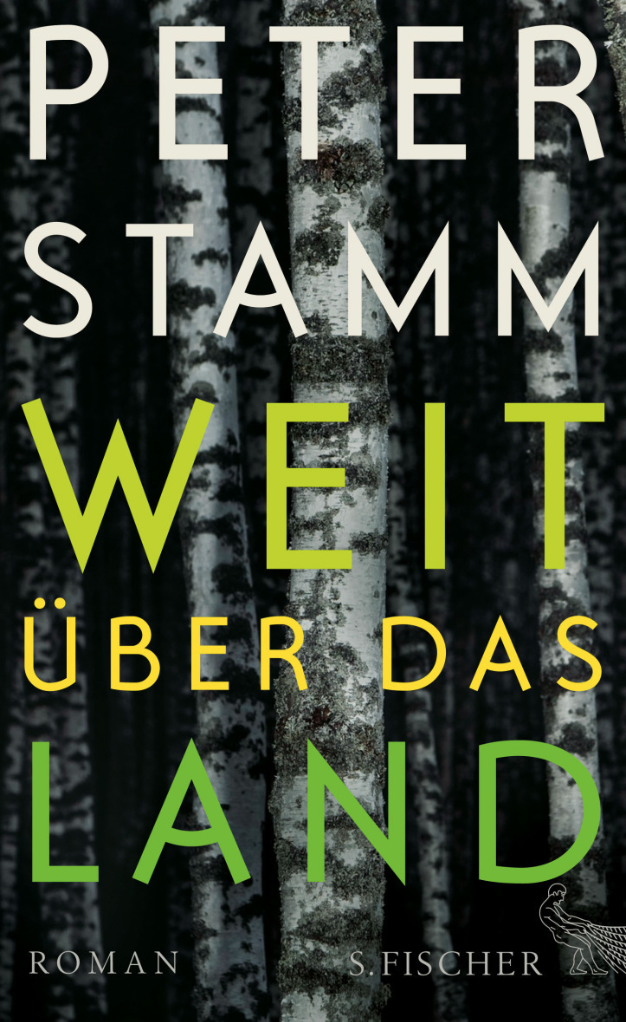
Weit über das Land

Peter Stamm’s latest novel. I must admit, I might not review it. It’s the worst book I’ve read this year. I can still not believe he wrote something like this.

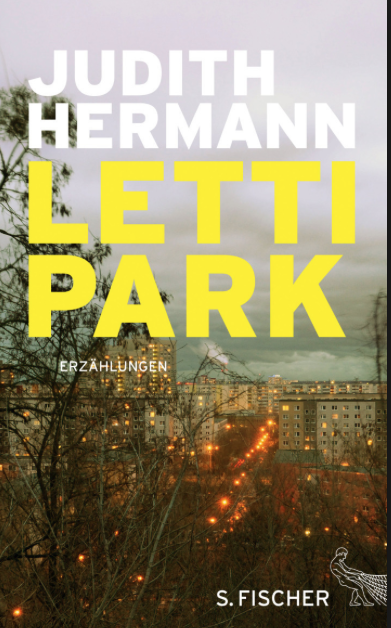
letti-park

Judith Hermann’s new short story collection Lettipark. I’ve not finished this yet but I can already see that it’s a mixed bag.

karen-kohler

Karen Köhler’s short story collection Wir haben Raketen geangelt.

I bought this collection a while ago but haven’t read it yet. When I was looking for reviews of Judith Hermann’s book I saw it mentioned a few times. Most critics came to the conclusion that readers would do better to read Köhler instead of Hermann. I’ll let you know what I think.

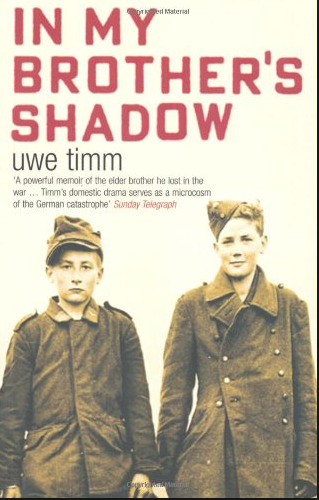
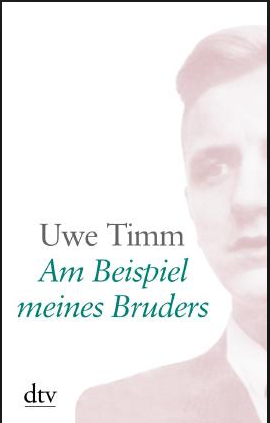
in-my-brothers-shadowam-beispiel-meines-bruders

I’ve only heard great things about Uwe Timm’s memoir In My Brother’s ShadowAm Beispiel meines Bruders. As far as I can tell, (I read the beginning), it’s amazing.

almost-like-springfast-ein-bisschen-fruhling

Almost Like SpringFast ein bisschen Frühling, is my first Alex Capus and if the rest is as good as the beginning, it won’t be my last.

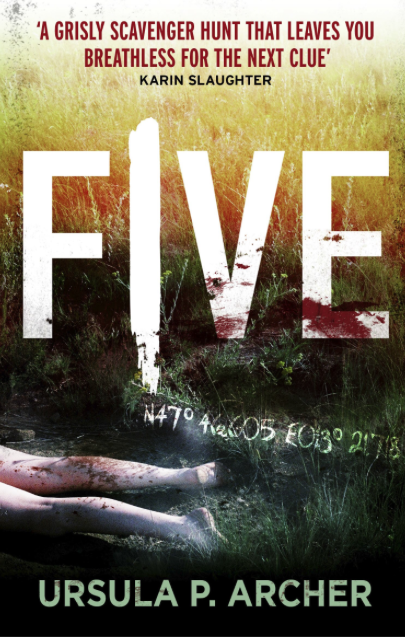
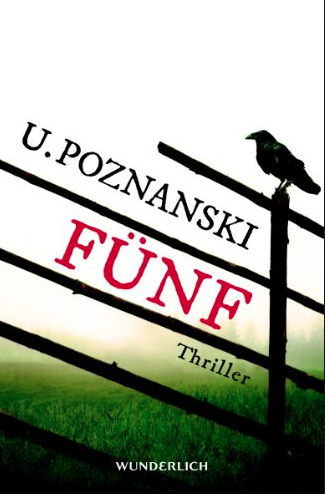
fivefunf

Last year I read Ursula Poznanski’s Erebos and was pretty much blown away. While I liked Five – Fünf a bit less, it’s still a really gripping book. You may have noticed that her adult crime novels are published under another name, Ursula P. Archer, in English. If you’re still looking for a page turner for crime week and are not too squeamish, you’ll enjoy this.

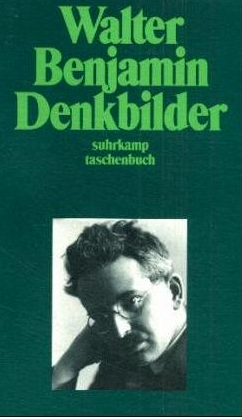
denkbilder

These are my plans so far. I might add some Walter Benjamin and one of the fantasy novels by Nina Blazon Der Winter der schwarzen Rosen (not translated yet).

der-winter-der-schwarzen-rosen

I hope you’re all busy making plans and wish you all a great month. I hope you’ll discover a lot of great books. Happy Reading!


*********

There will be a few giveaways.

Here’s a sneak peek.

montaignea-bell-for-ursli


*********

Please add your reviews to this site German Literature Month.

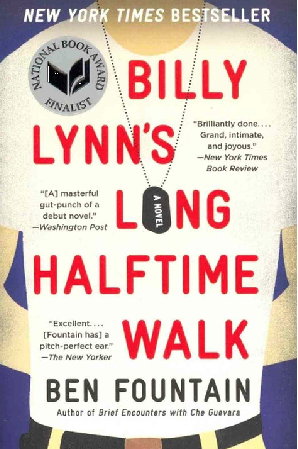
Ben Fountain: Billy Lynn’s Long Halftime Walk (2012) Literature and War Readalong September 2016

Billy Lynn's Halftime Walk

Luckily Billy Lynn’s Long Halftime Walk was one of my readalong titles or I might have given up after fifty pages. I found it hard to get into but once I passed the fifty page mark, I was so engrossed, I could hardly put it down. What a terrific, poignant, witty, and sarcastic book.

The novel is set on the last days of Bravo company’s victory tour. Billy Lynn and his comrades are heroes. They survived a firefight in Iraq, during which they overthrew a group of insurgents. One of the Bravos died in the fight, another one came back disabled. Nonetheless, this “sacrifice” might have passed unnoticed if it hadn’t been filmed by an embedded journalist. As a reward they receive medals and are sent home on a propaganda tour.

This does it; they throw back their heads and roar. In a way it’s so easy, all he has to do is say what they want to hear and they’re happy, they love him, everybody gets along. Sometimes he has to remind himself there’s no dishonor in it. He hasn’t told any lies, he doesn’t exaggerate, yet so often he comes away from these encounters with the sleazy, gamey aftertaste of having lied.

The last day is meant not only as a special tribute but as a special treat. The Bravos assist and participate in a game of the Dallas Cowboys. They are allowed to go back stage and to talk to the players, their manager and their rich Texan supporters. At halftime, they are on the field, right next to the musical attraction – Destiny’s Child. And during every break, the footage of their fight is shown on a giant screen.

During this tour, and especially on this last day, people force themselves on the young men, telling them how much they admire them, asking them questions about the war “Are we winning?” – “Did you kill many?” – “It’s a god war we’re fighting, right?”

Billy who’s done the most heroic thing, is the 3rd person narrator of this story. Like Holden Caufield he is equally precocious and naïve and such a terrific character. One of the central plot lines is his falling in love with a cheerleader. While his testosterone-fuelled feelings might not be love, as he thinks, hers are even further from the feeling as all she wants is “a hero” – “a soldier”, as Destiny’s Child sing. She wants the idea of a man, not the man himself.

“Hi, you’ve reached Faison! I’m not able to take your call right now…”

It makes for an odd sensation, watching her real-time person in the middle distance while holding her disembodied voice to his ear. It puts a frame around the situation, gives it focus, perspective. It makes him aware of himself being aware of himself, and here is a mystery that seems worth thinking about, why this stacking of awareness should even matter. Ant the moment all he knows is that there’s structure in it, a pleasing sense of poise or mental ordering. A kind of knowledge, or maybe a bridge thereto–as if existence didn’t necessarily have to be a moron’s progress of lurching from one damn this to another? As if you might aspire to some sort of context in your life, a condition he associates with adultness. Then comes the beep, and he has to talk.

It’s a very difficult book to review as it’s not very plot-driven. It’s the exuberant style that’s important, the descriptions of the absurdities, the frenzy with wich football and war are celebrated by the very rich, as if both only served one purpose – to make them feel good about themselves and about being Americans.

Where else but America could football flourish, America with its millions of fertile acres of corn, soy, and wheat, its lakes of dairy, its year-round gushers of fruits and vegetables, and such meats, that extraordinary pipline of beef, poultry, seafood, and pork, feedlot gorged, vitamin enriched, and hypodermically immunized, humming factories of high-velocity protein production, all of which culminate after several generations of epic nutrition in this strain of industrial-sized humans? Only America could produce such giants.


No matter their age or station in life, Billy can’t help but regard his fellow Americans as children. They are bold and proud and certain in the way of clever children blessed with too much self-esteem, and no amount of lecturing will enlighten them as to the state of pure sin toward which war inclines. He pities them, scorns them, loves them, hates them, these children. These boys and girls. These toddlers, these infants. Americans are children who must go somewhere else to grow up, and sometimes die.


All the fakeness just rolls right off them, maybe because the nonstop sales job of American life has instilled in them exceptionally high thresholds for sham, puff, spin, bullshit, and outright lies, in other words for advertising in all its forms.

I don’t think I’ve ever come across a contemporary book that was so astute and harsh in its criticism of the negative aspects of American culture. It shows that most things are about money and consumption. And even when people pretend they care about something, they ultimately only care about what it can bring them.

Somewhere along the way America became a giant mall with a country attached.

The book is written in a frantic, quick-paced style, with long sentences and paragraphs that reminded me of listening to a frenzied sports commentator.

Billy tries to imagine the vast systems that support these athletes. They are among the best-cared for creatures in the history of the planet, beneficiaries of the best nutrition, the latest technologies, the finest medical care, they live at the very pinnacle of American innovation and abundance, which inspires an extraordinary thought – send them to fight the war! Send them just as they are this moment, well rested, suited up, psyched for brutal combat, send the entire NFL! Attack with all our bears and raiders, our ferocious redskins, our jets, eagles, falcons, chiefs, patriots, cowboys – how could a bunch of skinny hajjis in man-skits and sandals stand a chance against these all-Americans? Resistance is futile, oh Arab foes. Surrender now and save yourself a world of hurt, for our mighty football players cannot be stopped, they are so huge, so strong, so fearsomely ripped that mere bombs and bullets bounce off their bones of steel. Submit, lest our awesome NFL show you straight to the flaming gates of hell!

Sometimes, when I watch a war movie or read a book about war, I have my doubts. I wonder whether or not it’s really anti-war – as it should. I never wondered for one second while reading this book. It’s not only against war but against the justification, the fake heroism, the phony concern and gratefulness. But it’s kind to the soldiers. They are shown as victims who very often only joined up because they were too poor to do anything else.

I was thinking, if Salinger had written Catcher in the Rye right after 9/11, it might have been a lot like Billy Lynn. I loved the Catcher in the Rye. Needless to say, I loved Billy Lynn.

Since the writing is the most important thing in this book, I’ll leave you with some more quotes:

Don’t talk about shit you don’t know, Billy thinks, and therein lies the dynamic of all such encounters, the Bravos speak from the high ground of experience. They are authentic. They are the Real. They have dealt much death and received much death and smelled it and held it and slopped through it in their boots, had it spattered on their clothes and tasted it in their mouths. That is their advantage, and given the masculine standard America has set for itself it is interesting how few actually qualify. Why we fight, yo, who is this we? Here in the chicken-hawk nation of blowhards and bluffers, Bravo always has the ace of bloods up its sleeve.


Fear is the mother of all emotion. Before love, hate, spite, grief, rage, and all the rest, there was fear, and fear gave birth to them all.


It’s going to be a long, lonesome eleven months in Iraq, long and lonesome being the best-case scenario.


Everybody supports the troops,” Dime woofs, “support the troops, support the troops, hell yeah we’re so fucking PROUD of our troops, but when it comes to actual money? Like somebody might have to come out of pocket for the troops? Then all the sudden we’re on everybody’s tight-ass budget. Talk is cheap, I got that, but gimme a break. Talk is cheap but money screams, this is our country, guys. And I fear for it. I think we should all fear for it.


Other reviews


*******

Billy Lynn’s Long Halftime Walk is the fourth book in the Literature and War Readalong 2016. The next book is the German WWII novel All For Nothing – Alles umsonst by Walter Kempowski. Discussion starts on Friday 25 November, 2016. Further information on the Literature and War Readalong 2016, including the book blurbs can be found here.