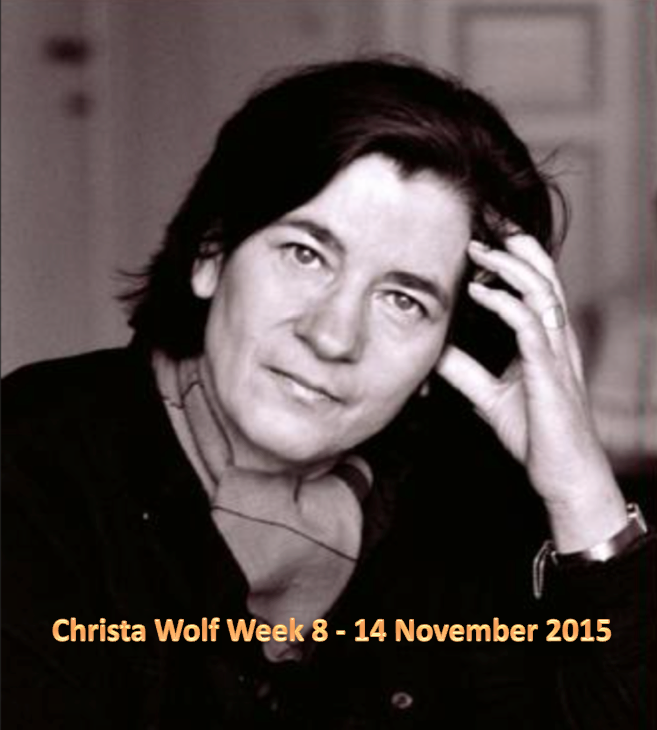
Christa Wolf Week 8 – 14 November 2015

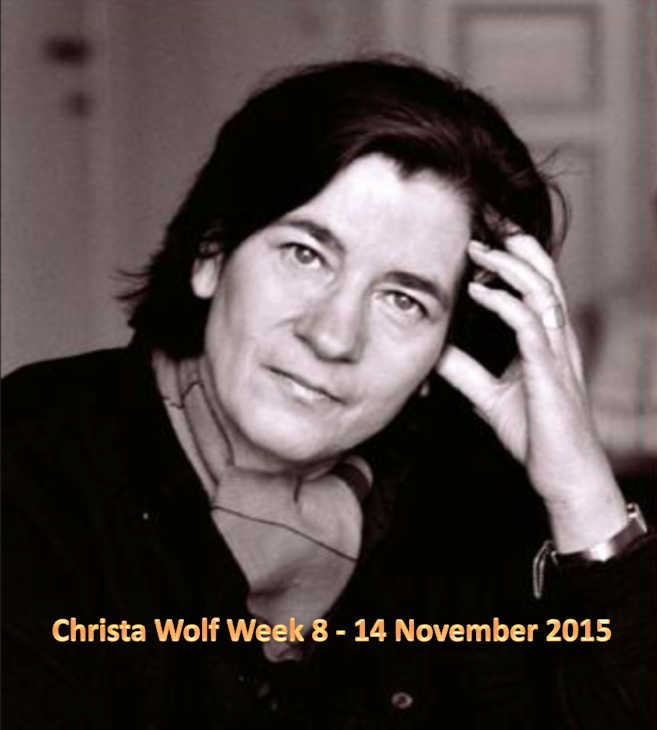
Christa Wolf Week

Today begins Christa Wolf Week and I’ve already spotted a few posts here and there. Christa Wolf was one of the most important writers from East Germany. Huge crowds came to her readings. She was considered controversial after the unification because she never openly criticized the values of the regime. She was also accused of having been a Stasi informant. It seems however that she wasn’t collaborating the way the authorities wanted and that she was closely watched herself. Given the complexity of the subject, I’m grossly simplifying here.

I was hoping to review at least two of her books but I won’t manage much more than The Quest for Christa T., which I find beautiful, fascinating, and annoying in equal measures. It doesn’t have a lot in common with the other books I read by her and which I liked, or even loved. The first book by Wolf I read was Cassandra and I still think it’s one of her greatest books and one of the greatest retellings of a myth. I also liked They Divided the Sky because it allows us the see the former German Democratic Republic through someone’s eyes who really stood behind its ideals. The one I truly loved was No Place on Earth that tells a fictitious meeting of the writers Karoline von Günderrode and Heinrich von Kleist, who both committed suicide a few years after the imagined meeting took place.

Other books by her that are important are Medea, A Day a Year and A Model Childhood.

What are you reading this week? Do you have a favourite Christa Wolf book?

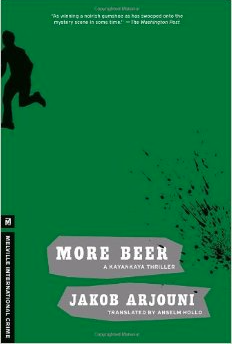
Jakob Arjouni: More Beer – Mehr Bier (1987) Kayankaya 2

More Beer

More BeerMehr Bier is the second novel in Jakob Arjouni’s Kayankaya series. It’s set in Frankfurt, Germany. PI Kayankaya is of Turkish origin. While Arjouni was still alive, he was called Germany’s answer to Raymond Chandler. I always found this comparison problematic. Arjouni writes extremely well. I’d say he’s definitely at the literary end of the crime spectrum. His books are hardboiled noir. Kayankaya is a cynical loner who gets beaten up more than once, still, I don’t think he has a lot in common with Marlowe. The differences are quite subtle but they are important. I remeber hating how Kayankaya killed a fly in the first novel. In this one, he beats a rat. Marlowe would never do something like that. I remember noticing after I’ve read three or four books by Chandler that Marlowe has a great fondness for animals. Kayankaya is much more jaded.

More Beer sees Kayankaya investigate the murder of a chemical plant owner. Four eco-terrorists have been charged with the murder, but it seems highly unlikely that they did go that far. Unfortunately,they don’t want to talk. Early on, it becomes obvious that there was a fifth man involved. But who and where is he? The defendants’ lawyer hires Kayankaya to find him. He investigates with his usual stubbornness, even pursuing after he gets beaten up a couple of times.

Kayankaya is a loner, a heavy drinker, a disillusioned man with an acerbic wit. And constantly mistreated because of his origins. I forgot how old these books are. This one was written in the 80s and to read about the way Kayankaya is treated was quite shocking. I think the status of people of Turkish origin has changed meanwhile. At least I hope so. Creating a character like this in the 80s must have been pretty provocative.

I’m not too sure what to think about this book. I found the first in the series, Happy Birthday, TürkeHappy Birthday, Turk, so much better. But while I didn’t care for the story of More Beer, I loved the writing. I’d forgotten just how well Arjouni writes. The novel is full of memorable metaphors like when the narrator compares rain drops on a windshield to a herd of animals running.  For that alone, I might reread it and will certainly not wait another ten years before I read the third one.

Arjouni, Jakob
Most of Arjouni’s novels have been translated and published by Melvillehouse.
Sadly the author died of pancreatic cancer in 2013. He was 48 years old.

Mehr Bier

Welcome to German Literature Month

literatur_2015_gold-2

This is just a brief welcome post to let you know about some of my own plans for German Literature Month.

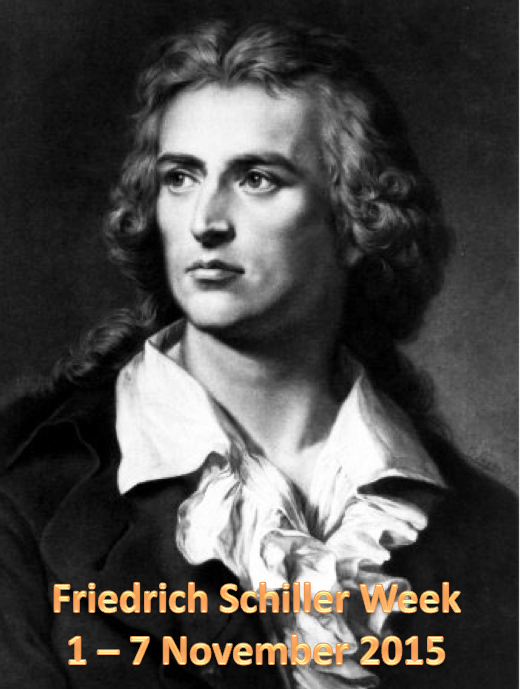
Friedrich Schiller Week

The first week is Schiller week, over at Lizzy’s blog. I won’t participate actively. I hope to review a crime novel and maybe a novella or two.

Christa Wolf Week

For Christa Wolf week I’m reading The Quest for Christa T., which is a bit of a challenge. I’m not as keen on it as I was on the her other books.

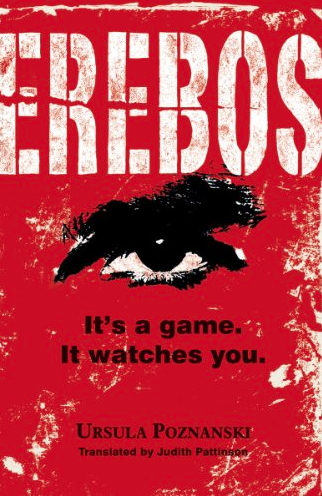
I’ve scheduled two things for week three. I’ll be posting a guest post by a writing buddy who recently revealed an interest in Irmgard Keun. I will also participate in Lizzy’s readalong of the YA novel Erebos. I’m almost finished with it and must say it’s a captivating book.

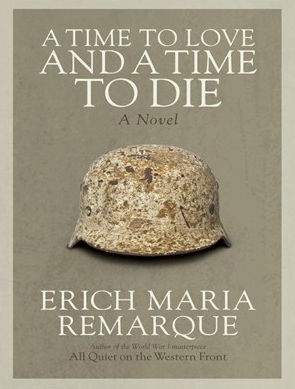
My own readlong is forthcoming in week four. Since Erich Maria Remarque’s novel A Time to Live and A Time to Die is rather chunky too, I suppose I’ll be busy reading that.

What other plans do I have?

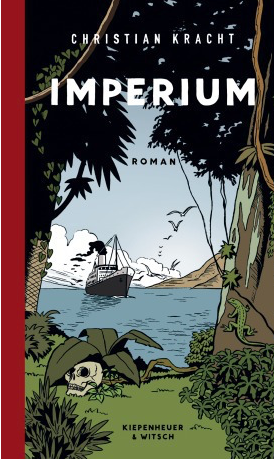
Imperium

Finally reading Christian Kracht’s recently translated Imperium.

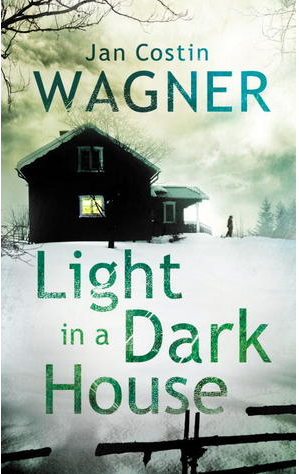
Light in a Dark House

Maybe read Jan Costin Wagner’s Light in a Dark House.

What else? Maybe some short stories.

Have you already started reading? What are your plans?

If you participate, please add your reviews to the German Literature Month Page.

Christa Wolf Giveaway – The Winners

literatur_2015_gold-2

One day left before  German Literature Month begins.

High time to announce the winners of Christa Wolf’s August – offered by Seagull Books.

And the winners are:

TJ @ MyBookStrings

Melissa Beck

Congratulations! And happy reading, TJ and Melissa.

Please send me your address via beautyisasleepingcat at gmail dot com. Lizzy will be sending your copies.


Announcing German Literature Month V

literatur_2015_gold-2

I’m delighted to announce that Lizzy and I will host the 5th German Literature Month (#germanlitmonth) this coming November.


For those who have not participated before, here are the rules:


1) Whatever you read, in whichever language you read, must have originally been written in German.  Novels, novellas, short stories, plays, poems, they all count.   No genre is excluded.
2)  Enjoy yourself.  There’s no need to write long, detailed reviews (although we do like those).  A quick opinion piece, the posting of a favourite poem, the tweeting of a pertinent quote or picture of a delicious book cover (using the hash tag #germanlitmonth, of course) all contributes to a communal celebration of German-language literature.


You are free to pick what you like but for those who prefer some guidance or those who love the group-spirit of the event there are themed weeks and readalongs.


Week 1:  Nov 1-7 Schiller Reading Week. Hosted by Lizzy.


Friedrich Schiller Week


Week 2:  Nov 8-14 Christa Wolf Reading Week. Hosted by Caroline.


Christa Wolf Week


Week 3:  Nov 15-21 Ladies’ reading week incorporating a readalong of Ursula Poznanski’s award-winning YA title, Erebos on Friday 20.11.  Hosted by Lizzy.


Erebos


Here’s the blurb:
‘Enter.
Or turn back.
This is Erebos.’
Nick is given a sinister but brilliant computer game called Erebos. The game is highly addictive but asks its players to carry out actions in the real world in order to keep playing online, actions which become more and more terrifyingly manipulative. As Nick loses friends and all sense of right and wrong in the real world, he gains power and advances further towards his online goal – to become one of the Inner Circle of Erebos. But what is virtual and what is reality? How far will Nick go to achieve his goal? And what does Erebos really want?


Week 4: Nov 22-28 Gents’ reading week incorporating a Literature and War readalong of Erich Maria Remarque’s A Time To Love and A Time to Die on Friday 27.11Hosted by Caroline.


A Time To Love and a Time to Die


Here’s the blurb:

From the quintessential author of wartime Germany, A Time to Love and a Time to Die echoes the harrowing insights of his masterpiece All Quiet on the Western Front.

After two years at the Russian front, Ernst Graeber finally receives three weeks’ leave. But since leaves have been canceled before, he decides not to write his parents, fearing he would just raise their hopes.

Then, when Graeber arrives home, he finds his house bombed to ruin and his parents nowhere in sight. Nobody knows if they are dead or alive. As his leave draws to a close, Graeber reaches out to Elisabeth, a childhood friend. Like him, she is imprisoned in a world she did not create. But in a time of war, love seems a world away. And sometimes, temporary comfort can lead to something unexpected and redeeming.
 
“The world has a great writer in Erich Maria Remarque. He is a craftsman of unquestionably first rank, a man who can bend language to his will. Whether he writes of men or of inanimate nature, his touch is sensitive, firm, and sure.”—The New York Times Book Review


Week 5: Nov 29-30 Read as You Please.


If you’re not sure what to read – our German Literature Month Page can help you with that.
German Literature Month IV was astounding in terms of numbers of participants (40) and quality contributions.  I’m not sure that we’ll be able to match it again, but let’s give it a shot. Are you in?

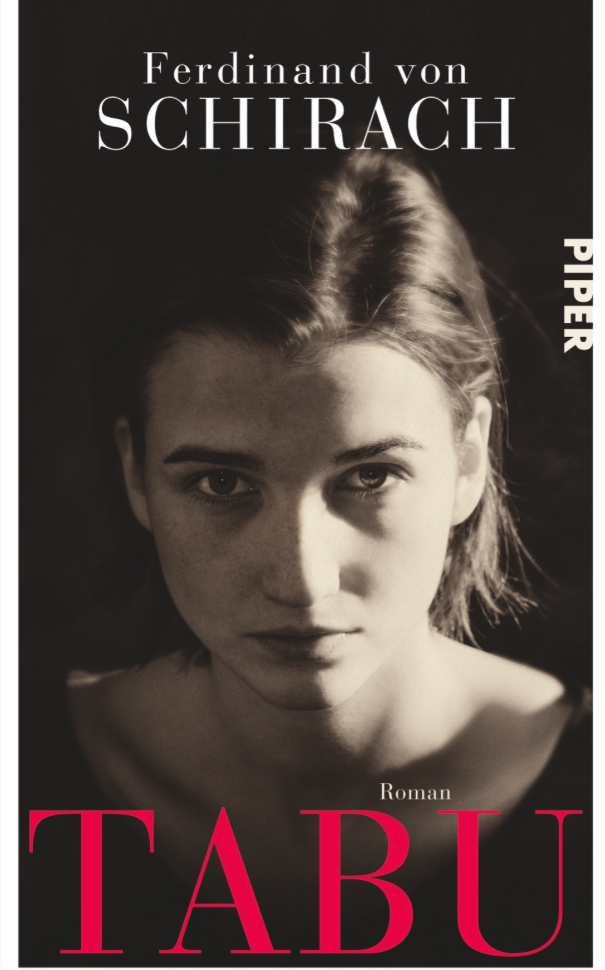
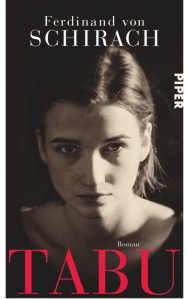
Ferdinand von Schirach: Tabu (2013) – The Girl Who Wasn’t There (2015)

Tabu

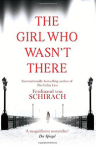
I bought Ferdinand von Schirach’s last novel The Girl Who Wasn’t There  –  Tabu (Taboo) when it came out in German, but didn’t feel like reading it until now. Meanwhile it’s available in translation and I’ve seen a few reviews on English blogs.

Since I liked his first books  Crime – Verbrechen, Guilt – Schuld, and The Collini Case – Der Fall Collini I was looking forward to The Girl Who Wasn’t There. I didn’t expect a crime novel per se, as von Schirach, even when he writes about crime, is more interested in justice and human dignity than crime-solving or reasons for committing a crime. He recently published a book of essays, which all circle around the idea of human dignity. No surprise then that Tabu wasn’t a “proper” crime novel. So, that’s not the problem I had with this book. My biggest problem was the style and that I felt he didn’t really have a story, only themes he wanted to explore.

Interestingly the reception in English-speaking countries – by professional critics and bloggers – is far more favourable than the reception in Germany. Could it be that the translation improved the text? I don’t think that’s the reason but you never know.

I like spare prose and it served von Schirach well in his first two story collections. His prose was still quite alright in The Collini Case, but it drove me up the wall in this novel. The prose isn’t only spare but clumsy. His overuse of parataxis and short main clauses just didn’t feel right. Parataxis is often used to convey a feeling of alienation. Of course, if a character, like the main character Sebastian von Eshburg, feels dead inside because his father committed suicide when he was only a kid – there must be a feeling of alienation, nonetheless, I would have hoped von Schirach would have tried to convey it in another way.

The book is divided into several parts; each has a color as its title. The longest parts tell about von Eschburg’s childhood and how he became a famous artist. Then we see a man being questioned and threatened by a police man. The next part has another narrator – defence lawyer Biegler. That part is much more lively. Biegler is a lusty, driven man. An interesting character. He accepts to defend von Eschburg, who is accused of murder, because he suspects von Eschburg has confessed a crime he might not have committed. The last parts are dedicated to the trial and its outcome.

Overall I didn’t care for this book. I’m familiar with von Schirach’s themes by now and I found the essay collection more interesting than this novel. The style, as I said, is annoying in German. Nonetheless there were parts I liked. Biegler’s chapter is great because Biegler is a great character. I also enjoyed reading about von Eschburg’s childhood because the setting von Schirach chose – the Swiss Graubünden region – brought back childhood memories.

Unfortunately I can’t say this is a must read. It has interesting elements but that wasn’t enough for me. Since some of the main topics are important – violence, the representation of sex and violence in art, sex trafficking, torture – it could still be a good choice for a book group.

A last comment on the title. The German title refers to the main theme, while the English title refers to the alleged crime.
The Girl Who Wasn't There

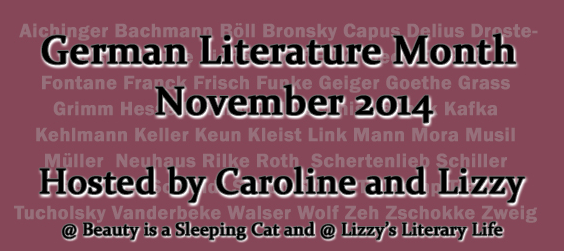
German Literature Month – Winner Announcement

Screen Shot 2014-09-24 at 07.23.25

Some of you will remember that we announced two special giveaways at the beginning of German Literature Month.

Two people will win two sets of books. One will be the winner of the “Pick and Mix Category” and the other will be the winner of “Best Post”.

While I will let Lizzy announce the winner of the “Pick and Mix Category”, I’m announcing the winner of the “Best Post”.

It wasn’t easy to find a winner because there were so many outstanding posts, but we both named the same without much thinking.

And here goes:

Winner of the category “Best Post” is Thomas (Mytwostotinki) for his post on Ostende. 1936, Summer of Friendship.

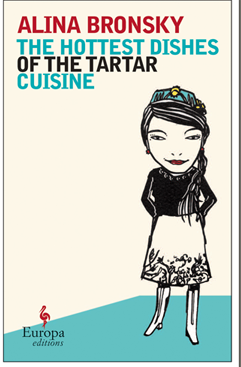
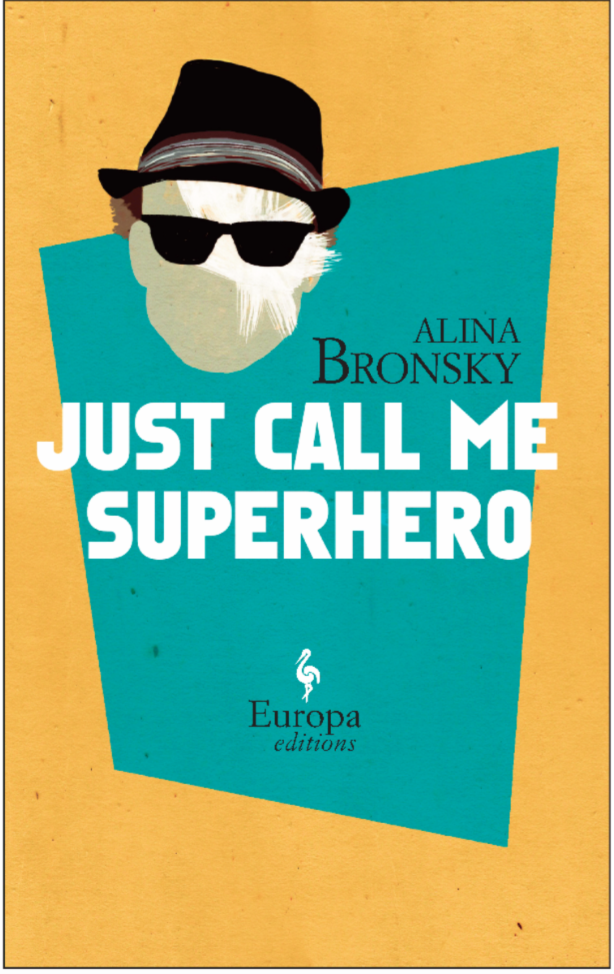
The Hottest DishesJust Call Me Superhero

Congratulations, Thomas, you have won two books by Alina Bronsky, The Hottest Dishes of the Tartar Cuisine and Just Call Me Superhero. Thanks to Europa Editions for their generosity.