Winner Announcement – German Literature Giveaway – Old Rendering Plant by Wolfgang Hilbig

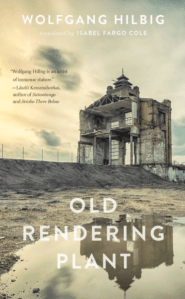
The following two of my readers have each won a copy of Wolfgang Hilbig’s Old Rendering Plant.

TJ (My Bookstrings) and

Brian from Brian’s Babbling Books.

Congratulations, TJ and Brian. I’m looking forward to your thoughts on the book.

Please send me your addresses via beautyisasleepingcat at gmail dot com or via Twitter DM.

Two Lines Press, a program of the Center for the Art of Translation, is generously sponsoring this giveaway.

German Literature Giveaway – Old Rendering Plant by Wolfgang Hilbig

Today I have a special treat for fans of W.G Sebald, László Krasznahorkai, and the movies of Andrei Tarkovsky. Two Lines Press, a program of the Center for the Art of Translation, is generously sponsoring a giveaway of two copies of Wolfgang Hilbig’s Old Rendering Plant.

Hilbig was born in East Germany but emigrated to West Germany in 1985. He received all of Germany’s major literary prizes.

I was familiar with his name but had never picked up any of his books. As soon as I was contacted by Two Lines Press, I browsed a few of his books and was stunned. The imagery reminded me so much of a Tarkovsky movie. And Tarkovsky is one of my favourite film directors. Abandoned houses, desolate landscapes, solitary people. I was captivated.

If you’d like to read a great review of the book here’s a post by roughghosts and his review in The Quarterly Conversation.

Here’s what you can find on the website of the Center for the Art of Translation:

“[Wolfgang Hilbig] evokes the luminous prose of W. G. Sebald.” — The New York Times

What falsehoods do we believe as children? And what happens when we realize they are lies—possibly heinous ones? In Old Rendering Plant Wolfgang Hilbig turns his febrile, hypnotic prose to the intersection of identity, language, and history’s darkest chapters, immersing readers in the odors and oozings of a butchery that has for years dumped biological waste into a river. It starts when a young boy becomes obsessed with an empty and decayed coal plant, coming to believe that it is tied to mysterious disappearances throughout the countryside. But as a young man, with the building now turned into an abattoir processing dead animals, he revisits this place and his memories of it, realizing just how much he has missed. Plumbing memory’s mysteries while evoking historic horrors, Hilbig gives us a gothic testament for the silenced and the speechless. With a tone worthy of Poe and a syntax descended from Joyce, this suggestive, menacing tale refracts the lost innocence of youth through the heavy burdens of maturity.

PRAISE

“Wolfgang Hilbig is an artist of immense stature.” — László Krasznahorkai, winner of the Man Booker International Prize and author of Satantango and Seiobo There Below

“Out of the ugliness of history and the wasted landscape of his home, he has created stories of disconsolate beauty.” — The Wall Street Journal

“Beneath Hilbig’s layers of imagistic prose, deep inside the tormented psyche of his narrator, a historical beast waits to be roused.” — Electric Literature“

“[Hilbig writes as] Edgar Allan Poe could have written if he had been born in Communist East Germany.” — Los Angeles Review of Books

*******

If you would like to win a copy of Hilbig’s novella, leave a comment, telling me why you’d like to read it.

The giveaway is US/Canada only. The winners will be announced on Wednesday November 22 2017, around 18:00 Central European time.

*******

The Giveaway is now Closed.

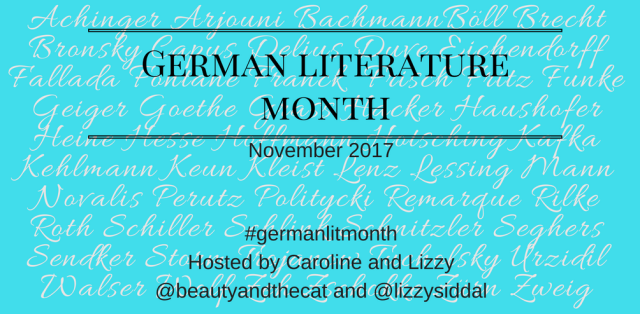
Welcome to German Literature Month

I can’t believe it’s already November. And I can equally not believe how unprepared I am this year. Usually I’ve already read a few books for German Literature Month before it even began. Or at least I’ve made a long list. Not so this time. I think I got a bit discouraged when I realized that most of the books I was drawn to haven’t been translated yet. To review or not to review a book that hasn’t been translated is always a dilemma. Not just during German Literature Month. In the last couple of months I decided mostly against it. I have a feeling, I won’t be able to do that this month. But we will see.

For now I only know that I will be discussing Lion Feuchtwanger’s The Opperman’s, which is part of the Literature and War Readalong. I’ll tell you more about it shortly.

And here is a tiny list.

The Nameless Day – Der namenlose Tag by Friedrich Ani

After years on the job, police detective Jakob Franck has retired. Finally, the dead with all their mysteries will no longer have any claim on him. Or so he thinks. On a cold autumn afternoon, a case he thought he’d long put behind him returns to his life and turns it upside down. The Nameless Day tells the story of that twenty-year-old case, which began with Franck carrying the news of the suicide of a seventeen-year-old girl to her mother, and holding her for seven hours as, in her grief, she said not a single word. Now her father has appeared, swearing to Franck that his daughter was murdered. Can Franck follow the cold trail of evidence two decades later to see whether he’s telling the truth? Could he live with himself if he didn’t? A psychological crime novel certain to thrill fans of Henning Mankell and Jo Nesbo, The Nameless Day is a masterpiece, a tightly plotted story of contemporary alienation, loss, and violence.

Swallow Summer by Larissa Boehning

Two music producers pack up their studio along with their dreams of ever making it in the industry after too many bands fail to pay their bills…
A woman takes up an invitation to visit an ex-lover in Arizona, only to find his apartment is no bigger than a motel room…
A former drama student runs into an old classmate from ten years before, hardly recognising the timid creature he has become…
Each character in Larissa Boehning’s debut collection experiences a moment where they re forced to confront how differently things turned out, how quickly ambitions were shelved, or how easily people change. Former colleagues meet up to reminisce about the failed agency they used to work for; brothers-in-law find themselves co-habiting long after the one person they had in common passed away; fellow performers watch as their careers slowly drift in opposite directions. Boehning’s stories offer a rich store of metaphors for this abandonment: the downed tools of a deserted East German factory, lying exactly where they were dropped the day Communism fell; the old, collected cameras of a late father that seem to stare, wide-eyed, at the world he left behind. And yet, underpinning this abandonment, there is also great resilience. Like the cat spotted by a demolition worker in the penultimate story that sits, unflinching, as its home is bulldozed around it, certain spirits abide.

Der Autor als Souffleur by Undine Gruenter (not translated)


I hope you’ve got your books ready and are looking forward to joining us.

Don’t forget the two readalongs:

On 15th November, the date of the Warwick Prize award, Lizzy will be discussing Yoko Tawada’s Memoirs of A Polar Bear.

On 29th November, I will discuss Lion Feuchtwanger’s The Oppermanns as part of her War and Literature series.

Announcing German Literature Month VII

Doesn’t time fly?  It seems like only two minutes ago since we were celebrating GLM VI.

Just like in previous years, I will co-host this event with Lizzy’s Literary Life. During the month of November, both our blogs will be dedicated to literature written in German.

Will you be dusting down some neglected tomes from your bookshelves? Reading more from a favourite author or treating yourself to some newly translated works?  There’s a lot to celebrate in German Literature this year: the Theodor Storm bi-centennial, the Heinrich Böll centennial, or the three German titles on the longlist of the Warwick Prize for Women in Translation.

It’s hard to know where to start, and impossible to fit it all in. So Lizzy and I have decided to let you meander through the trails of German literature wherever and in whatever fashion you may wish (and perhaps, between us, we’ll cover it all.)

The whole month will be read as you please, with two readalongs for those who enjoy social reading.

On 15th November, the date of the Warwick Prize award, Lizzy will be discussing Yoko Tawada’s Memoirs of A Polar Bear.

On 29th November, I will discuss Lion Feuchtwanger’s The Oppermanns as part of her War and Literature series.

There is no obligation to participate in the readalongs.  As ever,  the only rule for German Literature Month is to simply enjoy reading something originally written in German.  A novel, a play, a poem. Literary non-fiction, even.  Blog about it. Tweet about it. Review on goodreads or any other review site of your choice.  Just let the world know about the treasures to be found in German Literature (and let us know about it also on a special link that will be made available on November 1st).

In years past support for German Literature Month has been phenomenal, and the event is now a true highlight of our reading calendar.  Will GLM VII match its predecessors? It will if you join us. Will you?

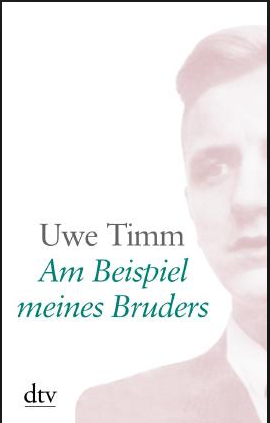
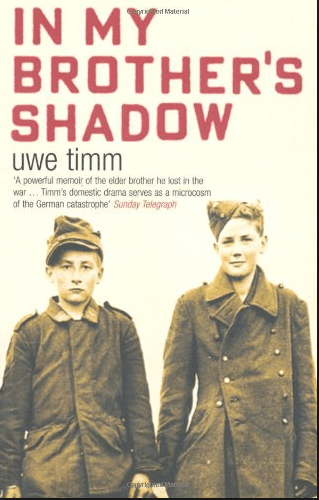
Uwe Timm: In My Brother’s Shadow – Am Beispiel meines Bruders (2003)

in-my-brothers-shadowuwe-timm

Maybe you’ve never heard of Timm’s novella The Invention of Curried Sausage. If you haven’t, do yourself a favour and get it because it’s marvellous. Possibly because I loved that novella so much, I stayed away from In My Brother’s ShadowAm Beispiel meines Bruders, although I’d been keen on reading it since it came out in 2003. There’s not one reader or critic who doesn’t think it’s essential reading. But we all know how it goes – everyone praises something, and one has read another book by an author that one loved  . . . I’m glad I finally overcame my reluctance because if ever a book was essential reading – then it’s this one. And for many reasons, not only as a brilliant WWII and post-war memoir.

In his memoir In My Brother’s Shadow, Timm doesn’t only try to reconstruct his brother’s life and find out who he really was, but examines his own family and the German post-war society. Timm was born in 1940, the third and last child of his parents. His sister and brother were both over sixteen years older. His brother Karl-Heinz was his father’s favourite. When Karl-Heinz was severely wounded and later died in 1943, on the Eastern Front, in the Ukraine, his father was devastated. The older son was everything he’d wished for. He would take over his business. He was courageous and heroic, unlike little Timm who’s squeamish and dreamy.

Although soldiers weren’t allowed to write a diary, Karl-Heinz did and after he died of his wounds, it was sent back to his parents.

When he’s almost sixty and both of his parents and sister dead, Uwe Timm, rereads the diary and the brother’s letters and decides to write this memoir.

It is clear from the beginning that he doesn’t consider his brother to be a hero. He’s too shocked by some of the diary entries. They are cold and devoid of any compassion with the soldiers and civilians he kills. Karl-Heinz is a member of the SS Panzer Division Totenkopf (Skull and Crossbones). One of the SS’s notorious elite divisions. But what shocks Timm even more, and that’s because it’s also part of the post-war mindset, are the omissions. He knows his brother was present when some of the most horrific extermination operations went on, but he doesn’t mention anything. And in the end, he even stops writing his diary because, as he writes, it doesn’t make sense to write about awful things.

Reading Timm’s account, you can feel that he was ashamed and horrified that he had a brother like this. And he’s ashamed and horrified because of the way people spoke right after the war. Many found it perfectly OK that Jews were killed and were only angry about losing the war. Many others said they “didn’t know” but it was clear they had only chosen not to know.

The silence and passivity of the masses disgusted Timm. He also found out that many soldiers were given a choice whether they wanted to be part of a firing squad or not. Hardly anyone said no. Interestingly though, saying no, had absolutely no consequences. They didn’t choose to fire people because they were scared but simply because they wanted to.

Timm also explores his father’s authoritarian education methods which were pretty typical for that time. Kids had to obey and if they didn’t  they were slapped, hit or worse. Psychologists have found out a long time ago that this “black pedagogy” as it is called was one of the reasons why Hitler and Nazism were so successful.

While the book is harsh on his family and many other Germans, it still captures the suffering. His family, like so many others, lost everything when Hamburg was destroyed in ’43. For many years they lived in a cellar.

In My Brothers’ Shadow is also amazing as a book about writing a memoir. What it means to dig deeper and find family secrets. It’s not surprising, he was only able to write about everything so honestly, after his parents and sister were dead.

Uwe Timm is a wonderful, stylish writer that’s why this memoir has many poetic elements. It is a fascinating and touching story of a German family.

One thing that Timm’s elegant and poignant memoir illustrates admirably well – silence is political. Looking the other way is not innocence it’s complicity. This should be self-evident, unfortunately, it wasn’t then and it’s still not now. I’m glad I finally read this memoir. Especially just after Kempowski’s novel. They are great companion pieces.

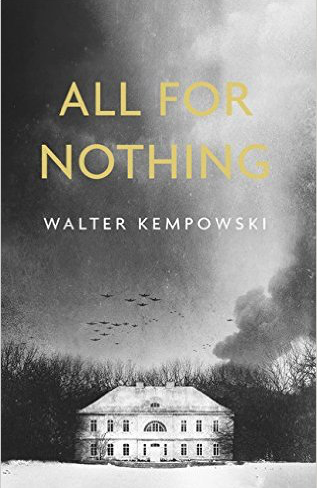
Literature and War Readalong November 2016 Meets German Literature Month: All For Nothing – Alles umsonst by Walter Kempowski

All For Nothing

The last title of this year’s Literature and War Readalong is Walter Kempowski’s All For Nothing – Alles umsonst. It was Kempowski’s last novel. Walter Kempowski was born in 1929 in Rostock and died in 2007 in Rotenburg. He was famous for his autobiographical novels, one of which Tadellöser & Wolff, was made into a mini-series, and his huge project Echo Soundings – Echolot, subtitled “A collective diary”. In this project he collected and juxtaposed excerpts of diaries, letters ,and documents to illustrate and capture history.

Here is the first sentence of All for Nothing

The Georgenhof estate was not far from Mitkau, a small town in East Prussia, and now, in winter, the Georgenhof, surrounded by old oaks, lay in the landscape like a black island in a white sea.

And some details and the blurb for those who want to join

All For Nothing – Alles umsonst by Walter Kempowski, 352 pages, Germany 2006, WWII

Here’s the blurb:

Winter, January 1945. It is cold and dark, and the German army is retreating from the Russian advance. Germans are fleeing the occupied territories in their thousands, in cars and carts and on foot. But in a rural East Prussian manor house, the wealthy von Globig family tries to seal itself off from the world. Peter von Globig is twelve, and feigns a cough to get out of his Hitler Youth duties, preferring to sledge behind the house and look at snowflakes through his microscope. His father Eberhard is stationed in Italy – a desk job safe from the front – and his bookish and musical mother Katharina has withdrawn into herself. Instead the house is run by a conservative, frugal aunt, helped by two Ukrainian maids and an energetic Pole. Protected by their privileged lifestyle from the deprivation and chaos around them, and caught in the grip of indecision, they make no preparations to leave, until Katharina’s decision to harbour a stranger for the night begins their undoing. Superbly expressive and strikingly vivid, sympathetic yet painfully honest about the motivations of its characters, All for Nothing is a devastating portrait of the self-delusions, complicities and denials of the German people as the Third Reich comes to an end.

*******

The discussion starts on Friday, 25 November 2016.

Further information on the Literature and War Readalong 2016, including all the book blurbs, can be found here.

Welcome to German Literature Month

german-literature-month-vi

Finally it’s November. Those of you who follow my blog might have noticed I was a bit quiet in the last weeks. With good reason. I was busy reading German, Austrian, and Swiss literature.

As you know, Lizzy and I have decided to do a “Read as you please month” with only two themed weeks.

A crime week during week two, hosted by Lizzy.

All For Nothing

The Literature and War Readalong on November 25, in which we read and discuss Walter Kempowski’s WWII novel All For Nothing – Alles umsonst.

For those who are still looking for titles, here are the books I have already read and those I’m still planning to read.

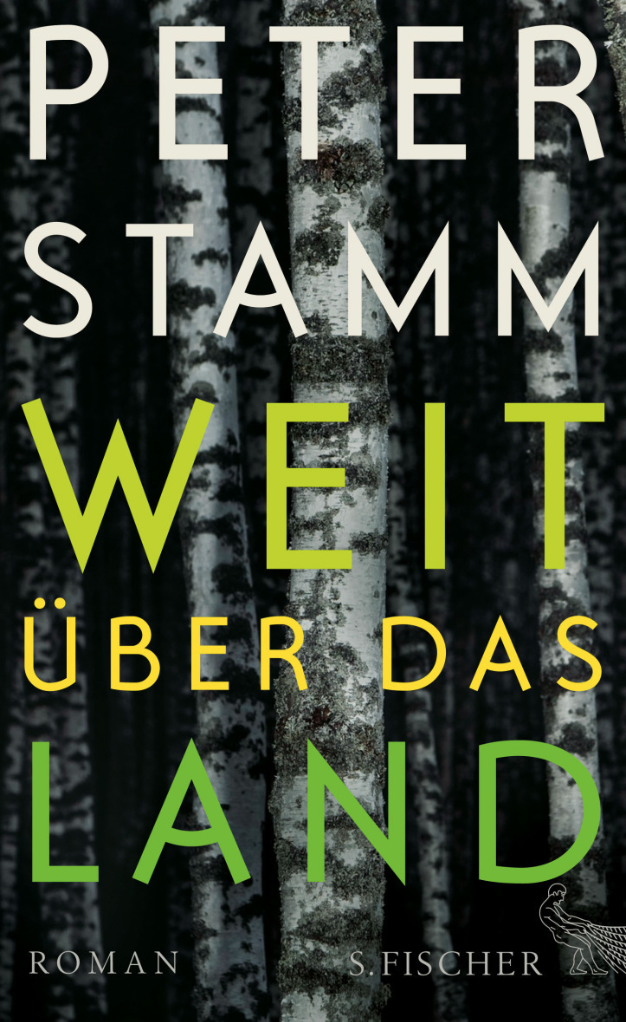
Weit über das Land

Peter Stamm’s latest novel. I must admit, I might not review it. It’s the worst book I’ve read this year. I can still not believe he wrote something like this.

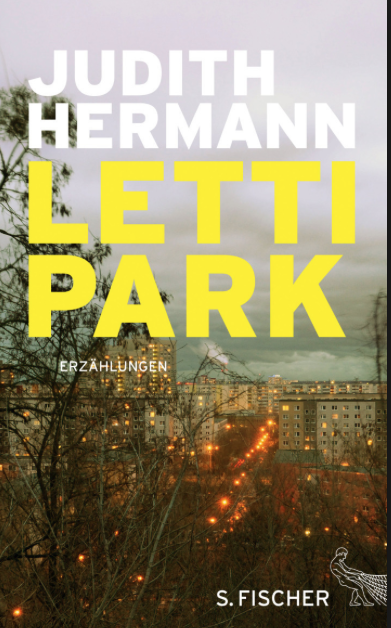
letti-park

Judith Hermann’s new short story collection Lettipark. I’ve not finished this yet but I can already see that it’s a mixed bag.

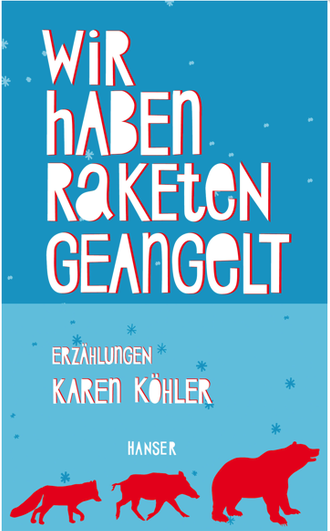
karen-kohler

Karen Köhler’s short story collection Wir haben Raketen geangelt.

I bought this collection a while ago but haven’t read it yet. When I was looking for reviews of Judith Hermann’s book I saw it mentioned a few times. Most critics came to the conclusion that readers would do better to read Köhler instead of Hermann. I’ll let you know what I think.

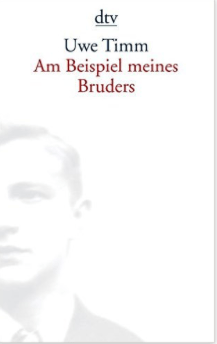
in-my-brothers-shadowam-beispiel-meines-bruders

I’ve only heard great things about Uwe Timm’s memoir In My Brother’s ShadowAm Beispiel meines Bruders. As far as I can tell, (I read the beginning), it’s amazing.

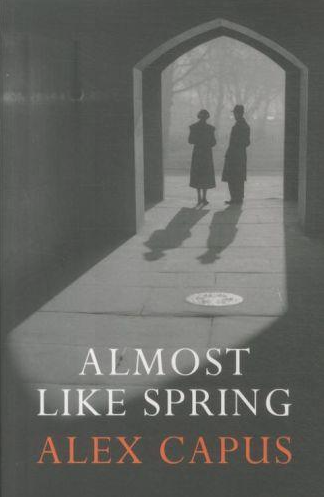
almost-like-springfast-ein-bisschen-fruhling

Almost Like SpringFast ein bisschen Frühling, is my first Alex Capus and if the rest is as good as the beginning, it won’t be my last.

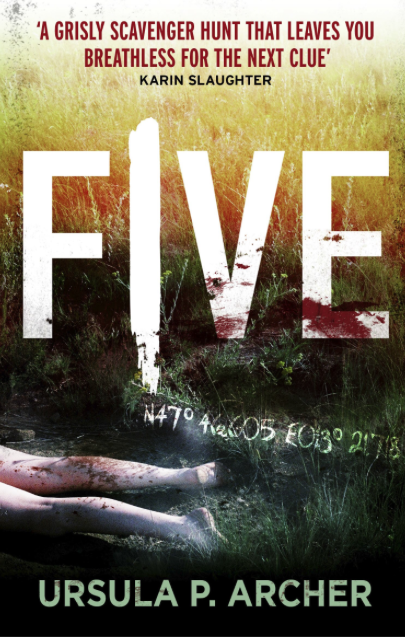
fivefunf

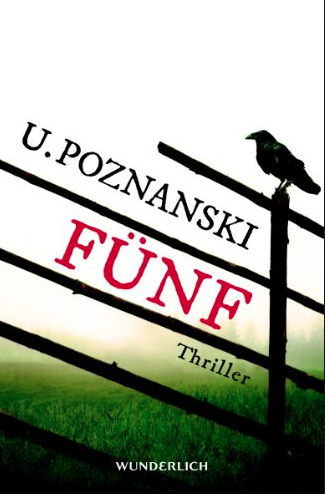
Last year I read Ursula Poznanski’s Erebos and was pretty much blown away. While I liked Five – Fünf a bit less, it’s still a really gripping book. You may have noticed that her adult crime novels are published under another name, Ursula P. Archer, in English. If you’re still looking for a page turner for crime week and are not too squeamish, you’ll enjoy this.

denkbilder

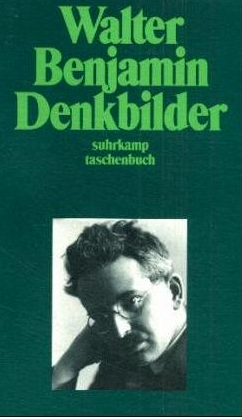
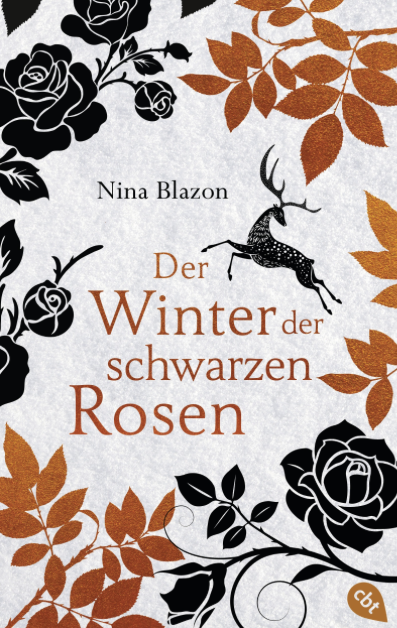
These are my plans so far. I might add some Walter Benjamin and one of the fantasy novels by Nina Blazon Der Winter der schwarzen Rosen (not translated yet).

der-winter-der-schwarzen-rosen

I hope you’re all busy making plans and wish you all a great month. I hope you’ll discover a lot of great books. Happy Reading!


*********

There will be a few giveaways.

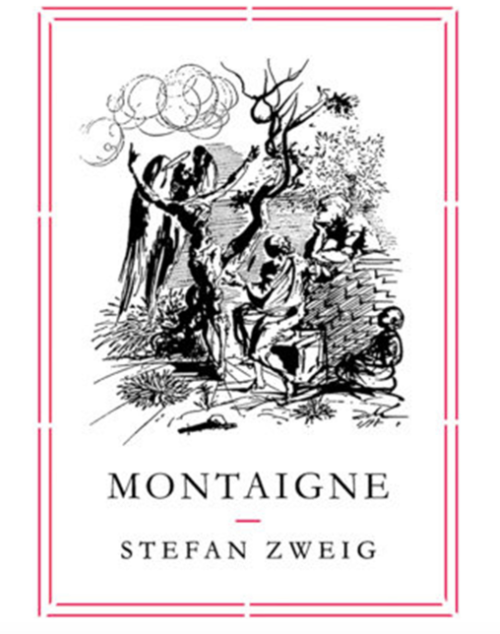
Here’s a sneak peek.

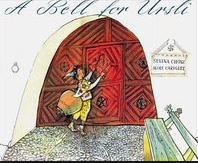
montaignea-bell-for-ursli


*********

Please add your reviews to this site German Literature Month.