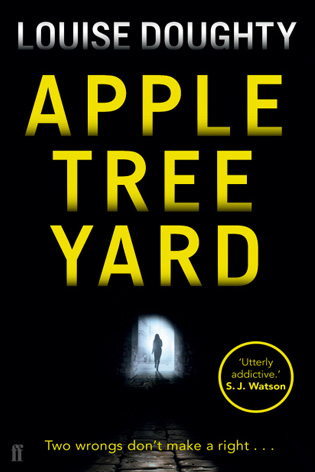
Louise Doughty: Apple Tree Yard (2013)

Apple Tree Yard

I wanted to read Apple Tree Yard as soon as it was out last year because I’d enjoyed Louise Doughty’s earlier novel Whatever You Love so much. I didn’t really know what to expect, didn’t read any reviews, and so I was glad to find out that not only is the book very different from her earlier novel, but just as good, maybe even better.

Apple Tree Yard tells the story of an affair that goes terribly wrong. Yvonne Carmichael is in her fifties, married with two grown-up kids. She’s a scientist and very successful in her work. Her marriage could be better but yshe and her husband do get along fine. What it is that makes her follow a man and start an affair with him? Boredom? Love—or rather lust— at first sight? Maybe a bit of both.

The book opens with a prologue that gives away a lot. We know Yvonne Carmichael and her lover have been arrested and are being tried and we also know that the prosecution has found out something that could be fatal for Yvonne. I think it’s quite impressive that Louise Doughty managed to give away this much in the prologue and still was able to write a page-turner that held my interest until the last page.

What worked particularly well for me was that large parts of the story were written as if Yvonne was talking to her lover, which was intimate and eerie at the same time.

Apple Tree Yard is the third crime novel with a London setting that I’ve read this year and, once again, the setting is almost a character.

The book is a crime novel but it explores a lot of themes in a very arresting way. Unfortunately mentioning some of them would really spoil the book. One theme I can mention, which is important, is the exploration of a marriage. Yvonne and her husband still share a lot but they are clearly not in love.

Apple Tree Yard is part thriller, part court-room drama, nicely paced, intricately plotted and infused with a bitter-sweet, melancholy mood that is quite rare in crime novels. A very gripping and intense novel.

 

Across the Universe (2011) A Sci-Fi Thriller

Across the Universe is the first Sci-Fi thriller I’ve ever read. It’s also a YA novel and the first in a trilogy. Luckily it’s not the type of series beginning without a proper ending. There are open questions but the mystery is resolved, the perpetrator is caught.

Amy follows her parents on a mission to a planet that is three hundred years away from Earth. Her parents are part of a project crew needed to terraform Centauri-Earth. They have agreed to board the spaceship Godspeed and to be cyrogenically frozen. Three hundred years in the future they will be unfrozen. Amy didn’t have to follow her parents. They gave her a choice: she could stay with her grandparents and her boyfriend or travel to a new planet with her parents. Her love for her parents is stronger than anything else and she accepts to be frozen. The description of this is actually extremely well done. I could almost feel the ice in my veins.

Fifty years before they should land, someone brutally unplugs Amy. Luckily Elder, the future leader of Godspeed, Eldest’s heir, finds her in time. He’s fascinated by Amy, who is a redhead with translucent white skin and green eyes. Nobody looks like Amy on Godspeed. Everyone looks exactly the same: olive skin, dark eyes, brown hair, tall and strong. Eldest, the current leader, is far less thrilled. He’d like to open a hatch and throw Amy into space. He thinks that having someone on board who looks so different, who knows what it was like on earth, poses a huge threat to peace and stability on Godspeed.

Amy and Elder find out that Amy’s attempted murder probably was a mistake. Someone is targeting the crew of the project, which means Amy’s parents are in danger.

The plot is gripping enough but that wasn’t what I liked about this book. What I liked was the world Beth Revis created. The spaceship Godspeed is like a snow globe. I happen to love snow globes, those mini-worlds inside of glass bubbles filled with water. So naturally, I loved the setting. Godspeed has many layers and is like a replica of the earth. While there are no seasons, there’s still weather; they have rain and wind and they grow plants and have cattle.

For those who were born aboard Godspeed their environment poses no problem, but for Amy the ship is claustrophobic. She knows that the stars on the ship’s ceiling are fake. When they discover that there is a hidden window which allows to look out into space, things become dramatic. People are only docile and agreeing to work like slaves because they know nothing else. But once they would realize how vast the world is outside of the ship, things could change. We soon understand that Godspeed is not so much peaceful but totalitarian.

Amy and Elder try to find out who wants to kill the frozen crew members and they try to make sense of many inconsistencies. Someone, for example, has changed the books on Earth’s history. Facts are distorted and used to manipulate people.

I enjoyed this novel. I loved the setting, I thought the book had many thought-provoking elements, the plot was suspenseful, and Beth Revis has a knack for descriptions. There’s a love story but it’s not too romantic. The character’s are a bit flat and Amy thinks a few silly things, but I didn’t mind. I read this as highly entertaining guilty pleasure. Plus it’s an interesting genre mix that works really well. A bit like a locked room mystery set in space.

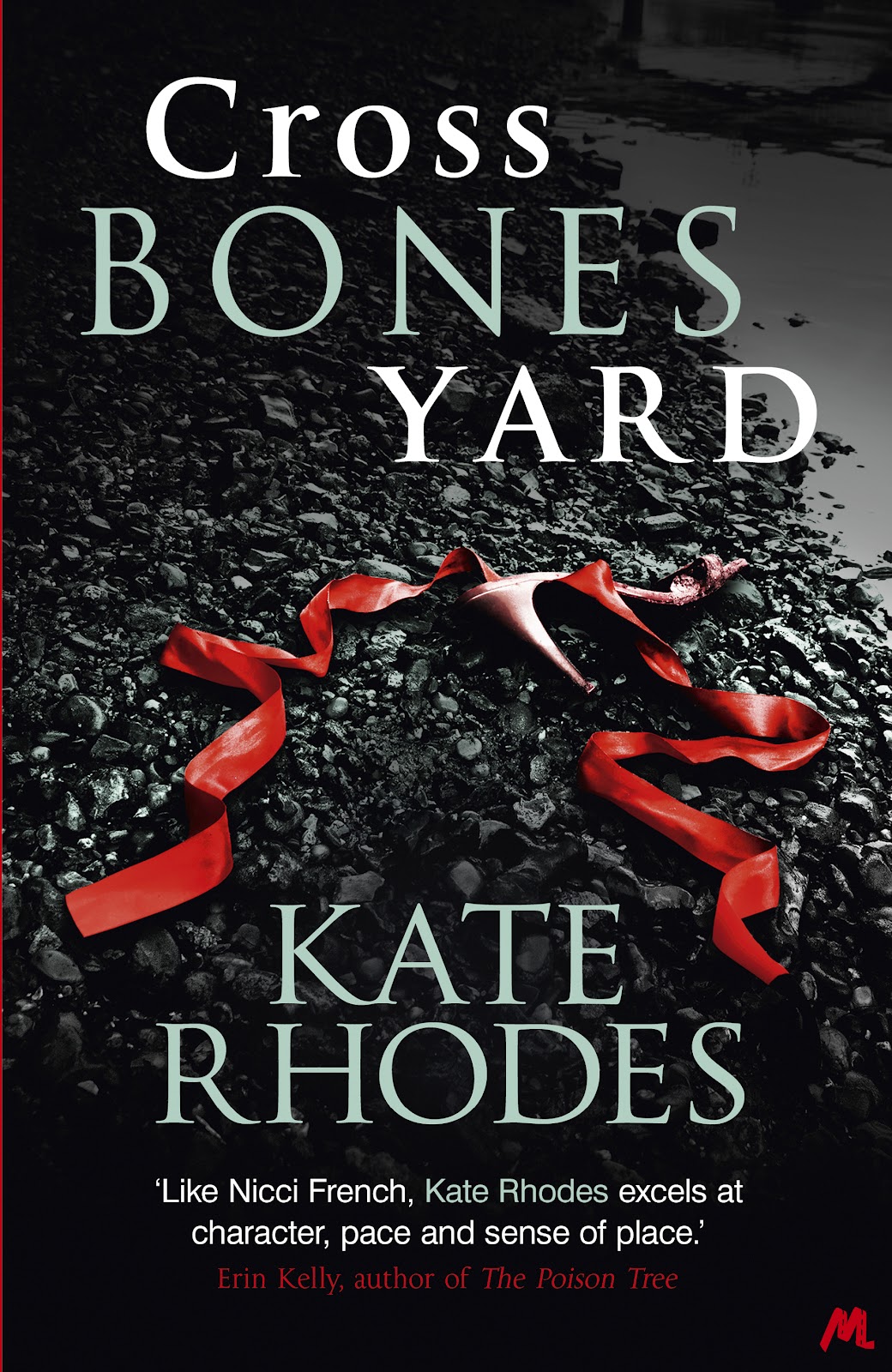
Kate Rhodes: Crossbones Yard (2012)

Crossbones Yard

When I reviewed Nicci French’s third Frieda Klein novel two weeks ago, Alex (Thinking in Fragments) mentioned Kate Rhodes’ Alice Quentin series as being similar and just as good. Of course, I had to get the first in the series Crossbones Yard and read it right away. Reading a new author with a favourite one in mind is often an unfortunate thing, but not in this case. I noticed similarities – a well-described London setting – one protagonist is a psychoanalyst, the other a psychologist – they both work for the police – they both get in trouble – they both have family issues and loyal friends – the pacing is similar and so is the knack for a strong plot. The best news is—Kate Rhodes’ book is still different enough to be interesting. I think one reason is that Alice is at least ten years younger than Frieda. She sounds and feels younger. She goes clubbing and drinks too much on occasions. She’s a professional, but she’s working for a hospital, not for herself, like Frieda. The London described in Crossbones Yard is edgier, it also seems bigger, as Kate Rhodes mentions more neighbourhoods.

The novel opens with a prologue. A flashback: an abusive father, a child in hiding. At the beginning of the novel, Alice avoids taking the elevator to her office on the 24th floor. She’d rather jog. Although she’s a successful psychologist, she suffers from claustrophobia. She’s working at a hospital where she has her practice and helps the police. Not surprisingly then, DCI Burns comes to fetch her. He wants her to talk to a man who is in prison for murder but will be released soon. Burns wants Alice to assess how dangerous he really is. She finds him creepy but mentally challenged and doesn’t see him as a risk. Unfortunately, just after he’s been released, a young woman, who’s obviously been held captive, is brutally murdered. Her face and abdomen were carved. Alice finds her body when she goes jogging one evening. The woman’s been dumped on the former burial ground Crossbones Yard. Nowadays it’s just a wasteland and happens to be exactly where Alice goes for her evening runs.

It will not be the last body Alice finds. At the same time she receives threatening letters and Alice knows that whoever kills these women is after her as well.

The book is swarming with suspects and many of them are somehow linked to a couple of serial killers. The husband is already dead but his wife is still serving time and the new murders look strikingly like those they committed.

I really liked Crossbones Yard a great deal in spite of feeling let down by the ending. The red herrings were too obvious; instead of misleading me, they led me to discover the murderer a bit too early. Still, this is a promising beginning to a series and I’m looking forward to read the sequels. Alice is a strong character and her troubled family history adds to her complexity. Another aspect I liked is that the comments Alice makes on psychology and human behaviour are eve more pertinent than those coming from Frieda Klein. And the descriptions of London are fantastic.

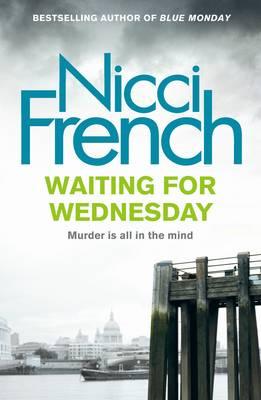
Nicci French: Waiting for Wednesday (2013)

Waiting for Wednesday

If you follow this blog you know I’m a fan of crime writing duo Nicci French. Having read the first two in the Frieda Klein series and spotting number four on the shelves of a local bookshop, I had to finally read Waiting for Wednesday. I really like this series, despite the fact that this is the weakest of the three. It’s an in-between book, a warm up for what will come next. That doesn’t mean it’s not gripping, it’s just that there are two plot-lines, which run parallel, and Frieda isn’t really part of the main plot, but investigating something else.

The book starts strong. Ruth Lennox, a middle-aged housewife with an untarnished reputation and a slightly perfectionist streak when it comes to housekeeping, is found brutally murdered. Her smallest daughter, Dora, finds her when she comes back from school. Why would anyone want to kill a perfect mother and wife, a model neighbour? Maybe she isn’t as exemplary as everyone believes? DCI Karlsson investigates this murder, unfortunately not with the help of psychotherapist Frieda Klein, but with another therapist, Hal Bradshaw,  who hates Frieda’s guts. Although Karlsson is told not to use Frieda’s help, he goes to see her anyway, as he senses the assigned therapist is pompous and useless.

Like in the other books of the series, Frieda’s private life takes a lot of space. Her last case with Karlsson has left her wounded and somewhat traumatized. I can’t reveal too much because that would spoil book number two. In any case, she’s not safe. Or will not always be safe and she knows that.

Her home is Frieda’s refuge. She loves her small house in London, but in this book she hardly ever has it to herself, as it’s invaded by friends and family and finally even by the family of the murdered woman because her niece, Chloë, is friends with the oldest boy.

While Karlsson and his team feverishly investigate the murder, Frieda’s rival, psychotherapist Hal Bradshaw, plays a dirty trick on her, trying to discredit her and some other therapists. A minor thing someone mentions in this charade, makes Frieda look for a girl who has gone missing a while ago. During her investigation, her path crosses with that of a journalist who has spent his whole life investigating the cases of missing girls.

It’s typical for Frieda that she puts herself at risk, so, once again, she makes a narrow escape – that’s not a spoiler as book 4 is already out and we know she’ll survive. Frieda’s love life has gained more importance as well, although her boyfriend Sandy lives in New York.

The book switches from the Ruth Lennox case to Frieda’s investigations and her life. Since Nicci French are excellent at what they do, the book felt seamless. It may not have been as gripping as the last, but it sure put me in the mood to grab the next one right away.

I would recommend this book if you like the series, but I’m not so sure how well it works when you haven’t read the first two. Starting with this one isn’t a good option as book two would be seriously spoilt.

Here’s Guy’s take on the novel. 

Eugenio Fuentes: The Depths of the Forest – El interior del bosque (1999)

El Interior del Bosque

In a guardian article on best crime fiction in English translation Ann Cleeves mentioned Eugenio Fuentes’ novel The Depths of the Forest – El interior del bosque. Since Stu‘s and Richard‘s Spanish Literature Month was upcoming and I’ve never read a Spanish crime novel before, I thought it would be an excellent choice.

The book starts chillingly with the POV of the first victim. Gloria, a beautiful painter, is hiking alone in Paternóster, a remote nature reserve, in Spain. She feels dread but since she’s all alone, there doesn’t seem to be any reason. A few minutes later she’s murdered brutally. This isn’t a spoiler. Her murder is revealed on the bokk cover and happens in the first few pages. The next POV is quite unusual. A rat finds Gloria’s body. The following paragraphs are written from the point of view of a group of young boys who torture scorpions and discover Gloria’s body. The POV switches again, this time we are in the head of Richard Cupido, the PI hired by Marcos, Gloria’s fiancé. Marcos is sure that the Guardia Civil, the local police, are not going to investigate thoroughly and hopes Cupido will find the murderer.

Most of the story is written from Cupido’s perspective but many chapters are told from the point of view of the many suspects. When a second woman is murdered there are even more suspects. In spite of these many different perspectives, the book didn’t feel disjointed.

Most of the men who came in contact with Gloria fell in love with her. And it seems that she had affairs with most of them. Was it a crime of passion? Or has it something to do with an ongoing lawsuit? El Paternóster used to belong to a rich widow who has been fighting to get it back for years. Did she take drastic measures to discourage the public from visiting?

Cupido turns in circles for a long time. He gathers information but it’s leading nowhere. And he becomes obsessed with Gloria himself.

Having finished the novel, I’m facing a huge dilemma. I want to be fair to a novel, which is clearly on the literary side of the crime spectrum, and would most certainly delight many readers, but at the same time I have to admit that this wasn’t for me. Not because it wasn’t good but because it contained a recurring scene of an act of cruelty against an animal (a deer) that made me sick. I skipped most of the parts but still read too much for my own liking. It wasn’t a gratuitous scene but nevertheless, I wonder why an author chooses to include scenes like this. I think this is too bad because if those scenes hadn’t been included I would have liked this book. I thought that all the aspects about nature and how people value it in different ways was thought-provoking and topical. From the nature theme we’re lead to think about human nature. Clearly, the cruelty is part of these explorations. Cupido is a complex character and most of the other character studies were quite fascinating too. The way Fuentes captured this nature reserve and its remoteness, was very well done. Fascinating and eerie at the same time. And I really wanted to find out who killed those women. But overall the novel was too pessimistic for my own liking. While I agree that humans are the most cruel animals in this world, I don’t want to read about it in this way. Or Nnot if illustrating this point includes scenes with cruelty against animals. If this doesn’t bother you and you like your crime novels unusual, literary and very bleak – don’t miss this.

This is my first contribution to Spanish Literature Month hosted by Stu and Richard.

The Depths of the Forest


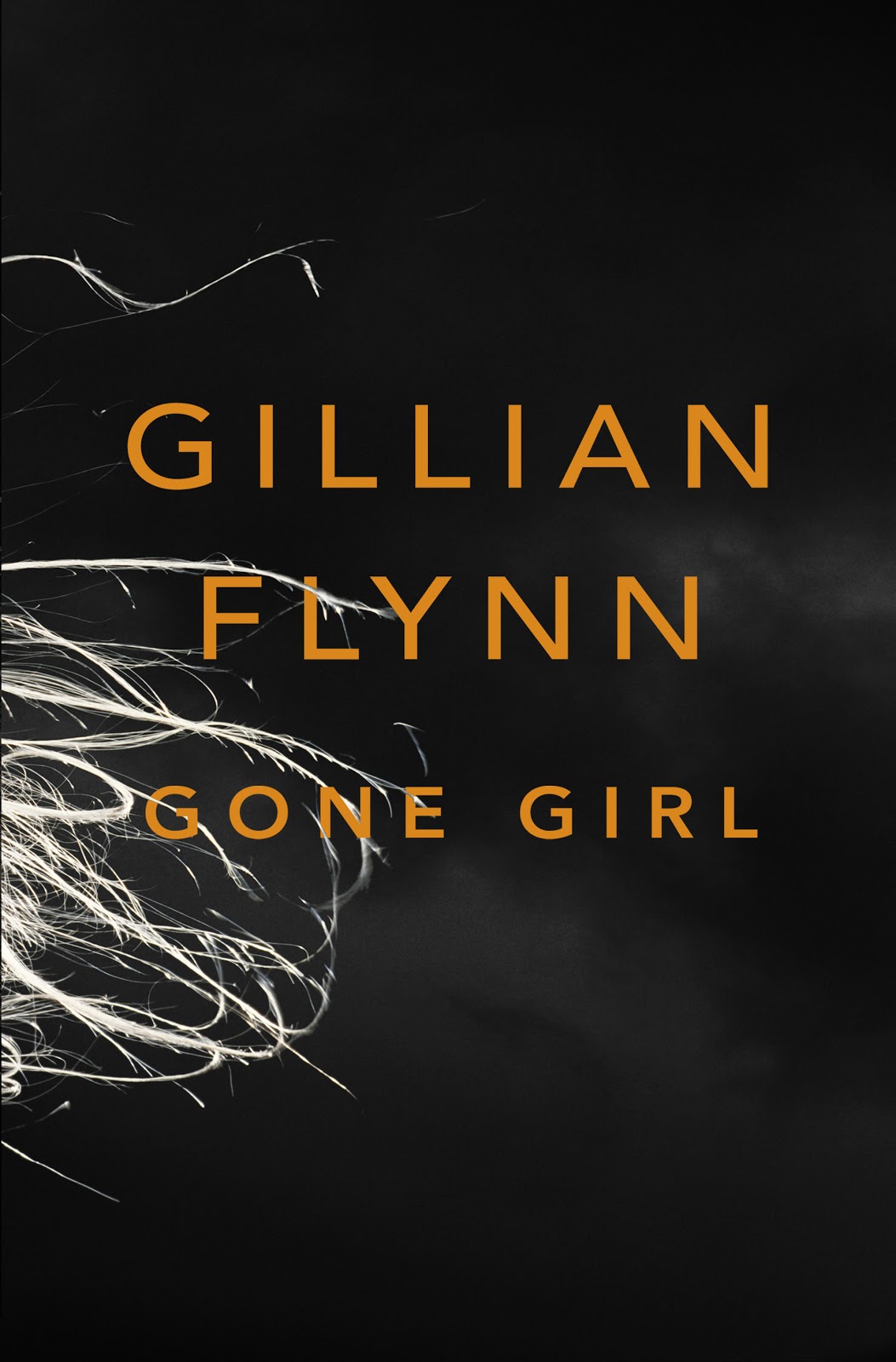
Gillian Flynn: Gone Girl (2012)

Gone Girl

So now I’m one of those who has read Gone Girl. Some bestsellers put me off because everyone reads them, others still make me want to find out what the fuss is all about. Gone Girl was one of the latter. You can’t pick up a recent crime novel without seeing a reference to Gone Girl, you can’t look at agent’s and editor’s picks without seeing it mentioned. Everyone, it seems, is looking for the next Gone Girl. Most of the time when I finally give in and read a book because of the hype, I’m disappointed. In this case it’s not as bad, but I still feel somewhat underwhelmed. Gone Girl has a major plot twist in the middle and an unexpected ending. And it is hugely manipulative, which may be the reason, why I wasn’t surprised by anything. I just felt I was led to assume one thing, while another was true. I saw the twist in the middle coming and foresaw the end. I also had the impression, I’ve read all this before, but I couldn’t come up with a book title. That’s when I realised that it has a similarity with some TV series like Damages and Breaking Bad, which I watched recently. They are both equally full of twists and turns. And I enjoyed them more.

So what’s it all about? On the day of their fifth anniversary beautiful, intelligent and witty Amy Dunne goes missing. A neighbour calls Nick at work and when he returns home, he finds his house wide open. He sees signs of a struggle in the living room and blood in the kitchen. What has happened to Amy? And why is Nick not as concerned as he should be? Police, media, neighbours, and even Amy’s parents, soon turn against Nick and suspect him to be a murderer.

The book is told by both Amy and Nick. Both are highly unreliable narrators. The only thing we know for sure is that their marriage went down the drain when they both lost their jobs and left New York, Amy’s hometown for Nick’s hometown North Carthage, Missouri. If they had only lost their jobs it would have been bad enough, but Amy, who was incredibly rich, loses most of her money. Amy’s psychologist parents are a successful writer duo. Their children’s book series Amazing Amy has earned them a fortune and made Amy into a celebrity. The only problem: the books are not as successful as they used to be. Bad investments and overspending have done the rest. Amy’s parents are broke and need Amy’s money.

Unfortunately it’s hard to write about this book in any depth without spoiling it. I’m glad I’ve read it. I can see why it appeals to many people. Gillian Flynn writes well and plots well. But from a psychological point of view, I found this unsatisfying. Both characters are described in great detail, but they didn’t come to life; they remain shallow, despicable card-board figures. When I think of the aforementioned series Damages, and the character Glenn Close plays, I see why I didn’t really appreciate Gone Girl. Glenn Close’s character is hateful and despicable, but she’s also admirable and touching. A fascinating, toxic mixture. Nick and Amy are just narcissistic ciphers.

Gone Girl is entertaining, but I don’t think it has anything pertinent to say about marriage or relationships, other than dysfunction + dysfunction = ultimate dysfunction. This was my second Gillian Flynn novel and I liked it less than the first, Sharp Objects. I’m curious to find out how Dark Places compares to these two.

Lucie Whitehouse: Before We Met (2014)

Before We Met

Lucie Whitehouse’s latest novel Before We Met, was a quick, fast-paced read. The book falls under the sub category of “domestic noir”. I didn’t even know that a sub-genre like that exists before I read Marina Sofia’s take on the term “chick noir”. I’m not sure I’m happy about these labels either. The only thing “domestic noir” tells us basically, is that it’s a married woman who gets in trouble. Before We Met was compared to Gone Girl, but since I haven’t read it that wasn’t something that made me pick it up. But when I saw Lucie Whitehouse compared to Nicci French in Guy’s review, I knew I had to read it as I’m a huge Nicci French fan. There are similarities, although, funny enough, the husband/wife duo Nicci French rarely write about married women. Their protagonists are mostly single women. The similarity is in the writing, and the pacing. Lucie Whitehouse and Nicci French both know how to write an engaging, well-plotted story that moves forward at a steady pace.

Hannah is a Brit who works in New York, where mutual friends introduce her to Mark who is British as well. Their relationship and the speed with which it develops catches them both unawares. Hannah didn’t really think she was the marrying kind, but handsome, attentive Mark wins her over and within a couple of months they are married. Mark is the owner of a successful British company, located in London. Hannah has a succesful career in New York. After they get married, she decides to relocate and follows Mark to London.  At the beginning of the novel they have been married for eight months. They live in a beautiful, huge house and are very happy together. Hannah is a little worried because she ‘s still not found a job but other than that everything is great. Until the day Mark doesn’t come home from a business trip.

That he doesn’t come home and tells her on the phone he’s lost his cell phone, is annoying, but it doesn’t alarm Hannah. What alarms her though is to find out that Mark has emptied her bank account and that a mysterious woman calls at his office.

I can’t write much more as the less you know, the more you will like this novel. It has quite a few unexpected twists and turns. For every explanation Hannah finds there’s a new unanswered question and in the end she doesn’t know whether she’s being protected or whether she is in danger.

As I said at the beginning, this was a quick read. It’s suspenseful and the writing is very smooth, very readable. My only negative comment would be that I found some of Hannah’s’ decisions not clever, but people react in strange ways under stress.