On Sarah Kirsch’s Regenkatze – Raincat (2007)

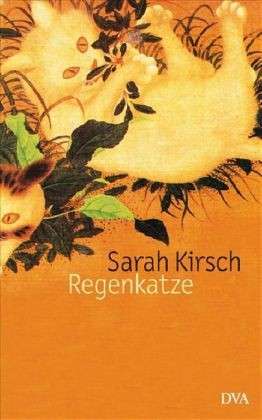
Regenkatze

Sarah Kirsch, born Ingrid Bernstein, in 1935, in Prussian Saxony was a German poet and artist. She was widely known and appreciated in Germany and received numerous prestigious prices. Quite a lot of her books, like the poetry collection Catlives, have also been translated into English. Sarah Kirsch died in May this year. Taking the name Sarah was a deliberate choice to annoy her father who was an anti-Semite.

At first I wanted to join Danielle in her Christa Wolf project. She’s reading One Day a Year, Christa Wolf’s diary, for GLM. While looking for the book on my shelves, I came across Sarah Kirsch’s Regenkatze (Raincat), a diary of the years 2003/2004 and started reading it right away. Such a lovely book. But imagine how surprised I was when I found two diary entries dedicated to Christa Wolf’s One Day a Year, which came out in 2003. Obviously they knew each other as they were writers in the former Democratic Republic of Germany, a secluded space, in which everyone was monitored and spied on. According to those diary entries, Wolf wrote about Sarah Kirsch in her diary. Kirsch doesn’t say too much but she’s not keen on Wolf’s book and abandons it after a while saying that she distorted the truth.

Regenkatze is a wonderful book. It has been written by a woman who loved life and enjoyed every moment of it. But she could also be very critical and ironic. She hated anything fake and phony and loved nothing better than reading, writing, cats and nature.

Kirsch lived in the country, in a house on her own and occasionally with her son. Her days are quiet and filled with observations of the weather, the trees and plants, her cats. Highlights are book deliveries and plunging into the work of new authors. In 2003 she goes through a Murakami phase and re-reads Proust’s books. But she also enjoys Harry Potter, watches crime on TV and snuggles up with the cat.

I hadn’t read any of her poems before but the way she wrote this diary told me I should. She wrote Regenkatze in a very peculiar way, inventing new words, writing in metaphor’s, breaking up the structure of sentences, adding dialect and spoken language.

It’s a very engaging book. Her enthusiasm and joy is infectious and I will certainly read more of her.

I leave you with two of her poems from Catlives:

The Housing

It is dark in the house water curtains

Flow in front of the windows until Epiphany

We put up with the Christmas tree

Flames flicker on candle stubs

Wind presses the linenfold water

Close to the panes bulbous plants

Flower white blue and pink

Darkness tumbles from corners

Steels over sills creeps into

Itself and under the beds

Silence wells up from cupboards and coffers

And in the warm and tangible gloom

Through which I pass as it closes behind me

That hangs about like violet velvet

Rolls itself up and swells and sits in each pot

The one I love suddenly treats the piano

To pieces that move me to tears

The cat treads on her favourite chair

The drainpipes leak at the

Predetermined spots the carpenter’s

Drunken soul is clattering in the rafters

Snow

How before our practices eyes

Everything changes the village flies

Centuries back in the snow

All we need are a couple of crows

Pollard willows along the way oldfashioned dogs

Love and faithfulness count you pull me

Over ditches carry my stole little

Bundle of wood into the evening

Living smoke  wraps up roofs.
Literature and War Readalong November 29 2013 Meets German Literature Month: Death of the Adversary – Der Tod des Widersachers by Hans Keilson

Death of the Adversary

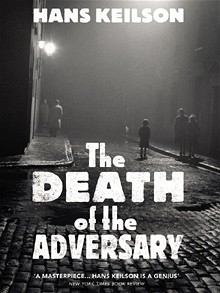
This months readalong title Death of the Adversary aka Der Tod des Widersachers by Hans Keilson is also part of German Literature Month. Keilson was an interesting figure. A German/Dutch novelist and psychiatrist who is most famous for his WWII novels. Born in 1909 in Germany, Keilson, who was Jewish, emigrated in 1936 to the Netherlands where he stayed until his death in 2011. During the war he was part of the Dutch Resistance. In his work he tried to analyse and illustrate the psychological, political and cultural aftermath of WWII.

Here is the book blurb

1930s Germany; the shadow of Nazism looms. Pictures of the new dictator, ‘B.’, fill magazines and newspapers. Our hero is ten when his world begins to change dramatically. Suddenly, the other children won’t let him join in their games. Later, he is refused a job on a shop-floor. Later still, he hears youths boasting of an attack on a Jewish cemetery. Both hypnotised and horrified by his enemy, our hero chronicles the fear, anger and defiance of everyday life under tyranny.

Written while Hans Keilson was in hiding during World War II, this novel is a powerful account of what he outlived. Painful, trenchant and streaked with dark humour The Death of the Adversary is a rediscovered masterpiece.

And the first sentences

For days and weeks now I have thought of nothhing but death. Though I am normally a late riser, I get up early every morning now, calm and uplifted, after a night of drealess sleep. I feel all my powers string and ready within me, as they have not been for a long time. I welcome the day which brings me once again the thought of death.

*******

The discussion starts on Friday, 29 November 2013.

Further information on the Literature and War Readalong 2013, including all the book blurbs, can be found here.

Welcome to German Literature Month

image

Lizzy and I are happy to announce the official beginning of German Literature Month. A few introduction posts and lists have cropped up here and there already, which tells us, the event will be running strong once more.

Since google reader doesn’t exist anymore and a really great alternative hasn’t been found, we’ve decided to set up a German Literature Month site on Blogger which allows you to use Mr. Linky.

Please sign up and leave your links here: German Literature Month Blog

You can find the link to the review site on my sidebar.

I’ve already started a couple of books and hope to be able to post the first reviews soon.

My plans are, as usual. over-enthusiastic.

I’m currently reading or planning on reading the following books

Allissa Walser Mesmerized – Am Anfang war die Nacht Musik

W.G Sebald The Emigrants – Die Ausgewanderten

Ferdinand von Schirach – Tabu (not translated yet)

Eduard von Keyserling – Schwüle Tage (not translated)

Elke Schwitters Mrs Sartoris – Frau Sartoris

Stefan Zweig – Beware of Pity – Ungeduld des Herzens

Please sign up and leave your links here: German Literature Month Blog

Vasily Grossman: Everything Flows (1961) Literature and War Readalong October 2013

Everything Flows

Would you inform on people to save your own life? Sign papers knowing very well it will send people to the Gulag? Would you? If you are like me, you are unable to answer this question. You will hope that you wouldn’t but how can you be sure. It didn’t take a lot for people to be sent to the camps. Anything would make the state suspect subversiveness.Some were sent because others signed a paper, some were sent because they didn’t sign papers. According to the afterword Grossman did precisely that, he signed a paper which served to arrest a group of doctors. He must have felt guilty all of his life, resented his own weakness. Exploring why people would do such a thing, is one of the themes in Everything Flows. It’s not always out of fear or cowardice.

A friend of Ivan Grigoryevich is responsible that he is sent to the Gulag for thirty years. He is released after Stalin’s death in 1953. At first he visits his cousin Nikolay, in Moscow. Nikolay is a scientist who has made a remarkable career, due to some extent to his betrayal of others. When he sees Ivan again, he’s incapable of showing compassion of listening to Ivan’s story. All he does is talk about his own hardships. How very cynical. No deprivations endured outside can be compared with what those in the camps had to go through. These are poignant scenes, which show the selfishness and faulty thinking of so many, the struggle between a bad conscience and the aim to refuse any responsibility. Ivan then moves on to Leningrad where he hopes to meet a former lover. He meets Anna Sergeyevna instead and shares a room with her and her little son. Her husband has been sent to a camp. She blames herself for having taken part in the Terror famine of 1932-3.

The story of Ivan is the only coherent storyline. It is interrupted by stories of other people and many non-fiction parts – on the terror against the Ukrainians, on Lenin and Stalin, on their terror regimes, on the way the Soviet Union worked. This made me wonder often whether Everything Flows can really be called a novel. Where is the borderline? How much non-fiction elements can a book contain and still be called fiction? Grossman didn’t see the publication of Everything Flows and it is possible he would have altered it, still, according to the afterword, it’s finished the way it is. He would not have removed the nonfiction parts, although it seems obvious that they were added to the manuscript later.

Until WWII Grossman was loyal to the Soviet state but after having witnessed the war, having been in Stalingrad, that changed completely. From then on he was focussing in his work on writing about everything as truthfully as possible, on not embellishing and buying into the state’s way of distorting the truth. This cost him almost everything and I’m surprised he was never sent to the Gulag himself. One of his most traumatic experiences was when his novel Life and Fate was confiscated. What further contributed to his critical view of the Soviet state was Stalin’s antisemitism.

In his best parts Everything Flows is an amazing testimony of compassion and humanity. In other parts it is a masterful depiction of the human condition and an open criticism of totalitarianism. Some of the non-fiction parts were a bit heavy going, as I was not familiar with many of the names and with Soviet history in general. I think he rendered the atmosphere of being unfree and the paranoia very well.

I’d like to read a biography of Grossman. He served 1000 days during WWII, was present in Stalingrad and his The Hell of Treblinka was the first eyewitness account and was used during the Nuremberg trials. Has anyone read the Gerrard’s biography The Life and Fate of Vasily Grossman or Grossman’s The Writer at War?

Other reviews

Andrew Blackman

Danielle (A Work in Progress)

Silver Seasons (Silver Threads)

*******

Everything Flows was the tenth book in the Literature and War Readalong 2013. The next is the WWII novel Death of the Adversary aka Der Tod des Widersachers by German writer Hans Keilson. Discussion starts on Friday 29 November, 2013. Further information on the Literature and War Readalong, including the book blurbs can be found here.

German Women Writers – A Few More Suggestions

image

German Literature Month is upcoming and since we’d like to promote women writers I thought, I give you some more suggestions. Two years ago I wrote this post containing mostly classics. Below you find a list with newer or lesser-known authors and books who are all interesting. None of these have been reviewed in one of the past GLM. There would be so many more if only they were translated.

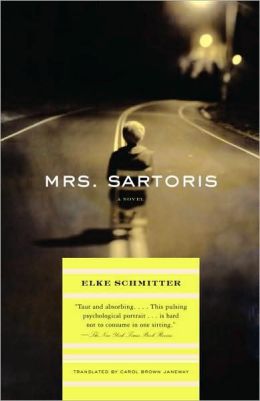
Mrs Sartoris

Elke Schmitter – Germany

Mrs Sartoris

An explosive first novel – Madame Bovary in modern Germany – about a wife and mother whose failed love affairs have driven her to the edge of sanity and to a startling attempt at vindication. After being jilted by a rich boyfriend, Margaret, eighteen and heartbroken, throws herself into a comfortable but stifling marriage to Ernst, a war veteran with a penchant for routine and order, who still lives with his mother in a small German village.

It’s not a bad life, considering Margaret’s psychological scars, but neither Ernst’s adoration nor the birth of a daughter can reawaken her frozen emotions. Until she slides into an affair with a married man with whom she plans to run away. Her plan is a fantasy that cannot possibly come true. Its repercussions nevertheless will explode with unimaginable force in these astonished lives.

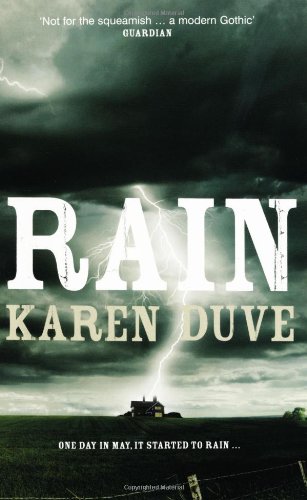
Rain

Karen Duve – Germany

Rain

“It will get better when it stops raining,” said Leon. When Leon Ulbricht lands a contract to write a gangster’s memoirs and moves into his dream home in an East German village with his beautiful wife Martina, everything seems set for an idyllic existence. But the dream home turns out to be in the middle of a fetid swamp; his house and marriage are falling apart; he can’t write the book and has spent all of his advance. It rains without end and their attempts to repair the house, or at least dry it out, are hampered by the plague of slugs eating away at the foundations. And then the gangster, wondering why his memoirs are not yet completed, decides to get nasty.

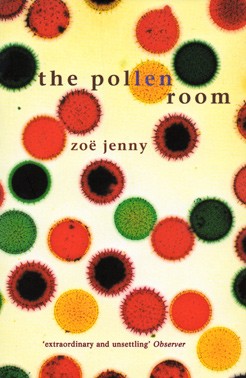
The Pollen Room

Zoe Jenny – Switzerland

The Pollen Room

Carlin Romano “The Philadelphia Inquirer”A European “Catcher in the Rye” or “Less than Zero” — a “spokenovel” for its generation….Abounds in gleaming sentences, in burnished image after image…[Jenny] is a beautifully disciplined writer.

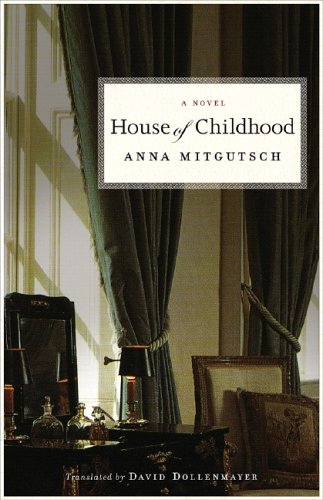
House of Childhood

Anna Mitgutsch – Austria

House of Childhood

Max Berman, a successful but rootless New York restoration architect, socialite, and ladies’ man, remembers his childhood home in the small Austrian town of “H,” mostly through his mother‚’s cherished photographs and vivid stories. When she dies, still longing for the house she fled with her husband and young children in 1928, Max temporarily abandons his playboy lifestyle and travels to H, determined to reclaim the confiscated house.

In H, Max encounters Nadja, a young woman convinced that her late mother was Jewish and that the local synagogue will provide the sense of community she lacks. Recognizing that she is too talented for her provincial neighbors, he arranges for her to attend college in the U.S., where she becomes the most significant of his many lovers. He also befriends Arthur Spitzer, a Holocaust survivor and the leader of H’s dwindling Jewish community, who helps him regain legal control of his mother’s house. When, years later, the last of his tenants finally moves out, Max returns to investigate his family’s ties in H for a fateful year that challenges his restlessness and seems to offer the chance for real belonging.

Acclaimed Austrian writer Anna Mitgutsch’s novel is a powerful examination of the meaning of home—in a place, a community, a relationship—and the difficulty of finding one in our tumultuous world.

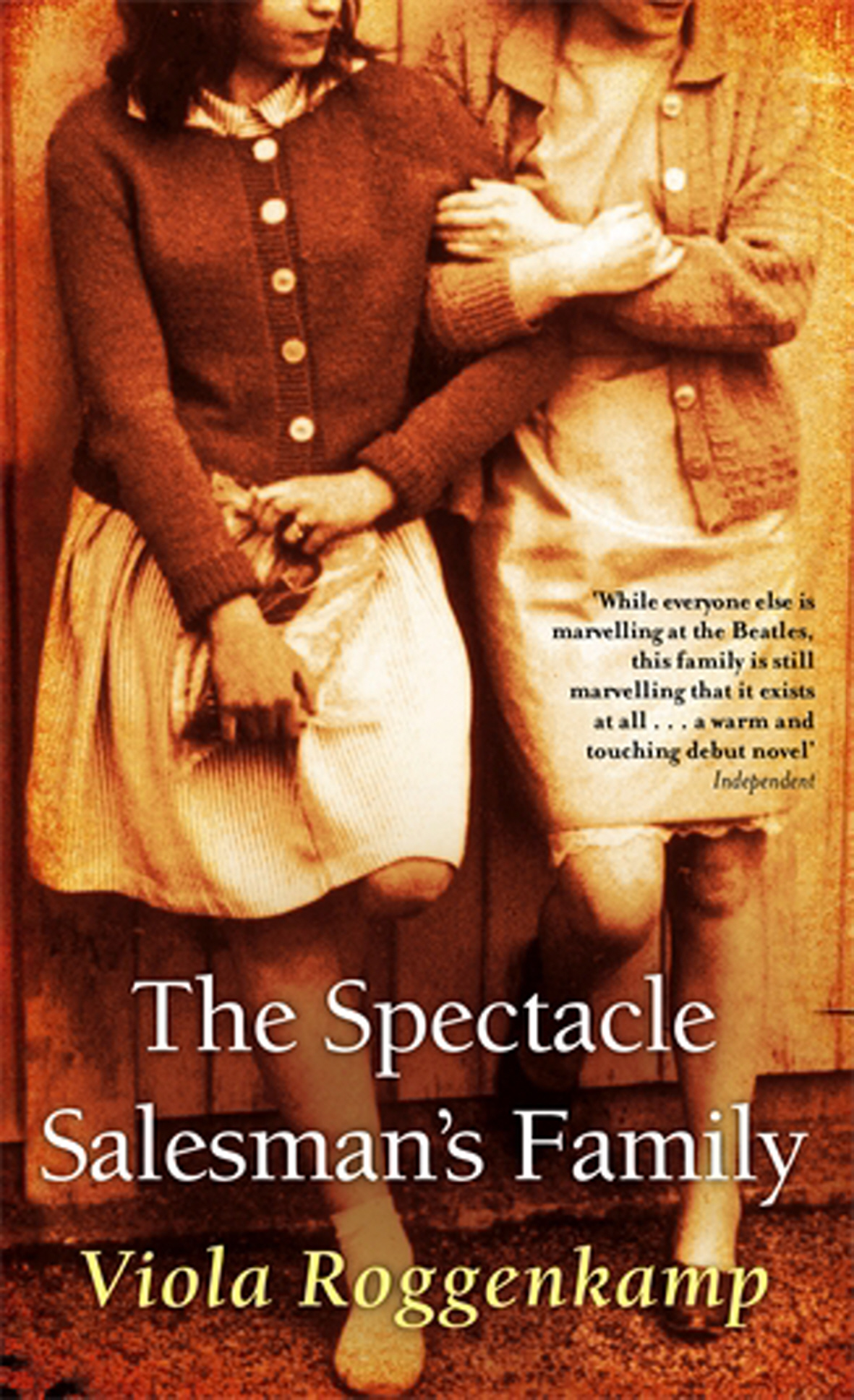
Roggenkamp

Viola Roggenkamp – Germany

The Spectale Salesman’s Family

Paul Schiefer is a travelling spectacles salesman. Every Monday morning he leaves Hamburg on a week-long sales trip. His wife, his mother-in-law and his two teenage daughters Fania and Vera see him off with abundant hugs and kisses, and they welcome him back with equal exuberance on Friday evening – just in time for Sabbath eve. While her husband is away, Alma Schiefer defends the wellbeing of her family with an explosive mixture of ferocious love and extreme determination. Thirteen-year-old Fania is torn between the comfort of home and the fearful thrills of the unknown outside world, a sixties world that contains student protest, beehive hairdos, Israel and the Six Day War, politics, religion, revolution and . . . the promise of love. Sensual, funny and acerbic, The Spectacle Salesman’s Family is a brilliant, vivid portrait of Jewish life in post-Holocaust Germany that continues the Jewish tradition of memorialising, recounting the details in order to hold onto the past and its lessons.


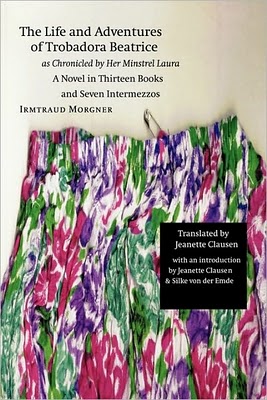
Trobadora Beatrice

Irmtraud Morgner – Germany

The Lives and Adventures of Trobadora Beatrice Chronicled by Her Minstrel Laura

Set in the German Democratic Republic of the early 1970s, The Life and Adventures of Trobadora Beatrice-a landmark novel now translated into English for the first time-is a highly entertaining adventure story as well as a feminist critique of GDR socialism, science, history, and aesthetic theory. In May 1968, after an eight-hundred-year sleep, Beatrice awakens in her Provence château. Looking for work, she makes her way to Paris in the aftermath of the student uprisings, then to the GDR (recommended to her as the “promised land for women”), where she meets Laura Salman, socialist trolley driver, writer, and single mother, who becomes her minstrel and alter ego. Their exploits-Beatrice on a quest to find the unicorn, Laura on maternity leave in Berlin-often require black-magic interventions by the Beautiful Melusine, who is half dragon and half woman. Creating a montage of genres and text types, including documentary material, poems, fairy tales, interviews, letters, newspaper reports, theoretical texts, excerpts from earlier books of her own, pieces by other writers, and parodies of typical GDR genres, Irmtraud Morgner attempts to write women into history and retell our great myths from a feminist perspective. Irmtraud Morgner (1933-90) was one of the most innovative and witty feminist writers to emerge from the GDR. Jeanette Clausen is an associate professor of German at Indiana University-Purdue University at Fort Wayne. She is a coeditor of German Feminism: Readings in Politics and Literature and is a past editor of Women in German Yearbook.

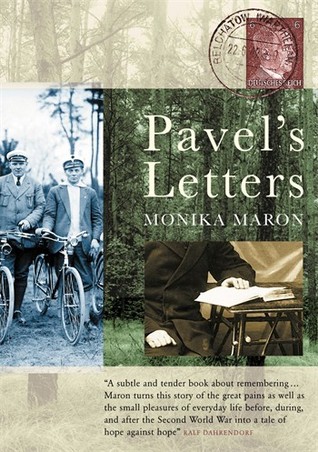
Pavel's Letters

Monika Maron – Germany

Pavel’s Letters

Teasing her family’s past out of the fog of oblivion and lies, one of Germany’s greatest writers asks about the secrets families keep, about the fortitude of ordinary people in extraordinary circumstances, and about what becomes of the individual mind when the powers that be turn against it.

Born in a working-class suburb of wartime Berlin, Monika Maron grew up a daughter of the East German nomenklatura, despairing of the system her mother, Hella, helped create. Haunted by the ghosts of her Baptist grandparents, she questions her mother, whose selective memory throws up obstacles to Maron’s understanding of her grandparents’ horrifying denouement in Polish exile.

Maron reconstructs their lives from fragments of memory and a forgotten box of letters. In telling her family’s powerful and heroic story, she has written a memoir that has the force of a great novel and also stands both as an elaborate metaphor for the shame of the twentieth century and a life-affirming monument to her ancestors.

Do you have a favourite author writing in German?

S. J. Bolton: Now You See Me (2011)

Now You See Me

I’m one of those who is fascinated by the story of Jack the Ripper or rather its mystery. I’m sure, if the crime had been solved, I would care far less, but those many questions  – Who was it and how did he get away with it? Why did he stop? Why did he choose prostitutes? – will never be answered, it will always compel people to speculate and add their own interpretations.

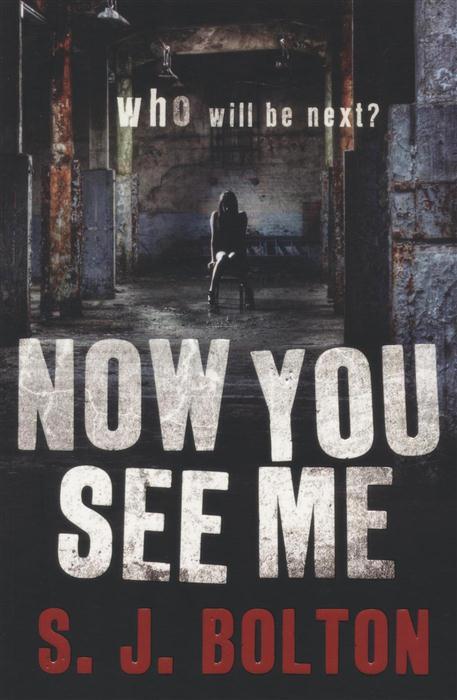
S. J. Bolton must have felt the same fascination and Now You See Me, her take on Jack the Ripper, is a gripping read. DC Lacey Flint, her main protagonist, has always been interested in serial killers. Jack the Ripper is just one of them but one she’s studied in detail. 120 years to the day after Jack the Ripper has killed his first victim, a woman is savagely murdered in London. And DC Flint is the one to find her. Other victims follow, always on the same day the Ripper killed one of his victims. Is this new murderer a copy cat? Why is he interested in Lacey? 

Detectives Dana Tulloch and DI Mark Joesbury are in charge of the investigation. When they notice how much Lacey knows about the Jack the Ripper and that the murderer seems to take an interest in her, they include her in the investigation. Joesbury mistrusts her in the beginning, which is unfortunate for him, as he’s also attracted by her. He knows that Lacey had a troubled past. Not one that a police officer should have. She had problems with drugs and delinquencies are mentioned.

Now You See Me is a page-turner. A police procedural combined with a thriller, which makes for suspenseful reading. This isn’t my first S. J. Bolton. I’ve read Sacrifice before. While I really enjoyed both of her books, they are both flawed. There is always a moment in her books when believability is stretched just a tad too much. If she wasn’t so good at atmosphere, suspense and interesting characters, she wouldn’t get away with it, but since she is great at those three aforementioned elements, I forgive her easily and will certainly read another one.

Danielle wrote a great review of Now You See Me here.

Have you read S. J. Bolton? Which is your favourite?

This is my fifth RIP review. Don’t miss visiting the RIP review site for other Mystery/Crime/Thriller/Ghost/Dark Fantasy related reviews.