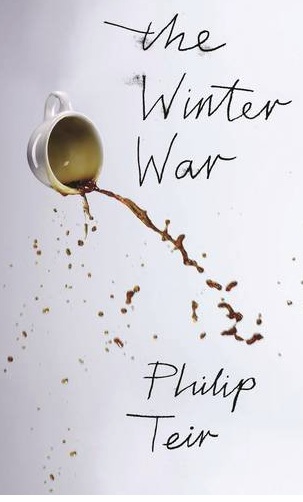
Philip Teir: The Winter War (2015) – Vinterkriget (2013)

Philip Teir

On the surface, the Paul family are living the liberal, middle-class Scandinavian dream. Max Paul is a renowned sociologist and his wife Katriina has a well-paid job in the public sector. They live in an airy apartment in the centre of Helsinki. But look closer and the cracks start to show.

As he approaches his sixtieth birthday, the certainties of Max’s life begin to dissolve. He hasn’t produced any work of note for decades. His wife no longer loves him. His grown-up daughters – one in London, one in Helsinki – have problems of their own. So when a former student turned journalist shows up and offers him a seductive lifeline, Max starts down a dangerous path from which he may never find a way back.

The Winter War is Philip Teir’s first novel but already he’s been hailed as one of the most important young Finnish writers. In a press release, which announced the translation of his book into English, I saw him mentioned as a Swedish author. That’s a bit embarrassing. Philip Teir is part of the Finland Swedish minority in Finland. He writes in Fenno Swedish and his book has been published by a Swedish publisher, nonetheless he was born and lives in Finland.

The title of the book is symbolic and alludes to the Winter War (Talvisota in Finnish – Vinterkriget in Swedish), in which Finland fought against Russia, after having been invaded by Russian forces in 1939. In the book however, the war is mentioned but it isn’t a topic. The major topic is the end of a marriage, embedded in a family story.

I wasn’t so keen on the book at first, because I wasn’t keen on the first narrator, Max, but the book alternates between four narrators: Max, his wife Katriina, and the daughters Helen and Eva. As soon as the book started switching to other narrators, I found it very captivating and was even a little sad when I finished it.

Max is a sociologist and when the book starts he struggles to write a book on Edvard Westermarck. He’s just turning 60 and about to start an affair with a much younger woman. Katriina is on her way to the Philippines to recruit nurses. When she finds out about the affair, he reaction is not exactly as Max imagined it would be. Helen is working as a teacher and has assigned her class to read a novel on the Winter War. When their grandmother has a stroke, it hits her the hardest. The youngest daughter, Eva, lives in London. She studies at an art school and meets people who have joined the Occupy movement.

Teir is a journalist and at times you can feel that. He even indicates his sources at the end of the book, names the authors and ideas which have influenced him. The result is a book that feels uncannily life-like and contains a lot of interesting ideas. I didn’t know Edvard Westermarck but he sounds like a real pioneer and fascinating person. I also enjoyed learning more about the Occupy movement. The thoughts on contemporary art were just as captivating.

The Winter War tells the story of a family in crisis. Each member is unsettled by something and has to make decisions. Not only about marriage and divorce but about choices of profession, ideologies and ways of life.

I was wondering how typical this family was. They live together and come together for important things like birthdays, the illness of the grandmother, the marriage of one daughter, but they each seem to live a completely independent life and have the most profound experiences on their own.

What I liked is that the person who seems the most fragile and directionless is ultimately the strongest and sanest. Maybe Teir wanted to say that those who think they have to make decisions that last a life time are the least suited for our society and only those who embrace flexibility and change are capable of navigating contemporary life and its difficult choices.

Teir has been compared to Jonathan Franzen and I can see why. There are similarities. I enjoyed reading this novel and if you like Franzen, you should pick it up. The Winter War is a highly entertaining, charcater-driven novel of ideas; just don’t expect stylish writing, elaborate descriptions or strong atmosphere.
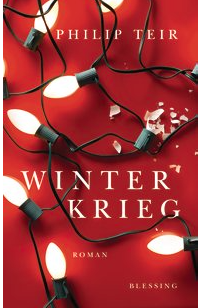
Winterkrieg

I’ve read the German edition of this book. Finland was the guest of honour at the Frankfort book fair 2014 and Teir’s was one of 120 new translations. I bought a few more and hope to review them soon. Sadly most haven’t been translated so far. I like the German cover and the paper they used for this edition is simply gorgeous and lovely to the touch (Munken Premium).

German Literature Month – Winner Announcement

Screen Shot 2014-09-24 at 07.23.25

Some of you will remember that we announced two special giveaways at the beginning of German Literature Month.

Two people will win two sets of books. One will be the winner of the “Pick and Mix Category” and the other will be the winner of “Best Post”.

While I will let Lizzy announce the winner of the “Pick and Mix Category”, I’m announcing the winner of the “Best Post”.

It wasn’t easy to find a winner because there were so many outstanding posts, but we both named the same without much thinking.

And here goes:

Winner of the category “Best Post” is Thomas (Mytwostotinki) for his post on Ostende. 1936, Summer of Friendship.

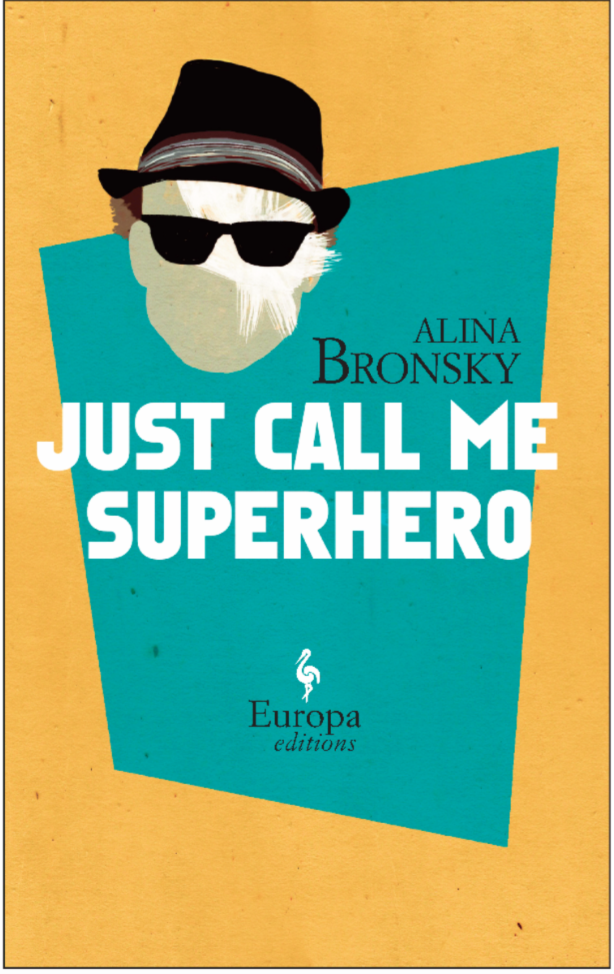
The Hottest DishesJust Call Me Superhero

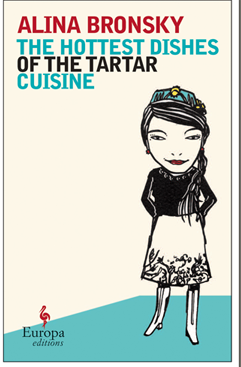
Congratulations, Thomas, you have won two books by Alina Bronsky, The Hottest Dishes of the Tartar Cuisine and Just Call Me Superhero. Thanks to Europa Editions for their generosity.

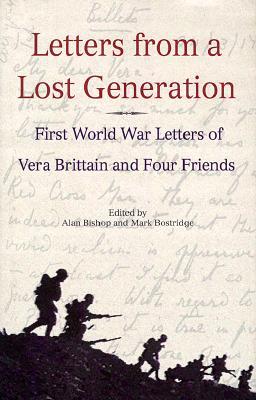
Literature and War Readalong December 29 2014: Letters From a Lost Generation by Vera Brittain and Four Friends

Letters From a Lost Generation

Letters from a Lost Generation is the book I’ve been looking forward to all year. I love reading letters and this collection has been on my radar for a long time. Vera Brittain was a nurse during WWI.

The letters have been written between her, her fiancé, her younger brother, and two of their best friends. All four men died in the war. I don’t know how she survived such loss. Vera Brittain later wrote her memoirs Testament of Youth, based on her wartime experience.

And some details and the blurb for those who want to join

Letters from a Lost Generation by Vera Brittain and Four Friends (UK) WWI, Letters, 448 pages

Nothing in the papers, not the most vivid and heart-rending descriptions, have made me realise war like your letters’ Vera Brittain to Roland Leighton, 17 April 1915.

This selection of letters, written between 1913 & 1918, between Vera Brittain and four young men – her fiance Roland Leighton, her brother Edward and their close friends Victor Richardson & Geoffrey Thurlow present a remarkable and profoundly moving portrait of five young people caught up in the cataclysm of total war.

Roland, ‘Monseigneur’, is the ‘leader’ & his letters most clearly trace the path leading from idealism to disillusionment. Edward, ‘ Immaculate of the Trenches’, was orderly & controlled, down even to his attire. Geoffrey, the ‘non-militarist at heart’ had not rushed to enlist but put aside his objections to the war for patriotism’s sake. Victor on the other hand, possessed a very sweet character and was known as ‘Father Confessor’. An important historical testimony telling a powerful story of idealism, disillusionment and personal tragedy.


*******

The discussion starts on Monday, 29 December 2014.

Further information on the Literature and War Readalong 2014, including all the book blurbs, can be found here.

Looking Back on German Literature Month IV 2014

Screen Shot 2014-09-24 at 07.23.25

Every year Lizzy and I think that German Literature Month can’t get any better and every year we are wrong. It keeps on getting better and better. More people take part – 43 this year – more blog post are being written – 174 (!) -, and the quality of the posts is surprising too. I’m so pleased and want to thank you all for participating and showing so much enthusiasm.

I tried to read all the posts, but I still have some catching up to do before next Sunday. Next Sunday Lizzy and I are giving away two books. One for the winner of the “pick and mix”- category and one for our “favourite post”. It’s not easy because there have been so many great posts.

I’m sorry if I haven’t been able to comment on some blogs, but unfortunately there are always a few with a commenting system I can’t use.

My personal month went great as well. I’ve read some outstanding books, discovered a new favourite crime writer, and managed to read most of the books on my list.

Thanks once more to everyone. And a very special thank you to my wonderful co-host Lizzy.

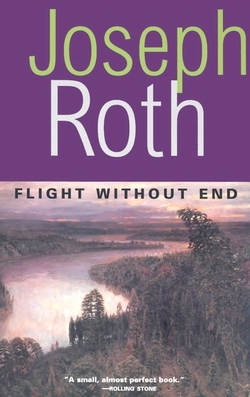
Joseph Roth: Flight Without End – Die Flucht ohne Ende (1927) Literature and War Readalong November 2014

Screen Shot 2014-10-19 at 10.18.51

I’ve read a few novels by Joseph Roth now and every time I’m surprised how different they are. Die Flucht ohne EndeFlight Without End is no exception. This is a Roth I’ve not encountered so far, or only in snippets. Flight Without End clearly shows the mark of the journalist, but it’s also the book of someone who cannot take the society he lives in seriously. Rarely have I seen him this sarcastic, mocking individuals and groups of people. And rarely have I come across a Roth that was this funny. I had to laugh out loud more than once and truly wish the translator was able to capture this. Roth’s wit and humour is very subtle and although a translation could be literal, the humour might get lost in translation as it’s often tied to one word that changes the meaning. Mostly he uses it when describing someone. Here’s just a short example.

Eine junge Schauspielerin, die zwar mit dem dicken Zweiten Bürgermeister geschlafen hatte, aber unbeschädigt aus seiner Umarmung wieder herausgekommen war und teilweise sogar erfrischt.

A young actress, who indeed slept with the fat second mayor but came out of this embrace undamaged, partially even refreshed.

I take just one element of the sentence to explain what I mean. It’s entirely possible to choose the word unharmed instead of undamaged but it would remove a lot of the fun. “Unbeschädigt” means both unharmed or undamaged, but normally you’d use it for an object, while unharmed would rather mean a person. Roth chose undamaged very consciously.

What struck me too in this book was how cosmopolitan Roth was. The book starts in the Russian steppe, moves to Baku, from there to Vienna, then to a unamed city on the Rhine, and ends in Paris. Each place is described masterfully, its essence captured, its character laid bare.

The story is a bit more problematic. I’ve seen this book mentioned as one of Roth’s weakest works, which would have needed some editing. I agree to some extent. I didn’t mind the lack of plot. What we find here is basically the story of a quest. Franz Tunda, former officer, then captive of the Russian army, escapee, revolutionary, drifter and private tutor, lacks one thing – a home. What is home for a man like Tunda? If he can be of some use, he’s adopted everywhere, but never really welcome. He stays an outsider and this makes him a keen observer. He sees behind everyone’s masks, doesn’t buy any of the big theories on progress and wealth. He’s as wary of the communists as he is of the socialist’s and the bourgeoisie. They all have a hidden agenda. That’s why his flight is without end because, as vast as the world may be, society ultimately makes it very small and there’s no home for those who don’t play along. When I get so much insight and analysis of people and countries I don’t mind a lack of plot. My reservation has something to do with the structure of the book. It’s presented as if we were reading an account of someone who is Tunda’s friend. At the same time there are accounts that are directly made by Tunda and it switches occasionally from third to first person. I think this would have needed editing but it’s a minor flaw.

One of the most poignant scenes is when Tunda visits the grave of the unknown soldier, under the Arc de Triomphe, in Paris.

The blue flame burned not to honor the dead soldiers, but to reassure the survivors. Nothing was more cruel than the blissfully ignorant devotion of a surviving father at the grave of his son, whom he had sacrificed without knowing it. Tunda sometimes felt as if he himself lay there in the ground, as if we all lay there, all those of use who set out from home and were killed and buried, or who came back but never came home. For it doesn’t really matter whether we’re buried or alive and well. We’re strangers in this world, we come from the realm of shadows.

Flight Without End doesn’t show us a poetic or lyrical Roth. It’s not elegiac or nostalgic. It’s sarcastic and ironic. It’s the work of someone who saw the downside of globalisation long before anyone else and who was no fool when it came to human beings. There are a few good ones out there but they hardly ever occupy the big stages; they might be hidden somewhere in the Taiga, doing their thing quietly and unseen.

I thoroughly enjoyed this book. It’s witty, irreverent, unflinching and astute. It may not be the best book for someone who hasn’t read Roth yet, but it’s a must-read for those who already like him.


Other reviews

Vishy (Vishy’s Blog) 


*******

Flight Without End is the eleventh book in the Literature and War Readalong 2014. The next book is Letters from a Lost Generation by Vera Brittain and four of her friends. Discussion starts on Monday 29 December, 2014. Further information on the Literature and War Readalong 2014, including the book blurbs can be found here.

Joseph Roth: Weights and Measures – Das falsche Gewicht (1937)

Weights and Measures

How does an upright, steadfast man survive among corruption, hypocrisy, and crime? Roth’s answer to this question, which lies at the heart of Weights and Measures – Das falsche Gewicht, is pretty simple: he doesn’t. Either he is tainted or he will go down.

Anselm Eibenschütz, a former officer, leaves his soldier’s life behind and becomes the inspector of weights and measures in Zlotogrod. He hasn’t changed profession by choice but because his wife urged him too. The change is hard on Eibenschütz. He’s not used to this region; it’s colder and rougher than where he used to live, and he isn’t cut out for the job. It’s not to his liking and since he is incorruptible and upright, he clashes with the merchants of the region. Hardly anyone conducts honest business. They all rely on extra-money, coming from the use of false weights and measures and smuggling. While the old inspector was open to bribes, Eibenschütz is not. He reports every single misconduct and sends even the poorest to prison. A kind man at heart, this is especially hard on him. He doesn’t want to punish those who have nothing, but can’t make exceptions because the richer would find out and he would be denounced. He finds ways to help the poor though. Either he doesn’t check on their shops or he warns them somehow.

Eibenschütz blames his wife for his misfortunes. Why did she have to talk him into leaving his former life? He begins to hate and neglect her and when he finds out she’s cheating on him, it offers him an excuse to neglect her even more.

In the province of Zlotogrod is a border tavern that is visited by smugglers. Jadlowker, the owner, is a profiteer and famous everywhere for his criminal activities. He lives with a beautiful gypsy woman, Euphemia. When poor Eibenschütz sees her for the first time he falls in love and becomes a regular customer.

From that moment on it goes downhill for Eibenschütz. Even though he is able to arrest Jadlowker and is named supervisor of the tavern, he doesn’t find happiness, but turns into an alcoholic. Eibenschütz isn’t the only one who is tested. There’s an unseasonably warm winter towards the end of the book; a cholera epidemic breaks out and kills hundreds. Because people fear to touch the dead, prisoners are used as undertakers. Jadlowker grabs the opportunity and flees. The end of the book is foreseeable and tragic.

I thought this was an absolutely remarkable novel for many reasons. The main theme is the clash between an honest man and a corrupt system, but what is amazing is how the story unfolds in front of the background of the disintegrating Austro-Hungarian monarchy and serves as a mirror. The book really gives you a feel for how huge this monarchy was, how extended, and how many cultures were part of it.

What I liked most is how Roth used the descriptions of the place and the weather to show Eibenschütz’s emotions and to underline the wild remoteness of this region. There were many beautiful small scenes and episodes. Eibenschütz is upright and stiff, but he’s also very emotional and feels deeply. His life as a soldier sheltered him emotionally; experiencing heartache and passion, unhinges him. When he falls in love he discovers nature. Before his “awakening” nature is just a phenomenon he sees but barely notices. The changing seasons bring rain or snow, breaking ice or sunshine, but that doesn’t affect him. Once he’s “awake” he feels the seasons, feels he’s part of it.

Weights and Measures is a wonderful book. Short, complex, and filled with poetic descriptions. Knowing that Roth battled alcoholism all of his life, gives Eibenschütz’ descent into alcoholism an even deeper meaning.

Here’s a wonderful review by Max (Pechorin’s Journal) which contains quotes.

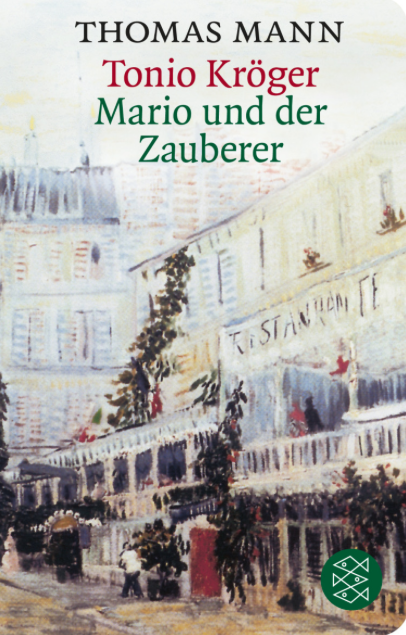
Thomas Mann: Tonio Kröger (1903)

Tonio Kröger

Tonio Kröger is considered one of Thomas Mann’s masterpieces, but only a few elements spoke to me, most of it infuriated me.  The writing is stellar, as usual, and the way he described Lübeck – the narrow alleys and gabled roofs – made me want to travel there, but the idea of the artist as tortured soul and ultimately superior was hard to stomach.

Tonio Kröger is the son of a German Consul and a Southern woman. He’s got his looks, – dark eyes and dark hair – and the name from her. From an early age on, Tonio feels he’s different, an outsider. Not only because his mother’s from the South, but because he loves books and art and feels like an artist. He first feels an intense love for blond and blue-eyed Hans and later for the blond, blue-eyed Inge. They seem to live in another sphere, a happier one, more immersed in life and what society expects from them.

Tonio wants to become a writer and finally, in his twenties, leaves Lübeck for Munich where he lives a life of debauchery, which disgusts him eventually. A long central chapter shows us Tonio discussing his views of art and life with the painter Lisaweta Iwanowna. Tonio is in his thirties now. Prematurely aged and sobered. Shortly afterwards, he departs for his hometown Lübeck. He visits his family home, which has been sold after the death of his father. One part of the stately home houses a public library. Tonio walks through the once familiar rooms. There’s nothing here for him anymore. He leaves for Denmark. At the hotel in Denmark he meets Hans and Inge again. They are married. He watches them without making himself seen. He’s less an outsider now than a spectator, still, he feels keenly that he’s different and decides to return home which isn’t Lübeck anymore.

A last letter to Lisaweta tells us he’s made peace with himself and will return to Munich for good.

The descriptions and the structure of the novella are wonderful. The way Mann captures the feeling of being an outsider is something one can easily relate to. But I didn’t like the ideas contained in the book. Tonio suffers a lot and he would like to be an ordinary person, like Hans and Inge. He would like to be blond and blue-eyed because those people have an easier, happier life. He’s tortured because he’s no conformist, but an artist. This is so dated and clichéd, it’s painful. Plus the association of blue eyes, blond hair with health and strength made me shudder. There’s also a lot of arrogance in this depiction of an artist. Yes, Tonio does suffer – or says so – , but he very obviously feels superior too.

I don’t think you have to be a tortured soul to be a great artists. Feeling like an outsider and being a non-conformist, most probably comes with it, but it doesn’t mean you have to suffer. And it most certainly doesn’t mean you are superior. I can’t accept the idea of an artist (or anyone else) as a superior person  or as “chosen”. That’s pure hubris. Tonio Kröger is filled to the brim with hubris. The suffering Tonio professes felt more like a pose than real pain.

Has anyone read Tonio Kröger? How do you feel about it?