War Through the Generations 2012 Reading Challenge – The Great War

This is the fourth year in a row that Anna and Serena host the War Through the Generations Challenge. Since this year is dedicated to WWI I chose to join them. I have quite a few books on my piles that I would like to read. I’m not sure how many I will read but I aim for 5.

Here are the rules

Books can take place before, during, or after the war, so long as the conflicts that led to the war or the war itself are important to the story. Books from other challenges count so long as they meet the above criteria.

Dip: Read 1-3 books in any genre with WWI as a primary or secondary theme.

Wade: Read 4-10 books in any genre with WWI as a primary or secondary theme.

Swim: Read 11 or more books in any genre with WWI as a primary or secondary theme.

5 books means I sign up for Wade. I may or may not read more but I’m pretty sure I’ll stay on this level.

Three of the books chosen are the first three titles of my Literature and War Readalong 2012. If you want to read along, please see the page for details.

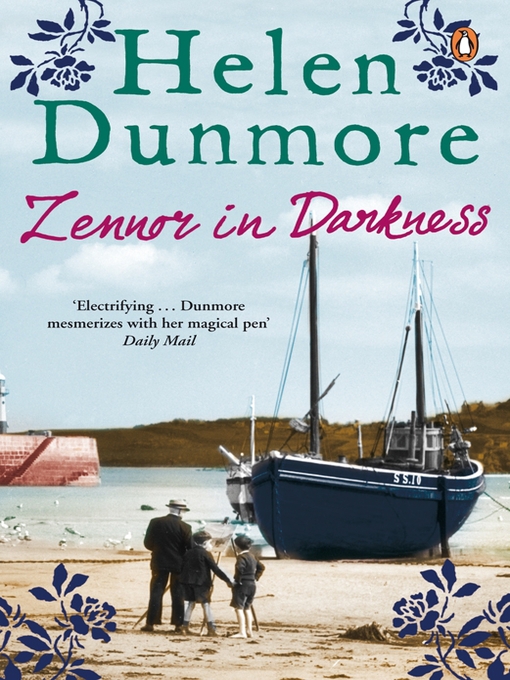
Zennor In Darkness by Helen Dunmore

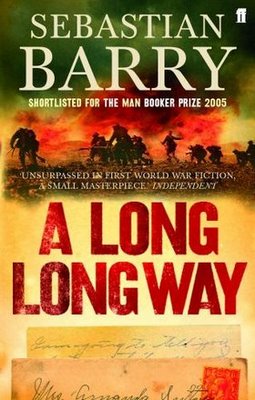
A Long Long Way by Sebastian Barry

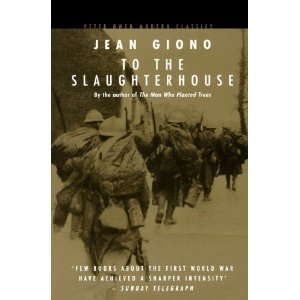
To the Slaughterhouse by Jean Giono

The other books that I will read for the challenge only are

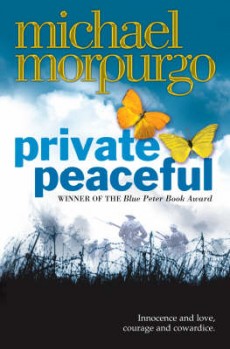
Private Peaceful by Michael Morpurgo. It’s a children’s book and I’m very interested to see how someone writes about war for children.

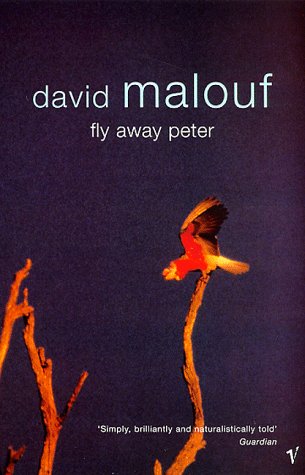
Fly Away Peter by David Malouf. This is a suggestion from Kevin (The War Movie Buff). It’s a very short novel by an Australian author which seems interesting. I’ve watched a lot of Australian WWI movies, it’s about time to read an Australian WWI book.

Here are a few additional suggestions as my favourite war novels are all WWI novels:

Remarque’s All Quiet on the Western Fornt. Probably the most famous one.

Pat Barker’s Regeneration TrilogyRegeneration –  The Eye in the DoorThe Ghost Road.

Jane Urquhart’s The Stone Carvers

Sebastian Faulk’s Birdsong 

Jennifer Johnston’s How Many Miles to Babylon? (here is my review).

If you would like to sign up, more details on the challenge can be found here.

Literature and War Readalong 2012

People have been announcing their challenges and events for 2012 for a while now so it was about time to let you see the list for next year’s Literature and War Readalong.

It was not easy to compile this list as the books needed to fulfill different criteria one of which was length. I didn’t want to include too many books over 300 pages. The only novel over 500 pages will make up for its length by being very readable.

The other criterion was the country. Like last year, I wanted to include books from as many different countries as possible. I know it looks as if there were more British books than anything else which is true, still I managed to include books from 8 different countries.

I will also join Anna and Serena for the War Through the Generations Challenge that is dedicated to WWI this year. My introductory post is due later this week. The first three novels in the readalong will also count for their challenge.

I have been asked whether it is possible to join but read something different. Since strictly speaking a readalong implies that people read and discuss the same book, it’s difficult but as I’m starting a Literature and War Project I thought of a good solution that will serve anyone who wants to join –  myself as well as I may be in the mood to read more than one novel focusing on war. The idea would be that anyone can join during the last week of the month and either participate in the readalong or review any other war themed book that will then be added to the project page. The objective of the page is to cover many different countries, wars, themes and even genres. For the War Through the Generations Challenge I will for example read a children’s book and maybe a crime novel set in the trenches. Next year I would also like to read a Sci-Fi novel like Joe Haldeman’s The Forever War that has been suggested by Max from Pechorin’s Journal. And finally I would like to read more non-fiction.

This year’s readalong will not always take place on Fridays but alternate between Monday and Friday depending on whether the Friday is during the last week of the month or not.

January, Monday  30

Helen Dunmore Zennor in Darkness , 320 p., England (1993), WWI

Spring, 1917 and war haunts the Cornish coastal village of Zennor: ships are being sunk by U-boats, strangers are treated with suspicion, and newspapers are full of spy-fever. Into this turmoil come DH Lawrence and his German wife Frieda, hoping to escape the war-fever that grips London. They befriend Clare Coyne, a young artist, struggling to console her beloved cousin John William who is on leave from the trenches and suffering from shell shock. Yet the dark tide of gossip and innuendo means that Zennor is neither a place of recovery nor of escape …

February, Monday 27

Sebastian Barry: A Long Long Way , 295 p.,  Ireland (2005), WWI

I discovered the book thanks to a comment from Danielle (A Work in Progress)

One of the most vivid and realised characters of recent fiction, Willie Dunne is the innocent hero of Sebastian Barry’s highly acclaimed novel. Leaving Dublin to fight for the Allied cause as a member of the Royal Dublin Fusiliers, he finds himself caught between the war playing out on foreign fields and that festering at home, waiting to erupt with the Easter Rising. Profoundly moving, intimate and epic, A Long Long Waycharts and evokes a terrible coming of age, one too often written out of history.

March, Friday 30

Jean Giono:  Le grand troupeauTo the Slaughterhouse 224 p., France (1931), WWI

Conscription reaches into the hills as the First World War come to a small Provençal community one blazing August. Giono’s fiercly realistic novel contrasts the wholesale destruction of men, land and animals at the front with the moral disintegration of the lonely and anxious people left behind. Yet not all is despair. The novel ends with a message  of hope.

April, Monday 30

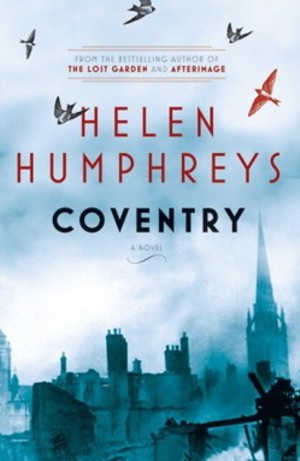
Helen Humphreys: Coventry,172 p., England (2008), WWII

Another book discovered thanks to Danielle (here)

On the night of the most devastating German raid on Coventry, two women traverse the city and transform their hearts. Harriet, widowed during WWI, is “”firewatching”” on the cathedral roof when first the factories and then the church itself are set ablaze. In the ensuing chaos she helps a young man, who reminds her of the husband she has lost, find his way back home where he left his mother.

May, Monday 28th

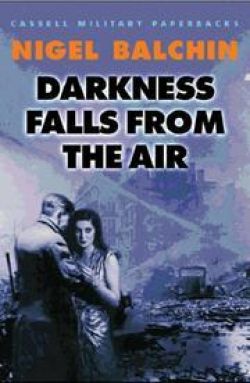
Nigel Balchin: Darkness Falls From The Air, 208 p., England (1942), WWII

I owe the discovery of Balchin to Guy (His Futile Preoccupations) who reviewed two of his books here and  here.

With ostentatious lack of concern, Bill Sarratt, his wife and her lover spend the war wining and dining expensively, occasionally sauntering out into the Blitz with cheerful remarks about the shattered night-life of London’s West End. But beneath the false insouciance lies the real strain of a war that has firmly wrapped them all in its embrace. Wit may crackle at the same pace as buildings burn, but personal tragedy lurks appallingly close at hand.

June, Friday 29

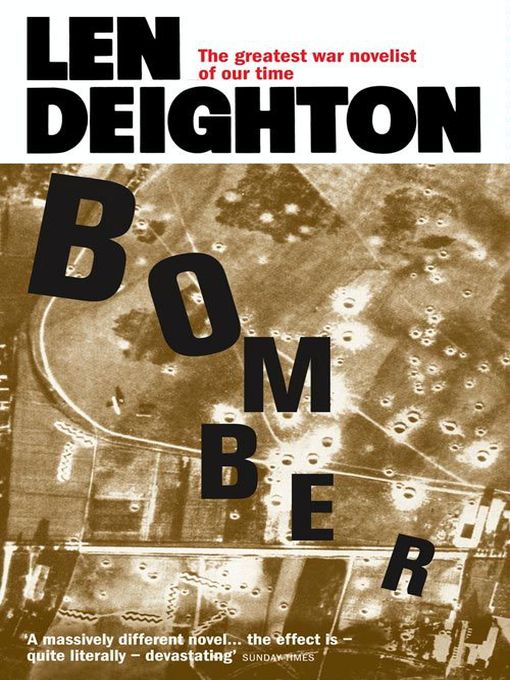
Len Deighton:  Bomber, 532 p., England (1970), WWII

This book is a suggestion from Kevin (The War Movie Buff). It is by far the longest on the list but it should be a very quick read.

The classic novel of the Second World War that relates in devastating detail the 24-hour story of an allied bombing raid.

Bomber is a novel war. There are no victors, no vanquished. There are simply those who remain alive, and those who die.Bomber follows the progress of an Allied air raid through a period of twenty-four hours in the summer of 1943. It portrays all the participants in a terrifying drama, both in the air and on the ground, in Britain and in Germany.In its documentary style, it is unique. In its emotional power it is overwhelming.Len Deighton has been equally acclaimed as a novelist and as an historian. In Bomber he has combined both talents to produce a masterpiece.


July, Monday 30

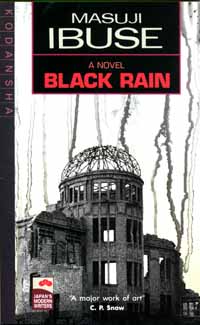
Masuji Ibuse: Black Rain – Kuroi Ame, 304 p., Japan (1969), WWII

I saw the book mentioned on Rise’s blog (in lieu of a field guide) where is was mentioned by Gary (The Parrish Lantern)

Black Rain is centered around the story of a young woman who was caught in the radioactive “black rain” that fell after the bombing of Hiroshima. lbuse bases his tale on real-life diaries and interviews with victims of the holocaust; the result is a book that is free from sentimentality yet manages to reveal the magnitude of the human suffering caused by the atom bomb. The life of Yasuko, on whom the black rain fell, is changed forever by periodic bouts of radiation sickness and the suspicion that her future children, too, may be affected.

lbuse tempers the horror of his subject with the gentle humor for which he is famous. His sensitivity to the complex web of emotions in a traditional community torn asunder by this historical event has made Black Rain one of the most acclaimed treatments of the Hiroshima story.

August, Friday 31

Aaron Applefeld: The Story of a Life – Sippur chajim, 208 p., Israel (1999), WWII

Aharon Appelfeld was the child of middle-class Jewish parents living in Romania at the outbreak of World War II. He witnessed the murder of his mother, lost his father, endured the ghetto and a two-month forced march to a camp, before he escaped. Living off the land in the forests of Ukraine for two years before making the long journey south to Italy and eventually Israel and freedom, Appelfeld finally found a home in which he could make a life for himself. Acclaimed writer Appelfeld’s extraordinary and painful memoir of his childhood and youth is a compelling account of a boy coming of age in a hostile world.


September, Friday 28

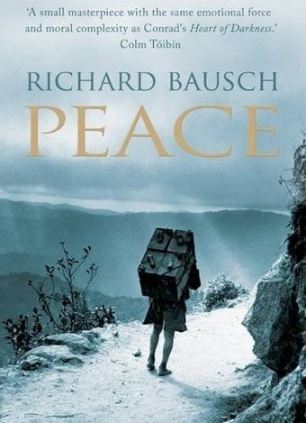
Richard Bausch: Peace, 171 p., US (2008), WWII

This was a suggestion from Sandra Rouse in a comment on one of this year’s readalong posts. 

It’s Italy, near Cassino. The terrible winter of 1944. A dismal icy rain falls, unabated, for days. Three American soldiers set out on the gruelling ascent of a perilous Italian mountainside in the murky closing days of the Second World War. Haunted by their sergeant’s cold-blooded murder of a young girl, and with only an old man of uncertain loyalties as their guide, they truge on in a state of barely suppressed terror and confusion. With snipers lying in wait for them, the men are confronted by agonizing moral choices…Taut and propulsive – Peace is a feat of economy, compression, and imagination, a tough and unmistakably contemporary meditation on the corrosiveness of violence, the human cost of war, and the redemptive power of mercy.

October, Monday 29

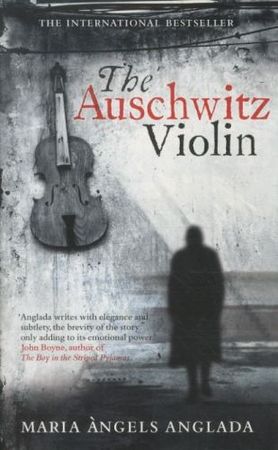
Maria Angels Anglada The Auschwitz Violin – El violí d’Auschwitz, 128 p., Spain (1994), WWII

In the winter of 1991, at a concert in Krakow, an older woman with a marvelously pitched violin meets a fellow musician who is instantly captivated by her instrument. When he asks her how she obtained it, she reveals the remarkable story behind its origin.

Written with lyrical simplicity and haunting beauty—and interspersed with chilling, actual Nazi documentation—The Auschwitz Violin is more than just a novel: It is a testament to the strength of the human spirit and the power of beauty, art, and hope to triumph over the darkest adversity.

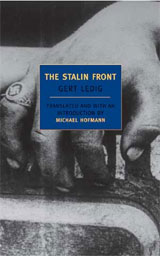
November, Friday 30

Gert Ledig The Stalin Front  –  Die Stalinorgel , 198 p., Germany (1955), WWII

1942, at the Eastern Front. Soldiers crouch in horrible holes in the ground, mingling with corpses. Tunneled beneath a radio mast, German soldiers await the order to blow themselves up. Russian tanks, struggling to break through enemy lines, bog down in a swamp, while a German runner, bearing messages from headquarters to the front, scrambles desperately from shelter to shelter as he tries to avoid getting caught in the action. Through it all, Russian artillery—the crude but devastatingly effective multiple rocket launcher known to the Germans as the Stalin Organ and to the Russians as Katyusha—rains death upon the struggling troops.
December, Friday 28

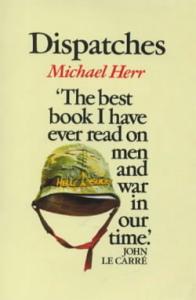
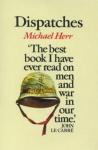
Michael Herr: Dispatches, 262 p., US (1977) Vietnam

This novel has been suggested by at least three people. Kevin (The War Movie Buff) and Max (Pechorin’s Journal)

If you’ve seen the movies Apocalypse Now and Platoon, in whose scripts Michael Herr had a hand, you have a pretty good idea of Herr’s take on Vietnam: a hallucinatory mess, the confluence of John Wayne and LSD.Dispatches reports remarkable front-line encounters with an acid-dazed infantryman who can’t wait to get back into the field and add Viet Cong kills to his long list (“I just can’t hack it back in the World”, he says); with a helicopter door gunner who fires indiscriminately into crowds of civilians; with daredevil photojournalist Sean Flynn, son of Errol, who disappeared somewhere inside Cambodia. Although Herr has admitted that parts of his book are fictional, this is meaty, essential reading for anyone who wants to understand Vietnam.

I hope that many of you will feel tempted by the one or the other title on the list and am looking forward to great discussions. The books are all very different in tone, style and themes. As always there are a some I can hardly wait to read.

*******

How does the readalong work?

This is just a quick info for those who are new to blogging and /or the readalong.

I will review the book on a set date during the last week of the month. If you choose to read along you can either participate in the discussion in the comments page or post a review on your blog. I will add all the links to the reviews at the bottom of my posts.

The books are usually announced with some additional information or a short introduction at the beginning of the month.

*******

This post will be copied into the Literature and War Redalong 2012 page so you can find it again at any time.

M.C. Beaton: A Highland Christmas (1999) A Hamish Macbeth Mystery

I like all sorts of crime and thrillers and while I mostly prefer more character driven psychological novels, I have a weakness for cozy and paranormal crime. Two years ago I discovered M.C. Beaton’s Hamish Macbeth series and fell in love with its charm. Set in the fictitious Scottish Highland village of Lochdubh it has everything we want from cozy crime. Great atmosphere, a very likable inspector, some excentric characters and crime that is far from gruesome. In the case of A Highland Christmas the crime doesn’t even involve a murder.

If you have never read any Hamish Macbeth, this may not be the place to start. It’s one of the more recent ones of a series in which there are already at least 30 books. Part of the charm is the character Hamish Macbeth (there is also a TV series starring Robert Carlyle). He is a very kind, good-looking loner whose love life is far from successful. In the earlier books his main companions are a dog and a wild cat. They are not mentioned here which was a bit of a disappointment but logical as they can hardly live forever. What I like about Hamish is the fact that he treats everyone equally nice, the old and the young, the men and the women and the animals as well.

Lochdubh is described in a way that makes you want to stay there for a while when your own personal life is getting too stressful. Life in the village of Lochdubh, which is surrounded by the picturesque scenery of the Scottish Highlands, is slow, people form a tight-knit community, they are chatty and friendly. Sorrows can be easily forgotten over a cup of tea and a wee dram.

It is winter in Lochdubh and Christmas isn’t far, only in this community of fervent Calvinists, there is no such thing as Christmas and Christmas decorations are unheard of. They are, as some would say, devilish. When this year, for the first time, someone sets up a Christmas tree and Christmas lights, nobody is surprised when they are stolen. Hamish isn’t thrilled that, instead of being somewhere on vacation, he has to chase a petty thief and on top of that find out who stole Mrs Gallagher’s cat.

Mrs Gallagher is a foreigner who has been living in Lochdubh for a while. She is generally hated but when Hamish pays her a visit and sees that she bolts her door, he is a bit surprised. It seems the woman is more frightened than truly unfriendly.

If you want to find out who stole the Christmas tree and if the cat is found, you have to read the book for yourself.

It’s a charming book, set in a charming world and for those who like M.C. Beaton it’s certainly a nice addition to the other books. In any case it’s a nice Christmas themed book with a picture-book Christmas ending, involving snow and good-natured festivities. The book is not too sugary but charmingly old-fashioned, despite the overall positive tone and the depiction of a better world, it still touches on themes like old-age and loneliness.

M.C. Beaton is also the author of the equally well-liked Agatha Raisin series which I haven’t read. Does anyone know  it?

Madame de Lafayette: The Princesse de Monpensier – La Princesse de Montpensier (1662)

The Princess of Montpensier

I’m not a re-reader but I have read Mme de Lafayette’s La Princesse de Clèves at least four times. It is my favourite novel. For its style as well as for the story. There is something in the way Mme de Lafyette describes feelings that touches me profoundly. She wasn’t a very prolific writer. Before publishing La Princesse de Clèves (1678) she published La Princesse de Montpensier (1662) anonymously and later La Comtesse de Tende. Zaïde (1670/71) was published shortly after La Princesse de Montpensier. Although Zaïde was published under a pseudonym, it seems to be sure that it was also written by Mme de Lafayette.

Generally I’m not so much into the literature of the 19th century, I often feel that earlier writers, especially some of the French ones, are far more modern and original. This is certainly the case of Mme de Lafayette. Until a few days ago I had not read anything else by her but I bought a book called Nouvelles galantes du XVIIè siècle (it contains stories by Mme de Lafayette, Saint-Réal, Du Plaisir and Catherine Bernard) and finally read La Princesse de Montpensier.

It is a short novella but it’s as wonderful and as astonishing as her masterpiece. Her style is flawless, it is pure perfection. I particularly like her use of the passé simple and the indirect speech. The language is as fresh as a newly cut rose, it hasn’t aged one day.

Mme de Lafayette was an innovator. Before her most of the baroque novels, like d’Urfés L’Astrée, were thousands of pages long. To be this concise and precise like she was, was unheard of before. She was also one of the first to write historical fiction. The people in her books did exist, however the story is invented.

La Princesse de Montpensier is set during a very tumultuous period of French history. It starts 1566,  during the civil war in which Catholics and Protestants fought a bloody battle, and ends in 1572 at the time of the horrible massacre of the Nuit de La Saint-Barthélemy or The St.-Bartholomew’s Day Massacre.

La Princesse de Montpensier and the Duc the Guise are secretly in love with each other. They are very young and hope to get married but for political reasons her family decides otherwise and marries her to the Prince de Montpensier. This is a great tragedy for the princess. She doesn’t love her husband and when conflict breaks out she is glad to see him go to war. Montpensier leaves the Comte the Chabannes with her, not knowing how much in love the Comte already is with the princess as well.

This is a time in which women do hardly ever choose their husbands and adultery is very common. The princess is an extremely beautiful woman and it isn’t surprising that there are many men falling for her. She fights them all off until the day when she sees the Duc de Guise again. A qui pro quo and the intense jealousy of her husband accelerate the story. The end is somewhat unexpected and tragic.

I was thinking of Kleist while reading this novella and saw once more how much German changed while French has pretty much stayed the same since the 17th Century. La Princess de Montpensier is 150 years older than Kleist’s The Duel but it feels so much more modern.

I really loved this story and will soon read La Comtesse de Tende as well. I cannot believe that this was only 50 pages long, it feels as if I had read a novel, it is so rich. The five main protagonists are all equally well developed. All five of them are hurt and we feel for all of them. We know the society is to blame for their tragedy but Mme de Lafayette wouldn’t be Mme de Lafayette if she didn’t pick one particular person and blame her.

Still, if you have never read anything by her, I would recommend to start with The Princesse de Clèves but this little book is very beautiful as well.

I would love to watch Bertrand Tavernier’s movie La Princesse de Montpensier. Has anyone seen it?

Epigonism and Lack of Fair play Among Book Bloggers

I have never in 1 year and 5 months of book blogging felt the urge to remove someone from my bloggroll because they were not playing fair.

But there is a first time in everything and that’s why today I had to remove a blogger’s name from the roll.

Said blogger has been writing posts for a long time and should know about book blogging fairness.

If you see something on another persons blog and you like it… You say so. You may also spread the word. If you like it so much that you feel you have to copy it… You say so and give credit.

If you don’t, you don’t play fair.

The only consolation I have is the fact that epigonism is a very unattractive trait.

No matter how many visitors and hits you get at the end of the day you lose your integrity. There is a lack of generosity in this type of behaviour that is very off putting.

I cannot change other people but I can try to be different that’s why

I wish that

I may  never feel inspired by someone’s idea and copy it without giving proper credit

I may never review a book without revealing on whose blog I discovered it

I may never be non-supportive if someone does something out of the ordinary

I may never be jealous of another blogger’s achievement

And the most important thing of all is

I wish that

I may never forget why I blog – to connect


Fyodor Dostoevsky: Poor People/Poor Folk – Бедные люди [Bednye lyudi] (1846)

Presented as a series of letters between the humble copying-clerk Devushkin and a distant relative of his, the young Varenka, Poor People brings to the fore the underclass of St Petersburg, who live at the margins of society in the most appalling conditions and abject poverty. As Devushkin tries to help Varenka improve her plight by selling anything he can, he is reduced to even more desperate circumstances and seeks refuge in alcohol, looking on helplessly as the object of his impossible love is taken away from him.

Poor People – or Poor Folk, depending on the translation – was Dostoevsky’s first novel. Published in 1846 it was highly acclaimed by fellow writers and critics alike. At only 24 Dostoevsky became a literary celebrity. It is generally not considered to be his best book, his masterpieces were still to come, but it already contains many of the elements that made Dostoevsky famous.

I must admit this was not an easy read. The style is simple and descriptive but the story was unsettling and depressing and it did ring unbearably true.

Poor People is an epistolary novel set in St.Petersburg among the very poor. The letters are exchanged between a young orphaned woman, Varenka,  and an elderly distant relative, the copy-clerk Devushkin, who loves her very much.

Those two poor people live very close to each other but have to hide their friendship as it could be misunderstood. The descriptions of Varenka’s past, how her parents died and mean people pretended to take care of her while in reality there was only abuse, are paired with Devushkin’s descriptions of the way he is living. Although he is very poor himself he tries to help the fragile young woman and sends her what little money he has. In order to save money he left his old apartment after his landlady died and moved into another place. In this apartment he lives with a great number of equally poor people together in close quarters. He really only occupies a little corner of the kitchen that is separated from the rest by a piece of fabric.

He doesn’t even mind living like this at first as he can see Varenka’s windows from his room but after a while it gets harder for him. In their letters they try to comfort each other and describe in great detail how they live. The tone is very emotional, there isn’t much they hold back. On some days they are cheerful and will write about nice things they have seen or experienced but on most other days they are in despair and very sad. Varenka is often ill and can’t work while Devushkin has a hard time to hide his poverty at work. His clothes are shabby and would need mending, he loses his buttons, his shoes have holes and the soles are coming off. The poorer they get, the worse they are treated by others, also from those who are as poor as they are.

As if matters were not bad enough, Devushkin spends what little money he has on alcohol. He invariably pays his escapades with fear and shame. One misfortune follows another as they have little or no means to prevent them.

Varenka is a very intelligent young woman. Unlike Devushkin she is educated and likes to read. She loves Pushkin and Gogol. In some of the letters and a little notebook that she sends to Devushkin, she describes her childhood. These are wonderful passages that capture the life in the country, the changing of the seasons. She describes with great detail how golden the autumn was in the country, how wonderful winter could be because they would sit around a fire and tell stories. These passages show how masterful a writer Dostoevsky is.

Devushkin on the other hand tells her what he sees when he goes out in Petersburg. It makes him sad to see beautiful rich women and to know how arbitrary it is to be either born poor or rich.

One of the themes of the novel is the arbitrariness of poverty and how prejudiced the rich are. They treat the poor as if they were contagious. On the other hand they like to see them because it makes them feel superior. For that very same reason they  like to give them alms. The lack of privacy makes matters worse. Living with so many or being stuffed into a tiny office space with many other clerks exposes you constantly to the prying of others.

It seems as if one should never undergo a certain level of poverty, once you fall below there is no getting up anymore. There are numerous little stories of other poor people who fall ill and of children who die because no medicine is available.

Devushkin and Varenka are amazing characters. Despite their destitution they always think of each other first and if they receive just a little bit of money from somewhere they will give to those who have even less.

Reading this in winter, when the days are getting shorter and it is getting colder was really not easy. It’s depressing and sad. I thought of a documentary that I watched not long ago about Russian pensioners and some of those people lived in the same dirty, shabby and unhealthy tiny apartments. I remember one old woman, sitting in a box-like room, crying all through the interview. She had hardly any food, no heating, her clothes were rags. And this in Europe in 2011.

I didn’t enjoy reading this but on the other hand I felt very bad for thinking like this. Those who live under such conditions cannot just decide to walk away from them. Who am I to want to shelter myself from reading about such things?

I accidentally landed in a slum once, in Fort-de-France, Martinique. I felt really miserable, not because I thought it was dangerous, (maybe it was, no clue) but because it felt like prying. By walking between the shacks I could see into the homes of these people, they had no windows or doors and I felt like a voyeur. I was then asked angrily what the heck I thought I was doing but they understood, that I had lost my way and once they realized it wasn’t curiosity, they were very helpful.

It is really in bad taste but apparently it is part of many a guided tour in Brazil to pay a visit to the favelas.

I have read a few of Dostoevsky’s books, Crime and Punishment, The Gambler, Memoirs from the House of the Dead, with the exception of the last, they didn’t seem this depressing and I liked them very much.

I still got White Nights, Notes From Underground and The Brothers Karamazov to read. But not just yet.

I didn’t include any quotes as I’ve read this in a German translation. I like the German cover a lot.

The Winners of the Giveaway of The Sorrows of Young Werther

Thanks to Music Box Films two people will soon be able to read The Sorrows of Young Werther, Goethe’s famous first novel.

The movie Young Goethe in Love,that has just been released by Music Box Films and can be watched in cinemas in the US right now, is based on the novel and Goethe’s own story.

The winners of our giveaway are

Michelle from booksandboston and

Professor Batty from Flippism is the Key

Happy reading to both of you!

Please send me your address via beautyisasleepingcat at gmail dot com