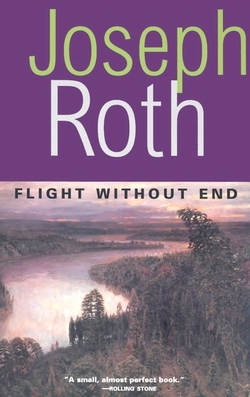
Literature and War Readalong November 30 2014 Meets German Literature Month: Flight Without End – Die Flucht ohne Ende by Joseph Roth

Screen Shot 2014-10-19 at 10.18.51

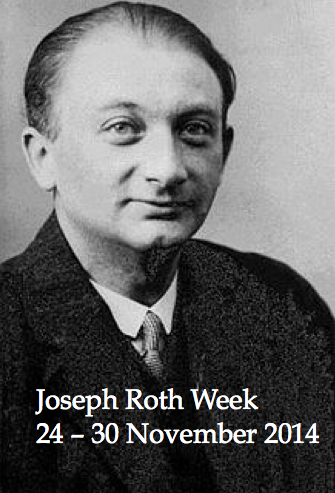
Jospeh Roth, one of the greats of Austrian literature, seemed like a wonderful choice, not only for the Literature and War Readalong in which we focus on WWI, but also as part of German Literature Month. And because he’s such a fine author, there will not only be a readalong but the last week of GLM ( 24 – 30 November) is dedicated to his work. After some rather unfortunate readalong choices, I’m confident this one will not disappoint.

Joseph Roth

Joseph Roth was an Austrian-Jewish writer and journalist. He died at the age of forty-seven in Paris. His early death was probably brought on by his alcoholism. His last book, called The Legend of the Holy Drinker, is inspired by his own battle with alcohol.

Some of his books deal with the end of the Austro-Hungarian Empire (The Radetzky March, The Emperor’s Tomb), others like Job focus on Judaism. Although he was Jewish, Catholicism was important for Roth and it’s assumed that he converted towards the end of his life.

Here are the first sentences of Flight Without End

Franz Tunda, first lieutenant in the Austrian Army, became a Russian prisoner of war in August 1916. He was taken to a camp a few versts north-east of Irkutsk. He succeeded in escaping with the help of a Siberian Pole. On the remote, isolated and dreary farm of this Pole, the officer remained until spring 1919.

And some details and the blurb for those who want to join

Flight Witout End – Die Flucht ohne Ende by Joseph Roth (Austria 1927) WWI, Classic,  144 pages

Flight Without End, written in Paris, in 1927, is perhaps the most personal of Joseph Roth’s novels. Introduced by the author as the true account of his friend Franz Tunda it tells the story of a young ex-office of the Austro-Hungarian Army in the 1914- 1918 war, who makes his way back from captivity in Siberia and service with the Bolshevik army, only to find out that the old order, which has shaped him has crumbled and that there is no place for him in the new “European” culture that has taken its place. Everywhere – in his dealings with society, family, women – he finds himself an outsider, both attracted and repelled by the values of the old world, yet unable to accept the new ideologies.


*******

The discussion starts on Friday, 28 November 2014.

Further information on the Literature and War Readalong 2014, including all the book blurbs, can be found here.

Literature and War Readalong October 31 2014: Phoenix and Ashes by Mercedes Lackey

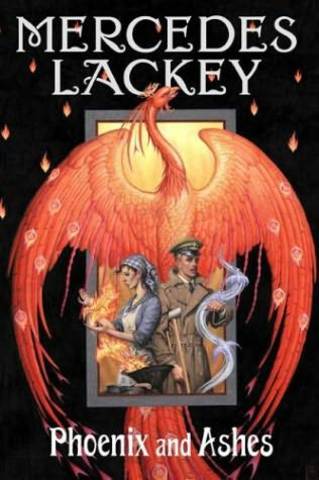
Phoenix and Ashes

Admittedly, this was a bit of an experimental choice for the Literature and War Readalong, but since this year is mostly dedicated to WWI, I thought some diversity would be nice. So why not read a fantasy novel dealing with the aftermath of the war?

Mercedes Lackey is one of the most prolific fantasy writers and has a huge following. Phoenix and Ashes is part of the Elemental Masters series. The books in the series are all fairy tale retellings, set in the early 1900s. Phoenix and Ashes is based on Cinderella. There are ten volumes in the series so far. If you’d like to find out more about Mercedes Lackey— here’s the link to her website.

Here are the first sentences

Her eyes were so sore and swollen from weeping that she thought she should have no tears left at all. She was so tired that she couldn’t keep her mind focused on anything; it flitted from one thought to another, no matter how she tried to concentrate.

One kept recurring, in a  never-ending refrain of lament. What am I doing here? I should be at Oxford.

Eleanor Robinson rested her aching head against the cold, wet glass of the tiny window in the twilight gloom of her attic bedroom. With an effort, she closed her sore, tired eyes, as her shoulders hunched inside an old woollen shawl. The bleak December weather had turned rotten and rainy, utterly un-Christmas-like. Not that she cared about Christmas.

And some details and the blurb for those who want to join

Phoenix and Ashes by Mercedes Lackey (US 2004) WWI, Fantasy, 468 pages

In this dark and atmospheric rendition of the Cinderella fairy tale, an intelligent young Englishwoman is made into a virtual slave by her evil stepmother. Her only hope of rescue comes in the shape of a scarred World War I pilot of noble blood, whose own powers over the elements are about to be needed more than ever.

“A dark tale full of the pain and devastation of war…and a couple of wounded protagonists worth routing for.”


*******

The discussion starts on Friday, 31 October 2014.

Further information on the Literature and War Readalong 2014, including all the book blurbs, can be found here.

Louisa Young: My Dear, I Wanted to Tell You (2011) Literature and War Readalong September 2014

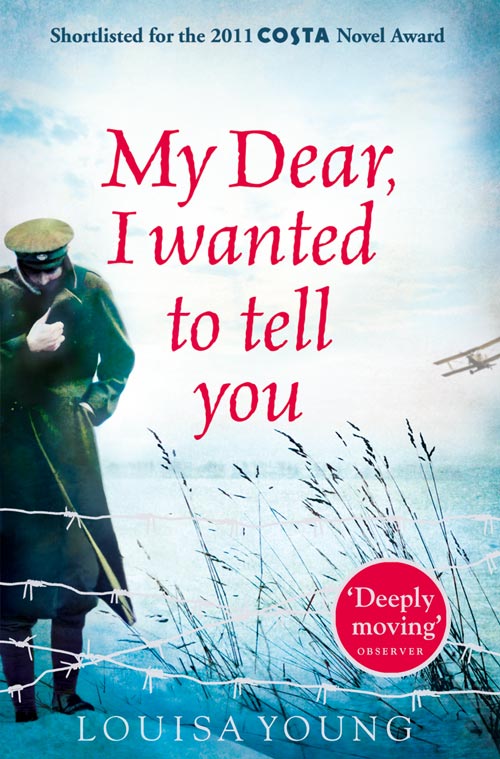
My Dear I Wanted To Tell You

Louisa Young’s novel My Dear, I Wanted to Tell You is one of the most surprising reads for me this year. After having been disappointed in Pat Barker’s Toby’s Room and Helen Dunmore’s The Lie, I was a little worried this would be the third in a series of underwhelming contemporary WWI novels. Well, it wasn’t. I loved this book and could hardly put it down. Not only because the story was so engaging and the characters so likable but because Louisa Young is a skillful storyteller with a very unique style. It’s not easy to tell a WWI story, including all the common themes, and manage to do that in a fresh and original way, but that’s just what Louisa Young did.

Riley Purefoy and Nadine Waveney meet when they are still small children. Although from very different backgrounds – he’s a poor working-class boy, she’s from a rich upper-class family – they become friends and their friendship turns into love eventually. They both share a passion for art and both want to become artists. Just before the war breaks out, Riley works as an assistant to an artist. He sees Nadine regularly and they know they are in love. However, when her parents find out, they are not thrilled and make Riley understand that he isn’t welcome in the Waveney’s home anymore. Feeling hurt and insulted, Riley impulsively joins the army and within a few weeks is sent to the trenches. Nadine on her side, becomes a nurse. They keep in contact and write to each other regularly, even meet during one of Riley’s leaves.

Thanks to influential people at home and thanks to Peter Locke, Riley’s commanding officer, who understands that Riley is very cultured and intelligent, Riley becomes an officer in spite of his background.

Peter Locke and his wife, Julia, are the second important couple in this novel. The book moves back and forth between these four characters.

The first half of the book is intense and beautiful and drew me in so much that when tragedy strikes it made me gasp. What followed wasn’t an easy read. It was tragic but so well done. There are numerous ways to write about facial mutilation and the way Louisa Young did it was outstanding. She combines the themes of body image, art, and beauty, and weaves them together in way that I found extremely thought-provoking. Peter’s wife, Julia, is obsessed with her beauty. She thinks she has nothing else to offer and, although not yet 30, already wants to undergo plastic surgery. Her thoughts and her anguish mirror the thoughts and the anguish of the mutilated men. I also liked that Louisa Young set the book in an artists’ milieu at the beginning because it underlines that we humans are extremely visual beings and while we might not all feel the same about beauty, we all feel the same about looks and mutilation. Making beauty, even more than mutilation, a main theme was a unique choice and even daring. Daring, because Louisa Young doesn’t spare us. She shows us what those mutilations looked like, what they did to a soldier. And how the society reacted. Even mothers screamed and fled at the sight of their disfigured sons.

The second part of the novel focusses almost entirely on the surgeries and the despair of the mutilated men and on the toll the war takes on the minds of those who survive intact.

One of the strengths of the book is its accuracy, another one is that Louisa Young makes us care about her characters. Not only about the main characters but about the minor characters as well. She captures a society and an event, and thus achieves what the best historical fiction should achieve— make us we feel we’ve been there too.

Although My Dear I Wanted to Tell You tells a horrific story, it’s an amazingly beautiful book, full of sentiment and rich descriptions. Louisa Young has already published the sequel (The Heroe’s Welcome) and more books centering on the same characters are still to come. As she said in an interview: “I think I may be writing the twentieth century, through these characters.” I’m eager to read more of her novels.

Other reviews

 Anna (Diary of an Eccentric)

Danielle (A Work in Progress)

My Book Strings

*******

My Dear, I Wanted to Tell You is the ninth book in the Literature and War Readalong 2014. The next book is the Fantasy novel Phoenix and Ashes by Mercedes Lackey. Discussion starts on Friday 31 October, 2014. Further information on the Literature and War Readalong 2014, including the book blurbs can be found here.

Literature and War Readalong September 29 2014: My Dear, I Wanted to Tell You by Louisa Young

My Dear I Wanted To Tell You

If I hadn’t read a lot of favourable reviews of Louisa Young’s novel My Dear, I Wanted to Tell You, I would never have picked it up. I know you shouldn’t judge a book by its cover but I’m allergic to men in greatcoat’s on WWI novels. On the other hand it’s better than a man in a greatcoat kissing a woman. But, as fluffy as it looks, the reviews made it sound poignant.

Louisa Young is a versatile author. Not only has she written three previous novels and a biography but, as Zizou Corder, she also writes a successful YA adult series together with her daughter.

Here are the first sentences

France, 7 June, 3.10 a.m.

It had been a warm night. Summery. Quiet, as such nights go.

The shattering roar of the explosion was so very sudden, cracking through the physicality of air and earth, that every battered skull, and every baffled brain within those skulls, was shaken by it, and every surviving thought was shaken out. It shuddered eardrums and set livers quivering; it ran under skin, set up counter-waves of blood veins and arteries, pierced rocking into the tiny canals of the sponge of the bone marrow. It clenched hearts, broke teeth, and reverberated in synapses and the spaces between cells. The men became a part of the noise, drowned in it, dismembered by it saturated. They were of it. It was of them.

They were all used to that.

And some details and the blurb for those who want to join

My Dear, I Wanted to Tell You by Louisa Young (UK 2011) WWI, Historical Fiction, 336 pages

A letter, two lovers, a terrible lie. In war, truth is only the first casualty. ‘Inspires the kind of devotion among its readers not seen since David Nicholls’ One Day’ The Times

While Riley Purefoy and Peter Locke fight for their country, their survival and their sanity in the trenches of Flanders, Nadine Waveney, Julia Locke and Rose Locke do what they can at home. Beautiful, obsessive Julia and gentle, eccentric Peter are married: each day Julia goes through rituals to prepare for her beloved husband’s return. Nadine and Riley, only eighteen when the war starts, and with problems of their own already, want above all to make promises – but how can they when the future is not in their hands? And Rose? Well, what did happen to the traditionally brought-up women who lost all hope of marriage, because all the young men were dead?

Moving between Ypres, London and Paris, My Dear I Wanted to Tell You is a deeply affecting, moving and brilliant novel of love and war, and how they affect those left behind as well as those who fight.


*******

The discussion starts on Friday, 29 September 2014.

Further information on the Literature and War Readalong 2014, including all the book blurbs, can be found here.

Literature and War Readalong August 29 2014: Undertones of War by Edmund Blunden

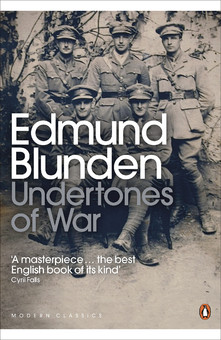
Undertones of War

Edmund Blunden’s Undertones of War is one of the most famous WWI memoirs. Blunden was a poet who enlisted at the age of twenty and took part in the battles at the Somme, Ypres and Passchendaele. My edition, which is The University of Chicago Press edition, contains a number of his poems. It will be interesting to compare the accounts of the trenches with the poems inspired by the landscape.

Here are the first sentences

I was not anxious to go. An uncertain but unceasing disquiet had been upon me, and when, returning to the officers’ mess a Shoreham Camp one Sunday evening, I read the notice that I was under orders for France, I did not hide my feelings. Berry, a subaltern of my set, who was also named for the draft, might pipe to me “Hi, Blunden, we’re going out: have a drink.”; I could not dance. There was something about France in those days which looked to me, despite all journalistic enchanters, to be dangerous.

And  some details and the blurb for those who want to join

Undertones of War by Edmund Blunden (UK 1928) WWI, Memoir, 288 pages

In what is one of the finest autobiographies to come out of the First World War, the distinguished poet Edmund Blunden records his experiences as an infantry subaltern in France and Flanders. Blunden took part in the disastrous battles of the Somme, Ypres and Passchendaele, describing the latter as ‘murder, not only to the troops, but to their singing faiths and hopes’. In his compassionate yet unsentimental prose, he tells of the heroism and despair found among the officers. Blunden’s poems show how he found hope in the natural landscape; the only thing that survives the terrible betrayal enacted in the Flanders fields.

*******

The discussion starts on Friday, 29 August 2014.

Further information on the Literature and War Readalong 2014, including all the book blurbs, can be found here.

Helen Dunmore: The Lie (2014) Literature and War Readalong July 2014

The Lie

The Lie is not the first WWI novel Helen Dunmore has written. Nor is it her first book about war. While you certainly don’t have to read Zennor in Darkness, or The Siege, or her ghost story The Greatcoat, before you read The Lie, it’s interesting to see how she approaches war from different angles. The Lie is foremost about the aftermath of war. About the scarring, the wounds, in the souls, the bodies, the land.

The Lie is set after WWI in Cornwall. The narrator, Daniel, lives on a forlorn piece of land, overlooking the sea. He’s shell-shocked, but unlike so many other soldiers with post-traumatic stress disorder, who populate literature, he’s taciturn and withdrawn. Even people who know him, like his childhood friend Felicia, would not be able to tell what is going on inside of his head.

I’ve been quiet a long time, I know that. It happens. I go back in my mind. It’s not the same thing as remembering, because it has colour and smell and taste.

The land on which Daniel lives belongs to Mary Pascoe, an old woman, almost blind and frail, who lived outside of society, far from the town, all of her life. WhenDaniel returns from the war, she let’s him seek shelter on her land. When she becomes very ill and blind, Daniel takes care of her and moves into her cottage with her. She makes him promise not to fetch a doctor and to stay on her land once she’s dead.

He takes care of her until her last moment and buries her on her land. Daniel is an able gardener and can live of the land, whose soil is rich. There’s a goat and hens as well. When people start to inquire about Mary, he tell’s them she’s still alive.  The lie will be his undoing.

The story moves back and forth in time, is interwoven with flashbacks of his childhood during which he was friends with Frederick and Felicia, and flashbacks of the war.

I was green as grass. And there was first aid drill, which was like no first aid I ever saw in France. We had a dummy which kept still and didn’t scream, bleed, or stink of shit because its insides were falling out. They taught us to tie a tourniquet, and apply field dressings, and that gas lies in pockets close to the ground long after you think it’s cleared.

You’d think selfishness would be the stronger force, but it turns out that it’s not so. Tell a man to unwrap his puttees, take off his boots, dry each toe individually, examine his feet for sores and rub them all over with whale oil, and tell him if he doesn’t he’ll get trench foot which will cause his feet to go black and stink and maybe even have to cut off — well, you’d think he’d do it. But he doesn’t. He’s cold and wet and dead beat and all he wants is to get some kip. Tell him he’s responsible for the feet of the man next to him, and he does it.

Daniel fights on his own at first and later, with Frederick. Frederick and Felicia come from money, while Daniel is the son of a poor housekeeper. Frederick’s and Daniel’s friendship is tested often due to these class differences; it ultimately survives, because the attachment is so profound.

During the war the class difference almost splits them up, but their friendship survives even this test. It even survives death. We know from the beginning that Frederick is killed in France. We just don’t know how, but assume that Daniel must have witnessed it and feels guilty, as he’s haunted by his death. And by Frederick’s ghost. I thought it was strange that she chose to write another ghost story, right after The Greatcoat, but this isn’t a ghost story. I read the ghost as a symbol for how deeply rooted the trauma of war is.

All at once I know he’s going to come. The dead aren’t tied to one place. He’s as fearful as I am, more maybe. He knows what’s coming to him, and he can’t get away from it. Something’s gone wrong. Thing’s out to stop, once they’re finished, but this won’t stop. They say the war is over, but they are wrong. It went too deep for that. It opened up a crack in time, a crater maybe. Once you fall into it, you can’t get out again. The mud is too deep and it holds you.

Daniel isn’t the only one grieving. Felicia has lost her husband and her brother in the war. When they meet again for the first time, they are both wary. They have changed and are not sure  whether there is more than their connection with Frederick that brings them together, or if there is a possibility of friendship, even love.

The Lie is a poetical story. The flashbacks are so tightly woven into the progressing story that they become part of it. Nothing that Daniel does, doesn’t remind him of the war. When he repairs Felicia’s furnace, he’s transported back to the trenches. When he cultivates the land, and digs in the soil, he’s reminded of the mud in France.

The most beautiful parts are the descriptions of this forlorn country, covered in furze and bracken, smelling of salty sea air and the richness of its soil. But in spite of these beautiful passages, I found the novel and its tragic ending, extremely depressing. And I didn’t get why the lie had such tragic consequences.


Other reviews

Danielle (A Work in Progress)

TJ (My Book Strings)

Violet (Still Life With Books)


*******

The Lie is the seventh book in the Literature and War Readalong 2014. The next book is the WWI memoir Undertones of War by Edmund Blunden. Discussion starts on Friday 29 August, 2014. Further information on the Literature and War Readalong 2014, including the book blurbs can be found here.
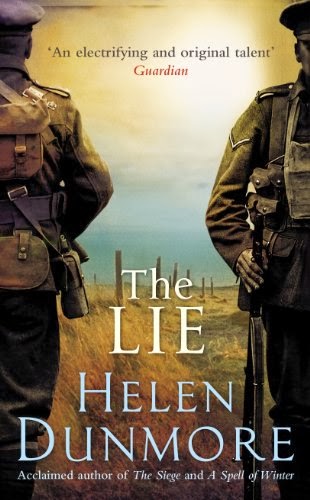
Literature and War Readalong July 28 2014: The Lie by Helen Dunmore

The Lie

Helen Dunmore has written several times about WWI. Back in 2012 we’ve read her earlier novel Zennor in Darkness, a book that made it on my Best of List that year. Naturally I’m looking forward to read her latest novel The Lie. I’ve seen a few reviews here and there but avoided to read them as I want to discover it for myself. What I like the most about Helen Dunmore is her beautiful prose. You can sense right away that she is also a poet.

If Rudyard Kipling’s epitaph at the beginning of the book is anything to go by, then it will be a heartbreaking novel.

If any question why we died

Tell them, because our fathers lied

This epitaph is doubly tragic as Kipling lost his son in WWI. Judging from the movie My Boy Jack, the boy would never have enlisted if it hadn’t been for his father. Here’s Kipling’s touching poem:

My Boy Jack

Have you news of my boy Jack?
Not this tide.
When d’you think that hell come back?
Not with this wind blowing, and this tide.

Has any one else had word of him?
Not this tide.
For what is sunk will hardly swim,
Not with this wind blowing, and this tide.

Oh, dear, what comfort can I find?
None this tide,
Nor any tide,
Except he did not shame his kind —
Not even with that wind blowing, and that tide.

Then hold your head up all the more,
This tide,
And every tide;
Because he was the son you bore,
And gave to that wind blowing and that tide!

Here are the first sentences of The Lie

He comes to me, clagged in mud from head to foot. A mud statue, but a breathing one. The breath whistles in and out of him. He stands at my be-end. Even when the wind is banging over the roof that I’ve bodged with corrugated iron, it’s very quiet. He doesn’t speak. Sometimes I wish he would break the silence, but then I’m afraid of what he might say. I can smell the mud.You never forget the reek of it. Thick, almost oily, full of shit and rotten flesh, cordite and chloride of lime. He has got himself coated all over with it. He’s camouflaged. He might be anything, but I know who he is.

And  some details and the blurb for those who want to join

The Lie by Helen Dunmore (UK 2014) WWI, Novel, 304 pages

Set during and just after the First World War, The Lie is an enthralling, heart-wrenching novel of love, memory and devastating loss by one of the UK’s most acclaimed storytellers. Cornwall, 1920, early spring.

A young man stands on a headland, looking out to sea. He is back from the war, homeless and without family.

Behind him lie the mud, barbed-wire entanglements and terror of the trenches. Behind him is also the most intense relationship of his life.

Daniel has survived, but the horror and passion of the past seem more real than the quiet fields around him.

He is about to step into the unknown. But will he ever be able to escape the terrible, unforeseen consequences of a lie?

*******

The discussion starts on Monday, 28 July 2014.

Further information on the Literature and War Readalong 2014, including all the book blurbs, can be found here.