
All Virago/All August

The Fountain OverflowsElizabeth and her German GardenLand of SpiceEdwardiansSummerhouse TrilogyThe Professor's House

I have many Virago titles on my piles and always meant to do at least a Virago reading week for myself. So, when I discovered  All Virago/All August, hosted by the Librarything Virago Readers Group on Heavenali’s blog, I decided I would join as well.

Half of the fun is making a list. Juliana (the blank garden) mentioned that she’ll read Elizabeth Taylor’s Angel and I decided to join her. So, that title is pretty certain but I have no clue what else I will be reading. Here are some of the titles on my piles.

Angel

Elizabeth Taylor – Angel

Writing stories that are extravagant and fanciful, fifteen-year old Angel retreats to a world of romance, escaping the drabness of provincial life. She knows she is different, that she is destined to become a feted authoress, owner of great riches and of Paradise House . . .

After reading The Lady Irania, publishers Brace and Gilchrist are certain the novel will be a success, in spite of – and perhaps because of – its overblown style. But they are curious as to who could have written such a book: ‘Some old lady, romanticising behind lace-curtains’ . . . ‘Angelica Deverell is too good a name to be true . . . she might be an old man. It would be an amusing variation. You are expecting to meet Mary Anne Evans and in Walks George Eliot twirling his moustache.’ So nothing can prepare them for the pale young woman who sits before them, with not a seed of irony or a grain of humour in her soul.

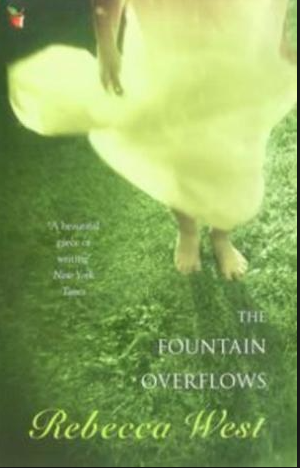
The Fountain Overflows

Rebecca West – The Fountain Overflows

Rose Aubrey is one of a family of four children. Their father, Piers, is the disgraced son of an Irish landowning family, a violent, noble and quite unscrupulous leader of popular causes. His Scottish wife, Clare, is an artist, a tower of strength, fanatically devoted to a musical future for her daughters.

This is the story of their life in south London, a life threatened by Piers’s streak of tragic folly which keeps them on the verge of financial ruin and social disgrace . . .

Elizabeth and her German Garden

Elizabeth von Arnim – Elizabeth and her German Garden

May 7th — There were days last winter when I danced for sheer joy out in my frost-bound garden in spite of my years and children. But I did it behind a bush, having a due regard for the decencies …’

Elizabeth’s uniquely witty pen records each season in her beloved garden, where she escapes from the stifling routine of indoors: servants, meals, domestic routine, and the presence of her overbearing husband …

Land of Spice

Kate O’Brien – Land of Spices

Mère Marie-Helene once turned her back on life, sealing up her heart in order to devote herself to God. Now the formidable Mother Superior of an Irish convent, she has, for some time, been experiencing grave doubts about her vocation. But when she meets Anna Murphy, the youngest-ever boarder, the little girl’s solemn, poetic nature captivates her and she feels ‘a storm break in her hollow heart’. Between them an unspoken allegiance is formed that will sustain each through the years as the Reverend Mother seeks to combat her growing spiritual aridity and as Anna develops the strength to resist the conventional demands of her background.

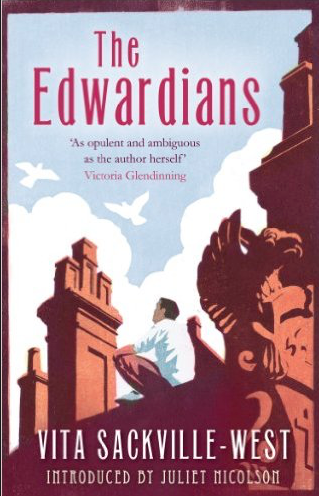
Edwardians

Vita Sackville-west – The Edwardians

Sebastian is young, handsome and romantic, the heir to a vast and beautiful English country estate. He is a fixed feature in the eternal round of lavish parties, intrigues and traditions at the cold, decadent heart of Edwardian high society. Everyone knows the role he must play, but Sebastian isn’t sure he wants the part. Position, privilege and wealth are his, if he can resist the lure of a brave new world.

Summerhouse Trilogy

Alice Thomas Ellis – The Summerhouse Trilogy

In “The Summer House” trilogy, three very different women, with three very distinct perspectives, narrate three very witty novels concerning one disastrous wedding in the offing.

“The Clothes in the Wardrobe” Nineteen-year-old Margaret feels more trepidation than joy at the prospect of her marriage to forty-year-old Syl.

“The Skeleton in the Cupboard” Syls’ mother, Mrs. Monro, doesn t know quite what to make of her son s life, but she knows Margaret should not marry him.

“The Fly in the Ointment” And then there s Lili, the free spirit who is determined that the wedding shall not happen, no matter the consequences.

The Professor's House

Willa Cather – The Professor’s House

On the eve of his move to a new, more desirable residence, Professor Godfrey St Peter finds himself in the shabby study of his former home. Surrounded by the comforting, familiar sights of his past, he surveys his life and the people he has loved: his wife Lillian, his daughters and, above all, Tom Outland, his most outstanding student and once, his son-in-law to be. Enigmatic and courageous – and a tragic victim of the Great War – Tom has remained a source of inspiration to the professor. But he has also left behind him a troubling legacy which has brought betrayal and fracture to the women he loves most . . .

Have you read any of these books? Which are the ones you liked the most? And will you join as well?
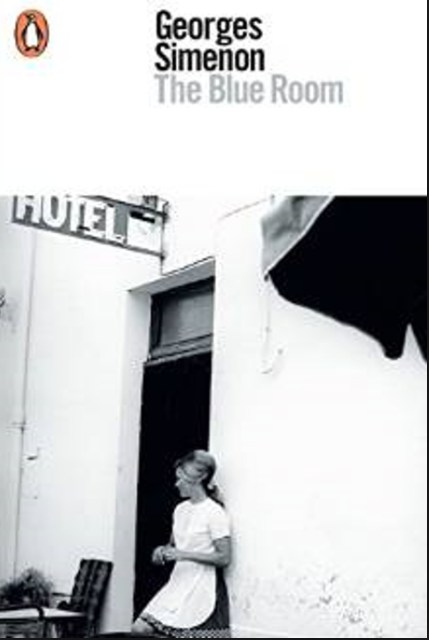
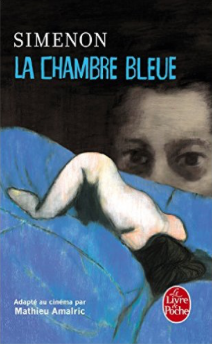
Georges Simenon: La chambre bleue – The Blue Room (1963)

The Blue RoomLa chambre bleue

While I’ve read some of Simenon’s Maigret novels, I hadn’t read any of his so-called “romans durs” until now.  Many people say they are far better than the Maigret novels and after having read The Blue Room –  La chambre bleue I think I can understand why. I can also see the influence the romans durs must have had on some newer authors like Pascal Garnier. Luckily for me, I liked Simenon’s novel much more than the Garnier novel I’ve read so far. The Blue Room is excellent.

The book starts with a scene in a hotel room – the blue room. Two people, Tony and Andrée, have just made love and he’s standing in front of a mirror, wiping away blood from his lips. The book starts in medias res, with a conversation. Andrée, who is watching Tony from the bed, is asking him, if she’s hurt him. Apparently she bit his lip. From the way she asks, we can deduce that it wasn’t as accidental as he believes. No, she probably bit him, so his wife will ask questions. What Andrée doesn’t know is that she’s not Tony’s first affair and that his wife is likely to ignore this one just like she ignored the others. Andrée then asks Tony whether he loves her and would love to spend his life with her. Tony’s not very attentive and says yes. A fatal error as the reader will find out very quickly. At the end of the scene in the hotel room, the book seamlessly switches to the examining magistrate’s chambers, where Tony is trying to defend himself in front of a psychiatrist and his lawyer.

The scene in the hotel room is a pivotal moment. From there the book moves backwards and forwards in time, unfolding Tony and Andrée’s whole story, from when they met as kids, to when they became lovers. It also switches from scenes set in the past to scenes in the present in which Tony, who has been arrested, tells his side of the story. The way Simenon has interwoven those narrative strands is pretty amazing. Nowadays, we’d have the different strands either separated by breaks between paragraphs, or chapters. Not so here, which makes it much more fluid, much more like watching a film.

Simenon’s style is hard to describe. It’s unadorned but so precise. Everything he chooses in his descriptions works masterfully. It’s like we’re looking at his characters through a microscope. The tiniest ugly little detail is laid bare.

While I don’t think his books are about suspense, it was suspenseful nonetheless because for a long time we have no clue why Tony got arrested. Nothing in the pivotal scene let’s us suspect that.

The Blue Room is a cruel, bleak analysis of a love affair that goes terribly wrong, written in evocative and pared-down prose. A great little book.

If you’d like to read a more eloquent review of the novel, here’s John Banville’s review of the Blue Room. He goes as far as comparing Simenon to Kafka.

The Blue Room has been made into a movie. I hope I can watch it soon.


This book was on the 20 under 200 list I did last summer. I must admit, I’ve been slacking. I’ve only read five or six from that list.

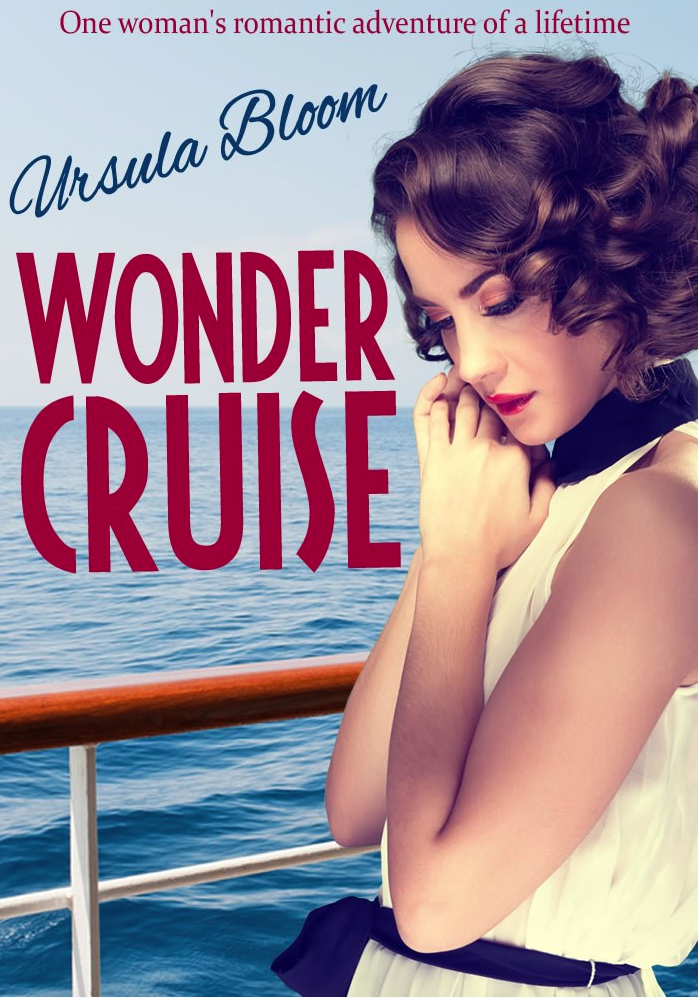
Ursula Bloom: Wonder Cruise (1934)

Wonder Cruise

Before Corazon Books contacted me and asked me whether I would be interested in reviewing Ursula Bloom’s Wonder Cruise, I had never even heard of the author before. It sounded like a novel by one of those wonderful English authors who wrote and published in the first half of the last century – Mary Stewart, Angela Thirkell, Barbara Pym -, so I said yes immediately. When the book arrived I was a bit worried because of the cover, but as soon as I started reading I knew I had nothing to worry about. Although it has an unfortunate cover, Wonder Cruise is an absolutely delightful book; it’s as charming as it’s witty. I could hardly believe that an author who wrote like this has become a forgotten author. Especially since Ursula Bloom wrote far over 500 novels. Yes, you read correctly – over 500. She’s even in the Guinness Book of Records.

Written and set in the 1930s, Wonder Cruise tells the story of Ann Clements. You could call it a story of awakening and transformation. Ann is a spinster of 35, with little hope of marriage or an otherwise fulfilled life. She works at an office, doing tedious, boring jobs. In her private life, she is pretty much under the thumb of her older brother Cuthbert, a pompous, self-righteous clergyman who manipulates Ann constantly. It doesn’t look as if there was a lot of hope for Ann’s future but, from the first page on we know that Ann’s a very keen observer and someone who is very much aware of the beauty surrounding her, and we instantly root for her.

She’s aware that she doesn’t like her life and her work but she doesn’t think it could change.

That was life at the office.

It went on and on and on for years, as it would go on and on, Ann felt, long after she was dead. It was a place that she had been sucked into by the giant machinery of life. An intricate pattern of living, and always dismally the same. You could not escape it.

Then something wonderful happens. Ann wins a lot of money in a sweepstake and suddenly life has promise. However, there’s Cuthbert to deal with. He wants her to save the money, so his own daughter will have something to fall back on. Ann’s torn between her feelings of duty and her yearning for another life.

Until this actual moment she had not realised that she was sick of digging, and of doing the same thing in the same way day after day. She had not realised that Mrs. Puddock’s rooms were awful, and that Monday washing, Tuesday ironing, Wednesday mending, Thursday hair-wash were much like a pair of handcuffs set like shackles on her wrists.

Once she’s conscious of her situation and the manipulations of her brother, she is able to break free. She books a cruise along the Mediterranean coast. The ship lands at Marseille, Gibraltar, Naples, Malta, Venice  . . . With every kilometer, Ann becomes more herself, discovers that she is still young and attractive. For the first time, she enjoys herself.

There was the scent of tuber roses, and of lilies and wistaria all blending together. It was far more beautiful than anything she had ever imagined, far lovelier than any picture she had seen, even the one inside the portal of the steamship company in Cockspur Street.

Cockspur Street.

How terribly far away that seemed – and was!

After a few weeks of enjoyment, Ann has to ask herself fundamental questions: Who is she really and what does she want? Can she ever go back to her dull life of routine? And what about the men she meets? Is there one among them that she could love?

I’ll stop here and let future readers find out from themselves how Ann answers these questions.

The descriptions of the various settings are so lovely and spot-on. I’ve been to many of these places and the way Ursula Bloom described them, shows that she knew these places very well. Ann is a delightful character. She’s endearing, naïve but enthusiastic and a witty and keen observer. It’s great fun to read her take on the various people who are on this cruise with her. Bloom enjoys poking fun at stuck-up, uptight Brits who treat the places and people they meet like artifacts in a museum and constantly complain about the heat and the food. Some of the scenes are really funny.

Wonder Cruise has been such a discovery. It offers intelligent, charming entertainment, features an endearing main character, and is full of witty observations and enthralling descriptions. I’d love to read more of Ursula Bloom’s books.

On Claudia Piñeiro’s “Elena sabe” (Elena Knows) – “Elena weiss Bescheid” (2007)

Elena sabeElena weiss BescheidElena et le roi détrône

Claudia Piñeiro is an Argentinian crime writer. Most of her novels have received prizes. This one is no exception. It received an Argentinian and a German prize. The good news—most of Piñeiro’s novels have been translated. The bad news—for reasons I really don’t get, this is one hasn’t been translated into English, but you can read it either in Spanish Elena sabe, French – Elena et le roi détrôné or German Elena weiss Bescheid. I suppose there are other translations.

Ever since I read Piñeiro’s All Yours – Tuya  in 2012, I knew I wanted to read more of her novels. Not sure why it took me so long. Two weeks ago, I thought of her again and ordered this one and another one, Thursday Night Widows.

Elena knows tells the story of a woman, Elena, who suffers from Parkinson’s disease. Her daughter, Rita, has been found dead in a belfry. The police have ruled that it was a suicide but Elena cannot accept that. She is sure that Rita was murdered. The book follows two alternating timelines, both from Elena’s point of view. The first is set firmly in the present, while the second timeline tells Elena and Rita’s story in flashbacks up until the suicide/murder. Since the police have stopped the investigation, Elena has decided that she will investigate on her own. Since she suffers from advanced Parkinson’s disease, this is a difficult task. The timeline set in the present follows her on a journey from her apartment to someone else’s apartment. She hasn’t seen this person in twenty years but hopes that she will “lend” her her body and investigate on Elena’s behalf.

What a breathtaking story. So well done and with an amazing twist at the end. I can’t say I knew a lot about Parkinson’s before reading this novel. I do now. I had no idea how awful this is. Elena’s days are an ordeal. Every single thing needs careful planning. Even the most mundane, routine acts. She cannot lift her head anymore, due to atrophied muscles in the neck. She cannot move, walk, etc, unless she takes tablets that take a certain amount of time to kick in and whose effect dwindles all too quickly. The flash back sections tell us that she lives with Rita, a forty-year-old single woman and that their relationship is one of love and hate. They exchange sentences that feel like the cracking of whips. Needless to say, Rita is the one who takes care of Elena. From what Elena tells the reader, we can deduce that Rita’s disgusted by her mother’s illness.

Following Elena on her trip to the other end of the city, is painful to read. But it’s equally painful to read about Rita’s life with her.

In a novel that is told like a taut crime novel, Claudia Piñeiro explores topics like illness, getting older, the responsibilities of women to take care of the elderly and of kids. She shows us women trapped in situations from which there’s no escaping. The end came as a shock but made perfect sense.

This is an outstanding novel. Sharp, taut, and unsparing. Highly recommended.

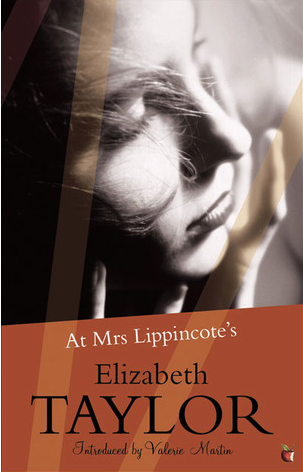
Elizabeth Taylor: At Mrs Lippincote’s (1945)

At Mrs Lippincote's

Published in 1945, At Mrs Lippincote’s was Elizabeth Taylor’s first novel. It’s my fourth Elizabeth Taylor novel and while it’s not my favourite, I liked it a great deal. It’s as sharp and witty as the others and a subtle exploration of truth and hypocrisy in wartime England, a time when the English society and its conventions changed rapidly. At the heart of the novel is the story of a marriage in dissolution. Julia and Roddy Davenant, and their son, live at the house of a widow, Mrs Lippincote. Her house is a stuffy house, filled with mahogany furniture. Roddy, who is in the RAF, was stationed in London before. His superior sent him to the countryside, hoping it would help save his marriage.

Julia is a great character. At times she’s a little intimidated by the formidable-sounding Mrs Lippincote and all the officers her husband works with, but most of the time, she just doesn’t care about convention and says so. This quote captures her particularly well:

Julia had a strange gift of coming to a situation freshly, peculiarly untarnished by preconceived ideas, whether of her own preconception or the world’s. Could she have taken for granted a few of those generalisations invented by men and largely acquiesced in by women (that women live by their hearts, men by their heads, that love is a woman’s whole existence, and especially that sons should respect their fathers), she would have eased her own life and other people’s.

Julia spends most of the time alone with her son or walking the small town at night, on her own, while her husband pretends he’s at his club. These nightly walks, more even than the way she expresses herself, shock her husband as they show an independence he doesn’t care for. He, who is anything but a model husband, hides his own shortcomings behind his hypocritical outrage. Her outings are quite harmless, although people start to talk because she’s visiting a man. Mr Taylor is someone they once knew in London. He’s the most tragic figure in this novel. He was the manager of an elegant restaurant in London but he has lost everything. His restaurant, his home, and his health. He is now the owner of a shabby pub. He and Julia are possibly the only really honest people in this novel. All around them people seem to be pretending:  that they have a better status than they really have; that they are faithful and morally superior or that they aren’t afraid of anything.

Here’s Mr. Taylor’s take on this.:

“Bombed out” is a phrase the world was now used to. “But you were lucky,” people would say, “not to have been sleeping there.” “No one was hurt,” he would say. It was like a game of tennis, that sort of conversation: the ball went back and forth but no one was really involved, the expected replies were dealt and after the game had been kept up for a while, the other side tired, and feeling it had done well, changed the subject. But the truth had not been spoken. Had he suddenly said: “My life ended just he same, whether I was killed or not. This that I have now means nothing to me and has no value,” they would still not have understood.

“And then, ” he continued, “there are all the people who refuse to have their morale destroyed. They are the worst part of the whole affair. Sometimes you feel it would be such a relief to say you’re frightened, but those awful people stop you. You go about all day longing to tell someone you’ve lost your nerve, or to hear someone say the same thing to you, but it never happens.”

Julia is so honest that she doesn’t even have illusions when it comes to herself:

“I think I am going on up, willy-nilly. This morning I read in the paper about something vile the Nazis did, and I thought: “It’s all right. It’s not as bad as the atrocity I read about last week.” I was very much shocked at myself.”

“War does that for one.”

“Yes. That’s what I said. The contemplation of brutality brutalises. ( . . . )”

Like in all of Elizabeth Taylor’s books, the best parts are the characterisations. She shows us people and their foibles and follies. There are some great, eccentric characters in this book.

Elizabeth Taylor is always astute and unmasks her character’s with her sharp mind. In this novel she unmasks a whole society and era – wartime England and all the small and big lies people tell themselves and each other. I think her subtle description of the mentality of the time – this clinging to the old conventions – the fear of the new – the stress of the war – is stunning. It’s what makes this a truly remarkable book.

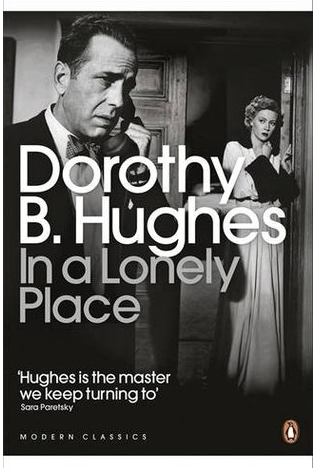
Dorothy B. Hughes: In a Lonely Place (1947)

In a Lonely Place

I came across Dorothy B. Hughes excellent noir novel In a Lonely Place in Books to Die For, a book of essays on important crime novels. Each of the articles was written by a famous crime writer. The book has been edited by John Connolly and Declan Burke. The article on In a Lonely Place was written by Megan Abbott. I’m sure I would have liked In A Lonely Place without reading Abbott’s essay but I might have missed a few things.

Books to Die For

Hughes novel is one of the first serial killer novels and inspired later works like Jim Thompson’s The Killer Inside Me. I know that many readers of this blog are averse to serial killer novels and I understand why. But this one is a very different book. There are three types of serial killer novels—those from the point of view of the victim, those from the point of view of the detectives and those from the killer’s point of view. The mainstream/bestselling novels usually fall into category one or two, while this one falls into the third category. Unfortunately, the blurb gives a very wrong impression and the reader thinks (s)he is reading a thriller-type story. That was never Hughes intention. Without the blurb it’s clear from the beginning that we’re in the head of the killer, Dix Steele. Dix is a WWII veteran who has just moved to L.A. and, on the spur of a moment, contacts Brub Nicolai, a former army buddy, who served with him in the UK, not knowing that he is a detective. An other perpetrator would have stayed away or fled, not so Dix Steele. He loves the idea of being able to follow the investigation very closely.

Here’s an early quote which doesn’t only give an idea of Dorothy B. Hughes’ writing but also of how eerie this scenario is. Brub is obviously talking to Dix.

Brub started, “Wha-” He realized Dix’s question. ” I guess it’s pretty much my fault. Ever since the thing started, I’ve been afraid for her. She’s lived in  the canyon all her life. She never had any fear, wandered all over it, any time of the day. But the canyon at night, the way the fogs come in— it’s a place for him.” His face was again angry, helplessly angry. “I’ve scared her. She’s alone so much. I never know what hours I have to keep. We have good neighbours, a couple of our best friends are right across the road. But you know our street. It’s dark and lonely and the way our house is set up there—” He broke off. “I’m the one who’s scared; I’ve infected her. And I can’t help it. I can’t pretend until we caught him.”

Megan Abbott emphasized in her essay that this is far more than a serial killer novel or an ordinary noir. The author went further than others in showing how difficult it was for veterans to return. How in many cases, they felt like their masculinity was in danger. The book is as much about gender as it is about crime. Men like Dix Steele had to reinvent themselves after the war. With the end of the war, they lost their identity.

What made me love this book is that we actually pity Dix Steele. He’s more than a little troubled and his suffering is genuine. Here’s a quote to illustrate this:

A man couldn’t live alone; he needed friends. He needed a woman, a real woman. Like Brub and Sylvia. Like that stupid Cary had that stupid Maude. Better than being alone.

It wasn’t often it hit him hard. It was the balmy night and the early dusk and the look of the lamps through opened windows and the sound of music from radios in the lighted rooms. he’d eschewed human relationship for something stronger, something a hell of a lot better.

What makes Dix Steele so tragic is that he is not only greedy and full of longing— for women he can’t have, for status, money, relationships, the “good life”— but also oddly hopeful. He believes that with the right woman everything might be different. When he sees Laurel Grey for the first time, a young  actress who is just as greedy for the good life, as he is, he genuinely believes, she might be his saviour.

I love nothing as much as atmospherical crime novels and this one might be one of the greatest in this regard. Set in L.A., it really brings the city to life and makes great use of the landscape and weather conditions. I thought that fog and mist were particular to San Francisco but reading this, I have to assume that the L.A. area (at the time?) was constantly foggy. Reading how this lonely, deranged and driven killer hunts for his prey in the fog made for great reading.

In a Lonely Place has been made into a movie starring Humphrey Bogart and Gloria Grahame. I haven’t seen it but I get the impression, the ending is very different.

Dorothy B. Hughes had an unusual writing career. She published twelve novels, three of which were made into movies, before she stopped writing in 1950. Allegedly, because she took care of her mother and her grandchildren. She died in 1993. It’s a bit sad to think that this great writer spent the last forty years of her life not writing.

Elizabeth McKenzie: The Portable Veblen (2016)

The Portable Veblen

There are a few things you might see differently after having read The Portable Veblen—squirrels, marriage, clinical trials, mental health, consumerism, Thorstein Veblen. What I’m trying to say – this is a novel that’s as quirky as it is serious. But the best of all: the voice is stunning and as witty as it is clever. Looking at some of the topics this novel explores—dsyfunctional families, PTSD, pharmaceutical companies, mental illness— one wouldn’t think it would be funny, but it is. I really loved this book and it’s main narrator Veblen Amundsen-Hovda.

Veblen, named after Thorstein Veblen, author of The Theory of the Leisure Class, is a self-declared “cheerer-upper” with a narcissistic, hypochondriac and controlling mother. Veblen is obsessed with squirrels, translates from the Norwegian in her free time and is highly suspicious of everything that whiffs of consumerism.

Veblen espoused the Veblenian opinion that wanting a big house full of cheaply produced versions of so-called luxury items was the greatest soul-sucking trap of modern civilization, and that these copycat mansions away from the heart and soul of a city had ensnared their overmortgaged owners – yes, trapped and relocated them like pests.

She’s engaged to Paul, a neurologist who works for a shady pharmaceutical company and gives her the most ridiculously huge engagement ring. All of her life, Veblen has been crushed by her mother. Her dad is in a mental institution and her step-dad always takes her mother’s side. Nonetheless, her mother and her mother’s opinion are important. So far, neither Veblen nor Paul have met their respective parents. Both are wary of a meeting. Veblen because she’s afraid of what crushing things her mother might say about the engagement and her fiancé, and Paul because he’s ashamed of his parents, hippies who were anything but good parents.

Just to give you an idea of what Veblen has to deal with. That’s her thinking of telling her mother about the engagement:

She had an internal clock set to her mother’s hunger for news, but sometimes it felt good to ignore it.

Then she went back inside and grabbed the phone to spring the news on her mother. Nothing being fully real until such springing. And nothing with her mother ever simple and straightforward either, and that was the thrill of it. A perverse infantile thrill necessary to life.

And this is how the phone call goes:

“Well. Did you say yes for all the right reasons?”

The coffeemaker gurgled and hissed, a tired old friend doing its best. “I think so.”

“Marriage is not the point of a woman’s life. Do you understand that?”

“By now.”

“Do you love him?”

“I do, actually.”

“Is everything between you, good, sexually?”

“Mom, please! Boundaries or whatever.”

“Don’t say boundaries like every teenage twerp on TV.”

It bothered Veblen’s mother that most people were lazy and had given up original thought a long time ago, stealing stale phrases from the media like magpies.


The main question at the heart of the story is: should anyone get married, especially when coming from a dysfunctional family? It takes Veblen a long time to make up her mind – the whole novel – and most of it involves hilarious scenes. Her mother is one of those parents that, while toxic, still has a lot going for her. I loved all the scenes that involved her. I equally enjoyed the passages in which we see Veblen on her own. Some of the chapters are told from Paul’s POV and those weren’t my favourites. He’s not a character that could stand on his own, he always needs to clash with another one to be interesting.

This might be one of the wittiest books I’ve read in a long time. But it’s also charming and profound. I’ve seen a few people comment that they found the book confusing. I didn’t. Most of the crazy moments are due to Veblen’s attempts at staying sane. Dissociation and escape into a fantasy world in which squirrels communicate with her, are coping mechanisms. As cheerful as Veblen seems, she is someone who has been crushed and whose lack of self-confidence is painful. That a lot of her composure comes from taking medication, is equally tragic. It may sound paradoxical, but given her upbringing, she’s doing well.

As I said, I enjoyed The Portable Veblen a great deal. It’s s such a clever book.

I wasn’t surprised to find it on the short list for the 2016 Bailey’s Prize for Fiction.