Kristina Carlson: Mr Darwin’s Gardener (2009)

Mr Darwin's Gardener

Mr Darwin’s Gardener is a novella by Finnish author Kristina Carlson. In her native Finland, she’s a popular children’s book author but has also written three highly acclaimed books for adults, one of which is Mr Darwin’s Gardener.

The blurb calls this novel “A postmodern Victorian novel about faith, knowledge and our inner needs.” The main character is Thomas Davis, Darwin’s gardener. A loner and widower whose faith and trust in life are tested. Not only has he lost his wife but his children are sickly. Since he shuns religion, he can’t even find solace in the church. When the book begins he’s not sure life is still worth living. This sounds conventional enough but the way this novella is presented is anything but. The “story” is told by multiple narrators. The effect is that of a chorus. Kristina Carlson dips in and out of various POVs, often switching from first to third within a paragraph. I could have gotten used to that if the 1st and the 3rd POV had been that of the same person, but very often, that wasn’t the case. The transitions were blurred most of the time and since there were so many characters it was confusing at times. It would have helped, if there had been a change in voice and tone, but Kristina Carlson used the same voice and tone throughout the novel. The way the narrators spoke about faith and destiny, was the only way to distinguish one person from another.

Nonetheless, I enjoyed large parts of the book, because of the descriptions. This book contains some of the most exquisite and precise nature descriptions I’ve come across. And they do serve a purpose. This is a novel about faith, and about a very specific point in time. Darwin’s books challenges the Bible, contradicting it, questioning it. What did a person have when the person lost his/her faith?— nature. Those detailed descriptions reminded me of some very detailed religious paintings. A believer would find much solace in their minutiae. And so, Thomas Davis finds solace in contemplating nature, following its change through the seasons. Its never-ending cycle is a consolation.

Here’s a quote to illustrate her writing

A shadow flits across one of the dark windowpanes of Down House and Thomas is startled. He straightens up, shoves his hands into his pockets and stools to the back gate. Herbs and cabbages grow in a bed where Mr Darwin once cultivated yellow toadflax. The villagers thought it was a mere weed, and of course dahlias and asters are more beautiful, though the nature of beauty is mysterious. By the footpath grow hazel, alders, elms, birches, hornbeam, privet, dogwood and holm oak. Mr Darwin had them planted decades ago. Thomas turns and wanders across the meadow. When the heels of his boots sink into wet earth, the smell of mould wafts out of the long flattened grass.


A book about faith, religion, destiny, bigotry and hope, with accurate and gorgeous nature descriptions. Not a breezy book by any means, but one that’s exquisitely crafted.

This is book five of my 20 under 200 project.
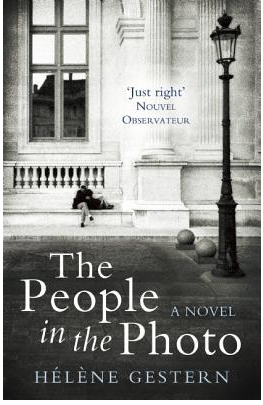
Hélène Gestern: The People in the Photo – Eux sur la photo (2013)

The People in the PhotoEux sur la photo

I came across the novel The People in the PhotoEux sur la photo by French author Hélène Gestern on Danielle’s blog (here) and immediately had to get the French paperback. (I know – book buying ban and all that).

The People in the Photo is an epistolary novel which gave it a charming old-fashioned feel although it’s set in 2007. Hélène has placed an ad in a newspaper asking if anyone knows the names she has found on a photo, showing her late mother in 1971, in a tennis tournament in Switzerland, alongside two men. Hélène never knew her mother who “disappeared” when she was only three years old. Her father and her stepmother only told her that she died in an accident. Hélène’s many questions were never answered. Her father didn’t want his former wife mentioned.

After the death of her father and while she slowly loses her stepmother to Alzheimer, Hélène finds the photo showing her mother and decides to use it to find out more about her. Stéphane writes to her because he’s recognized the name of one of the two men on the photo—it’s his father.

Hélène and Stéphane begin to write to each other regularly. Both want to find out more about their parents. Stéphane, who describes his father as broody and taciturn, just as much as Hélène. Using photos and correspondences, tracking down people, they begin to put together the pieces of the puzzle. A first their interest in solving a mystery guides them, but soon they become friends and there’s even the possibility of love.

The book is as much about how harmful family secrets can be as it is about loss and grief, identity and love, errors of judgement and guilt. It delicately shows that uncovering a secret may have consequences that cannot be undone. You can’t “unknow” something. There are many moments of hesitations in the book – whenever new information is found, photo collections (Stéphane’s father was a photographer), letters and a diary are discovered. Should they read it? What if they are not strong enough to face the truth? And what will it mean for their present lives, their relationship? Some truths might be too hard to bear.

I believe it’s always better to know the truth but one has to be prepared—it can be unpleasant and tragic like in the case of Hélène’s mother and Stéphane’s father. The beginning of the novel is quite sober. The tone is inquisitive and polite but the closer they get to the truth, the more they open up to each other, the more the books gets emotional. The final revelations are made via a letter from Hélène’s stepmother and the diary of a friend of their parents. I expected a sad story but never imagined finding out what happened would move me as much as it did.

While family secrets are a major theme, the power of photos is just as important. Each chapter begins with the description of a photo, leaving out any interpretations at first. Only later, in the following letters, do we learn the background information. This illustrates how misleading photos can be. And that absences are just as telling as what the photo shows.

History is another important theme. Hélène does not only uncover her family’s history but pieces of Russian and French history. And she appeals to Stéphane not to judge their parents as if their story had taken place in our time, but to keep in mind that they were people of another era.

Hélène Gestern has achieved to write a book that is very emotional but never soppy nor melodramatic. The structure is tight, the writing smooth, the themes are complex and the characters feel authentic. It’s entertaining and profound and has the charm of old black and white photos.

The People in the Photo is Hélène Gestern’s first book. She’s already published two more in French, both of which deal with the power of pictures.

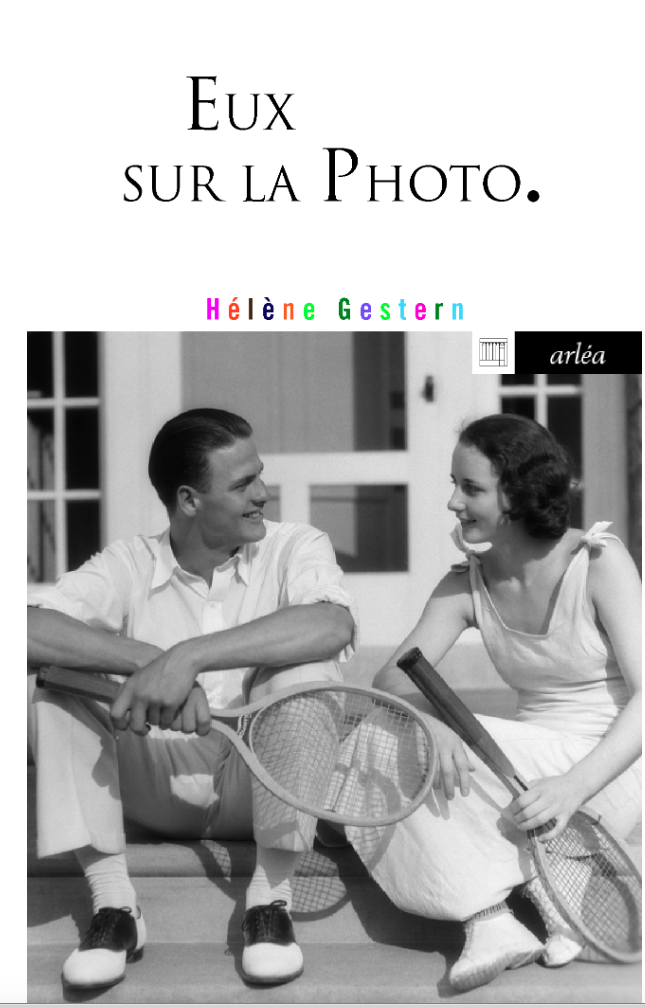
I added both covers because the French, while set during the wrong decade (the 40s), captures the spirit of the photo in the novel.

Clare Mackintosh: I Let You Go (2014)

I Let You Go

I came across Clare Mackintosh’s novel I Let You Go on Twitter. It’s another one of those psychological thrillers with a split narrative and a huge, stunning twist. But, for once, I really loved the twist and the split narrative actually added not only other POVs but another genre altogether. Unfortunately I can’t say much about the twist, only that I found it great but if I told you why, it would be utterly spoilt. But I can talk about the split narrative.

The prologue describes a horrible accident. A small child runs from his mother and is killed in a hit and run. The novel is told from several POVs – the two most important ones being Clare’s and the police’s. Adding the POV of the police was quite unusual and made this book a combination of psychological thriller and police procedural, which worked well.

Clare runs from Bristol after the accident and hides in Wales. She’s an artist but her hand has been so severely wounded that she cannot work as a potter anymore. She starts to take photographs of the beaches, where she lives. It’s out of season when she arrives and the cottage she rents is far away from any other houses. The only people she sees are the owner of a caravan park and the local vet who helps her when she finds an abandoned puppy. While Clare, who is haunted by memories of the accident and other traumatic events,  tries to heal and find new meaning in life, the police frantically look for the person who killed the little boy.

The book has a leisurely pace until the twist in the middle, but from then on it gets very fast paced and suspenseful. We find out that the accident isn’t the only horrible thing in Clare’s past and that the past she hopes she’s left behind, is catching up with her. I can’t say more.

This is a suspenseful, well-plotted, fast-paced psychological thriller with a major twist. The characters are well-drawn, the setting is atmospheric and the end doesn’t disappoint. Maybe the police parts are a tad too long, unless this is meant to be a first in a series. If it’s a standalone, then those parts could have done with some cutting because we don’t need to know that much about the private lives of the detectives. Possibly, though, it was Clare Mackintosh’s homage to her twelve years in the police force. All in all, a minor thing that doesn’t change that I enjoyed this book a lot.


Literature and War Readalong September 30 2015: Fateless – Sorstalanság by Imre Kertész

Fateless

The third book in this year’s Literature and War Readalong is Imre Kertész’ Holocaust novel Fateless. Kertész is a Hungarian author who won the Nobel Prize in Literature in 2002. As far as I know, he’s the only Hungarian author who has won the prize.

As a boy of fourteen, Kertész was deported to Auschwitz in 1944 and later brought to Buchenwald. Although the book is based on some of his own experiences, it is by no means autobiographical. The movie based on the book, and for which Kertész wrote the script, is much more autobiographical as the novel.

Here are the first sentences

I didn’t go to school today. Or rather, I did go, but only to ask my class teacher’s permission to take the day off. I also handed him the letter in which, referring to “family reasons” my father requested that I be excused. He asked what the “family reasons” might be. I told him my father had ben called up for labor service; after that he didn’t raise a further peep against it.

And some details and the blurb for those who want to join

Fateless – Sorstalanság by Imre Kertész (Hungary 1975), Holocaust,  Novel, 272 pages.

The powerful story of an adolescent’s experience of Auschwitz by Holocaust survivor and Nobel Prize winner, Imre Kertész.

Gyuri, a fourteen-year-old Hungarian Jew, gets the day off school to witness his father signing over the family timber business to the firm’s bookkeeper – his final business transaction before being sent to a labour camp. Two months after saying goodbye to his father, Gyuri finds himself assigned to a ‘permanent workplace’, but within a fortnight he is unexpectedly pulled off a bus and detained without explanation. This is the start of his journey to Auschwitz.

On his arrival Gyuri finds that he is unable to identify with other Jews, and in turn is rejected by them. An outsider among his own people, his estrangement makes him a preternaturally acute observer, dogmatically insisting on making sense of everything he witnesses.

I’m planning on watching the movie soon. I’m interested to see the differences. If you don’t get the time to read the novel, but still want to join the discussion, you could just watch (and review) the movie.


*******

The discussion starts on Wednesday, 30 September 2015.

Further information on the Literature and War Readalong 2015, including all the book blurbs, can be found here.

Paula Hawkins: The Girl on the Train (2015)

The Girl on the Train

Sometimes a negative review entices me to read a book. To be fair though, in the case of Paula Hawkins’ The Girl on the Train, there were also a fair amount of positive reviews that made me want to read it. What I didn’t expect was that I would like it so much. I basically gobbled it down in a couple of sittings. For sure, the writing is very simple—present tense + short sentences + split narrative, short chapters, three narrators. Not exactly sophisticated writing. And, yes, the three women who tell this story have only one voice. Without chapter headings indicating when it’s Rachel’s, Megan’s or Anne’s turn to tell the story, we would hardly be able to guess. Their lives are different, some of their dysfunctions are different, but the tone and vocabulary is pretty much the same. And all three of them are not exactly role models.

There’s Rachel, the girl on the train. Every day she commutes to London, guzzling cans of pre-mixed gin and tonic, although she’s been unemployed for some time. The train always stops at the same place and she gets a good view of one of the houses. The young good-looking couple living there fascinates her. They remind her of herself and her ex-husband Tom with whom she used to live only a few houses farther down. While her obsessive interest in the couple is strange, it is far stranger that she’s willing to enter her fantasy world when she thinks she sees something shocking. I’m not going to write more as it’s a book that’s easily spoilt.

Why did I love it, you wonder? There are books that do nothing more than exploit an idea or an image. In this case: looking at people from a train and imagining their lives. I liked this idea a great deal. I would never spy on people with binoculars – a habit I find positively disgusting-, but I’m fascinated by the tiny glimpses of other people’s lives we can catch when we are on a train. I often wonder what kind of life they have, those people, frozen in a single moment of their lives, while I rush by. I could relate to Rachel’s fascination and understood how someone as dysfunctional and lonely would get caught up in her fantasies.

I also loved the novel because I found it very gripping. And very realistic. I’ve had the misfortune of meeting a Megan and an Anna. Also women like Rachel, only without her alcohol problems. One of the characters in particular reminded me of a girl I used to work with for a while. The moment a guy showed interest in someone else, had a girl friend or a wife, she had to fling herself at him.

The Girl on the Train is a page-turner that depicts certain aspects of our society like isolation, commuting, envy, and narcissism in a realistic way. It’s a bit like Gone Girl’s little sister, although the writing isn’t nearly as good. Still,  if you’re in the mood to gobble down a book and share my fascination with the small glimpses of other people’s lives you can catch while rushing by on a train – get it. It’s flawed but entertaining. Just one word of warning – the end is a bit disappointing.

After finishing it I picked up Renée Knights Disclaimer and was amused to see that the sticker on the book doesn’t say “The new Gone Girl” but “If You Liked The Girl on the Train“. I suspect in a few months it will say “The new Disclaimer“. I’m eager to find out which I will like better.

Nicci French: Thursday’s Child (2014)

Thursday's Children

I’ve been waiting to read Thursday’s Child, the fourth in the Frieda Klein series, until it came out in paperback. That happened just a few months before the fifth Friday on my Mind was published. It’s one of the rare series I’ve followed since the beginning. Here are the first three reviews Blue Monday – Tuesday’s Gone – Waiting for Wednesday

I think what surprised me the most, is that this book was so much better than the last and that it felt very fresh, and added a lot on Frieda’s private life and backstory.

Due to the nature of the crime she investigates, we learn a lot about Frieda’s past. Since Frieda is a psychotherapist, an old school friend contacts her because her daughter shows signs of distress. At first, Frieda is not willing to see the girl. For one, she wasn’t all that keen on her mother all those years ago and she’s not sure how she can help. In the end she accepts to see the girl anyway and what she hears is extremely shocking. Not only because something awful happened to the girl, but because what happened sounds exactly like something that happened to Frieda when she was the girls’ age.

Although Frieda’s left her hometown twenty years ago, hasn’t stayed in contact with any of her friends, and never spoke to her mother again, she decides to leave London and investigate what has happened to the girl – and maybe to herself. I’m one of those people who would never go to a school reunion and reading how Frieda went back and had to face her past, was an intense read. I also had a very complex relationship with my mother, and so, reading about her reunion with her mother was intense as well.

Unlike in most other Frieda Klein novels, London isn’t as important in this book as in the others, but it still plays a role. Frieda’s love life takes a surprising turn and I’m not sure how I feel about it. I wonder if it was necessary to handle it that way and I’m very curious to see where she goes from here.

While the crime element is solid and gripping, it’s not the only interesting narrative strand. Following Frieda as she faces her troubled past was well worth reading. That one of the perpetrators of the first books is still following Frieda, added another, creepy layer.

Something I don’t like in crime novels is when there’s a final showdown. It’s a typical element in most psychological thrillers and Nicci French has used it before. Not in this one. That’s why it felt fresher. Frieda also didn’t put herself as much in harm’s way as she did in other books. That was always an element that annoyed me because I felt it had less to do with Frieda than with creating suspense.

If you like the series, you shouldn’t miss this. It’s the second best so far. However, I wouldn’t recommend to start with this one. You would maybe still enjoy the crime story but the part about Frieda’s life would not be as interesting.

Stewart O’Nan: The Odds (2012)

The Odds

Stewart O’Nan’s novel The Odds is the second novel of my 20 Under 200 project. It’s the third of O’Nan’s novels I’ve read so far and while Last Night at the Lobster is still my favourite, I thought this was very well done.

The Odds tells the story of a middle-aged couple, who spends Valentines Weekend at an expensive hotel in Niagara Falls. They are broke, about to lose their beloved house, and ready to file for bankruptcy. Their marriage has been crumbling for years and after this weekend they will get a divorce. Basically, because they hope to hide assets. The interesting element, the element that generates tension in this novel, is that the reader knows from the beginning this weekend means different things for the characters. Marion considers this a weekend of goodbye. The divorce will bring her freedom. Art, on the other hand, considers this to be a new beginning. He’ll ask his wife to marry him again. Unsurprisingly, the book is full of double entendre and subtext. Watching the protagonists circle each other, trying to find out if they made the right move – Marion hopes having sex isn’t giving the impression, she’s still in for a new beginning, while Art hopes the flashy diamond ring does really express love and is not just seen as a reckless token – is enthralling.

While these dynamics would be interesting enough to follow, there’s something else ging on here. Niagara Falls was where they spent their honeymoon but it’s also a place where you can gamble. This might have been the most interesting part of the book and it shattered a few of my illusions. How naïve was I to believe that Niagara Falls offered nothing but a spectacular view of one of nature’s most amazing offerings. I’ve been taught, Niagara Falls is a garish, small version of Las Vegas. Flashing lights and casinos included. I honestly don’t get it. Do people really enjoy illuminated sights? In garish colors at that? I remember when I saw the Eiffel Tower for the first time in its all-year-round Christmassy illumination – I was disgusted. But this seems even more sacrilegious.

The trip to the casino makes a lot of sense because Art thinks he has figured out how to win big time at the roulette wheel, using the Martingale system. He’s certain that working with the odds will save them.

I found it amusing that Stewart O’Nan used different statistics as titles for his chapters. Odds of a couple making love on Valentine’s Day 1 in 14 – Odds of a U.S. citizen filing for bankruptcy: 1 in 17 – Odds of a married couple reaching their 25th anniversary: 1 in 6 – Odds of surviving going over the Falls without a barrel: 1 in 1,5000,000. Of course, all these are relevant to the story and made me think of those long chapter titles we find in many 19th century novels that give a flavour of what follows.

While they spend their days queuing for hours to see the many tourist attractions, at night they hit the casinos. If you want to find out whether the odds are against them – you’ll have to read the book.

I found this very well written, very realistic. I particularly liked the way he showed the absurdity of a tourist business that transforms a natural phenomenon into a tawdry theme park. Pretty sad, to be honest. It was equally excellent how he described how two people can have very different feelings about the same thing and that even in a marriage you may very well live with a stranger.

What kept me from loving this was that the people described are very realistic, but not exactly interesting. Since this is the second novel about middle-aged people, written by a man, I wonder whether men’s view of middle age in our society isn’t more negative than women’s view. Often, in novels written by women, the middle-aged protagonist starts a new, freer life. This is to some extent reflected in the attitude of the two protagonist. While Art thinks it would be a catastrophe if they spilt, it means freedom for Marion.

After finishing this book I’ve asked myself two questions:

What are the odds that I’ll visit Niagara Falls: 1 in 10,000

What are the odds I’ll pick up another Stewart O’Nan novel? 1:1

Maybe The Odds isn’t Stewart O’Nan’s best novel but it’s still well worth reading.

I first read about The Odds on Guy’s blog here.