Peter Mendelsund: What We See When We Read (2014)

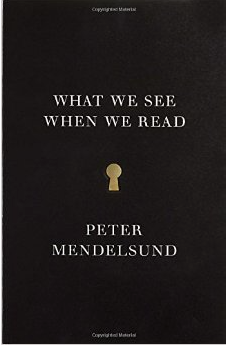
What We See When We Read

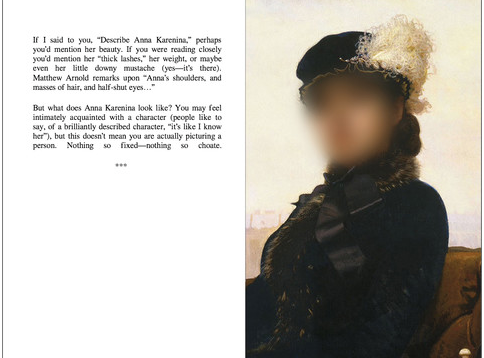
How does your Anna Karenina look? Is she tall and dark-haired? Homely or elegant? Can you picture her nose? And what color is Ishmael’s hair? What does he wear? These are but a few of the questions Peter Mendelsund explores in his exciting book What We See When We Read.

Mendelsund is the associate art director of Alfred A. Knopf and art director of Pantheon books. In his book, which is subtitled A Phenomenology with Illustrations, he explores what it means to read and what types of pictures are created in books and in our heads.

As readers we are often not conscious that the images we see before our inner eyes correspond only to some extent to what we find on the page. Our own imagination embellishes, we write along. That’s why we so often find fault with the way characters and settings look in movies. “No,” we say. ”This isn’t what I’ve imagined.” Returning to the book, we might discover that what we imagined isn’t any closer to what the author wrote than the choices the film director made.

Ciphers

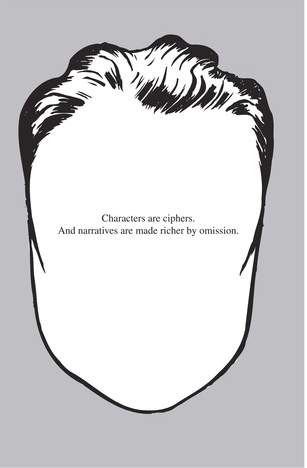
“Characters,” Mendelsund writes, “are ciphers. And narratives are made richer by omission.” I agree with him. Most readers would. Isn’t there anything more tiresome than a description that is so detailed that you feel your imagination crumble under the exhaustion of picturing exactly what you should see?

Mendelsund also questions whether we are still able to imagine like people in the era before movies, TV, and the Internet. And what about children? Do we teach them how to imagine through picture books? Are they born with their imaginations? And has everyone the same imagination?

While I nodded in agreement most of the time, and stopped reading frequently because I found an observation so interesting, there were a few moments when I disagreed. Mendelsund states, for example, that we all fill in gaps with things we are familiar with. If a book is set in a foreign country, we will still see our own backyard. He mentions that while reading a documentary on Stalingrad, he pictured the streets of Manhattan. I certainly don’t do that and I’m sure I’m not the only one who doesn’t.

Anna Karenina

The best thing about the book however is that it’s like a picture book for grown ups. It has illustrations on almost every page, makes elaborate use of different fonts, font sizes, and placement of text and, in doing so, enhances the experience, adds to the questions, and illustrates the points.

Be prepared – if you read this book, you’ll want to discuss it. Mendelsund may not always be right, but he’s always stimulating and thought provoking. I certainly enjoyed this book a lot.

Stanley Meisler: Shocking Paris (2015)

Shocking Paris

It’s rare that I accept review copies these days, but a book about the so-called School of Paris wasn’t something to pass up. I don’t regret accepting Shocking Paris as I’ve read it in a couple of days, something I rarely do with nonfiction. I really liked it a great deal. It was as fascinating as it was informative.

Stanley Meisler is a distant relative of Chaim Soutine, which may explain his interest in a painter who isn’t as well-known in the US as in Europe. Soutine isn’t the only writer Meisler writes about. His topic is the School of Paris – a group of influential, mostly Eastern Jewish painters, who were living and working in Paris from the years just before WWI until WWII. Most of them lived and worked in Montparnasse in the famous La Ruche residence. Back then Montmartre had already lost its importance for painters and was slowly turning into the tourist trap it still is.

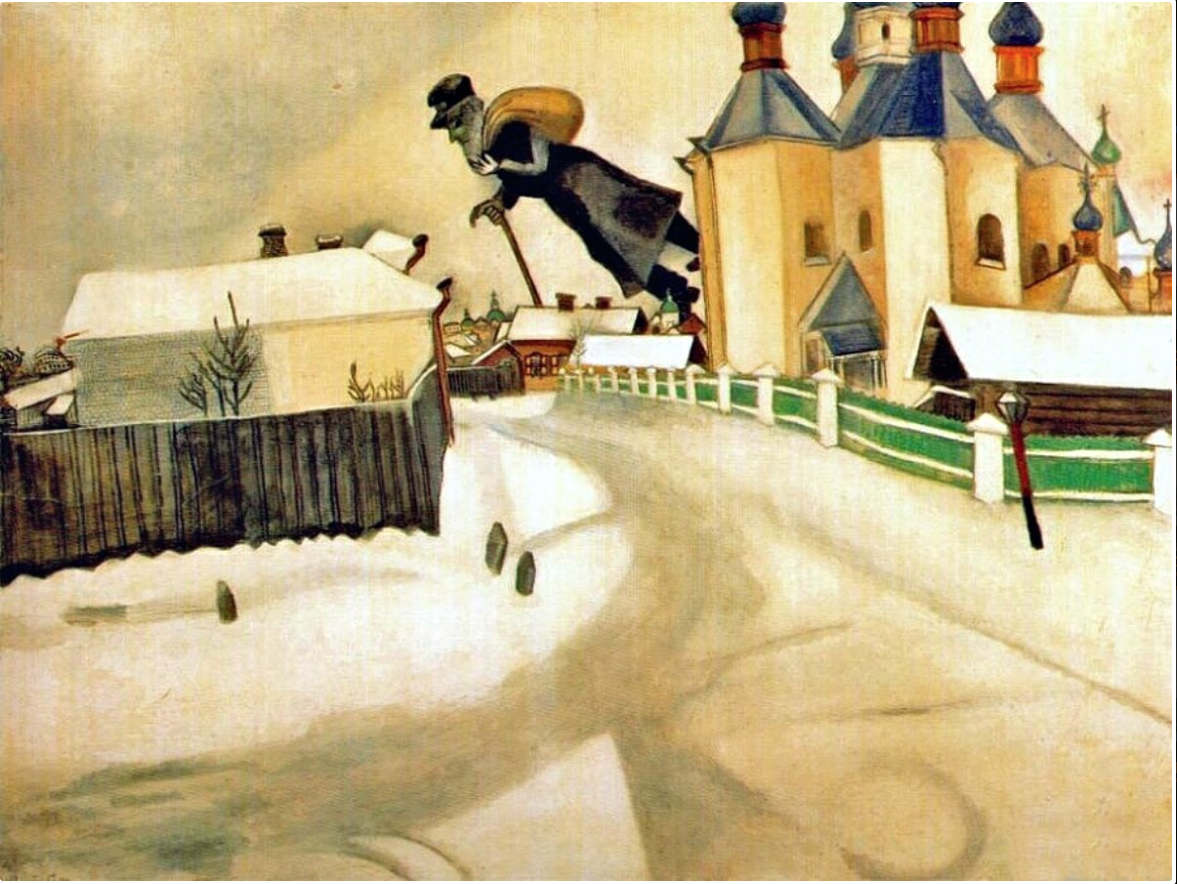
While Chaim Soutine is his main topic, we read about many other painters, notably Amedeo Modigliani, an Italian Jew, and Marc Chagall, still one of the most famous painters.

The early chapters were particularly interesting because they describe how revolutionary it was that young Jewish men and women became artists and the struggle they faced because painting was against their religion. That certainly explains why so many left for Paris where important artists like Picasso resided. It also explains, as Meisler states, why there are no important Jewish painters prior to the 20th century.

Soutine

Soutine

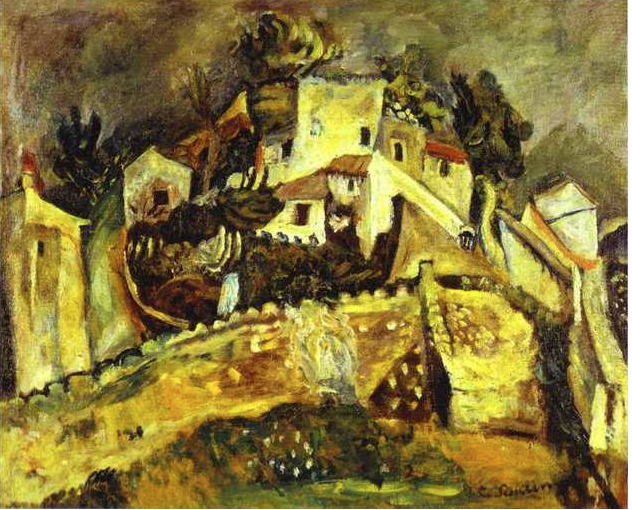
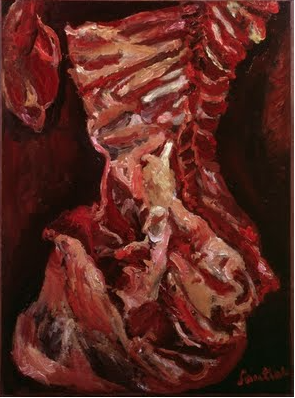
Above—two paintings by Chaim Soutine

I’ve never been a fan of Soutine’s paintings, but it’s obvious that he was influential. You can see his influence in the works of painters like Francis Bacon and even Jackson Pollock.

The landscapes he painted were always distorted, the people made ugly. And he had a special fondness for depicting bloody meat. Another typical trait was how thick the paint is on his paintings. Many appear three-dimensional thanks to those thick layers of paint.

Modigliani

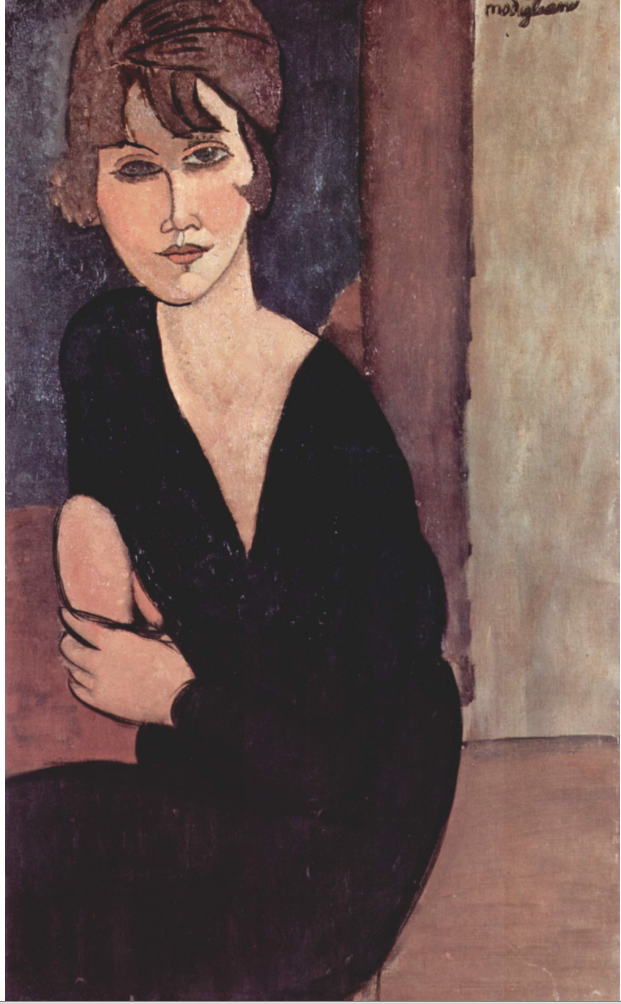
Above—painting by Amedeo Modigliani

Modigliani, who was his close friend until he died too early in 1920, was a much more colourful person. Soutine was not only notoriously shy but awkward. He didn’t know how to make friends. According to Meisler, he rarely washed or changed his clothes and must have been rather revolting at times. He was also peculiar in so far as he destroyed many of his paintings. Either because someone said something he didn’t like about them or because he wasn’t satisfied anymore.

Chagall 2

Chagall1

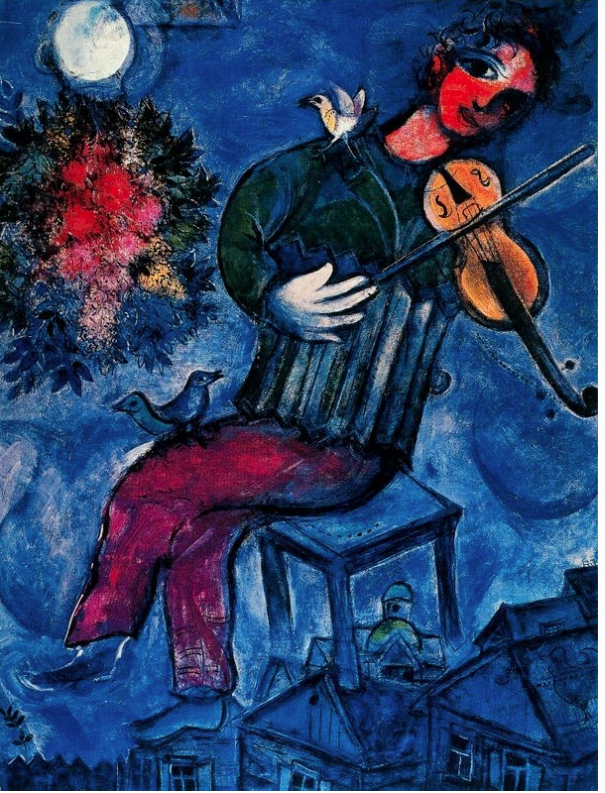
Above—two paintings by Marc Chagall

Shocking Paris was a fascinating book for many reasons. It was interesting to read about the School of Paris and the anti-Semitism they were facing, long before WWII. Chaim Soutine is one of only a few Jewish painters who didn’t change his name. It was equally interesting to read about the war and how Soutine managed to escape deportation. There’s a long chapter about Varian Fry, a young American, who helped many writers and painters to escape to the US. I’ve come across his name several times before. Some of the most famous people he helped were—Heinrich Mann, Lion Feuchtwanger, Franz Werfel, Max Ernst, André Breton, Hannah Arendt, Arthur Koestler and many more.

Soutine spent parts of the war, hidden in Paris. Later he fled to the country with his lover Marie Berthe Aurenche, the ex-wife of max Ernst. His health had been bad for many years. He suffered from stomach ulcers and finally died in 1943 because he couldn’t be treated in time. He’s buried on the cemetery of Montparnasse in Paris.

Early in the book Meisler writes that he avoided conjecture. Soutine was a complicated man and many of the things people say about him are contradicting. He wasn’t someone who spoke or wrote about his art or himself, like Chagall did. Nor was he good-looking and larger than life like Modigliani. Nonetheless, it’s always tempting to try to spice up a biographical account by adding anecdotes and using conjecture. Meisler doesn’t do that. The account is interesting but sober that’s why I wished the book had another title. I find it lurid. And misleading. At the time people were shocked that so many foreigners, especially Jews, occupied such an important place in the Parisian art scene, but there’s nothing truly shocking between these pages. I’m afraid the wrong reader might pick up this book. That’s too bad because it’s engaging and well-researched and focusses on painters and a movement which isn’t well-known outside of France.

I highly recommend this book, not only to art fans and people interested in Soutine and Chagall, but also to those interested in WWII, Paris and the history of France (there’s a lot – highly critical parts – about Vichy France).

Thanks to Palgrave Macmillan for the review copy.

Literary Lost – Viewing Television Through the Lens of Literature

Literary Lost

Years ago I caught two episodes of Lost on TV and thought it might be a series I’d enjoy. Only it was aired too late for me, so I gave up. A while ago I discovered Sarah Clarke Stuart’s book Literary Lost, which analyses the use of works of fiction in the series. Those familiar with Lost probably know that far over 70 books are used, mentioned, discussed, and alluded to in the series.

Some of the books are important because different characters read them. Others have influenced story lines. Others have the same themes and motives. The books are mostly literary fiction.

Some of the most important books which are used repeatedly are the following: Heart of Darkness, Alice’s Adventures in Wonderland, Robinson Crusoe, Watership Down, Moby Dick, Lord of the Flies, Our Mutual Friend, Of Mice and Men, A Wrinkle in Time, Ulysses, The Odyssey, The Wonderful Wizard of Oz, The Stand.

Some books that are equally important but not mentioned as often are: The Brothers Karamazov, Slaughterhouse Five, The Third Policeman, The Invention of Morel, Everything That Rises Must Converge.

The Crying of Lot 49 is never mentioned but it’s narrative plays an important role for those trying to understand the end of Lost.

After I started reading the book, I finally also started to watch the series. I must say, looking at it from a literary perspective makes for really exciting watching. With the exception of Adolfo Bioy Casares The Invention of Morel, I think I own almost all the books that are important in the show and have read many. Just last week I finished The Wonderful Wizard of Oz.

Sarah Clarke Stuart writes in Literary Lost that the series’ use of books was so influential that it has turned non-readers into readers, rekindled the interest of some who stopped reading, and has even led to higher sales for some books like Flann O’ Brien’s The Third Policeman.

Lost has also led to special book clubs in which people don’t only discuss the series but the books that are featured. It’s not surprising that there were challenges to read all of the titles.

Sarah Clarke Stuart’s book does more than just add another layer to the viewing experience. It shows that some TV series can offer more than pure escapism and are exciting narratives in their own right. She shows that Lost is a great example of a neo-baroque series:

In the case of Lost’s hyperconscious literary references, “nostalgic reverence” is usually the motive. The on-screen appearance of a book suggests certain themes, while paying homage to that particular work. Furthering the postmodern understanding of Lost, more than one academic observer has identified the “neo-baroque” qualities of the show, using the model that Angela Ndalianis provides in her book Neo-Baroque Aesthetics and Contemporary Entertainment. Intertextuality is a central prong of her neo-baroque construct; she explains that a text’s allusions create “folds” and “labyrinthine” impression. Neo-baroque narratives draw the audience into potentially infinite or at least multiple directions that rhythmycally recall what Focillon labels the “system of the labyrinth”.

Of course there are similar books on other TV series. I’ve got one dedicated to Six Feet Under (Reading Six Feet Under – TV to Die For) and at least half a dozen who study Buffy the Vampire Slayer and one or the other focussing on Veronica Mars.

I know this is a bit of a disjointed post, but I just wanted to share my enthusiasm for the series and the book. I was hoping that someone might be tempted to watch/re-watch Lost and that we might be able to discuss some of the topics and books. Or that those who love the series but were not aware of Literary Lost might pick it up.

I was wondering if anyone has read Bioy Casares The Invention of Morel. It’s the book mentioned in the series I’m most tempted to read at the moment.

Have you watched the series? Did it make you pick up some books?

Literature and War Readalong August 29 2014: Undertones of War by Edmund Blunden

Undertones of War

Edmund Blunden’s Undertones of War is one of the most famous WWI memoirs. Blunden was a poet who enlisted at the age of twenty and took part in the battles at the Somme, Ypres and Passchendaele. My edition, which is The University of Chicago Press edition, contains a number of his poems. It will be interesting to compare the accounts of the trenches with the poems inspired by the landscape.

Here are the first sentences

I was not anxious to go. An uncertain but unceasing disquiet had been upon me, and when, returning to the officers’ mess a Shoreham Camp one Sunday evening, I read the notice that I was under orders for France, I did not hide my feelings. Berry, a subaltern of my set, who was also named for the draft, might pipe to me “Hi, Blunden, we’re going out: have a drink.”; I could not dance. There was something about France in those days which looked to me, despite all journalistic enchanters, to be dangerous.

And  some details and the blurb for those who want to join

Undertones of War by Edmund Blunden (UK 1928) WWI, Memoir, 288 pages

In what is one of the finest autobiographies to come out of the First World War, the distinguished poet Edmund Blunden records his experiences as an infantry subaltern in France and Flanders. Blunden took part in the disastrous battles of the Somme, Ypres and Passchendaele, describing the latter as ‘murder, not only to the troops, but to their singing faiths and hopes’. In his compassionate yet unsentimental prose, he tells of the heroism and despair found among the officers. Blunden’s poems show how he found hope in the natural landscape; the only thing that survives the terrible betrayal enacted in the Flanders fields.

*******

The discussion starts on Friday, 29 August 2014.

Further information on the Literature and War Readalong 2014, including all the book blurbs, can be found here.

Best and Worst Books 2011

Looking back I must say that this was a very good reading year. That’s fortunate for me because to be honest in many other areas it was a nightmare and I hope that next year will be better. But readingwise it was wonderful. So many new authors, so many really great books. It couldn’t have been much better.

It’s always so difficult to say which books I liked the most but I noticed that whenever I thought “Best Books” and started to make a mental list, the same 12 books popped up again and again and only when I went back to the blog and looked at all the posts, did I remember many more. So, like last year, I’m cheating and do not present a Top 10 but a best of per category.  The 12 that popped up immediately can all be found under the category beautiful and enchanting.

All the quotes are taken from my reviews.

Most beautiful and enchanting books 

Saraswati Park by Anjali Joseph

“The calm, quiet and floating feeling that permeates Saraswati Park makes this one of the most beautiful novels I have read recently. Saraswati Park is about love and marriage, loss and discoveries but also about the power of imagination and memories, the beauty and danger of reading and ultimately also about writing.”

Three Horses by Erri de Luca

Three Horses was my first Erri de Luca but it will not be the last. “The scent of earth, sage and flowers pervades a story of love, pain and war.”

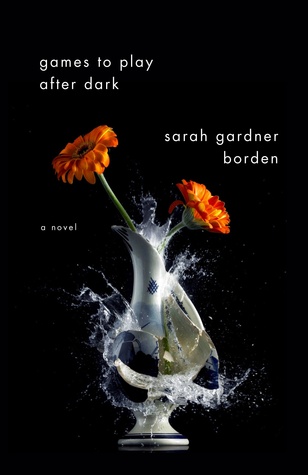
Games to Play After Dark by Sarah Gardner Borden

“It is hard to believe that Games to Play After Dark is Sarah Gardner Borden’s first novel. The topic, a marriage that falls apart, may not be the most original, the young mother who tries to combine the demands of her children and her husband and her personal needs, isn’t new but how she describes it, the details she evokes, the way she looks at what has been swept under the carpet and the bed and what is hidden in the closets is extremely well done.

Back When We were Grownups by Anne Tyler

Back When We Were Grownups is a novel about possibilities, lost dreams, second chances, family and love and ultimately about chosing the right path and belonging. I really loved this book. I liked Rebecca and many of the other characters, especially Poppy, the great-uncle. I liked how it shows that choosing a partner also means choosing a life and that maybe sometimes when we feel we are just drifting we are actually just sliding along because we are on the right path.

The Fish Can Sing by Halldór Laxness

Have you ever read a book and caught yourself smiling almost all the time? The Fish Can Sing is so charming I couldn’t help doing it. It’s also quite funny at times and certainly very intriguing. I’m afraid I can’t really put into words how different it is. As a matter of fact, Halldór Laxness’ book is so unusual and special that I have to invent a new genre for it. This is officially the first time that I have read something that I would call mythical realism.

The Square Persiommon by Takashi Atoda

I think the most intense reading experience is one that connects you to your own soul, that triggers something in you and lingers. Atoda’s stories even made me dream at night. I almost entered an altered state of consciousness while reading them.  The Square Persimmon managed to touch the part in me where memories lie buried and dreams have their origin.

Stranger by Taichi Yamada

Strangers is an excellent ghost story but it is also so much more than just a ghost story. It’s a truly wonderful book with a haunting atmosphere, a melancholy depiction of solitude and loneliness with a surprisingly creepy ending.

Enchanted Night by Steven Millhauser

Hot summer nights have a special magic. In the middle of the night, when everyone is sleeping and only night creatures are awake, the hot still air is heavy, time seems to stand still and the world is indeed enchanted. This is the magic captured by Steven Millhauser in his beautiful and poetical novella Enchanted Night. I have never read this book before but the images, the atmosphere felt so familiar. It was a bit like looking into my own imagination.

Goldengrove by Francine Prose

Reading Francine Prose’s novel Goldengrove felt at times like holding the clothes and belongings of a dead person in my hands. While I read it, and for a long while after I finished it, I felt as if I was grieving. It’s a really sad novel but at the same time it’s a very beautiful novel. It also reminded me of the series Six Feet Under. There is something very similar in the mood and the characters. Although I absolutely loved this novel I could imagine it isn’t for everybody.

Nada by Carmen Laforet

 Nada deserves to be called a classic. However it isn’t a classic because of the plot which can be summarized in a few sentences but because of the style. This is a young writer’s book who manages to capture the intensity of living typical for the very young and passionate.

The Cat by Colette

La Chatte has a subject to which I relate but it is far more than the story of a relationship between a man and his cat. It is a subtle analysis of love versus passion, of marriage versus celibacy, of childhood and growing up, of change and permanence. The story also captures the dynamics of disenchantment following the recognition that one’s object of desire is flawed.

So Long, See You Tomorrow by William Maxwell

So Long, See You Tomorrow  is a beautiful and melancholic short novel that explores a wide range of themes like memory, the past, isolation, loneliness, friendship, jealousy and violence. The central theme is that of the omission and the following regret. There are so many things left unsaid, things not done or too late in a life, that this core theme will speak to almost all of us. It’s often little things but they resonate for a long time in our lives and we might wish to turn back time and undo what has happened.

Most engrossing reads

These were the books where I never checked how many pages were left because I had finished them before even getting the chance to do so. In other words, the page-turners.

Underground Time by Delphine de Vigan

Les Heures souterraines or Underground Time is a chillingly good novel and shockingly topical. It’s accurate in its depiction of life in a corporate setting and of  life in a big city. It’s a very timely book, a book that doesn’t shy away to speak about the ugly side of  ”normal lives”.

Whatever You Love by Louise Doughty

Whatever You Love is a book of raw emotions. And that from the first moment on when we read about the police knocking on Laura’s door to inform her that her daughter Betty has been killed. Laura is a very emotional woman, she feels everything that happens to her intensely, her reactions are very physical. There are many elements in the book that made me feel uneasy.

You Deserve Nothing by Alexander Maksik

You Deserve Nothing was certainly one of the most entertaining reads this year. It offers an interesting mix of alternating and very realistic sounding voices, a Parisian setting and a wide range of themes.

A Kind of Intimacy by Jenn Asworth

I already jokingly “said” to Danielle in a comment that her top 2010 might become my top 2011 and,  yes, this book is certainly a candidate as it is astonishingly good. Very dark, absolutely fascinating, engrossing, and very well executed. While starting it I had forgotten Jenn Ashworth was compared to Ruth Rendell but the association immediately occurred to me as well.

everything and nothing by Araminta Hall

everything and nothing was one of those super fast reads, a book that I could hardly put down. Really riveting. The only complaint I have is that this is labelled as a psychological thriller. Although there is a part of it reminiscent of Ruth Rendell, it is like a background story and not really very gripping. At least not for me. Still I consider this to be a real page-turner for the simple reason that it captures chaotic family life in so much detail and explores some of the questions and problems parents who work full-time would face.

Best Books – Literature and War Readalong

How Many Miles To Babylon? by Jennifer Johnston

I loved How Many Miles to Babylon? I think it is a beautiful book. It doesn’t teach you as much about WWI as Strange Meeting (see post 1) but it says a lot about Irish history. I found this look at the first World War from an Irish perspective extremely fascinating.

The Things They Carried by Tim O’Brien

I expected The Things They Carried to be a very good book. A very good book about the war in Vietnam. What I found is not only an outstanding book about the war in Vietnam but also about the art of storytelling. I’m really impressed.

The Silent Angel by Heinrich Böll

Böll has a gift for description which is rare. And he represents a rare model of moral integrity, he is an author who wrote for those who have nothing, who tried to unmask hypocrisy and uncover everything that was fake and phony in post-war Germany. I don’t know all that many authors who are so humane.

Most touching

On the Holloway Road by Andrew Blackman. I read this novel in the summer and it’s one of a few books I haven’t reviewed. In this case because the reading caught me completely unawares. I had such an emotional reaction that I had to talk about it all the time. I still feel like reviewing it but I need some distance

Best classics

Mme de Treymes by Edith Wharton

Madame de Treymes has a Parisian setting which always appeals to me, as sentimental as this may be. It is a cruel little book and a very surprising one. All in all there is not a lot of description of the city itself, the novel rather offers an analysis of the society. It is interesting to see how Americans perceived the Parisian society and the differences in their respective values.

Hotel Savoy by Joseph Roth

Hotel Savoy has really everything. It is funny, sad, picturesque, touching and bitter-sweet and the ending is perfection. Roth describes people, the hotel and the little town with great detail. And every second sentence bears an explosive in the form of a word that shatters any illusion of an idyllic life. Roth served in WWI and never for once allows us to forget that the horror of one war and subsequent imprisonment have only just been left behind  while the next one is announcing itself already.

Grand Hôtel by Vicki Baum

Grand Hôtel is set in a luxurious hotel in Berlin between the wars. It’s walls shelter a microcosm of German society. The novel draws a panorama of the society and the times, reading it is fascinating and gives a good impression and feel for the time and the people. Vicki Baum includes a wide range of characters, the porter who waits for his wife to give birth to the first child, the aristocratic head porter Rohna, the many drivers and maids as well as some very interesting guests. Including the employees of the hotel gives the book a bit of an upstairs-downstairs feel and permits insight into the lives of the “simple people” who earn just enough not to starve.

Pedro Parámo by Juan Rulfo

It’s a powerful novel infused with the spirit of the Mexican Día de los muertos or Day of the Dead at the same time it is an allegory of oppression and freedom that comes at the highest cost. When you read Pedro Páramo it becomes obvious that “magic realism” has many faces.

Best non-fiction books

Making Toast by Roger Rosenblatt

I found Making Toast wonderful. It contains a lot of little endearing episodes like the one that gave the book its title, in which Rosenblatt states that the only thing he is really good at is making toast for the whole family in the morning. He describes how he gets up very early and, taking into consideration each family member’s taste, he produces a multitude of personalized breakfast toasts.

The Film Club by David Gilmour

The relationship between these two is unique. So much honesty, trust and friendship between a father and a son is wonderful. Not every parent has the chance to spend as much time with his kid, that is for sure, but every parent has certainly spent enchanted moments with his/her child and will be touched by this story. For us film lovers The Film Clubis  a great way to remind us how many movies there are still to discover, how many to watch again and in how many different ways we can watch them.

Howard’s End is on the Landing by Susan Hill

I can’t tell you exactly how long it took to read Howards End is on the Landing. An evening? Two? Certainly not longer. I devoured it. What is more fascinating to read than a bookish memoir? And written by a writer.

The Gifts of Imperfection by Brené Brown

Brené Brown is a researcher, specialized in topics like shame and perfectionism and analyzing how they are linked and keep us from living wholeheartedly. She is an incredibly honest and open person who is able to show her vulnerability.

Natural History of Destruction by W.G. Sebald

On the Natural History of Destruction is one of the most amazing books I have read this year. For numerous reasons. It is in line with the topic of my reading projects and readalong and contains descriptions that I have never read like this. On the other hand it gave me the opportunity to see another side of Sebald. One that I didn’t expect.

Cinderella Ate My Daughter by Peggy Orenstein

What happens when a feminist who knows exactly how things should be, gets pregnant and the child is – horror on horror – a girl? This is pretty much how Peggy Orenstein opens her entertaining, thought-provoking and occasionally quite shocking account Cinderella Ate my Daughter about what she sub-titles “Dispatches from the front-lines of the new girlie-girl culture”.

The Equality Illusion by Kat Banyard

Kat Banyard’s The Equality Illusion: The Truth about Men and Women Today takes an unflinching look at what it means to be a woman today and, due to the fact that Banyard is British, especially in the UK . Still, whether you are an Afghan woman fighting for girl’s rights of literacy or an American doctor performing late stage abortions, you have one thing in common: you lead a dangerous life and might end up being killed. Both things happened.  The first happened in Afghanistan in 2006, the second in the US in 2009. They illustrate the illusion of equality and show what a global phenomenon it is.

New Author Discoveries

These are the authors that made me think “I would like to read all of his/her books”.

Beryl Bainbridge,  William Maxwell, Jennifer Johnston, Peter Stamm, Annie Ernaux

The worst book this year

There is a lonely winner this year and it has so far not even been reviewed. I’m still determined to do so but I find adding quotes so tedious, only in this case it’s necessary to illustrate the problem I had with the book. Now you are dying to know the title, aren’t, you?

In a Hotel Garden by Gabriel Josipovici
Literature and War Readalong June 24 2011: If This is A Man aka Se questo è un uomo by Primo Levi

This month is moving very fast and the next readalong is on the 24th already. It might be good to get started if you want to join in.

Primo Levi is a writer that has been on my mind for years. I knew his story, had read about him. I have read other’s accounts of their incarceration in concentration camps. I have read excerpts of Levi’s work but never got around to read his most famous book, the autobiographical account of his incarceration in the extermination camp Auschwitz.

He was on my mind for this and because he committed suicide so late in life. Because he seems to be such a perfect example of survivor’s guilt.

I dreaded to read his account, I know it won’t be cheerful but I always wanted to read it, wanted to explore his life, to understand why he couldn’t live with the guilt of being one of a very few survivors.

Despite the sadness and the horrors he describes there is beauty in his books as he is not only a witness of dreadful times but also an accomplished writer.

Primo Levi’s book is the only nonfiction book in this readalong.

I’m reading the French translation Si c’est un homme.

Franz Kafka: Brief an den Vater – Letter to My Father (1919)

This letter is the closest that Kafka came to setting down his autobiography. He was driven to write it by his father’s opposition to his engagement with Julie Wohryzek. The marriage did not take place; the letter was not delivered.

In his preface he [the translator Howard Colyer] states that he was most concerned to reproduce the raw “venting of feelings” in the letter as well as the extraordinary “momentum of the prose.” In both these aims he succeeds. Unlike earlier, and fussier, versions, his translation catches the naked energy of the original.

Written in 1919 and published posthumously in 1952 Brief and den Vater or, in its latest English translation, Letter to My Father, is a unique piece of writing. Although decidedly a letter, Max Brod, did not include it in Kafka’s correspondence but in his other work.

Before going into details I have to say a few words about the title. Being a native German/French speaker I did read the German original but since this blog is written in English I attached the English cover.  This latest translation is called Letter to My Father while former translations were either known as  Letter to His Father or Dearest Father. The title of the German, which of course hasn’t been given by Kafka himself,  would best be translated as Letter to the Father. I think that choosing a pronoun wasn’t a good idea, be it “his” or “my”. Dearest Father isn’t satisfying either. It is the opening of the letter but it gives the wrong idea. This isn’t a nice letter by a loving son. A neutral title like the one chosen for the German original is by far the best version, closely followed by Letter to His Father. Why a translator, who claims to want to stay close to the raw venting of feelings, chooses the possessive determiner “my” eludes me.

Putting aside my reservations regarding the choice of the English title, I would really like to urge anyone interested in Kafka who hasn’t done so already to read this book. It is incredibly precious and sheds a light on many of Kafka’s novels and stories, and can show where a lot of the angst and torment came from.

Kafka was already 36 years old when he wrote this letter that he never gave or sent to his father. Five years later Kafka would be dead. The trigger for the letter was his father’s reaction to Kafka’s engagement with Julie Wohryzeck. This is the second engagement in Kafka’s life, the first to Felice Bauer was equally broken off.

In his long letter Kafka gets square with his father. He describes in detail his upbringing, analyzes his father and himself and leaves almost nothing unsaid. It would have been interesting to know how his father would have taken such a letter but judging from the descriptions he wouldn’t have been impressed.

Reading the letter was equally fascinating and painful. We understand how much Kafka was afraid of this Über-Vater who was nothing less than a preposterous tyrant. Whatever he said was the abolute truth. He never doubted himself for one second and would never tolerate any contradiction. One of his favourite methods of education was irony and crushing his children with his verbal superiority. He would abuse and swear and make them look ridiculous. All of Kafka’s friends were criticized, all of his ideas were ridiculed.

The worst was how different the two men were. Hermann Kafka was a strong, vulgar, muscular, irascible, energetic man with a very loud and overbearing voice. He loved to eat huge amounts of food and swallow them down very fast. Franz on the other hand was weak and frail, sensitive, hesitant and delicate and represented everything his father despised.

The constant bullying and criticism infused him with feelings of guilt, anxiety and insecurity. But he also realized that his father wasn’t a superior being at all. Being degraded by someone who isn’t special must have made him feel even worse. His father scolded the children when they misbehaved at the dinner table but everything he asked of them, he didn’t do.

One part I found particularly interesting was Kafka’s analysis of his father’s Judaism. He clearly saw it as what it really was, a phony way of being accepted by society. He didn’t really believe or live according to the religion, he only used it to show himself in public and to further intimidate his son.

An endless source of pain were the different ways of seeing sexuality. When barley 16, Kafka’s father urges the young man to visit brothel,s and every time he wants to get married, he tells him to go and see prostitutes instead of getting married to the next best woman.

I can imagine how painful, crushing and ultimately damaging it must have been to grow up with such an egotistical bully.

The letter is very dense and offers much more on different other topics. If you are interested in Kafka and like his work, you shouldn’t hesitate to read it. The fear of the father hasn’t often been put into such eloquent words.