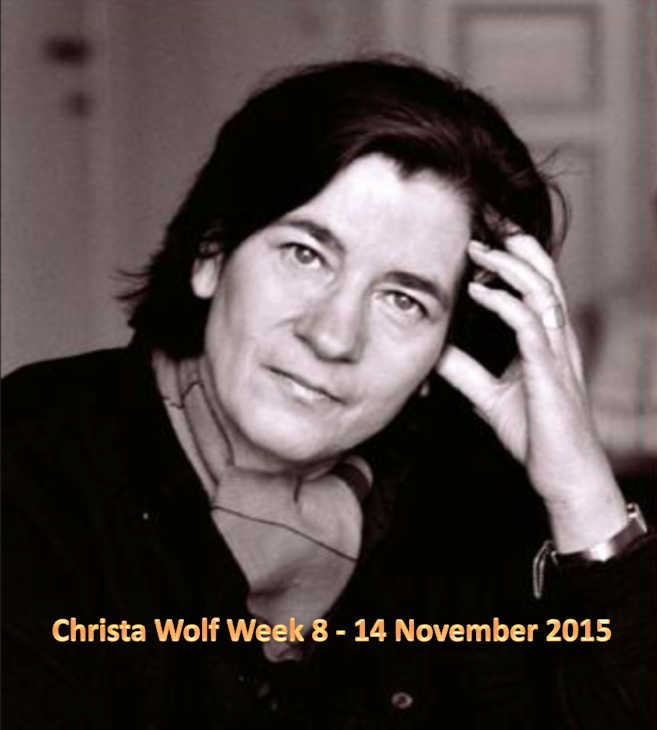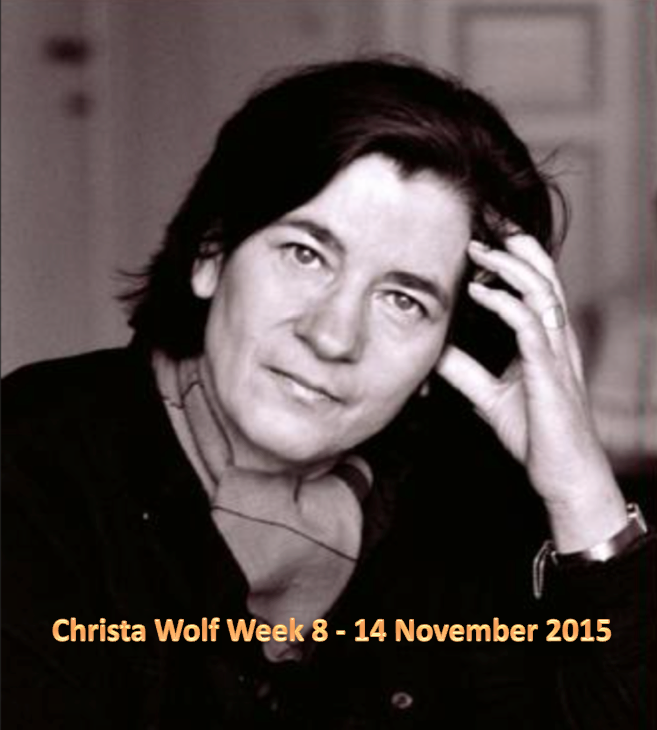
Christa Wolf Week 8 – 14 November 2015

Christa Wolf Week

Today begins Christa Wolf Week and I’ve already spotted a few posts here and there. Christa Wolf was one of the most important writers from East Germany. Huge crowds came to her readings. She was considered controversial after the unification because she never openly criticized the values of the regime. She was also accused of having been a Stasi informant. It seems however that she wasn’t collaborating the way the authorities wanted and that she was closely watched herself. Given the complexity of the subject, I’m grossly simplifying here.

I was hoping to review at least two of her books but I won’t manage much more than The Quest for Christa T., which I find beautiful, fascinating, and annoying in equal measures. It doesn’t have a lot in common with the other books I read by her and which I liked, or even loved. The first book by Wolf I read was Cassandra and I still think it’s one of her greatest books and one of the greatest retellings of a myth. I also liked They Divided the Sky because it allows us the see the former German Democratic Republic through someone’s eyes who really stood behind its ideals. The one I truly loved was No Place on Earth that tells a fictitious meeting of the writers Karoline von Günderrode and Heinrich von Kleist, who both committed suicide a few years after the imagined meeting took place.

Other books by her that are important are Medea, A Day a Year and A Model Childhood.

What are you reading this week? Do you have a favourite Christa Wolf book?
Wednesdays Are Wunderbar – German Literature Month Giveaway – August by Christa Wolf

literatur_2015_gold-2

It’s Wednesday again and you already know what that means. We’re hosting a giveaway. This week’s copies are from Seagull Books (University of Chicago Press).

Screen Shot 2015-10-27 at 17.02.56

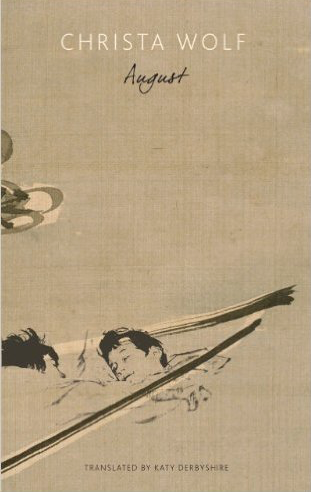
For this year’s German Literature Month I have the opportunity to give away two copies of Christa Wolf’s August, translated by Katy Derbyshire. Since I’m hosting a Christa Wolf week this year, I’m particularly pleased about this giveaway.

Christa Wolf Week

Here’s what the editor writes about August:

Christa Wolf was arguably the best-known and most influential writer in former East Germany. Having grown up during the Nazi regime, she and her family were forced to flee their home like many others, nearly starving to death in the process. Her earliest novels were controversial because they contained veiled criticisms of the Communist regime which landed her on government watch lists. Her past continued to permeate her work and her life, as she said, “You can only fight sorrow when you look it in the eye.”

August is Christa Wolf’s last piece of fiction, written in a single sitting as an anniversary gift to her husband. In it, she revisits her stay at a tuberculosis hospital in the winter of 1946, a real life event that was the inspiration for the closing scenes of her 1976 novel Patterns of Childhood. This time, however, her fictional perspective is very different. The story unfolds through the eyes of August, a young patient who has lost both his parents to the war. He adores an older girl, Lilo, a rebellious teenager who controls the wards. Sixty years later, August reflects on his life and the things that she taught him.

Written in taut, affectionate prose, August offers a new entry into Christa Wolf’s work and, incidentally, her first and only male protagonist. More than a literary artifact, this new novel is a perfectly constructed story of a quiet life well lived. For both August and Christa Wolf, the past never dies.

*******
If you are interested in winning this book, leave a comment, telling me why you’d like to read it.

The competition is open internationally. The winner will be announced on Saturday October 31 2015, around 18:00 Central European time.

Announcing German Literature Month V

literatur_2015_gold-2

I’m delighted to announce that Lizzy and I will host the 5th German Literature Month (#germanlitmonth) this coming November.


For those who have not participated before, here are the rules:


1) Whatever you read, in whichever language you read, must have originally been written in German.  Novels, novellas, short stories, plays, poems, they all count.   No genre is excluded.
2)  Enjoy yourself.  There’s no need to write long, detailed reviews (although we do like those).  A quick opinion piece, the posting of a favourite poem, the tweeting of a pertinent quote or picture of a delicious book cover (using the hash tag #germanlitmonth, of course) all contributes to a communal celebration of German-language literature.


You are free to pick what you like but for those who prefer some guidance or those who love the group-spirit of the event there are themed weeks and readalongs.


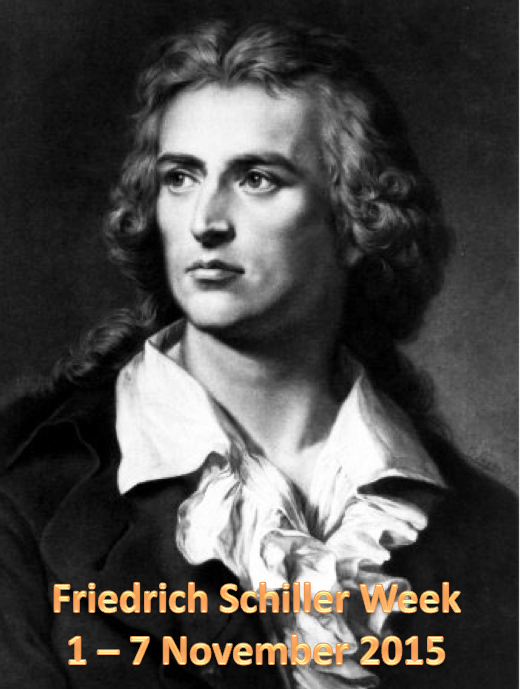
Week 1:  Nov 1-7 Schiller Reading Week. Hosted by Lizzy.


Friedrich Schiller Week


Week 2:  Nov 8-14 Christa Wolf Reading Week. Hosted by Caroline.


Christa Wolf Week


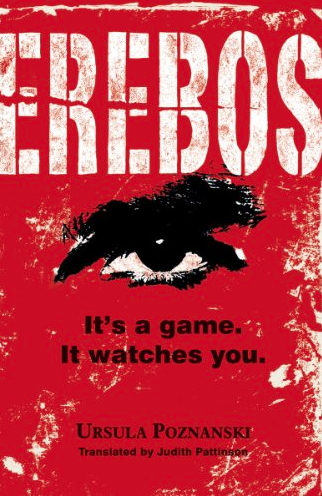
Week 3:  Nov 15-21 Ladies’ reading week incorporating a readalong of Ursula Poznanski’s award-winning YA title, Erebos on Friday 20.11.  Hosted by Lizzy.


Erebos


Here’s the blurb:
‘Enter.
Or turn back.
This is Erebos.’
Nick is given a sinister but brilliant computer game called Erebos. The game is highly addictive but asks its players to carry out actions in the real world in order to keep playing online, actions which become more and more terrifyingly manipulative. As Nick loses friends and all sense of right and wrong in the real world, he gains power and advances further towards his online goal – to become one of the Inner Circle of Erebos. But what is virtual and what is reality? How far will Nick go to achieve his goal? And what does Erebos really want?


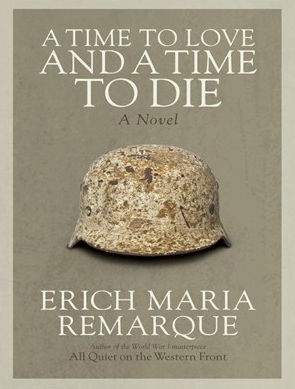
Week 4: Nov 22-28 Gents’ reading week incorporating a Literature and War readalong of Erich Maria Remarque’s A Time To Love and A Time to Die on Friday 27.11Hosted by Caroline.


A Time To Love and a Time to Die


Here’s the blurb:

From the quintessential author of wartime Germany, A Time to Love and a Time to Die echoes the harrowing insights of his masterpiece All Quiet on the Western Front.

After two years at the Russian front, Ernst Graeber finally receives three weeks’ leave. But since leaves have been canceled before, he decides not to write his parents, fearing he would just raise their hopes.

Then, when Graeber arrives home, he finds his house bombed to ruin and his parents nowhere in sight. Nobody knows if they are dead or alive. As his leave draws to a close, Graeber reaches out to Elisabeth, a childhood friend. Like him, she is imprisoned in a world she did not create. But in a time of war, love seems a world away. And sometimes, temporary comfort can lead to something unexpected and redeeming.
 
“The world has a great writer in Erich Maria Remarque. He is a craftsman of unquestionably first rank, a man who can bend language to his will. Whether he writes of men or of inanimate nature, his touch is sensitive, firm, and sure.”—The New York Times Book Review


Week 5: Nov 29-30 Read as You Please.


If you’re not sure what to read – our German Literature Month Page can help you with that.
German Literature Month IV was astounding in terms of numbers of participants (40) and quality contributions.  I’m not sure that we’ll be able to match it again, but let’s give it a shot. Are you in?

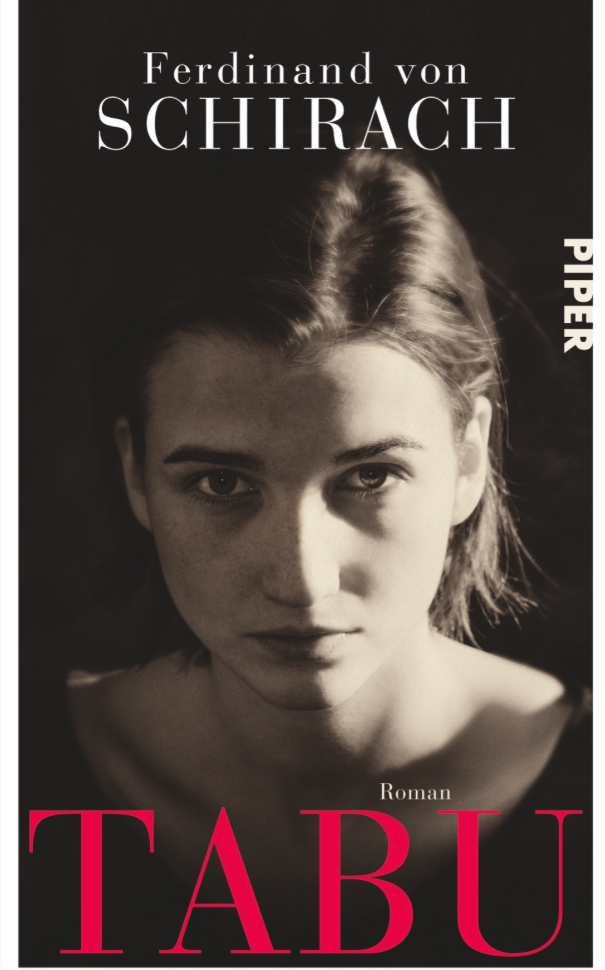
Ferdinand von Schirach: Tabu (2013) – The Girl Who Wasn’t There (2015)

Tabu

I bought Ferdinand von Schirach’s last novel The Girl Who Wasn’t There  –  Tabu (Taboo) when it came out in German, but didn’t feel like reading it until now. Meanwhile it’s available in translation and I’ve seen a few reviews on English blogs.

Since I liked his first books  Crime – Verbrechen, Guilt – Schuld, and The Collini Case – Der Fall Collini I was looking forward to The Girl Who Wasn’t There. I didn’t expect a crime novel per se, as von Schirach, even when he writes about crime, is more interested in justice and human dignity than crime-solving or reasons for committing a crime. He recently published a book of essays, which all circle around the idea of human dignity. No surprise then that Tabu wasn’t a “proper” crime novel. So, that’s not the problem I had with this book. My biggest problem was the style and that I felt he didn’t really have a story, only themes he wanted to explore.

Interestingly the reception in English-speaking countries – by professional critics and bloggers – is far more favourable than the reception in Germany. Could it be that the translation improved the text? I don’t think that’s the reason but you never know.

I like spare prose and it served von Schirach well in his first two story collections. His prose was still quite alright in The Collini Case, but it drove me up the wall in this novel. The prose isn’t only spare but clumsy. His overuse of parataxis and short main clauses just didn’t feel right. Parataxis is often used to convey a feeling of alienation. Of course, if a character, like the main character Sebastian von Eshburg, feels dead inside because his father committed suicide when he was only a kid – there must be a feeling of alienation, nonetheless, I would have hoped von Schirach would have tried to convey it in another way.

The book is divided into several parts; each has a color as its title. The longest parts tell about von Eschburg’s childhood and how he became a famous artist. Then we see a man being questioned and threatened by a police man. The next part has another narrator – defence lawyer Biegler. That part is much more lively. Biegler is a lusty, driven man. An interesting character. He accepts to defend von Eschburg, who is accused of murder, because he suspects von Eschburg has confessed a crime he might not have committed. The last parts are dedicated to the trial and its outcome.

Overall I didn’t care for this book. I’m familiar with von Schirach’s themes by now and I found the essay collection more interesting than this novel. The style, as I said, is annoying in German. Nonetheless there were parts I liked. Biegler’s chapter is great because Biegler is a great character. I also enjoyed reading about von Eschburg’s childhood because the setting von Schirach chose – the Swiss Graubünden region – brought back childhood memories.

Unfortunately I can’t say this is a must read. It has interesting elements but that wasn’t enough for me. Since some of the main topics are important – violence, the representation of sex and violence in art, sex trafficking, torture – it could still be a good choice for a book group.

A last comment on the title. The German title refers to the main theme, while the English title refers to the alleged crime.

The Girl Who Wasn't There

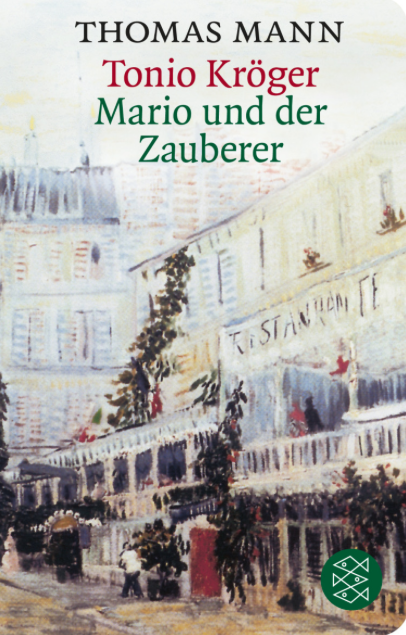
Thomas Mann: Tonio Kröger (1903)

Tonio Kröger

Tonio Kröger is considered one of Thomas Mann’s masterpieces, but only a few elements spoke to me, most of it infuriated me.  The writing is stellar, as usual, and the way he described Lübeck – the narrow alleys and gabled roofs – made me want to travel there, but the idea of the artist as tortured soul and ultimately superior was hard to stomach.

Tonio Kröger is the son of a German Consul and a Southern woman. He’s got his looks, – dark eyes and dark hair – and the name from her. From an early age on, Tonio feels he’s different, an outsider. Not only because his mother’s from the South, but because he loves books and art and feels like an artist. He first feels an intense love for blond and blue-eyed Hans and later for the blond, blue-eyed Inge. They seem to live in another sphere, a happier one, more immersed in life and what society expects from them.

Tonio wants to become a writer and finally, in his twenties, leaves Lübeck for Munich where he lives a life of debauchery, which disgusts him eventually. A long central chapter shows us Tonio discussing his views of art and life with the painter Lisaweta Iwanowna. Tonio is in his thirties now. Prematurely aged and sobered. Shortly afterwards, he departs for his hometown Lübeck. He visits his family home, which has been sold after the death of his father. One part of the stately home houses a public library. Tonio walks through the once familiar rooms. There’s nothing here for him anymore. He leaves for Denmark. At the hotel in Denmark he meets Hans and Inge again. They are married. He watches them without making himself seen. He’s less an outsider now than a spectator, still, he feels keenly that he’s different and decides to return home which isn’t Lübeck anymore.

A last letter to Lisaweta tells us he’s made peace with himself and will return to Munich for good.

The descriptions and the structure of the novella are wonderful. The way Mann captures the feeling of being an outsider is something one can easily relate to. But I didn’t like the ideas contained in the book. Tonio suffers a lot and he would like to be an ordinary person, like Hans and Inge. He would like to be blond and blue-eyed because those people have an easier, happier life. He’s tortured because he’s no conformist, but an artist. This is so dated and clichéd, it’s painful. Plus the association of blue eyes, blond hair with health and strength made me shudder. There’s also a lot of arrogance in this depiction of an artist. Yes, Tonio does suffer – or says so – , but he very obviously feels superior too.

I don’t think you have to be a tortured soul to be a great artists. Feeling like an outsider and being a non-conformist, most probably comes with it, but it doesn’t mean you have to suffer. And it most certainly doesn’t mean you are superior. I can’t accept the idea of an artist (or anyone else) as a superior person  or as “chosen”. That’s pure hubris. Tonio Kröger is filled to the brim with hubris. The suffering Tonio professes felt more like a pose than real pain.

Has anyone read Tonio Kröger? How do you feel about it?

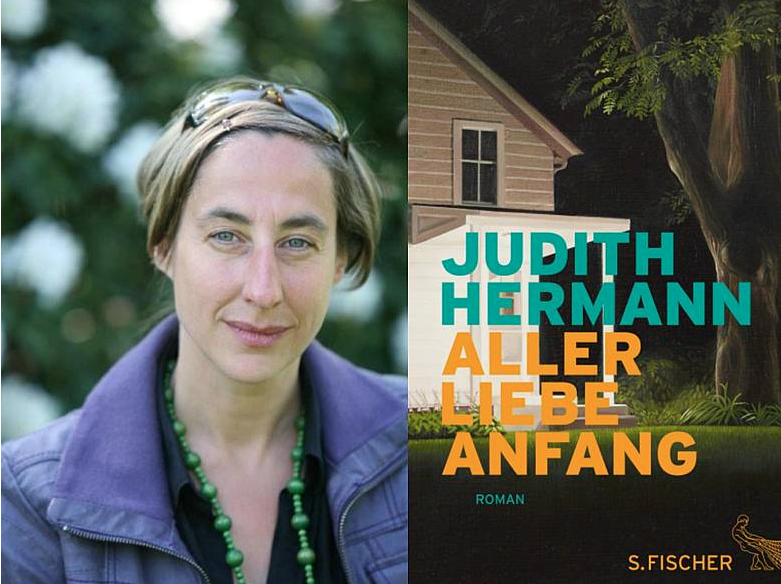
Bad Literature Doesn’t Equal Genre – On Judith Hermann’s Aller Liebe Anfang (2014)

Aller Liebe Anfang

Edo Reents, the critic of the FAZ – Frankfurter Allgemeine Zeitung – wrote about Judith Hermann’s long-awaited first novel:  “Judith Hermann has two problems. She cannot write and she has nothing to say.” – “Judith Hermann hat zwei Probleme: Sie kann nicht schreiben, und sie hat nichts zu sagen”. I wouldn’t go as far as that, but I too felt that the muses were absent while she wrote this. It’s particularly disappointing because she took a long time to write this novel. Her last book came out in 2009. You’d expect a masterpiece after five years of silence.

Edo Reents’ review wasn’t the only one I read and most critics share his opinion; they just don’t word it as a personal attack. I’m not keen on this type of exposure of an author, but there were other elements – in the reviews and the book – that were incredibly annoying.

Aller Liebe Anfang is a stalker novel. Yes, another one. It’s the choice of theme that led the critics to the most stupid analysis I’ve read in a long time. Because this is a topic often used in genre literature and because the book isn’t great, they deduce that it must be genre. Some critics even mentioned Stephen King. Now, you may like Stephen King or not, but the guy knows how to write great genre and, funny enough, if you read Aller Liebe Anfang as genre – it’s even worse. Clearly those critics just know about Stephen King, they haven’t read him or any other genre writer or they would know that plausibility and logic are key in most crime novels. Unfortunately you don’t find a lot of that in Hermann’s book. Nor do you find compelling and precise descriptions, but blurred settings and faulty imagery. The characters too are blurred and their occupations seem vague. I’ve never heard of a nurse doing people’s shopping or of a carpenter designing houses.

What’s the novel about? Stella and Jason have been married for five years. They live with their small daughter in the suburbs. Where? We don’t know. That’s another annoying trait of this book: Everything is vague. Jason is mostly gone for weeks and Stella is alone. She loves to sit in the living room, in front of a huge window, reading. She doesn’t realize that she’s probably watched all the time until one day a guy rings the door bell demanding to talk to her. She refuses and, Mister Pfister (yes, that’s his name, not Herr Pfister), insists. He returns daily, leaves messages, photos, small things in her letter box. Stella is passive at first and when she finally reacts it’s too late. Things go very wrong.

Why does she not react? Because she’s unsettled by Mister Pfister and starts to look at her own life from outside. Is this really the life she wanted? Has she ever decided what kind of life she wants or has she just been drifting?

The reflections circling around Stella’s life were well done. I also liked her prose in these sections because some of the descriptions stood out like scarecrows on an empty field. She does more telling than showing but it’s often interesting telling. She takes risks.

In spite of some good elements, this isn’t a book I would recommend. I seriously wonder what went wrong here. I have a suspicion. Judith Herman is one of a few German authors who has been highly praised and translated into English – and many other languages. This book feels as if it had been written with an international market in mind. Knowing that the US and UK market is much more interested in plot, she added a stalker element to an otherwise quiet and introspective novel. The names she chose are very telling too. Stella, Jason, Ava, Mister Pfister  – really? I haven’t come across these names in Germany very often. And then there’s the  setting. It’s deliberately vague – with a bit of imagination it could be set anywhere in the world.

I once thought that Judith Hermann was one of the most important younger writers. I still think her shot story collections are wonderful. But she isn’t a novelist and she shouldn’t add a dodgy plot to her story just because she has an international market in mind. Considering how very few German books are translated into English, I would wish, this one wouldn’t make it and leave room for something that’s really good. Sadly, without the stalker element – and maybe 100 pages shorter – this could have been another of her memorable short stories.


Michael Kumpfmüller: Die Herrlichkeit des Lebens (2011) – The Glory of Life (2014)

Die Herrlichkeit des LebensThe Glory of Life

There are two types of historical novels: those which are pure fiction and those in which real people are brought to life. I’m fond of the latter, so I was interested in Michael Kumpfmüller’s Kafka novel  Die Herrlichkeit des Lebens – The Glory of Life.

What a sad and moving book this is. The last Kafka book I’ve read was Brief and den Vater – Letter to My Father, and with that in mind, Kumpfmüller’s novel was even more moving. There’s this future giant at of German literature, who, at forty, is still afraid to face his father, to make decisions for himself, and to allow himself to live a happy, fulfilled life. And then, on a holiday with his sister, he meets Dora Diamant, a young Eastern Jewish woman who works as a cook in a holiday home for Jewish children. It’s the year 1923, Kafka has been ill for many years by then and is retired. A year later, in 1924, he will be dead.

Dora Diamant falls in love with him instantly. She loves this sensitive, delicate man. He too, falls in love. She’s good for him and for the first time in his life he makes plans for the future. They want to live together in Berlin. He will not return to his family home in Prague. It takes a lot of courage for him to oppose his parents, but they finally give in. Of course, they don’t know that he will live with Dora.

The months in Berlin are some of the happiest in Kafrka’s life, but they are difficult too. Kafka and Dora are not married and landlords aren’t keen on having them in their house. And there’s the hyperinflation. Money’s devalued constantly. Life in Berlin is incredibly expensive. The winter is harsh and the apartments are cold. It doesn’t take a lot for a frail man like Kafka to fall ill again. This time it will be fatal.

The book tells us how he has to return to Prague, from there to a sanatorium in Austria, and to another one, near Vienna. Dora follows him eventually. Kafka’s parents have accepted her. Possibly they sense it’s the end anyway.

It’s incredibly sad to read how Kafka suffered. How painful it was to write his final short stories, but it’s also interesting to read about some of those stories and what they meant. In his last year, for the first time, he stood up against his father; for the first time he’s almost free. Too late though. He dies in June 1924, after long and intense suffering.

Kumpfmüller alternates between Dora’s and Kafka’s point of view which enlarges the book. The dialogue is rendered in indirect speech which is the only way this could have been done. Anything else would have been tacky. Besides, he had to invent most. The notebooks and letters of Kafka’s last years are lost. Dora took them and in 1933 they were confiscated by the Nazis.

I never pictured Kafka to be a ladies’ man nor that there was a true joy of life hidden in him. It’s horrible to see to what extent his father crushed him.

Anyone interested in Kafka should read this. Preferably, in parallel with some of his short stories and The Letter to My Father.