German Literature Month – Effi Briest Group Read Week I

This is the first week of our Effi Briest Group Read. The questions have been provided by Lizzy (here is her post).

I’ve read Effi Briest before and liked it a lot. I was eager to find out what I would think of it this time. Out of the three tragic heroines – Mme Bovary – Anna Karenina and Effi Briest – she was always my favourite. I’m glad to discover a book that I like even more than the first time I read it and a heroine that touches me even more deeply. This is strange as I have nothing in common with Effi. And it is also interesting as once more it shows that there is no such thing as a spoiler in literature. On the very contrary, to know the outcome gives you a chance to pay more attention to other things than plot.

1: Welcome to the 1st German Literature Month Readalong!  Had you heard of Theodor Fontane and Effi Briest before now?  What enticed you to readalong with us?

I think I will skip this question.

2:  Which edition/translation are you using and how is it reading?

I’m reading a German paperback edition. It has an appendix of 100 pages but I didn’t read them this time around.

3:  Is the novel living up to your expectations?

As I wrote in the intro, I read this before and liked it a lot. For me to re-read a book it needs some very specific elements. Liking isn’t one of them. I didn’t “like” Mme Bovary but I read it three times. I did however like Effi Briest but it’s also a very subtle novel, a novel from a mature author, one of the best of German literature, it offers a lot, still, re-reading is the ultimate test. And it passed the test. It’s as wonderful as the first time or even better. I was much more attentive than when I read it 6 or 7 years ago.

4:  What do you make of Effi Briest and Baron von Innstetten.   What motivates them?  What do you make of their match?

It has been said that Effi was very much the product of her upbringing. I tought this is obvious in the way she speaks about this marriage. I think she is very estranged from herself and doesn’t really know what she wants for herself, although, she has an idea. She isn’t an intellectual, she knows as much. Effi isn’t a contemplative heroine who likes to read and brood, this is a lively young girl who likes entertainment and fun, yet society and her family want her to be successful and successful means attract a successful husband. As she says “Anyone is the right one as long as he is aristocratic, has a high position and is looking good”. I wasn’t sure what to think of Instetten at first. I thought for a while that he wasn’t so bad but he is very condescending. There are these little remarks about Effi’s intellect that are extremely hurtful. He belittles her constantly, even when he pays her a compliment it’s a trapdoor.

5:  How are you reacting to Effi’s parents?

“Das ist ein zu weites Feld” or “This is a vast field” (I don’t know how it is translated) is the pet sentence of Effi’s father. He uses this sentence constantly all through the novel and I think a person like this in real life would drive me up the wall. He avoids every conversation of problematic topics but the sentence also shows that he is well aware that things are not as they seem. Of the two (mother and father), he is the more likable and also the much more understanding. It’s the mother I  have a real problem with. It’s this attitude of having your own child experience what you went through, for the sake of society, that I find revolting. She infuriates me. She knows very well that poor Effi is far too young for Instetten.

6:  Are there any secondary characters to whom you are particularly drawn?  Any to whom you are adverse?

I love Frau Kruse and the black chicken and Gieshübler is an interesting person. He is the antithesis for me to all the other characters, someone who stayed good despite adversity and doesn’t pass on the bad things he may have experienced.

7: Effi Briest was originally serialised in 6 parts.  I’m assuming that its 36 chapters were published in 6 monthly parts of 6 chapters each and the novel so far seems to bear this out.  How does the mood of the first part (chapters 1-6) contrast with that of the second (chapters 7-12)?

The first chapters are playful and light. We meet an exuberant Effi, one who does only know good things, is sheltered and child-like. She loves the idea of getting married and climbing the social ladder. She is a bit wary of Kessin, as there might not be a lot of entertainment but she is still looking forward to it. Once she is there that changes rapidly and she feels like an animal in a cage.

8:  We finished our first reading at the end of chapter 15 or the middle of part 3.  Where is Effi in terms of her psychological development and how does this bode for the future?

I think that she has to a certain extent realized that she made a mistake but she hopes for a change through her child.

Please leave a link to your post in the comments section or in the Mr. Linky. (To see the participants, you have to click on Mr Linky. It’s Mr. Linky for wordpress – meaning NOT sophisticated)

W.G. Sebald: On the Natural History of Destruction – Luftkrieg und Literatur (1999)

During World War Two, 131 German cities and towns were targeted by Allied bombs, a good number almost entirely flattened. Six hundred thousand German civilians died a figure twice that of all American war casualties. Seven and a half million Germans were left homeless. Given the astonishing scope of the devastation, W. G. Sebald asks, why does the subject occupy so little space in Germany s cultural memory? On the Natural History of Destruction probes deeply into this ominous silence.

This is one of the most amazing books I have read this year. For numerous reasons. It is in line with the topic of my reading projects and readalong and contains descriptions that I have never read like this. On the other hand it gave me the opportunity to see another side of Sebald. One that I didn’t expect. If you are familiar with his fiction, notably if you have read them in the German original, you know that he is a very challenging writer. His sentences follow a rhythm that is very much his own. He tends to use old-fashioned and also invented words. And as far as I know he is not very humorous. The two essays contained in the German original of this book, the first on the description of the destruction of the German cities in German literature  – or rather its absence – and the second on Alfred Andersch are so different from his fiction. The style is fluent, accessible and he is extremely funny. The essay on Andersch made me laugh out loud. Sebald’s analysis and description of this conceited writer is hilarious. But that essay is not the topic of my review. I’d like to focus on Sebald’s Luftkrieg und Literatur whose English title is On the Natural History of Destruction.

The book is based on Sebald’s lectures which he held at the university of Zürich in 1997. Those lectures had the impact of a bomb. What Sebald stated was outrageous and had never before been said like this and analyzed with so much detail and force.

What Sebald does in this book, and that is why it is so amazing, is showing what post-war German literature failed to do and doing it at the same time.  It is a reproach and a demonstration how it should have been done.  Some of the descriptions are not for the faint-hearted, they are quite gruesome.

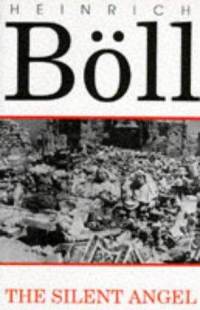
When I started to read I was puzzled at first because he wrote that hardly any German writer had tried to describe the enormity of the destruction of the German cities. I thought he was wrong in stating this but soon enough I understood why I thought so. I’ve always loved Heinrich Böll. Especially in my early twenties he was my favourite German writer and I read most of his books, one of them The Silent Angel. For some reasons I didn’t know that this book had been written in the 50s and was never published because editor and writer thought the topic was inappropriate. Together with Gert Ledig’s novel The Payback (possible choice for next year’s Literature and War Readalong), it is the only Western German book that chose the massive bombing and its aftermath as topic. Only, The Silent Angel had to wait almost 40 years for its publication.

Sebald analyzes in great depth why these were two of the few books. If I hadn’t seen the corny TV production Dresden I wouldn’t have had such a good idea about what it meant to bomb a city as radically as the German cities were bombed. That’s why I would urge you to watch Dresden (forget about the romance).

There are a few things that Sebald underlines. First how widely those cities were bombed. The RAF flew 400’000 missions dropping one million tons of bombs on 131 cities, some of which were flattened completely. 600’000 civilians lost their lives, 7’500’000 were homeless.

The second thing Sebald shows is that these are simply numbers. They seem enormous but they don’t let you experience what it meant to have been in one of those cities during the bombing or to have lived in one of them afterwards. There are accounts of this, like in the books of Nossack, but apart from that a lot of the documentation comes from foreign journalists. German writers and diarists hardly mention anything. As mentioned before, one of the rare writers who didn’t shy away from the topic was Gert Ledig. Already his first novel The Stalin Front or Die Stalinorgel depicted explicitly the atrocity of the Eastern Front. In his later work Payback aka Vergeltung he wrote in great details about the destruction. Unlike Böll’s novel, Ledig’s were published but he wasn’t republished and was finally forgotten, even excluded from the collective memory, as Sebald writes.

But what did Germany want to hush up and why?

When you bomb a city like they bombed the big German cities what follows is a huge surface fire followed by a firestorm that will make everything burst, sear and singe everything and was literally an extremely strong wind that blew even bodies away. What this heat does to a body is described by Sebald, mostly quoting Nossack, in gruesome details. What is also described is what happens later in a city full of rotting corpses. Rats will swarm the place. The stink will be insufferable and the flies unbearable.

This massive destruction and its aftermath filled the Germans with shame, according to Sebald. That’s why they didn’t want it mentioned, started to repress it. They even went as far as saying the bombing had a good side. Many of the old buildings would have needed renovating anyway, many of the factories were dated. Rebuilding was cheaper than tearing down and rebuilding afterwards. This is amazing thinking. The Wirtschaftswunder made the rest. The incredible efforts put into rebuilding and the economic growth helped the Germans forget and repress.

On the other hand, as Sebald states, it would have been rich of Germany to complain after having tried to exterminate a whole people and bringing war and destruction on everyone. As proof of this reasoning he mentions that the British never tried to repress the Blitz. It was a topic in books and documentaries and mentioned in various other forms of writing.

This urge to repress could even be seen immediately after the bombings. Sebald quotes Nossack twice on this. He describes a woman who was seen cleaning her windows. The house in which she lived was the only house in the whole neighbourhood that hadn’t been destroyed. He also saw people sitting on a balcony, drinking coffee although the house and those next to theirs were the only ones left intact.

As is usual in Sebald’s books there are a lot of photos which add another dimension to this excellent book. I think this is an absolute must-read for anyone interested in German literature, post-war Germany, the mass destruction of the German cities and the psychological mechanics of repression.

This review is part of German Literature Month – Week I – German Literature.

Don’t forget to visit Lizzy’s blog. Tomorrow she will review Alina Bronsky’s The Hottest Dishes of the Tartar Cuisine.

Wednesdays are wunderbar – Heinrich Böll Giveaway

I’m so glad that I can give away six books by Heinrich Böll, my favourite German author. The giveaway has been kindly provided by Melville House Press.

We give away 6 novels to 3 winners, 2 novels each. Please tell us which novels you would like.

Here we go (the blurbs are all from the Melville House Böll Page):

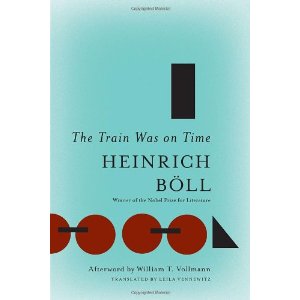
The Train was on Time

Heinrich Böll’s taut and haunting first novel tells the story of twenty-four-year-old Private Andreas as he journeys on a troop train across the German countryside to the Eastern front. Trapped, he knows that Hitler has already lost the war … yet he is suddenly galvanized by the thought that he is on the way to his death.

As the train hurtles on, he riffs through prayers and memories, talks with other soldiers about what they’ve been through, and gazes desperately out the window at his country racing away. With mounting suspense, Andreas is gripped by one thought over all: Is there a way to defy his fate?

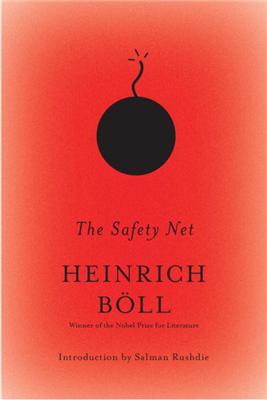
The Safety Net

Fritz Tolm has risen to the most powerful position in Germany.

With fame comes fear and vulnerability. Threats to his life are met with the all-pervasive “safety-net” of police protection and surveillance.

Trapped in a house they dare not leave, where every visitor is suspect and every object a potential bomb, Tolm and his family wait to discover when and how terrorism will overtake them.

Group Portrait with Lady

Cited by the Nobel Prize committee as the “crown” of Heinrich Böll’s work, the gripping story of Group Portrait With Lady unspools like a suspenseful documentary. Via a series of tense interviews, an unnamed narrator uncovers the story—past and present—of one of Böll’s most intriguing characters, the enigmatic Leni Pfeiffer, a struggling war widow.

At the center of her struggle is her effort to prevent the demolition of her Cologne apartment building, a fight in which she is joined by a motley group of neighbors. Along with her illegitimate son, Lev, she becomes the nexus of a countercultural group rebelling against Germany’s dehumanizing past under the Nazis … and what looks to be an equally dehumanizing future under capitalism.

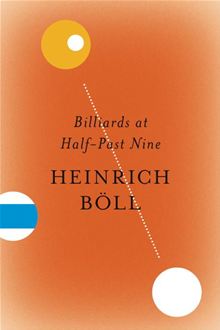
Billards at Half-Past Nine

Heinrich Böll’s well-known opposition to fascism and war informs this moving story of a single day in the life of traumatized soldier Robert Faehmel, scion of a family of successful Cologne architects, as he struggles to return to ordinary life after the Second World War. An encounter with a war-time nemesis, now a power in the reconstruction of Germay, forces him to confront private memories and the wounds of Germany’s defeat in the two World Wars.

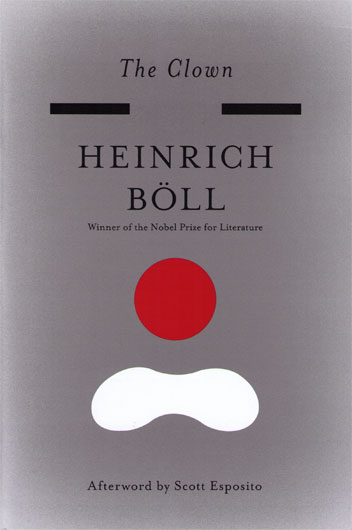
The Clown

Acclaimed entertainer Hans Schnier collapses when his beloved Marie leaves him because he won’t marry her within the Catholic Church.

The desertion triggers a searing re-examination of his life — the loss of his sister during the war, the demands of his millionaire father, and the hypocrisies of hs mother, who first fought to “save” Germany from the Jews, then worked for “reconciliation” afterwards.

Heinrich Böll’s gripping consideration of how to overcome guilted and live up to idealism — how to find something to believe in — gives stirring evidence of why he was such an unwelcome presence in post-War German consciousness … and why he was such a necessary one.

Irish Journal

When Heinrich Böll traveled with his wife to Ireland in the early 1950′s, he was immediately enchanted by the landscape and the people. Reveling in respite from a Europe still recovering from war, he was captivated by what he saw as a friendly and classless society that took life at a more leisurely pace. He was delighted, for example, by the Irish saying that explained why the trains were always late: “When God made time he made plenty of it.” Böll would return again and again.

In this unique entry in his oeuvre, Böll documents his eccentric travels around the Emerald Isle, detailing its charm in a way that gives his own habit of studying character and paradox, not mention national identity, a beguiling twist. The result, here presented with an epilogue written years later with Böll’s observation of changes since his first visit, is a reflection on the essence of a place and its people that is, indeed, evergreen.

*********

If you are interested in two or more of these books, tell me which ones you would like. The only condition is that you tell us about a favourite German book or author or – if you only get started – tell us what books you plan on discovering, which authors or books tempt you.

The giveaway is part of German Literature Month.

Also visit What to drink while reading Heinrich Böll on the Melville House Blog.

The giveaway is open internationally, the books will be shipped by the editor. The winners will be announced on Sunday 6 November 18.00 – European – (Zürich) time.

Initiating German Literature Month or 14 German Women Writers You Shouldn’t Miss

Welcome to German Literature Month or Herzlich Willkommen zum Monat der deutschsprachigen Literatur 

I thought it might be a good idea to start German Literature Month with a post that I had promised to write on some of the most important women writers of German language. German literature is often perceived as being dominated by men.

As you know the first week of German Literature Month is dedicated to German literature. The second will be focussing on crime novels, the third on Austrian and Swiss writers, week number four is Kleist and/or classics week and during the last days of the event you can do as you please. Maybe those who don’t know what to read yet, will find something in the list below.

I’m reading an excellent anthology right now which is called Wenn die Worte fliegen  (When words take flight). The book is out of print but cheap used copies can be ordered. It’s a compilation of 30 German women writers and poets. Some of them have written books I like a lot. I was quite excited and thought it would be great to pick 20 of them and introduce their writing but when I started looking them up, I saw that it was pointless. Not even 50% of them have been translated. Maybe some of you would have been interested anyway, especially those who read German, but for the others it’s a bit pointless. The book focuses mainly on writers of the 20th century and that is no coincidence. There are not a lot of women writers before that.

Finally I decided to introduce 11 writers who have been translated into English – with the exception of Lena Christ and Brigitte Reimann – and to add three earlier authors.

When I was reading the compilation I found it interesting to see how the topic’s change. I think you can find four main currents. Before WWII – war literature – post-war and finally post-wall literature. We shouldn’t forget that until 1989, there were not three countries producing literature written in German, but four. The literature and authors of the Former Democratic Republic of Germany (ex DDR) are quite unique. Their choice of themes is different from the West, they are often far more political and they didn’t have the same freedom of expression. Their books circle around topics that are important for them, like living in a communist state. Their characters question their country and it’s politics, many books describe people who are tempted to leave or who leave.

Sophie von La Roche’s (Germany 1730 – 1807) Geschichte des Fräuleins von Sternheim. Von einer Freundin derselben aus Original-Papieren und andern zuverläßigen Quellen gezogen (1771)  aka The History of Lady Sophia Sternheim: Extracted by a Woman Friend of the Same is the first German novel by a woman and as such foundational. It was very successful and widely read, although, it seems, very often misunderstood. Von La Roche, who was the grandmother of Bettina and Clemens Brentano, always had an educational aim when she wrote. He writing belongs to the Enlightenment and Sentimentalist (Empfindsamkeit) movement, a precursor of romanticism.

Annette von Droste-Hülshoff ‘s (Germany 1797 – 1848) Die Judenbuche  – The Jew’s Beech (1842) is very mysterious, eerie and highly readable. It is an early crime story and has also a very Gothic feel. Droste-Hülshoff however marks the transition between romanticism and realism. When I read this book I was surprised how well-written and truly suspenseful it is. Here is an online version The Jew’s Beech.

Johanna Spyri (Switzerland 1827 – 1901). Her most famous work Heidi (1880) is also one of the most famous Swiss novels and one of the most famous children’s books. It’s the tale of the little orphan girl Heidi who has to live with her cold and distant grandfather, high in the Swiss mountains. This is a tear-jerker that has also been made into movies and TV series. It’s still widely read to children in Switzerland and Germany. I might not have included it, if it hadn’t been so difficult to find another Swiss author who has been translated. For those who read German I would like to recommend the novels of Eveline Hasler. In each one of them she explores the life of a famous woman. Her style is noteworthy and the stories are thought-provoking. Here are links to German books. Anna Göldin. Letzte Hexe, Die Wachsflügelfrau. Geschichte der Emily Kempin-Spyri.

Lena Christ (Germany 1981-1920). Lena Christ was a successful writer but is best known for her autobiographical novel Erinnerungen einer Überflüssigen (Memoir of a superfluous woman). Her books have not been translated but I found this interesting analysis of her work and the works  of authors like Asta Scheib that are based on her life: The Passion of Lena Christ. Lena Christ’s story is famous because it is so tragic. It’s the story of a toxic mother-daughter relationship that ultimately seems to have killed the daughter. Lena Christ committed suicide in 1920. Reading her book is very painful. It’s the story of a sensitive and emotional girl who was crushed by a mean domineering mother.

Anna Seghers (Germany – German Democratic Republic 1900- 1983) This is one of Germany’s most accomplished writers. Her writing during and after the war circles around Nazi Germany and the Holocaust. Seghers was Jewish and fled from Germany. She lived in the Caribbean for a while. Later she settled in the DDR and wrote novels with a distinct socialist theme. Her most famous book Das siebte Kreuz aka The Seventh Cross is a must-read. One of the best books on Nazi Germany. Her short-stories are outstanding as well.

Irmgard Keun (Germany 1905 – 1982). Irmgard Keun’s novels are as interesting as her life. She entered the literary scene early with The Artificial Silk Girl that was a huge success (not her first novel but her biggest success). When the Nazi’s came to power her books were banned and she fled from Germany. After Midnight captures the mood of pre-war Germany like no other. Prone to drinking and self-delusion she often spent long stretches in psychiatric hospitals. The last twenty years of her life she didn’t write anymore and just vegetated in a home. I love the voices of her heroines who capture the pre-war atmosphere and uncover the most terrible things with utter naiveté.
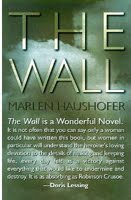
Marlen Haushofer (Austria 1920-1970) has written a few novels but the one that really stands out is The Wall. I have read this book a long time ago but it is still haunting me. This is such a powerful story and I would like to recommend it to all of you who haven’t read it yet. It’s been called dystopian or feminist ecological and whatever not. All wrong. This is an absolutely uncanny look into the frailty of human existence. The protagonist wakes up one morning to find herself totally isolated from any other human being and separated from the rest of the world by an invisible wall. She struggles hard to survive. She isn’t completely alone, she has her animals, one of them a dog. It’s fascinating to see how resourceful she is and after a while her life seems almost normal until the day she senses someone else’s presence…

Ingeborg Bachmann (Austria 1926 – 1973). Bachmann is one of the most interesting German writers. There is nothing she couldn’t write marvellously well. Poems, short stories, a novel. They all contain a rare and savage beauty, something raw and refined at the same time. Her only novel Malina aka Malina (German), which is part of the Todeasartenzyklus (The Cycle of Manners of Death), contains a very uncanny element. I’m not going to reveal it but if you read it and read her biography you will see what I mean. Her books circle around death and different ways of dying. It’s eerie to know that she died a particularly strange death. She was smoking in her bed in Rome and because of the high amount of pain killers she took, she burned alive without realizing it.

Brigitte Reimann (German Democratic Republic 1933 – 1973). If I had studied German literature and had to choose a research topic it would have been her. If I had studied psychology, I would have chosen her as well. Reimann was an amazing woman. She wrote a few novels that are highly engaging, although flawed. I know of no ex DDR writer who was so much in favour of her country and still managed to analyze it in-depth, to show the difficulties, the contradictions. On the other hand she was an excessive woman and an addict like no other. She had probably more lovers than any other writer ever, was married at least four times. She drank excessively and smoked too much. She was only 40 when she died of cancer. What makes her so fascinating is that she kept a diary and reading it is mind-boggling. This was such an intelligent and intellectual woman, yet she didn’t get how unfree she was, unfree through the state she lived in and through her way of life. Her life has been made into an interesting TV movie starring beautiful Martina Gedeck Hunger auf Leben (not sub-titled).
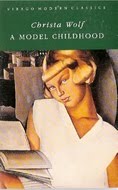
Christa Wolf (German Democratic Republic – Germany 1929 –  ). She doesn’t need a lot of introducing as she is probably one of the best know German women writers. Her oeuvre is interesting and captivating. Some of the early books are easily readable and so are her short stories. Some are complex and almost experimental. I couldn’t recommend one single book as she has written so many and in so many different styles that I would need to know someone to know which one to pick. I personally like No Place on Earth aka Kein Ort. Nirgends that explores the tragic lives of Karoline von Günderrode and Heinrich von Kleist but I would also recommend her Cassandra aka Kassandra which stunned me and her more famous ones A Model Childhood aka Kindheitsmuster and The Quest for Christa T. aka Nachdenken über Christa T.

Monika Maron (German Democratic Republic – Germany 1941 – ) Like Christa Wolf, Monika Maron was born in the former German Democratic Republic and many of the novels she wrote circle around themes related to her home country. Flugasche aka Flight of Ashes is one of the most famous ones and tells the story of a journalist uncovering the environmental pollution stemming from a coal-fired power pant. I like Maron’s later novels a lot. They all explore the inner lives of women and are very subtle and engaging. However they are not translated with the exception of Pavel’s Letters that I haven’t read yet.

Elfriede Jelinek (Austria 1946 – ) Nobel Prize winner.  The Piano Teacher aka Die Klavierspielerin is an unpleasant book. It’s fantastic but I didn’t like it. The story of the piano teacher whose dominant and dysfunctional mother crushes her and turns her into a being torn between masochism and sadism and who tries frantically to repress her own sexuality, is hard to take.
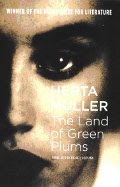
Herta Müller (Romanian born German 1953 – ) Nobel Prize winner. Being awarded the Nobel Prize seems to help you getting published. Most of Herta Müller’s books are available in English. I’m puzzled about the English titles.  The Land of Green Plums  aka Herztier (Heartanimal) The Appointment – Heute wär ich mir lieber nicht begegnet (I would have preferred not to meet myself today), The Passport aka Der Mensch ist ein grosser Fasan auf der Welt (Man is a large pheasant in the world). Herta Müller was born in Romania and her novels all explore life under a communist regime. She wrote novels, poems and essays that all deal with the aftermath of terror, violence and cruelty.

Judith Herrmann (Germany 1970 – ). If you would like to read a contemporary author who has so far refrained from writing about WWII or history in general but prefers to explore her characters interior lives and how they are rooted in our contemporary society, then you should read Judith Hermann. I’ve hardly been as impressed by a collection of short stories as by her Summerhouse, later. She has since written another collection Nothing but Ghosts and a novel Alice. This is contemporary German writing at its best. Poignant and poetical.

I could add a lot of other names. Especially in the last few years there have been a lot of new voices, some of them great. Lizzy will focus more on newer books and will also review the one or the other younger author, like Alina Bronsky.

Please, don’t forget to leave a comment with a link, should you have written a post and also hop over to Lizzy who starts German Literature Month with The Magic Mountain of German Literature.

All the posts will be compiled in the German Literature Month November 2011 Participants – Links – Giveaways Page

Literature and War Readalong November 2011 Meets German Literature Month: The Silent Angel by Heinrich Böll

I’m not sure all those who follow me for the Literature and War Readalong did notice that there was a change of title. It just didn’t feel right to read an American author depicting the Civil War during German Literature Month. This means The Killer Angels are postponed (?).

The choice for this month’s readalong is Heinrich Böll’s The Silent Angel aka Der Engel schwieg. This novel, by my favourite German writer, is a unique book. I will explore this in more detail in Thursday’s post on Sebald’s Luftkrieg und Literatur aka On the Natural History of Destruction.

Here’s the blurb for Silent Angel

The first novel by the Nobel prize winner, never previously published. Written at the end of the Second World War it describes the death and destruction faced by the people of a city ravaged by war.

The readalong is not taking place on Friday but on Saturday 26 November. Anyone who wants to participate just leave a link in the comments section of my post, I will then add it to my post. Those who have no blogs are welcome to leave longer comments or send me an e-mail with their thoughts before Saturday and I will add them to my post. Should anyone prefer questions instead of freestyle, let me know. I could send out questions but give me time until Wednesday 23 November.

Watch out for Wednesday’s giveaway…

Joseph Roth, Irmgard Keun, Christa Wolf Giveaway -The Winners

It’s my pleasure to announce this week’s winners who have been drawn by random.org list generator.

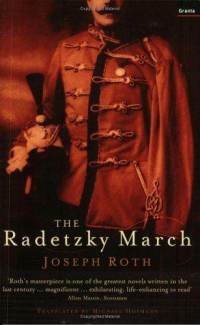
The winner of Joseph Roth’s The Radetzky March is – megan

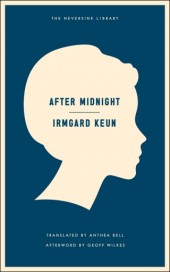
The winnder of Irmgard Keun’s After Midnight is – Susanna P. from Susie Bookworm

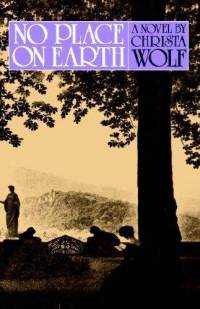
The winner of Christa Wolf’s No Place on Earth is – Litlove from Tales from the Reading Room.

Happy reading, megan, Susanna and Litlove!

Please send me your contact details via beautyisasleepingcat at gmail dot com.

The giveaways are part of Lizzy and my German Literature Month in November.

The next giveaway will take place on Wednesday 2 November.

Should anyone want to participate in the organized Effi Briest readalong, please leave a comment or sign up here and we will send you the questions for week 1. 

Wednesdays are wunderbar – Joseph Roth, Irmgard Keun and Christa Wolf (English or German) Giveaway

Today we have a different kind of giveaway. The books are personal contributions and that is why you can win them either in English or in German. The giveaway is part of Lizzy and my German Literature Month in November.

The books I selected are the following:

Joseph Roth’s The Radetzky March (1932).

The Radetzky March is one of the very great novels of 20th century literature. It’s a swan song, a melancholic depiction of the end of an era.

The Radetzky March can fairly claim to be one of the great novels of the last century. Its theme, beautifully articulated, is the end of an era. His anthem for a vanished world has the intense, fleeting beauty of a sunset’ Sunday Telegraph ‘He saw, he listened, he understood. The Radetzky March is a dark, disturbing novel of eccentric beauty… If you have yet to experience Roth, begin here, and then read everything’ Eileen Battersby, Irish Times ‘The true reading pleasure afforded by the rich environment Roth captures may well have increased over time, while the schisms at the heart of Europe continue to fascinate. It seems that we are rediscovering in twentieth-century Central European literature classics for a new millennium.”

Book number two is After Midnight (1937) by Irmgard Keun.

Keun was a very successful writer until the Nazi’s came. Her novel After Midnight and all of her other works (the most famous is The Artificial Silk Girl) were confiscated and banned. She flew from Nazi Germany together with her lover Joseph Roth. Keun is a tragic figure. In and out of psychiatric hospitals, alcoholism… Her biography is as fascinating as her novels. There is a lot of her own life in the novels too.

What I like a lot about her writing is that it seems so deceptively simple while in reality it is full of explosives. In After Midnight a young woman with the voice of a child describes the most upsetting things. It’s a lucid depiction of the ascent of Nazism and shows, like not many other novels, how and why the Nazi’s were so successful. The fact that a very simple, almost simpleminded girl tells the story makes it an uncanny read.

In 1937, German author Irmgard Keun had only recently fled Nazi Germany with her lover Joseph Roth when she wrote this slim, exquisite, and devastating book. It captures the unbearable tension, contradictions, and hysteria of pre-war Germany like no other novel. Yet even as it exposes human folly, the book exudes a hopeful humanism. It is full of humor and light, even as it describes the first moments of a nightmare. After Midnight is a masterpiece that deserves to be read and remembered anew.

The third book is Christa Wolf’s No Place on Earth (1979).

No Place on Earth is a special book for me and a special book for this event. It is my favourite Christa Wolf and its topic fits nicely into our event as it depicts an imaginary encounter between Heinrich von Kleist and the poet Karoline von Günderrode. Von Günderrode is hardly read anymore although she was very influential. She was the friend of Bettina von Arnheim (born Bettina von Brentano, sister of Clemens Brentano) who wrote a book about her which is really wonderful. Von Günderrode and von Kleist never really met but – that’s what Christa Wolf imagines – if they had…. Who knows, they might not have ended their lives. Both authors committed suicide at an early age and are seen as victims of the circumstances in which they lived. In Wolf’s novel they are given the opportunity to meet and to find that they are kindred spirits. It’s a very poetical novel and I would wish that whoever wins it will like it as much as I did.

This fictionalized account of an encounter in 1804 between the poet Karoline von Gunderrode and writer Heinrich von Kleist is pieced together from extracts of actual letters. In real life, both committed suicide some years after the events in this book.

If you would like to win one of those books, or enter for more than one, please let me know which ones you would like and why you would like to win them. Also indicate if you would like the book in English or in German. There is only one little condition – you should be a participant of German Literature Month.

The giveaway is open internationally, the books will be shipped by amazon or the book depository. The winners will be announced on Sunday 30 October 18.00 – European – (Zürich) time.