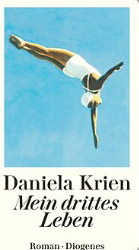
Daniela Krien’s My Third Life (Mein drittes Leben)

German author Daniela Krien who was born in the former G.D.R. published her first novel We Will Tell Each Other Everything (Wir werden uns alles erzählen) in 2011. Long before Kairos she told the story of a passionate love story between a very young woman and a much older man during the final months of the DDR. I found the book a little mawkish but not bad at all, especially in the parts that introduced us to a world that had already been long gone by then. Sure, Erpenbeck is the better writer but if I had to pick one of the two, I’d say I liked Krien’s novel better.

Since then, she’s published four more novels, two of which were translated – The Fire and Love in Case of Emergency (aka Love in Five Acts). While I got the latter on my piles, I haven’t read the others. When I was at the bookshop the other week, I discovered her latest Mein drittes Leben. It hasn’t been translated yet but given the success of some of her other books in translation, I wouldn’t be surprised if a UK or US publisher picked it up.

The book begins after Linda has moved away from Leipzig to the country, while her husband stayed in their flat in Leipzig. They aren’t divorced, nor are they theoretically separated but Linda needs some time on her own. The village and the house she’s staying in aren’t very appealing. But Linda doesn’t care. She’s looking after the chicken of the former owner and her dog and that’s all she seems to need. Her husband, Richard, visits her every other week and she makes a few friends, but mostly she stays on her own.

Bit by bit the reader discovers that Linda once had what she would have called the perfect life: a kind daughter, a husband she’s still in love with after almost twenty years, and a job as a curator of an art foundation that gave her a great deal of satisfaction. But then a tragedy happens. Her seventeen-year-old daughter is run over by a lorry. Linda and Richard grieve deeply but while Richard gets better, Linda doesn’t. On the contrary. It seems to get worse. When she’s diagnosed with cancer on top of that, she knows she can’t go on like before. Once the chemo is over, she moves.

I’ve read a few books about grief, fiction and nonfiction. Guilt is so often part of the grieving process. Here as well. Linda feels particularly guilty because her daughter did something that morning, she wouldn’t have done if Linda had told her not to. But the guilt runs much deeper and that’s where the strength of this book lies. It is tied into her motherhood and the way she became a mother. Richard had been married before and had two beautiful, intelligent children. He didn’t want another child and Linda had to fight very hard for him to give in. Once her daughter is born, Linda wants another child but Richard refuses. Years later, when he finally agrees, it’s too late. One of the things that weighs heavily on Linda’s consciences is the fact that she often compared her daughter to Richard’s first children or to other young people and found her lacking. She seemed too normal, too kind, not particularly beautiful, not fascinating.

Linda has a lot to come to terms with. Her struggles are intense. At times the reader fears she’s going to end it all. And then Richard loses patience. He’s been waiting two years and there is still no sign that Linda will return to Leipzig. The marriage ends when he meets another woman

It may sound like My Third Life is a very depressing book but it’s not. I found it engaging and enjoyable. The way Linda evolves after her marriage ends is uplifting and very relatable. Ultimately, My Third Life is much more than a story about grief, it’s also the story of a marriage. And an exploration of what makes life meaningful. I wouldn’t exactly call My Third Life great literature but it’s very readable. It would make an amazing book club read as it offers so many discussion points. How long should a person grieve? What is the right way to grieve? How do partners survive the loss of a child, especially when they don’t grieve the same way? What about friendships? How do friendships survive something like this?
 

Welcome to German Literature Month X 2020

The first of November is here and it’s finally time for German Literature Month.

As you may know from our intro posts, we have two parallel programs this year. Lizzy is reading literature from all of the German Bundesländer, while I host four author weeks, including a Literature and War readalong of a newly discovered Siegfried Lenz novel – The Turncoat– on November 27.

Week 1 – November 1-7  Sophie von La Roche week

Week 2 – November 8-14 Max Frisch week

Week 3 – November 15-21 Ingeborg Bachmann week

Week 4 – November 22-28 Siegfried Lenz week

Feel free to join us or read as you please. As long as you enjoy yourself.

Here’s the link to our dedicated GERMAN LITERATURE MONTH PAGE – please do add your reviews so we can find and read them.

Welcome to German Literature Month IX 2019

Welcome all! It’s that glorious time of the year again – a full month of Germanic literary indulgence! This is just a quick admin post as there may be newcomers who wonder how this event works.

1. Read anything you want in any language you want … as long as the material was originally written in German.

2. You can follow the themed reading schedule, or ignore it completely by reading as you please for the entire month.

3. If you’re joining in the Berlin Alexanderplatz readalong, please leave an email address to receive the readalong discussion questions.

4. Share what you are reading and what you felt about it by using the tag #germanlitmonth on your blog posts, tweets, instagram shots or booktube videos.

5. Please add a link to each review on the linky at www.germanlitmonth.blogspot.com. (This is an invaluable help when pulling together the author index at the end of the event. Check out the indices from previous years if you’re looking for something to read.)

6. Have fun!

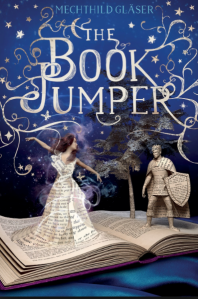
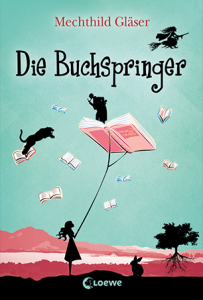
Mechthild Gläser’s The Book Jumper – Die Buchspringer – German Literature Month Readalong

The Book Jumper is a children’s book by German author Mechthild Gläser.

Amy and her mother flee Bochum to take refuge on a forgotten Shetland island. Years ago, when she was pregnant with Amy, her mother left the island just as helter-skelter as they left Bochum now. Amy never knew why. She also never knew her dad. The island, the castle, and Amy’s grandmother are all very mysterious, but not as mysterious as learning that Amy is a book jumper, like everyone in her family. Book jumping is an important ability that gets lost once people get older. Together with two other young people Amy is taught in the art of book jumping. In the beginning book jumping novices have to stick to a favourite book. In Amy’s case that’s The Jungle Book. She is told that it’s important not to stray from the path of the story or to interfere with it. The book jumpers are vital for literature because they have to make sure that the stories remain exactly as they were originally written down.

Among other things, Amy is taught that she can only jump into a book from a specific spot and when she puts the open book on her face. She realizes soon, that this isn’t a necessity for her. She can jump into any book pretty much from wherever she wants. Already on her first jump into the jungle book, she strays from her path and meets Goethe’s Werther. Together with him, she travels in the no-man’s-land between different stories or enters other novels, like Alice in Wonderland. It doesn’t take long until she realizes that there’s something wrong in the land of literature. It seems that a thief is stealing ideas and important story lines get either jumbled or lost. Together with Werther and Will, another book jumper, Amy tries to catch the thief. Unfortunately, the thief is quite dangerous. He kills a beloved literary character and, in the end, even attempts to kill Amy and her grandmother. I can’t really tell much more without spoiling the story.

When Lizzy proposed to read this, I really liked the premise of the book. The idea to jump into your favourite novels, meet favourite characters was so appealing. Sadly, this didn’t work for me. I read it pretty quickly, it had some amusing moments and characters, especially Werther, but it felt quite lifeless. Even the love story between Will and Amy, did only work at first. The solution to the story felt forced. The only thing I liked, was Amy’s back story.

The book is initially amusing, but not exactly a must-read. Something was missing. It may sound weird, but it isn’t fantastical enough. I also didn’t like that Mechthild Gläser spoils a few classic stories by giving away the ending. On top of that, the German blurb is misleading. We’re led to believe Amy will become friends with Elizabeth Bennett, but she only sees her once and very briefly. I hope others enjoyed this more than I did.

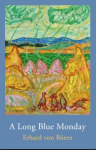
German Literature Month Giveaway – A Long Blue Monday by Erhard von Büren

I’ve got a special treat for you this week. I’m giving away one copy of Erhard von Büren’s lovely novel A Long Blue Monday.

The novel portrays, with dry humour, delicate irony and a touch of nostalgia, the lives and feelings of young people in the late 1950s.

“Erhard von Büren pours out memories of love affairs, of family life, of student experiences or incidents from his readings… His style is spiced with waywardness and wit.” – Award of the Canton Solothurn Prize for Literature.

In A Long Blue Monday, the narrator, who is temporarily away from home working on a book about Sherwood Anderson, remembers his unrequited love affair with Claudia, whom he met at college during rehearsals for a play.

How could he, the village lad, the son of a working-class family, aspire to gain the affection of Claudia, a sophisticated town girl, who lives with her wealthy family in a spacious house by the river? Worlds seem to separate the two. But he is convinced that where there’s a will there’s a way. As a young boy, he had tried, by being a model pupil and a model son, to repair his family’s damaged reputation. But now, in spite of all his attempts, his love remains unreciprocated. Finally he decides to take several weeks off college to write a play – a trilogy, no less – to gain Claudia’s esteem.


A Long Blue Monday  is also the readalong title during Swiss Literature week. The discussion takes place on November 28.

If you would like to win a copy, leave a comment below, telling me why you’d like to read it.

The giveaway is open internationally. The winner will be announced on Sunday November 11 2018, around 18:00 Central European time.

******

Thanks to Erhard von Büren and Helen Wallimann, who translated the book, for offering a copy.

Giveaway Winner Announcement- Grimm’s Fairy Tales T-shirt by Literary Book Gifts

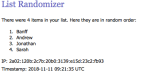
It’s Sunday and time for the winner announcement of the Grimm’s Fairy Tale T-shirt, determined with the help of random.org.

The lucky winner is Jonathan (Intermittencies of the Mind).

Congratulations, Jonathan.

Please contact me via beautyisasleepingcat at gmail dot com.

Thanks to Literary Book Gifts for co-sponsoring the T-shirt and for offering a code.