Sjöwall & Wahlöö: The Locked Room (1972) Martin Beck Series

the-locked-room

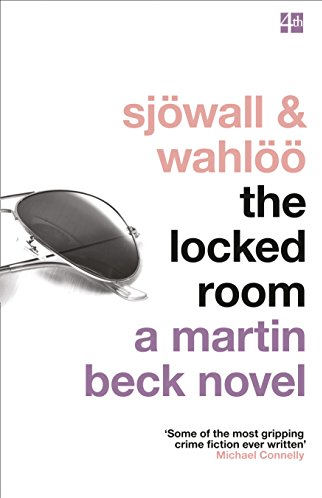
One could say that Sjöwall and Wahlöö are the grandfathers of Swedish crime. They wrote long before Nordic crime was the thing it has become. Their Martin Beck series is said to be one of the best around. A true classic. While the books have been around for as long as I can think, I never picked one up, although I have always been curious. Now, finally, because I was looking for a locked room mystery, I came across the eight title in the Martin Beck series, The Locked Room, and thought I’ll give it a try. I know it’s not ideal to start with book eight in a series but it was OK. I never felt liked I was missing a ton of information. According to Michael Connelly, who wrote the introduction to this book, it’s one of their best.

This book was not what I’ve expected. It was so much better. So good in fact that I immediately downloaded the first in the series.

Detective Inspector Martin Beck isn’t the central character in this book because he’s been shot and only just returned to work after an eighteen month break. To help him get back into the routine, he’s been assigned a minor case. A man has shot himself and Beck has to wrap up the case.

Parallel to this case, we follow the police investigating a bank robbery that has gone terribly wrong. One of the customers was shot. For years, the police have tried to catch a group of bank robbers, but they always escaped. The police are pretty sure that the robbers they are chasing, robbed this bank as well, even though they never shot anyone before.

The readers know from the beginning that someone else has robbed the bank. We also learn that the suicide Beck investigates was a murder. The man was found dead, shot, in a locked room and no weapon could be found.

These are two very different cases. The one Beck investigates is more suspenseful as we only know as much as Beck knows. The other case is rather hilarious. And this is exactly why this series surprised me so much and why I loved this book. Very obviously Sjöwall and Wahlöö were very fond of their character Beck. Beck, who is a bit of a loner, is very intelligent, a thinker, slightly sarcastic and disillusioned but not bitter. His colleagues aren’t too keen on him, they find him bizarre and too unconventional. He’s definitely an outsider. While we can feel how much the authors like Beck, we also notice quickly, how little they think of the police in general. They make fun of the bank robbery squad wherever they can. More than one of their missions turns into a farce. Some of these characters are very likeable too but dorky. Others, especially those higher up in the ranks are just clueless.

I really enjoyed the mix of such different cases. The quiet, introspective case Beck was on and the big bank robbery investigation that took surprising turns and had many funny moments.

Another aspect I liked was that the book was full of social criticism. It’s really quite harsh in places. The authors excoriate Swedish society and politics.

I know that Beck is more prominent in the earlier books, so I can’t wait to read a novel in which he gets more room. He’s a great character.

All in all, a very pleasant surprise. Sharp, pithy writing, combined with dry humour, appealing characters, a realistic setting, and two interesting cases. What more could you want?
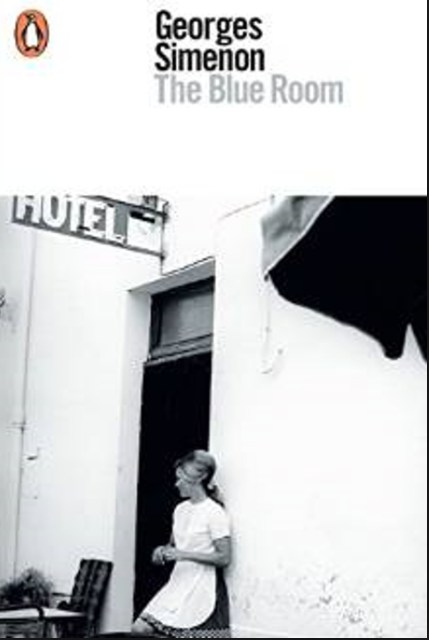
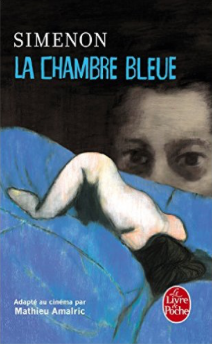
Georges Simenon: La chambre bleue – The Blue Room (1963)

The Blue RoomLa chambre bleue

While I’ve read some of Simenon’s Maigret novels, I hadn’t read any of his so-called “romans durs” until now.  Many people say they are far better than the Maigret novels and after having read The Blue Room –  La chambre bleue I think I can understand why. I can also see the influence the romans durs must have had on some newer authors like Pascal Garnier. Luckily for me, I liked Simenon’s novel much more than the Garnier novel I’ve read so far. The Blue Room is excellent.

The book starts with a scene in a hotel room – the blue room. Two people, Tony and Andrée, have just made love and he’s standing in front of a mirror, wiping away blood from his lips. The book starts in medias res, with a conversation. Andrée, who is watching Tony from the bed, is asking him, if she’s hurt him. Apparently she bit his lip. From the way she asks, we can deduce that it wasn’t as accidental as he believes. No, she probably bit him, so his wife will ask questions. What Andrée doesn’t know is that she’s not Tony’s first affair and that his wife is likely to ignore this one just like she ignored the others. Andrée then asks Tony whether he loves her and would love to spend his life with her. Tony’s not very attentive and says yes. A fatal error as the reader will find out very quickly. At the end of the scene in the hotel room, the book seamlessly switches to the examining magistrate’s chambers, where Tony is trying to defend himself in front of a psychiatrist and his lawyer.

The scene in the hotel room is a pivotal moment. From there the book moves backwards and forwards in time, unfolding Tony and Andrée’s whole story, from when they met as kids, to when they became lovers. It also switches from scenes set in the past to scenes in the present in which Tony, who has been arrested, tells his side of the story. The way Simenon has interwoven those narrative strands is pretty amazing. Nowadays, we’d have the different strands either separated by breaks between paragraphs, or chapters. Not so here, which makes it much more fluid, much more like watching a film.

Simenon’s style is hard to describe. It’s unadorned but so precise. Everything he chooses in his descriptions works masterfully. It’s like we’re looking at his characters through a microscope. The tiniest ugly little detail is laid bare.

While I don’t think his books are about suspense, it was suspenseful nonetheless because for a long time we have no clue why Tony got arrested. Nothing in the pivotal scene let’s us suspect that.

The Blue Room is a cruel, bleak analysis of a love affair that goes terribly wrong, written in evocative and pared-down prose. A great little book.

If you’d like to read a more eloquent review of the novel, here’s John Banville’s review of the Blue Room. He goes as far as comparing Simenon to Kafka.

The Blue Room has been made into a movie. I hope I can watch it soon.


This book was on the 20 under 200 list I did last summer. I must admit, I’ve been slacking. I’ve only read five or six from that list.

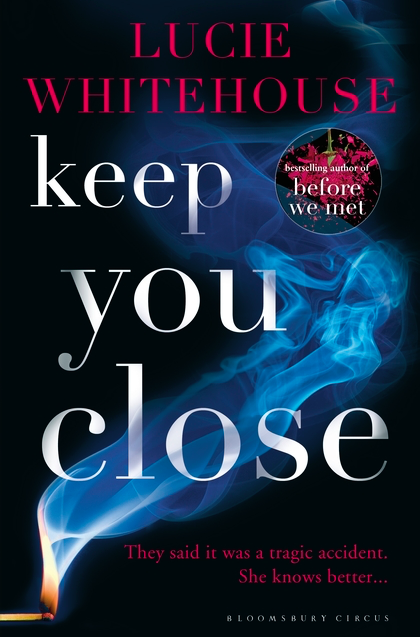
Lucie Whitehouse: Keep You Close (2016)

Keep You Close

This is just a quick review of Lucie Whitehouse’s latest novel Keep You Close. It’s short because it’s more easily spoilt than other crime novels. It has a couple of really surprising twists and it would be sad to give them away.

The famous, rich young painter Marianne Glass is found dead in her garden. The police say that it was an accident. Her former best friend Rowan Winter doesn’t believe this. Marianne suffered from crippling vertigo and would never have gone this close to edge of the roof.

When Rowan hears of her former best friend’s death, she travels to Oxford and the home of the Glass family. Marianne’s house is a place where she once used to be a constant visitor. Rowan, who lost her mother as a young girl and whose father never had time for her, found a second family in her friend’s family. Coming back after all these years is intense, to say the least. Although the circumstances are dire, the Glass family, or what is left of them, are happy to see Rowan again and even ask her to house-sit for them. Rowan however has a hidden agenda. She’s the only one who cannot belive that Marianne’s death was an accident. Could it have been a suicide? She doesn’t think so, she thinks that something far more sinister has happened and wants to investigate Marianne’s death.

Early on we find out that Rowan and Marianne hadn’t been in contact for ten years because of something that happened back then. This was right about the same time Marianne’s father died in a car crash. The official version was that they had a falling out because Rowan intruded too much and didn’t let Marianne grieve. But the reader questions soon whether Rowan isn’t hiding something.

A lot of things are mysterious. Someone seems to watch the house at night. Someone else or maybe the same person tries to break in. A lot of people seem to gain, one way or the other, through Marianne’s death. Some even attack Rowan, saying that she’s profiting as well, since she was able to renew her friendship with the Glass’s and begins a relationship with Marianne’s brother.

Keep You Close is an entertaining book but not entirely convincing. I didn’t mind the slow pace as much as the implausibility of some of the twists. One was really surprising and well done, the others were over the top. All in all, it’s not a bad book, but not as good as some of her older novels. This is her fourth and I’ve read three of them so far. I liked both The House at Midnight and Before We Met better than this. If you’ve never read anything by Lucie Whitehouse, I’d suggest to start with one of her earlier novels. I read The House at Midnight before blogging, so you won’t find a review, but here’s my review of Before We Met.


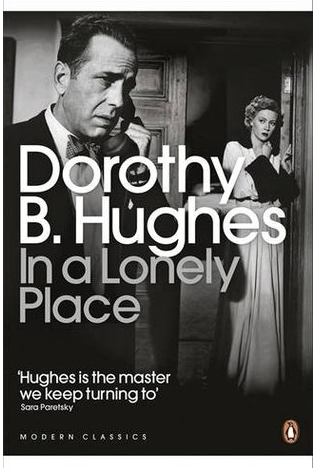
Dorothy B. Hughes: In a Lonely Place (1947)

In a Lonely Place

I came across Dorothy B. Hughes excellent noir novel In a Lonely Place in Books to Die For, a book of essays on important crime novels. Each of the articles was written by a famous crime writer. The book has been edited by John Connolly and Declan Burke. The article on In a Lonely Place was written by Megan Abbott. I’m sure I would have liked In A Lonely Place without reading Abbott’s essay but I might have missed a few things.

Books to Die For

Hughes novel is one of the first serial killer novels and inspired later works like Jim Thompson’s The Killer Inside Me. I know that many readers of this blog are averse to serial killer novels and I understand why. But this one is a very different book. There are three types of serial killer novels—those from the point of view of the victim, those from the point of view of the detectives and those from the killer’s point of view. The mainstream/bestselling novels usually fall into category one or two, while this one falls into the third category. Unfortunately, the blurb gives a very wrong impression and the reader thinks (s)he is reading a thriller-type story. That was never Hughes intention. Without the blurb it’s clear from the beginning that we’re in the head of the killer, Dix Steele. Dix is a WWII veteran who has just moved to L.A. and, on the spur of a moment, contacts Brub Nicolai, a former army buddy, who served with him in the UK, not knowing that he is a detective. An other perpetrator would have stayed away or fled, not so Dix Steele. He loves the idea of being able to follow the investigation very closely.

Here’s an early quote which doesn’t only give an idea of Dorothy B. Hughes’ writing but also of how eerie this scenario is. Brub is obviously talking to Dix.

Brub started, “Wha-” He realized Dix’s question. ” I guess it’s pretty much my fault. Ever since the thing started, I’ve been afraid for her. She’s lived in  the canyon all her life. She never had any fear, wandered all over it, any time of the day. But the canyon at night, the way the fogs come in— it’s a place for him.” His face was again angry, helplessly angry. “I’ve scared her. She’s alone so much. I never know what hours I have to keep. We have good neighbours, a couple of our best friends are right across the road. But you know our street. It’s dark and lonely and the way our house is set up there—” He broke off. “I’m the one who’s scared; I’ve infected her. And I can’t help it. I can’t pretend until we caught him.”

Megan Abbott emphasized in her essay that this is far more than a serial killer novel or an ordinary noir. The author went further than others in showing how difficult it was for veterans to return. How in many cases, they felt like their masculinity was in danger. The book is as much about gender as it is about crime. Men like Dix Steele had to reinvent themselves after the war. With the end of the war, they lost their identity.

What made me love this book is that we actually pity Dix Steele. He’s more than a little troubled and his suffering is genuine. Here’s a quote to illustrate this:

A man couldn’t live alone; he needed friends. He needed a woman, a real woman. Like Brub and Sylvia. Like that stupid Cary had that stupid Maude. Better than being alone.

It wasn’t often it hit him hard. It was the balmy night and the early dusk and the look of the lamps through opened windows and the sound of music from radios in the lighted rooms. he’d eschewed human relationship for something stronger, something a hell of a lot better.

What makes Dix Steele so tragic is that he is not only greedy and full of longing— for women he can’t have, for status, money, relationships, the “good life”— but also oddly hopeful. He believes that with the right woman everything might be different. When he sees Laurel Grey for the first time, a young  actress who is just as greedy for the good life, as he is, he genuinely believes, she might be his saviour.

I love nothing as much as atmospherical crime novels and this one might be one of the greatest in this regard. Set in L.A., it really brings the city to life and makes great use of the landscape and weather conditions. I thought that fog and mist were particular to San Francisco but reading this, I have to assume that the L.A. area (at the time?) was constantly foggy. Reading how this lonely, deranged and driven killer hunts for his prey in the fog made for great reading.

In a Lonely Place has been made into a movie starring Humphrey Bogart and Gloria Grahame. I haven’t seen it but I get the impression, the ending is very different.

Dorothy B. Hughes had an unusual writing career. She published twelve novels, three of which were made into movies, before she stopped writing in 1950. Allegedly, because she took care of her mother and her grandchildren. She died in 1993. It’s a bit sad to think that this great writer spent the last forty years of her life not writing.

Three Short Reviews – Eileen (2015) – The Loney (2014) – Saturday (2005)

Ottessa MoshfeghScreen Shot 2016-04-15 at 09.37.31Screen Shot 2016-04-15 at 10.16.27

I finished so many novels recently that I will never be able to review them all. That’s why I decided to do a post with shorter reviews. It doesn’t mean that the books weren’t as good as other books I’ve read. Just bad timing review-wise. I’ve added some blurb quotes at the beginning. Either as a contrast to what I wrote or to emphasize my opinion.

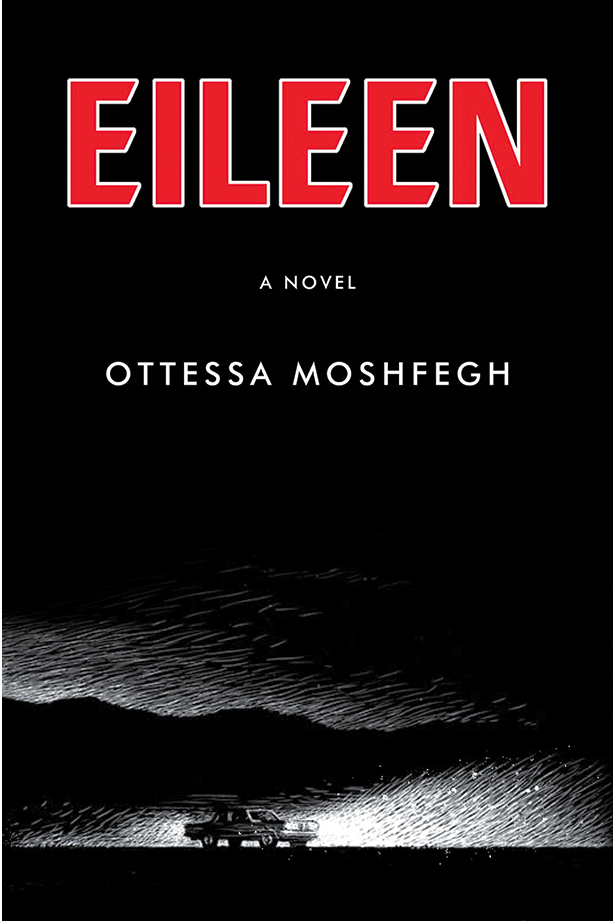
Ottessa Moshfegh

Fully lives up to the hype. A taut psychological thriller, rippled with comedy as black as a raven’s wing, Eileen is effortlessly stylish and compelling. – Robert Douglas-Fairhurst, The Times

First up is Ottessa Moshfegh’s Eileen. The tale of a crime that is instrumental in freeing the main character. Now this is a book I’m not likely to forget. The writing is so assured and strong. The voice of the narrator is original and the way the book was told worked remarkably well. The narrator, who was once called Eileen, is now an older woman, looking back at something that happened a long time ago. Back then she was an insecure woman who lived with her alcoholic father in a very dirty, sordid home and worked in a boy’s prison. When the new counselor, the glamorous Rebecca, arrives at the school, things first get very exciting for Eileen and then they get out of control. Eileen is a very unpleasant character. It’s not always a joy to be inside of her head. She has perverse fantasies and some of her hidden habits are really gross. The reasons why I enjoyed this taut noir so much, is that the older Eileen constantly adds information about her future life and because we sense that things will go wrong, we wonder how she managed, in spite of everything we are told, to have an almost normal life. I also enjoyed that it’s never really clear whether she’s totally unreliable or just completely deranged. Ottessa Moshfegh has been on my radar for a while. Many of her short stories have been highly praised. She certainly is a very assured and very talented writer. I’m really keen on reading more of her stories and hope she’ll write another novel soon

If you’d like a more detailed review here’s Guy’s post on Eileen. I discovered the book on his blog.

Screen Shot 2016-04-15 at 09.37.31

‘The Loney is not just good, it’s great. It’s an amazing piece of fiction’ Stephen King

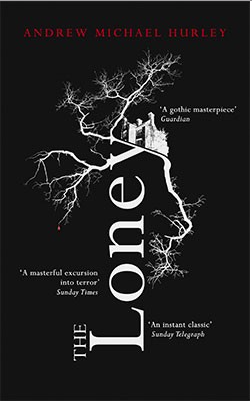
The Loney won the Costa Prize in 2015. I received the novel as a Christmas gift. I’d never heard of the book before but the person who gave it to me, knows that I like dark and gothic tales. I’m really glad that I’ve read it but not entirely sure I liked it. The atmosphere is amazing. It’s set in a bleak desolate part of England, near the coast in Lancashire. The Loney is a stretch of land that gets cut off and turns into an island during high tide. Getting lost between the land and the sea is very dangerous. The tide comes in quickly and surprisingly. The narrator is an older man. The story he tells takes place when he’s still a young boy. For a long time it’s not clear if what happens in the book is just the result of religious fanaticism or whether there is really a haunting. I found that interesting but wasn’t too keen on the ending. The story takes place during Easter. The narrator’s parents, especially the mother, are fanatics. They hope that they will be able to cure the narrator’s older brother through prayer. The mother is a really chilling charcater and sounded a lot like Jeannette Winterson’s mother.

What didn’t work so well was the subdued tone. The writing is deliberately old-fashioned, but takes, in my opinion, too much time. The atmosphere is spooky from beginning to end; the mood depressing, but there’s no real climax. It’s very well written though. I’ll keep an eye out for other books by this author. This was Andrew Michael Hurley’s first novel.

Screen Shot 2016-04-15 at 10.16.27

“A book of great moral maturity, beautifully alive to the fragility of happiness and all forms of violence… Everyone should read Saturday… Artistically, morally and politically, he excels” (The Times)

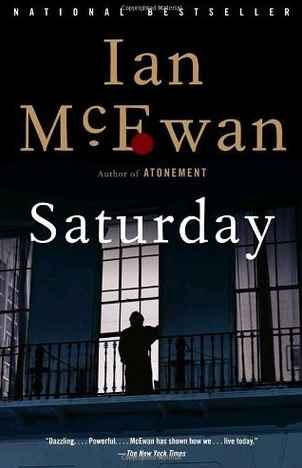
I know that a lot of people love Ian McEwan. Many even think he’s an outstanding writer. While I find him entertaining, I don’t really think he is all that good. The whole time I was reading Saturday I kept turning the pages quickly, which means I was captivated by the story, but at the same time I couldn’t help but think that this was a lot like Grey’s Anatomy in book form. Captivating but also a bit trashy. Saturday tells the story of one day in the life of neurosurgeon Henry Perowne. The details are so minute that it actually made me laugh. You can sense that McEwan did a lot of research but did he have to pack all of it into his book? I found this very heavyhanded. Almost like the novel of a beginner. Now, the neurosurgery part was actually OK. Not the most fascinating topic for me, but OK. But since he wanted to add other subjects, we get a lot of information on literature—one of Perowne’s kids is a poet, and so is his father-in-law— and information on music— his son is a musician. After a while, I felt like being invited to one of those boring dinner parties where everyone has a “great career”, reads the latest books, has seen the latest movies and talks a little bit about politics and endlessly about food. There’s even a recipe in this book. Ha! Perowne and his entourage are the kind of people I’ve seen referred to as “Champage Socialists” here in Switzerland.

At the beginning of the day, Perowne thinks he witnesses something horrible. He’s unsettled. Later, he really experiences something terrible. It all left me completely cold. I’d lost patience with the character. All in all, yes, I was entertained. In a way it felt like spying on someone or like living someone else’s life for a day. Nonetheless, I can’t say I found it great or that it’s a must read.

Have you read any of these?

Nicci French: Friday On My Mind (2015) Frieda Klein 5

Friday On My Mind

I just finished the fifth novel in Nicci French’s Frieda Klein series, Friday On My Mind. I really like this series although not all the books are equally good. Part of the appeal is that they are set in London, so, understandably I wasn’t too keen on book four, in which Frieda is returning to her childhood home and which therefore takes place mostly outside of London.

In this novel, we are back in London. It’s quite different from the other books, but I’m happy to say it’s one of the best of the series. Frieda isn’t only  looking for a perpetrator, no, she’s on the run and desperately trying to clear her name. A body has been found in the Thames. The dead man has a hospital tag with Frieda’s name around his wrist. His throat has been cut, so he’s clearly a murder victim. For various reasons, the police suspect Frieda.

Hiding in London proves to be very difficult. And dangerous. The police are hunting her and with CCTV everywhere, she might be discovered all too soon. But the danger doesn’t come from the police, it comes from the murderer who chases her as well.

As usual, Frieda does a lot of foolish things and puts herself and her friends in danger.

I really enjoyed this fifth installment. I liked the story and I like Frieda and her circle of friends who play an important role in this book.

Another aspect I enjoyed was that because Frieda was on the run, she came into contact with people who live on the margins of society and under precarious circumstances. This gave the book depth. On a side note—This is  the second UK novel I’ve read recently, in which the killing and/or abuse of homeless people plays a role. I felt tempted to google this and was shocked to find out how often this really happens. It’s appalling.

The sixth book is due in June (Saturday Requiem) but I will probably wait until it’s available in paperback.

Here are the links to the reviews of the other books in the series:

Blue Monday

Tuesday’s Gone

Waiting for Wednesday

Thursday’s Child

Matthew Frank: If I Should Die (2014)

If I Should Die

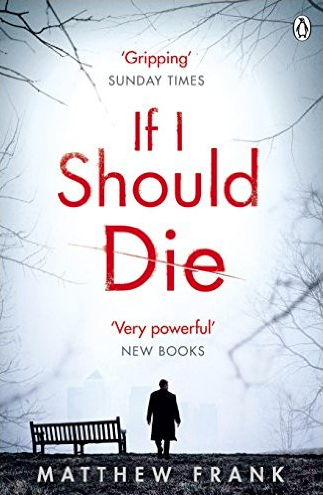
I’ve seen so many rave reviews of this crime novel, that I had to pick it up. It’s a police procedural, set in London. I’m not sure whether this is a first in a series but it’s possible. The main character is trainee detective, Joseph Stark, a twenty-five-year-old Irak and Afghan veteran, dealing with heavy PTSD. He’s still recovering from an ambush that cost the lives of his comrades and has left him scarred and wounded.

When Stark begins his work at the precinct, repeated attacks on homeless people are worrying the police. When one of the victims dies, the investigation intensifies. Things get chaotic when a homeless man confesses that he’s murdered someone. How are these attacks linked and who are the perpetrators? Only when the police find out that the homeless man is a veteran (Falkland), do they make progress, as Stark is able to communicate with him.

The book offers some interesting insight into what happened and what happens to veterans in Britain. It also explores youth gangs and homelessness. The characters are realistic and likeable. The writing’s tight, the social commentary pertinent. But – I was the wrong reader for this. The book is more than just a crime novel, it’s a character study of a young veteran with PTSD. All the reviews I read, praised that aspect, called it new and gripping. Unfortunately I couldn’t even tell you how many times I’ve come across the same character in books, movies, and TV series. Admittedly, more movies than books but nonetheless, the PTSD Afghan or Irak veteran has almost become a cliché. This novel adds nothing new. The worst parts for me were those dealing with the ambush in Afghanistan. I’ve seen too many movies dealing with this to find it of any interest. Maybe it’s unfair, but I felt I had to say this because I’m sure, there are others with my interests who might not find this part of the novel original.

So, if you’ve never watched a film about recent wars – this novel could be for you. It doesn’t only show what PTSD means, but it makes it very clear that even decorated veterans may very well end up homeless because nobody cares what happens to them once they have done their duty. I still enjoyed parts of this book because the writing is assured, the investigation and the social commentary are interesting and the characters are appealing. However, I found it was too long (460 pages). Did I find it gripping? No, but sometimes, interesting is enough.