Winners of the Giveaway of Jenn Ashworth’s Cold Light

As promised, I am announcing the winners of the giveaway today. I have used random. org’s list generator.

The two copies go to

Litlove from Tales from the Reading Room

and

Amy from The House of the Seven Tails

Congratulations.

I will contact you per e-mail or you can send me your address via e-mail.

I have read my copy already and will be posting on it soon.

Georges Simenon: Maigret et les Vieillards aka Maigret in Society (1960)

Last year I felt the urge to read some Maigret and got four books. I reviewed the first Un Noël de Maigret aka Maigret’s Christmas. I liked quite a few things about it and since they are all short, under 200 pages, I thought I might try another one.

I’m not sufficiently familiar with Simenon’s Maigret novels to know which of the two that I have read is the more typical one. All I can say is that I liked the first but I’m completely underwhelmed by the second.

In Maigret et les Vieillard aka Maigret in Society Maigret has to solve the murder of an aristocratic ex-ambassador. He has been shot four times, in his own apartment, in the middle of the night. His old servant found him towards the morning and reports the murder at the Ministry of Foreign Affairs.

Maigret has the pleasure to interview people belonging to the Parisian High Society. A breed he isn’t exactly fond of. Although – typical for Maigret – he never judges people, we still understand how much he disapproves of them and thinks they are all a bit odd.

The Count had a “lover”, a princess, who was married to someone else. For over fifty years he wrote a daily letter to the princess which she would promptly answer. They had intended to get married after the death of her husband which had just occurred before the murder.

Despite the strange habits and a few questionable things he discovers, Maigret doesn’t see a motif or find a suspect.

I’m not sure whether this is a trait of Simenon or the Maigret novels but 80% of the book consists of dialogue. The lack of description and scenes was not to my liking. I love good dialogue but it was a bit average. He got the different talking styles of the people very well but the exchange wasn’t very interesting.

All in all I cannot recommend this novel. I’m also not keen on a detective who smokes a pipe and whose homey wife stays at home waiting for him with the dinner and his slippers …

The thing that I found most interesting is the fact how the books are rooted in their time. The mentioning of the death penalty startled me at first and then I vaguely remembered that the Capital punishment existed in France until the 80s. Should you, for one reason or the other, feel nostalgic about the 60s in France, you might like this.

Since I still have two other books sitting here, my final verdict is outstanding… I already have a feeling that I will have to look somewhere else for a detective series that is really to my liking or stick to those I already know. I think I need to get back to Simenon’s romans durs. They are definitely worth reading.

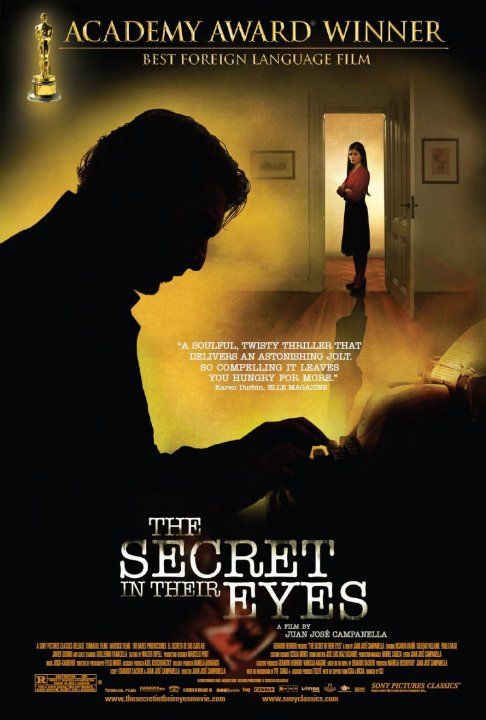
Juan José Campanella’s El Secreto de Sus Ojos / The Secret in Their Eyes (2009) An Argentinian/Spanish Thriller

Juan José Campanella’s movie El Secreto de Sus Ojos aka The Secret in Their Eyes is an unusual thriller. It’s a Argentinian/Spanish co production, based on Eduardo Sacheri’s novel El Secreto de Sus Ojos.

The story is told in an unusual way, takes many twists and turns and offers an astonishing and thought-provoking ending.

Benjamín Espósito is a retired Argentinian federal agent. He has started to write a novel about a case that happened many years ago and that took an unsatisfactory turn. Liliana Coloto, a beautiful young woman, was brutally raped and murdered in her own apartment. Although Espósito and his colleague probably found the killer, the man was let go.

Espósito writes his novel for many reasons, one of which is giving an ending to something that didn’t have one. In order to achieve this, he revisits the case and the people who were involved.

Espósito pays a visit to the former chief of the department, Irene Menéndez-Hastings and tells her about his plans to write a novel about the case. She isn’t very keen on the idea. The case and its outcome were too upsetting. And there may be other reasons why she doesn’t want to remember what happened so many years ago.

The story of the case is told in flash backs and bit by bit we see what happened, how the people involved in the investigation lived, how they got emotionally involved in the case. Espósito cares a lot about Liliana’s husband. The man is devastated by the loss and the brutality of the crime and tries to find the murderer on his own.

In a conversation between Liliana’s husband and Espósito, Liliana’s husband says that he wouldn’t want the man to be executed. Capital punishment would be much too merciful.

I liked this movie a lot, it’s very melancholic, manages to interweave different story lines and offers a few interesting themes like writing as a means to find closure,  second chances, capital punishment and justice. The characters are very complex and interesting.

The movie is mysterious for a long time but I can assure you that everything is resolved in the end, all the loose ends will be tied together.

I’m not always tempted to read a novel after having watched a movie but it in this case I’m really curious. Has any one read the Spanish original? The English translation The Secret in Their Eyes will be out soon as well.
.

Gianrico Carofiglio: Involuntary Witness aka Testimone inconsapevole (2002) First in an Italian Legal Thriller Series

A nine-year-old boy is found murdered at the bottom of a well near a popular beach resort in southern Italy. In what looks like a hopeless case for Guido Guerrieri, counsel for the defence, a Senegalese peddler is accused of the crime. Faced with small-town racism fuelled by the recent immigration from Africa, Guido attempts to exploit the esoteric workings of the Italian courts. More than a perfectly paced legal thriller, this relentless suspense novel transcends the genre. A powerful attack on racism, and a fascinating insight into the Italian judicial process, it is also an affectionate portrait of a deeply humane hero.

Former anti-Mafia prosecutor Gianrico Carofiglio is said to write some of the best legal thrillers Italy has to offer. I am not an expert when it comes to legal thrillers but  his novel Involuntary Witness, the first in the series centering on Avvocato Guido Guerrieri, is really good. Guerrieri is such a likable character and the themes of the novel are varied, spanning from racism, immigration, relationships and marriage, the meaning of life, to the Italian criminal system.

Guerrieri has recently been divorced and is very depressed. At the beginning of the novel he has panic attacks, can hardly sleep. He is a vulnerable, pensive  man who likes to read, have long discussions about books, movies and music. He loves St. Exupéry, Picnic at Hanging Rock and the music of David Gray. As a criminal lawyer he has to do some dubious things and tries to ignore whether his clients are guilty or not. After all, he is paid to get them out, no matter what they did. But Guerrieri has  a conscience that’s why he often wonders if what he does is really right. He also lives dangerously occasionally.
One of the best parts of the novel is the change Guerrieri undergoes. The person at the beginning of the novel isn’t the same as the one at the end. Just to watch him, follow him, first through his misery and later when he starts to enjoy life again, feels so realistic. I started to believe after a while that the description was based on a real person.

Guerrieri is good at his job, no doubt about it. There is always work for him. We sense that Carofiglio knows what he is writing about. The descriptions of the city and the court, the people, the lawyers, judges, policemen, prosecutors are realistic. The series is set in the Southern Italian town of Bari, an attractive location, close to the sea.

The story is rather simple. A nine year old boy is found murdered in a well. Due to some unfortunate circumstances a Senegalese immigrant is accused of the murder. The case looks hopeless as there is a lot of evidence against the man. Guerrieri isn’t even sure at first whether he should accept to defend him but he feels pity and finally accepts.

I wasn’t familiar with the subgenre of the legal thriller. At least not in book form. The focus is really on the trial and whether the accused will be sentenced or not. Guerrieri isn’t playing the role of an investigator. He thinks his client is innocent but he doesn’t try to find someone who might have done it or even find out why the child has been killed.

In Italy Carofiglio’s novels are considered to be much more than just thrillers and I can see why. The books seem to tell the story of an interesting man who happens to be a criminal lawyer and is excellent in his job, but this isn’t the most important element of the books. Guerrieri’s outlook on life, the way he sees and analyses people is far more important.

Involuntary Witness is an excellent book and I am certainly going to read the next in the series. I absolutely want to know what happens to Guerrieri and where life and love will lead him.

Do you know the series or any other legal thrillers that you like?

Louise Welsh: Naming the Bones (2010)

Knee-deep in the mud of an ancient burial ground, a winter storm raging around him, and at least one person intent on his death: how did Murray Watson end up here? His quiet life in university libraries researching the lives of writers seems a world away, and yet it is because of the mysterious writer, Archie Lunan, dead for thirty years, that Murray now finds himself scrabbling in the dirt on the remote island of Lismore. Loaded with Welsh’s trademark wit, insight and gothic charisma, this adventure novel weaves the lives of Murray and Archie together in a tale of literature, obsession and dark magic.

I read a few intriguing reviews of Louise Welsh’s books and Naming the Bones was the one that tempted me the most. Set in Glasgow, Edinburgh and on the Island of Lismore, off the West Coast of Scotland, this is a very atmospherical read. The first 150 pages or so, it did remind me a lot of Kate Atkinson but farther into the novel, this changed considerably. And that is a bit sad. The novel had the potential to be great but the denouement wasn’t to my liking and so I would say, yes, it is a very good novel but not a great one.

Murray Watson, a professor of English literature at the University of Glasgow has a passion that makes him ask for a sabbatical. Since he was a very young guy, he loved the poems of Archie Lunan. Lunan has only had one slim collection published before he died an untimely and mysterious death. Living on the Island of Lismore for a certain time, together with Christie, his girl friend, he took a boat in stormy weather and never returned.

Murray wants to write his biography, do extensive research on the poet, interview people who knew him and secretly wishes to find a few undiscovered poems. Fergus Baine, the head of the department and husband of Murray’s lover Rachel, disadvises this approach. He tells him to concentrate on the poems, not the man.

It is obvious that Naming the Bones is exploring these two approaches to literature; the biographical one and the one leaving out everything related to the life of the author.

Murray is an interesting character. We meet him at a junction in his life. He has just been dumped by Rachel and realizes that Fergus may have known all along that he had an affair with her and that he may not have been the only one whith whom she had affairs. Fergus and Rachel seem to have a very unhealthy relationship.

Murray’s father died of Alzheimer’s and Jack, his brother, who is an artist, made an installation, showing their demented father on film which infuriates Murray.

Murray is a good looking, very attractive man and his charms are the reason why all through the novel women feel attracted to him.

What reads for the first 100 and so pages like a character study and an adventure story circling around the core theme of researching a deceased poet, starts to get dismal once it seems obvious that some of the people in Murray’s life knew Archie and that there may be secrets tied to Archie’s death that are far more disturbing than the possibility that Archie committed suicide.

When the reasearch in Edinburgh and Glasgow is finished, Murray leaves for the Island of Lismore where Christie lives. She doesn’t want to give him an interview or any other information, still Murray wants to see the place where Archie lived and died.

As beautiful as the island may be, it is a lonely and desolate place. Murray’s mood seems to get darker and darker, along with the developments in the novel. It also seems as if other people looking into Archie’s life had met with an untimely death and the further we read into the novel the more uncanny it gets.

I saw the term “gothic” mentioned a few times along with this book and couldn’t understand the use at first. I love gothic books but I do not like the blend of gothic and crime/thriller because that invariably means that  a “satanistic cult” or some such thing serves as part of the background. It’s not as bad as that here but the elements are present. Lucky the outcome isn’t tied to anything supernatural or occult. What we find out at the end just shows some young people’s depravity.

As said in the beginning, this is a very atmospherical novel. I have been to Scotland and know Glasgow and Edinburgh as well as some of the islands off the West Coast and I must say they are very well rendered. It is also an extremely well written novel, the numerous main and secondary characters are without any exception interesting and complex. There is more than one theme explored in this book which gives it additional depth. Welsh tackles topics like old age, research, poetry, alternative life styles, modern relationships, death and suicide with intelligence and a great deal of insight.

All this together makes Naming the Bones a very entertaining read on an autumn or winter afternoon when the world outside is as rainy, stormy and dark as the world in the novel. If you like a gothic atmosphere, you will enjoy this a great deal.

Here’s the island’s website should you plan a trip to Scotland: Island of Lismore.

Dutch Literature Recommendations

Lost Paradise

A post on Guy’s blog His Futile Preoccupations, followed by a discussion and comments on Dutch literature inspired me to write a post on maybe not sufficiently known Dutch literature. There is maybe also an upcoming European book tour on Bookaroundthecorner’s Blog.

I did learn Dutch because I wanted to read Dutch books in the original language. It’s a funny language and very close to the Swiss German dialects therefore I can’t say it was difficult to learn for me. The structure of the sentences is very English, the words have either German or English origin. However I read most of the books in the German translation which was mostly OK. Despite having read a fair amount of books I still have a big TBR pile of Dutch books.

I tried to find as many English translations as possible but depending on the author the result is somewhat meager.

The list below consists of literary fiction and a few crime writers. The authors that deserve particular attention are Grünberg, Mulisch, de Winter, Palmen, Hermans and Nooteboom.  I have also read the crime writers. Janwillem van de Wetering’s series is very different, very enjoyable. Saskia Noort seemed rather a bit in the vein of Mary Higgins Clark. Maarten t’Hart writes crime and memoirs and is good at both. Mulisch, Nooteboom and van de Wetering should be easy to find. Many of their books have been translated.

Arnon Grünberg: Phantom Pain

Arnon Grunberg’s masterful first novel is a rare feat: a work that manages to be shocking yet not sensationalist, hip but not trendy, ironic but not cynical. Most of all it is highly affecting. Highly recommended.

Leon de Winter: Hoffman’s Hunger

Felix Hoffman’s hunger is both physical and emotional. A Dutch diplomat with a chequered career behind him, he is now Ambassador in Prague in the late 1980s; his final posting. In Kafka’s haunted city, Hoffman desperately feeds his bulimia and spends his insomniac nights studying Spinoza and revisiting the traumas of his past. A child survivor of the Holocaust, Hoffman married and had beloved twin daughters, but a double tragedy has befallen his family; one daughter died as a young girl of leukaemia, the other, who became a heroin addict, has committed suicide.This has wrecked Hoffman’s marriage and his life; he has not had one decent night’s sleep since the death of his daughter over twenty years ago, and his constant physical hunger reflects his emotional hunger for truth and understanding. When Carla, a Czech double agent, gets into Hoffman’s bed, political and emotional mayhem ensues. Hoffman’s past and his present predicament are inextricably bound up with the tormented history of Europe over the fifty years since the Second World War. Like Europe, he is at a crossroads, and the signs point to an uncertain future.

Willem Frederik Hermans: Beyond Sleep

A gripping tale of a man approaching breaking point set beyond the end of the civilised world: a modern classic of European literature.

Margriet de Moor: The Virtuoso

A novel set in 18th-century Naples. For one entire season, Carlotta sits in her candle-lit box, held in the spell of a world in which knowledge, beauty and love collide: music. She has fallen in love with the male soprano, Gasparo.

Cees Nooteboom: Lost Paradise

Nooteboom brings a subtle, playful brilliance to this exceptional story of escape, loss and identity.

Harry Mulisch: The Discovery of Heaven

On a cold night in Holland, Max Delius – a hedonistic, yet brilliant astronomer who loves fast cars, nice clothes and women – picks up Onno Quist, a cerebral chaotic philologist who cannot bear the banalities of everyday life. They are like fire and water. But when they learn they were conceived on the same day, it is clear that something extraordinary is about to happen. Their worlds become inextricably intertwined, as they embark on a life’s journey destined to change the course of human history. A magnum opus that is also a masterful thriller.

Connie Palmen: The Laws

A debut novel which won the European Novel of the Year Award about unconventional love spanning seven years. A young philosophy student Marie Deniet encounters several men: an astrologer, an epileptic, a philosopher, a priest, a physicist, an artist and a psychiatrist, and attempts to comprehend the laws these loves live by.

and The Friendship

Ara and Kit, two girls in the village school, seem to have nothing in common. Ara, the elder, is large, earthy and illiterate; Kit is lean, brainy and interested in abstractions like philosophy. After they leave school Ara cannot let Kit alone – she is drawn to her as a moth to a candle flame.

Jessica Durlacher. I couldn’t find any of her books in English but she is famous as she writes on the Holocaust and is mentioned in this book: The Holocaust Novel

Dutch crime

Janwillem van de Wetering: Outsider in Amsterdam

Piet Verboom is found dangling from a beam in the Hindist Society he ran as a restaurant-commune in a quiet Amsterdam street. Detective-Adjutant Gripstra and Sergeant de Gier of the Amsterdam police force are sent to investigate what looks like a simple suicide.
Outsider in Amsterdam is the first in the Amsterdam Cops series of internationally renowned mysteries.

Saskia Noort: The Dinner Club

On a cold winter’s night, an elegant villa goes up in flames. Evert Struyck, happily married, father of two and successful business man, dies in the fire. His wife, Babette and the children manage to escape. Babette is part of a group of five women, known as “the dinner club”, who meet regularly and whose husbands do business together. Karen, a dinner club member, takes Babette into her house after the fire, but soon discovers that the friendships in the dinner club are not as unconditional as they seem. It becomes clear that some people have benefited from Evert’s death. Within weeks another member of the club falls from the balcony of a hotel and dies. Karen starts to put the pieces together. White-collar crime, fraud and adultery are the putrefying glue that has kept the dinner club together. Not for much longer. Set in a world of affluent suburbs, flashy 4×4’s and country clubs, familiar to readers in the UK and the US, “The Dinner Club” is a psychological thriller about a group of people desperately hanging on to the outer varnish of their lives. Some of them will defend their material success at any price. Imagine “Desperate Housewives” scripted by Patricia Highsmith. That’s “The Dinner Club”

Maarten t’Hart: The Sundial

The Sundial opens with Leonie Kuyper attending the funeral of her best friend Roos Berczy. She has always felt a little overshadowed by her friend’s glamorous looks and successful career so when she discovers she is the sole heir to Roos’s estate Leonie, an impoverished translator, cannot refuse. Leonie gradually begins to assume Roos’s identity, and as questions arise about her friend’s past, her curiosity becomes piqued. Leonie’s investigations soon unearth certain suspicious circumstances surrounding Roos’s death and the culprit, alarmed by this, springs into action.

I’m planning on reading either Hoffman’s Hunger or Phantom Pain soon.

If you think of reading books in Dutch, it might also be worth trying the literature of Suriname. I have one or two books but they have not been translated.

Does anyone have other suggestions and/or know the books?

If you are interested in a Dutch read along taking place in June, please visit Iris on Books

Phantom Pain

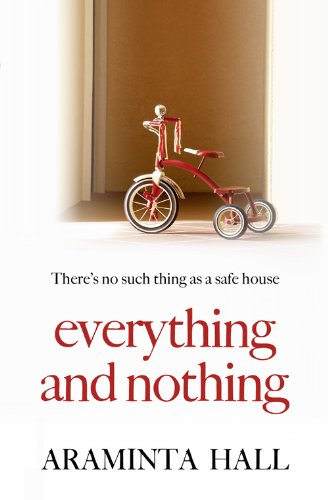
Araminta Hall: everything and nothing (2011) Social Realism and Psychological Suspense

Ruth and Christian are – just – holding their marriage together, after Christian’s disastrous affair a year ago. But chaos beckons, and when the family are suddenly left without any childcare, Agatha comes into their lives to solve all their problems. But Agatha is not as perfect as she seems and her love for the children masks a deeper secret.

I read a review of this book on Lizzy’s Literary Life and something told me I might like it. And I did. It was one of those super fast reads, a book that I could hardly put down. Really riveting. The only complaint I have is that this is labelled as a psychological thriller. Although there is a part of it reminiscent of Ruth Rendell, it is like a background story and not really very gripping. At least not for me. Still I consider this to be a real page-turner for the simple reason that it captures chaotic family life in so much detail and explores some of the questions and problems parents who work full-time would face. I often enjoy descriptions of domestic life although I don’t live anything that is even remotely comparable.

Ruth and Christian both not only work full-time but overtime many days of the week. They both have careers that seem to absorb all of their energy and when they come home in the evening they face total chaos. The place is dirty, sticky and disorderly, the little girl is screaming constantly and throws one temper tantrum after the other. The little boy, at three, still doesn’t eat properly and drinks from a bottle. The nights are nightmares too. Ruth and Christian fight and when they finally go to bed, the girl starts to scream again. She always wakes at midnight and never goes back to sleep.

At the beginning of the novel Ruth knows she isn’t capable of going on like this. She needs a new nanny. And in comes Agatha. We know from the start that something is wrong with her. She lives in daydreams and lies to her employers and to herself constantly. Something bad has happened in her past, a trauma that she cannot overcome and tries to repress with her imagination.

Family life improves considerably after she has started working for Ruth and Christian. She is super organized and makes Ruth feel deficient. To make things worse, Christian accidentally meets the woman he has had an affair with and starts seeing her for drinks.

Something bad, coming from Agatha, is lurking in the background and we know things will go very awry. But as said, this is completely toned down. I was fascinated by Ruth. Christian was not particularly interesting. Just one of those guys who thinks he has the right to have an affair when his wife is pregnant for the second time and is not that much into him during that time.  Ruth shows every sign of a severe depression and what I found interesting is the fact that this did not start right after she had the first baby but several months later. As if the bubble of enchantment that the little baby brought burst suddenly. From that moment on she struggles. I could feel the exhaustion of that woman and I know that this is very realistic. Women around me have mentioned it. If you are unlucky and have a baby that doesn’t sleep well and you need to go to work every morning… Ruth is a journalist and her work is very demanding. There is always someone waiting to jump into her position should she show signs of weakness.

I also hear the type of questioning very often that Ruth utters. Is it OK to work full-time and have children? Is it OK to have someone else looking after them? I think in the book the problem isn’t only that Ruth works full-time but that both work overtime and that she tries for too long to cope with everything else as well. She is afraid that having a nanny means defeat. And she thinks that women like Nigella Lawson are an example for the fact that it is possible to have and do it all yourself.

There is a strange fascination in seeing people at their most vulnerable, when their masks are down. That’s what made this book so riveting for me. And I think the questions it asks are very important.

I would be curious to hear from anyone who has read it.

This was Araminta Hall’s first novel. I really wouldn’t mind reading the next one too.