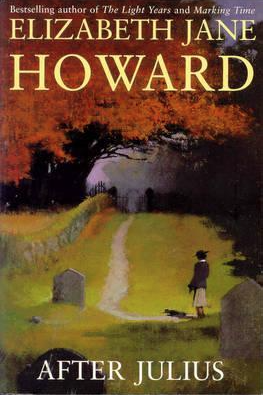
Elizabeth Jane Howard: After Julius (1965)

After Julius

It is twenty years since Julius died, but his last heroic action still affects the lives of the people he left behind. Emma, his youngest daughter, twenty-seven years old afraid of men. Cressida, her sister, a war widow, blindly searching for love in her affairs with married men. Esme, Julius’s widow, still attractive at fifty-eight, but aimlessly lost in the routine of her perfect home. Felix, Esme’s old lover, who left her when Julius died and who is still plagued by guilt for his action. And Dan, an outsider. Throughout a disastrous – and revelatory – weekend in Sussex, the influence of the dead Julius slowly emerges.

Elizabeth Jane Howard is best known for her Cazalet Chronicles, which I haven’t read yet. I don’t know where I came across After Julius, I only know I liked the premise. I’m drawn to stories that deal with the aftermath of an action. While After Julius is more complex than that, all the characters are affected by Julius’ last heroic action, which took place during WWII, twenty years before this story begins.

After Julius is divided into three parts; each part is subdivided into several chapters, each of which is told by another narrator. In lesser hands this might have turned into a fractured story, but Elizabeth Jane Howard is a very skilful writer and, while each chapter is told in a distinct voice, the whole feels seamless.

The narrators are Esme, Julius’ fifty-eight-year-old widow, Cressy, her older daughter, Emma, her younger daughter, Dan, Emma’s friend and Felix, Esme’s former lover. These five people, plus a married couple and an old Major meet for a dinner at Esme’s house in the country.

In the first part we see them all get ready for the weekend. Cressy and Emma live together in a dingy flat in London. Emma works in her late father’s publishing house, while Cressy struggles as a pianist. Like her mother, Cressy’s been a widow since the last war. She’s a great beauty, one of those that make whole rooms go quiet when she enters. A bit like Lily Bart. And, like Lily Bart, her beauty isn’t doing her any good. She attracts many, mostly married men, and all of her affairs end in drama and tears. When we meet her first she’s crying and thinking of ending it with her current lover Dick. Esme lives luxuriously in a big house in the country. Her only occupations are her garden, answering letters, planning meals and instructing the housekeeper. Dan’s a struggling poet and Felix is a doctor, who has spent most of his life abroad.

The dinner turns into a disaster for many reasons. Felix, who is Cressy’s age, was once her mother’s lover. He left her when Julius died and they haven’t seen each other in twenty years. Cressy’s lover is the husband of the woman, Esme invited for the dinner. The friend Emma brings along is an eccentric poet that she’s met only a few hours ago and invited spontaneously.

The last part of the novel shows each character after the disastrous meal.

The plot isn’t the most important thing in this book. What is amazing is how true to life these characters are. How we get to see their vulnerabilities, their disappointments, their hidden motivations. It’s a very outspoken book. Whether it lays bare the hopes of the protagonists, their sexual desires, or their life choices, it’s so honest, it’s occasionally painful to read. We forget that these are characters on paper and think we’re actually looking into someone’s soul.

It’s a beautiful book and a tragic one. We can’t help but wonder—when did things start to go wrong? While Julius’ death sets things in motion, it’s not the real beginning of the drama.

Esme is by far the most tragic character. She’s looking forward to seeing Felix again. Although he’s fourteen years younger, she hopes that there could finally be a future for them. She never assumes that he may have come for other reasons.

I found it hard to believe at times that this book was written in 1965. The open discussion of abortion and sexuality seemed far more modern. It made me wonder if we’re not living in more prudish times now.

Before ending this post I have to mention Elizabeth Jane Howard’s descriptions. They are stunning. When she describes a room, a scene, clothes, anything, she makes full use of these descriptions. It’s never just a random description but it always contributes to the understanding of a character, enhances the mood, sets the tone.

It’s still early but I wouldn’t be surprised if this book would be among my best of this year. Since she reminded me of many writers I absolutely love —Elizabeth Taylor, Rosamond Lehmann, Jean Rhys, Elizabeth Bowen — I know I’ll be reading more of her.

Do you have a favourite Elizabeth Jane Howard novel?
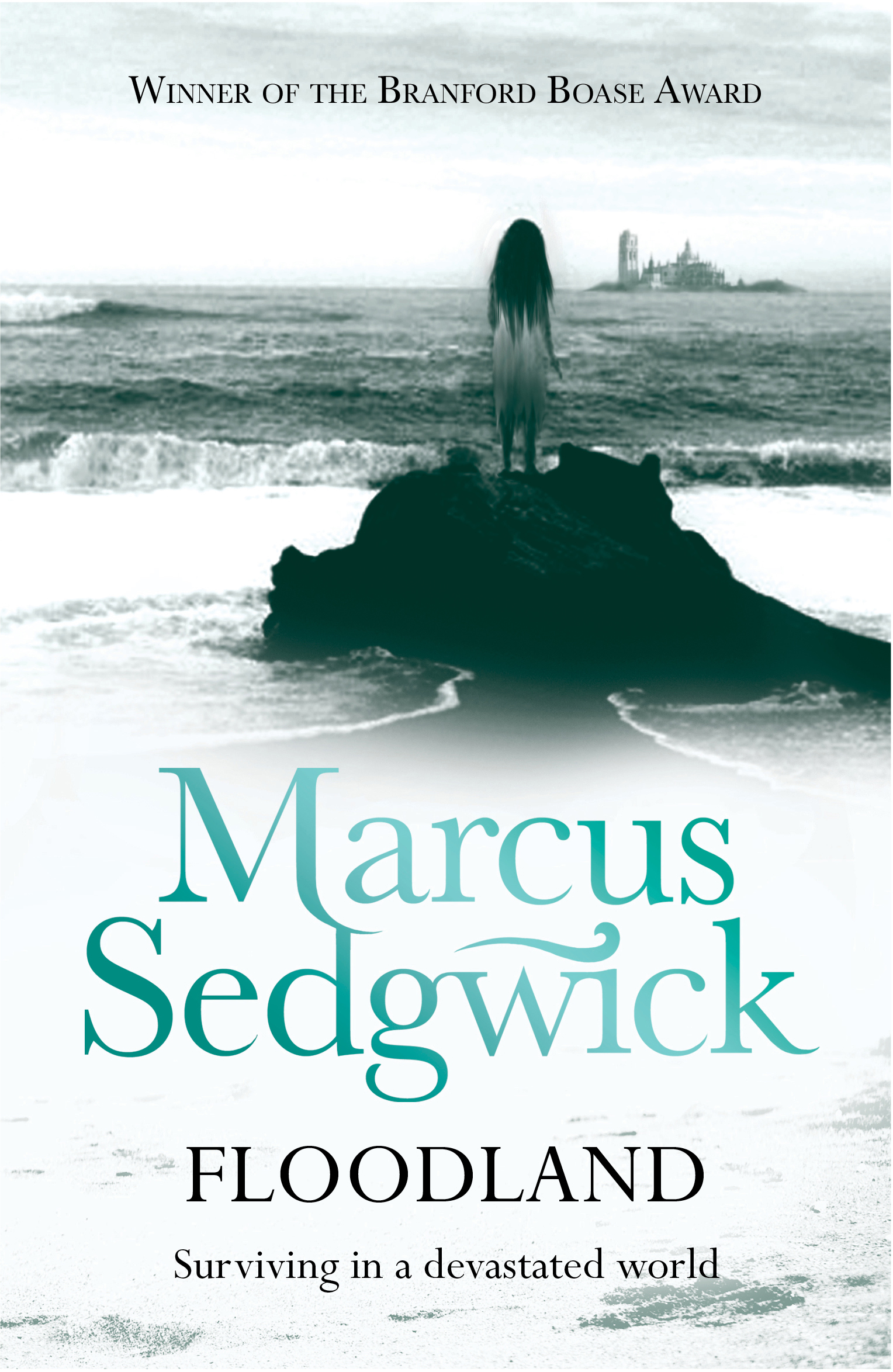
 

Marcus Sedgwick: Floodland (2000)

Floodland

Marcus Sedgwick has been on my radar for a while. I’ve seen more than one enthusiastic review of his books. He’s regularly nominated for awards and has won a few, notably the Branford Boase Award for first children’s book for Floodland. When you come to a writer who is as prolific as Marcus Sedgwick it’s hard to know where to start. Last year he even published a book for adults A Love Like Blood, that’s high on my TBR piles. I first wanted to read Midwinterblood but then decided to start with his first novel Floodland.

Floodland is set in the UK in the future. Most of the country is flooded, some of the higher regions building small islands. Food is scarce and people try to flee from the smaller islands to a larger part of the mainland. Zoe is left behind on the island of Norwich when her parents leave. During a moment of total chaos they boarded without making sure that she was really following them. Zoe’s been fighting for herself ever since. She’s a loner and most people leave her alone that’s why, when she discovers a boat, she’s able to hide it, and make it seaworthy again. One day she leaves the island, looking for the mainland. Instead of finding the mainland she’s stranded on an even smaller island than Norwich. Dooby, who is only a few years older than Zoe, is the leader of the people on that island. Food is even scarcer and so is shelter. Most people live in an old cathedral. Dooby confiscates her boat and Zoe’s forced to stay on this island on which people have turned into barbaric mobs, periodically overrun by other mobs who they torture and kill, if given a chance. Her only aim is to find her boat, flee and find the mainland and her parents.

I thought that the idea of Norwich being an island was pretty uncanny. I liked how this book was structured and divided into three parts “before”, “then” and “after”. Each part is subdivided into short chapters. At the beginning of every part and every chapter we find haunting wood carvings by Marcus Sedgwick.

Floodland is a short novel and so it may not be surprising that the writing is taut. There’s no superfluous word here. It all moves along at a steady pace and is very suspenseful.The middle part, which is the longest, was reminiscent of Lord of the Flies. It was also the part which carried the strongest message. There’s only one elderly person on that island and he makes Zoe understand how important it is to tell stories if humans want to keep their humanity.

The end felt a bit rushed but I still thought it was well done. Overall I enjoyed this adventurous story a great deal. Zoe’s a wonderful heroine and the world Marcus Sedgwick created felt realistic. There’s not too much backstory but we still understand it’s all a result of global warming. For children this may be a very emotional book because Zoe wonders until the end why her parents didn’t come back to find her. There’s one thing I didn’t like and that’s the idea that people turn into animals when they lose their humanity. I’m not keen on the dichotomy animal/human. The people in this book lose their compassion and their altruism because they are in a very precarious situation. They are cruel and depraved. That doesn’t make them animals. Animals don’t know cruelty.

If you’d like to find out more about Marcus Sedgwick here’s his website Marcus Sedgwick. It’s one of the most appealing writer’s websites I’ve come across. He also writes a blog where I found this quote that sums up his writing

I’m not a writer who tells you something five times. I usually say it just once, and if I say it any more in a first draft, my editor makes me take it out in a rewrite anyway. That’s one of the reasons that my books are sometimes shorter than other people’s. And that’s one of the reasons why I wish some people would read more slowly. Books are patient; you can afford to take your time when you’re reading for pleasure.

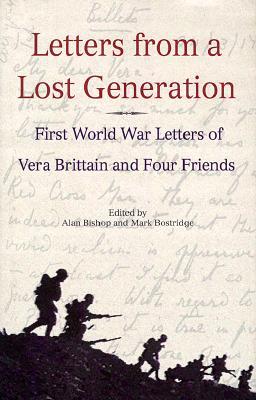
Literature and War Readalong December 29 2014: Letters From a Lost Generation by Vera Brittain and Four Friends

Letters From a Lost Generation

Letters from a Lost Generation is the book I’ve been looking forward to all year. I love reading letters and this collection has been on my radar for a long time. Vera Brittain was a nurse during WWI.

The letters have been written between her, her fiancé, her younger brother, and two of their best friends. All four men died in the war. I don’t know how she survived such loss. Vera Brittain later wrote her memoirs Testament of Youth, based on her wartime experience.

And some details and the blurb for those who want to join

Letters from a Lost Generation by Vera Brittain and Four Friends (UK) WWI, Letters, 448 pages

Nothing in the papers, not the most vivid and heart-rending descriptions, have made me realise war like your letters’ Vera Brittain to Roland Leighton, 17 April 1915.

This selection of letters, written between 1913 & 1918, between Vera Brittain and four young men – her fiance Roland Leighton, her brother Edward and their close friends Victor Richardson & Geoffrey Thurlow present a remarkable and profoundly moving portrait of five young people caught up in the cataclysm of total war.

Roland, ‘Monseigneur’, is the ‘leader’ & his letters most clearly trace the path leading from idealism to disillusionment. Edward, ‘ Immaculate of the Trenches’, was orderly & controlled, down even to his attire. Geoffrey, the ‘non-militarist at heart’ had not rushed to enlist but put aside his objections to the war for patriotism’s sake. Victor on the other hand, possessed a very sweet character and was known as ‘Father Confessor’. An important historical testimony telling a powerful story of idealism, disillusionment and personal tragedy.


*******

The discussion starts on Monday, 29 December 2014.

Further information on the Literature and War Readalong 2014, including all the book blurbs, can be found here.

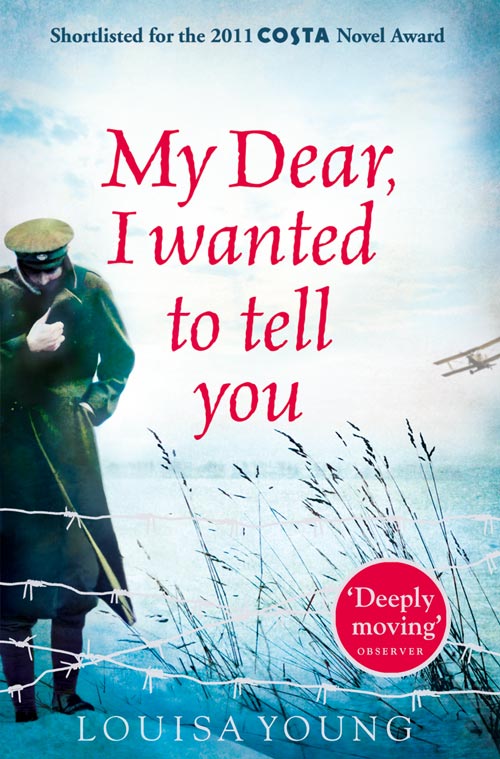
Literature and War Readalong September 29 2014: My Dear, I Wanted to Tell You by Louisa Young

My Dear I Wanted To Tell You

If I hadn’t read a lot of favourable reviews of Louisa Young’s novel My Dear, I Wanted to Tell You, I would never have picked it up. I know you shouldn’t judge a book by its cover but I’m allergic to men in greatcoat’s on WWI novels. On the other hand it’s better than a man in a greatcoat kissing a woman. But, as fluffy as it looks, the reviews made it sound poignant.

Louisa Young is a versatile author. Not only has she written three previous novels and a biography but, as Zizou Corder, she also writes a successful YA adult series together with her daughter.

Here are the first sentences

France, 7 June, 3.10 a.m.

It had been a warm night. Summery. Quiet, as such nights go.

The shattering roar of the explosion was so very sudden, cracking through the physicality of air and earth, that every battered skull, and every baffled brain within those skulls, was shaken by it, and every surviving thought was shaken out. It shuddered eardrums and set livers quivering; it ran under skin, set up counter-waves of blood veins and arteries, pierced rocking into the tiny canals of the sponge of the bone marrow. It clenched hearts, broke teeth, and reverberated in synapses and the spaces between cells. The men became a part of the noise, drowned in it, dismembered by it saturated. They were of it. It was of them.

They were all used to that.

And some details and the blurb for those who want to join

My Dear, I Wanted to Tell You by Louisa Young (UK 2011) WWI, Historical Fiction, 336 pages

A letter, two lovers, a terrible lie. In war, truth is only the first casualty. ‘Inspires the kind of devotion among its readers not seen since David Nicholls’ One Day’ The Times

While Riley Purefoy and Peter Locke fight for their country, their survival and their sanity in the trenches of Flanders, Nadine Waveney, Julia Locke and Rose Locke do what they can at home. Beautiful, obsessive Julia and gentle, eccentric Peter are married: each day Julia goes through rituals to prepare for her beloved husband’s return. Nadine and Riley, only eighteen when the war starts, and with problems of their own already, want above all to make promises – but how can they when the future is not in their hands? And Rose? Well, what did happen to the traditionally brought-up women who lost all hope of marriage, because all the young men were dead?

Moving between Ypres, London and Paris, My Dear I Wanted to Tell You is a deeply affecting, moving and brilliant novel of love and war, and how they affect those left behind as well as those who fight.


*******

The discussion starts on Friday, 29 September 2014.

Further information on the Literature and War Readalong 2014, including all the book blurbs, can be found here.

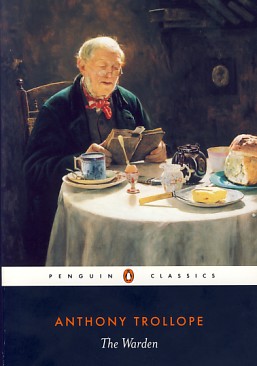
Anthony Trollope: The Warden (1855)

The Warden

Memory is a funny thing. For years I have been haunted by a sensual impression of a place. I remember being in England and walking along a row of houses. It’s a very peaceful, mild, warm autumn afternoon. The houses are part of a larger compound, overshadowed by a huge cathedral. I remember walking away from the cathedral close and coming to a small river that was flowing through the grassy meadow, on the same level as the soil. There were weeping willows and sheep. Walking around that place was like visiting a time long gone. These haunting images returned periodically. The light outside of my windows sometimes triggered the memory. It was always nice to go back in my mind, the only trouble was – I couldn’t remember where this had been. I’ve been in England many times, stayed there for a couple of months or weeks. I’ve visited many places and many cathedrals, but as much as I thought about it – I had no clue where I’d been on that warm autumn afternoon. Not until reading The Warden. The moment I opened the book and read the description of Barchester I knew – this is where I had been. But how could that be? Barchester doesn’t exist. Although I like to keep the introduction of a book until I’ve finished it, I had to read it to find out more. In the introduction I learned that Trollope based Barchester on Salisbury and Winchester. I immediately went online and looked up photos of Salisbury cathedral, the cathedral close and the meadows around and, yes, indeed, that’s where I’ve been some years ago. I found it pretty uncanny that Trollope was so capable at describing a place. I still don’t know why I forgot that the images were images of Salisbury. I’ve never forgotten a place like that. Maybe because it was so dreamlike?

I’ve meant to read Trollope for a while. Actually ever since I’ve read Guy’s (His Futile Preoccupations) and Brian’s (Babbling Books) reviews of his novels. Most of Trollope’s books are chunky but The Warden, the first in the Chronicles of Barsetshire, is a mere 180 pages.

According to the introduction, Henry James called The Warden “the history of an old man’s conscience”. That’s true, however, it’s only one of at least three major themes Trollope exlpores and which all contribute to make The Warden a highly worthwhile and interesting book and one of those you’d love to discuss with other people.

Septimus Harding is precentor and warden of an almshouse. With these positions come 800£ per year. In order to obtain this money Mr Harding doesn’t have to work a lot. As a precentor he’s in charge of the choir in the cathedral and as warden he’s the moral support of the twelve destitute men who are allowed to spend their last years in the almshouse. Since the almshouse was founded in the 15th century, the warden has received  more money every year because of the revenue of the land. The twelve men’s allowance however would have been still the same as in the 15th Century if Mr Harding hadn’t given them some of his own money.

At the time when this story takes place, numerous reformers are hunting down greedy clergymen, showing how they abuse of their power and enrich themselves at the expense of others. Dr Bold is just such a reformer. When he meets the warden and his daughter, with whom he falls in love, he learns about the founder’s will and instigates an investigation which leads him to the conclusion that Mr Harding receives money that is due to the almsmen. His inquiry quickly gets out of hand when the biggest newspaper publicly accuses the warden of greed and malpractice.

Mr Harding is an excessively private man. He’s weak but kind and good-hearted. Being dragged into the spotlight like this, accused and shamed, is more than he can bear. He never thought that he might be doing something wrong but once he starts to think about it, he’s not so sure that he wasn’t enriching himself at the expense of the twelve poor men. While he doesn’t want to fight the accusation, his son-in-law, archdeacon Dr Grantly and the bishop of Barchester, fight for him and soon both parties involve lawyers. The warden has another strong supporter in his daughter who begs Dr Bold to abandon the cause.

The three themes which are explored each center on another figure. Mr Harding has to examine his conscience. Will he stay warden if it has been proven that he’s legally entitled to his money or will his own conscience tell him to let go?

Mr Bold shows how good intentions at the wrong moment and without thinking about consequences can be fatal. Maybe Mr Harding gets too much money, but why make this a matter of public interest and involve the newspaper? Why does he disregard the peace and quiet that reigns at the almshouse? Neither Mr Harding nor the twelve men are wanting anything. They live together amicably but once Dr Bold tells the twelve men that they should get more money, peace is lost forever.

For contemporary readers it might be interesting to read about the role of the press and the journalist Tom Towers. Trollope was inspired by true stories and what he lets us experience is the beginning of the value of public opinion and the power of the press.

Trollope chose to show us the end of an era. The tone of the book is elegiac throughout. In the introduction Robin Gilmour makes an interesting point. The warden’s garden is a strong symbol of this dying of an era. At the beginning of the novel it’s lush, green and lovely. At the end:

The warden’s garden is a wretched wilderness, the drive and paths are covered with weeds, the flowerbeds are bare, and the unshorn lawn is now a mass of long damp grass and unwholesome moss.

I had a very strong reaction when I read how content Mr Harding was in the beginning and how quickly a lifetime of ease was destroyed. At the same time I had to agree with Bold. Not in this matter, but in general. Why would a clergyman be given so many riches, a huge house with gardens, and a large income without doing any work? Still, I was sad for Mr Harding who was threatened to lose everything he held dear, even though he might not have been entitled to have it.

What annoyed me about Mr Bold’s doing was that the man he attacked was a kind and generous man and – compared to other clergymen – a tiny fish.

Before ending this rather lengthy review, I’d like to say a few things about Trollope’s writing. I enjoyed the descriptions and I had to laugh out loud a few times when he characterized people, notably the archdeacon, using caricature and satire. I found many of his authorial intrusions interesting but there were too many for my taste. I had problems with the parodies of Carlyle and Dickens because they felt glued on and were not a part of the story. I didn’t mind that Trollope spoke to the reader directly but some of the more hidden intrusions were annoying.

I’m glad I read The Warden. It made me remember my stay at Salisbury and I loved the descriptions. I liked his choice of themes and think they are just as important today as they were then. I also think he’s a wonderful satirist. Will I read the next in the series? In all honesty – I’m not so sure. I can’t pretend I fully warmed to Trollope and although I’ve started a small Victorian literature reading project, I think I’ll move on to Elizabeth Gaskell and the Brontës.

If you’d like to read more reviews on Trollope visit Guy’s  (His Futile Preoccupations), Brian’s (Babbling Books) and Tony’s (Tony’s Reading List) blogs. Brian’s reading and reviewing The Barsetshire Chronicles (here’s his review of The Warden). Tony has reviewed both the Barchester and the Palliser novels – and some more and  Guy has written about many of the other novels.


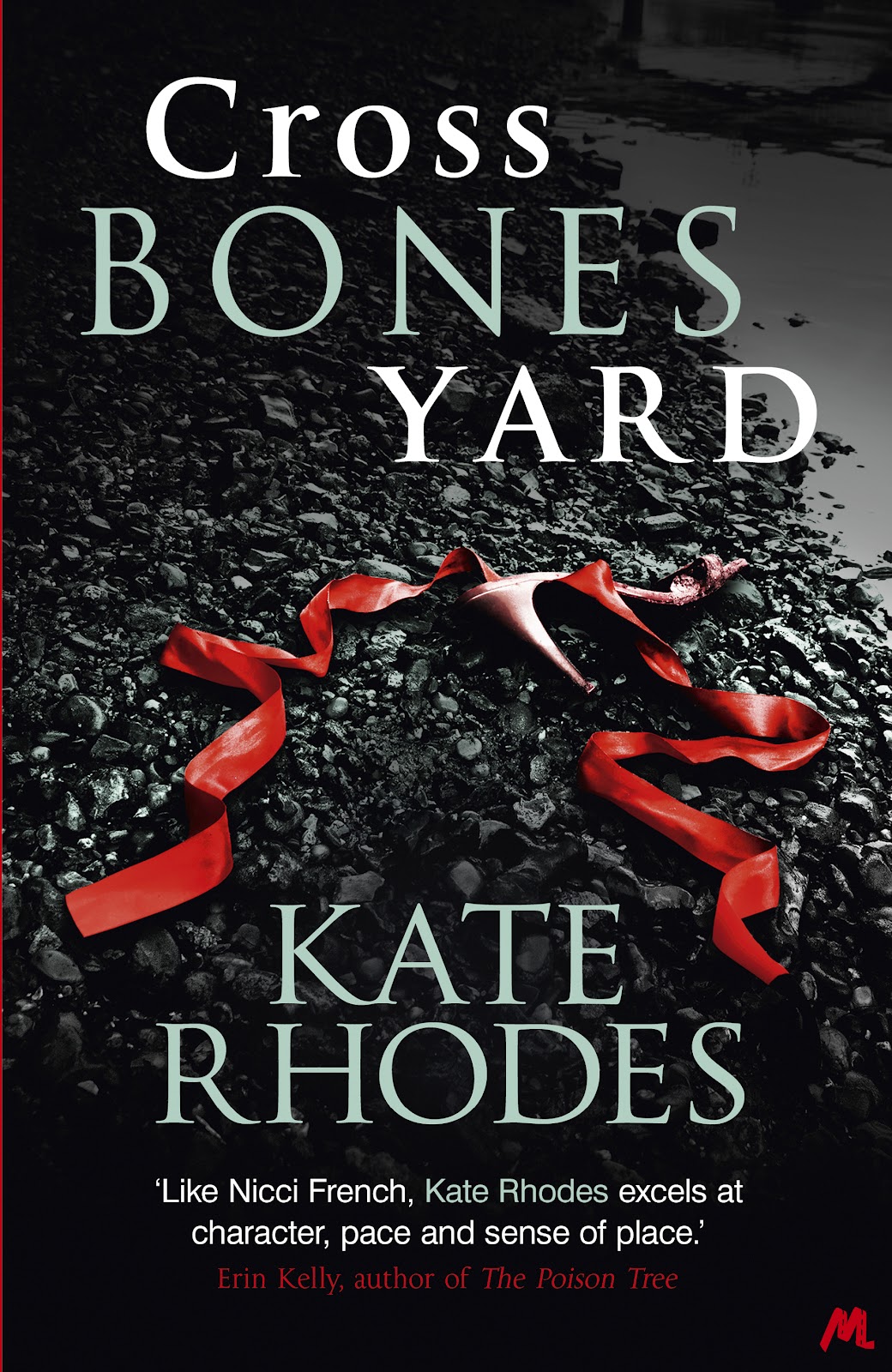
Kate Rhodes: Crossbones Yard (2012)

Crossbones Yard

When I reviewed Nicci French’s third Frieda Klein novel two weeks ago, Alex (Thinking in Fragments) mentioned Kate Rhodes’ Alice Quentin series as being similar and just as good. Of course, I had to get the first in the series Crossbones Yard and read it right away. Reading a new author with a favourite one in mind is often an unfortunate thing, but not in this case. I noticed similarities – a well-described London setting – one protagonist is a psychoanalyst, the other a psychologist – they both work for the police – they both get in trouble – they both have family issues and loyal friends – the pacing is similar and so is the knack for a strong plot. The best news is—Kate Rhodes’ book is still different enough to be interesting. I think one reason is that Alice is at least ten years younger than Frieda. She sounds and feels younger. She goes clubbing and drinks too much on occasions. She’s a professional, but she’s working for a hospital, not for herself, like Frieda. The London described in Crossbones Yard is edgier, it also seems bigger, as Kate Rhodes mentions more neighbourhoods.

The novel opens with a prologue. A flashback: an abusive father, a child in hiding. At the beginning of the novel, Alice avoids taking the elevator to her office on the 24th floor. She’d rather jog. Although she’s a successful psychologist, she suffers from claustrophobia. She’s working at a hospital where she has her practice and helps the police. Not surprisingly then, DCI Burns comes to fetch her. He wants her to talk to a man who is in prison for murder but will be released soon. Burns wants Alice to assess how dangerous he really is. She finds him creepy but mentally challenged and doesn’t see him as a risk. Unfortunately, just after he’s been released, a young woman, who’s obviously been held captive, is brutally murdered. Her face and abdomen were carved. Alice finds her body when she goes jogging one evening. The woman’s been dumped on the former burial ground Crossbones Yard. Nowadays it’s just a wasteland and happens to be exactly where Alice goes for her evening runs.

It will not be the last body Alice finds. At the same time she receives threatening letters and Alice knows that whoever kills these women is after her as well.

The book is swarming with suspects and many of them are somehow linked to a couple of serial killers. The husband is already dead but his wife is still serving time and the new murders look strikingly like those they committed.

I really liked Crossbones Yard a great deal in spite of feeling let down by the ending. The red herrings were too obvious; instead of misleading me, they led me to discover the murderer a bit too early. Still, this is a promising beginning to a series and I’m looking forward to read the sequels. Alice is a strong character and her troubled family history adds to her complexity. Another aspect I liked is that the comments Alice makes on psychology and human behaviour are eve more pertinent than those coming from Frieda Klein. And the descriptions of London are fantastic.

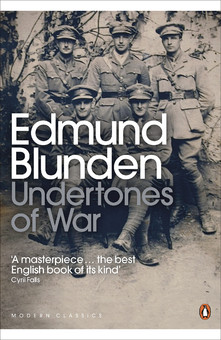
Literature and War Readalong August 29 2014: Undertones of War by Edmund Blunden

Undertones of War

Edmund Blunden’s Undertones of War is one of the most famous WWI memoirs. Blunden was a poet who enlisted at the age of twenty and took part in the battles at the Somme, Ypres and Passchendaele. My edition, which is The University of Chicago Press edition, contains a number of his poems. It will be interesting to compare the accounts of the trenches with the poems inspired by the landscape.

Here are the first sentences

I was not anxious to go. An uncertain but unceasing disquiet had been upon me, and when, returning to the officers’ mess a Shoreham Camp one Sunday evening, I read the notice that I was under orders for France, I did not hide my feelings. Berry, a subaltern of my set, who was also named for the draft, might pipe to me “Hi, Blunden, we’re going out: have a drink.”; I could not dance. There was something about France in those days which looked to me, despite all journalistic enchanters, to be dangerous.

And  some details and the blurb for those who want to join

Undertones of War by Edmund Blunden (UK 1928) WWI, Memoir, 288 pages

In what is one of the finest autobiographies to come out of the First World War, the distinguished poet Edmund Blunden records his experiences as an infantry subaltern in France and Flanders. Blunden took part in the disastrous battles of the Somme, Ypres and Passchendaele, describing the latter as ‘murder, not only to the troops, but to their singing faiths and hopes’. In his compassionate yet unsentimental prose, he tells of the heroism and despair found among the officers. Blunden’s poems show how he found hope in the natural landscape; the only thing that survives the terrible betrayal enacted in the Flanders fields.

*******

The discussion starts on Friday, 29 August 2014.

Further information on the Literature and War Readalong 2014, including all the book blurbs, can be found here.