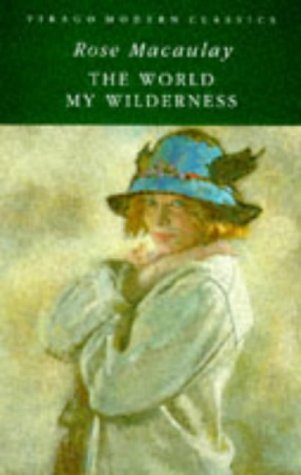
Rose Macaulay: The World My Wilderness (1950)

802630-5

What a beautiful and peculiar book. Rose Macaulay’s The World My Wilderness was her second to last novel. The first after a ten-year hiatus brought on by a lot of heartache and sorrow. In 1939 she caused an accident in which her lover was injured; in 1941 her apartment was bombed and she lost almost all of her possessions and then in 1942 her lover died. Before that Rose Macaulay was a successful author of mostly satirical books. The World My Wilderness is quite different; it’s a compassionate book that reflects her own sorrows as well as other elements of her biography, like childhood years spent in Italy.

The book is set in the South of France, London, and Scotland. The main character, 17-year-old Barbary, is sent to London to live with her father and go to art school. The war is over and her mother Helen wants to get rid of her for different reasons. She and her step-brother have gone wild during the war. They joined the maquis (resistance), and may or may not have been involved when Helen’s second husband, Barbary’s stepfather, known as collaborator, was killed by the resistance.

Barbary’s father has remarried as well and Barbary and her new stepmother, a very conventional woman, clash immediately. Barbary is profoundly miserable, misses her mother and France, but finds solace in the company of her stepbrother. Together they explore the ruins around St.Paul’s cathedral and discover that this wasteland bears some resemblance with their beloved maquis. The ruins are like a wilderness, and, like the maquis, populated by petty thieves and delinquents. Barbary, who is a talented painter, draws postcards of the ruins and sells them to tourists.

The main story is about whether or not Barbary will be allowed to see her mother again and return to France. But since this isn’t a plot-driven novel, its strengths lie elsewhere. This is a book full of lush descriptions and fascinating characters. They are all flawed and complex and whenever we think, we know them, they do something that surprises us. One technique that contributes to see the characters in all their complexity is a frequent change of point of view. Often we’re introduced to a character, seeing him/her through her own eyes and then, right afterwards, we see them through the eyes of others. The result is quite arresting. My favourite character was Helen, Barbary’s mother. She’s a free-spirit who loves art, men, freedom, and a good life. Conventions are not for her. In France she lives as she likes, while she was a constant source of scandal and gossip in London.

Here’s Helen’s take on country and family:

“One understands so well,” said Helen, languidly teasing a small green lizard cupped in her hand, “the desire not to work; indeed I share it to the full. As to one’s country, why should one feel any more interest in its welfare than in that of other countries? And as to the family, I have never understood how that fits in with the the other ideals—or, indeed, why it should be an ideal at all. A group of closely related persons living under one roof; it is a convenience, often a necessity, sometimes a pleasure, sometimes the reverse; but who first exalted it as admirable, an almost religious ideal?”

I expected The World My Wilderness to be a lot like Mollie Panter-Downes One Fine Day but it’s much more like a novel by Colette. Helen herself reminded me a lot of Colette and some of her heroines. She’s such an uninhibited, freethinking, sensual woman. While Helen is a cheerful woman, in love with life and love, she’s also a tragic figure because she was deeply in love with her second husband.

The World My Wilderness is also excellent in the way it describes post-war London with its ruins and struggling population. Everything is still crumbling—the houses and the society. It’s a world in change in which destruction is found right along a wild, mysterious beauty.

Summer slipped on; a few blazing days, when London and its deserts burned beneath a golden sun, and the flowering weeds and green bracken hummed with insects, and the deep underground cells were cool like churches, and the long dry grass wilted, drooped, and turned to hay; then a number of cool wet days, when the wilderness was sodden and wet and smelt of decay, and the paths ran like streams, and the ravines were deep in dripping greenery that grew high and rank, running over the ruins as the jungle runs over Maya temple, hiding them from prying eyes.

I wish I had been able to review this book right after I finished it but that was just before German Literature Month. It would have deserved a more careful review. I still hope you can tell, that I loved it. It’s a marvelous novel.
A Bunch of Mini Crime and Thriller Reviews

The Ice TwinsCop TownChemistry of DeathUntil It's OverDisclaimerMurder on the Orient EXpress

I went over my stacks of read books during German Literature Month and was startled when I noticed how many books, especially thriller and crime novels, I had read but not reviewed. I could probably write longer posts but decided to write a few very short reviews instead. That way, you might still hear about a book worth reading or one you should avoid and I don’t have to post every single day until the end of the year.

Disclaimer

Renée Knight’s Disclaimer is possibly the thriller disappointment of the year. The premise was interesting – a woman receives a novel in which the authors describe something that happened a long time ago and that she never told anyone. I think the book has two major flaws. One is that it’s not believable. I hate it when plot relies on one character suspecting another without questioning things. That alone would have annoyed me but I also thought the story was highly unbelievable. Sometimes a book can be salvaged through great atmosphere and description. Not so this novel. In my opinion that’s the second flaw of Disclaimer. While it’s said to be set in London, it might as well have been set on the moon. Not once did I see the city. Unbelievable story, wonky psychology, and zero atmosphere.

Murder on the Orient EXpress

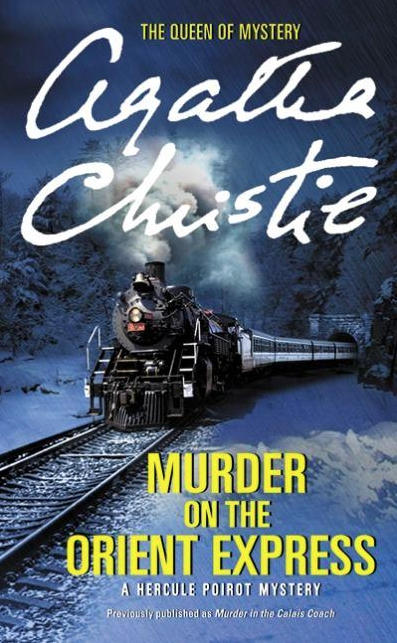
Murder on the Orient Express was another disappointment. I picked it because I was in the mood to read a locked-room mystery and because I haven’t read any Agatha Christie in a long time. So far I’ve only ever read her standalone novels and one or two Miss Marple novels. While they might be formulaic, I still really enjoyed them. This was my first Hercule Poirot. I never picked them up because for me, as a native French speaker, the name is so silly. It sounds like poireau – leek – or poivrot – drunkard – . Plus Hercule? Really? I expected him to be on the boring side and that’s what he is. I wasn’t fascinated by his deductive skills. Still, it was a quick read and I loved the setting. I only found the murder and the way it was solved a bit lame. Still, if you like a great setting – a train in winter – and are in favour of cozy crime and whodunnits – especially locked-room mysteries – this might be for you.

The Ice Twins

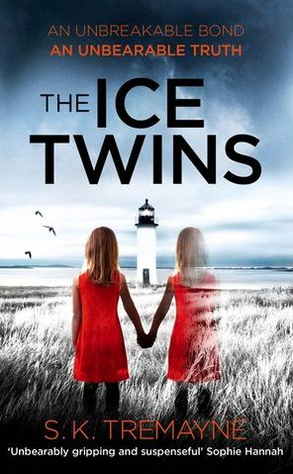
The Ice Twins had a lot to offer. Stunning descriptions and atmosphere. After the death of one of their twin daughters, Angus and Sara Moorcroft move to a remote Scottish island. Such eerie, creepy descriptions and certainly not a place I would have chosen to live in, after the awful loss of a child. It gets creepier when the surviving twin begins to claim that she’s the other one. The part that affected me the most and which is the creepiest is the favouritism. While the father openly preferred one kid, the mother preferred the other. What does it mean, when you suddenly think that it’s not your favourite who has survived?  The Ice Twins was psychologically compelling. The descriptions are great. Unfortunately the end was a bit of a disaster. Not only was it disappointing and far-fetched, I also found it misogynistic. When I bought the book, I thought S.K.Tremayne was a woman but after finishing, I started to doubt that. And indeed, S.K. Tremayne is a man. I’m not surprised. The ending leaves no doubt.

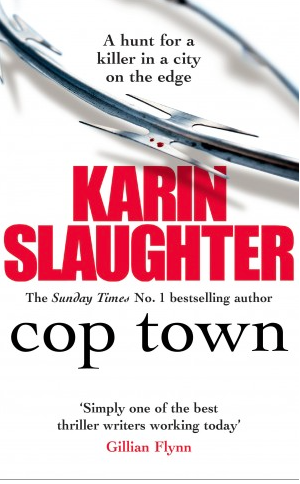
Cop Town

With Karin Slaughter’s standalone novel Cop Town I finally enter the territory of the books I loved without reservations. Like Nicci French or Sarah Bolton, she is one of my favourite mainstream crime writers.  I’ve been reading her series for years, but when I heard she’d written a standalone novel, set in the 70s in Atlanta, I was interested immediately. What sounded particularly great was the research she’d done for this book. The period details are amazing. Her choices of two female protagonists make this a very feminist novel, as it’s in part a murder mystery – there’s a shooter killing cops – and a book about women on the police force, a workplace that’s dominated by white males who are sexist, racists, anti-Semites, homophobic . . . you name it. Into this explosive environment comes Kate, a rookie cop. She’s recently widowed, her husband died in Vietnam. Kate comes from an upper-class, Jewish family. The Vietnam angle, is another well-done angle.  Her first day is a shocker, but to the surprise of everyone, even her partner Maggie, she doesn’t give up. Maggie comes from a cop family. Her uncle and her brother have joined the force. They both didn’t want her to follow them in their footsteps and the aggression and violence she has to endure, are appalling. Notably her uncle Terry is the prototypical male white homophobic sexist racist. The shooter’s been active for a while, which infuriates the cops and even leads them to plant false evidence.  Maggie and Kate decide to take matters into their own hands. A dangerous idea. Slaughter’s writing is tight, as usual, the period details so well captured, the story is gripping. A remarkable achievement. It works as a crime novel and as a novel on the 70s, Atlanta, gender issues . . .  It’s shocking to think what women had to put up with to fulfill the dream of working in a male dominated  job. A word of warning—I’m not the most squeamish but there’s some violence in this book that was very hard to read and get out of my mind again.

Until It's Over

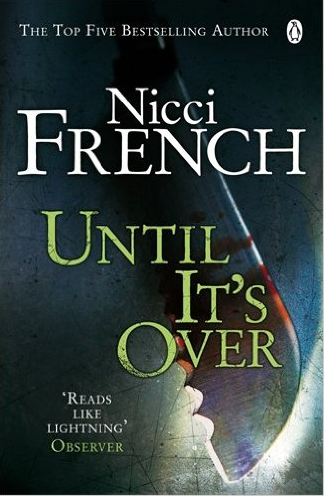
Everyone reading this blog knows how much I love the author duo Nicci French. I’m slowly reading my way through their novels. Surprisingly I wouldn’t have heard of Until It’s Over, if it hadn’t been mentioned by one of my readers a year ago (I’m really sorry I can’t remember who it was). I got it back then and kept it for later. A while ago, I read a review of it and that’s how I remembered I had it on my piles. I’m glad I read that review before reading the book because, with the wrong expectation, I might have been disappointed. They did something very unusual here. They wrote two distinct parts. Part one is told from the point of view of London Cycling Courier Astrid, part two from the point of view of the perpetrator. It wasn’t easy to adapt to part two because I loved part one so much. Astrid lives together with a group of friends in an old house, in an area of London that hasn’t bee gentrified yet. Suddenly people around her are murdered. What has it got to do with her? While the story is suspenseful, it’s not what I liked best. I liked to read about this group of friends who share a house. Loved the setting, which Nicci French captures so well- the bars, the parks, the houses. London is as much a character as the people. Part two is very good too, but I would have loved to go on reading from Astrid’s point of view. Once I had gotten used to the new narrator, I liked part two almost as much. I’ve read a lot of Nicci French’s novels. Some I loved, some I found OK; this was one of the best.

Chemistry of Death

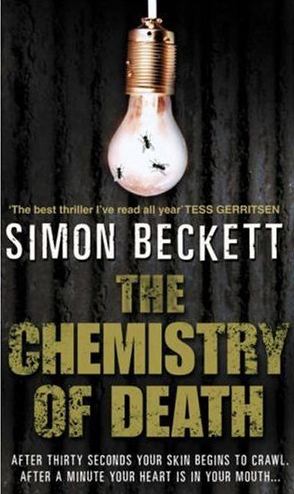
The Chemistry of Death is another book that has been lying on my piles almost since it came out. For some reasons, I didn’t think I would like it because I got a bit tired of serial killer novels. In theory I would like them, because, for me, a great serial killer novel is like a realistic ghost or horror story. That’s why setting, atmosphere and mood are so important in this subgenre. Sadly, many authors just use the trope to avoid to have to dig for good reasons for murder and many of those “products” are as far from psychologically compelling as can be. However, there’s one thing I don’t like even in the best serial killer books —the showdown ending. All these books get frantic towards the end and there are recurring elements that are frankly annoying – e.g. hero/heroine tries to avoid killer and runs right into his arms. While The Chemistry of Death does have a formulaic ending, the rest of the book is so astonishingly well done, that it hasn’t only become one of the favourites of this year but I think it’s possibly one of the best crime novels I’ve ever read. I loved the mourning, depressed narrator, loved, the almost gothic descriptions of murder scenes and locations. The atmosphere is brooding, haunting. Don’t be put of by the serial killer thing— this is so well written and atmospheric, it would be sad to miss it.

Have you read any of these? Does anyone know a good locked-room mystery?

Final Giveaways and Looking Back on German Literature Month 2015

literatur_2015_gold-2

It feels as if I only just posted the intro to German Literature Month 2015. It’s hard to believe the month is already over.

And what a month it was. So many great posts. We have a total of 157 contributions. I’m not really into statistics, so I can’t tell you whether that’s more or less than last year – be it as it may, it’s a lot.

Thank you so much for your enthusiasm.

I haven’t read as much as I wanted, nor have I been able to visit everyone, but I’m still doing my rounds.

As a thank you to all of you, I’m giving away two books from Pushkin Press.

A Chess Story

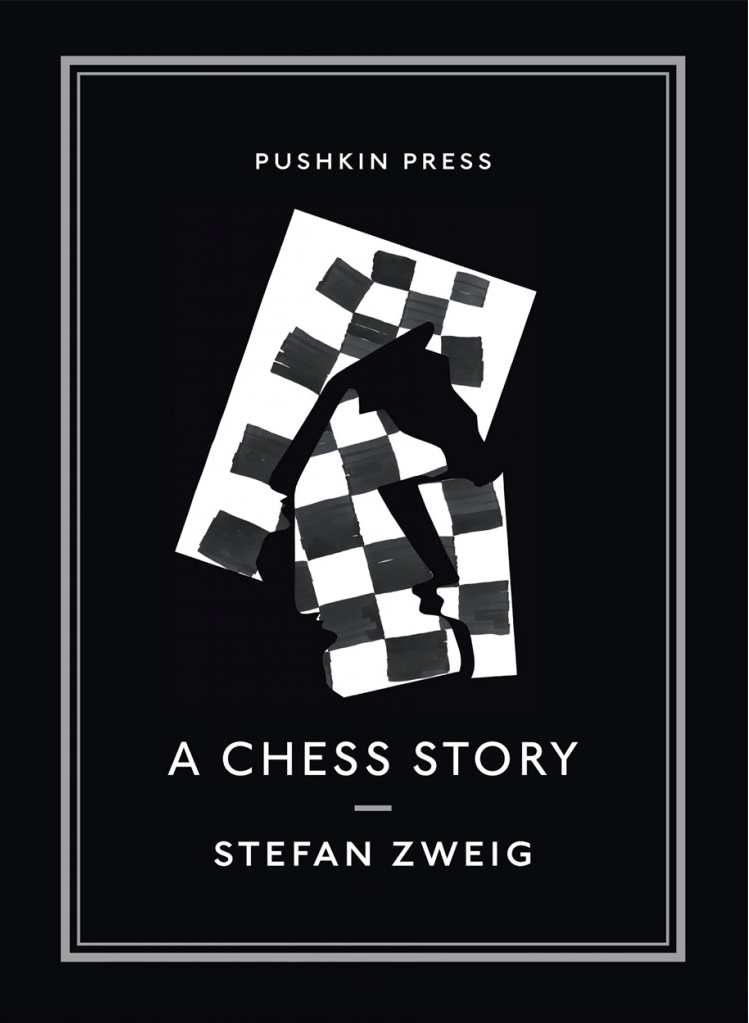
Stefan Zweig’s A Chess Story

Chess world champion Mirko Czentovic is travelling on an ocean liner to Buenos Aires. Dull-witted in all but chess, he entertains himself on board by allowing others to challenge him in the game, before beating each of them and taking their money. But there is another passenger with a passion for chess: Dr B, previously driven to insanity during Nazi imprisonment by the chess games in his imagination. But in agreeing to take on Czentovic, what price will Dr B ultimately pay?

A moving portrait of one man’s madness, A Chess Story is a searing examination of the power of the mind and the evil it can do.

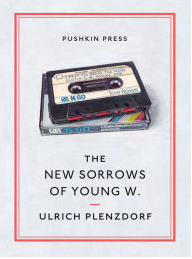
The Sorrows of Young W.

Ulrich Plenzdorf’s The Sorrows of Young W. A retelling of Goethe’s famous novel, set in GDR. It’s often called a GDR Catcher in the Rye.

‘I was just a regular idiot, a nutcase, a show-off and all that. Nothing to cry about. Seriously’

Edgar W., teenage dropout, unrequited lover, unrecognized genius – and dead – tells the story of his brief, spectacular life.

It is the story of how he rebels against the petty rules of communist East Germany to live in an abandoned summer house, with just a tape recorder and a battered copy of Goethe’s The Sorrows of Young Werther for company. Of his passionate love for the dark-eyed, unattainable kindergarten teacher Charlie. And of how, in a series of calamitous events (involving electricity and a spray paint machine), he meets his untimely end.

Absurd, funny and touching, this cult German bestseller, now in a new translation, is both a satire on life in the GDR and a hymn to youthful freedom.

Ulrich Plenzdorf was born in Berlin in 1934, and studied Philosophy and Film in Leipzig. In the early 1970s, he achieved fame with the much acclaimed The New Sorrows of Young W., considered a modern classic of German literature and taught in classrooms across Germany. From 2004 onwards, Plenzdorf was a guest lecturer at the German Institute of Literature in Leipzig. An award-winning and much celebrated author and dramatist, he died in 2007.

*****

All you have to do is tell me which book you’d like to win and why. The giveaways are open internationally. I’ll announce the winners on Monday 7 December 17:00 – Western European time.

This Giveaway is now closed!

My Case for “The Artificial Silk Girl” – A Guest Post by John Lugo-Trebble

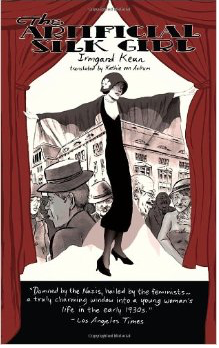
The Artificial Silk Girl

When you are part of a writers’ group, it’s only natural to discuss books. And so, a while ago, I mentioned German Literature Month on my writer’s forum and found out that one of the members. John Lugo-Trebble, had studied German literature and did research on Irmgard Keun (and other authors). While discussing, he said that he found she deserved to be more widely known, especially her masterpiece The Artificial Silk Girl Das kunstseidene Mädchen. I certainly agree with him, and so I asked him whether he felt like writing a guest post for German Literature Month. I’m very glad he said yes. John Lugo-Trebble is an American writer, living in the UK. Some of his short fiction is forthcoming on Jonathan the literary journal of Sibling Rivalry Press.

My Case for “The Artificial Silk Girl” – by: John Lugo-Trebble

Christopher Isherwood’s “Berlin Stories” was the inspiration for “Cabaret” which for an English speaking audience is often the image conjured up of Weimar Berlin. His Berlin is a decadent melting pot on the brink of implosion through the eyes of fun seeking expats. I don’t think you can argue that his observations are not important but for me, reading is like travelling and when I travel I always like to experience what locals would. This is why for me, one of the most important German texts capturing the era that should be read by English speakers is “Das kunstseidene Mädchen” (“The Artificial Silk Girl”) by Irmgard Keun.

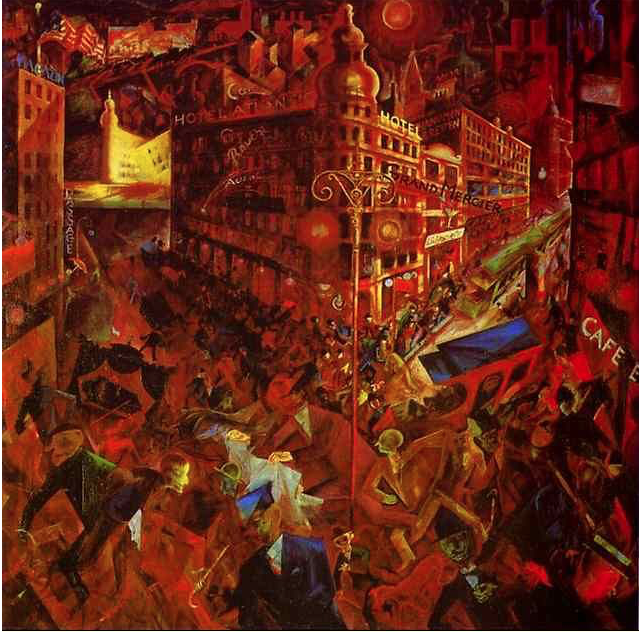
Georg Grosz - Die Stadt

Irmgard Keun gives us not just a German insight but a female German insight to Weimar through the eyes of her protagonist Doris. Working in a theatre in Köln, young Doris craves the spotlight, like the women in the glossy magazines that are like her Bible. She wants glamour, she wants wealth. She doesn’t want to be like her parents, on the breadline. She especially fears becoming her mother and having to support a man, in a loveless marriage. Doris becomes enamoured with a fur coat at the theatre and decides to steal it. In her fur coat, she can dream of the life she so covets. She can pretend to be that wealthy young girl who deserves the finery in life. She can epitomise glamour when wrapped in the soft fur. Now a fugitive because of this coat, she runs to Berlin wherein her vain attempt in pursuing glamour she weaves through the city’s underworld of prostitutes, pimps, communists and even becoming a mistress herself. Her dreams quickly spiral out of control as she chases money, stability and ultimately love amidst the backdrop of Berlin’s economic and political turmoil; putting us in mind of one of Grosz’s paintings come alive.

On the one hand, Doris is a mirror of the limitations of the New Woman, a woman who was to be liberated from the shackles of Imperial Germany by the promise of the Social Democratic Weimar Constitution. The reality is the limitations of that liberation that came with the economic upheaval left by the Treaty of Versailles. There is though something in Doris’ tale that resonates still today and that is the pursuit of glamour, a desire for celebrity.

I was reminded only recently of “The Artificial Silk Girl” when I was watching “The Bling Ring.” For those of you who haven’t seen it, the film is loosely based on a crime spree in Los Angeles perpetrated by a group of celebrity admiring, glamour seeking teenagers who literally break into the houses of their style icons to steal their possessions. They are driven by this desire and need to be famous, to lead an untouchable existence of celebrity. I couldn’t help but think of Doris. The difference though is that Doris has a moral centre which comes forward as she sits on a bench at Bahnhof Zoo, no longer the girl start struck in pursuit of wealth, she is a woman aware of the world around her, her own limitations, and indeed her own desires. Will she head out of Berlin or stay? We don’t know, but what we do know is that the fur coat is long gone now.

Irmgard Keun is one of the few German women writers of her day who have been translated into English and I truly believe one of the finest writers of the Twentieth Century, full stop. She presents us with a protagonist who has the naiveté of youth and the observational skills of a woman of her day. You will fall in love with her vulnerability, laugh at her silliness and want to shake her till she grows up but also respect her path because she tries, even when there is no hope presenting itself. With Keun, there is a voice beyond Alfred Döblin and Hans Fallada’s portrayals of women which leave much open to debate. There is more than Sally Bowles.

*****

Thanks so much, John, for this interesting post. I hope those who haven’t done so yet, will soon pick up The Artificial Silk Girl, or one of Keun’s other great novels.

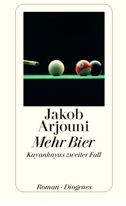
Jakob Arjouni: More Beer – Mehr Bier (1987) Kayankaya 2

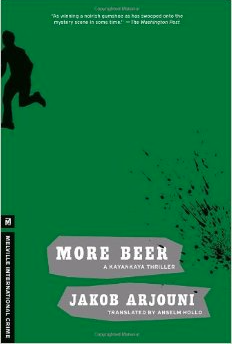
More Beer

More BeerMehr Bier is the second novel in Jakob Arjouni’s Kayankaya series. It’s set in Frankfurt, Germany. PI Kayankaya is of Turkish origin. While Arjouni was still alive, he was called Germany’s answer to Raymond Chandler. I always found this comparison problematic. Arjouni writes extremely well. I’d say he’s definitely at the literary end of the crime spectrum. His books are hardboiled noir. Kayankaya is a cynical loner who gets beaten up more than once, still, I don’t think he has a lot in common with Marlowe. The differences are quite subtle but they are important. I remeber hating how Kayankaya killed a fly in the first novel. In this one, he beats a rat. Marlowe would never do something like that. I remember noticing after I’ve read three or four books by Chandler that Marlowe has a great fondness for animals. Kayankaya is much more jaded.

More Beer sees Kayankaya investigate the murder of a chemical plant owner. Four eco-terrorists have been charged with the murder, but it seems highly unlikely that they did go that far. Unfortunately,they don’t want to talk. Early on, it becomes obvious that there was a fifth man involved. But who and where is he? The defendants’ lawyer hires Kayankaya to find him. He investigates with his usual stubbornness, even pursuing after he gets beaten up a couple of times.

Kayankaya is a loner, a heavy drinker, a disillusioned man with an acerbic wit. And constantly mistreated because of his origins. I forgot how old these books are. This one was written in the 80s and to read about the way Kayankaya is treated was quite shocking. I think the status of people of Turkish origin has changed meanwhile. At least I hope so. Creating a character like this in the 80s must have been pretty provocative.

I’m not too sure what to think about this book. I found the first in the series, Happy Birthday, TürkeHappy Birthday, Turk, so much better. But while I didn’t care for the story of More Beer, I loved the writing. I’d forgotten just how well Arjouni writes. The novel is full of memorable metaphors like when the narrator compares rain drops on a windshield to a herd of animals running.  For that alone, I might reread it and will certainly not wait another ten years before I read the third one.

Arjouni, Jakob
Most of Arjouni’s novels have been translated and published by Melvillehouse.
Sadly the author died of pancreatic cancer in 2013. He was 48 years old.

Mehr Bier

Welcome to German Literature Month

literatur_2015_gold-2

This is just a brief welcome post to let you know about some of my own plans for German Literature Month.

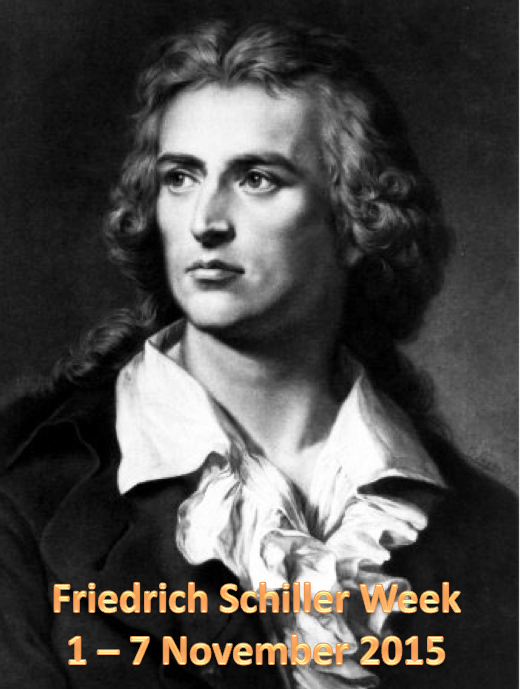
Friedrich Schiller Week

The first week is Schiller week, over at Lizzy’s blog. I won’t participate actively. I hope to review a crime novel and maybe a novella or two.

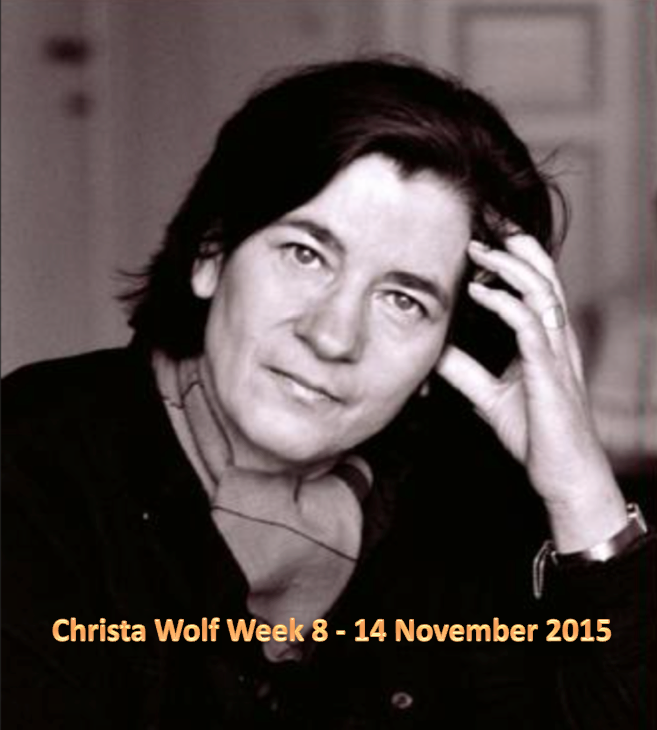
Christa Wolf Week

For Christa Wolf week I’m reading The Quest for Christa T., which is a bit of a challenge. I’m not as keen on it as I was on the her other books.

I’ve scheduled two things for week three. I’ll be posting a guest post by a writing buddy who recently revealed an interest in Irmgard Keun. I will also participate in Lizzy’s readalong of the YA novel Erebos. I’m almost finished with it and must say it’s a captivating book.

My own readlong is forthcoming in week four. Since Erich Maria Remarque’s novel A Time to Live and A Time to Die is rather chunky too, I suppose I’ll be busy reading that.

What other plans do I have?

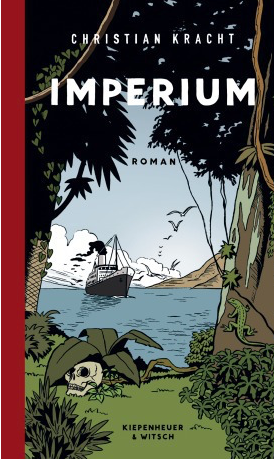
Imperium

Finally reading Christian Kracht’s recently translated Imperium.

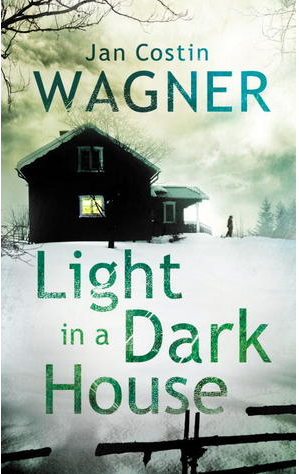
Light in a Dark House

Maybe read Jan Costin Wagner’s Light in a Dark House.

What else? Maybe some short stories.

Have you already started reading? What are your plans?

If you participate, please add your reviews to the German Literature Month Page.

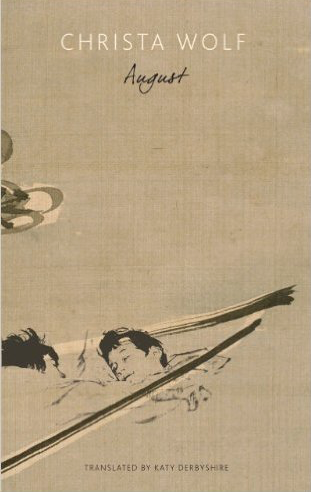
Wednesdays Are Wunderbar – German Literature Month Giveaway – August by Christa Wolf

literatur_2015_gold-2

It’s Wednesday again and you already know what that means. We’re hosting a giveaway. This week’s copies are from Seagull Books (University of Chicago Press).

Screen Shot 2015-10-27 at 17.02.56

For this year’s German Literature Month I have the opportunity to give away two copies of Christa Wolf’s August, translated by Katy Derbyshire. Since I’m hosting a Christa Wolf week this year, I’m particularly pleased about this giveaway.

Christa Wolf Week

Here’s what the editor writes about August:

Christa Wolf was arguably the best-known and most influential writer in former East Germany. Having grown up during the Nazi regime, she and her family were forced to flee their home like many others, nearly starving to death in the process. Her earliest novels were controversial because they contained veiled criticisms of the Communist regime which landed her on government watch lists. Her past continued to permeate her work and her life, as she said, “You can only fight sorrow when you look it in the eye.”

August is Christa Wolf’s last piece of fiction, written in a single sitting as an anniversary gift to her husband. In it, she revisits her stay at a tuberculosis hospital in the winter of 1946, a real life event that was the inspiration for the closing scenes of her 1976 novel Patterns of Childhood. This time, however, her fictional perspective is very different. The story unfolds through the eyes of August, a young patient who has lost both his parents to the war. He adores an older girl, Lilo, a rebellious teenager who controls the wards. Sixty years later, August reflects on his life and the things that she taught him.

Written in taut, affectionate prose, August offers a new entry into Christa Wolf’s work and, incidentally, her first and only male protagonist. More than a literary artifact, this new novel is a perfectly constructed story of a quiet life well lived. For both August and Christa Wolf, the past never dies.

*******
If you are interested in winning this book, leave a comment, telling me why you’d like to read it.

The competition is open internationally. The winner will be announced on Saturday October 31 2015, around 18:00 Central European time.