Am Südhang – On Southern Slopes by Eduard von Keyserling – A Post a Day in May

I wrote about one of Eduard von Keyserling’s novellas during GLM 2013 –here. Back then, not one of his books had been translated into English and that was such an incredible shame. Meanwhile, his masterpiece Die Wellen  Waves has been translated and published by Dedalus European Classics. As I wrote in that post, von Keyserling is often compared to Fontane because they are from the North and both set their novels in the Northern parts of Germany. It’s a very unfortunate comparison because the era and writing style are so different. Both are elegant writers, but von Keyserling is much more like Schnitzler than Fontane. He’s a typical impressionist writer. He has something very Austrian and when one knows a few things about his life, that’s no coincidence. He was born at Castle Tels-Paddern (now in  Latvia), Courland Governorate, then part of the Russian Empire, but then moved to Vienna and later to Munich.

Maybe Waves wasn’t a success – I never saw it reviewed on any blogs – because that remained the only official translation. There’s good news though, as Tony from Tony’s Reading List actually went and translated first the book I reviewed in 2013 – Schwüle Tage  Sultry Days and then two other short works, which you can all find here.

Sadly, Am Südhang – On Southern Slopes, the novella I read on my beautiful rainy reading day last week, hasn’t been translated. As with everything I’ve ever read by von Keyserling – it’s a shame. He’s such a brilliant writer.

Am Südhang opens with Karl Erdmann von West-Wallbaum in a carriage on his way to his parent’s estate where he will spend his summer. He has just been made Lieutenant and thinks that this rise will mean people will take him more seriously. He can hardly wait to arrive as the summers on his parent’s estate are always so beautiful. And he is always in love. Always with the same woman, Daniela, a friend of his mother, who is much younger and divorced. Every summer she’s the centre of all the men’s attention as she’s beautiful, intelligent, and likes to charm. It’s both painful and delicious to be in love with her, as Karl Erdmann muses, and he’s looking forward to lying in the grass and dream of her all day long.

But that isn’t the only thing he’s looking forward to. On the estate, with his family, his parents and siblings, he lives a life of sheltered ease and luxury which makes him languorous and lazy. While he can be hard and cynical in the outer world, during summer he’s like sensitive, thin-skinned fruit that grows on southern slopes.

It wouldn’t be a von Keyserling novel if things stayed light and harmonious. There’s always a dark undercurrent and tragedy and this story is no exception. Even though he doesn’t take it very seriously, the duel that awaits Karl Erdmann casts a dark shadow. And there’s also the deep sadness of the private tutor who, like everyone else, is in love with Daniela.

It’s a beautiful novella. Rich in emotions and descriptions. Nature and the weather always play important parts, mirroring the feelings of the protagonists. In this story, the garden descriptions are so very lush. Von Keyserling paints with words. He captures scents and sound, colours and forms. We sit next to Karl Erdmann in his carriage and feel the cool shade under the trees, hear the soft rustling of the dew in the leaves. We can see the family waiting for Karl Erdmann’s arrival, the women in their white summer dresses standing on the stairs.

The only thing that was hard to read was the duck hunting. It’s always part of these novels set among the upper classes. And it’s always terrible. It was over quickly, but still made me sad.

There is some criticism of the way of life described, but mostly von Keyserling just captures a moment in time. It’s a dying society but when he wrote this novella, in 1916, it was still very much alive.

I hope this will be translated because it’s so amazing. I’m sure most of us can relate to the magic of summer holidays when you’re still a child or very young. Those hot, languorous, carefree days, mostly spent outdoors unless summer rains kept you in.

If you haven’t read von Keyserling yet, do yourself a favour and read Waves or some of Tony’s translations. I’m adding the link to them here again.

Most of his novellas were translated into French – here’s a link to the collected works.

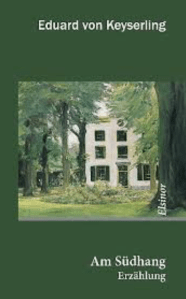
The cover of the German edition shows a painting of Max Liebermann, Landhaus in Hilversum (1901). It’s the perfect choice for this book.
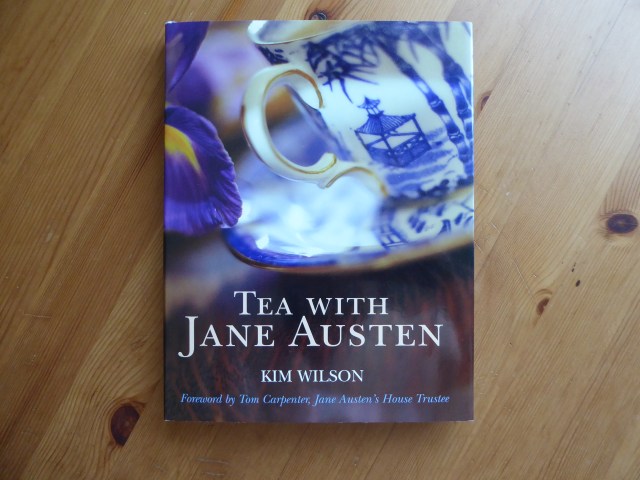
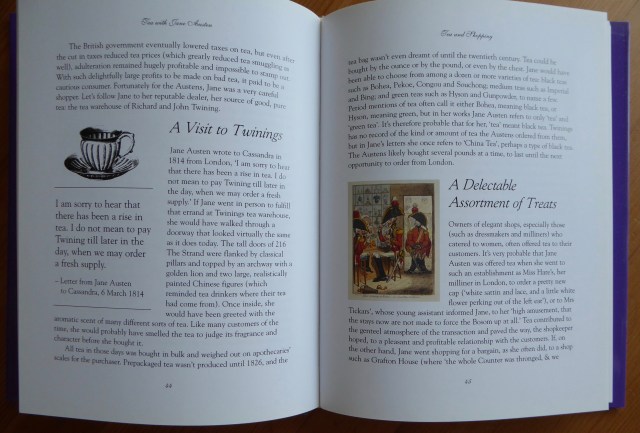
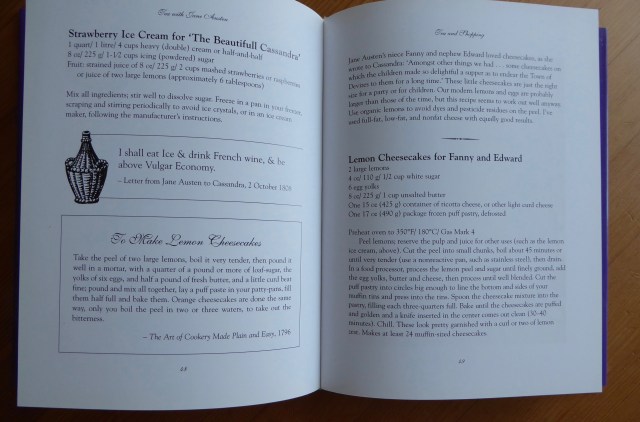
Tea with Jane Austen by Kim Wilson – History, Recipes, Quotes – A Post a Day in May

It is entirely possible that many of you already know Tea with Jane Austen as it was a favourite with book bloggers when it came out. That wasn’t exactly yesterday but in 2011. This edition, that is. The original was published in 2004.

Tea with Jane Austen is a delightful and informative book that will charm Jane Austen and tea lovers alike. As the introduction states:

The book examines the role tea played in everyday life for Jane Austen (1775 – 1817) and her characters. Illustrated with extracts from her novels, her letters, and the writings of her contemporaries, each chapter looks at tea in a different context, from taking tea at various times of day to its function in particular aspects of their lives. I also include some recipes of the time, along with adaptations for the modern cook, for tasty fare that was served with tea.

I like that we learn a lot about Austen’s life and the history and importance of tea at the time. The extracts from the letters and the quotes from the books really transport you back in time.

It’s an ideal companion to read alongside the novels, an excellent introduction to her life and work, or a nice way to remember those we’ve already read. But it can also be used to recreate a breakfast, afternoon, or evening tea à la Jane Austen.

Kim Wilson has written other books about Jane Austen. At Home with Jane Austen looks particularly appealing.


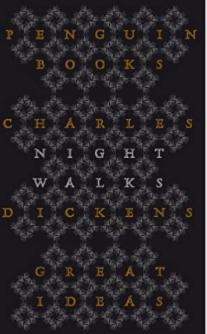
Night Walks by Charles Dickens – London by Night – A Post a Day in May

Today’s post is very short. We have the most delicious reading weather and I want to make the most of it. Yesterday the thermometer on my shady balcony showed 30°. It was hot and humid, so, as was to be expected, we have rain today. Not just a drizzle, a downpour. The back garden is full of very old trees with dense foliage that is now dripping with rain. It’s wonderful. The best reading weather ever.

Night Walks, one of the titles from the Penguin Great Ideas series, contains several journalistic texts Charles Dickens wrote between 1850 – 1870. I’ve only read the first short piece so far, the one that has given the book it’s title – Night Walks.

During a certain period of his life, Dickens suffered from insomnia. It was due to a “distressing impression” and led to his wandering the streets of London all night during a series of several nights. He never says what distressing impression caused his insomnia, only speaks about the cure. Since he couldn’t sleep, he decided, it would be best to go for long walks. He must have left the house around midnight and only returned after sunrise to, finally, fall into an exhausted sleep.

This is a very short piece but it’s immensely enjoyable. Dickens describes his nightly London so well, creates such an uncanny atmosphere, touches on so many themes like homelessness, social injustice, poverty, mental health, in a mere 15 pages.

But the river had an awful look, the buildings on the bans were muffled in black shrouds, and the reflected lights seemed to originate deep in the water, as if the spectres of suicides were holding them to show where they went down. The wild moon and clouds were as restless as an evil conscience in a tumbled bed, and the very shadow of the immensity of London seemed to lie oppressively upon the river

He starts his walk close to Waterloo Bridge, at the time, a toll bridge, and walks on in the direction of London Bridge, Westminster, and ends at Covent Garden. He passes prisons, asylums, and theatres. After two in the morning, when the last pub closes, it gets very quiet. Only very few people are out and about and he cherishes what little contact he has, with the man on the toll bridge for example. His favourite parts seem to be having a light breakfast at Covent Garden or watching the mail come in at a railway terminus.

I tried to find out what caused Dickens’ insomnia and came across this interesting blog post

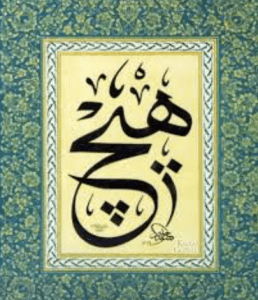
The Calligraphers’ Night – La nuit des calligraphes by Yasmine Ghata – A French/Turkish Novel – A Post a Day in May

Yasmine Ghata was born in France to a Turkish father and a Lebanese mother, the famous poet Vénus Khoury-Ghata. Yasmine Ghata studied Islamic Art. The Calligraphers’ Night – La nuit des calligraphes was her first novel. It was published in French in 2004, the Hesperus edition is from 2007. It’s currently sold out but used copies can be found very easily.

The Calligraphers’ Night tells a very poetic version of the story of Yasmine Ghata’s grandmother, the first female Turkish master calligrapher Rikkat Kunt. The book is told in first person, from the point of view of Rikkat. Rikkat Kunt was born in 1903 in Istanbul, where she also died in 1986. She was always drawn to calligraphy, the art that captures Allah’s breath, but at first she was married to a man she didn’t love. It wasn’t easy being a calligrapher for a woman but especially difficult at the time because calligraphy was on the way to extinction. Calligraphy and book illustrations were predominately Islamic art forms. But in 1928, attempting to modernize Turkey, Atatürk abolished the use of the Arabic alphabet in favour of a new Europeanized alphabet. The calligrapher’s work was threatened not only because it would lose meaning but also because Atatürk was not in favour of Islam.

Caught between a loveless marriage and those radical changes, Rikkat Kunt had to fight hard to pursue her calling. She finally got a divorce and worked as a calligraphy teacher at a university. Later, she met another man and another unhappy marriage followed. The son of that marriage would be the father of the author of this book.

This is such a beautiful book. The way it’s told is poetic. We really get a sense for this beautiful art and a better understanding for the religion. Everything has meaning in this art. Not only the finished product but the act of drawing the words or decorative borders of the books. The narrator explains, for example that the time the ink needs to dry, less than a minute in winter, several seconds in summer, corresponds to the presence of God.

Calligraphy is not only described as art but as magic. It is holy and without religion meaningless. Later however, Rikkat Kunt, too, began to modernize her calligraphy and strayed from the path of religion.

I mentioned before that Rikkat Kunt is the narrator, but I also need to mention that she begins her story after her death. The pages are populated with the ghosts of her predecessors. The ghosts of famous calligraphers are always presents and guide her. I think this symbolizes the tradition of this art. They all contribute to praise Allah and his prophet and one influences the next.

I loved this book so much. Not only is the writing beautiful and the story fascinating, but I feel like I learned so much about Turkish culture, language, history, and religion. The way this is presented is informative but never dry and fits into the story seamlessly. And I’ve always been fascinated by calligraphy. I also find Arabic so beautiful to look at that I wanted to learn it once.

Because being a calligrapher was so unusual for a women and because women at the time didn’t have a lot of freedom, the book is also about the role and position of women in Turkish culture.

I’ve been to Turkey but not to Istanbul. I always wanted to see it, now more so than ever.

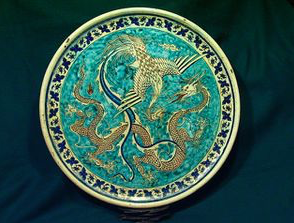
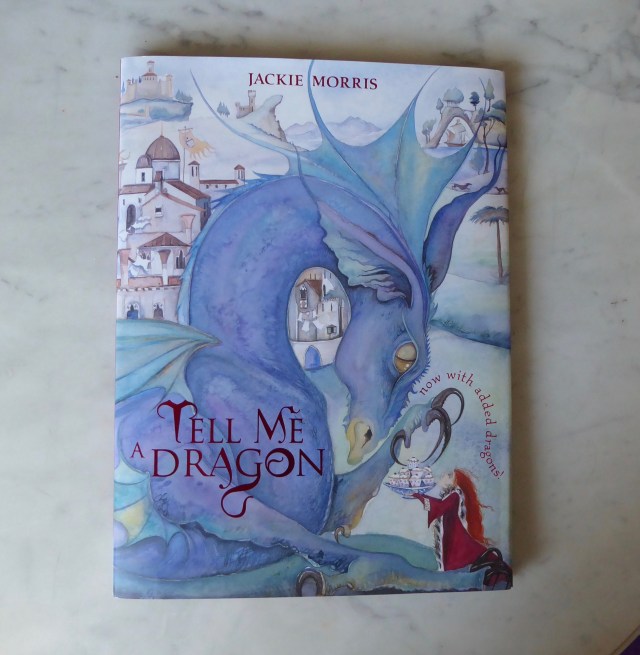
Tell Me A Dragon – The Wonderful Art of Jackie Morris – A Post a Day in May

As you know by now, I’m fond of children’s books. Especially picture books. I only have a small collection, but I cherish every single book. Those I usually like the most are the ones that have been written and illustrated by the same person. When I discovered Jackie Morris and her art on Twitter, I knew immediately that I would love to collect her books. The artwork is just stunning.

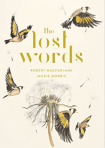
She has also done several very interesting collaborations. Lost Words, her collaboration with Robert MacFarlane, garnered a lot of praise.

Fantasy Fans will know her from her cover art of Robin Hobb’s famous series.

Her books are exquisite and appeal to adults just as much as they appeal to children.

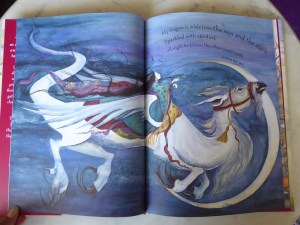
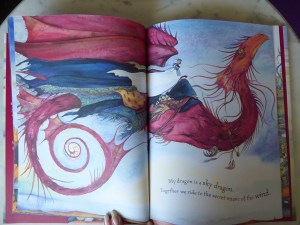
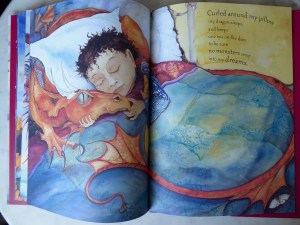
Even though I want to collect her books, I have only gotten one so far. The picture book – Tell Me A Dragon.


I absolutely love it. The artwork is delicate, the colors so intense.


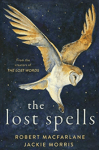
I know I will get the books she did with Robert Macfarlen, Lost Words and Lost Spells, which hasn’t been published yet.

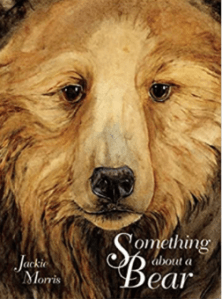
But I would also like to get her other picture books eventually.

Jackie Morris lives in Wales with her children and three cats.  It’s worth following her on Twitter. It’s such a lovely account with photos, kitten pics, and sneak peeks at her art. Here’s the link to her Twitter account and the link to her blog.

Love by Angela Carter – A Post A Day in May

Opening an Angela Carter novel is like entering an opulent, sumptuously decorated room. It’s lush, it’s whimsical, it’s anything but minimalist. Love is no exception; it might even be one of the lusher ones I’ve read. Heroes & Villains has always been my favourite because of the imagery. Love has similar elements. The landscape, the apartment, the people, they are a bit wild, a bit mad, and reflect Angela Carter’s very distinct aesthetic. The book also reminded me of one of Le Douanier Rousseau’s paintings. He used to be my favourite painter as a child.

Love tells the story of a relationship triangle. One could call it a love triangle but whether there really is love among these three people, even though the title might indicate so, is questionable.

Annabel is a fragile, anxious art student who lives in her mind. Everything she sees is fed into her own mythology. Things have value only as far as they somehow fit into this mythology.

She quickly interpreted him into her mythology but if, at first, he was a herbivorous lion, later he became a unicorn devouring raw meat.

Lee, a former literature student and now teacher, is very different. He drifts through life, attracting women with his good looks and dazzling smile. His brother Buzz is more like Annabel. Slightly crazy, definitely wild, delinquent, and unpredictable.

At the beginning of this short novel, Lee and Buzz live together. They are only half-brothers and don’t have a lot in common except for a troubled childhood, but they are close or rather dependent on each other. One morning, after a party, Lee wakes up and a girl he doesn’t know lies next to him. How Annabel landed there, is explained later. This scene shows, they didn’t really choose each other. Fate brought them together. Annabel moves in with Lee. Buzz is travelling at that time, but once he comes back, dynamics change and the relationship becomes problematic.

Before Annabel moves in, Lee lives in white rooms. Her arrival brings colour and disorder. Because she’s an art student, and loves colour, she will soon cover his walls with paintings (see quote at the end of the post).

They rolled all over the pastel crayons scattered on the sheets so her back was variegated with patches and blotches all the colours of the rainbow and Lee was also marked everywhere with brilliant dusts, both here and there also darkly spotted with blood, each a canvas involuntarily patterned by those workings of random chance so much prized by the surrealists.

This is a rich tale of complicated relationships with destructive and self-destructive facets. Upon reading the names Annabel and Lee, anyone who knows Edgar Allan Poe, will immediately think of his poem Annabel Lee. That’s not a coincidence. If you know it, you know this is a tragic story. (You can read the poem here)

Annabel is so frail that a man like Lee, who carelessly drifts through life, seducing one woman after the other, unhinges her. And the friendship with someone like Buzz, who is as unconventional as they come, makes things even worse.

I loved this book so much. It’s one of a few books by her that I hadn’t read when I went through my Angela Carter phase. I’m not sure why. Possibly because of the title. I didn’t expect it to be this good. Reading it was like watching a very trippy movie or exploring a house with rooms that are all decorated in another, but very luxurious way. It’s also fascinating as a character study.

Love has so many symbols, themes, and images that fans of Angela Carter wil recognise from her other novels: rich interiors, leafy nature, passion, mental health, suicide, female sexuality, bourgeoisie, bohème, marriage, free love . . . I could go on and on.

I’m afraid, I’m not doing this complex book any justice. It would deserve an in-depth review but, because of my project, I don’t have the time to go deeper.

Angela Carter wrote an Afterword to Love, in which she imagines the future of her characters. It’s a feminist sequel to Love. Style-wise it was different from the novel, more sarcastic and cheeky.

I’ll leave you with a favourite passage from the beginning of the book (p.7)

In their room, Lee lay face down on the carpet in front of the fire, perhaps asleep. The walls around him were painted a very dark green and from this background emerged all the dreary paraphernalia of romanticism, landscapes of forests, jungles and ruins inhabited by gorillas, trees with breasts, winged men with pig faces and women whose heads were skulls. An enormous bedstead of dull since rarely polished brass, spread with figured Indian cotton, occupied the center of the room which was large and high but so full of bulky furniture in dark woods (chairs, sofas, bookcases, sideboards, a round mahogany table covered with a fringed, red plush cloth, a screen cover with time browned snaps) that one had to move around the room very carefully for fear of tripping over things. Heavy velvet curtains hung at the windows and puffed blue dust at the touch; a light powder of dust covered everything. On the mantelpiece stood the skull of a horse amongst a clutter of small objects such as clockwork toys, stones of many shapes and various bottles and jars.

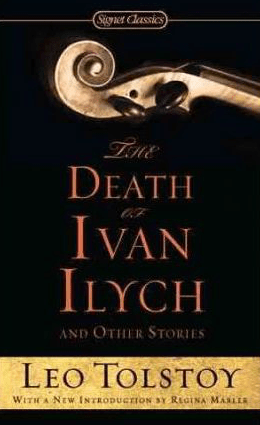
The Death of Ivan Ilych by Leo Tolstoy – Classic Russian Literature – A Post a Day in May

Leo Tolstoy’s novella The Death of Ivan Ilych was published in 1886, roughly thirty years after War and Peace and twenty years after Anna Karenina.

I have read this before but felt it was time to reread it. I didn’t realize when starting it, what an excellent companion piece to Flaubert’s A Simple Heart this is. Both novellas tell the story of a life. One the story of a simple, uneducated woman, the other the story of a highly educated, successful man. Both stories are tragic.

The Death of Ivan Ilych starts with the discussion of a few lawyers, one of which just read their colleague, Ivan Ilych, has died. This intro chapter sets the tone. The reaction of the men tells us everything about them, their way of life, and Ivan Ilych’s life. Not one of them is saddened. They are only upset because it briefly reminds them of death. They soon console themselves though.

The very fact of the death of someone close to them aroused in all who heard about it, as always, a feeling of delight that he had died, and they hadn’t.

Only one of the men feels he should pay the widow a visit. Seeing the dead man makes him feel uncomfortable. He’s glad when he can escape again and go back to his life, his “friends” and playing bridge, a game Ivan Ilych had enjoyed and been very good at.

After this intro chapter follows the story of Ilych’s life. This is how it begins:

Ivan Ilych’s life had been most simple and most ordinary and therefore most terrible.

This is so short and cruel and tells us in one sentence everything that we need to know about Ivan Ilych. It condenses what we will read in the next chapters in more detail.

Ivan Ilych was a successful lawyer. He made a stunning career, even though he wasn’t always happy with the developments, especially not after he got married. What at first looked like a good idea, settling down with someone who had a bit of money and was nice to look at, soon proved to have been a mistake. She was jealous and never happy with what they had, always pushing him to make more and more money. He did so, not only for her and domestic peace, but because he, too, measured success in terms of financial and professional success. And he also liked power.

In his work itself, especially in his examinations, he very soon acquired a method of eliminating all considerations irrelevant to the legal aspect of the case, and reducing even the most complicated case to a form in which it would be presented on paper only in its externals, completely excluding his personal opinion of the matter, while above all observing every prescribed formality.

After living in provincial towns for many years, he finally gets offered a very good position in St Petersburg. He buys a house and furnishes it the way he always wanted. In his eyes it is perfection. But the author tells us otherwise.

In reality it was just what is usually seen in the houses of people of moderate means who want to appear rich, and therefore succeed only in resembling others like themselves: there are damasks, dark wood, plants, rugs, and dull and polished bronzes — all the things people of a certain class have in order to resemble other people of that class. His house was so like the others that it would never have been noticed, but to him it all seemed to be quite exceptional.

Ivan Ilych, who has never done any manual thing in his life, enjoys decorating his new home but then something happens. He has a minor accident and feels some pain in his side.

Soon after this, he notices that the pain won’t go and that he has other symptoms. He knows he’s seriously ill, even fears he might die.

Over the next months, Ivan Ilych deteriorates more and more, is misdiagnosed and misunderstood and dies a lonely painful death.

Ilych’s illness and death are slow and agonizing and give him time to think about his life. He realizes that something had been missing, that he had measured success in the wrong way.

‘Maybe I did not live as I ought to have done,’ it suddenly occurred to him. ‘But how could that be, when I did everything properly?’ he replied, and immediately dismissed from his mind this, the sole solution of all the riddles of life and death, as something quite impossible.

The tragedy is that the doctors who are incapable of empathy, are just like he was with the criminals— pompous and condescending. His entire world, he discovers is full of falsehood.

What tormented Ivan Ilych most was the deception, the lie, which for some reason they all accepted, that he was not dying but was simply ill, and that he only needs keep quiet and undergo a treatment and then something very good would result.

The Death of Ivan Ilych is an upsetting story. It’s dreadful to see how much he suffers and how nobody cares. I think one can also feel that Tolstoy didn’t like his character and that might be the biggest difference to Flaubert’s story. Flaubert didn’t judge Felicité. He felt compassion. Tolstoy doesnt feel compassion for Ilych as he seems to stand for everything Tolstoy abhors – bureaucracy, nepotism and arrivistes.

As I mentioned before, I read this twice and it feels like I’ve been reading two different stories just because my own life has changed so much. The first time, I’ve read it right after my dad’s death. This time around the sections on illness got to me more because the doctor’s reminded me so much of some of the doctor’s I’ve seen in the last couple of months. They just didn’t listen and had their idea about why I was in pain but very clearly they were wrong.

A lot has been speculated about Ivan Ilych’s illness. It’s never said what he has and might not be important. There are also many theories about the meaning of this story. To me, it is the story of a man who wanted only pleasant things in life, who hated change, and let himself drift until he hit a major obstacle, which he was incapable of overcoming. In that, and verything else, he is indeed mediocre.