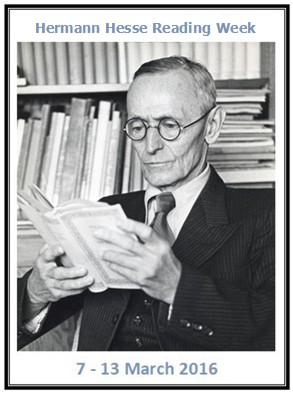
Welcome to Hermann Hesse Reading Week 7 – 13 March 2016

hesse revised

Today is the first day of Hermann Hesse Reading Week, here at my blog and over at Kaggsy’s Bookish Ramblings. I’ve been busy and have read a couple of books (Rosshalde, Klingsor’s letzter Sommer, Wanderung) and will write about them shortly. Pat (South of Paris Books) and I will both write about Klingsor on Thursday 10 March, so if anyone has read that too, try to  join our discussion.

If you participate, please use the Mr. Linky, so Karen and I can visit and comment. Just add your name (blog) + the name of the book you’ve read and then the link below.

I wish everyone a great week.


Literature and War Readalong March 31 2016: 1914 by Jean Echenoz

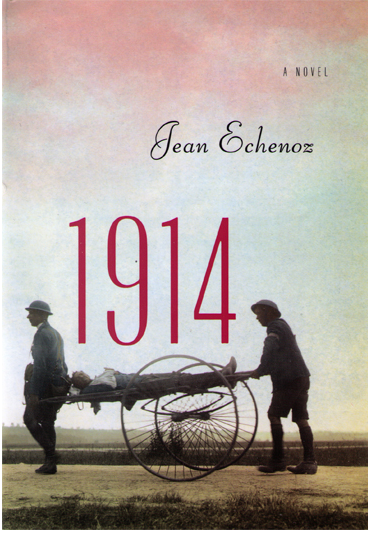
1914

This month’s readalong title is the slim novel 1914  – 14 by prize-winning French author Jean Echenoz. He has won the Prix Médicis for Cherokee and the Prix Goncourt for I’m off – Je m’en vais, both prestigious prizes, and a number of smaller prizes as well. He’s been on my radar for a long while and when I saw he wrote a novel set during WWI, I was immediately tempted. To be honest, the book has received mixed reviews. I’m very curious to find out on which side I’ll be.

Interestingly, the French title is 14 not 1914. One could probably discuss endlessly why they chose 1914 for the English translation and whether it’s right to change it like that. When I compared the beginning of the two books in French and English I noticed considerable differences. Those who read it in English, will have to tell me what they think of the translation.

Here are the first sentences:

Since the weather was so inviting and it was Saturday, a half day, which allowed him to leave work early, Anthime set out on his bicycle after lunch. His plan: to take advantage of the radiant August sun, enjoy some exercise in the fresh country air, and doubtless stretch out on the grass to read, for he strapped to his bicycle a book too bulky to fit in the wire basket. After coasting gently out of the city, he lazed easily along for about six flat miles until forced to stand up on his pedals while tackling a hill, sweating as  he swayed from side to side. The hills of the Vendée in the Loire region of west-central France aren’t much, of course, and it was only a slight rise, but lofty enough to provide a rewarding view.

And some details and the blurb for those who want to join

1914  – 14 by Jean Echenoz, 120 pages France 2012, WWI

Here’s the blurb:

Jean Echenoz turns his attention to the deathtrap of World War I in 1914. Five Frenchmen go off to war, two of them leaving behind young women who long for their return. But the main character in this brilliant novel is the Great War itself. Echenoz, whose work has been compared to that of writers as diverse as Joseph Conrad and Laurence Sterne, leads us gently from a balmy summer day deep into the relentless – and, one hundred years later, still unthinkable – carnage of trench warfare.

*******

The discussion starts on Thursday, 31 March 2016.

Further information on the Literature and War Readalong 2016, including all the book blurbs, can be found here.

Vanessa Gebbie: Storm Warning – Echoes of Conflict (2010) Literature and War Readalong February 2016

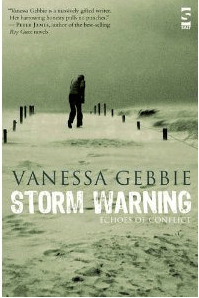
Storm Warning

Very often short story collections are just that – collections of stories that may or may not have a few themes in common. Most of the time, the themes are different, while the voice stays the same. Not so in Vanessa Gebbie’s stunning collection Storm Warning – Echoes of Conflict. The themes —war and conflict— are the same in every story, but the voices, points of view, the structure, the range of these stories is as diverse as can be. That’s why this collection is one of those rare books, in which the sum is greater than its parts. Each story on its own is a gem, but all the stories together, are like a chorus of voices lamenting, accusing, denouncing, and exploring conflict through the ages and the whole world. The result is as chilling as it is powerful and enlightening. I don’t think I’ve ever come across anything similar in book form and the only comparable movie, War Requiem, uses a similar technique only at the very end, during which we see  horrific original footage taken from many different wars, covering decades, and dozens of countries.

We’ve often discussed the question of how to write about war in the Literature and War Readalong and I’ve said it before – if I put away a book and am left with a feeling of  I-wish-I’d-been-there, then the book is a failure in terms of its anti-war message. I don’t think one should write about war and give readers a similar, pleasant frisson, they get when they read crime. I can assure you, you won’t have a reaction like this while reading Storm Warning. Without being too graphic, Vanessa Gebbie’s message is clear – there’s no beauty in war. There’s no end to war either. Even when a conflict is finished, it still rages on in the minds of those who suffered through it. Whether they were soldiers or civilians. War destroys bodies and souls. And—maybe one of the most important messages— war is universal. Including stories set in times as remote as the 16th century, choosing locations as diverse as South Africa, the UK, and Japan, conflicts like WWI, WWII, the Falklands war, Iraq, Vietnam, and many more, illustrates this message powerfully. Choosing from so many different conflicts also avoids falling into the trap of rating. I always find it appalling when people rate conflicts, saying this one was worse than that one. Maybe the methods are more savage in some conflicts, but they are all equally horrific.

What is really amazing in this collection is that so many of the stories get deeper meaning because they are juxtaposed with other stories. For example, there’s the story The Ale Heretics set in the 16th Century, in which a condemned heretic, awaits being burned. Burning people alive was such a savage and abominable thing to do, but just when we start to think “Thank God, that’s long gone” – we read a story about necklacing, a form of torture and execution, practiced in contemporary South Africa (possibly in other regions too), in which the victims are also burned alive. And, here too, it’s said to be in the name of the law. If I had only read the first story, it wouldn’t have been as powerful as in combination with the second.

Vanessa Gebbie’s writing is very precise, raw, expressive. As I said before, each story has a distinct voice. There are men and women talking to a dead relative, others seem to try to explain what happened to them, others accuse, many denounce. Yet, as precise as the writing is, often there’s an element of mystery as to what conflict we are reading about. While it’s mostly clear, what conflict is described, they are rarely named. Interestingly, this underlines the similarity and universality, but it also makes differences clear. When a girl talks to her dead sister Golda, mentions the Kristallnacht, we know, it’s a Holocaust story. When gas gangrene is mentioned, we know it is about WWI.

Many of you might wonder, whether the stories are not too graphic, whether the book is depressing. There’s a balance between very dark and dark stories. There’s a touch of humour here and there, even if it’s gallows’ humour, and there’s the one or the other story that’s almost uplifting like my own personal favourite Large Capacity, Severe Abuse. In this story, a Vietnam veteran lives in the basement of an apartment house for retired army officers. He’s in charge of washing their laundry which gives him an opportunity for revenge. This story illustrates also the invisibility of many veterans. They are decorated, they return, they suffer, but society doesn’t care. Some of the veterans in this collection, end up homeless. Too sum this up— the collection is not easy to read, as it’s quite explicit in showing that war mutilates bodies and souls.

Another favourite story was The Return of the Baker, Edwin Tregear. It’s a story that does not only illustrate the difficulties of the homecoming, but the absurdity of things that happened during the war. In this case WWI and its practice of firing soldiers for so-called cowardice.

Some of the stories describe a narrow escape like in The Salt Box, in which a dissident poet finds an unexpected ruse to destroy his poems when his house is searched.

The narrators and characters in these stories are of different gender and age. Stories that have child narrators are often particularly harrowing. There’s the one called The Wig Maker, in which a child witnesses the execution of the mother, and another one, The Strong Mind of Musa M’bele, in which the kid knows his father will be necklaced. Another kid, in Cello Strings and Screeching Metal, witnesses someone being shot while climbing the Berlin Wall.

Quite a few of the stories are more like snapshots; they are very brief, only a page or two, but there are some longer ones as well.

I must say, I’m impressed. The range of these stories is amazing. Getting voice right and distinct, is a difficult thing to do and to get it as right and as distinct in so many stories is absolutely stunning. This is certainly one of the most amazing and thought-provoking anti-war books I’ve ever read.

Should you be interested, one of the stories – The Wig Maker – is available online. Just a warning – it’s possibly the most explicit of the collection.

Vanessa Gebbie is joining our discussion, so, please, don’t hesitate to ask questions.

Other reviews

Danielle (A Work in Progress)


*******

Storm Warning is the first book in the Literature and War Readalong 2016. The next book is the French WWI novel 1914  – 14 by Jean Echenoz. Discussion starts on Thursday 31 March, 2016. Further information on the Literature and War Readalong 2016, including the book blurbs can be found here.

Literature and War Readalong February 29 2016: Storm Warning by Vanessa Gebbie

Storm Warning

The first readalong of this year’s Literature and War Readalong 2016 is very special for several reasons. It’s the first time, I’ve included a short story collection. Then it’s the first book that deals with more than just one conflict. And— I’m particularly pleased about this— the author, Vanessa Gebbie, will join the discussion. Needless to say I’m really looking forward to the discussion and hope that many of you will join.

Since it’s a short story collection I’ve added the first sentences of the first three stories:

The Return of the Baker, Edwin Tregear

Unlike so many, I came home in July. Some of the lads got off the train at Exeter, some at Plymouth. I must have gone to sleep. I woke at Penzance, my stop, when someone shouted, “End of the line, mate.”

Storm Warning

I was on leave.

Telephone call from Istanbul, 3am, Wednesday. Woman’s voice. “StormWarning.”

Gas Gangrene

For the soldiers buried at Tyn Cot Cemetery, Flanders

It’s a sick joke, mate, looking back. You people think gas gangrene was some sort of bloating, a passing blackening of the lungs, a momentary seizing up, that it went as the clouds dispersed.


And some details and the blurb for those who want to join

Storm Warning: Echoes of Conflict by Vanessa Gebbie, 120 pages, UK, 2010, WWII

Here’s the blurb:

Storm Warning explores the echoes and aftershocks of human conflict in a series of powerful stories in which the characters are tested, sometimes to breaking point. Gebbie pulls no punches, exploring the after-effects of atrocity and sometimes, the seeds of atrocity itself.

*******

The discussion starts on Monday, 29 February 2016.

Further information on the Literature and War Readalong 2016, including all the book blurbs, can be found here.

Final Giveaways and Looking Back on German Literature Month 2015

literatur_2015_gold-2

It feels as if I only just posted the intro to German Literature Month 2015. It’s hard to believe the month is already over.

And what a month it was. So many great posts. We have a total of 157 contributions. I’m not really into statistics, so I can’t tell you whether that’s more or less than last year – be it as it may, it’s a lot.

Thank you so much for your enthusiasm.

I haven’t read as much as I wanted, nor have I been able to visit everyone, but I’m still doing my rounds.

As a thank you to all of you, I’m giving away two books from Pushkin Press.

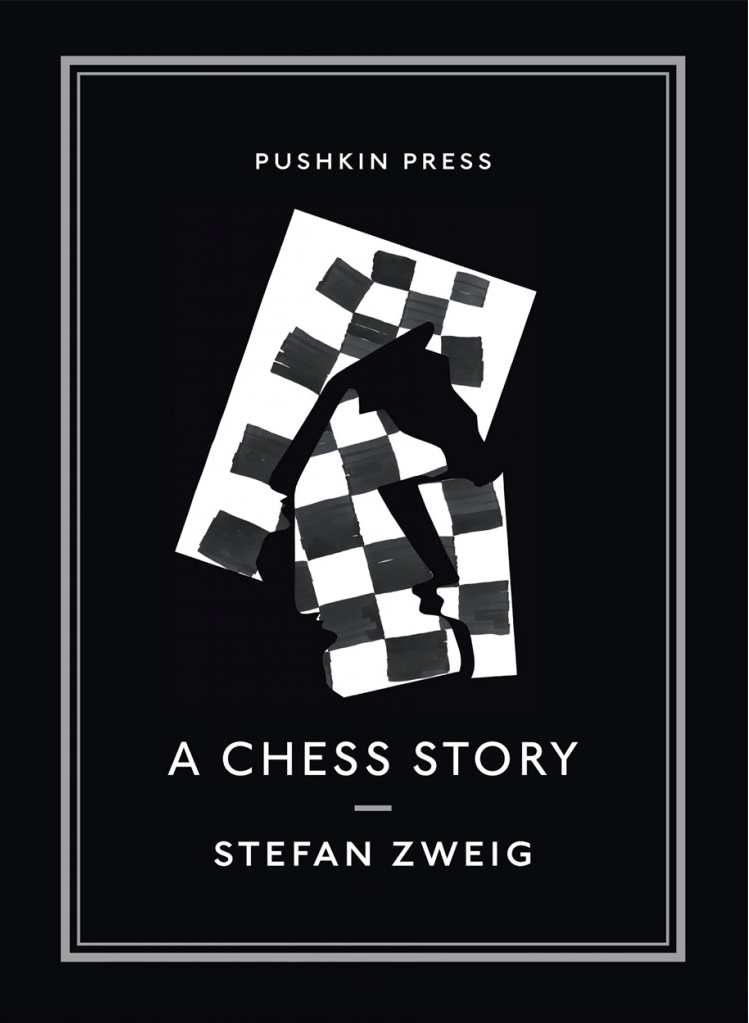
A Chess Story

Stefan Zweig’s A Chess Story

Chess world champion Mirko Czentovic is travelling on an ocean liner to Buenos Aires. Dull-witted in all but chess, he entertains himself on board by allowing others to challenge him in the game, before beating each of them and taking their money. But there is another passenger with a passion for chess: Dr B, previously driven to insanity during Nazi imprisonment by the chess games in his imagination. But in agreeing to take on Czentovic, what price will Dr B ultimately pay?

A moving portrait of one man’s madness, A Chess Story is a searing examination of the power of the mind and the evil it can do.

The Sorrows of Young W.

Ulrich Plenzdorf’s The Sorrows of Young W. A retelling of Goethe’s famous novel, set in GDR. It’s often called a GDR Catcher in the Rye.

‘I was just a regular idiot, a nutcase, a show-off and all that. Nothing to cry about. Seriously’

Edgar W., teenage dropout, unrequited lover, unrecognized genius – and dead – tells the story of his brief, spectacular life.

It is the story of how he rebels against the petty rules of communist East Germany to live in an abandoned summer house, with just a tape recorder and a battered copy of Goethe’s The Sorrows of Young Werther for company. Of his passionate love for the dark-eyed, unattainable kindergarten teacher Charlie. And of how, in a series of calamitous events (involving electricity and a spray paint machine), he meets his untimely end.

Absurd, funny and touching, this cult German bestseller, now in a new translation, is both a satire on life in the GDR and a hymn to youthful freedom.

Ulrich Plenzdorf was born in Berlin in 1934, and studied Philosophy and Film in Leipzig. In the early 1970s, he achieved fame with the much acclaimed The New Sorrows of Young W., considered a modern classic of German literature and taught in classrooms across Germany. From 2004 onwards, Plenzdorf was a guest lecturer at the German Institute of Literature in Leipzig. An award-winning and much celebrated author and dramatist, he died in 2007.

*****

All you have to do is tell me which book you’d like to win and why. The giveaways are open internationally. I’ll announce the winners on Monday 7 December 17:00 – Western European time.

This Giveaway is now closed!

Imre Kertész: Fateless – Sorstalanság (1975) Literature and War Readalong September 2015

Fateless

Imre Kertész novel FatelessSorstalanság tells the story of fifteen-year old Gyuri Köves, a Jewish boy who lives in Budapest. It starts in 1944, on the day on which Gyuri’s father is sent to a labour camp. What strikes the reader from the beginning is the narrator’s voice and his cluelessness. He’s a young boy, interested in girls and puzzled by his parents strange arrangements (he lives with his father and his stepmother and his parents often quarrel because his mother wants him to live with her). He notices everything that goes on around him but his interpretations are always slightly off. He finds logic in many shocking things, like the yellow star they have to wear, the way they are being treated by non-Jews and many other things. Why? Because they seem logical, from a certain point of view. And because he doesn’t feel like a Jew. His family isn’t religious. They even eat porc during the last dinner with his father. He feels that the star and being ostracized hasn’t really anything to do with him. It’s not personal.

A little later Gyuri is sent to work in a factory and then, one morning, has to get off the bus and wait endlessly for a train to take him and others to another “work place”. Of course, the reader knows it’s a concentration camp. He’s first sent to Auschwitz, then to Buchenwald and later to Zeitz.

He still finds logic in everything he sees. In the way they are forced to work, in the way they are punished. That doesn’t mean he doesn’t suffer. He’s cold, dirty and constantly hungry. He witnesses executions and is afraid of being sent to the gas chambers.

Towards the end of the book, he falls ill and is sent back to Buchenwald until the day the camp is freed and he can return to Budapest.

Reading a novel, set to large parts in a concentration camp, filtered through the consciousness of a narrator like this, was a peculiar and eerie experience. It could have gone wrong. It could have felt sensationalist and dishonest like The Boy in the Striped Pyjamas (I’m referring to the movie not the book), but it didn’t. It’s chilling because we know what he’s talking about but he doesn’t. When Gyuri tells us how everyone stepping off the train is inspected and then either sent to one group or the other, we know that it means that they will either be sent to a labour camp or to the gas chambers. Reading Gyuri’s assessment of what happens, his feeling of being chosen and found worthy – without knowing the real logic behind it all – is almost creepy.

The best novels don’t just follow a character from the beginning to the end but they show a change. And Gyuri does change. The boy who’s leaving the concentration camp is bitter and full of hatred. The days of his admiration for a system that runs,logically, smoothly, and mercilessly are long gone.

I’ve seen this novel called “shocking” and, if you’ve read my review until now, you may think, you know why. Because of the distortion. But that’s not the shocking part. What may seem odd is the end of the book. It’s not a plot element, therefore, I don’t consider it to be a spoiler to reveal the end. When Gyuri returns to Budapest, people refer to the horrors he must have seen or ask him whether it was like hell. He tells them that he hasn’t seen hell and therefore he doesn’t know how to compare. And  he finds it absurd when people tell him to start a new life, leave what has happened behind. But it’s not likely he will ever forget. What he doesn’t tell them is, that there were moments of great happiness in the concentration camp. And that’s the shocking thing of the novel. It shows us that we cannot imagine something we haven’t experienced. Whether we think, like some,  it wasn’t all that bad or whether we assume it was “hell” – we have no clue. Both assumptions are equally faulty. And there’s a certain arrogance in a assuming that we can picture what we don’t know.  And there can always be happiness. This reminded me of one of my favourite books – Solzhenitsyn’s One Day in the Life of Ivan Denisovich.

The end also reveals the meaning of the title. The novel describes many instances in which the Jews let the oppressor handle them like cattle. They never fight back. This, as Gyuri says, was a choice. Everything was a choice. There’s no such thing as “fate” – everybody is ultimately free, free to choose how to act. Always.

I wish this review was more eloquent but I’ve got the flu since Monday and my head is fuzzy. I’m sorry for that. It’s a book that would have deserved a careful review because it’s stunning. I really liked it a great deal and, for once, “like” isn’t a badly chosen word, even though I’m writing about a Holocaust novel.

I have watched the movie as well and found it powerful. It stay’s close to the novel, with the exception of the last parts. In the movie Gyuri is offered to go to the US when the camp is freed by the Americans. Going back to Hungary means going to the Russian sector. Nothing to look forward to. This isn’t a topic in the book.

The book is based on Kertész’s own experience. As a fourteen-year old he was sent to Auschwitz and from there to Buchenwald. Interestingly he says that the book is far less autobiographical than the movie.


Other reviews

Emma (Book Around the Corner)


*******

Fateless is the third book in the Literature and War Readalong 2015. The next book is the German novel A Time to Love and a Time to Die – Zeit zu leben und Zeit zu sterben by Erich Maria Remarque. Discussion starts on Friday 27 November, 2015. Further information on the Literature and War Readalong 2015, including the book blurbs can be found here.
Announcing German Literature Month V

literatur_2015_gold-2

I’m delighted to announce that Lizzy and I will host the 5th German Literature Month (#germanlitmonth) this coming November.


For those who have not participated before, here are the rules:


1) Whatever you read, in whichever language you read, must have originally been written in German.  Novels, novellas, short stories, plays, poems, they all count.   No genre is excluded.
2)  Enjoy yourself.  There’s no need to write long, detailed reviews (although we do like those).  A quick opinion piece, the posting of a favourite poem, the tweeting of a pertinent quote or picture of a delicious book cover (using the hash tag #germanlitmonth, of course) all contributes to a communal celebration of German-language literature.


You are free to pick what you like but for those who prefer some guidance or those who love the group-spirit of the event there are themed weeks and readalongs.


Week 1:  Nov 1-7 Schiller Reading Week. Hosted by Lizzy.


Friedrich Schiller Week


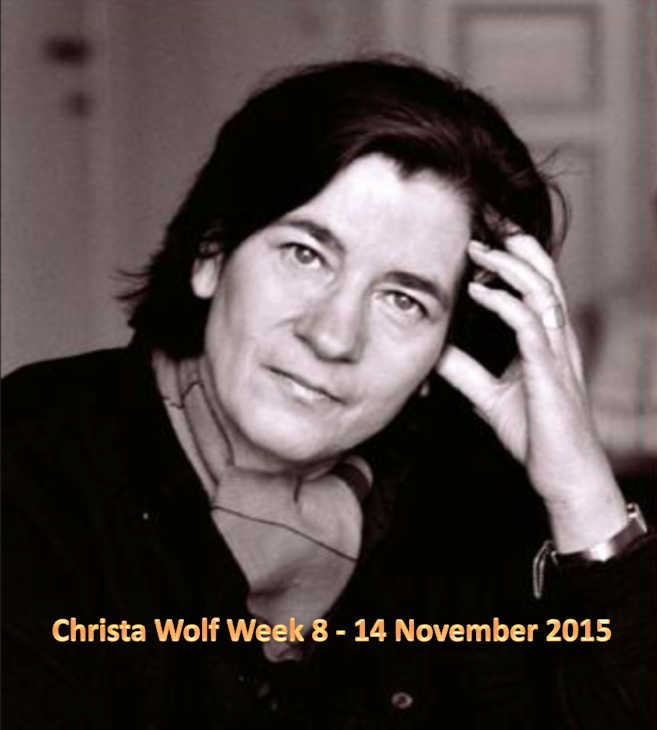
Week 2:  Nov 8-14 Christa Wolf Reading Week. Hosted by Caroline.


Christa Wolf Week


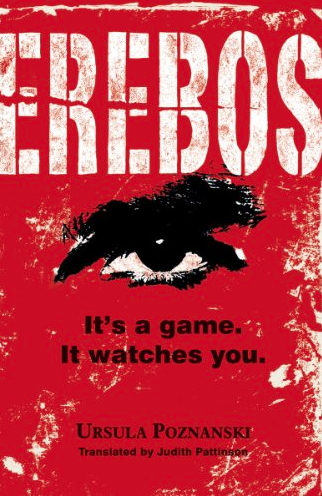
Week 3:  Nov 15-21 Ladies’ reading week incorporating a readalong of Ursula Poznanski’s award-winning YA title, Erebos on Friday 20.11.  Hosted by Lizzy.


Erebos


Here’s the blurb:
‘Enter.
Or turn back.
This is Erebos.’
Nick is given a sinister but brilliant computer game called Erebos. The game is highly addictive but asks its players to carry out actions in the real world in order to keep playing online, actions which become more and more terrifyingly manipulative. As Nick loses friends and all sense of right and wrong in the real world, he gains power and advances further towards his online goal – to become one of the Inner Circle of Erebos. But what is virtual and what is reality? How far will Nick go to achieve his goal? And what does Erebos really want?


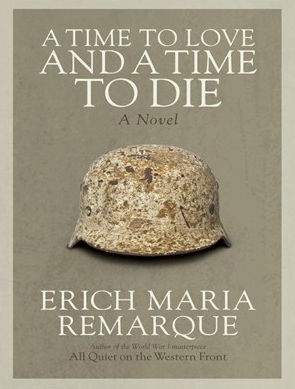
Week 4: Nov 22-28 Gents’ reading week incorporating a Literature and War readalong of Erich Maria Remarque’s A Time To Love and A Time to Die on Friday 27.11Hosted by Caroline.


A Time To Love and a Time to Die


Here’s the blurb:

From the quintessential author of wartime Germany, A Time to Love and a Time to Die echoes the harrowing insights of his masterpiece All Quiet on the Western Front.

After two years at the Russian front, Ernst Graeber finally receives three weeks’ leave. But since leaves have been canceled before, he decides not to write his parents, fearing he would just raise their hopes.

Then, when Graeber arrives home, he finds his house bombed to ruin and his parents nowhere in sight. Nobody knows if they are dead or alive. As his leave draws to a close, Graeber reaches out to Elisabeth, a childhood friend. Like him, she is imprisoned in a world she did not create. But in a time of war, love seems a world away. And sometimes, temporary comfort can lead to something unexpected and redeeming.
 
“The world has a great writer in Erich Maria Remarque. He is a craftsman of unquestionably first rank, a man who can bend language to his will. Whether he writes of men or of inanimate nature, his touch is sensitive, firm, and sure.”—The New York Times Book Review


Week 5: Nov 29-30 Read as You Please.


If you’re not sure what to read – our German Literature Month Page can help you with that.
German Literature Month IV was astounding in terms of numbers of participants (40) and quality contributions.  I’m not sure that we’ll be able to match it again, but let’s give it a shot. Are you in?