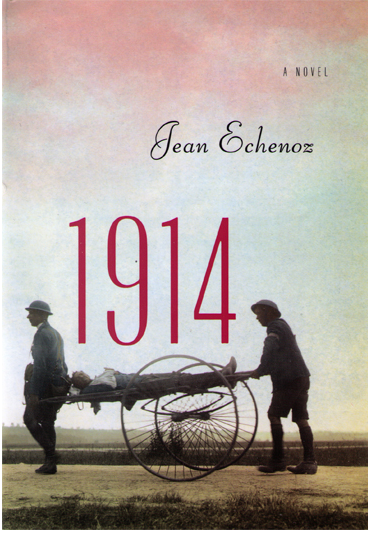
Literature and War Readalong March 31 2016: 1914 by Jean Echenoz

1914

This month’s readalong title is the slim novel 1914  – 14 by prize-winning French author Jean Echenoz. He has won the Prix Médicis for Cherokee and the Prix Goncourt for I’m off – Je m’en vais, both prestigious prizes, and a number of smaller prizes as well. He’s been on my radar for a long while and when I saw he wrote a novel set during WWI, I was immediately tempted. To be honest, the book has received mixed reviews. I’m very curious to find out on which side I’ll be.

Interestingly, the French title is 14 not 1914. One could probably discuss endlessly why they chose 1914 for the English translation and whether it’s right to change it like that. When I compared the beginning of the two books in French and English I noticed considerable differences. Those who read it in English, will have to tell me what they think of the translation.

Here are the first sentences:

Since the weather was so inviting and it was Saturday, a half day, which allowed him to leave work early, Anthime set out on his bicycle after lunch. His plan: to take advantage of the radiant August sun, enjoy some exercise in the fresh country air, and doubtless stretch out on the grass to read, for he strapped to his bicycle a book too bulky to fit in the wire basket. After coasting gently out of the city, he lazed easily along for about six flat miles until forced to stand up on his pedals while tackling a hill, sweating as  he swayed from side to side. The hills of the Vendée in the Loire region of west-central France aren’t much, of course, and it was only a slight rise, but lofty enough to provide a rewarding view.

And some details and the blurb for those who want to join

1914  – 14 by Jean Echenoz, 120 pages France 2012, WWI

Here’s the blurb:

Jean Echenoz turns his attention to the deathtrap of World War I in 1914. Five Frenchmen go off to war, two of them leaving behind young women who long for their return. But the main character in this brilliant novel is the Great War itself. Echenoz, whose work has been compared to that of writers as diverse as Joseph Conrad and Laurence Sterne, leads us gently from a balmy summer day deep into the relentless – and, one hundred years later, still unthinkable – carnage of trench warfare.

*******

The discussion starts on Thursday, 31 March 2016.

Further information on the Literature and War Readalong 2016, including all the book blurbs, can be found here.

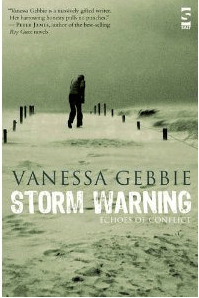
Vanessa Gebbie: Storm Warning – Echoes of Conflict (2010) Literature and War Readalong February 2016

Storm Warning

Very often short story collections are just that – collections of stories that may or may not have a few themes in common. Most of the time, the themes are different, while the voice stays the same. Not so in Vanessa Gebbie’s stunning collection Storm Warning – Echoes of Conflict. The themes —war and conflict— are the same in every story, but the voices, points of view, the structure, the range of these stories is as diverse as can be. That’s why this collection is one of those rare books, in which the sum is greater than its parts. Each story on its own is a gem, but all the stories together, are like a chorus of voices lamenting, accusing, denouncing, and exploring conflict through the ages and the whole world. The result is as chilling as it is powerful and enlightening. I don’t think I’ve ever come across anything similar in book form and the only comparable movie, War Requiem, uses a similar technique only at the very end, during which we see  horrific original footage taken from many different wars, covering decades, and dozens of countries.

We’ve often discussed the question of how to write about war in the Literature and War Readalong and I’ve said it before – if I put away a book and am left with a feeling of  I-wish-I’d-been-there, then the book is a failure in terms of its anti-war message. I don’t think one should write about war and give readers a similar, pleasant frisson, they get when they read crime. I can assure you, you won’t have a reaction like this while reading Storm Warning. Without being too graphic, Vanessa Gebbie’s message is clear – there’s no beauty in war. There’s no end to war either. Even when a conflict is finished, it still rages on in the minds of those who suffered through it. Whether they were soldiers or civilians. War destroys bodies and souls. And—maybe one of the most important messages— war is universal. Including stories set in times as remote as the 16th century, choosing locations as diverse as South Africa, the UK, and Japan, conflicts like WWI, WWII, the Falklands war, Iraq, Vietnam, and many more, illustrates this message powerfully. Choosing from so many different conflicts also avoids falling into the trap of rating. I always find it appalling when people rate conflicts, saying this one was worse than that one. Maybe the methods are more savage in some conflicts, but they are all equally horrific.

What is really amazing in this collection is that so many of the stories get deeper meaning because they are juxtaposed with other stories. For example, there’s the story The Ale Heretics set in the 16th Century, in which a condemned heretic, awaits being burned. Burning people alive was such a savage and abominable thing to do, but just when we start to think “Thank God, that’s long gone” – we read a story about necklacing, a form of torture and execution, practiced in contemporary South Africa (possibly in other regions too), in which the victims are also burned alive. And, here too, it’s said to be in the name of the law. If I had only read the first story, it wouldn’t have been as powerful as in combination with the second.

Vanessa Gebbie’s writing is very precise, raw, expressive. As I said before, each story has a distinct voice. There are men and women talking to a dead relative, others seem to try to explain what happened to them, others accuse, many denounce. Yet, as precise as the writing is, often there’s an element of mystery as to what conflict we are reading about. While it’s mostly clear, what conflict is described, they are rarely named. Interestingly, this underlines the similarity and universality, but it also makes differences clear. When a girl talks to her dead sister Golda, mentions the Kristallnacht, we know, it’s a Holocaust story. When gas gangrene is mentioned, we know it is about WWI.

Many of you might wonder, whether the stories are not too graphic, whether the book is depressing. There’s a balance between very dark and dark stories. There’s a touch of humour here and there, even if it’s gallows’ humour, and there’s the one or the other story that’s almost uplifting like my own personal favourite Large Capacity, Severe Abuse. In this story, a Vietnam veteran lives in the basement of an apartment house for retired army officers. He’s in charge of washing their laundry which gives him an opportunity for revenge. This story illustrates also the invisibility of many veterans. They are decorated, they return, they suffer, but society doesn’t care. Some of the veterans in this collection, end up homeless. Too sum this up— the collection is not easy to read, as it’s quite explicit in showing that war mutilates bodies and souls.

Another favourite story was The Return of the Baker, Edwin Tregear. It’s a story that does not only illustrate the difficulties of the homecoming, but the absurdity of things that happened during the war. In this case WWI and its practice of firing soldiers for so-called cowardice.

Some of the stories describe a narrow escape like in The Salt Box, in which a dissident poet finds an unexpected ruse to destroy his poems when his house is searched.

The narrators and characters in these stories are of different gender and age. Stories that have child narrators are often particularly harrowing. There’s the one called The Wig Maker, in which a child witnesses the execution of the mother, and another one, The Strong Mind of Musa M’bele, in which the kid knows his father will be necklaced. Another kid, in Cello Strings and Screeching Metal, witnesses someone being shot while climbing the Berlin Wall.

Quite a few of the stories are more like snapshots; they are very brief, only a page or two, but there are some longer ones as well.

I must say, I’m impressed. The range of these stories is amazing. Getting voice right and distinct, is a difficult thing to do and to get it as right and as distinct in so many stories is absolutely stunning. This is certainly one of the most amazing and thought-provoking anti-war books I’ve ever read.

Should you be interested, one of the stories – The Wig Maker – is available online. Just a warning – it’s possibly the most explicit of the collection.

Vanessa Gebbie is joining our discussion, so, please, don’t hesitate to ask questions.

Other reviews

Danielle (A Work in Progress)


*******

Storm Warning is the first book in the Literature and War Readalong 2016. The next book is the French WWI novel 1914  – 14 by Jean Echenoz. Discussion starts on Thursday 31 March, 2016. Further information on the Literature and War Readalong 2016, including the book blurbs can be found here.

On Richard Yates’ The Easter Parade (1976) and Cold Spring Harbor (1986)

Easter ParadeCold Spring Harbor

I had almost forgotten how fascinating it is to read several books of the same author, one after the other. You see patterns emerge, recurring motifs, similar themes. Maybe not every author’s work is as homogenous as Yates’ is. In his case, the books are variations on the same themes. Some readers might find it repetitive to read so many of his novels, but I liked to see the patterns and differences emerge. Comparing The Easter Parade with Cold Spring Harbor was particularly rewarding. Most of Yates’ main themes are already present in Revolutionary Road but The Easter Parade and Cold Spring Harbor take them one step further.

The similarities of The Easter Parade and Cold Spring Harbor are striking. In both books we have excentric, almost laughable, mothers who are prone to drinking. We have struggling daughters and/or sons, who desperately try to live a better life but fail hopelessly. We watch those daughters and sons have kids and already know they will pass on the “loser gene”. Divorce is as much a recurring theme as alcoholism, lack of ambition, self-deception, and a failure to stand up for oneself.

The Easter Parade tells the story of a mother, Pookie, and her two daughters, Sarah and Emily. From the frist sentence on we know the story will not be a happy one.

Neither of the Grimes sisters would have a happy life, and looking back it always seemed the trouble began with their parents’ divorce.

If ever a sentence summed up the books of an author, then this is it. Not only does it tell us that his characters will not be happy, but it places them firmly in a family tradition, which predestines them for unhappiness. This is an extremely pessimistic view of families. While I agree, it’s very difficult to free yourself from the influence of a dysfunctional family, I’m not as pessimistic as Richard Yates. I do believe it’s possible.

The two daughters in The Easter Parade live very different lives. While Sarah gets married early and has kids, Emily is a free spirit, who strives for a career and has many lovers. She does get married but the marriage doesn’t last. We can judge how pessimistic Yates was, when we follow Emily’s life. The only reasons, for me, why she couldn’t be happy was that her family prevented her. The strings that attached her were too tight, even after she left and went to live far away from them.

Cold Spring Harbor tells the story of different people. Evan Shepard comes from a broken home, although his parents aren’t divorced. His father could never live the life he wanted to live and his mother is a severely depressed alcoholic. Evan marries too early, gets a divorce, and then meets his second wife, Rachel and her family. Rachel’s mother resembles Pookie. She too has two kids, a daughter and a son, she is divorced, has illusions of grandeur and drinks too much. About halfway into the novel, we know that Rachel will follow in her footsteps and possibly pass her unhappiness on to her child. We do have hope for the son though.

Failed marriages and divorce are recurring themes but, unfortunately, Yates’ characters experience other forms of misery. They are either not ambitious and therefore never achieve any type of professional fulfillment, or they are ambitious but not good enough at what they are doing and will never know success.

Both novels are sad and tragic but, strangely enough, they didn’t depress me. Yates’s outlook is pessimistic but when you look at his characters closely, you see that the misfortune is the result of their own doing. You don’t need to let your parents unhappy lives/marriages drag you down. Just because your parents drink, that doesn’t mean you have to start drinking as well. Maybe it’s odd, but in a way I found the books almost comforting because, maybe unbeknownst to Richard Yates himself, they seemed to be telling— this only happened to these people because they didn’t free themselves.

And then, like in Revolutionary Road – there’s the writing which is simply amazing. He’s got a knack for describing people like not many other authors. Actually, this aspect of his writing, reminded me a lot of Jane Austen. I already felt that when reading Revolutionary Road but after these two books, even more. Like Jane Austen, he can see right through people and phrase this in a witty way. The biggest difference is the fate he’s got in store for them. Not one of them is allowed a Happy Ending à la Austen. That said, his observations and descriptions are so masterful that they always cheer me up.

I’m not sure which of the three novels I’ve read so far I liked best. Possibly The Easter Parade. Cold Spring Harbor is like another version of that book; a slightly less perfect one.

Here’s my review of Revolutionary Road.

Matthew Frank: If I Should Die (2014)

If I Should Die

I’ve seen so many rave reviews of this crime novel, that I had to pick it up. It’s a police procedural, set in London. I’m not sure whether this is a first in a series but it’s possible. The main character is trainee detective, Joseph Stark, a twenty-five-year-old Irak and Afghan veteran, dealing with heavy PTSD. He’s still recovering from an ambush that cost the lives of his comrades and has left him scarred and wounded.

When Stark begins his work at the precinct, repeated attacks on homeless people are worrying the police. When one of the victims dies, the investigation intensifies. Things get chaotic when a homeless man confesses that he’s murdered someone. How are these attacks linked and who are the perpetrators? Only when the police find out that the homeless man is a veteran (Falkland), do they make progress, as Stark is able to communicate with him.

The book offers some interesting insight into what happened and what happens to veterans in Britain. It also explores youth gangs and homelessness. The characters are realistic and likeable. The writing’s tight, the social commentary pertinent. But – I was the wrong reader for this. The book is more than just a crime novel, it’s a character study of a young veteran with PTSD. All the reviews I read, praised that aspect, called it new and gripping. Unfortunately I couldn’t even tell you how many times I’ve come across the same character in books, movies, and TV series. Admittedly, more movies than books but nonetheless, the PTSD Afghan or Irak veteran has almost become a cliché. This novel adds nothing new. The worst parts for me were those dealing with the ambush in Afghanistan. I’ve seen too many movies dealing with this to find it of any interest. Maybe it’s unfair, but I felt I had to say this because I’m sure, there are others with my interests who might not find this part of the novel original.

So, if you’ve never watched a film about recent wars – this novel could be for you. It doesn’t only show what PTSD means, but it makes it very clear that even decorated veterans may very well end up homeless because nobody cares what happens to them once they have done their duty. I still enjoyed parts of this book because the writing is assured, the investigation and the social commentary are interesting and the characters are appealing. However, I found it was too long (460 pages). Did I find it gripping? No, but sometimes, interesting is enough.

Richard Yates: Revolutionary Road (1961) or Why is Richard Yates a Writer’s Writer?

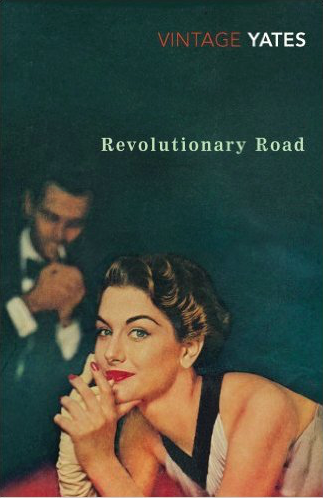
Revolutionary Road

The first time I came across the name Richard Yates was in 2006 when his short story collection Eleven Kinds of Loneliness was translated into German. All the big newspapers reviewed and praised it. I think that must have been about the same time, he was rediscovered in the US, which then led to the translations. I’m not sure why it took me another nine years to finally pick up one of his books. Be it as it may, I’m so glad I finally did. After finishing Revolutionary Road, I started to read up on him and that’s when I came across this very long, very insightful article by Stewart O’Nan: The Lost World of Richard Yates. It was written in 1999 – before the rediscovery. It’s interesting because O’Nan not only tries to capture why he thinks Yates is an amazing author but also goes into lengthy musings on why he was never successful. For me, it wasn’t surprising that it took so long to discover him in Germany, but that he wasn’t successful in the US or other English-speaking countries did come as a surprise. Stewart O’Nan’s central thesis is that Yates is a writer’s writer. Not a typical one, though. I’ll get to that again, after the review of Revolutionary Road.

Revolutionary Road tells the story of Frank and April Wheeler, a young couple who’s living in the suburbs of New York. The book opens with an amateur play in which April has the main role. At first it looks like it could be a success. Initially, April’s performance is good enough to make her husband fantasize what her success will mean for them. He imagines how April will be admired and how it will ultimately make him a center of admiration too and how he will pretend to be all modest about it. But then the play goes wrong and turns into a farce, exposing all the actors, including April to ridicule. It’s a devastating moment. Not so much because the play goes wrong but because the Wheeler’s dreams are shattered. April, who studied acting once, isn’t a good actress after all. And Frank, who imagined his wife’s stellar performance would reflect on him as well, feels just as ashamed as she does, maybe even more so.

This scene is a perfect introduction to the novel and the couple April and Frank Wheeler. While the outcome is dramatic for them, it’s not as such tragic but it contains all the elements of the future tragedy.

Yates introduces us here to a couple who lives a somewhat mediocre life. He’s working for a company he doesn’t appreciate, doing a job that bores him to death. She’s a housewife and stay-at-home-mom, the last thing she ever wanted to be. This as such is sad but what makes it sadder is the fact that they still think they are special and different from anybody else. But every time they want to prove themselves that they are more cultivated, wittier, unconventional, their unrealistic dreams crash against reality and leave them bitter, disillusioned, and filled with an anger they take out on each other.

I must admit, it took me over a hundred pages until I started to appreciate what Yates was doing. I hated and despised these two characters so much. Their aspirations and pretences showed us that they were anything but special but mediocre and petty. Since one of Yates’s admittedly brilliant techniques is to show us Frank’s interior monologue, we’re constantly in the head of a real douchebag. As I said, I was so distracted by the story and found the characters so off-putting, that I almost missed to pay attention to Yates’s narrative techniques. Not only is it brilliant to let Frank’s interior monologue clash with reality, it’s also quite funny.

At the heart of the story is April’s dream to leave and start a new life in Paris. The interesting thing about it is that while it may seem wild, it’s a totally feasible plan, yet they are bound to fail. Why and how they fail is shown in a masterful way.

The most tragic and paradoxical thing about April and Frank Wheeler isn’t that they never live their dream but that they try, if only for a very brief moment, to live it.

I said at the beginning of this post that Yates was, for a long time, considered to be a writer’s writer. This was surprising to me at first because usually writer’s writers are stylists, often using lyrical prose. Yates does write well but his writing is accessible, smooth, simple, almost free of figures of speech. He’s not strong on descriptions, hardly uses atmosphere or mood. So what is it then? It’s amazing how brilliantly he describes people and their interactions. His dialogue and interior monologue is sharp and witty. But more than that, his choices of scenes and structure are admirable. I wondered constantly – how will he capture this or that? Whose point of view will he choose next? And, most importantly – how will he end this novel? I wasn’t interest in the ending from a plot perspective but from a perspective of author’s choice. I felt that there had to be a major “bang”. What would it be?

These are reasons why I agree with O’Nan— he is a writer’s writer. After having found O’Nan’s essay,  I came across John Mullan’s four part piece on Revolutionary Road in The Guardian – you can find it here Part I Imaginary Dialogue, Part II The Epigraph, Part II Comic Dialogue, Part IV The Ending. Reading it confirmed my impressions. Yates is a highly conscious writer. His style may be effortless, his structure and narrative choices are not. One just has to think of the title. Revolutionary Road is the street on which the Wheelers live. It’s close to a suburban nightmare called “Revolutionary Hill”, where all the houses are candy-colored, cute abominations. Not so the Wheeler’s street and house. Nonetheless, it’s suburbia and even in a part that’s not as affluent. Knowing that they read signs and interpret them in a spirit of self-aggrandisement, the name of the road becomes ironic. The Wheeler’s are a lot of things but they are not revolutionary nor rebellious. If anything they are self-deluded and narcissistic.

Revolutionary Road was my first Richard Yates but it won’t be the last. I’m already halfway through Easter Parade and want to read Cold Spring Harbor and Eleven Kinds of Loneliness after that.

I had to watch the movie after finishing the book. Of course, it’s not as good but what bothered me the most was that the Frank Wheeler in the movie was almost likable.

Literature and War Readalong 2016

Storm Warning1914The HuntersBilly Lynn's Halftime WalkAll For Nothing

A few of you have already been wondering whether or not there will be another Literature and War Readalong. As you can see, there will be another one, but, like last year, it will be a mini-edition, although I included one book more.

Storm Warning

February, Monday 29

Storm Warning: Echoes of Conflict by Vanessa Gebbie, 120 pages, UK, 2010, WWII

Here’s the blurb:

Storm Warning explores the echoes and aftershocks of human conflict in a series of powerful stories in which the characters are tested, sometimes to breaking point. Gebbie pulls no punches, exploring the after-effects of atrocity and sometimes, the seeds of atrocity itself.

1914

March, Thursday 31

1914  – 14 by Jean Echenoz, 120 pages France 2012, WWI

Here’s the blurb:

Jean Echenoz turns his attention to the deathtrap of World War I in 1914. Five Frenchmen go off to war, two of them leaving behind young women who long for their return. But the main character in this brilliant novel is the Great War itself. Echenoz, whose work has been compared to that of writers as diverse as Joseph Conrad and Laurence Sterne, leads us gently from a balmy summer day deep into the relentless – and, one hundred years later, still unthinkable – carnage of trench warfare.

The Hunters

May, Tuesday 31

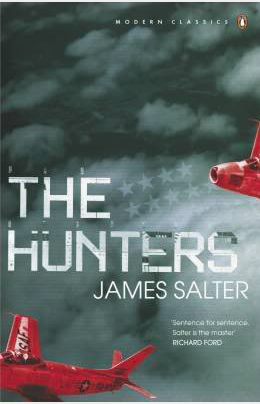
The Hunters by James Salter, 233 pages, US 1957, War in Korea

Here’s the blurb:

Captain Cleve Connell arrives in Korea with a single goal: to become an ace, one of that elite fraternity of jet pilots who have downed five MIGs. But as his fellow airmen rack up kill after kill – sometimes under dubious circumstances – Cleve’s luck runs bad. Other pilots question his guts. Cleve comes to question himself. And then in one icy instant 40,000 feet above the Yalu River, his luck changes forever. Filled with courage and despair, eerie beauty and corrosive rivalry, James Salter’s luminous first novel is a landmark masterpiece in the literature of war.

Billy Lynn's Halftime Walk

September, Friday 30

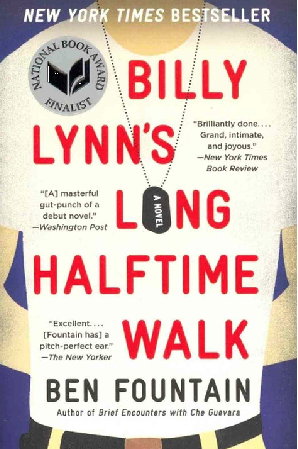
Billy Lynn’s Long Halftime Walk by Ben Fountain,  307 pages, US 2012, War in Iraq

Here’s the blurb:

His whole nation is celebrating what is the worst day of his life

Nineteen-year-old Billy Lynn is home from Iraq. And he’s a hero. Billy and the rest of Bravo Company were filmed defeating Iraqi insurgents in a ferocious firefight. Now Bravo’s three minutes of extreme bravery is a YouTube sensation and the Bush Administration has sent them on a nationwide Victory Tour.

During the final hours of the tour Billy will mix with the rich and powerful, endure the politics and praise of his fellow Americans – and fall in love. He’ll face hard truths about life and death, family and friendship, honour and duty.

Tomorrow he must go back to war.

All For Nothing

November, Friday 25

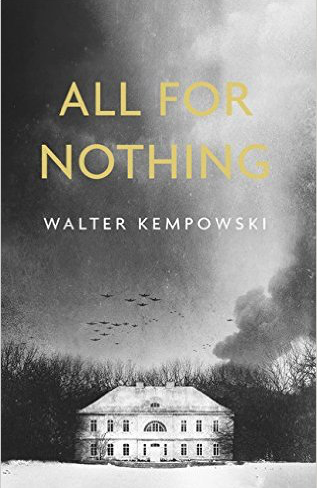
All For NothingAlles umsonst by Walter Kempowski, 352 pages, Germany 2006, WWII

Here’s the blurb:

Winter, January 1945. It is cold and dark, and the German army is retreating from the Russian advance. Germans are fleeing the occupied territories in their thousands, in cars and carts and on foot. But in a rural East Prussian manor house, the wealthy von Globig family tries to seal itself off from the world. Peter von Globig is twelve, and feigns a cough to get out of his Hitler Youth duties, preferring to sledge behind the house and look at snowflakes through his microscope. His father Eberhard is stationed in Italy – a desk job safe from the front – and his bookish and musical mother Katharina has withdrawn into herself. Instead the house is run by a conservative, frugal aunt, helped by two Ukrainian maids and an energetic Pole. Protected by their privileged lifestyle from the deprivation and chaos around them, and caught in the grip of indecision, they make no preparations to leave, until Katharina’s decision to harbour a stranger for the night begins their undoing. Superbly expressive and strikingly vivid, sympathetic yet painfully honest about the motivations of its characters, All for Nothing is a devastating portrait of the self-delusions, complicities and denials of the German people as the Third Reich comes to an end.

*******

Five books from four countries, covering four different wars. The books are all rather short and quite diverse. For the first time, I have included a collection of short stories. And I included the first novel on the war in Korea.

As always, I hope that many of you will feel tempted to join me.

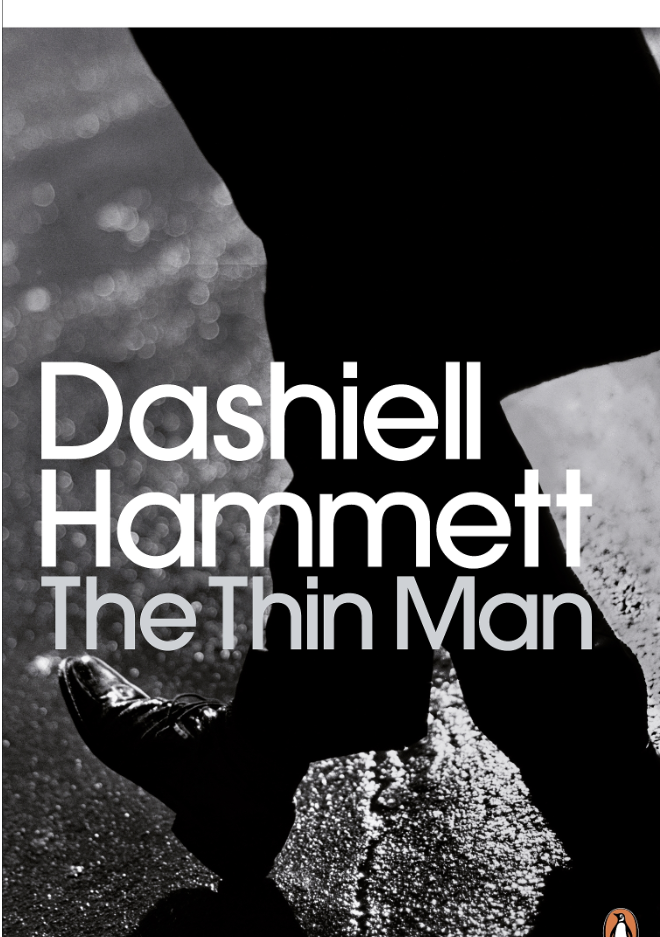
Dashiell Hammett: The Thin Man (1934)

The Thin Man

While I’ve devoured all of Chandler’s books, I’ve hardly read any Hammett. Way back when I started this blog, I read and reviewed The Glass Key – book and movie – and while I liked it, I never returned to him until now. Although I had both The Maltese Falcon and The Thin Man on my piles, I picked the latter. I’m pretty sure they are not in the same league and it wasn’t s as hard-boiled or noir as I expected. On the contrary. It has even some elements of a screwball comedy.

It’s the Christmas season and our hero, Nick Charles, is back in New York with his young wife Nora and their schnauzer Asta. Nick used to be a PI in New York before he met Nora and followed her to San Francisco where they share a business.

While waiting in a speakeasy for his wife who is Christmas shopping, a young woman walks up to him and introduces herself as Dorothy Wynant. Nick used to know her father and her when she was a kid. Dorothy hopes he’s got her’ father’s address but he hasn’t. He hasn’t heard from Wynant in years. Shortly after this encounter, Nick hears that Wynant’s secretary and former lover Julia Wolf has been found dead, shot four times, and that Wynant is missing. Interestingly, the dying Julia has been found by Wynant’s ex-wife, the manipulative, bitchy Mimi. Everyone, including the police, is convinced that Wynant shot Julia, only Nick doubts this.

While the readers are kept guessing who shot Julia, I can’t say that the crime-solving is the most interesting element in this story. What I enjoyed the most is the description of the couple Nick and Nora and the way they spend their days and nights. Most of the story takes place in their hotel room and a huge number of people drifts in and out. Friends, acquaintances, police men, criminals. Every one is constantly downing a drink. The last thing Nick does before he goes to bed – drink, the first thing he does when he gets up – he pours himself another drink. Nora and the others aren’t much better.

Nora might not be the best developed character but she’s fun. She’s the opposite of a nagging housewife. No matter what Nick does or what happens to him, she never gives him a hard time, never freaks out. She’s almost twenty years younger than her husband and very fascinated by his old life. When he’s dragged into the investigation of Julia’s murder, she joins him eagerly and tries to help him find out who killed her.

The tone and humour throughout the book, especially in the dialogue is very dry. Not as dark as in other novels of the era but refreshingly brittle.

I only found out after finishing this novel that Hammett wrote it for the women’s magazine Redbook where it was serialised in 1934. That may explain why it’s not as dark and why there are so many female main characters. There’s Nora, Nick’s wife, the hysterical Dorothy, Mimi, her bitchy mother and Dorothy’s aunt. The male characters are rather pale in comparison.

The THin Man is certainly not Hammett’s best but it’s fun.

Has anyone seen the movie?