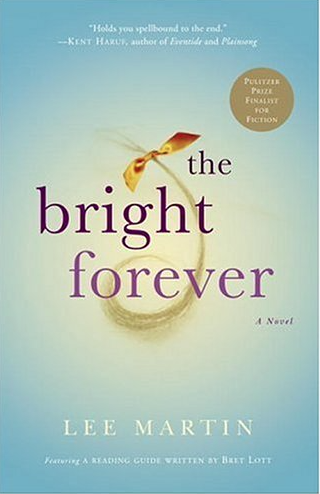
Lee Martin: The Bright Forever (2005)

the-bright-forever

This has been an odd reading and blogging year so far. I’m only reviewing about one in four or five books I read. Not only because I’m sometimes disappointed in my choices but also because I don’t have enough time to review them. But when I come across a book like Lee Martin’s The Bright Forever and know it will be on my favourites list at the end of the year, then I have to review the book or, at least, write about it.

The Bright Forever was a Pulitzer Finalist but I hadn’t heard of it until I discovered Lee Martin via his blog and a nonfiction flash class he taught online at WordTango.

The novel is set in a fictional small town in Indiana in 1972. It’s a hot summer evening and nine-year-old Katie Mackey, daughter of the richest man in town, takes her bicycle to bring back her library books. She never returns home. Told from the points of view of different narrators, the novel explores a crime and its aftermath, explores themes of loneliness, guilt, shame, and the desperate struggle for happiness.

This isn’t a crime novel, it’s a literary novel about a crime but it’s just as suspenseful as a crime novel. For the longest time we don’t know what happened to Katie, nor who is responsible.

The choice of narrators is not only great and gives the novel depth but it’s also extremely well done. Lee Martin manages to give each of his narrators a very distinct voice. Not an easy thing to do. First we have Katie’s older brother Gilley who feels responsible for the disappearance because he ratted out his sister. He told their parents that she forgot to return her library books. The next narrator is Mr Dee. A lonely, older man who teaches math. He is a bit too fond of Katie. We’re never sure whether his feelings for her a really fatherly or whether he’s a pedophile. This makes him creepy and touching at the same time. Clare is another narrator. She has done the unforgivable. Shortly after her husband’s death, she starts a relationship with a foreigner, Raymond R. Raymond’s voice is the last. He’s the most problematic figure. The most enigmatic and dishonest. Needless to say, that more than one person looks guilty.

Chosing so many narrators allowed Lee Martin to explore many different topics and to depict his characters from many different angles. We see how they perceive themselves, but also what others think about them. In Mr. Dee’s case that’s particularly poignant, We know he has secrets, but we also know something he ignores— some of the villagers know his secrets. This creates a mirror effect that is very arresting.

While I liked the story and the characters, the thing I loved the most was how Lee Martin captured those lazy summer days that seem to never end when you’re a kid or a teenager. It’s also admirable how he shows that even small town people’s lives are complex and full of pain, mystery and beauty.

The Bright Forever is a stunningly beautiful, mellow novel. It is told in lyrical, evocative prose, which suits this bitter-sweet, nostalgic tale so well. I’m not a rereader but I think this is one of a very few books, I’ll pick up again some day.

Here are some quotes to give you an idea:

That dream was still in my head, that crazy dream about Katie and me on Dumbo the elephant and Mr. Dees walking in the clouds. When I opened my mouth, the dream was on my tongue, as was the feeling that I’d had ever since–the sensation that sometimes life was so wonderful it was scary, not to be trusted.

Here’s Clare talking about Raymond

I think it was this: like most of us, he was carrying a misery in his soul. I don’t say it to forgive what he done, [sic] only to say it as true as I can. He was a wrong-minded man, but inside- I swear this is true- he was always that little boy eating that fried-egg sandwich in that dark hallway while the steam pipe dripped water on his head. I don’t ask you to excuse him, only to understand that there’s people who don’t have what others do, and sometimes they get hurtful in their hearts, and they puff themselves up and try all sorts of schemes to level the ground- to get the bricks and joints all plumb, Ray used to say. They take wrong turns, hit dead ends, and sometimes they never make their way back.

And Gilley looking back

I thought to myself then that it didn’t matter where I ended up; I’d always be living that summer in that town, wishing that I had done things differently, tormented by the fact that I hadn’t. I’d never go far enough to be able to escape it. Maybe you’re happy about that. Maybe not. Maybe you’re carrying your own regrets, and you understand how easy it is to let your life get away from you. I wish I could be the hero of this story, but I’m not. I’m just the one to tell it, at least my part in it, the story of Katie Mackey and the people who failed her. It’s an old one, this tale of selfish desires and the lament that follows, as ancient as the story of Adam and Eve turned away forever from paradise.

And one more

When someone you love disappears, it’s like the light goes dim, and you’re in the shadows. You try to do what people tell you: put one foot in front of the other; keep looking up; give yourself over to the seconds and minutes and hours. But always there’s that glimmer of light-that way of living you once knew-sort of faded and smoky like the crescent moon on a winter’s night when the air is full of ice and clouds, but still there, hanging just over your head. You think it’s not far. Your think at any moment you can reach out and grab it.
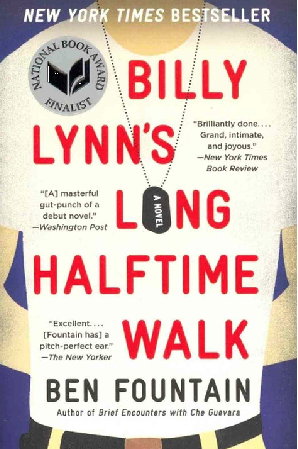


Literature and War Readalong September 30 2016: Billy Lynn’s Long Halftime Walk by Ben Fountain

Billy Lynn's Halftime Walk

Next up in the Literature and War Readalong 2016 is Ben Fountain’s novel on the war in Iraq Billy Lynn’s Long Halftime Walk. Billy Lynn is Ben Fountain’s first novel. Before that he was mostly known as a short story writer. Many of his stories were published in prestigious magazines and received prizes (the O.Henry and Pushcart among others). A lot of people who already read this novel, told me how much they liked it. If I’m not mistaken, the book is set in the States and not in Iraq. It’s neither a war zone story, nor a home front story but a story of soldiers who are back home to celebrate a victory, before they will be shipped out again.

Billy Lynn’s Long Halftime Walk by Ben Fountain,  307 pages, US 2012, War in Iraq

Here are the first sentences

The men of Bravo are not cold. It’s a chilly and windwhipped Thanksgiving Day with sleet and freezing rain forecast for late afternoon, but Bravo is nicely blazed on Jack and Cokes thanks to the epic crawl of game-day traffic and limo’s mini bar. Five drinks in forty minutes is probably pushing it, but Billy needs some refreshment after the hotel lobby, where over caffeinated tag teams of grateful citizens trampolined right down the middle of his hangover.

Here’s the blurb:

His whole nation is celebrating what is the worst day of his life

Nineteen-year-old Billy Lynn is home from Iraq. And he’s a hero. Billy and the rest of Bravo Company were filmed defeating Iraqi insurgents in a ferocious firefight. Now Bravo’s three minutes of extreme bravery is a YouTube sensation and the Bush Administration has sent them on a nationwide Victory Tour.

During the final hours of the tour Billy will mix with the rich and powerful, endure the politics and praise of his fellow Americans – and fall in love. He’ll face hard truths about life and death, family and friendship, honour and duty.

Tomorrow he must go back to war.

*******

The discussion starts on Friday, 30 September 2016.

Further information on the Literature and War Readalong 2016, including all the book blurbs, can be found here.

Elizabeth Taylor: Angel (1957)

Angel

Angel was my fifth Elizabeth Taylor novel and it was nothing like the ones I’ve read before. It’s almost entirely a character portrait, covering one person’s life from her teenage years to her death. I can’t remember many other of her novels spanning so many years, with the exception of A Game of Hide and Seek, but even that stops before middle age, as far as I remember.

The novel starts with an éclat. Fifteen-year-old Angel is caught lying. She’s been telling two small girls of her glamorous life at Paradise House. In reality, she and her mother live in a crammed apartment above her mother’s shop and Paradise House is the place where her aunt, a lady’s maid, works. When her mother finds out about her lies, she’s so angry that she slaps her. Not something Angel’s likely to forgive. Since she was a child, Angel fantasizes about the house and thinks that she should be living there and not the other Angel, the daughter of her aunt’s mistress.

This early scene tells us a lot about Angel. Not only is she unhappy about her circumstances but she imagines a better life for herself, feeling that she’s entitled to it. Since she’s got such a rampant imagination, she thinks the best revenge is to do something with it and she begins to write a novel. Her mother and her aunt are horrified. Writing? What and idea! But Angel doesn’t care. No matter the cost, she will become a famous author. This is another of her traits – she is determined and when she’s determined she doesn’t stop until she gets what she wants. All this wouldn’t be so bad but Angel is also deluded. She thinks that she’s a great writer although what she produces is pure schlock. She loves to imagine things but she never does any research. She’s also quite ignorant. People in her books open champagne bottles with a corkscrew. Her books are not only risqué but full of inconsistencies, melodrama and bad taste. At first her novel is rejected but then she finds a publishing house that is willing to give it a go. The two publishers are so amused by her writing that they can’t let it pass, thinking that the public might enjoy it for its raunchy scenes and wild spinning of tales. And they are right. Angel’s novels are a major success, making her not only famous but very rich.

Unfortunately, and this is the true tragedy, she doesn’t know that her books are loved in spite of being bad and not because they are, as she believes, masterpieces.

It wouldn’t be an Elizabeth Taylor novel if it wasn’t astute, witty, and wonderfully well-observed. Not only Angel’s mother, but also her aunt, the publishers, the servants, her friend Nora, and Nora’s brother Esmé, are all fully rounded characters.

Obviously, delusions like Angel’s cannot last a life time. While the book is funny and often hilarious in the beginning, the tone and mood get darker and very melancholic in the end.

I thought that Angel was grotesque in many ways but she had endearing qualities. She discovers vegetarianism and a deep love for animals. The big house in which she lives swarms with cats and there are many wonderful scenes. Elizabeth Taylor must have had cats because so many details are so well captured.

Angel’s a lonely figure but she has some relationships. With her live-in friend Nora, her gardener, and others. While they are all exasperated, they stay with her. Not only because of her money, although that’s part of it, but because she’s so genuine. She may be deluded, she may be flawed, but she’s true to herself. Always and at any cost.

I was wondering the whole time while reading this book where the inspiration for this novel came from. Hilary Mantel, who wrote the introduction, thinks that in writing this book Elizabeth Taylor showed how bad writers can make money while good ones, like Taylor herself, are never fully recognized during their life time. But that’s not all, according to Mantel, it’s also a very astute depiction of the life of a writer. I’m not entirely satisfied with these explanations. I think she must have met someone like Angel. When I started reading the book, I found Angel unrealistic, but then I remembered a woman I once worked with who was almost exactly like Angel.

Angel is very different from the other Elizabeth Taylor novels I’ve read so far but that doesn’t mean it wasn’t as good. It’s an amazing book. It’s funny, clever, and so well-observed. I read so many novels that I forget within a month or two, but I’m not likely to forget Angel and its fascinating eponymous character.

Here are my other Elizabeth Taylor reviews, should you be interested. They aren’t in any particular order.

At Mrs Lippincote’s

A Game of Hide and Seek

Mrs Palfrey at the Claremont

Blaming

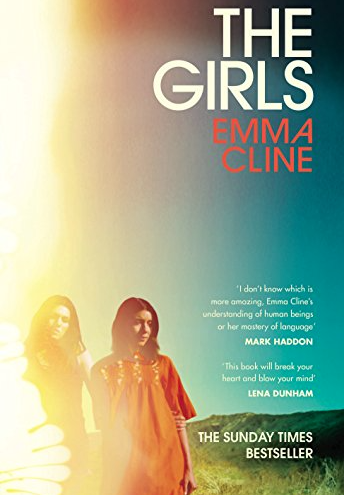
Emma Cline: The Girls (2016)

The Girls

I knew a lot about The Girls and Emma Cline’s publishing deal before the book was even out. It has been sold at an auction for 2,000,000 $ – together with the next, not yet written – novel and a collection of short stories. That must put a lot of pressure on the author. Another sign of a major hype is that the German translation came out at the same time as the US original. Oddly, since it’s been published, I’ve not heard so much about it or read many reviews on blogs. The title might not be doing it any favours as it makes it sound like another “girl thriller”. While it’s about a crime, The Girls is a literary novel, not a crime novel per se.

I’m in two minds about this novel. The first forty pages were terrific. Emma Cline showed major talent. Her prose was stylish and original and the approach to her topic daring, but then came the long, frankly rather boring middle section that made me almost abandon the book. I’m glad I didn’t because the end was good.

The Girls is told as a split narrative. Most parts are set during the summer of ’69 and told from the point of view of fourteen-year-old Evie Boyd; the other parts are told by the now middle-aged Evie, who’s looking back. In 1969 Evie’s a lonely girl who lives with a mother who’s just rediscovered dating and doesn’t have time nor patience. She’s going to send Evie to a boarding school. That would be misery enough but on top of that, Evie’s just fallen out with her best friend and is discovering her sexuality, which she can’t handle at all. Then, one afternoon, she sees the girls—a group of beautiful, dirty teenage girls who appear self-assured, arrogant, and wild. Evie’s fascinated, especially by Suzanne. Evie finds out later that the people in her town are wary of them. There are rumours of drug abuse, delinquency and orgies.

Evie sees them again and is invited to their farm and introduced to Russell, their leader. She’s quickly sucked into the life on the farm and becomes one of them. Being part of that group means following Russell’s every move, waiting to be summoned by him, stealing for him, doing drugs, having sex with much older men. Russell pretends to be enlightened but he’s narcissistic and deranged. What he really wants is to become a famous pop star.

Evie’s too miserable in her life to notice that something’s going very wrong on the farm. Not only are they taking too many drugs, but there’s hardly any food. The houses they live in are decaying. The whole place is dirty and insalubrious.

Early in the novel, we learn that a horrific murder was committed and we know that, for some reason, Evie wasn’t part of the group who committed it. What we only find out at the end is why she wasn’t there and what happened to her afterwards.

It’s not often that a book comes full circle at the end like this one. For a long time, I didn’t like the dual narrative, found it artificial, but it made sense in the end.

Emma Cline does a great job at showing us the world through the eyes of a lonely teenage girl. A girl that’s very much a product of her time. She manages to make us see how girls like Suzanne and Evie were easy prey for a man like Russell (or Manson). But she also shows us that Russell wasn’t the only reason for a girl to stay on the farm. In Evie’s case, it’s not Russell who has a hold on her, but the charismatic Suzanne.

At first I was a bit afraid that given the nature of the crime, the book would be too sensationalist. It is sensationalist, but not because of the crime but because of the way Cline writes about sex. The book is explicit and occasionally shocking. I guess that’s one of the reasons why it’s not been marketed as a YA novel.

I didn’t find this novel entirely convincig and certainly don’t understand the huge advance payment she received. While there are great parts in the book, there are many parts that are dragging and the story was far from original. It certainly wasn’t a must read.

If you’d like to get to know her writing – here’s her only other publication, her short story Marion. It was published by the Paris Review and received the Paris Review Plimpton Prize for Fiction in 2014.

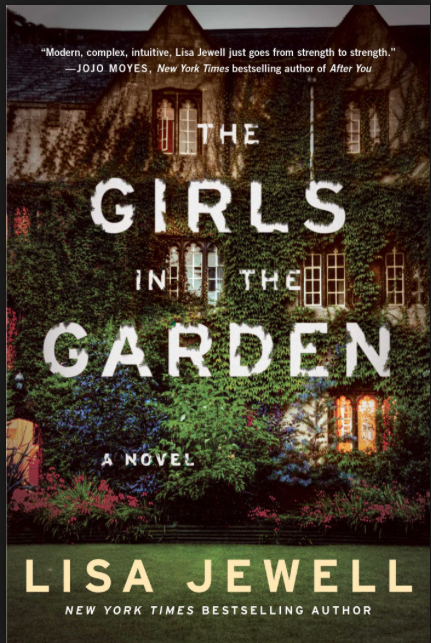
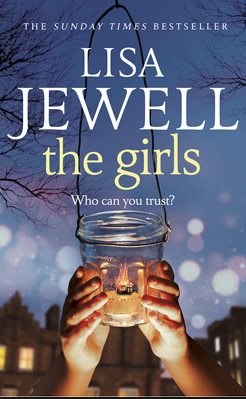
Lisa Jewell: The Girls in the Garden aka The Girls (2015)

The Girls in the GardenThe Girls Lisa Jewell

It doesn’t happen often that I stay up late because I have to finish a book but in this case it did. I guess that shows how captivated I was by Lisa Jewell’s novel The Girls or The Girls in the Garden (the US title). I came across this book on Danielle’s blog (here is the link) and had to get it right away. I just knew I would love everything about it.

The Girls is set in London, during one summer, in a communal garden and the flats and houses surrounding it. It’s told by several different narrators. It begins in the house Claire shares with her two daughters. Claire and her younger daughter Pip have just returned from a party, Claire is drunk and throwing up. Pip is worried and goes to look for her older sister Grace who is still in the garden with a group of kids from the neighbourhood. When Pip finds her, Grace is half-naked and unconscious. From here the story rewinds and starts at the beginning when Claire and her daughters move into one of the houses bordering the huge garden. Claire and her two daughters, twelve-year-old Pip and thirteen year old Grace, have gone through something shocking. The girl’s father burned down their beautiful house during an episode of paranoid schizophrenia. He’s been in a psychiatric hospital since then and Claire has never visited, nor does she want her girls to see him. When they arrive in their new house, they are quickly drawn into the lives of their neighbours. Claire and the girls are invited for dinner and the girls become part of a group of local kids.

Among the neighbours are Adele and Leo and their three homeschooled daughters. Gordon, Leo’s obnoxious father, who stays with them for health reasons. The elderly Rhea, who lives with a giant rabbit and a cat. Cece and her daughter Tyler. And beautiful Dylan with his mother and older brother with special needs.

The garden is a secluded place, secured by gates and only accessible with keys and through the back gardens of the surrounding houses. All the people who have access to the garden see it as a safe haven. A place where nothing can happen. That Grace is found unconscious, bleeding, and half-naked in a place like this is particularly shocking. Not only because nobody would have expected something like this to happen, but also because it’s clear that it must have been someone with access to the garden. Possibly someone who was at the summer night’s party.

Every single one of the men in this book is suspicious. Everybody else seems to hide something or know something they won’t tell. And there was the mysterious death of another girl, many years ago.

Obviously I found this book very suspenseful or I wouldn’t have stayed up late to finish it. But there was more. While the central question is what happened to Grace, the central themes are trust and safety, marriage and family life, growing up and friendships, themes we can all relate to. Plot and subplots, look at these themes from different angles and the result is arresting. I’m also fond of these communal gardens that I only know from the UK. They have something enchanted.

If you’re looking for a page-turner with great characters, a wonderful setting, and relatable themes, you shouldn’t miss this.

I’ve seen that Lisa Jewell has written many books. Has anyone read them? Are they as gripping as this?

All Virago/All August

The Fountain OverflowsElizabeth and her German GardenLand of SpiceEdwardiansSummerhouse TrilogyThe Professor's House

I have many Virago titles on my piles and always meant to do at least a Virago reading week for myself. So, when I discovered  All Virago/All August, hosted by the Librarything Virago Readers Group on Heavenali’s blog, I decided I would join as well.

Half of the fun is making a list. Juliana (the blank garden) mentioned that she’ll read Elizabeth Taylor’s Angel and I decided to join her. So, that title is pretty certain but I have no clue what else I will be reading. Here are some of the titles on my piles.

Angel

Elizabeth Taylor – Angel

Writing stories that are extravagant and fanciful, fifteen-year old Angel retreats to a world of romance, escaping the drabness of provincial life. She knows she is different, that she is destined to become a feted authoress, owner of great riches and of Paradise House . . .

After reading The Lady Irania, publishers Brace and Gilchrist are certain the novel will be a success, in spite of – and perhaps because of – its overblown style. But they are curious as to who could have written such a book: ‘Some old lady, romanticising behind lace-curtains’ . . . ‘Angelica Deverell is too good a name to be true . . . she might be an old man. It would be an amusing variation. You are expecting to meet Mary Anne Evans and in Walks George Eliot twirling his moustache.’ So nothing can prepare them for the pale young woman who sits before them, with not a seed of irony or a grain of humour in her soul.

The Fountain Overflows

Rebecca West – The Fountain Overflows

Rose Aubrey is one of a family of four children. Their father, Piers, is the disgraced son of an Irish landowning family, a violent, noble and quite unscrupulous leader of popular causes. His Scottish wife, Clare, is an artist, a tower of strength, fanatically devoted to a musical future for her daughters.

This is the story of their life in south London, a life threatened by Piers’s streak of tragic folly which keeps them on the verge of financial ruin and social disgrace . . .

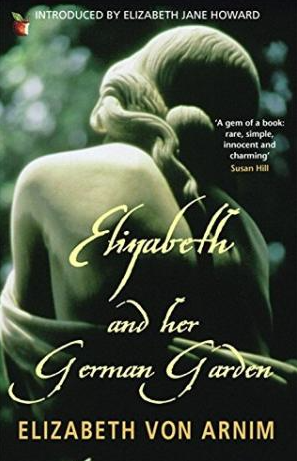
Elizabeth and her German Garden

Elizabeth von Arnim – Elizabeth and her German Garden

May 7th — There were days last winter when I danced for sheer joy out in my frost-bound garden in spite of my years and children. But I did it behind a bush, having a due regard for the decencies …’

Elizabeth’s uniquely witty pen records each season in her beloved garden, where she escapes from the stifling routine of indoors: servants, meals, domestic routine, and the presence of her overbearing husband …

Land of Spice

Kate O’Brien – Land of Spices

Mère Marie-Helene once turned her back on life, sealing up her heart in order to devote herself to God. Now the formidable Mother Superior of an Irish convent, she has, for some time, been experiencing grave doubts about her vocation. But when she meets Anna Murphy, the youngest-ever boarder, the little girl’s solemn, poetic nature captivates her and she feels ‘a storm break in her hollow heart’. Between them an unspoken allegiance is formed that will sustain each through the years as the Reverend Mother seeks to combat her growing spiritual aridity and as Anna develops the strength to resist the conventional demands of her background.

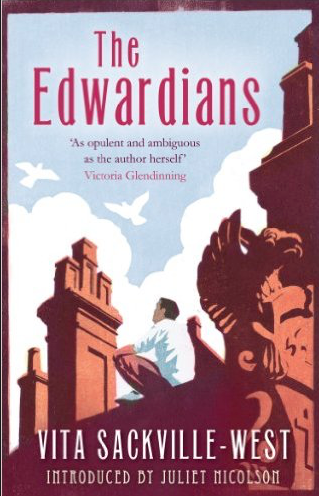
Edwardians

Vita Sackville-west – The Edwardians

Sebastian is young, handsome and romantic, the heir to a vast and beautiful English country estate. He is a fixed feature in the eternal round of lavish parties, intrigues and traditions at the cold, decadent heart of Edwardian high society. Everyone knows the role he must play, but Sebastian isn’t sure he wants the part. Position, privilege and wealth are his, if he can resist the lure of a brave new world.

Summerhouse Trilogy

Alice Thomas Ellis – The Summerhouse Trilogy

In “The Summer House” trilogy, three very different women, with three very distinct perspectives, narrate three very witty novels concerning one disastrous wedding in the offing.

“The Clothes in the Wardrobe” Nineteen-year-old Margaret feels more trepidation than joy at the prospect of her marriage to forty-year-old Syl.

“The Skeleton in the Cupboard” Syls’ mother, Mrs. Monro, doesn t know quite what to make of her son s life, but she knows Margaret should not marry him.

“The Fly in the Ointment” And then there s Lili, the free spirit who is determined that the wedding shall not happen, no matter the consequences.

The Professor's House

Willa Cather – The Professor’s House

On the eve of his move to a new, more desirable residence, Professor Godfrey St Peter finds himself in the shabby study of his former home. Surrounded by the comforting, familiar sights of his past, he surveys his life and the people he has loved: his wife Lillian, his daughters and, above all, Tom Outland, his most outstanding student and once, his son-in-law to be. Enigmatic and courageous – and a tragic victim of the Great War – Tom has remained a source of inspiration to the professor. But he has also left behind him a troubling legacy which has brought betrayal and fracture to the women he loves most . . .

Have you read any of these books? Which are the ones you liked the most? And will you join as well?

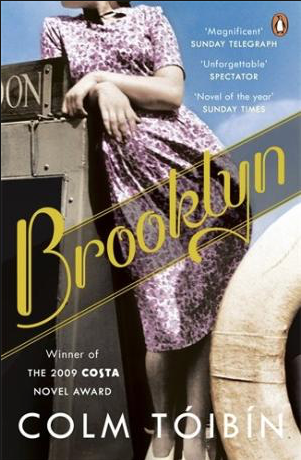
Colm Tóibín: Brooklyn (2009)

Brooklyn

I can’t understand why I haven’t read Colm Tóibín before. He’s outstanding. I admire his writing, his luminous prose. It’s not easy to say why it is so great but it is. His descriptions, the details he chooses, the settings, are so precise and conjure up a whole world.

It’s the 1950s and Ellis Lacey is living in Ireland with her mother and older sister. She wants to be an accountant but is only a shop assistant. Thanks to her sister, she can emigrate to America where she’s hired in a shop, goes to an accounting school and betters herself. Here, she meets a young Italian man and begins a relationship with him. After tragedy strikes, she has to decide whether she will stay in America or go back to Ireland. The novel has four parts. The first is set in Ireland and on the ship crossing over to America, the second and third are set in Brooklyn, the last in Ireland.

Ellis is a passive character but interesting as she’s introspective and a keen observer of what happens around her and inside of herself. I loved reading about the way she processed things that had happened to her during the day. In the beginning this passivity isn’t exactly attractive but it’s not as infuriating as it is in the last part. Ellis never speaks up, never fights for herself and in the end, she pays a high price for this behaviour. One aspect that stood out for me was the way Tóibín wrote about the experience of being an immigrant. I’ve lived abroad a few times, in some cases in places where I knew hardly anyone. Many of the feelings described, brought those experiences back.

Here’s a quote showing Ellis in the shop she’s working in Brooklyn.

The morning was full of frenzy; she did not for one moment have peace to look around her. Everyone’s voice was loud, and there were times when she thought in a flash of an early evening in October walking with her mother down by the prom in Enniscorthy, the Slaney River, glassy and full, and the smell of leaves burning from somewhere close by, and the daylight going slowly and gently. This scene kept coming to her as she filled the bag with notes and coins and women of all types approached her asking where certain items of clothing could be found or if they could return what they had bought in exchange for other merchandise, or simply wishing to purchase what they had in their hands.

Ellis may be the main character but there are numerous other characters, some who only appear briefly. They are all complex and rich in facets. One could also say that the two main settings, the eponymous Brooklyn and Ireland are treated like characters. They are described in detail, juxtaposed, compared, contrasted. Two very distinct worlds come alive between these pages.

I highly recommend Brooklyn. It’s beautiful and I can’t wait to read more of Tóibín. Just be warned – Ellis can, at times, be an infuriating character.

If you’d like to read a more in-depth review here’s Max’s take on the novel.