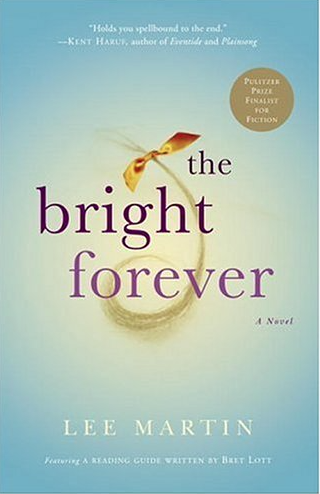
Lee Martin: The Bright Forever (2005)

the-bright-forever

This has been an odd reading and blogging year so far. I’m only reviewing about one in four or five books I read. Not only because I’m sometimes disappointed in my choices but also because I don’t have enough time to review them. But when I come across a book like Lee Martin’s The Bright Forever and know it will be on my favourites list at the end of the year, then I have to review the book or, at least, write about it.

The Bright Forever was a Pulitzer Finalist but I hadn’t heard of it until I discovered Lee Martin via his blog and a nonfiction flash class he taught online at WordTango.

The novel is set in a fictional small town in Indiana in 1972. It’s a hot summer evening and nine-year-old Katie Mackey, daughter of the richest man in town, takes her bicycle to bring back her library books. She never returns home. Told from the points of view of different narrators, the novel explores a crime and its aftermath, explores themes of loneliness, guilt, shame, and the desperate struggle for happiness.

This isn’t a crime novel, it’s a literary novel about a crime but it’s just as suspenseful as a crime novel. For the longest time we don’t know what happened to Katie, nor who is responsible.

The choice of narrators is not only great and gives the novel depth but it’s also extremely well done. Lee Martin manages to give each of his narrators a very distinct voice. Not an easy thing to do. First we have Katie’s older brother Gilley who feels responsible for the disappearance because he ratted out his sister. He told their parents that she forgot to return her library books. The next narrator is Mr Dee. A lonely, older man who teaches math. He is a bit too fond of Katie. We’re never sure whether his feelings for her a really fatherly or whether he’s a pedophile. This makes him creepy and touching at the same time. Clare is another narrator. She has done the unforgivable. Shortly after her husband’s death, she starts a relationship with a foreigner, Raymond R. Raymond’s voice is the last. He’s the most problematic figure. The most enigmatic and dishonest. Needless to say, that more than one person looks guilty.

Chosing so many narrators allowed Lee Martin to explore many different topics and to depict his characters from many different angles. We see how they perceive themselves, but also what others think about them. In Mr. Dee’s case that’s particularly poignant, We know he has secrets, but we also know something he ignores— some of the villagers know his secrets. This creates a mirror effect that is very arresting.

While I liked the story and the characters, the thing I loved the most was how Lee Martin captured those lazy summer days that seem to never end when you’re a kid or a teenager. It’s also admirable how he shows that even small town people’s lives are complex and full of pain, mystery and beauty.

The Bright Forever is a stunningly beautiful, mellow novel. It is told in lyrical, evocative prose, which suits this bitter-sweet, nostalgic tale so well. I’m not a rereader but I think this is one of a very few books, I’ll pick up again some day.

Here are some quotes to give you an idea:

That dream was still in my head, that crazy dream about Katie and me on Dumbo the elephant and Mr. Dees walking in the clouds. When I opened my mouth, the dream was on my tongue, as was the feeling that I’d had ever since–the sensation that sometimes life was so wonderful it was scary, not to be trusted.

Here’s Clare talking about Raymond

I think it was this: like most of us, he was carrying a misery in his soul. I don’t say it to forgive what he done, [sic] only to say it as true as I can. He was a wrong-minded man, but inside- I swear this is true- he was always that little boy eating that fried-egg sandwich in that dark hallway while the steam pipe dripped water on his head. I don’t ask you to excuse him, only to understand that there’s people who don’t have what others do, and sometimes they get hurtful in their hearts, and they puff themselves up and try all sorts of schemes to level the ground- to get the bricks and joints all plumb, Ray used to say. They take wrong turns, hit dead ends, and sometimes they never make their way back.

And Gilley looking back

I thought to myself then that it didn’t matter where I ended up; I’d always be living that summer in that town, wishing that I had done things differently, tormented by the fact that I hadn’t. I’d never go far enough to be able to escape it. Maybe you’re happy about that. Maybe not. Maybe you’re carrying your own regrets, and you understand how easy it is to let your life get away from you. I wish I could be the hero of this story, but I’m not. I’m just the one to tell it, at least my part in it, the story of Katie Mackey and the people who failed her. It’s an old one, this tale of selfish desires and the lament that follows, as ancient as the story of Adam and Eve turned away forever from paradise.

And one more

When someone you love disappears, it’s like the light goes dim, and you’re in the shadows. You try to do what people tell you: put one foot in front of the other; keep looking up; give yourself over to the seconds and minutes and hours. But always there’s that glimmer of light-that way of living you once knew-sort of faded and smoky like the crescent moon on a winter’s night when the air is full of ice and clouds, but still there, hanging just over your head. You think it’s not far. Your think at any moment you can reach out and grab it.



How Do You Feel About Errors and Clichés in Short Stories? or Some Thoughts On Ann Patchett’s Switzerland

ceci-nest-pas-la-suisse

I’m baffled to say the least. I don’t think I’ve ever come across a story with more factual errors. Since I haven’t read a lot of Ann Patchett’s work, I was glad to see that the September issue of One Story featured her short story “Switzerland”. To be entirely honest, I found the title a bit odd. Did she really write a story about Switzerland? Or is it only a setting? I’m not sure why, but I immediately found it a bit problematic to give a story the title of a whole country. Just imagine I would set a story in Rome and call it “Italy”. Be it as it may, I was willing to give it a try and expected to enjoy it.

The story can be summarized quickly. Teresa is a seventy-something woman from LA who just retired. One of her children, Holly, has been living in a Zen community in Switzerland for over twenty years. Teresa’s only seen her very rarely. Her decision to travel to Switzerland and not only visit her daughter but be part of the Zen community for a few weeks, eat, live and meditate with them, is major.

The stay at the Zen community is a life changer and will help Teresa come to terms with things that have happened in the past. So far so good, and I’m pretty sure, I would have liked this story if there hadn’t been so many errors and clichés. And not just little things but big things that annoyed me a great deal.

What kind of errors and clichés you may wonder. Here goes

  • Teresa takes a plane from LA to Paris and then to Lucerne. Her daughter waits for her at the airport in Lucerne. The airport and her stay there are described in detail The only problem – there is no airport in Lucerne. It’s impossible to fly there.
  • When Teresa gets off the plane she comments about the cold. It’s icy – because, of course, we’re in Switzerland and it’s September. Let me assure you, unless you’re on the top of the Matterhorn, it will not be cold in Switzerland in September. Not even cool. Right now it’s still 100°F. It might be cooler in Lucerne, but not under 90°F.
  • The Zen community sells walking sticks that have been made from original Swiss stone pine. Hmmm. This tree doesn’t really grow in Switzerland. It’s a Mediterranean tree.
  • She mentions two newspapers Le Matin and Blick and then says Holly didn’t buy them because she can’t read German so well. Well – Le Matin is obviously French. But that’s not the only thing. Someone living in a Zen community would hardly read such trashy newspapers (the equivalent of the UK Sun).
  • Teresa sees goats and, of course, the goats look like they were waiting for Heidi or her grandfather.
  • And then, of course, Swiss chocolate is mentioned. Holly eats Toblerone.

One or two internet searches and these errors could have been omitted. Teresa could have landed in Zürich. The sticks could have been made of some other wood. She could have chosen between the newspapers NZZ and Weltwoche – far more believable in this context. Upon seeing the mountains she could have thought of Meinrad Inglin or Charles Ferdinand Ramuz. Instead of Toblerone, she could have eaten a Kägi fret. Or bought Ricola instead. And what if she’d stepped off the plane saying: “Wow, I never expected Switzerland to be this warm in September.” That would have been a nice foreshadowing of the upcoming changes in her perception. Alas!

I’m not normally hunting for errors  and clichés but these mistakes are huge and annoying. How did they get past the editor? Or are these just liberties she’s taken? If that were the case, I’m not sure why she would do that. Many readers enjoy discovering other countries via literature. As an author you have a duty towards those who are not familiar with a setting—don’t misinform them.

How do you feel about such errors/liberties?

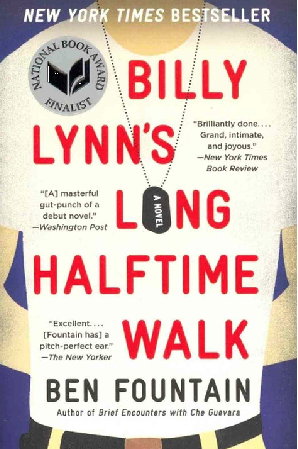
Literature and War Readalong September 30 2016: Billy Lynn’s Long Halftime Walk by Ben Fountain

Billy Lynn's Halftime Walk

Next up in the Literature and War Readalong 2016 is Ben Fountain’s novel on the war in Iraq Billy Lynn’s Long Halftime Walk. Billy Lynn is Ben Fountain’s first novel. Before that he was mostly known as a short story writer. Many of his stories were published in prestigious magazines and received prizes (the O.Henry and Pushcart among others). A lot of people who already read this novel, told me how much they liked it. If I’m not mistaken, the book is set in the States and not in Iraq. It’s neither a war zone story, nor a home front story but a story of soldiers who are back home to celebrate a victory, before they will be shipped out again.

Billy Lynn’s Long Halftime Walk by Ben Fountain,  307 pages, US 2012, War in Iraq

Here are the first sentences

The men of Bravo are not cold. It’s a chilly and windwhipped Thanksgiving Day with sleet and freezing rain forecast for late afternoon, but Bravo is nicely blazed on Jack and Cokes thanks to the epic crawl of game-day traffic and limo’s mini bar. Five drinks in forty minutes is probably pushing it, but Billy needs some refreshment after the hotel lobby, where over caffeinated tag teams of grateful citizens trampolined right down the middle of his hangover.

Here’s the blurb:

His whole nation is celebrating what is the worst day of his life

Nineteen-year-old Billy Lynn is home from Iraq. And he’s a hero. Billy and the rest of Bravo Company were filmed defeating Iraqi insurgents in a ferocious firefight. Now Bravo’s three minutes of extreme bravery is a YouTube sensation and the Bush Administration has sent them on a nationwide Victory Tour.

During the final hours of the tour Billy will mix with the rich and powerful, endure the politics and praise of his fellow Americans – and fall in love. He’ll face hard truths about life and death, family and friendship, honour and duty.

Tomorrow he must go back to war.

*******

The discussion starts on Friday, 30 September 2016.

Further information on the Literature and War Readalong 2016, including all the book blurbs, can be found here.

Elizabeth Taylor: Angel (1957)

Angel

Angel was my fifth Elizabeth Taylor novel and it was nothing like the ones I’ve read before. It’s almost entirely a character portrait, covering one person’s life from her teenage years to her death. I can’t remember many other of her novels spanning so many years, with the exception of A Game of Hide and Seek, but even that stops before middle age, as far as I remember.

The novel starts with an éclat. Fifteen-year-old Angel is caught lying. She’s been telling two small girls of her glamorous life at Paradise House. In reality, she and her mother live in a crammed apartment above her mother’s shop and Paradise House is the place where her aunt, a lady’s maid, works. When her mother finds out about her lies, she’s so angry that she slaps her. Not something Angel’s likely to forgive. Since she was a child, Angel fantasizes about the house and thinks that she should be living there and not the other Angel, the daughter of her aunt’s mistress.

This early scene tells us a lot about Angel. Not only is she unhappy about her circumstances but she imagines a better life for herself, feeling that she’s entitled to it. Since she’s got such a rampant imagination, she thinks the best revenge is to do something with it and she begins to write a novel. Her mother and her aunt are horrified. Writing? What and idea! But Angel doesn’t care. No matter the cost, she will become a famous author. This is another of her traits – she is determined and when she’s determined she doesn’t stop until she gets what she wants. All this wouldn’t be so bad but Angel is also deluded. She thinks that she’s a great writer although what she produces is pure schlock. She loves to imagine things but she never does any research. She’s also quite ignorant. People in her books open champagne bottles with a corkscrew. Her books are not only risqué but full of inconsistencies, melodrama and bad taste. At first her novel is rejected but then she finds a publishing house that is willing to give it a go. The two publishers are so amused by her writing that they can’t let it pass, thinking that the public might enjoy it for its raunchy scenes and wild spinning of tales. And they are right. Angel’s novels are a major success, making her not only famous but very rich.

Unfortunately, and this is the true tragedy, she doesn’t know that her books are loved in spite of being bad and not because they are, as she believes, masterpieces.

It wouldn’t be an Elizabeth Taylor novel if it wasn’t astute, witty, and wonderfully well-observed. Not only Angel’s mother, but also her aunt, the publishers, the servants, her friend Nora, and Nora’s brother Esmé, are all fully rounded characters.

Obviously, delusions like Angel’s cannot last a life time. While the book is funny and often hilarious in the beginning, the tone and mood get darker and very melancholic in the end.

I thought that Angel was grotesque in many ways but she had endearing qualities. She discovers vegetarianism and a deep love for animals. The big house in which she lives swarms with cats and there are many wonderful scenes. Elizabeth Taylor must have had cats because so many details are so well captured.

Angel’s a lonely figure but she has some relationships. With her live-in friend Nora, her gardener, and others. While they are all exasperated, they stay with her. Not only because of her money, although that’s part of it, but because she’s so genuine. She may be deluded, she may be flawed, but she’s true to herself. Always and at any cost.

I was wondering the whole time while reading this book where the inspiration for this novel came from. Hilary Mantel, who wrote the introduction, thinks that in writing this book Elizabeth Taylor showed how bad writers can make money while good ones, like Taylor herself, are never fully recognized during their life time. But that’s not all, according to Mantel, it’s also a very astute depiction of the life of a writer. I’m not entirely satisfied with these explanations. I think she must have met someone like Angel. When I started reading the book, I found Angel unrealistic, but then I remembered a woman I once worked with who was almost exactly like Angel.

Angel is very different from the other Elizabeth Taylor novels I’ve read so far but that doesn’t mean it wasn’t as good. It’s an amazing book. It’s funny, clever, and so well-observed. I read so many novels that I forget within a month or two, but I’m not likely to forget Angel and its fascinating eponymous character.

Here are my other Elizabeth Taylor reviews, should you be interested. They aren’t in any particular order.

At Mrs Lippincote’s

A Game of Hide and Seek

Mrs Palfrey at the Claremont

Blaming

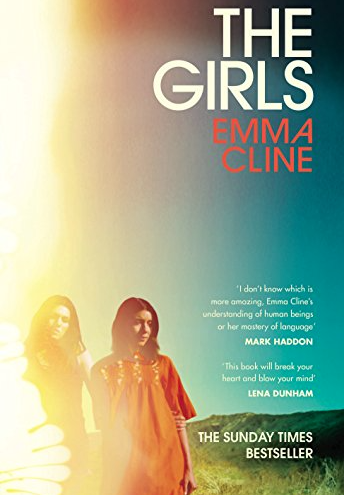
Emma Cline: The Girls (2016)

The Girls

I knew a lot about The Girls and Emma Cline’s publishing deal before the book was even out. It has been sold at an auction for 2,000,000 $ – together with the next, not yet written – novel and a collection of short stories. That must put a lot of pressure on the author. Another sign of a major hype is that the German translation came out at the same time as the US original. Oddly, since it’s been published, I’ve not heard so much about it or read many reviews on blogs. The title might not be doing it any favours as it makes it sound like another “girl thriller”. While it’s about a crime, The Girls is a literary novel, not a crime novel per se.

I’m in two minds about this novel. The first forty pages were terrific. Emma Cline showed major talent. Her prose was stylish and original and the approach to her topic daring, but then came the long, frankly rather boring middle section that made me almost abandon the book. I’m glad I didn’t because the end was good.

The Girls is told as a split narrative. Most parts are set during the summer of ’69 and told from the point of view of fourteen-year-old Evie Boyd; the other parts are told by the now middle-aged Evie, who’s looking back. In 1969 Evie’s a lonely girl who lives with a mother who’s just rediscovered dating and doesn’t have time nor patience. She’s going to send Evie to a boarding school. That would be misery enough but on top of that, Evie’s just fallen out with her best friend and is discovering her sexuality, which she can’t handle at all. Then, one afternoon, she sees the girls—a group of beautiful, dirty teenage girls who appear self-assured, arrogant, and wild. Evie’s fascinated, especially by Suzanne. Evie finds out later that the people in her town are wary of them. There are rumours of drug abuse, delinquency and orgies.

Evie sees them again and is invited to their farm and introduced to Russell, their leader. She’s quickly sucked into the life on the farm and becomes one of them. Being part of that group means following Russell’s every move, waiting to be summoned by him, stealing for him, doing drugs, having sex with much older men. Russell pretends to be enlightened but he’s narcissistic and deranged. What he really wants is to become a famous pop star.

Evie’s too miserable in her life to notice that something’s going very wrong on the farm. Not only are they taking too many drugs, but there’s hardly any food. The houses they live in are decaying. The whole place is dirty and insalubrious.

Early in the novel, we learn that a horrific murder was committed and we know that, for some reason, Evie wasn’t part of the group who committed it. What we only find out at the end is why she wasn’t there and what happened to her afterwards.

It’s not often that a book comes full circle at the end like this one. For a long time, I didn’t like the dual narrative, found it artificial, but it made sense in the end.

Emma Cline does a great job at showing us the world through the eyes of a lonely teenage girl. A girl that’s very much a product of her time. She manages to make us see how girls like Suzanne and Evie were easy prey for a man like Russell (or Manson). But she also shows us that Russell wasn’t the only reason for a girl to stay on the farm. In Evie’s case, it’s not Russell who has a hold on her, but the charismatic Suzanne.

At first I was a bit afraid that given the nature of the crime, the book would be too sensationalist. It is sensationalist, but not because of the crime but because of the way Cline writes about sex. The book is explicit and occasionally shocking. I guess that’s one of the reasons why it’s not been marketed as a YA novel.

I didn’t find this novel entirely convincig and certainly don’t understand the huge advance payment she received. While there are great parts in the book, there are many parts that are dragging and the story was far from original. It certainly wasn’t a must read.

If you’d like to get to know her writing – here’s her only other publication, her short story Marion. It was published by the Paris Review and received the Paris Review Plimpton Prize for Fiction in 2014.

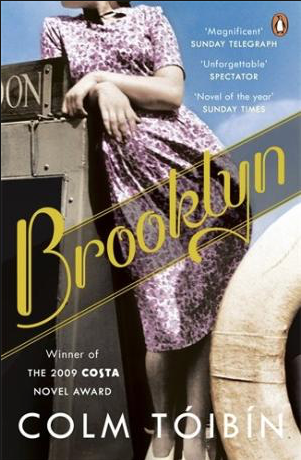
Colm Tóibín: Brooklyn (2009)

Brooklyn

I can’t understand why I haven’t read Colm Tóibín before. He’s outstanding. I admire his writing, his luminous prose. It’s not easy to say why it is so great but it is. His descriptions, the details he chooses, the settings, are so precise and conjure up a whole world.

It’s the 1950s and Ellis Lacey is living in Ireland with her mother and older sister. She wants to be an accountant but is only a shop assistant. Thanks to her sister, she can emigrate to America where she’s hired in a shop, goes to an accounting school and betters herself. Here, she meets a young Italian man and begins a relationship with him. After tragedy strikes, she has to decide whether she will stay in America or go back to Ireland. The novel has four parts. The first is set in Ireland and on the ship crossing over to America, the second and third are set in Brooklyn, the last in Ireland.

Ellis is a passive character but interesting as she’s introspective and a keen observer of what happens around her and inside of herself. I loved reading about the way she processed things that had happened to her during the day. In the beginning this passivity isn’t exactly attractive but it’s not as infuriating as it is in the last part. Ellis never speaks up, never fights for herself and in the end, she pays a high price for this behaviour. One aspect that stood out for me was the way Tóibín wrote about the experience of being an immigrant. I’ve lived abroad a few times, in some cases in places where I knew hardly anyone. Many of the feelings described, brought those experiences back.

Here’s a quote showing Ellis in the shop she’s working in Brooklyn.

The morning was full of frenzy; she did not for one moment have peace to look around her. Everyone’s voice was loud, and there were times when she thought in a flash of an early evening in October walking with her mother down by the prom in Enniscorthy, the Slaney River, glassy and full, and the smell of leaves burning from somewhere close by, and the daylight going slowly and gently. This scene kept coming to her as she filled the bag with notes and coins and women of all types approached her asking where certain items of clothing could be found or if they could return what they had bought in exchange for other merchandise, or simply wishing to purchase what they had in their hands.

Ellis may be the main character but there are numerous other characters, some who only appear briefly. They are all complex and rich in facets. One could also say that the two main settings, the eponymous Brooklyn and Ireland are treated like characters. They are described in detail, juxtaposed, compared, contrasted. Two very distinct worlds come alive between these pages.

I highly recommend Brooklyn. It’s beautiful and I can’t wait to read more of Tóibín. Just be warned – Ellis can, at times, be an infuriating character.

If you’d like to read a more in-depth review here’s Max’s take on the novel.

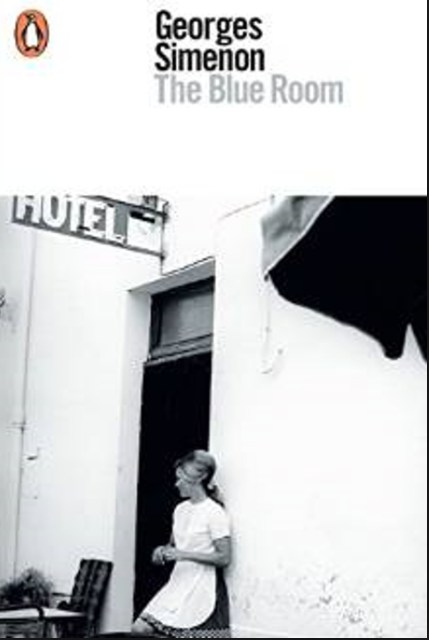
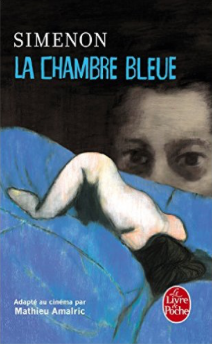
Georges Simenon: La chambre bleue – The Blue Room (1963)

The Blue RoomLa chambre bleue

While I’ve read some of Simenon’s Maigret novels, I hadn’t read any of his so-called “romans durs” until now.  Many people say they are far better than the Maigret novels and after having read The Blue Room –  La chambre bleue I think I can understand why. I can also see the influence the romans durs must have had on some newer authors like Pascal Garnier. Luckily for me, I liked Simenon’s novel much more than the Garnier novel I’ve read so far. The Blue Room is excellent.

The book starts with a scene in a hotel room – the blue room. Two people, Tony and Andrée, have just made love and he’s standing in front of a mirror, wiping away blood from his lips. The book starts in medias res, with a conversation. Andrée, who is watching Tony from the bed, is asking him, if she’s hurt him. Apparently she bit his lip. From the way she asks, we can deduce that it wasn’t as accidental as he believes. No, she probably bit him, so his wife will ask questions. What Andrée doesn’t know is that she’s not Tony’s first affair and that his wife is likely to ignore this one just like she ignored the others. Andrée then asks Tony whether he loves her and would love to spend his life with her. Tony’s not very attentive and says yes. A fatal error as the reader will find out very quickly. At the end of the scene in the hotel room, the book seamlessly switches to the examining magistrate’s chambers, where Tony is trying to defend himself in front of a psychiatrist and his lawyer.

The scene in the hotel room is a pivotal moment. From there the book moves backwards and forwards in time, unfolding Tony and Andrée’s whole story, from when they met as kids, to when they became lovers. It also switches from scenes set in the past to scenes in the present in which Tony, who has been arrested, tells his side of the story. The way Simenon has interwoven those narrative strands is pretty amazing. Nowadays, we’d have the different strands either separated by breaks between paragraphs, or chapters. Not so here, which makes it much more fluid, much more like watching a film.

Simenon’s style is hard to describe. It’s unadorned but so precise. Everything he chooses in his descriptions works masterfully. It’s like we’re looking at his characters through a microscope. The tiniest ugly little detail is laid bare.

While I don’t think his books are about suspense, it was suspenseful nonetheless because for a long time we have no clue why Tony got arrested. Nothing in the pivotal scene let’s us suspect that.

The Blue Room is a cruel, bleak analysis of a love affair that goes terribly wrong, written in evocative and pared-down prose. A great little book.

If you’d like to read a more eloquent review of the novel, here’s John Banville’s review of the Blue Room. He goes as far as comparing Simenon to Kafka.

The Blue Room has been made into a movie. I hope I can watch it soon.


This book was on the 20 under 200 list I did last summer. I must admit, I’ve been slacking. I’ve only read five or six from that list.