Welcome to German Literature Month

I can’t believe it’s already November. And I can equally not believe how unprepared I am this year. Usually I’ve already read a few books for German Literature Month before it even began. Or at least I’ve made a long list. Not so this time. I think I got a bit discouraged when I realized that most of the books I was drawn to haven’t been translated yet. To review or not to review a book that hasn’t been translated is always a dilemma. Not just during German Literature Month. In the last couple of months I decided mostly against it. I have a feeling, I won’t be able to do that this month. But we will see.

For now I only know that I will be discussing Lion Feuchtwanger’s The Opperman’s, which is part of the Literature and War Readalong. I’ll tell you more about it shortly.

And here is a tiny list.

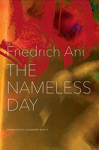
The Nameless Day – Der namenlose Tag by Friedrich Ani

After years on the job, police detective Jakob Franck has retired. Finally, the dead with all their mysteries will no longer have any claim on him. Or so he thinks. On a cold autumn afternoon, a case he thought he’d long put behind him returns to his life and turns it upside down. The Nameless Day tells the story of that twenty-year-old case, which began with Franck carrying the news of the suicide of a seventeen-year-old girl to her mother, and holding her for seven hours as, in her grief, she said not a single word. Now her father has appeared, swearing to Franck that his daughter was murdered. Can Franck follow the cold trail of evidence two decades later to see whether he’s telling the truth? Could he live with himself if he didn’t? A psychological crime novel certain to thrill fans of Henning Mankell and Jo Nesbo, The Nameless Day is a masterpiece, a tightly plotted story of contemporary alienation, loss, and violence.

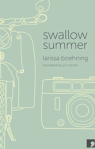
Swallow Summer by Larissa Boehning

Two music producers pack up their studio along with their dreams of ever making it in the industry after too many bands fail to pay their bills…
A woman takes up an invitation to visit an ex-lover in Arizona, only to find his apartment is no bigger than a motel room…
A former drama student runs into an old classmate from ten years before, hardly recognising the timid creature he has become…
Each character in Larissa Boehning’s debut collection experiences a moment where they re forced to confront how differently things turned out, how quickly ambitions were shelved, or how easily people change. Former colleagues meet up to reminisce about the failed agency they used to work for; brothers-in-law find themselves co-habiting long after the one person they had in common passed away; fellow performers watch as their careers slowly drift in opposite directions. Boehning’s stories offer a rich store of metaphors for this abandonment: the downed tools of a deserted East German factory, lying exactly where they were dropped the day Communism fell; the old, collected cameras of a late father that seem to stare, wide-eyed, at the world he left behind. And yet, underpinning this abandonment, there is also great resilience. Like the cat spotted by a demolition worker in the penultimate story that sits, unflinching, as its home is bulldozed around it, certain spirits abide.

Der Autor als Souffleur by Undine Gruenter (not translated)


I hope you’ve got your books ready and are looking forward to joining us.

Don’t forget the two readalongs:

On 15th November, the date of the Warwick Prize award, Lizzy will be discussing Yoko Tawada’s Memoirs of A Polar Bear.

On 29th November, I will discuss Lion Feuchtwanger’s The Oppermanns as part of her War and Literature series.

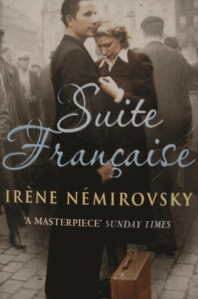
Irène Némirovsky: Suite Française (2004) Literature and War Readalong October 2017

Suite Française, Irène Némirovsky’s posthumously published novel was written in 1942, rediscovered in 1998 and published in 2004. Originally it was planned as a sequence of five novels, but Némirovksy was deported and murdered in Auschwitz before she could complete it.

The two novels included in Suite FrançaiseTempête en juin and Dolce – can be read individually. There are a few characters that are mentioned in both but that does not affect the plot. Judging from the notes Némirovsky left, part three, would have reintroduced a number of the characters from the first books. We can assume, that all five books together would have worked a bit like Balzac’s Comédie Humaine.

Part one, Tempête en juin, which is much more episodic than part two, begins in Paris, in 1941 when the Germans arrive. Thousands of people flee in panic. The book follows several groups of people who all flee the town. Gabriel Corte, a famous writer, flees with his mistress. Some members of the Péricand family flee to Nîmes, where they have family. One of the sons is in the army, another one runs aways to join the army and a third, a priest, is guiding orphans out of the town. Charles Langelet, an aesthete and collector of art and porcelain, flees in a car. The Michaud’s, two bank employees, try to join the staff of the bank in Troyes. Their son Jean-Marie, who has been wounded, is recovering in Bussy.

The narrative moves back and forth between these people, yet the result is anything but disjointed because the tone is so similar and the descriptions so astute. At times it feels like a documentary. The reader is there all the time. We can see, hear and smell the chaos, the fear, the panic. But we also see people at their worst. Most of those Némirovsky chose to describe, with the exception of the Michauds, are rich people. Rich people with a lot of possessions that they don’t want to lose and cling to. People who think that even under dire circumstances, when there’s no food, no shelter, they should still be able to get what they want because they can pay for it. Most of these people are shown as materialistic, ruthless and selfish. They cling to their things in a way that’s absurd. The best example for this is the collector Langelet. He tricks a young couple and steals their petrol, just to save himself and his possessions. In the end, he has nowhere to go and returns to Paris. We see him unwrapping his collection, dine in expensive restaurants and return to his life as a socialite, until he has the most absurd accident.

Part one ends with the armistice and the Germans occupying large parts of France.

Part two begins right after the armistice and is set in the province, in Bussy. It shows how the French dealt with the German occupation and ends when Germany begins the invasion of Russia and the troops stationed in Bussy are sent to the Eastern Front.

Part two has two main story lines. One centers on Lucile Angellier whose husband is a prisoner of war. The Angelliers are one of the richest families of Bussy that’s why a Oberleutnant of the Wehrmacht is billeted at their house. Lucile and the Oberleutnant both seem unhappy in their respective marriages. After long shared walks and endless discussions about music and art, they fall in love but don’t engage in an affair.

The second story line follows a French farmer who was a prisoner of war and escaped. He’s one of those who has the hardest time accepting the new masters. While things look peaceful, under the surface it’s boiling. The French resent the Germans, resent that they eat their food, flirt with their women, live in their houses and make the rules. Who disobeys is shot.

Both parts are very good but I loved the first one more. The descriptions, the choice of details, the characterisations were so captivating that I could hardly put it down. I could also relate to it far more as my father’s family was among those who fled Paris when the Germans arrived. Nobody spoke about it. My dad had just been born, so he didn’t experience it and other members of the family didn’t talk about it. I know they fled to Brittany where my grandmother was from. Brittany was among the parts occupied by the Germans and they spoke about that. Just like in Dolce, they described the Germans as mostly very polite and even kind, but, like in Dolce, they found that even harder to take. Psychologically, an occupation is an extremely difficult experience. So many conflicting emotions play into it. Irène Némirovsky excels at describing this.

Obviously, this novel spoke to me because it shed light on some questions I had about my family’s history, but even without that, I would have loved this book for its minute details and because it focused on  aspects of the war that are often just briefly mentioned. I can’t think of any other novel that focuses on the invasion of Paris and the early occupation. Most other books either focus on the fighting or on the resistance. I also liked how critical she seems of human behaviour. All too often historical WWII novels or period movies choose to show how people grow under the circumstances, how they overcome their pettiness and selfishness, turn into heroes. The shared tragedy brings out the best in them. While I’m sure, this is true for some, for many it isn’t. Since Némirovsky experienced what she described, I’m pretty sure, her description is more realistic than the idealized versions we usually see. In her book, the Michauds are the only people who seem to grow morally under the circumstances.

One could write endlessly about this book. I only scratched the surface. Suite Française is more than just an outstanding novel, it’s an invaluable document. What a terrible shame it wasn’t finished. That said, it doesn’t feel unfinished.

Other Review

TJ (My Book Strings)


*******

Suite Française is the sixth book in the Literature and War Readalong 2017. The next book is the German pre-war novel The Oppermanns  – Die Geschwister Oppermann by Lion Feuchtwanger. Discussion starts on Wednesday, November 29, 2017. You can  find further information on the Literature and War Readalong 2017, including the book blurbs here.

Literature and War Readalong October 2017: Suite Française by Irène Némirovsky


Irène Némirovsky’s posthumously published book Suite Française has been on my pile for ages. I bought the French edition when it came out in 2004. The book consists of two fifths of a novel that was planned to have five parts. Irène Némirovsky wasn’t able to finish her work.  The author, who was of Ukrainian Jewish origin, was deported by the Nazis and killed in 1942.

Usually I start my readalong books later in the month but given that this one is over 500 pages long, I started early. That’s why I can do something, I usually can’t do— urge you to pick this up. I haven’t finished yet but I can already tell – this is fantastic and will make my end of year list.

Most WWII novels we’ve read for the readalong were written either with hindsight or as contemporary historical novels. Not this one. It was written while things happened, which gives it a poignancy, many other books lack. In that it reminds me of Duras’ La douleur.

Here are the first sentences:

Hot, thought the Parisians. The warm air of spring. It was night, they were at war and there was an air raid. But dawn was near and the war far away. The first to hear the hum of the siren were those who couldn’t sleep—the ill and bedridden, mothers with sons at the front, women crying for the men they loved. To them it began as a long breath, like air being forced into a deep sigh. It wasn’t long before its wailing filled the sky. It came from afar, from beyond the horizon, slowly, almost lazily. Those still asleep dreamt of waves breaking over pebbles, a March storm whipping the woods, a herd of cows trampling the ground with their hooves, until finally sleep was shaken off and they struggled to open their eyes, murmuring. “Is it an air raid?”

And some details and the blurb for those who want to join

Suite Française by Irène Nemirovsky, 432 pages, France 1942, WWII

Set during the year that France fell to the Nazis, Suite Française falls into two parts. The first is a brilliant depiction of a group of Parisians as they flee the Nazi invasion; the second follows the inhabitants of a small rural community under occupation. Suite Française is a novel that teems with wonderful characters struggling with the new regime. However, amidst the mess of defeat, and all the hypocrisy and compromise, there is hope. True nobility and love exist, but often in surprising places.

Irène Némirovsky began writing Suite Française in 1940, but her death in Auschwitz prevented her from seeing the day, sixty-five years later, that the novel would be discovered by her daughter and hailed worldwide as a masterpiece.

*******

The discussion starts on Tuesday, 31 October 2017.

Further information on the Literature and War Readalong 2017, including all the book blurbs, can be found here.

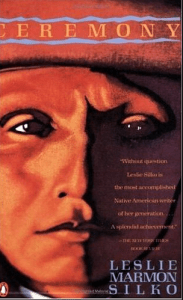
Leslie Marmon Silko: Ceremony (1977) Literature and War Readalong September 2017

The good news first—I got along better with Leslie Marmon Silko’s Ceremony than with N. Scott Momaday’s House Made of Dawn. I found the writing evocative; the descriptions of the landscape are stunning and it’s a very rich, multi-layered book. The bad news—it was still hard work. There’s not much of a plot, the story isn’t told chronologically, there’s a mix between prose and poems, and without some research, a lot of it would have gone over my head. And that even though I studied cultural anthropology and have at least some idea of Native American mythology.

Given its complexity and that I did only very little research after finishing it, I can’t write an exhaustive review. But I can give you a brief summary and focus on some of the elements that stood out for me.

Tayo, who is half Laguna and half White, suffers from PTSD. He’s a veteran of the war in the Pacific. But not only that, he was also a prisoner of war and one of only a few to survive the notorious Bataan Death March. He’s haunted by the atrocities of war, like the killing of Japanese prisoners, and the things he saw during the march, especially the death of his best friend Rocky. After his captivity, after the war, Tayo spends time at an army hospital but back at the reservation, it’s clear, he’s not cured. He hallucinates, hears voices, drinks too much and gets violent. His family feels that only a medicine man can help but the first ceremony doesn’t change anything because the medicine man is stuck in the past. Only when Tayo finds another medicine man, who incorporates the changes the world has undergone, does he have a chance to heal.

The book explores many themes. Change and identity, the way white people destroy nature and other humans, war, spirituality, the landscape and nature. One could pick any of these themes and write endlessly about it. Since I read this for the readalong, I’ll focus on  a few of the war elements.

There are several things that stood out. First, Tayo, Rocky, and their friends sign up because they hope that fighting for the US, will help them to be accepted. To become “real Americans” one could say. Once back, they soon learn that nothing has changed. They don’t receive any recognition and are pretty much where they were before, only worse off because now they have to deal with contradictions and trauma. Tayo discovers one of the biggest contradictions once he realizes that the Japanese look similar and that the faces of his friends and the soldiers merge in his hallucinations. That’s when he understands he has been instrumentalized by the whites. But not only that – they value him and his people as little as the Japanese. The atomic bomb was tested near the Indian reservations and then used to bomb people, who look a lot like the Indians. The sequence below illustrates this very well.

He had been so close to it, caught up in it for so long that its simplicity struck him deep inside his chest: Trinity Site, where they exploded the first atomic bomb, was only three hundred miles to the southeast, at White Sands. And the top-secret laboratories where the bomb had been created were deep in the Jemez Mountains, on land the Government took from Cochiti Pueblo: Los Alamos, only a hundred miles northeast of him now, still surrounded by high electric fences and the ponderosa pine and tawny sand rock of the Jemez mountain canyon where the shrine of the twin mountain lions had always been. There was no end to it; it knew no boundaries; and he had arrived at the point of convergence where the fate of all living things, and even the earth had been laid. From the jungles of his dreaming he recognised why the Japanese voices had merged with Laguna voices, with Josiah’s voice and Rocky’s voice; the lines of cultures and world were drawn in flat dark lines on fine light sand, converging in the middle of witchery’s final ceremonial sand painting. From that time on, human beings were one clan again, united by the fate the destroyers planned for all of them, for all living things; united by a circle of death that devoured people in cities twelve thousand miles away, victims who had never known these mesas, who had never seen the delicate color of the rocks which boiled up their slaughter.

Needless to say, that the book is to a large extent a criticism of white society and the way White people destroy everything – other people, animals, and nature. In the ceremony, Tayo learns that there are forces, called destroyers, who brought witchery, or dark witchcraft into the world to destroy it. The whites seem to have been the most infected and now act according to the destroyers’ will.

I know I’m not doing this book justice. It’s extremely complex and poetic. To properly review and analyse it, it would need, at least, a second reading.

I didn’t fully warm to Ceremony. I liked the descriptions of the landscape best. And the parts where Tayo’s on a quest to find his uncle’s cattle. Tayo’s a keen observer and the harsh beauty of the land, the precariousness of life in a dry, desert like place, where livestock is constantly threatened to die of thirst, is powerfully rendered. On the other hand, when I look at our world today, the way climate change affects us all, when I think of the 6th extinction that’s currently underway, and how “he who shall not be named” uses a rhetoric of total destruction, I can’t help but notice that Ceremony is an important book. Many of the themes are as actual today as they were when Leslie Marmon Silko wrote it.

I hope I could give a bit of an idea of the book. Its’ definitely ideal for students of American and/or Native American Literature, as it’s so rich and offers so many topics for analysis and discussion. 

Here’s one of my favourite quotes:

The buzzing of grasshopper wings came from the weeds in the yard, and the sound made his backbone loose. He lay back in the red dust on the old mattress and closed his eyes. The dreams had been terror at loss, at something lost forever; but nothing was lost; all was retained between the sky and the earth, and within himself. He had lost nothing. The snow-covered mountain remained, without regard to titles of ownership or the white ranchers who thought they possessed it. They logged the trees, they killed the deer, bear and mountain lions, they built their fences high; but the mountain was far greater than any or all of these things. The mountain outdistanced their destruction, just as love had outdistanced death. The mountain could not be lost to them, because it was in their bones; Josiah and Rocky were not far away. They were close; they had always been close. And he loved them then as he had always loved them, the feeling pushing over him as strong as it had ever been. They loved him that way; he could still feel the love they had for him. The damage that had been done had never reached his feeling. This feeling was their life, vitality locked deep in blood memory, and the people were strong, and the fifth world endured, and nothing was ever lost as long as the love remained.

Other Reviews

TJ (My Book Strings)


*******

Ceremony is the fifth book in the Literature and War Readalong 2017. The next book is the French WWII novel Suite Française by Irène Nemirovsky. Discussion starts on Tuesday 31 October, 2017. You can  find further information on the Literature and War Readalong 2017, including the book blurbs here.
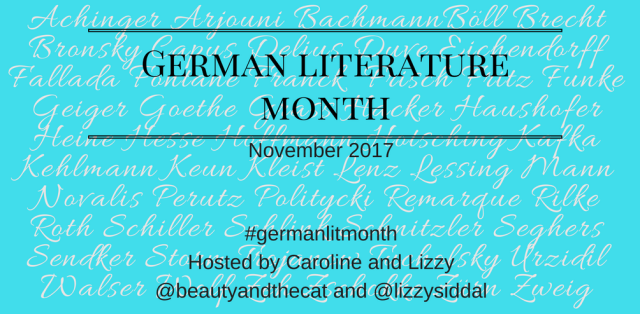
Announcing German Literature Month VII

Doesn’t time fly?  It seems like only two minutes ago since we were celebrating GLM VI.

Just like in previous years, I will co-host this event with Lizzy’s Literary Life. During the month of November, both our blogs will be dedicated to literature written in German.

Will you be dusting down some neglected tomes from your bookshelves? Reading more from a favourite author or treating yourself to some newly translated works?  There’s a lot to celebrate in German Literature this year: the Theodor Storm bi-centennial, the Heinrich Böll centennial, or the three German titles on the longlist of the Warwick Prize for Women in Translation.

It’s hard to know where to start, and impossible to fit it all in. So Lizzy and I have decided to let you meander through the trails of German literature wherever and in whatever fashion you may wish (and perhaps, between us, we’ll cover it all.)

The whole month will be read as you please, with two readalongs for those who enjoy social reading.

On 15th November, the date of the Warwick Prize award, Lizzy will be discussing Yoko Tawada’s Memoirs of A Polar Bear.

On 29th November, I will discuss Lion Feuchtwanger’s The Oppermanns as part of her War and Literature series.

There is no obligation to participate in the readalongs.  As ever,  the only rule for German Literature Month is to simply enjoy reading something originally written in German.  A novel, a play, a poem. Literary non-fiction, even.  Blog about it. Tweet about it. Review on goodreads or any other review site of your choice.  Just let the world know about the treasures to be found in German Literature (and let us know about it also on a special link that will be made available on November 1st).

In years past support for German Literature Month has been phenomenal, and the event is now a true highlight of our reading calendar.  Will GLM VII match its predecessors? It will if you join us. Will you?

Literature and War Readalong September 2017: Ceremony by Leslie Marmon Silko

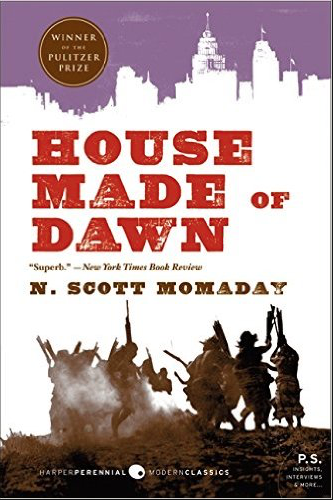
Leslie Marmon Silko’s novel Ceremony is the second Native American novel we’re reading for this year’s Literature and War Readalong 2017. I truly hope it’s more accessible than the first we read N. Scott Momaday’s House Made of Dawn. I struggled quite a bit with it as you can see here.

Leslie Marmon Silko was born in 1948, in Albuquerque, New Mexico. She is of mixed heritage, Laguna Pueblo, Mexican and white. She grew up on a Laguna Pueblo Reservation and continued to live there later in life.

Ceremony immediately became an American classic after its publication in 1977. It especially spoke to the Vietnam war veterans who related to the novels’ exploration of a veteran’s way of healing.

Here is the first sentence of Ceremony:

Tayo didn’t sleep well that night. He tossed in the cold iron bed, and the coiled springs kept squeaking even after he lay still again, calling up humid dreams of black night and loud voices rolling him over and over again like debris caught in a flood.

And some details and the blurb for those who want to join:

Ceremony by Leslie Marmon Silko, 243 pages, US 1977, WWII

The great Native American Novel of a battered veteran returning home to heal his mind and spirit
More than thirty-five years since its original publication, Ceremony remains one of the most profound and moving works of Native American literature, a novel that is itself a ceremony of healing. Tayo, a World War II veteran of mixed ancestry, returns to the Laguna Pueblo Reservation. He is deeply scarred by his experience as a prisoner of the Japanese and further wounded by the rejection he encounters from his people. Only by immersing himself in the Indian past can he begin to regain the peace that was taken from him. Masterfully written, filled with the somber majesty of Pueblo myth, Ceremony is a work of enduring power. The Penguin Classics Deluxe Edition contains a new preface by the author and an introduction by Larry McMurtry.

*******

The discussion starts on Friday, September 29.

Further information on the Literature and War Readalong 2017, including all the book blurbs, can be found here.

Toni Morrison: God Help the Child (2015)

I’m so annoyed with myself. I have three or four unread books by Toni Morrison on my piles but instead of reading those, I went and bought her latest, God Help the Child. That wouldn’t be a problem if this was a good book but it’s not. It’s so flawed, it could be a beginner’s novel. And the style? Well, when you pick a Toni Morrison novel, you expect it to be challenging. You don’t expect it to be bland mainstream, with descriptions like “the sky was baby-blue”. Honestly, what went wrong?

The book’s premise had so much promise. The blurb said it’s a book about the way parents damage their children and the repercussions this has later in their life, but somehow that’s not really what it is about. The book doesn’t really take this theme seriously. Maybe because it’s about so many other topics— race, skin color, trust, self-esteem, child abuse.

When the main character Bride is born, her mother rejects her immediately because of her black skin. Nobody in Bride’s family is this blue-black. In fact, they are so light, some of them did pass as white. Her mother, too, could, if she wanted, pass as white. Bride’s father is so shocked that he leaves her mother. He can’t imagine that two rather fair African-Americans could be the parents of such a black child. Of course, he suspects she was unfaithful.

Bride grows up as an outsider and only later, in her twenties, is she able to embrace her skin color and discover her beauty. She even learns how to underline it by wearing only white. At the age of twenty-two, she’s a successful executive at a cosmetic company, ready to launch her own beauty line. While she’s still fighting for her mother’s love, she’s also happy about her success and her beautiful lover, Booker, until the day she tells him something and he leaves her without an explanation.

The reader learns that Booker’s reaction has something to do with Bride’s idea of helping a woman who was convicted for child abuse.

I will stop here as the book basically is about why Bride does what she does and why this makes Booker flee. Both reasons are tied to the protagonists’ childhood.

For such a slim novel – under 180 pages – it has just too many themes. While some are really well done, especially all those linked to colorism, others didn’t get the depth they would have deserved. It isn’t fully explored what being rejected by her mother really meant for Bride. She does something cruel to gain her mother’s love and this affects her, but there doesn’t seem any real and deep damage. This struck me as odd.

What also struck me as odd was the number of child molesters we come across in this book. This too is such a serious problem, but it just didn’t get the careful treatment it would have deserved.

I’m really disappointed and wish I hadn’t bothered with this book. At the same time, I find colorism such an important topic, that I liked the book for that.

I’m glad this wasn’t my first Toni Morrison. It would have been my last. I’d rather read some bestseller than something that is written like a mainstream novel but saddled with heavy, carelessly treated themes. Don’t read this unless you’re a Toni Morrison fan and want to read everything she’s ever written. That said, I think she’s a terrific author and I’ll be reading more of her. Let’s just hope this was a one-off.

Have you read Toni Morrison? Which of her novels do you consider must-reads?