Helmut Krausser: The Great Bagarozy – Der grosse Bagarozy (1997)

the-great-bagarozy

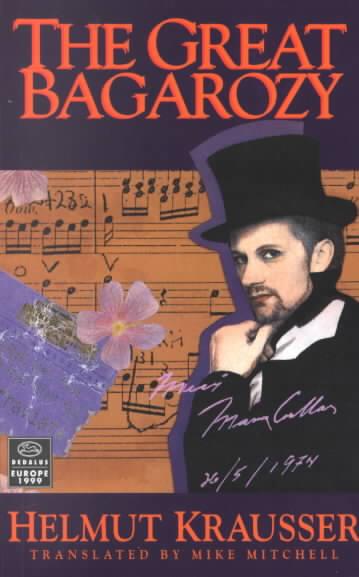
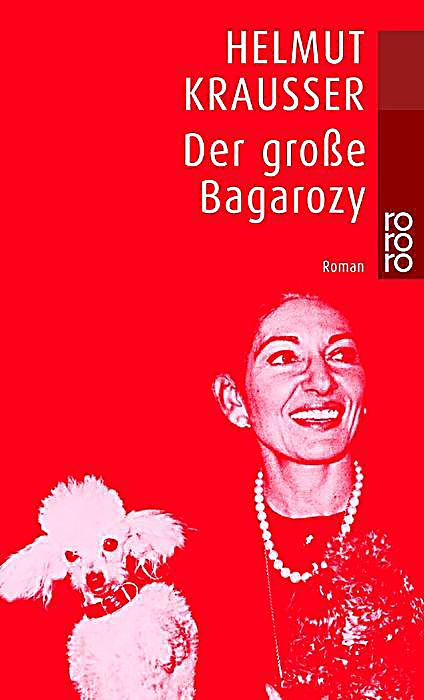
To enjoy this novel you don’t need to be a fan of Maria Callas but you should at least be interested in her life, as The Great Bagarozy – Der grosse Bagarozy is to a large extent an homage to the late Diva. (When you look at the German cover you’ll notice that they chose to make that fact obvious. Not so for the English cover.)

Cora Dulz is a psychiatrist. A very bored one and not exactly someone you’d call compassionate. She’s bored with her marriage to a cardiac tax consultant whose greatest interest is to collect morbid obituaries. There is nothing else in his life he’s this passionate about. Although some hints tell us that he likes to hire cleaning women who perform their tasks naked.

Cora is equally bored by her patients whose ailments make her either yawn or laugh. When two of them commit suicide, she fears for her practice. During this troubled time a new patient appears. Stanislaus Nagy, a man who is obsessed with Maria Callas and states to have known her very well. He pretends to be the devil himself and maintains that he has accompanied Maria during most of her life in the form of a black poodle.

Now this is a story that wakes up Cora. Not only is she interested in this new patient’s story, no, she also falls in love with him and fantasizes constantly about having sex with him. When he doesn’t turn up anymore she looks for him and ends up chasing him until she finds him on the stage of a music hall performing as The Great Bagarozy.

Kraussers novel deliberately blurs every line and confuses assumptions. Is Nagy ill? Or maybe Cora is far more obsessed than he is? Is he really the devil? Could that be?

Whether Nagy is just a devilish man playing tricks on a bored psychiatrist or whether he really is the devil is for you to find out. In any case, he pushes Cora to commit something quite horrible in the end.

I found this novel to be interesting, witty, funny, full of symbolism and extremely well-written. Krausser has a way with words, many of his sentences are worth quoting, and his descriptions are unusual like when he says the sky was the grey of poisoned doves. I’ve always been fascinated by Maria Callas. The woman and the legend and the fact that she’s actually not that good a singer but was considered, and still is considered, one of the greatest. Her life was tragic until the end. If you’re interested in her you’ll learn quite a lot about her life. I loved that Krausser chose to add the macabre obituaries Cora’s husband collects. It added a Six Feet Under feel to the story. He also chose to add many photos of Maria Callas, which add another layer. It’s interesting how her pictures seem to mirror her voice. She could be so beautiful on one photo, and look really rough on the next. When she was younger she managed to sing quite a pure soprano (especially in Tosca) but later on she was much more of a mezzo-soprano (as in Carmen), which, as far as I know, was her true voice type.

The Great Bagarozy is a funny, wicked, entertaining book and a great homage to Maria Callas.

The book has been made into a movie directed by Bernd Eichinger.

der-grosse-bagarozy-072101614

Elke Schmitter: Mrs Sartoris – Frau Sartoris (2000)

Mrs Sartoris

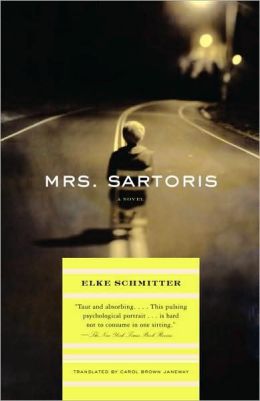
Part confessional, part thriller, Elke Schmitter’s explosive first novel is the story of Margaret. Jilted by a rich boyfriend when only eighteen, she finds herself many years later married, with a daughter, to Ernst, a war veteran with a penchant for routine and order. Living out her days in a small German village she is emotionally frozen, until one day she embarks on passionate affair with a married man. Planning to run away with him, she seems unaware that her plan is a fantasy that can never come true, and similarly unaware of the shocking repercussions that could result from chasing such a dream.

Why does someone commit a crime? Especially someone who isn’t really a criminal, but an ordinary person. Mrs Sartoris is an ordinary person, still, she kills someone. How that happened and who she killed is at the heart of this captivating and masterful novel.

Mrs Sartoris is a troubled woman. She drinks too much, is unhappy and once upon a time she spent a few months in a psychiatric hospital. She lives with her mother-in-law, her husband and her daughter in a small house. The only person in her life she’s truly attached to is her mother-in-law. She makes life bearable. There is no warmth between her and her husband and, as we will learn later, there are reasons for that.

The book opens with a cryptic short paragraph in which Mrs Sartoris, who tells the whole story, writes about an incident. What it is will be revealed very slowly. Small chapters on that incident change with chapters on her life. Her childhood and unhappy love story, her dreadfully boring and conventional married life, her affair with Michael.

Mrs Sartoris isn’t an entirely unreliable narrator but she’s highly deranged and depressed which clouds her judgement.

The story as such is interesting and suspenseful. And there is a twist at the end, which is very well done. But what makes this book truly masterful is the way it’s told. There are passages in the narration that I would call “litanies” in which Mrs Sartoris enumerates things. In one instance she talks about all the meaningless sentences she doesn’t want to say anymore. Reading them in rapid succession is eerie to say the least and makes the reader think how often one uses empty phrases just like that. How many meaningful conversations do we have day in and out? Another litany enumerates all the things Mrs Sartoris has never had in her life and this reveals so much bleak emptiness, it’s  chilling.

Mrs Sartoris has been compared to Mme Bovary. I don’t think I would have made the comparison if the blurb hadn’t told me to make it. Sure, there is an adultery, but other than that? Mrs Sartoris’ husband is as conventionally boring as Charles Bovary, Mrs Sartoris is lost in a dream world and her lover resembles Mme Bovary’s lover a tiny bit but that’s that. I would, if I had to, much rather compare it to Tim Parks’ Loving Roger.

Mrs Sartoris is the tightly woven story of a life, an analysis of a crime written in a chilling, and revealing style that will haunt readers for quite a while.

For another take on the novel here is Stu’s review.

Alissa Walser: Mesmerized – Am Anfang war die Nacht Musik (2010)

untitled

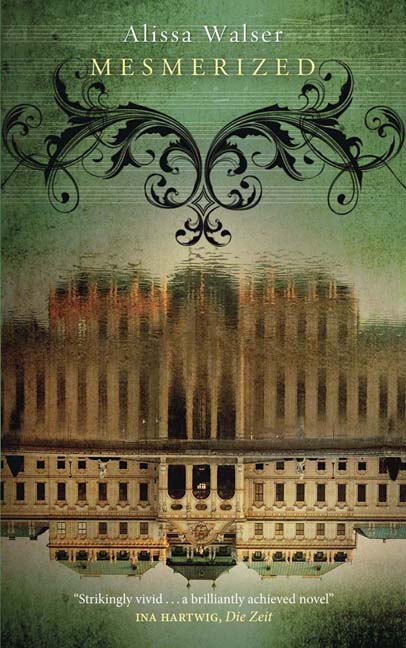
I so wanted to love this book. I liked the premise, the first sentences were evocative and descriptive but then, a few pages later, I just couldn’t stand the style anymore. Admittedly, it’s artful but also quite lifeless and tedious. The whole book contains only indirect speech and a great majority of the sentences are only fragments. Very staccato and after a longer period of reading, very repetitive. I’ve read mostly positive reviews of this book on English blogs, but they were all based on the translation while I read the German original. Maybe it reads better in English? The German critics were either impressed with the style or they called it artificial.

The story as such, which is based on true events, is fascinating. It’s set in Vienna in 1777  and in Paris in 1784. Franz Anton Mesmer was one of the most famous doctors of his time. A controversial figure who invented a treatment method involving what he called “animal magnetism”, in which he applied magnets to his patients or applied some sort of energy therapy. Some of the cases were quite miraculous, the most famous being the cure of the blind musician Maria Theresia Paradis. Maria lost her sight at the age of five and it was never clear what caused it. Still she was an accomplished musician and protégée of the empress. Mesmer moves her away from her family and treats her in his hospital. After a few weeks the girl can see again. Unfortunately it affects her music. Seeing makes her less of an accomplished musician. Her parents and doctors come running and in the end, nobody really knows why, she loses her eyesight again and Mesmer is called a fraud. After these unhappy developments Mesmer flees to Paris where some see him as a charlatan, others think he’s a miraculous doctor.

The book clearly underlines that Mesmer has found a relationship between body and mind and in removing Maria from her family he indicates that the surroundings were toxic. Maria’s blindness has a lot in common with some of the hysterical symptoms Freud will describe later.

What I really liked in this book is how music and energy are paired. Nobody denies the effect of music, the wonder of it, despite the fact that you can neither touch nor see music, still most people around Mesmer, don’t believe in energy fields in the body. Mesmer is a musician as well and the bond he forms with Maria, a bond her parents and his wife equally fear and hate, is strong because they understand each other on a deeper level. They communicate through their love of music. His understanding of her personality is much more intuitive than rational and that may have been a reason why the therapy worked so well. Until the parents turned up and Maria was dragged in front of a critical public who was hoping she wasn’t cured.

There are tragic elements in the book. Many quacks tried to cure Maria before she was brought to Mesmer and some of the brutal treatments left scars on her. Even in 18th Century Austria there were a lot of physicians more interested in money than the cure of an ill person.

The translation of the title is a bit surprising. In German the book is called “In the beginning the night was music”, which is a very rich, lyrical and biblical sounding title.

If I had liked Alissa Walser’s style, which reminded me a bit of Elfriede Jelinek, I would have loved the book, but since I found it tiresome, I didn’t.

A few more positive reviews

TBM (50 Year Project) 

David (Follow the Thread)

Iris on Books

Here’s the author reading the beginning of the novel:

Welcome to German Literature Month

image

Lizzy and I are happy to announce the official beginning of German Literature Month. A few introduction posts and lists have cropped up here and there already, which tells us, the event will be running strong once more.

Since google reader doesn’t exist anymore and a really great alternative hasn’t been found, we’ve decided to set up a German Literature Month site on Blogger which allows you to use Mr. Linky.

Please sign up and leave your links here: German Literature Month Blog

You can find the link to the review site on my sidebar.

I’ve already started a couple of books and hope to be able to post the first reviews soon.

My plans are, as usual. over-enthusiastic.

I’m currently reading or planning on reading the following books

Allissa Walser Mesmerized – Am Anfang war die Nacht Musik

W.G Sebald The Emigrants – Die Ausgewanderten

Ferdinand von Schirach – Tabu (not translated yet)

Eduard von Keyserling – Schwüle Tage (not translated)

Elke Schwitters Mrs Sartoris – Frau Sartoris

Stefan Zweig – Beware of Pity – Ungeduld des Herzens

Please sign up and leave your links here: German Literature Month Blog

German Women Writers – A Few More Suggestions

image

German Literature Month is upcoming and since we’d like to promote women writers I thought, I give you some more suggestions. Two years ago I wrote this post containing mostly classics. Below you find a list with newer or lesser-known authors and books who are all interesting. None of these have been reviewed in one of the past GLM. There would be so many more if only they were translated.
Mrs Sartoris

Elke Schmitter – Germany

Mrs Sartoris

An explosive first novel – Madame Bovary in modern Germany – about a wife and mother whose failed love affairs have driven her to the edge of sanity and to a startling attempt at vindication. After being jilted by a rich boyfriend, Margaret, eighteen and heartbroken, throws herself into a comfortable but stifling marriage to Ernst, a war veteran with a penchant for routine and order, who still lives with his mother in a small German village.

It’s not a bad life, considering Margaret’s psychological scars, but neither Ernst’s adoration nor the birth of a daughter can reawaken her frozen emotions. Until she slides into an affair with a married man with whom she plans to run away. Her plan is a fantasy that cannot possibly come true. Its repercussions nevertheless will explode with unimaginable force in these astonished lives.
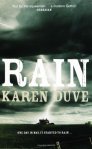
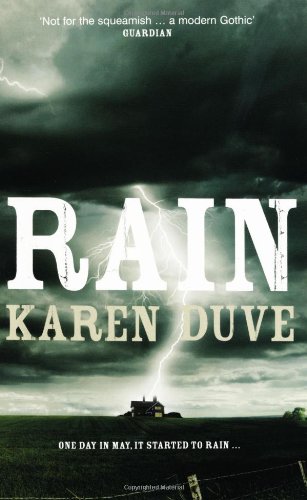
Rain

Karen Duve – Germany

Rain

“It will get better when it stops raining,” said Leon. When Leon Ulbricht lands a contract to write a gangster’s memoirs and moves into his dream home in an East German village with his beautiful wife Martina, everything seems set for an idyllic existence. But the dream home turns out to be in the middle of a fetid swamp; his house and marriage are falling apart; he can’t write the book and has spent all of his advance. It rains without end and their attempts to repair the house, or at least dry it out, are hampered by the plague of slugs eating away at the foundations. And then the gangster, wondering why his memoirs are not yet completed, decides to get nasty.
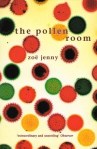
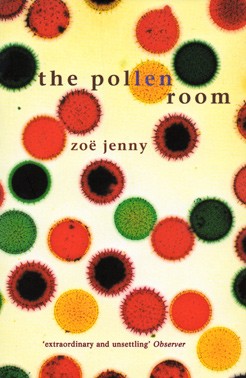
The Pollen Room

Zoe Jenny – Switzerland

The Pollen Room

Carlin Romano “The Philadelphia Inquirer”A European “Catcher in the Rye” or “Less than Zero” — a “spokenovel” for its generation….Abounds in gleaming sentences, in burnished image after image…[Jenny] is a beautifully disciplined writer.
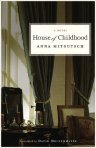
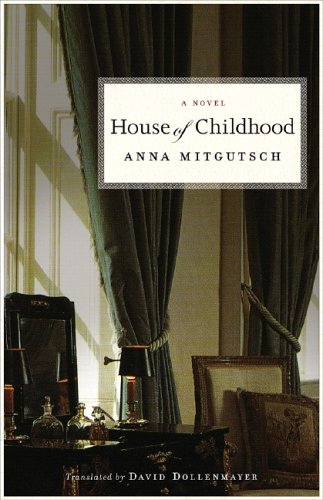
House of Childhood

Anna Mitgutsch – Austria

House of Childhood

Max Berman, a successful but rootless New York restoration architect, socialite, and ladies’ man, remembers his childhood home in the small Austrian town of “H,” mostly through his mother‚’s cherished photographs and vivid stories. When she dies, still longing for the house she fled with her husband and young children in 1928, Max temporarily abandons his playboy lifestyle and travels to H, determined to reclaim the confiscated house.

In H, Max encounters Nadja, a young woman convinced that her late mother was Jewish and that the local synagogue will provide the sense of community she lacks. Recognizing that she is too talented for her provincial neighbors, he arranges for her to attend college in the U.S., where she becomes the most significant of his many lovers. He also befriends Arthur Spitzer, a Holocaust survivor and the leader of H’s dwindling Jewish community, who helps him regain legal control of his mother’s house. When, years later, the last of his tenants finally moves out, Max returns to investigate his family’s ties in H for a fateful year that challenges his restlessness and seems to offer the chance for real belonging.

Acclaimed Austrian writer Anna Mitgutsch’s novel is a powerful examination of the meaning of home—in a place, a community, a relationship—and the difficulty of finding one in our tumultuous world.
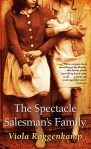
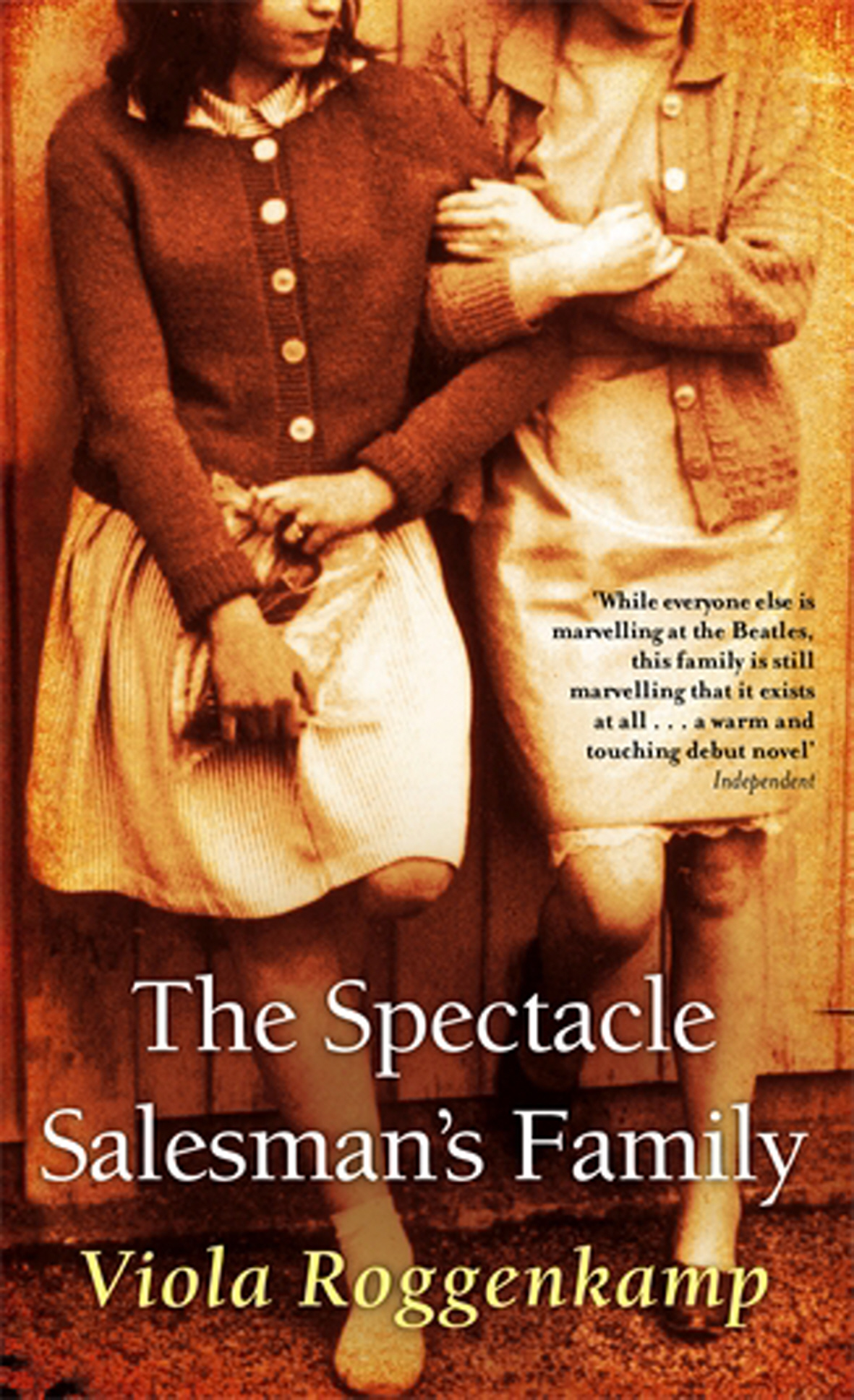
Roggenkamp

Viola Roggenkamp – Germany

The Spectale Salesman’s Family

Paul Schiefer is a travelling spectacles salesman. Every Monday morning he leaves Hamburg on a week-long sales trip. His wife, his mother-in-law and his two teenage daughters Fania and Vera see him off with abundant hugs and kisses, and they welcome him back with equal exuberance on Friday evening – just in time for Sabbath eve. While her husband is away, Alma Schiefer defends the wellbeing of her family with an explosive mixture of ferocious love and extreme determination. Thirteen-year-old Fania is torn between the comfort of home and the fearful thrills of the unknown outside world, a sixties world that contains student protest, beehive hairdos, Israel and the Six Day War, politics, religion, revolution and . . . the promise of love. Sensual, funny and acerbic, The Spectacle Salesman’s Family is a brilliant, vivid portrait of Jewish life in post-Holocaust Germany that continues the Jewish tradition of memorialising, recounting the details in order to hold onto the past and its lessons.
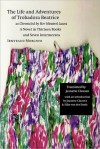
 

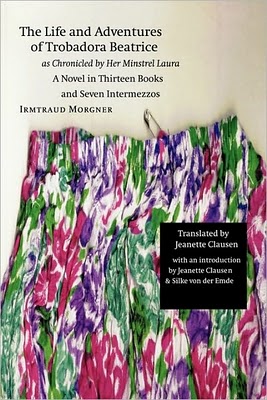
Trobadora Beatrice

Irmtraud Morgner – Germany

The Lives and Adventures of Trobadora Beatrice Chronicled by Her Minstrel Laura

Set in the German Democratic Republic of the early 1970s, The Life and Adventures of Trobadora Beatrice-a landmark novel now translated into English for the first time-is a highly entertaining adventure story as well as a feminist critique of GDR socialism, science, history, and aesthetic theory. In May 1968, after an eight-hundred-year sleep, Beatrice awakens in her Provence château. Looking for work, she makes her way to Paris in the aftermath of the student uprisings, then to the GDR (recommended to her as the “promised land for women”), where she meets Laura Salman, socialist trolley driver, writer, and single mother, who becomes her minstrel and alter ego. Their exploits-Beatrice on a quest to find the unicorn, Laura on maternity leave in Berlin-often require black-magic interventions by the Beautiful Melusine, who is half dragon and half woman. Creating a montage of genres and text types, including documentary material, poems, fairy tales, interviews, letters, newspaper reports, theoretical texts, excerpts from earlier books of her own, pieces by other writers, and parodies of typical GDR genres, Irmtraud Morgner attempts to write women into history and retell our great myths from a feminist perspective. Irmtraud Morgner (1933-90) was one of the most innovative and witty feminist writers to emerge from the GDR. Jeanette Clausen is an associate professor of German at Indiana University-Purdue University at Fort Wayne. She is a coeditor of German Feminism: Readings in Politics and Literature and is a past editor of Women in German Yearbook.
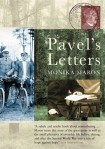
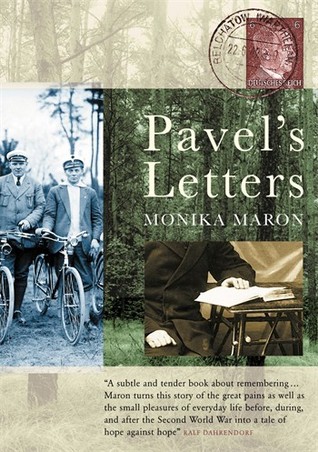
Pavel's Letters

Monika Maron – Germany

Pavel’s Letters

Teasing her family’s past out of the fog of oblivion and lies, one of Germany’s greatest writers asks about the secrets families keep, about the fortitude of ordinary people in extraordinary circumstances, and about what becomes of the individual mind when the powers that be turn against it.

Born in a working-class suburb of wartime Berlin, Monika Maron grew up a daughter of the East German nomenklatura, despairing of the system her mother, Hella, helped create. Haunted by the ghosts of her Baptist grandparents, she questions her mother, whose selective memory throws up obstacles to Maron’s understanding of her grandparents’ horrifying denouement in Polish exile.

Maron reconstructs their lives from fragments of memory and a forgotten box of letters. In telling her family’s powerful and heroic story, she has written a memoir that has the force of a great novel and also stands both as an elaborate metaphor for the shame of the twentieth century and a life-affirming monument to her ancestors.

Do you have a favourite author writing in German?

Announcing German Literature Month III – November 2013

image

Lizzy and I are delighted to be making this announcement and we hope you’re happy to hear it.  The tweets of others as early as January of this year looking forward to German Literature Month convinced us it just had to happen.  And so your wishes have come true. This time, however, we are issuing a challenge.

GLM I and II were resounding successes and we want GLM III to follow suit.  One thing has concerned us though.   Why were the lady writers so grossly under-represented?  Only 22% of the authors read in GLM I, reducing to 19% in GLM II, were female. We want to redress that balance.  Now we’re not going all Orange prize on you.  We don’t want to exclude the great male authors in German(-language) literature.  But we are structuring the month so that there are times to focus in on the ladies.

We would, therefore, like the structure of German Literature Month III to look like this.

Week 1:  1-7.11 Ladies Week

Week 2:  8-14.11 Gents Week

Week 3: 15-21.11 Ladies Week

Week 4: 22-28.11 Gents Week

Weekend 29-30.11 Read as you please

Read anything you want: any format, any genre. As long as the works were originally written in German and are reviewed during November, they count for GLM III.  The ideal female:male author ratio at the end of the month would be 50:50.

We will also have two readalongs:

7.11 Lizzy will lead a discussion of a title to be determined by public vote. A post will follow shortly with voting options. In the meantime if there’s a title you wish to suggest, written by a female (it will be ladies’ week after all), please leave a comment.

29.11 Caroline will lead a War and Literature discussion of Hans Keilson’s Death of the Adversary.

With just 5 weeks and 3 days to go it’s time to start planning.  Check out those TBR’s and library catalogues.  Find some female authors to read.  Most of all get excited.  This is the German Lit blogging event of the year.  What’s not to get excited about?

Daniela Krien: Someday We’ll Tell Each Other Everything – Irgendwann werden wir uns alles erzählen (2011)

Someday

Daniela Krien’s debut novel Someday We’ll Tell Each Other Everything (German title: Irgendwann werden wir uns alles erzählen) was a success in Germany and has already been translated into 15 languages, one of which English. That’s why I thought I’d like to see for myself if it’s really that good. I’m not sure the book won me over as a whole, but I liked a lot of the elements and the end packs a real punch.

The narrator Maria is a young woman of 16 who is living with her boyfriend Johannes on his family’s farm. It’s 1990 and the Berlin wall has just fallen. The novel begins shortly before the reunification of Germany. What makes the story interesting is that it’s set in Eastern Germany and that we see the end of the former Democratic Republic through the eyes of the people who lived there. The author grew up in the country, in the former DDR, so she knows what she’s writing about.

It’s odd that Maria is living with her boyfriend’s family and not with her own but we learn later that the mother has been left and that Maria can’t stand her sadness anymore. It’s far livelier on the Brendel’s farm. But even though it’s livelier, there are tensions as well, and just like in her own family, there are family secrets.

Maria and Johannes are still going to school but Maria stays at home most of the time, hiding somewhere, reading Dostoevsky. She’s often sad as well, prone to mood swings, but she is a keen observer and a kind girl. She want’s to help and make her stay worthwhile for everyone.

Not far from the Brendel’s farm is the farm of the Henners. Henner is a forty-year old guy, a brute, as they say, a man whose wife couldn’t stand his company anymore and who has left him. He’s said to be violent and drinks like a fish. He comes to the Brendel farm occasionally because they have a small farm shop. Maria watches him and Marianne, Johannes’ mother. Marianne seems to have a bit of a crush on him. Maria herself is fascinated and before long, without thinking of the consequences, she’s having an affair with him.

Their love affair is one of those dark maelstrom passions. They try to fight it but to no avail. Maria feels extremely guilty, but at the same time she cannot let go. What they share is too deep. It’s passionate, violent, but it’s also more than that. Henner opens up, tells her his life story.

At first their affair is all about sex but later they are content to just read Dostoevsky and Trakl together. Henner even tries to get sober.

They way this is told is quite appealing. The beginning is strange but after a while, you feel sucked in and read more and more quickly.

I have never read a novel about the end of the former Democratic Republic from the point of view of someone who lived “over there”. I really liked how Daniela Krien captured this. Just imagine: one day the authorities decide that your country will not exist anymore. Even though it might be for the better, it would still be a shock. There are many small details which show that and they are well rendered.

I was surprised that Maria was allowed to live with her boyfriend’s parents and that they shared a room and a bed, but then I remembered that the attitude towards sexuality is said to have been much more liberal in the former Democratic Republic. I watched a talk show on German TV a few years ago with athletes from the ex-DDR and they mentioned that for them one of the strangest things was how sex was handled in Germany. They said they preferred partenrs who came from the former Democratic Republic because they were more liberated. Judging from this novel it certainly seems as if there had been quite a difference.

The title is a Dostoevsky quote taken from the Brothers Karamazov. The book contains a few quotes from Dostoevsky, others are taken from Hamsun. Henner repeatedly quotes Trakl’s poem Song in the Night. Trakl is an Austrian poet. His poems are beautiful but gloomy.

If you like dark love stories you’d like Someday We’ll Tell Each Other Everything. You might equally like it if you have an interest in country life or life in the former Democratic Republic of Germany. The style is quite simple, most sentences are short. It’s not subtle but it works. The whole story is carried by the narrative voice, which I found haunting. The end alone makes it worth to read the book.