Jenny Erpenbeck, Clemens Meyer and Berlin City-Lit Giveaway -The Winners

It’s finally Sunday again and here are our three lucky winners drawn by random.org list generator.

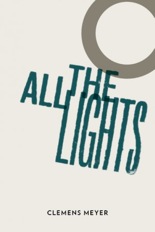
The winner of Clemens Meyer’s short story collection All the Lights, courtesy of And Other Stories, is

Rise from in in lieu of a field guide

Jenny Erpenbeck’s Visitation which we give away courtesy of Portobello Books has been won by

neer from A Hot Cup of Pleasure 

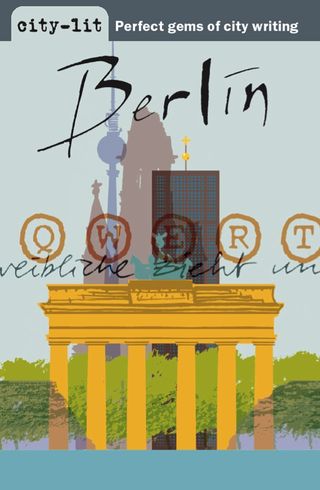
City-Lit Berlin, a contribution from Oxygen Books goes to

John (I think your site isn’t up and running yet?)

Happy reading, Rise, neer and John!

Please send me your contact details via beautyisasleepingcat at gmail dot com.

The giveaways are part of Lizzy and my German Literature Month in November.

The next giveaway will take place on Wednesday 26 October.

Btw. Those who won can participate again. 🙂

Wednesdays are wunderbar – Jenny Erpenbeck, Clemens Meyer and Berlin City-Lit Giveaway

Today we have a double giveaway. One on Lizzy‘s blog (that will be posted around 18.00 UK time) and the other one here. The giveaways are part of our German Literature Month in November.

Lizzy is giving away Pereine titles  (Next World Novella, Portrait of The Mother as A Young Woman and Maybe This Time) and two copies of Berlin City-Lit (see below). Her giveaway is UK only.

I’m very happy to be able to offer you three great book choices.

The first is Clemens Meyer’s short story collection All the Lights, courtesy of And Other Stories. Meyer started as a very young author and since he has entered the literary scene he has received a lot of praise.

Fifteen stories, laconic yet full of longing, from the young star of German fiction.’ GQ ‘The best crafted, toughest and most heart-rending stories in Germany.’ Spiegel ‘Respect to him. He’s the real deal.”

A man bets all he has on a horserace to pay for an expensive operation for his dog. A young refugee wants to box her way straight off the boat to the top of the sport. Old friends talk all night after meeting up by chance. She imagines their future together…Stories about people who have lost out in life and in love, and about their hopes for one really big win, the chance to make something of their lives. In silent apartments, desolate warehouses, prisons and down by the river, Meyer strikes the tone of our harsh times, and finds the grace notes, the bright lights shining in the dark.

The second book is Jenny Erpenbeck’s Visitation which we give away courtesy of Portobello Books. I’m sure you have seen the one or the other review of this book. It was a huge success in Germany and is now equally appreciated everywhere else.

`This haunting novel beautifully dramatises how ordinary lives are affected by history’

By the side of a lake in Brandenburg, a young architect builds the house of his dreams – a summerhouse with wrought-iron balconies, stained-glass windows the color of jewels, and a bedroom with a hidden closet, all set within a beautiful garden. But the land on which he builds has a dark history of violence that began with the drowning of a young woman in the grip of madness and that grows darker still over the course of the century: the Jewish neighbors disappear one by one; the Red Army requisitions the house, burning the furniture and trampling the garden; a young East German attempts to swim his way to freedom in the West; a couple return from brutal exile in Siberia and leave the house to their granddaughter, who is forced to relinquish her claim upon it and sell to new owners intent upon demolition. Reaching far into the past, and recovering what was lost and what was buried, Jenny Erpenbeck tells an exquisitely crafted, stealthily chilling story of a house and its inhabitants, and a country and its ghosts.

The third book is a contribution from Oxygen Books. You can win a copy of City-Lit Berlin. An anthology of stories set in Berlin. There are a lot of interesting authors included. Many German ones but also others.

If you would like to win one of those books, or enter for more than one, please let me know which ones you would like. Ideally you would read and review the book that you win.

Don’t forget to visit Lizzy’s Literary Life if you are located in the UK. She will post this evening (18.00 UK time).

The giveaway is open internationally, the books will be shipped by the editors. The winners will be announced on Sunday 23 October 20.00 – European – (Zürich) time.

Kleist Novellas Giveaway – The Winner

It’s finally Sunday and I’m glad to be able to announce the winner of the giveaway of the following two novellas by Kleist, courtesy of Melville House Press.

The giveaway is part of Lizzy and my German Literature Month in November.

The winner of this week’s giveaway – drawn by random.org number generator – is Vishy from Vishy’s Blog.

Please send me your contact details via beautyisasleepingcat at gmail dot com.

We hope you will be able to read and review at least one of them during Kleist week in November.

Happy reading, Vishy.

The next giveaway will take place next Wednesday.

Wednesdays are wunderbar – Kleist Novellas Giveaway

As Lizzy already announced last week, you should get used to our “Wednesdays are wunderbar” series that will take place on a fairly regular basis until the end of November. They are an integral part of our German Literature Month in November.

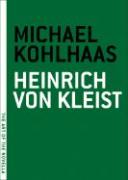
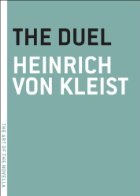
This week’s giveaway has been kindly provided by Melville House Press. We have two of Heinrich von Kleist’s novellas to give away, The Duel (aka Der Zweikapmpf) and Michael Kholhaas (Michael Kohlhaas deutsch).

Heinrich von Kleist died 200 years ago, on November 21 1811. Kleist was 34 years old when he died or – to be more precise – killed himself together with his friend, Henriette Vogel. As much as we appreciate his work now, that was not the case during his life. He got little recognition at the time. His plays and novellas that are considered to be among the finest in German literature had to wait until the 20th century to be discovered and treasured.

Like Jean Paul, or the equally tragic Friedrich Hölderlin, Kleist didn’t belong to any specific movement. He was neither a classic nor a romantic, but somewhere in between and quite unique. He certainly was a troubled man who was too sensitive for his time. Not being understood and the fear of losing his livelihood made matters worse.

He may be more famous for his plays but he has written some extremely impressive novellas. The stories are often violent and somewhat stretching believability but the accuracy of the descriptions and his use of language are what make him one of the very great German writers. He has a voice entirely his own.

Below you can see the two novellas we are giving away. As I haven’t read these two, I added the blurbs.

Based on actual historic events, this thrilling saga of violence and retribution bridged the gap between medieval and modern literature, and speaks so profoundly to the contemporary spirit that it has been the basis of numerous plays, movies, and novels. It has become, in fact, a classic tale: that of the honorable man forced to take the law into his own hands. In this incendiary prototype, a minor tax dispute intensifies explosively, until the eponymous hero finds the forces of an entire kingdom, and even the great Martin Luther, gathered against him.

One of the few novellas written by the master German playwright, The Duel was considered by Thomas Mann and others to be one of the great works of German literature. The story of a virtuous woman slandered by a nobleman, it is a precise study of a subject that fascinated von Kleist: that people are sometimes seemingly punished for their very innocence. This new translation reinvigorates a key work by this revolutionary German writer

If you are interested in reading these two novellas, please leave a comment. The only condition is that you read and review them during the Kleist and Other German Classics week of our German Literature Month in November (week 4).

The giveaway is open internationally, the books will be shipped by the editor. The winner will be announced on Sunday 16 October 20.00 – European – (Zürich) time.

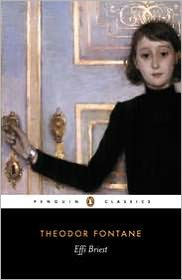
Wednesdays are wunderbar – Effi Briest Group Read Giveaway

Today we are kicking off the Wednesdays are wunderbar series which will be dedicated to giveaways. As Effi Briest is one of our readalong titles this is the first book that is given away.

The actual giveaway takes place on Lizzy’s blog. So if you are interested in winning Effi Briest and taking part in the readalong, please head over via this link and leave a comment.

Don’t miss reading one of the most wonderful German novels. With a bit of luck, you get the book version for free but you could also download it. You will find the details and more information on the readalong on Lizzy’s page.

German Literature Month – November 2011

Finally I am allowed to let you know what Lizzy and I have been planning in the background for quite a while now.

I’m happy to announce that Lizzy Siddal from Lizzy’s Literary Life and I are co-hosting a German Literature Month in November.  Ever since Iris from Iris on Books hosted her Month of Dutch Literature it’s been on our minds to do something similar for the literature of the German-speaking countries. We both share a passion for the literature of Austria, Germany and Switzerland and hope to find many like-minded and interested people to join us.

We have prepared a programme, including two readalongs and a lot of giveaways that generous publishers like Melville House, Bitter Lemon Press, Pereine Press, And Other Stories, Portobello Books and One World Classics have kindly contributed. The giveaways are international with the exception of a few which are UK only.

The official kick off will be on November first,  from then on we will post on alternating days. Lizzy will post on Tuesdays and Fridays, I will post on Mondays and Thursdays. Wednesdays, starting already in October, are reserved for giveaways. The readalongs will take place on Saturdays. Sunday will be weekly wrap up day and the time for announcing the winners of the giveaways.

The first readalong is dedicated to  Effi Briest. It will run for three weeks. Details and exact dates are given below.

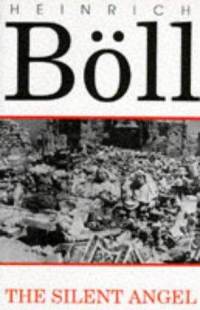
The second readalong is my monthly Literature and War Readalong that I will shift to Saturday and I have also changed the previoulsy announced title. We will read Heinrich Böll’s The Silent Angel. This book is unique for reasons that I will reveal in a later post. On a more personal note it is important to me as Böll is my favourite German author.

The programme will look as follows

Week 1 German Literature

Maybe you like Thomas Mann or you are a fan of Genazino. Now’s the time to share this.

Week 2 Crime Fiction

There are a lot of crime novels written in German out there. Whether you like it gritty or rather go for psychological suspense, you are sure to find something.

Week 3 Austria and Switzerland 

You could either read some of the 19th century Swiss classics like Gotthelf, Keller or Meyer or finally read the Roths and Zweigs you have had on your TBR pile for years.

Week 4 Kleist and Other German Classics

Kleist died 200 years ago. We are going to read some of his novellas and give away some of his books but we will also read other classics.

Week 5 Read As You Please and Wrap Up

Wrap up week is a chance to read and review whatever you like. I’ll go for something that hasn’t been translated yet.

Three Week Readalong on Saturdays  (5th chapters 1-15, 12th chapters 16 – 24 and 19th chapters 25 – 36, 280 pages)

Literature and War Readalong 2011 on Saturday 26th November

The Silent Angel (184 pages)

Giveaways

These are some of the possible titles for the giveaways. The exact titles will be announced on the giveaway days.

We will post a few times in the upcoming weeks sharing reading suggestions, as we hope that many of you will read and review with us.

The idea is that you link your posts in the comment sections of our posts. The Sunday will be wrap up day in which we will give an overview of everything that has happened through the week.

Get your copies out, enter the giveaways, or buy a few books and join us.

Feel free to use the button and spread the word.

I’m looking forward to November.

Visit the German Literature Month Page for regular updates.

Rilke’s Letters to a Young Poet (1903-1908) and Romain Rolland on Rilke (1941)

Drawn by some sympathetic note in one of his poems, young people often wrote to Rilke with their problems and hopes. From 1903 to 1908 Rilke wrote a series of remarkable responses to a young would-be poet, on poetry and on surviving as a sensitive observer in a harsh world. An accompanying chronicle of Rilke’s life shows what he was experiencing in his own relationship to life and work when he wrote these letters.

Rilke’s Letters to a Young Poet or Briefe an einen jungen Dichter are very famous. I often heard people mention them. So far I had only managed to read The Notebooks of Malte Laurids Brigge, his only novel, and Rilke’s poems. He has always been one of my favourite poets and I was quite thrilled when the first Rilke Projekt CD came out in Germany. German actors and singer’s recite his poems to music that has been especially composed for the project. Meanwhile there are at least two or three other CDs out.

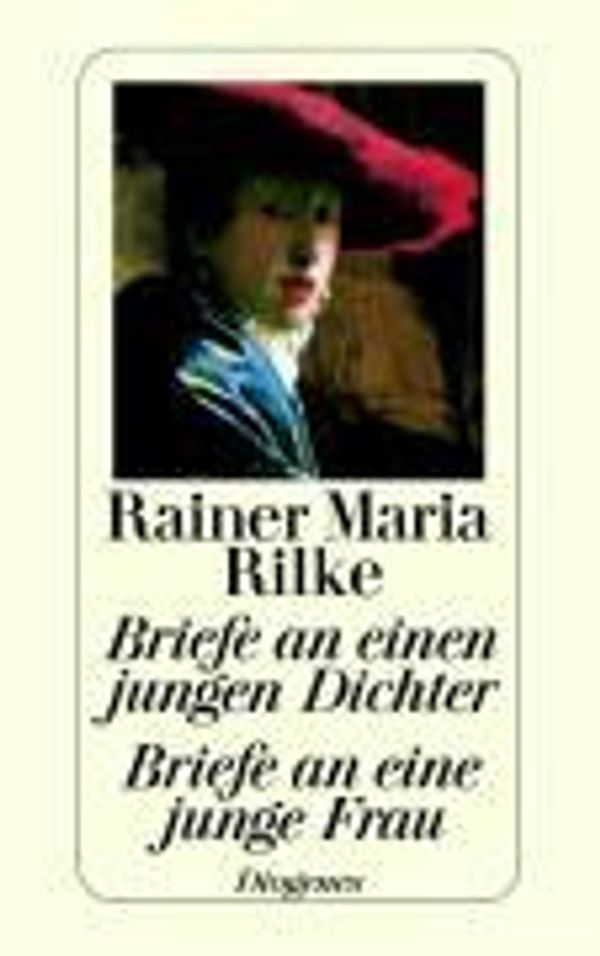
I’ve been reading the book you can see below Briefe an einen jungen Dichter which also contains the Letters to a Young Woman and an essay by Romain Rolland on Rilke.

The essay fascinated me even more than the letters.

Romain Rolland and Rilke were living within walking distance from each other in Paris, Rilke in the Rue Campagne-Première 17 and Romain Rolland on the Boulevard Montparnasse 162. For years they were living close to each other without knowing each other. They were introduced by Stefan Zweig. To read the names of all their mutual friends with whom they met regularly is quite amazing. Stefan Zweig, André Gide, Emile Verhaeren, Auguste Rodin, are but a few. Rilke and Rodin were very close friends and it’s interesting to read how different the two were. Rolland also mentions what an unhappy childhood Rilke had. From 10 to 16 he was at a very strict Military Academy and one can imagine how horrible this rigid discipline must have been for someone so sensitive.

Rolland and Rilke met before WWI and when the war broke out, Rolland left for Switzerland and lived in Geneva while Rilke left for Germany and was finally drafted in 1916. This is something I had either forgotten or didn’t know. Luckily Rilke didn’t have to fight and was working in an archive instead but he lost all his belongings which had remained in his apartment in Paris. His things were confiscated and auctioned, everything, including his manuscripts. What a nightmare. Gide tried to help but it was too late. Nothing was returned to the owner.

After the war Rilke came to live in Switzerland as well, not far from where Romain Rolland stayed. Most of the time Rilke lived at the Château de Muzot.
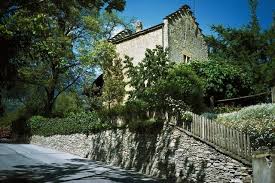
By that time Rilke’s health had deteriorated considerably and he had to stay frequently at the sanatorium Valmont where he also died. Only shortly before he died it was discovered that he had suffered from some very rare form of leukaemia.

Reading the letters with all this in mind, was quite touching.

A young aspiring poet had written to Rilke asking for advice and over the years Rilke would guide him with his letters. The idea of art and the artist that Rilke describes in his letters is so far from what we see nowadays.

Rilke’s idea of an artist is almost religious and deeply spiritual. First, he advises the young poet, he must try to find out whether being a writer is really his deepest wish. Only if he isn’t able to exist without creating, he should pursue this career. Everything else isn’t true to the soul and will only achieve to produce things devoid of meaning.

Art is good when born of necessity.

He also tells him that loneliness and solitude must be endured. They will transform the soul and lay bare its depth and truth. Most people look for an easy way of life but that isn’t the way of the soul. The soul strives for the difficult and serious.

In one of the first letters he tells the young man to read the novelist that is closest to his, Rilke’s, heart, Jens Peter Jacobsen. I have read Jacobsen’s Niels Lyhne when I was very young, shortly after reading The Notebooks of Malte Laurids Brigge, and I can confirm that it is deeply moving and engaging.

The artist described by Rilke is a pure being of the utmost integrity. This isn’t the realm of creative writing schools and MFA’s (I don’t want to criticize these at all. Our time is a different one). The art created by a being who is capable to endure loneliness and dive into the abyss of the soul or embrace the beauty of inspiration, has a deeply spiritual dimension.

I liked the gentleness of Rilke’s tone, how each and every single word is chosen carefully and especially for the one receiving the letter.

It is interesting to read what he writes about criticism and how to live with being criticized.

The advice he gives in his letters is true and precious but I was, once more, astonished, how much Rilke’s German is different form the one written and spoken nowadays. German isn’t a language that is supervised by a body of language authority like French. The German from only a few decades back sounds quite different from the one in use now.

Rilke is a deeply emotional man and so is his writing. There isn’t the tiniest trace of irony or sarcasm which is a deliberate choice. Rilke writes that a young aspiring poet must stay away from irony as he must explore things that are very serious and deep. Irony will, according to Rilke, never reach the deepest layers of the soul.

Another interesting aspect was what he said about love and men and women. Love, like loneliness, must be endured, he states, it is the most difficult thing in the world. He further says that he doesn’t think that men and women are all that different and that he thinks that women sadly are not yet fully accepted as human beings and that is not how it should be. They should be able to be whole and independent without the need of a man.

It made me a bit sad to read the letters, the world in which they have been written, is long gone, and our values have so much deteriorated.

Rainer M. Rilke: Briefe an einen jungen Dichter - Briefe an eine junge Frau, Buch